DD
MM
YYYY

PAGES

DD
MM
YYYY

spot_img

PAGES

Home Blog Page 4046

The Price of Personal Data

0

A few decades ago, resumes or CVs were classified by workers out of loyalty to companies. Then, companies guaranteed long-term employment. In other words, firing and layoffs had a human element. But as companies began to see humans as “numbers”, the people revolted, and as that was happening, Linkedin came onboard, providing an ecosystem which declassified all resumes and CVs! So, with that, you tell that employer, I love this work but I am also available to other companies, because I cannot trust you eternally!

That brings me to the fixation of the European Union on ad-data privacy. Which data are we talking about here? The one people put cameras and stream anything lens can pick LIVE on Facebook and Instagram. Yes, data which are already declassified by the users? Do they really want protection?

Indeed, the metadata which Facebook’s Meta needs to make some money is an intrusion, and the company has been fined many times. Interestingly, Facebook has a response: “Facebook and Instagram users in Europe will be able to opt out of ads — for a fee. Parent company Meta says the option is meant to comply with European regulations that limit data collection. Using the web versions of the platforms will cost 9.99 euros ($10.57) a month, while the iOS and Android apps will cost 12.99 euros. It will be available in November to anyone in the European Union, European Economic Area and Switzerland. Users in those regions will still be able to opt for the ad-based free versions.”

Now, let the people pay and protect their data. It was like the old Yahoo Premium which offered zero ads on Yahoo. Within months, Yahoo noted that it was not working well because ads are not really bad when you check your bank account.

Let us not complicate things in this world. Yes, if you do not want to see ads, PAY to use the service. Hope everyone will be happy now. Eat your data, but send me money to use my service.

Solana Blockchain adds Incubator Program to woo Developers; DCG says it was ‘blind-sided’ by NYAG

0

Solana, the blockchain platform that claims to offer fast, scalable and low-cost transactions, has announced a new initiative to support the development and launch of projects on its network. The Solana Incubator, which is backed by some of the leading venture capital firms in the crypto space, aims to provide technical guidance, funding and mentorship to startups that want to build on Solana.

The incubator is part of Solana’s broader strategy to attract more developers and entrepreneurs to its ecosystem, which competes with other smart contract platforms such as Ethereum, Binance Smart Chain and Cardano. Solana claims that its network can process up to 50,000 transactions per second (TPS) at an average cost of $0.00025 per transaction, making it ideal for applications that require high throughput and low latency.

According to Solana’s website, the incubator will accept applications from projects that are focused on one of the following categories: DeFi (decentralized finance), NFTs (non-fungible tokens), Web3 (decentralized web applications), gaming, social media and metaverse. The incubator will also consider projects that are exploring new use cases for blockchain technology or that are leveraging Solana’s unique features such as its Proof of History (PoH) consensus mechanism, which enables faster synchronization and verification of transactions.

Proof-of-history is a way of encoding the passage of time into the blockchain, by using a verifiable delay function (VDF) that produces a unique hash every fixed interval. This hash is then used as an input for the next hash, creating a chain of hashes that can be verified by anyone. By doing this, Solana creates a trustless and decentralized clock that can be used to order transactions and events on the network.

Proof-of-stake is a way of securing the network by requiring validators to stake some number of tokens to participate in the consensus process. Validators are randomly selected to propose blocks and vote on them, based on their stake weight and the PoH sequence. Validators earn rewards for producing and validating blocks and lose stake for behaving maliciously or going offline.

By combining PoH and PoS, Solana achieves a high throughput of up to 50,000 transactions per second, a low latency of 400 milliseconds, and a low fee of 0.00001 SOL per transaction. Solana also claims to be able to scale to millions of transactions per second in the future, by using techniques such as sharding, parallel processing, and compression.

The incubator will offer a range of benefits to the selected projects, including:

Up to $500,000 in seed funding from Solana’s strategic partners, such as Alameda Research, Multicoin Capital, Jump Capital and CMS Holdings.

Access to Solana’s core developers and engineers, who will provide technical support and feedback on the projects’ architecture and design. Mentorship from experienced entrepreneurs and investors in the crypto industry, who will share their insights and advice on product development, marketing, fundraising and scaling.

Exposure to Solana’s global community of users, developers and investors, who will help test, promote and adopt the projects’ products and services. Participation in exclusive events and workshops hosted by Solana and its partners, where the projects will have the opportunity to network with other innovators and influencers in the crypto space.

The incubator is currently accepting applications for its first cohort, which will run from January to March 2024. The deadline for submissions is December 15, 2023. The incubator plans to select up to 10 projects for each cohort, which will last for three months. The incubator expects to run four cohorts per year.

Solana’s announcement comes at a time when the platform is experiencing rapid growth and adoption. According to data from CoinGecko, Solana’s native token SOL has surged by over 10,000% since the beginning of 2021, reaching an all-time high of $214.96 on November 7, 2022. Solana’s market capitalization currently stands at over $60 billion, making it the fifth-largest cryptocurrency by market cap.

Solana’s popularity has also been driven by the launch of several successful projects on its network, such as Audius, a decentralized music streaming platform that has over 6 million monthly active users; Serum, a decentralized exchange that facilitates cross-chain trading of crypto assets; Star Atlas, a metaverse game that features NFTs and DeFi elements; and Degenerate Ape Academy, a collection of NFTs that sold out in eight minutes and generated over $96 million in sales.

Solana’s incubator is expected to further boost its ecosystem and attract more talent and innovation to its platform. By offering a comprehensive package of support and resources to aspiring founders, Solana hopes to foster a vibrant community of projects that can compete with rival chains and deliver value to users and investors alike. Solana is one of the most promising blockchain platforms in the market, with a growing ecosystem of applications and partners. It aims to provide a fast, secure, and scalable solution for decentralized applications that require high performance and low costs.

DCG says it was ‘blind-sided’ by NYAG as Fireblocks taps former New York regulator

DCG, the parent company of Grayscale Investments and CoinDesk, has released its third quarter shareholder letter, in which it addressed the recent lawsuit filed by the New York Attorney General (NYAG) against it and its affiliates. The letter, published on October 27, stated that DCG was “blind-sided” by the NYAG’s allegations, which accused the company of violating New York’s Martin Act by offering unregistered securities to investors and engaging in fraudulent conduct.

DCG claimed that it had cooperated fully with the NYAG’s investigation, which began in July 2019, and that it had provided “voluminous” information and documents to the regulator. DCG also said that it had “repeatedly” tried to engage in a dialogue with the NYAG to resolve any concerns, but that the regulator had “refused to engage in any meaningful discussions” and instead “chose to file a meritless lawsuit without warning or notice.”

DCG asserted that it had “acted in good faith and with transparency” throughout its operations, and that it had complied with all applicable laws and regulations. DCG also said that it had “always put the interests of its investors first” and that it had “provided them with valuable products and services that have helped them gain exposure to the digital asset space.”

DCG said that it was “confident” in its legal position and that it would “vigorously defend” itself against the NYAG’s claims. DCG also said that it would “continue to execute on its strategic vision” and that it was “excited about the future of the digital asset industry.”

DCG’s letter also highlighted its achievements in the third quarter, such as launching new products, expanding its global presence, growing its assets under management, and acquiring Luno, a leading digital asset platform in emerging markets. DCG also expressed its optimism about the long-term potential of digital assets, especially as more institutional investors enter the space.

Fireblocks taps former New York regulator to step up compliance.

Fireblocks, a platform that provides digital asset custody and transfer services, has hired a former New York State Department of Financial Services (NYDFS) official as its new chief compliance officer.

Michael Mosier, who served as the deputy superintendent and deputy counsel for financial crimes at NYDFS, will oversee Fireblocks’ global regulatory and compliance strategy and lead its engagement with regulators, law enforcement agencies, and industry groups.

Mosier brings over 20 years of experience in the public and private sectors, working on anti-money laundering (AML), counter-terrorism financing (CTF), sanctions, cybercrime, and other financial crime issues. He has also held senior positions at the U.S. Treasury Department, the Financial Crimes Enforcement Network (FinCEN), the White House National Security Council, and the Department of Justice.

In a press release, Fireblocks CEO Michael Shaulov said that Mosier’s appointment reflects the company’s commitment to “the highest standards of compliance and security” as it expands its global footprint and customer base.

“Michael is a recognized leader in the field of financial crime and compliance, and we are thrilled to have him join our team. His deep expertise and insights will be invaluable as we continue to navigate the complex and evolving regulatory landscape of the digital asset industry,” Shaulov said.

Mosier said that he was impressed by Fireblocks’ vision and technology, which he believes can “transform the way financial institutions interact with digital assets.”

“I look forward to working with the Fireblocks team to ensure that we operate with integrity and in compliance with applicable laws and regulations, while also fostering innovation and growth in this exciting space,” Mosier said.

Fireblocks was founded in 2018 and provides a secure platform for institutions to store, transfer, and issue digital assets. The company claims to have over 500 customers, including banks, exchanges, fintechs, and hedge funds, and to support over 400 tokens and cryptocurrencies. Fireblocks has raised $310 million in funding to date, valuing the company at $2 billion.

Why is it important for Cybertruck to be bulletproof?

0

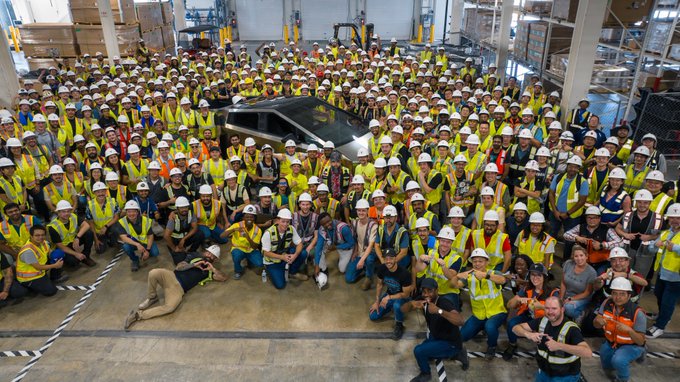
Cybertruck is a revolutionary electric pickup truck that aims to redefine the automotive industry. It is designed to be durable, versatile, and futuristic. One of the most striking features of Cybertruck is its bulletproof exterior, which can withstand 9 mm handgun rounds and even sledgehammer blows. But why is it important for Cybertruck to be bulletproof?

Cybertruck is a vehicle that challenges the conventional design and performance of pickup trucks. It has a sleek and angular exterior, made of ultra-hard stainless steel that can withstand bullets and sledgehammers. It has an adaptive air suspension system that can adjust the ride height and damping according to the terrain and load. It has an electric powertrain that can accelerate from 0 to 60 mph in as little as 2.9 seconds, and tow up to 14,000 pounds.

It has a spacious cabin that can seat six people, and a versatile bed that can fit a standard 4×8 sheet of plywood. It has a solar roof option that can generate up to 15 miles of range per day. It has a built-in 110/220V outlet that can power tools and appliances. It has a self-driving capability that can navigate complex traffic scenarios and off-road conditions.

But Cybertruck is not only a vehicle that offers superior functionality and durability. It is also a symbol of Tesla’s leadership and ambition in the electric vehicle market and beyond. Cybertruck is a statement that Tesla is not afraid to innovate and disrupt the status quo, even if it means facing criticism and skepticism from the mainstream media and the public.

Cybertruck is a demonstration that Tesla is not only competing with other automakers, but also creating its own category of vehicles that appeal to a new generation of customers who value sustainability, performance, and style. Cybertruck is a manifestation of Tesla’s vision and mission to accelerate the transition to sustainable energy and transportation, and to make the world a better place for humanity.

There are several reasons why bulletproofing Cybertruck makes sense. First, it enhances the safety and security of the driver and passengers. In a world where violence and crime are prevalent, having a vehicle that can protect you from bullets and other projectiles can be a lifesaver. You never know when you might encounter a hostile situation on the road or in a parking lot, and having a bulletproof vehicle can give you peace of mind and confidence.

Second, it showcases the strength and durability of Cybertruck’s materials and engineering. Cybertruck is made of ultra-hard 30X cold-rolled stainless steel and armored glass, which are also used in SpaceX’s Starship rocket. These materials are not only resistant to corrosion and denting, but also to high-impact forces and extreme temperatures. By demonstrating that Cybertruck can withstand bullets, Tesla is proving that its vehicle is built to last and perform in any environment.

Third, it creates a unique and distinctive identity for Cybertruck in the market. Cybertruck is unlike any other pickup truck in the world, with its angular and futuristic design. By adding bulletproofing to its features, Tesla is further differentiating Cybertruck from its competitors and appealing to customers who value innovation and novelty. Bulletproofing also adds an element of fun and excitement to Cybertruck, as it allows customers to test its capabilities and show off its prowess.

But how does bulletproofing affect the weight and speed of Cybertruck?

Bulletproofing Cybertruck adds some extra weight to the vehicle, but not as much as you might think. According to Tesla, Cybertruck weighs between 5,000 and 6,500 pounds, depending on the configuration. This is comparable to other pickup trucks on the market, such as the Ford F-150, which weighs between 4,000 and 5,500 pounds.

The difference is that Cybertruck uses a stainless-steel exoskeleton, which is stronger and lighter than conventional steel or aluminum. This allows Cybertruck to have a bulletproof body without compromising its efficiency or agility.

Bulletproofing Cybertruck also does not affect its speed significantly. According to Tesla, Cybertruck can accelerate from 0 to 60 mph in as little as 2.9 seconds, and reach a top speed of over 120 mph. This is faster than most pickup trucks on the market, and even some sports cars.

The reason is that Cybertruck has a powerful electric motor that delivers instant torque and acceleration. This allows Cybertruck to overcome the drag and inertia caused by its bulletproof body and achieve impressive speeds. Bulletproofing Cybertruck does not have a negative impact on its weight and speed. It actually enhances its performance and efficiency by using a stainless-steel exoskeleton and an electric motor. Bulletproofing Cybertruck is not a drawback, it is an advantage.

Bulletproofing Cybertruck is an important feature that enhances its safety, durability, and identity. It is a testament to Tesla’s vision and ambition to create a vehicle that is not only functional, but also futuristic and fun.

Two potential airdrops many hunters have underrated

0

Accepting early updates (knowledge) from the field is the most important way to succeed in the blockchain world. The majority of this knowledge has the potential to be profitable if the user constantly follows the steps back to front in order to win. Consistency is the primary driving force behind those updates.

Although there is no shortage of information to find and learn from, persistence and patience are key components. As I write this, the material I will be introducing already exists (has been for years).

The blockchain area offers potential rewards that are commonly referred to as $0 investment. To become involved in this space, one must learn about the history, foundation, and goals of the network. The tester receives a reward for testing such a network. Whoa, it sounds good, but how ready are you?

There are standards for network development in the blockchain sector, and there are various types of development inside the blockchain space.

While each network within the space discusses a variety of topics, I can claim that they all have similar origins, roots, and natures. Please gaze down and explore the world of nothing when chasing the large bag, as that is where the money lies. A significant airdrop that pays off enormously on the testnet is often a dream come true; many hunters refer to it as an incredible airdrop. Aptos gives a network tester a massive airdrop in late 2022 valued at $10,000. Because everything on the Aptos network is made simple, the tester may become discouraged from participating in or testing the protocol due to its nature. 

Now consider those in whom we have already committed resources and expect to profit, yet who ultimately revealed unknowable information that is unworthy of discussion. I’ll highlight two enormous communities’ potentially incredible airdrops below, which are based on market news and research. This enormous community is supported by a large network of unnoticed backers and investors.

This community has already made a significant contribution to the expansion of knowledge and education that has fueled the quick development of blockchain technology. But despite the fact that this community has been in the sector for at least ten years, no coin or token has been created by them. They are now introducing a bundle to be of the same natural likeness of mining on a daily basis. Does this imply that they are calling for their native token? Begin asserting the following summary data;

CoinmarketCap Airdrop
As I write this, CoinmarketCap is the first network and project that comes to me with a sizable investor base and supportive community. Everybody using blockchain is aware of CoinmarketCap’s characteristics and its significance within the blockchain community. However, the blockchain educational house and analysis powerhouse haven’t produced a token or coin that is recognized as their own.

A probable hidden airdrop called CoinmarketCap Diamond is presently taking place on their platform. A lot of people have been claiming lifetime CoinmarketCap diamonds. Diamonds have potential worth that can be used to open wait lists and gain access to some possible ongoing airdrops. Everything about this investment, which is worth zero dollars, is speculative. Because to see the future is to begin utilizing the opportunities that are currently available, the future is the present. Keep in mind that this platform has a fantastic community and investors behind it. The Diamond may become a CoinmarketCap native coin. But because Blockchain is where fantasies come true with nothing to earn higher, speculation is a normal phrase that literally turns into reality.

Assume that after claiming and amassing more diamonds, the white paper is introduced, allocation occurs, and the listing price — which must start at a minimum of $0.0131 — arrives. Go through CoinmarketCap’s universe and begin claiming the diamond.

Coin gecko Airdrop
This platform’s nature is similar, and there’s nothing to hide this time. Many people made money early this year from coin gecko candy that was subject to vesting. The candy claim is still in progress. Now, if the necessary actions are taken, conjecture becomes reality and dreams come true. Four years ago, the Coin Gecko platform introduced the concept of candy claiming, which some hunters in the area took up. Their assertion was made with the intention of making money, therefore conjecture is not their journal.

Learn and claim to laugh.

Kraken to share User Data with IRS as DYDX aims to share fees with Validators and Stakers

0

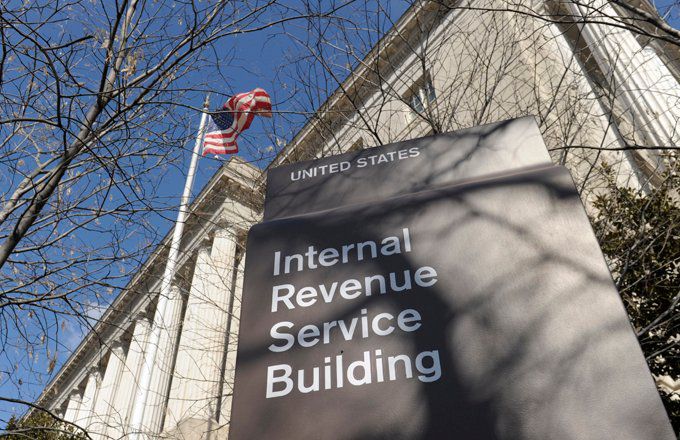
Kraken, one of the largest cryptocurrency exchanges in the world, has announced that it will comply with a court order to provide the Internal Revenue Service (IRS) with information on its users who conducted transactions worth more than $20,000 between 2016 and 2020. The court order was issued in June this year, after the IRS filed a petition to obtain the records of Kraken’s customers as part of its efforts to enforce tax compliance in the crypto space.

According to a blog post published by Kraken on October 26, the exchange will start sharing the data with the IRS by November 30. The data will include the name, address, email, phone number, date of birth, taxpayer identification number, account activity, and transaction details of the affected users. Kraken said that it will notify the users who are subject to the data sharing via email and in-app messages.

Kraken also said that it tried to limit the scope of the court order and protect the privacy of its users, but it was unable to challenge the legal basis of the IRS’s request. The exchange added that it respects the rule of law and cooperates with legitimate requests from government agencies.

The exchange advised its users to consult with a tax professional if they have any questions or concerns about their tax obligations. It also reminded them that they can use third-party services such as CoinTracker or TaxBit to calculate and report their crypto taxes.

Kraken is not the only crypto exchange that has been targeted by the IRS in recent years. In 2016, the IRS obtained a similar court order to access the records of Coinbase’s users who traded more than $20,000 in crypto between 2013 and 2015. Coinbase initially resisted the order, but eventually agreed to share the data of about 13,000 users in 2018.

The IRS has been ramping up its efforts to crack down on tax evasion and fraud in the crypto industry, as more people invest and trade in digital assets. In 2019, the IRS sent letters to more than 10,000 crypto users, warning them that they may have failed to report their income or pay taxes on their transactions. In 2020, the IRS added a question on Form 1040, asking taxpayers whether they received, sold, exchanged, or acquired any financial interest in virtual currency during the year.

The IRS has also issued guidance on how to treat crypto transactions for tax purposes. According to the IRS, crypto is treated as property, not as currency, and therefore subject to capital gains and losses rules. The IRS also clarified that crypto received as payment for goods or services, as income from mining or staking, or as a result of a hard fork or an airdrop is taxable as ordinary income. The IRS also said that taxpayers who donate crypto to qualified charities can claim a deduction for their charitable contribution.

DYdX Chain to distribute all network fees to validators and stakers

DYdX Chain is a new layer-2 protocol for decentralized derivatives trading, powered by StarkWare’s zero-knowledge proofs. DYdX Chain aims to offer fast, scalable, and low-cost transactions for traders and liquidity providers on the DYdX platform.

One of the key features of DYdX Chain is that it will distribute all network fees to validators and stakers, creating a strong incentive for participation and security. Validators are nodes that run the DYdX Chain software and process transactions, while stakers are users who stake DYDX tokens to support validators and earn rewards.

The fee distribution mechanism works as follows:

Every transaction on DYdX Chain has a network fee, which is paid in the same asset as the transaction. For example, if a user trades ETH for USDC, the network fee is paid in ETH. The network fee is calculated as a percentage of the transaction value, based on a dynamic fee schedule that adjusts according to network congestion and demand.

The network fee is split into two parts: 70% goes to the validator who processed the transaction, and 30% goes to a global fee pool. The global fee pool accumulates fees from all transactions on DYdX Chain and is distributed to stakers every epoch (a fixed period of time, e.g., one week).

The distribution of the global fee pool is proportional to the amount of DYDX tokens staked by each Staker, and the duration of their stake. The longer and larger the stake, the higher the share of the fee pool. Staker’s can claim their fee rewards at any time or reinvest them into their stake to compound their returns.

By distributing all network fees to validators and stakers, DYdX Chain aligns the interests of all participants and creates a positive feedback loop. Validators are incentivized to provide high-quality service and maintain network security, while stakers are incentivized to stake more DYDX tokens and support validators. This in turn increases the value proposition of DYDX Chain and attracts more users and liquidity, which generates more fees and rewards for validators and stakers.

Sen. Elizabeth Warren finds support in US House to tackle Crypto Finance Terrorism

Senator Elizabeth Warren, a vocal critic of the cryptocurrency industry, has found allies in the US House of Representatives for her proposed legislation to regulate the sector and combat its use for illicit purposes. The bill, titled the Digital Asset Market Structure and Investor Protection Act, aims to create a clear and comprehensive framework for the oversight and protection of digital assets in the US.

The bill would require any entity that offers digital asset services, such as exchanges, custodians, or brokers, to register with the Securities and Exchange Commission (SEC) or the Commodity Futures Trading Commission (CFTC), depending on the nature of the asset. It would also establish a new category of digital assets called “digital asset securities”, which would be subject to the same rules and regulations as traditional securities.

The bill would also empower the Financial Crimes Enforcement Network (FinCEN) and other relevant agencies to monitor and prevent the use of digital assets for money laundering, terrorist financing, and other criminal activities. It would require digital asset service providers to comply with the Bank Secrecy Act and other anti-money laundering laws, as well as to report suspicious transactions and maintain records of customer identities.

The bill has received support from several members of the House Financial Services Committee, including Chairwoman Maxine Waters, who said that she “looks forward to working with Senator Warren on this important issue”. Other co-sponsors include Representatives Stephen Lynch, Jesús García, Al Green, and Rashida Tlaib.

Senator Warren said that her bill would “provide the regulatory certainty and consumer protections that investors and innovators need in the crypto space”. She added that “by harnessing the potential of crypto while cracking down on its use by criminals and terrorists, we can ensure that this new technology benefits American consumers and businesses”.

Elliptic says scale of crypto base terrorism funding is being misrepresented.

Elliptic, a company that provides blockchain analytics and compliance solutions, has published a report that challenges the common narrative that cryptocurrencies are widely used by terrorist groups. The report, titled “Crypto Terrorism: How Serious Is the Threat?”, analyzes the available evidence and data on the use of crypto assets by terrorist organizations and their supporters.

According to Elliptic, the scale of crypto-based terrorism funding is being misrepresented by some media outlets and policymakers, who often rely on anecdotal or unverified sources. The report claims that the actual amount of crypto funds raised by terrorist groups is very small compared to their overall financing needs, and that crypto assets are not well suited for their operational requirements.

The report cites several examples of crypto fundraising campaigns by terrorist groups, such as Hamas, ISIS, and al-Qaeda, and shows that they have raised only modest amounts of money, ranging from a few thousand to a few hundred thousand dollars. The report also points out the challenges and limitations that these groups face when using crypto assets, such as low adoption rates, technical complexity, regulatory scrutiny, and traceability.

Elliptic argues that crypto assets are not an attractive option for terrorist groups, who prefer to use more traditional and reliable methods of financing, such as cash, hawala networks, charities, and state sponsors. The report concludes that crypto-based terrorism funding is not a serious threat at the moment but warns that the situation could change in the future if crypto adoption increases or if new technologies emerge that could enhance the anonymity and usability of crypto assets.

The report recommends that policymakers and regulators should adopt a balanced and evidence-based approach to addressing the potential risks of crypto assets for terrorism financing and avoid overreacting or imposing excessive restrictions that could stifle innovation and legitimate use cases.