DD
MM
YYYY

PAGES

DD
MM
YYYY

spot_img

PAGES

Home Blog Page 4047

Petroleum Marketers Debunk Plan to Increase Pump Price to N700/Liter

0

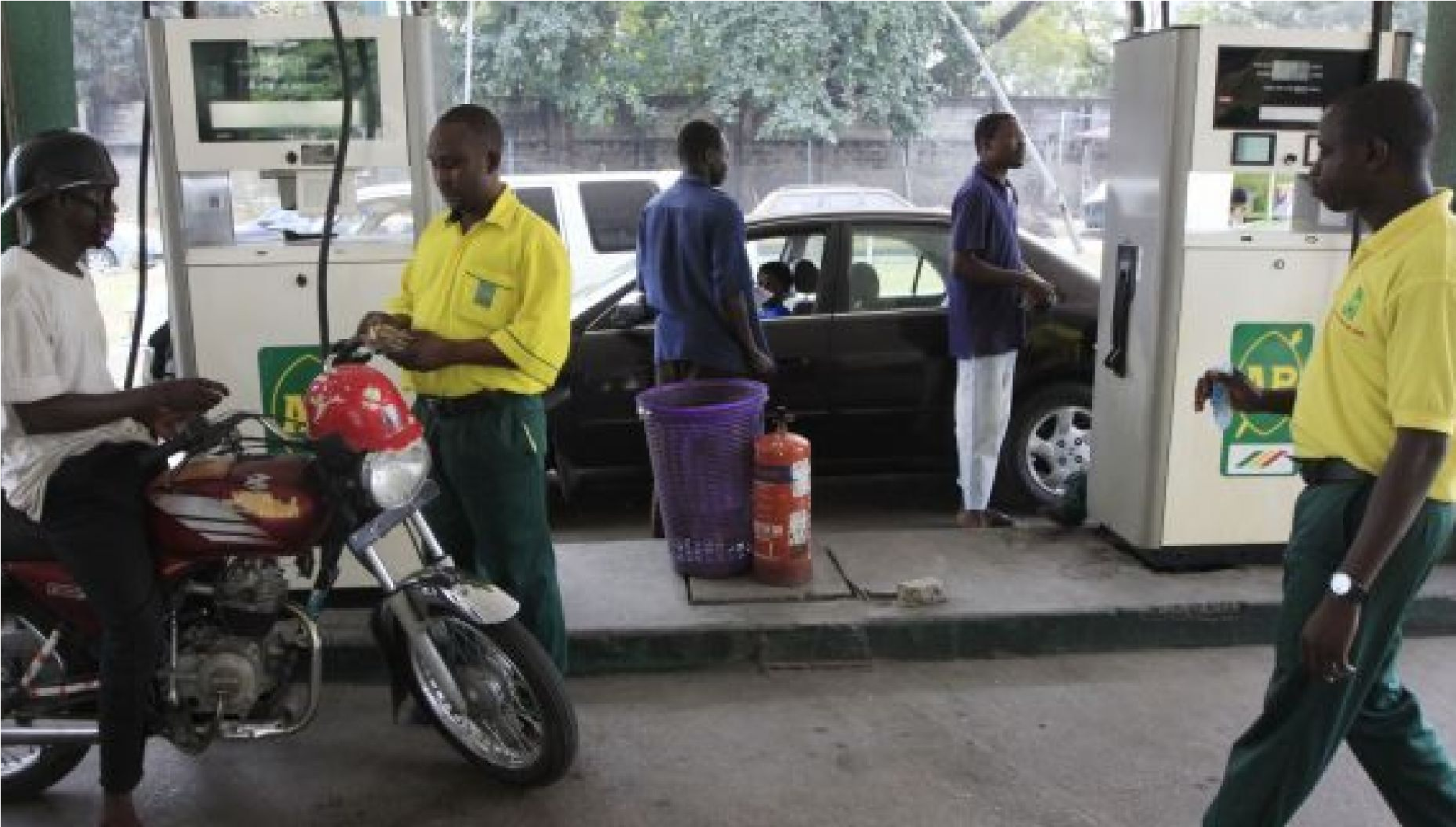
The Independent Petroleum Marketers Association of Nigeria (IPMAN) has debunked the alleged plan to increase the pump price of Premium Motor Spirit (PMS), commonly known as petrol, to N700 per liter in the country’s north and above N600 in the south.

Alhaji Dele Tajudeen, the Chairman of IPMAN Southwest Zone, clarified this matter in an interview with the News Agency of Nigeria (NAN) in Ibadan on Friday.

The projected price increase is based on the realities of the floated FX market that have resulted in a significant depreciation of the naira against the dollar. The naira has fallen up to N769/$1 in the Investor and Exporter window, fueling the belief that given the removal of fuel subsidy, the next batch of imported PMS will be based on current exchange rates.

But Tajudeen urged Nigerians to disregard such speculations and advised against participating in panic buying. He said that the current selling price of petrol would not exceed its present rate.

Furthermore, he commended President Bola Tinubu for eliminating the subsidy on petrol, stating that it was a long-overdue decision.

“Even in PIA bill, it has been clearly stated that the subsidy must be removed.
”So, I want to commend him for removing the subsidy and I want to say that we are in support totally. This is because the subsidy was a scam,” he said.

According to him, the Nigerian National Petroleum Company Limited (NNPCL) retail outlet has a market advantage that will sustain the current market prices. He said the masses should relax because the fuel prices will not rise up to N700 per liter.

“I want to disabuse the mind of the people that they should not panic about it, there is no cause for alarm, we are in control and there is nothing like that.

“So, people should be rest assured that there is no way they can buy petrol more than the price it is being sold now.

“If we look at the price from NNPC retail limited, which is an integral part of NNPC limited, they have more advantages than independent marketers and major marketers.

”So, it was the retail price that they announced they had never given a specific price to the independent marketers.

“However, I have read what somebody put into the paper, it is just speculation it is not a reality. Nothing like that I want to assure the masses.

“There is no how the price can go to N700 as we speak, because even if the FX is N700 or N800 that has not nothing to take the price of petroleum from N500 to N700,” Tajudeen said.

A coalition of Civil Society Organizations (CSOs) has vowed to resist further increment in pump prices, which upon the removal of fuel subsidy last month, jumped from N185 to as high as N557 per liter. The increment has been described as adding more nails to the coffin of suffering Nigerians.

Tajudeen said the deregulation has resulted in different pump prices, which is now determined by the cost of transportation of the products to different locations.

”If you are moving products within Lagos the price may not be more than N300,000 but if you are moving up to Ibadan or there about it could be as much as N500,000.

”And if you are going to Ilorin, it could be as high as N700,000 that would account for differential in prices.

“I want to say with all sense of authority that as of today within Lagos metropolis nobody should sell more than N515 to N520 per liter.

”Though NNPC has given us the price but the reality of it is that what we buy from the market; because NNPC limited is not the only source for our product, we get from private depots.

“So, whatever we buy is what we put our own margin and sell.

”But as of today, the highest you can get anywhere should be around N550; Lagos N510 per liter; Ogun State between N500 and N520,” Tajudeen said.

How Nations Advance, Using Strategic Subsidies To Build and Rebuild Economies

2

My social media handles are classrooms, and I like to engage as the questions come. Question: Why do you want the Nigerian government to subsidize or keep subsidizing postal service, petrol and education?

My Response: Let me begin by drawing cases from the United States (I can use any developed economy). I have lived in a red state (Alabama), blue states (MD and MA) and swing state (PA), and I have seen how cities advance. In the ranking of the top 20 American best universities, more than 80% are in blue democratic cities. Also, the largest American cities are also majorly blue cities. More so, in per capita income ranking, blue states will pick the top five while the red ones will pick the bottomn five. So, there is a statistical validation that blue states outperform economically.

So, what do blue American cities and states do? They build economic platforms faster, larger and better than their red counterparts. They have the best school systems, best transport networks, etc. With those infrastructural platforms, communities and opportunities emerge. 

Education: there will not be a generation of knowledge workers if Nigeria does not subsidize education. For all the attacks on California, with its world-class university ecosystem, innovation happens therein and everyone comes there to build the next phase of technology. Nigeria’s most important infrastructure is education. More than 70% of people reading this will not have gone to universities in Nigeria without that subsidy. In FUTO, I won multiple university scholar awards and I experienced the beauty of an amazing Nigeria, helping my education through broad subsidies and scholarships.  For me, Nigeria worked for me. Education subsidy is a catalytic infrastructure for a nation; do not remove it.

Postal service: Nigeria needs to link the urban and rural areas so that commerce can happen at scale. The postal system has a role. In the US, for the last 20 years, the US postal service has recorded losses and they’re fine with it.  If Nigeria fixes corruption, we can build a functioning NIPOST that will lose $100 million but can power a new market of $50 billion which we can tax to make $1 billion. 

Fuel: I have already explained my point here. You can add that as Europe subsidies renewable energy, and EV cars, they’re using subsidies to rebuild their economies. Nigeria’s problem is not subsidies but CORRUPTION in our subsidy execution. We must kill corruption to advance as a nation.

My Conclusion: Nigeria needs to do strategic subsidies, effectively and efficiently. We cannot be the “red states” of Africa in a time when Rwanda and South Africa are building modern platforms for their futures. America created one a few decades ago when it decided to subsidize ecommerce. Yes, when US senators voted to not burden online stores with collecting sales taxes, etc, it knew many Americans would move online, leaving physical stores which must continue to collect taxes, to fade.

That dishwasher is $1,000 and sales tax is 7%. If you buy on Amazon, you pay only $1,000 while if you go to a physical store, you pay $1,070. With free shipping, most moved online. Then, when the US government felt that those online stores had matured, they removed those subsidies, and now all stores collect the taxes! If Amazon had been left to battle the free market, it would not have succeeded! It got a lot of help along with many online stores because the US wanted to create a new sector! 

Nigeria needs to create new sectors, and subsidies are vehicles which nations use to make such happen. Ford, Tesla, GM, etc are getting huge funds as the US races to build modern infrastructure for the electric vehicle future. Intel, AMD, ADI, etc are getting massive funds from the government to rebuild their semiconductor competitiveness.


Nigeria’s Problem is Not Fuel Subsidies

NCC Empowers Telcos to Recycle SIMs Inactive for Six Months in Nigeria

0

The Nigerian Communications Commission (NCC) has announced that telecommunications companies (Telcos) are authorized to deactivate inactive subscribers from their networks after six months of inactivity.

This is a key provision outlined in the newly approved guidelines for Telcos by the NCC, which will be implemented soon.

The new NCC guidelines, titled, ‘Draft Quality of Service Business Rules’, stipulate the minimum quality and standards of service, associated measurements, and key performance indicators for measuring the quality of service.

Per the guidelines, if a subscriber remains inactive for an additional six months, there is a possibility of losing their number, unless there is a network-related issue preventing the activation of the Registered Glove Enclave (RGE).

“A subscriber’s line may be deactivated if it has not been used, within six months, for a Revenue Generating Event (RGE), and if the situation persists for another six months, the subscriber may lose their number, except for a network-related fault inhibiting an RGE,” the guidelines stipulated.

Recycling of inactive phone numbers has remained a big subject in Nigeria, following the arrest of one Anthony Okolie, a Delta State-based trader, by the Department of State Services (DSS), for using a SIM previously owned by Hanan Buhari, the president’s daughter.

Based on the new guidelines, the NCC said that telcos have the authority to reassign dormant SIM cards without recourse to the previous owners, as long as the inactivity falls within the stipulated period of six months.

For subscribers who wish to recover their lines after it might have been recycled, the commission said they must provide “proof of good reason for absence and are at liberty to request for line parking.”

In the guidelines, the NCC announced other regulations, including alert etiquette.

The commission stated that during credit alert notifications while on a call, telecommunications companies (telcos) should provide “a single short-beep” to the call initiator two minutes before the call is set to end, and another beep at 30 seconds before termination.

The NCC also said that if a call is unable to last for up to 30 seconds, a low credit announcement should be played when the call is initiated.

These new guidelines have been introduced per Section 57 of the NCC Act, allowing stakeholders to provide their input on the policy.

Additionally, the NCC directed in the guidelines, that telcos ensure that customers are attended to within 30 minutes upon their arrival at any of the telcos’ service centers nationwide.

“For customer care centers, waiting time to be physically attended to by relevant staff at customer care centers is 30 minutes. The licensee shall provide means of measuring the waiting time, starting from the time of arrival at the premises,” the guideline said.

The commission also said telcos must ensure that customers are hastily attended to when they call a helpline or visit their providers’ offices.

“Lines should not be more than three times; maximum number of rings before a call is answered by either an IVR machine or a live agent should not be more than five; and where a customer decides to speak to a live agent, the maximum duration allowable on the queue/IVR should be five minutes before answer,” the NCC said.

The regulator added: “In exceptional cases where a live agent may be unavailable within five minutes to answer the call, a customer should be given an option to hang up to be called back within a maximum time of 30 minutes. Customer care lines that can be accessible through 21 free access numbers and if one number, then it should accommodate multiple other network calls at the same time.”

South Korean Lawmakers Pass Crypto Bill to Protect Investors, Vitalik Concerned on SEC’s Regulations

0

South Korean lawmakers have passed a bill that aims to protect investors in the cryptocurrency market. The bill, which was approved by the National Assembly on Friday, requires crypto exchanges, asset managers, and custodians to register with the Financial Services Commission (FSC) and comply with anti-money laundering and consumer protection rules. The bill also imposes a 20% tax on crypto income above 2.5 million won ($2,100) per year.

The South Korean National Assembly opines that the bill will provide a legal framework for the regulation of cryptocurrencies and digital assets in the country. The bill, which was approved by a unanimous vote on June 29, 2023, aims to protect investors from fraud, money laundering, and other risks associated with the crypto industry.

The bill defines cryptocurrencies as “digital assets that can be traded or transferred electronically using cryptographic methods”. It also requires crypto-related businesses, such as exchanges, custodians, and brokers, to register with the Financial Services Commission (FSC) and comply with anti-money laundering (AML) and know-your-customer (KYC) rules. Additionally, the bill imposes a 20% tax on income from crypto transactions exceeding 2.5 million won ($2,200) per year.

The passage of the bill is seen as a positive step for the development of the crypto sector in South Korea, which is one of the largest markets for digital assets in the world. According to a report by Chainalysis, South Korea ranked third in terms of crypto adoption among 154 countries in 2022. The report also estimated that South Koreans traded over $106 billion worth of cryptocurrencies in 2022, accounting for 17% of the global market share.

The bill is expected to provide more clarity and certainty for both investors and businesses in the crypto space, as well as enhance the credibility and legitimacy of the industry. The bill will also help prevent illegal activities and protect consumers from scams and hacks that have plagued the crypto scene in recent years. For instance, in 2018, two major South Korean exchanges, Coinrail and Bithumb, were hacked and lost over $70 million worth of cryptocurrencies combined.

The bill will take effect in September 2023, after a three-month grace period for existing crypto businesses to comply with the new regulations. Those who fail to do so will face fines or imprisonment. The FSC will also issue detailed guidelines and standards for the implementation of the bill in the coming months.

The bill is widely welcomed by the crypto community in South Korea, as well as by international observers and experts. Many believe that the bill will set a precedent for other countries to follow suit and adopt a more progressive and supportive stance towards cryptocurrencies and digital assets.

In a different shift, Vitalik Buterin, the co-founder of Ethereum, has recently expressed his concern about the possible regulatory actions that the U.S. Securities and Exchange Commission (SEC) might take against some of the emerging blockchain platforms, such as Solana, Avalanche, and Polkadot.

In a podcast interview with Lex Fridman, Buterin said that he was worried that these platforms, which have been gaining popularity and market share in the decentralized finance (DeFi) and non-fungible token (NFT) sectors, might face the same fate as Ripple, which is currently embroiled in a lawsuit with the SEC over whether its XRP token is a security or not.

Buterin argued that these platforms, which he called “rollups on steroids”, are essentially centralized entities that have a lot of control over their networks, such as the ability to pause transactions, roll back blocks, or censor users. He said that these features might make them more vulnerable to regulatory scrutiny and intervention, especially in the U.S., where the SEC has been cracking down on crypto projects that it deems to be offering unregistered securities.

Buterin said that he hoped that these platforms would eventually decentralize more and adopt more transparent and democratic governance models, but he also acknowledged that this might be difficult to achieve in practice. He said that he was not trying to criticize or attack these platforms, but rather to warn them and their users of the potential risks they might face in the future.

He also said that he was not worried about Ethereum’s own status as a security, as he believed that Ethereum had sufficiently decentralized over time and had established itself as a public good that benefits the whole crypto ecosystem. He said that Ethereum’s upcoming transition to proof-of-stake (PoS) and Shanghai Upgrade would further enhance its scalability, security, and sustainability, and make it more competitive with other platforms.

Implications of Naira Devaluation on Crypto Adoption in Nigeria

0

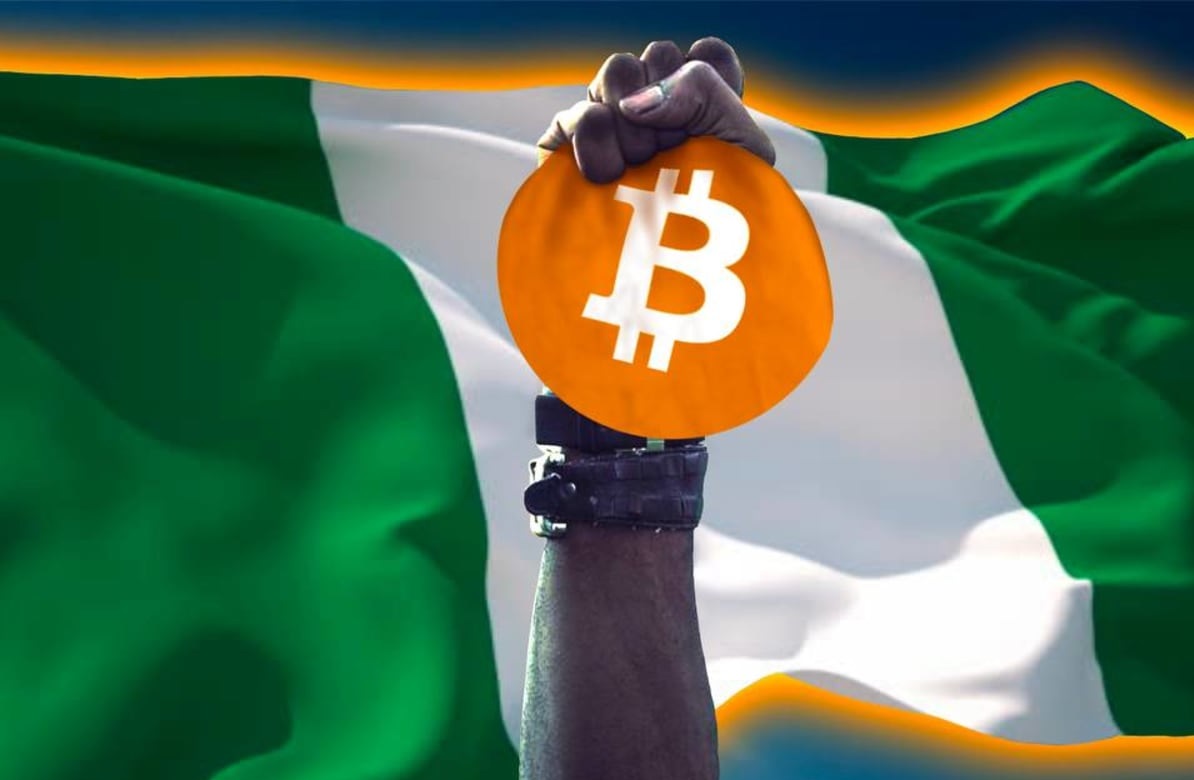
The Naira, the official currency of Nigeria, has been experiencing a rapid devaluation in recent years, reaching a record low of 570 naira per US dollar in November 2021 and currently exchanging for N765/$1. This has been driven by various factors, such as the COVID-19 pandemic, low oil prices, high inflation, and foreign exchange shortages. The devaluation of the naira has had significant implications for the Nigerian economy and society, affecting various sectors and aspects of life. One of the most notable impacts of the naira devaluation has been on the adoption of cryptocurrencies in Nigeria.

However, the recent devaluation of the Nigerian naira has sparked a renewed interest in cryptocurrency adoption among the citizens of Africa’s most populous nation, the naira has been under pressure for several years due to low oil prices, foreign exchange shortages, inflation and political instability, this move is intended to unify the multiple exchange rates that existed in the country and to ease the pressure on the external reserves.

However, the devaluation has had a negative impact on the purchasing power of Nigerians, who rely heavily on imported goods and services. Many people saw their savings and incomes eroded by the currency depreciation and the rising cost of living. As a result, some Nigerians are turning to cryptocurrencies as a hedge against inflation and a means of preserving their wealth.

Cryptocurrencies are digital assets that use cryptography to secure transactions and control the creation of new units. They operate on decentralized networks that are not controlled by any central authority, such as a government or a bank. Some of the most popular cryptocurrencies include Bitcoin, Ethereum, and Litecoin. Cryptocurrencies offer several advantages over traditional currencies, such as lower transaction fees, faster processing times, greater transparency, and enhanced privacy. However, they also pose some challenges, such as volatility, security risks, regulatory uncertainty, and limited acceptance.

Nigeria has been one of the leading countries in Africa and the world in terms of cryptocurrency adoption. According to a report by Chainalysis, a blockchain analysis company, Nigeria ranked third in the world in terms of cryptocurrency adoption in 2020, behind only Vietnam and India. The report estimated that Nigerians traded over $400 million worth of cryptocurrencies in 2020, up from $35 million in 2019. The report also found that Nigeria had the highest percentage of cryptocurrency users among its internet users, at 32%.

The devaluation of the naira has been one of the main drivers of cryptocurrency adoption in Nigeria. Many Nigerians have turned to cryptocurrencies as a hedge against inflation and currency depreciation, as well as a means of preserving their purchasing power and wealth. Cryptocurrencies have also enabled Nigerians to access global markets and opportunities, bypassing the restrictions and limitations imposed by the traditional financial system. For instance, cryptocurrencies have facilitated cross-border remittances, e-commerce transactions, peer-to-peer lending, crowdfunding, and investment opportunities.

However, the devaluation of the naira has also posed some challenges for cryptocurrency adoption in Nigeria. One of the challenges is the regulatory environment, which has been uncertain and hostile towards cryptocurrencies. In February 2021, the Central Bank of Nigeria (CBN) issued a circular prohibiting banks and other financial institutions from facilitating cryptocurrency transactions or providing services to cryptocurrency exchanges. The CBN cited concerns over money laundering, terrorism financing, fraud, and currency stability as reasons for the ban. The ban sparked outrage and criticism from cryptocurrency users and stakeholders, who argued that it was counterproductive and detrimental to innovation and financial inclusion.

Another challenge is the lack of infrastructure and awareness among Nigerians about cryptocurrencies. Despite the high level of cryptocurrency adoption in Nigeria, many Nigerians still lack access to reliable internet connectivity, electricity, smartphones, and digital literacy skills that are essential for using cryptocurrencies. Moreover, many Nigerians are still unaware or skeptical about cryptocurrencies, due to misinformation, myths, scams, and negative perceptions. Therefore, there is a need for more education and awareness campaigns to inform Nigerians about the benefits and risks of cryptocurrencies, as well as how to use them safely and responsibly.

The devaluation of the naira has had significant implications for cryptocurrency adoption in Nigeria. It has increased the demand and usage of cryptocurrencies among Nigerians who seek to protect their wealth and access global opportunities. However, it has also created some challenges for cryptocurrency adoption in Nigeria, such as regulatory uncertainty and lack of infrastructure and awareness. Therefore, there is a need for more dialogue and collaboration between the government, the private sector, and the civil society to create a conducive environment for cryptocurrency adoption in Nigeria.