DD
MM
YYYY

PAGES

DD
MM
YYYY

spot_img

PAGES

Home Blog Page 405

PunkStrategy Achieves ATM Market Capitalization of $150M Fueled By Flywheel Model

0

PunkStrategy ($PNKSTR), an automated trading protocol tied to CryptoPunks NFTs, recently achieved a new all-time high market capitalization of approximately $150 million, driven by its innovative “flywheel” mechanism that uses 10% transaction fees to buy floor-priced NFTs, relist them at 1.2x, and reinvest proceeds into token buybacks and burns.

This surge aligns with broader momentum in NFT Strategy tokens, where similar projects like BIRBSTR up 80% to $12M, PDYSTR up 60% to $11M, and APESTR up 30% to $8M are also pumping, fueled by OpenSea’s integration and a rewards pool worth 20 ETH for select tokens.

Launched in September 2025 by TokenWorks as an art project turned DeFi-NFT hybrid, $PNKSTR has collected hundreds of ETH in fees, acquired over 15 CryptoPunks, and burned portions of its supply, creating perpetual buy pressure and yield for holders.

In parallel, the NodeMonkes Bitcoin Ordinals collection—a 10,000-piece pixel art series inscribed on satoshis since early 2023—has seen renewed interest with a 40% floor price pump, coinciding with the launch of Node Strategy.

This project adapts the PunkStrategy model to Ordinals, attempting an automated flywheel for NodeMonkes despite Bitcoin’s lack of smart contracts, through an open auction that’s already 30% sold out and backed by NodeMonkes founder Rocktoshi.

While Ethereum’s programmability enables seamless automation for $PNKSTR, Ordinals adaptations face technical hurdles like manual processes or PSBT flags for decentralized trading, potentially limiting scalability but tapping into Bitcoin’s on-chain durability.

The surge in PunkStrategy ($PNKSTR) and related NFT Strategy tokens, alongside adaptations like Node Strategy for Bitcoin Ordinals, signals a broader evolution in how NFTs integrate with DeFi mechanics to enhance liquidity and value accrual.

This “flywheel” model—where trading fees fund NFT purchases, relists at a premium, and proceeds drive token buybacks and burns—creates self-reinforcing loops that tie tokenomics directly to underlying NFT markets, potentially stabilizing floors by absorbing flipper inventory and rewarding long-term holders through deflationary supply reductions.

For Ethereum-based projects like $PNKSTR, this has already locked up multiple CryptoPunks, reducing short-term selling pressure while exposing investors to NFT market flows without direct ownership, offering a speculative yet innovative alternative to pure holding.

On the Bitcoin side, Node Strategy’s attempt to replicate this for NodeMonkes Ordinals introduces cross-chain experimentation, potentially expanding Ordinals’ utility beyond static inscriptions by leveraging Bitcoin’s scarcity for durable, on-chain treasuries.

However, Bitcoin’s lack of native smart contracts imposes hurdles like reliance on manual auctions or partial signatures (PSBTs), limiting automation and scalability compared to Ethereum’s seamless execution—this could foster hybrid liquidity tools but risks slower adoption or centralization vulnerabilities.

Overall, these mechanics could catalyze a “NFT-Fi” resurgence, blending collectibles with yield generation and drawing institutional interest as case studies in hybrid assets, though sustainability hinges on sustained NFT demand.

Key risks include extreme volatility from NFT market downturns, whale dumps straining liquidity, and self-referential “left foot stepping on right foot” dynamics that may falter without external inflows.

Protocol exploits, as seen in related NFTStrategy bugs though not directly impacting $PNKSTR, underscore smart contract vulnerabilities, while Ordinals face Bitcoin purist backlash over network bloat and higher fees.

Tax implications also differ: Ethereum NFT strategies may align with DeFi norms, but Ordinals are often treated as collectibles at a 28% capital gains rate, complicating cross-chain plays.

Market effects point to increased trading volumes and floor price support, potentially sparking domino effects for blue-chip collections and inspiring forks across ecosystems—evidenced by proposals for platforms like OpenSea to seed these tokens for mutual fee revenue growth.

If successful, this could redefine NFTs as active economic engines rather than passive art, accelerating 2025’s resurgent liquidity trends, but failure might leave treasuries holding illiquid assets, highlighting the speculative gamble.
Toncoin Price Prediction Weak, Shiba Inu Stays Range-Bound, BlockDAG Presale Heads for $600M Mark

0

Toncoin is showing weakness as many price updates point to rebounds that rarely sustain momentum. Shiba Inu (SHIB) also looks stuck in narrow ranges, with price moves still linked to whale actions and burn activity rather than steady ecosystem expansion.

Telling a different story is BlockDAG (BDAG). The CEO, Antony Turner, a seasoned fintech leader, has mapped out a structured growth plan. His steps include the Awakening Testnet and airdrop, the X1 mining app with over 3 million users, and Dashboard V4 that adds demo trading. Each milestone is designed to build trust and scale. Ownership rests with its 312,000+ community members. With Turner steering growth and open leadership, BlockDAG stands out among the top crypto coins, with clear goals for Tier 1 listings and lasting expansion.

BlockDAG Presale Rockets to Nearly $420M

Who runs BlockDAG? The CEO is Antony Turner, and under his guidance, the presale has become one of the most structured offerings in 2025. Milestones like the Awakening Testnet, the X1 mobile mining app with 3M+ users, and Dashboard V4 with demo exchange trading have shown credibility and real use cases. These moves explain how BlockDAG grew from low-key beginnings to raising nearly  $420M and heading toward $600M.

At a batch 30 price of $0.0015 per BDAG for a limited time, over 26.5 billion coins have been sold. Projections point to a potential 3,025% ROI if the coin lists at $0.05. This clear financial model balances low entry cost with strong growth potential, making it a standout among top crypto coins.

Ownership is community-driven, with 312K+ wallets sharing control. Turner sets the plan, but holders make up the foundation. A 25% referral program and 20K+ X-series miners shipped worldwide strengthen adoption. These details prove BlockDAG is not only well-funded but also broadly distributed and active.

Looking forward, Turner’s next steps include Tier 1 exchange listings and expansion into DeFi, DePIN, and AI utilities. With technical rollouts and market growth aligned, BlockDAG is not just competing with other best projects; it is aiming for lasting dominance.

Shiba Inu Relies on Burn Rates Once Again

Shiba Inu (SHIB) is trading near $0.00001175, caught between strong support and resistance zones. Analysts note that holding above $0.00001100–$0.00001200 could lead to a short-term 15–25% push toward $0.000018–$0.000020. Failure to break resistance around $0.000014–$0.000015 could send it back near $0.000011.

Whale movements and burn rates remain the main drivers. However, their impact often falls short of altering supply in the long run. Forecasts suggest SHIB may stay between $0.00001155 and $0.00001407 throughout 2025. This outlook supports slow gains instead of sudden rallies. Hopes for Shibarium’s growth and ecosystem adoption still exist, but traction has been slower than expected.

For now, SHIB continues to act like a meme-driven asset. Its sharp reactions to sentiment make support and resistance levels critical to watch in the coming months.

Toncoin Still Lacks Clear Momentum

Toncoin is trading close to $2.67 after a 20% drop in volume, creating caution in the short term. If support at $2.75 holds, a bounce toward $3.00 and $3.40 is possible. Some platforms even suggest a climb to $3.41 soon, which would mark about a 25% rise from current levels.

If weakness continues, the price could slip below $2.60, highlighting the importance of nearby support levels. Toncoin has also seen institutional activity, including AlphaTON’s $30M purchase and future plans for $100M. Robinhood and Gemini listings add further backing.

Year-end predictions remain split. Some models keep TON between $2.90 and $3.20 for 2025, while others see highs up to $8 if adoption scales. Factors like Telegram integration, whale activity, and sentiment will play large roles in shaping performance.

Final Thoughts on Top Crypto Coins in 2025

Current Toncoin updates point to limited growth unless volume returns, while SHIB trades sideways with burn rates and whale actions as its key triggers. Both show activity but remain limited without stronger adoption.

BlockDAG, under Antony Turner, is charting another path. With almost $420M raised, 26.5B+ coins sold, and 3M+ X1 app users, every milestone has added value. From the Awakening Testnet to Dashboard V4 and global miner sales, its progress has been consistent and measurable.

This steady growth, backed by 312K+ holders, referral programs, and clear Tier 1 listing goals, places BlockDAG among the top crypto coins of 2025. While others stall, BlockDAG is proving that structured planning and strong adoption can drive long-term dominance.


Presale: https://purchase.blockdag.network

Website: https://blockdag.network

Telegram: https://t.me/blockDAGnetworkOfficial

Discord: https://discord.gg/Q7BxghMVyu

ETH Faces Resistance, TRX Sees Growth, While BlockDAG Awakening Testnet Positions It as the Best Crypto to Buy Right Now

0

Why settle for networks that lag in usability? Ethereum is still moving slowly toward full account abstraction, while Tron continues to patch its systems without changing the core user experience. Both are often described as the best crypto to buy right now, but where is the true leap forward that actually makes Web3 simpler? BlockDAG delivers that answer.

The Awakening testnet has gone live with EIP-4337 account abstraction already in place, bringing gas sponsorships, batching, and social recovery to life for real users. Ethereum’s updates remain gradual, while BlockDAG (BDAG) is already live with the features others only promise. Tron’s transaction growth looks solid, but usability still lags. That contrast makes BlockDAG a far stronger candidate when analyzing the best crypto to buy right now.

BlockDAG Awakening Puts Smart Accounts in Action

BlockDAG has officially launched its Awakening testnet with full EIP-4337 account abstraction. This means users receive gas sponsorships to process transactions without upfront fees, batching to combine multiple actions into simple, low-cost steps, and social recovery, so lost keys don’t mean lost funds. These upgrades transform the user experience from complex and intimidating to friendly and practical, positioning BlockDAG as the best crypto to buy right now for those seeking real utility.

While Ethereum rolls out abstraction features step by step, BlockDAG delivered them in one bold move. That difference matters. Crypto adoption depends on usability as much as speed or scale, and BlockDAG has combined all three. For developers, the Awakening also provides a new IDE with runtime upgradability. Still, it is the smart account features that highlight how far ahead this project is compared to the competition.

Backing these upgrades is a presale that has already become one of the largest in 2025. BlockDAG has raised over $420 million, sold more than 26.5 billion coins, and built a community of 312,000 holders. Around 3 million people use the X1 mining app daily, and 20,000 physical miners have been shipped.

At $0.0015 per coin, with projections up to $0.05, early buyers are looking at a potential ROI of 3,025%. When measured against other projects often listed among the best crypto to buy right now, BlockDAG combines innovation, adoption, and profitability in a way few can match.

Ethereum Struggles Under Liquidations and Delays

The latest Ethereum (ETH) price update indicates the coin is struggling to hold above $4,000, currently trading between $3,880 and $3,970. Heavy liquidations, over $1.7 billion across crypto, with ETH accounting for a large portion, have applied pressure. A $22 billion options expiry looms, while macroeconomic conditions, including a stronger dollar and the potential for a U.S. government shutdown, weigh on sentiment. Support levels are currently near $3,800–$4,000, but resistance at $4,200–$4,500 has yet to be breached.

On the technical side, Ethereum is preparing its Pectra upgrade, with EIP-7251 and EIP-7702 expected to be implemented by mid-2025. Still, account abstraction remains gradual compared to projects like BlockDAG, where it is already active.

Tron Expands Transfers and Strengthens Its DeFi Base

The Tron (TRX) price forecast indicates steady growth, driven by rising on-chain activity. Tron has recently surpassed Ethereum in daily USDT transfers, moving billions in volume at a fraction of the fees. Proposal 789, which reduced smart contract energy costs by 60%, has also improved dApp affordability and expanded DeFi participation.

Tron’s network scale is undeniable: it boasts over 332 million user accounts, 11 billion transactions processed, and a total value of $28 billion locked. Analysts forecast short-term targets of $0.36 to $0.37, suggesting room for growth. Tron is also reinforcing its presence through rebranding, expanding its treasury, and publishing research that highlights its dominance in stablecoin transfers.

These achievements ensure that TRX remains part of the conversation about the best crypto to buy right now, particularly for those prioritizing scale and stablecoin activity.

BlockDAG Surpasses Ethereum And Tron

Ethereum’s latest price update shows it hovering under $4,000, with resistance unbroken and upgrades progressing slowly. Tron’s forecast indicates steady transaction growth and short-term upside, as USDT transfers continue to increase. Both remain important contenders in the best crypto to buy right now, but their strategies reveal the gap between incremental improvements and transformative delivery.

That is where BlockDAG makes its mark. With the Awakening testnet live and account abstraction already in use, it provides gas-free transactions, batching, and social recovery today, not years from now. Combined with a presale that has raised over $420 million and an ROI potential exceeding 3,000%, BlockDAG is showing why it stands as the best crypto to buy right now, setting a new benchmark for usability and adoption in 2025.

Presale: https://purchase.blockdag.network

Website: https://blockdag.network

Telegram: https://t.me/blockDAGnetworkOfficial

Discord: https://discord.gg/Q7BxghMVyu

How is the UAE becoming a strategic choice for new startups?

0

The United Arab Emirates (UAE) is rewriting the playbook for startup success. In just a few decades, it has transformed from a desert economy into a dynamic center for global business and innovation. Today, founders from all over the world are choosing the UAE as their launchpad—not only to tap into the regional market but also to springboard into the wider world. Whether you’re a tech innovator, an ecommerce dreamer, or an entrepreneur seeking a flexible, growth-friendly ecosystem, the UAE offers unique advantages that are hard to find elsewhere.

Why are so many startups moving here? It’s all about strategic positioning, a supportive government, a welcoming regulatory climate, and practical benefits like favorable taxes and robust funding access. Let’s get practical and walk through the real reasons why the UAE has become such a strategic choice for new startups—and how you can make the most of it.

The UAE as a hub for startups targeting international markets

It’s easy to talk about location, but the UAE truly sits at a global crossroads. Dubai and Abu Dhabi, in particular, are positioned between Europe, Asia, and Africa. This means your business sits within an eight-hour flight of two-thirds of the world’s population—think millions of potential customers, partners, and investors.

Startups in the UAE benefit from logistics that are rarely matched. Ultra-modern airports, ports, and road connections make international trade smooth and rapid. This is one reason tech startups prefer setting up businesses in the UAE for growth and development: they know they can reach markets in just about every direction, fast.

The global focus doesn’t stop with geography—the workforce here is equally diverse. With a talent pool from around the world, you get access to varied skills and perspectives. There’s also a cluster effect: if you’re in fintech, climate tech, digital assets, or other high-growth verticals, you’ll find clusters like Dubai Internet City and Abu Dhabi Global Market teeming with startups, accelerators, and investors.

Tax benefits: How the UAE provides tax incentives for new businesses

Let’s talk numbers. One reason the UAE stands out for startups is its uniquely favorable tax regime:

  • Zero personal income tax: You and your employees can keep your entire salary. This naturally attracts skilled talent.
  • Low corporate tax: Only profits above AED 375,000 (about USD 100,000) are taxed at a flat 9%. For many smaller startups, there is no corporate tax liability at all.
  • Free Zones mean 0% corporate tax: Start your business in one of the many Free Zones (like Dubai Internet City, Abu Dhabi Global Market, or DMCC), and you may qualify for 0% corporate tax, subject to certain conditions. You’ll also get 100% foreign ownership and no restrictions on repatriating profits.
  • No tax on capital gains or dividends: Sell your shares, receive dividends—there’s simply no tax at the federal level, making the UAE a great hub for holding companies and scaling operations.
  • No withholding taxes: Sending profits or dividends abroad? The UAE doesn’t tax outbound payments, which keeps things simple and attractive for international founders.

This tax structure isn’t just theoretical. It’s a real, practical advantage that means more profits can be reinvested in your business—and that’s a huge boost, especially in your early growth stages.

UAE company licensing and registration process: Steps to get your startup up and running quickly

Getting your company legally registered in the UAE is designed to be straightforward—gone are the days of heavy bureaucracy or months-long waits. Here’s how the typical process unfolds for startups:

  1. Decide on a legal structure: Will you register as a sole establishment, LLC, or Free Zone company? For most foreign startups, Free Zones are the top choice due to their speed, 100% ownership, and sector-focused support.
  2. Choose your business activity and location: There are dozens of Free Zones, each specializing in different sectors—tech, media, fintech, logistics, and more. Picking the right fit is important: for example, tech startups might consider Dubai Internet City, while fintech firms may prefer Abu Dhabi Global Market.
  3. Reserve your company name and apply for initial approval: Some activities require special approvals, but for most generic businesses, this is a quick online step.
  4. Prepare legal documents: Submit standard documents such as passport copies, a business plan (for certain activities), and proof of address. Many Free Zones have online portals to upload these directly.
  5. Sign incorporation documents: You’ll sign your Memorandum and Articles of Association, often digitally or in-person at the registration authority’s office.
  6. Get your trade license: Once the documents are approved, you receive your trade license. In many Free Zones, you can get licensed within a few days.
  7. Open a company bank account: UAE banks cater to startups but may require an in-person meeting and business plan. The process has become increasingly efficient, especially for Free Zone companies.
  8. Hire and sponsor employees: Many licenses allow you to sponsor your own residency (and your family) as well as employees via straightforward visa processes.
  9. Set up your office or flexi-desk: Depending on your business activity, requirements range from a simple flexi-desk to fully fitted offices. Many Free Zones provide co-working spaces and affordable starter packages.

The government continues to streamline these steps, rolling out new portals and simplified bundles for startups, further lowering the barrier to entry.

How the UAE is helping startups expand into international markets

The UAE isn’t just a great place to start—it’s built for scaling. Here’s how it actively supports international expansion:

  • World-class infrastructure: Fast internet, top logistics, and direct air links to Europe, Asia, and Africa allow you to serve customers anywhere seamlessly.
  • Funding opportunities: VC funds, angel investors, government grants, and programs like the Dubai Future District Fund or Abu Dhabi Investment Office give startups easier access to growth capital.
  • Global networking events: From GITEX Global (the region’s largest tech show) to FinTech Abu Dhabi, you’ll find frequent events to connect with global partners and investors.
  • Flexible visas: The Golden Visa and Green Visa programs offer long-term residency for entrepreneurs and talented professionals, making it easier to build diverse, international teams.
  • Strong intellectual property protection: The UAE’s legal system protects trademarks, patents, and IP, making it a safer base for innovative startups.
  • Government-backed accelerators and incubators: Programs like Dubai Future Accelerators, Hub71 (in Abu Dhabi), and multiple Free Zone incubators provide mentorship, market access, and investor introductions.

Key business strategies for UAE startups

Want to maximize your chances of success? Here are some actionable recommendations for new startups in the UAE:

  • Stay flexible: The business environment moves quickly; be ready to adapt your model and offerings as market demands shift.
  • Leverage innovation: Explore partnerships, experiments, and R&D in emerging sectors like AI, blockchain, or sustainable tech. The government encourages bold ideas.
  • Build a robust network: Use local events, co-working hubs, and accelerators to connect with potential co-founders, customers, and funders.
  • Understand cultural nuances: The UAE is cosmopolitan but valuing local culture and building trust with Emirati and expat partners alike is key.
  • Follow local regulations: Ensure compliance—but don’t get overwhelmed. The licensing and compliance environment is designed to help (not hinder) startups, with plenty of advisors ready to assist.
  • Use digital marketing: Social media and influencer marketing are highly effective in the UAE’s connected, mobile-first market.

Conclusions and recommendations for startups in the UAE

The UAE’s rise as a global startup hotspot isn’t accidental. It’s anchored in thoughtful policy, a welcoming regulatory regime, unmatched international connectivity, and a relentless drive for innovation. If you’re aiming to turn a big idea into a scalable business, the UAE is built to make that happen—whether you want to access regional GCC markets, go global, or simply build in a safe, rewarding environment.

tekedia.com-20251002.txt
You may be offline or with limited connectivity. Try downloading instead.

Berkshire Hathaway Strikes $9.7bn Deal for OxyChem, Extending Buffett’s Energy and Chemicals Play

0

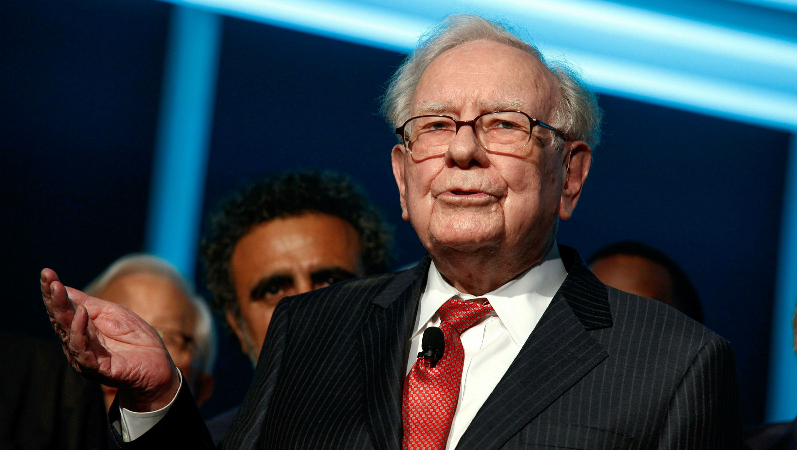
Warren Buffett’s Berkshire Hathaway on Thursday announced a $9.7 billion cash deal to buy Occidental Petroleum’s petrochemical subsidiary, OxyChem, marking its largest acquisition since 2022, when it paid $11.6 billion for insurer Alleghany.

The transaction comes as Berkshire sits on a near-record $344 billion in cash, underscoring Buffett’s strategy of deploying capital into large, established businesses with steady returns.

Occidental shares fell about 6 percent after the announcement, reflecting market unease over the sale of a profitable unit. But the deal gives Occidental the opportunity to strengthen its finances, with CEO Vicki Hollub confirming $6.5 billion of the proceeds will be directed toward debt repayment — a critical move following the heavy leverage the company took on during its $55 billion purchase of Anadarko Petroleum in 2019.

“The problem has been getting our debt down faster, so this resolves the one outstanding issue that I think will now unlock our stock and allow shareholders to feel more comfortable, hopefully, to add to their positions and others to come in,” Hollub told CNBC’s Squawk Box. “So now we’re going to be able to start our share repurchase program again. … This is the last step that we needed in our major transformation that we started 10 years ago.”

Buffett, now 95 and stepping down as CEO at the end of the year, has built Berkshire’s reputation on acquiring what he calls “forever assets.” In chemicals, this marks a return to familiar territory — the conglomerate paid around $10 billion in 2011 for Lubrizol, another specialty chemicals producer. Greg Abel, Berkshire’s vice chairman of non-insurance operations and Buffett’s successor from 2026, called OxyChem a natural fit.

“We look forward to welcoming OxyChem as an operating subsidiary within Berkshire,” Abel said, adding that Hollub’s decision to use proceeds to pay down debt demonstrates Occidental’s “commitment to long-term financial stability.”

The deal is expected to close in the fourth quarter. The Wall Street Journal first reported on the transaction earlier this week.

Berkshire’s relationship with Occidental dates back to 2019, when Buffett provided $10 billion in financing to help Occidental secure Anadarko. In exchange, Berkshire received preferred shares paying an 8 percent dividend, along with warrants to buy common stock. Hollub said Occidental intends to start redeeming Berkshire’s preferred shares in 2029 as it grows cash reserves, but until then, the dividend payments remain a reliable stream for Berkshire.

For Berkshire, the OxyChem deal highlights its evolving energy strategy compared with its other cornerstone holdings. While its utility arm, Berkshire Hathaway Energy, focuses on renewables and long-term infrastructure, and BNSF Railway provides steady transport returns, OxyChem fits into a different part of the industrial cycle — one tied to chemicals essential for water treatment, healthcare, and manufacturing. It also complements Berkshire’s 28.2 percent stake in Occidental, deepening exposure to the energy sector without taking direct control of the oil business, something Buffett has said he does not intend to do.

By contrast, Berkshire’s capital allocation in the past decade has also leaned heavily into insurance, railroads, and Apple — its single largest equity stake. The OxyChem acquisition reflects Buffett’s long-held preference for businesses that generate strong cash flows regardless of economic cycles, a pattern that investors expect Abel will continue after Buffett’s departure.

Occidental, meanwhile, views the divestiture as a long-awaited reset. The debt strain from Anadarko has loomed over the company for years, delaying buybacks and weighing on its stock. Hollub framed the OxyChem sale as the “last step” in a decade-long transformation, signaling to investors that the company is prepared to return cash to shareholders.

The deal, then, is as much about Berkshire’s future as Occidental’s. Buffett, who first stepped into Occidental during one of its most consequential deals in 2019, sees this as a parting move that underscores his belief in the durability of the U.S. energy and chemicals business. It offers a fresh chance for Occidental to regain footing with investors after years of balance-sheet pressure.