DD
MM
YYYY

PAGES

DD
MM
YYYY

spot_img

PAGES

Home Blog Page 4051

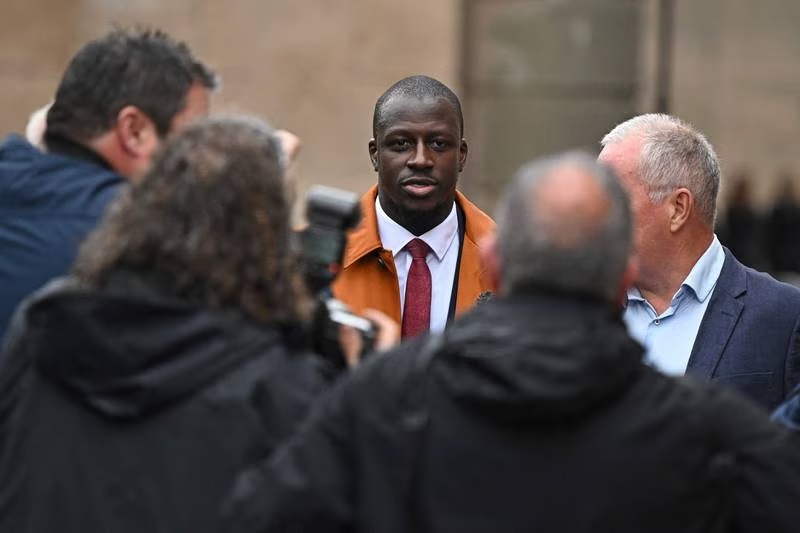
Benjamin Mendy; Punishment for False Rape Accusation

1

As the story of the non-guilty verdict of Benjamin Mendy fills the air today, down here in Nigeria, a Magistrate Court sitting in Kaura, Nasarawa state also today found one Josiah Moses not guilty of rape allegations he was accused of in 2019 after he had spent about four years in prison before he was found not guilty and released today.

Benjamin Mendy, the former Manchester City football star was in October 2022 accused of raping a 24-year-old woman, similarly, a 29 years old woman also alleged that the football star molested and attempted to rape her two years earlier. He was found innocent of the rape and the attempted rape allegations and was released today after months of being behind bars.

Well, Benjamin Mendy and Josiah Moses who were both found not guilty and released today were even fortunate enough to not have lost their lives from the ordeal, unlike one late Izu who could not take the framing and accusations and was forced to take his life in 2020. The story of Izu is always evergreen in my memory, a budding fashion designer in his early 20s. His name was added to the list of rapists that was circulated on Twitter. He reached out to the compilers of the list to clear his name, his accuser confirmed that Izu never raped or attempted to rape her but she won’t take his name off the list of rapists. Izu could not take it anymore and he had to commit suicide to end it all.

Understandably, it is a societal thing that when it involves rape everyone gets sentimental and emotional and sides with the accuser or the presumed victim while the accused person loses the benefit of doubt or the presumption of innocence as provided by the Constitution. Immediately you are accused of rape, there is the likelihood that everyone, including the investigators and prosecutors, even your family and friends will believe your accuser over you, even when you are framed.

As a lawyer, I cannot count how many persons I have encountered who are languishing in prison detention for false rape accusations. Some are still in prison because they are indigent and cannot afford a lawyer to help them out, in fact, Josiah Moses was not able to afford a lawyer, he was represented pro bono. Just imagine if our office had not come along to represent him free of charge he wouldn’t have been out yet.

People like the late Izu have lost their lives by being falsely accused of rape, people like Benjamin Mendy will forever have their lives and careers ruined, and people like Josiah Moses suffered and lost a whole four years of his life; all these incidents and many more poses the question, whether there is a punishment for false rape accusers, if there is, is it commensurate or stringent enough to deter mischief makers from falsely accusing persons of rape?

As the punishment for rape in most jurisdictions of the world is a life sentence, nobody cares if you are framed or not, if you are not able to prove that you didn’t do it you will be jailed for life for something that you didn’t do, the same way should the punishment for false accusation of rape attract a life jail term but no, that is not the case; in the UK the accusers of Benjamin Mendy is likely going to pay just £2000 as a fine and or some months in jail and that will be it while back home in Nigeria, there is no provision for any punishment not even monetary fine against the false accusers of Josiah Moses. The worst he can do is to seek monetary compensation from the state and not from his accuser since it is the state that prosecuted him.

Nigerian laws should be amended to provide punishment for false rape accusers, not just some punishment but a stringent one. Lying under oath to incriminate a person itself is perjury which is a crime punishable with at least 14 years jail term as provided in S. 118 of the criminal code act and if the perjurer lies to incriminate a person for an offense punishable with a death sentence or life sentence, the accuser is to be punished with life jail term. False rape accusers should be prosecuted under the provisions of section 118 of the criminal code since they lied under oath to incriminate another, but this is yet to be the case.

Aside from false rape accusers being prosecuted for perjury and sent to jail, they should as well be made to pay substantial monetary compensation to the accused, compensating him for the stain on his name and for the lost time. The name of a false rape accuser should as well be on public record so that anyone interested can access and see it.

Once people are aware that if you accuse someone of rape and it ends up being a false accusation, you will be made to pay heavily for it, there will be little or no false rape accusations and innocent persons won’t be losing their lives and be sent to jail for something they did not do.

As a disclaimer, I as an individual and also as a legal practitioner condemns rape in its totality and I believe that no punishment melted on a rapist is enough but my submission is while rapists are being punished, false rape accusers should as well be punished, with that we can minimize the case of false rape accusations which are most times concocted as a vendetta by scorned lovers or angry exes. The side effect no doubt is that it may discourage genuine rape victims to come forward but as a principle of natural Justice postulates that it is better and more satisfactory for ten guilty persons to go free than one innocent person to be punished, we can live with rapists going scot free than innocent people falsely accused being punished for the offence they didn’t commit.
 

Ripple CEO Calls SEC a Bully Following XRP Partially Win

0

Ripple CEO Brad Garlinghouse shared his thoughts on the ongoing legal battle between his company and the U.S. Securities and Exchange Commission (SEC). He accused the SEC of being a bully and acting against the interests of the crypto industry and American innovation.

Garlinghouse claimed that Ripple has achieved a partial victory in the case, as the court denied the SEC’s request to access Ripple’s legal communications. He said that this was a “very important moment” for the case, as it showed that Ripple did not have fair notice from the SEC that XRP was considered a security.

He also criticized the SEC for its “regulation by enforcement” approach, which he said creates uncertainty and confusion for the crypto market. He argued that the SEC should provide clear and consistent guidance for the industry, instead of suing companies after the fact.

The SEC accused Ripple in 2020 of illegally raising $1.3 billion through the sale of XRP. A judge on Thursday seemingly decided that XRP was not a security when sold on the secondary market but would be a security when sold to institutional investors. “The law of the land right now is that XRP is not a security,” Garlinghouse said on Bloomberg TV.

Garlinghouse reiterated that Ripple is committed to defending itself and its customers in court, and that it will continue to work with regulators and policymakers around the world to foster innovation and growth in the crypto space. He expressed his confidence that Ripple will prevail in the case, and that XRP will be recognized as a legitimate digital asset that benefits millions of users globally.

The SEC and Ripple could still appeal the judge’s decision. An appeal from the SEC could take years, Garlinghouse told Bloomberg. The court agreed with the SEC that the Howey test governs the securities analysis of crypto transactions and rejected Ripple’s made-up test as to what constitutes an investment contract, instead emphasizing that Howey and subsequent cases have held that a variety of tangible and intangible assets can serve as the subject of an investment contract.

Meanwhile, ex-Celsius CEO faces fraud charges, LinkedIn News reports.

Federal prosecutors have charged Alex Mashinsky, ex-CEO of bankrupt crypto exchange Celsius, with several counts of fraud connected to “a yearslong scheme to mislead customers” about Celsius’ financial stability, according to Bloomberg. Mashinsky, who was arrested Thursday, is also accused of market manipulation. Meanwhile, the company has agreed to a $4.7 billion civil settlement with the Federal Trade Commission — one of the largest settlements in FTC history, CNBC notes — but payment is suspended while Celsius pays back any remaining customer assets.

  • The Securities and Exchange Commission and the Commodity Futures Trading Commission announced their own lawsuits against Mashinsky and Celsius Thursday.
  • Roni Cohen-Pavon, Celsius’ chief revenue officer, has also been charged with fraud.
  • Coinbase says its fight with the SEC received a boost after a judge ruled in a separate case Thursday that XRP token purchases via exchanges are not securities transactions.

Be Part of Tekedia’s Affiliate Program

0

Join our thriving community of affiliates and start earning by promoting Tekedia’s exceptional products and services. As an affiliate, you’ll have the opportunity to showcase our high-quality offerings and earn commissions for every successful purchase.

Whether you have a blog, social media following, or a network of contacts, our affiliate program provides you with a platform to monetize your influence.

Take the first step towards becoming a Tekedia affiliate and reap the rewards of partnering with us.

Get Started as an Affiliate

Enjoy the advantages of being part of our affiliate network:

Big Commissions: Earn commissions of up to 25% on every successful sale you refer to Tekedia.

Fully Transparent: Experience complete transparency in tracking and reporting your referrals, ensuring you have a clear view of your performance and earnings.

Digital Reconciliation: Our streamlined digital reconciliation processes make it easy for you to manage and track your payouts accurately.

Global Payouts: Receive your commissions conveniently in multiple currencies, including Naira, USD, GBP, and more, ensuring seamless transactions wherever you are.

Don’t miss out on the opportunity to earn endless commissions while promoting Tekedia’s program.

Register Here

How it Works

  1. Sign Up: Join the Tekedia affiliate program by completing a simple registration process and gain access to your unique affiliate dashboard.
  2. Get Your Unique Affiliate Link: In your dashboard, you will find a unique affiliate link that identifies you as the referrer. Use this link to promote Tekedia products and services across your online platforms.
  3. Promote and Drive Traffic: Share your affiliate link through various channels such as social media, email marketing, blog posts, or website banners.
  4. Earn Commissions: For every qualified referral that results in a purchase, you earn a commission. The more referrals you bring, the more commissions you earn.
  5. Receive Payouts: Payouts are processed every Friday, ensuring you receive your commissions in a timely manner.

Welcome to the Tekedia Affiliate Hub

The Tekedia Affiliate Hub is an ecosystem designed to empower and support individuals across the world. As a member of our affiliate program, you have the opportunity to collaborate with us and earn generous commissions by promoting our range of products and services.

Our portfolio includes Tekedia Institute (school.tekedia.com), Tekedia Capital (capital.tekedia.com), and Tekedia.com.

With the Affiliate Hub, you gain access to a dynamic platform where you leverage network and marketing skills to generate income while promoting our top-notch offerings.

Join us today and embrace the potential to grow and earn with Tekedia.

More incentives for affiliates

 * Exclusive Promotions and Discounts

  • Dedicated Affiliate Support

  • Marketing Resources and Tools

  • Performance Incentives and Bonuses

  • Affiliate Training and Education

  • Regular Communication and Updates

  • Tiered Commission Structure

  • Affiliate Community and Networking

  • Recognition and Awards

  • Affiliate Contests and Prizes

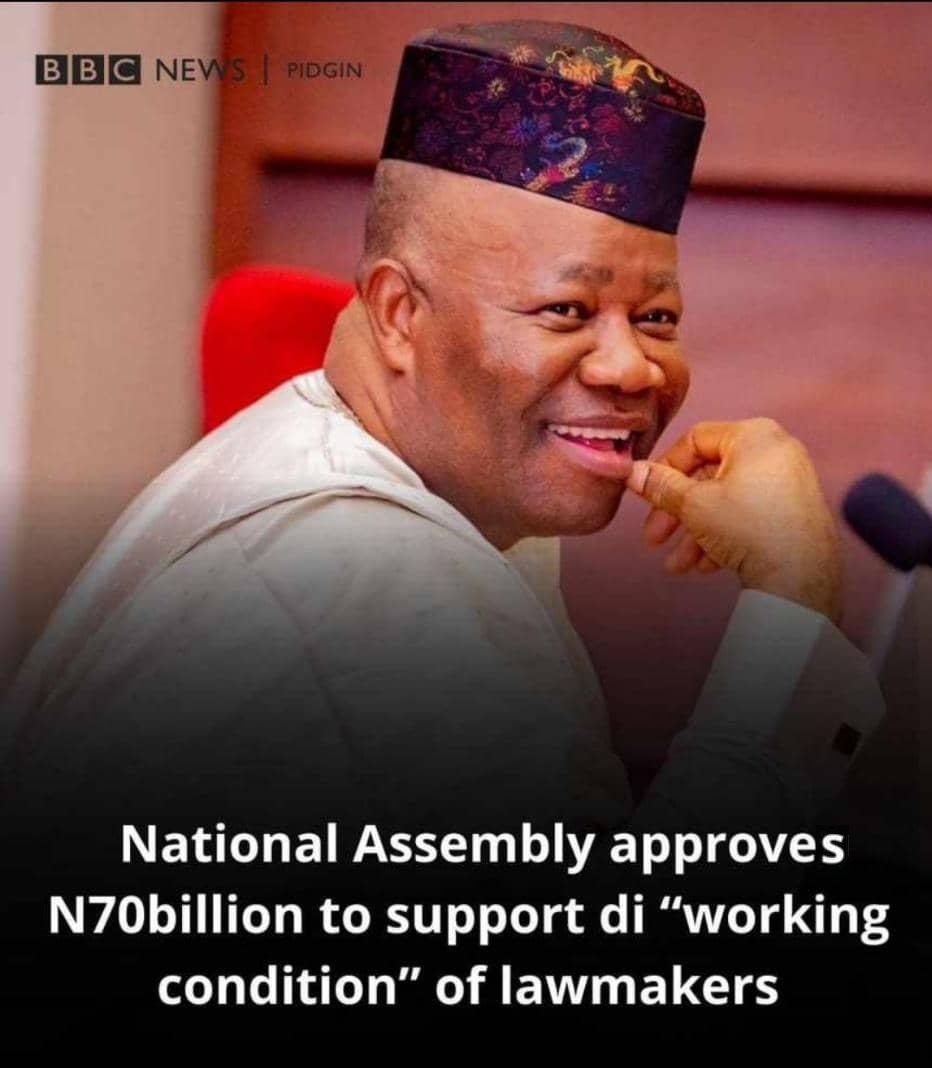
Nigeria’s National Assembly Gets The Bank Alerts!

0

What a moment for Nigeria’s national parliament: “The National Assembly is to get N70 billion in the 2022 Supplementary Appropriation Bill to improve the working conditions of its new members.” And that takes me back to that novel – The Beautyful Ones Are Not Yet Born – by Ghana’s  Ayi Kwei Armah .  Reading Armah’s novel in the same term with  “The Incorruptible Judge” by D. Olu Olagoke, you become confused if both are writing of the same Africa. They were: Armah was writing of the existing Africa while Olagoke was thinking of an expectant Africa.

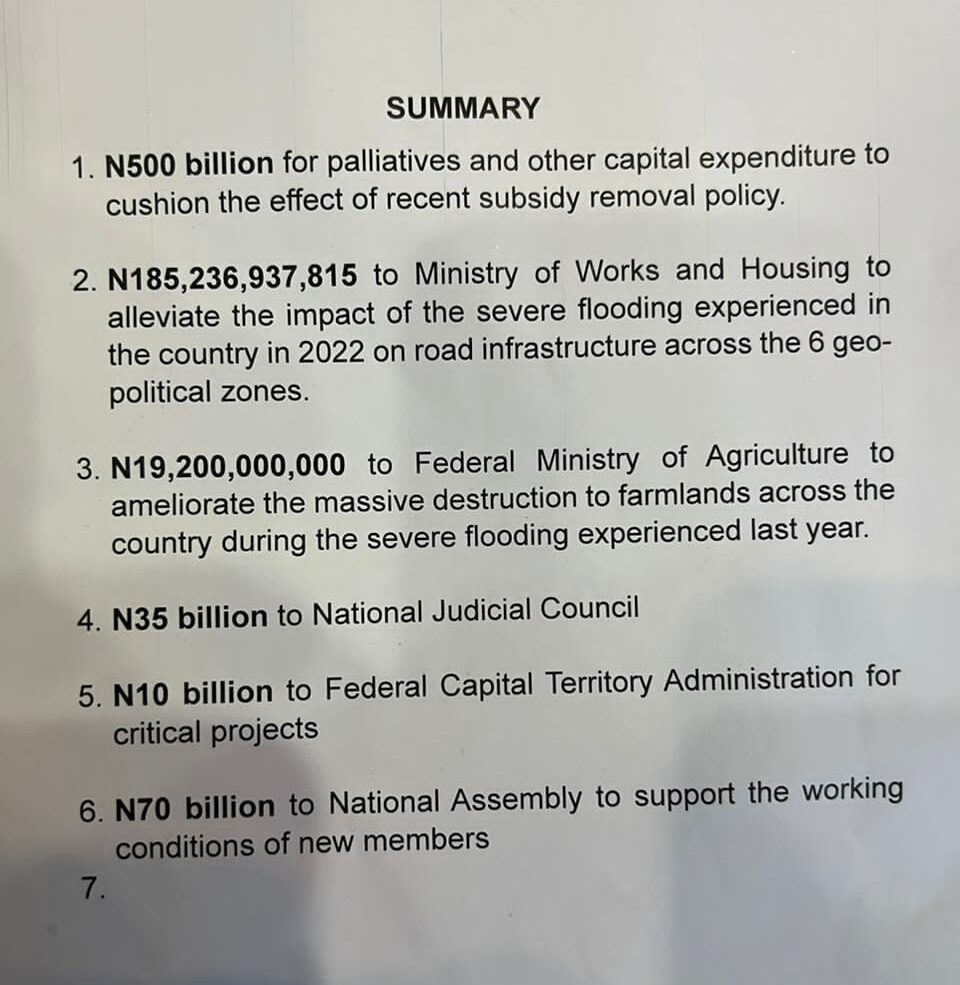
The National Assembly is to get N70 billion in the 2022 Supplementary Appropriation Bill to improve the working conditions of its new members.

Conversely, farmers who suffered the devastating 2022 floods across the country, will be getting N19 billion.

These are contained in the bill considered by the House of Representatives on Thursday during plenary.

A breakdown and details of the allocation are contained in a document obtained by PREMIUM TIMES.

PREMIUM TIMES had reported that President Bola Tinubu forwarded a bill to amend the 2022 Supplementary Act to the National Assembly. The supplementary Bill had earlier been passed by the ninth assembly.

Armah’s work was brutal and I am not sure if WAEC has ever recommended it for English Literature students. It was painful to read to imagine a teenager growing up in such a hopeless imagination.  But my dean of studies, Mr Ude, derived joy reminding everyone of this novel as he criticized IBB wife’s Better Life for Rural Women project, exclaiming “the beautiful ones are not yet born” at the end of his complaints, about Nigeria.

So, in less than two months – Nigeria’s congress has taken care of the bank accounts of their members. They have scored and now they can “work” for us.  It is all illusion as Armah wrote!

*That is from BBC pidgin please on that “di”. I had to add “s” on “approve” even though that broke the second law of pidgin, no plural and singular.

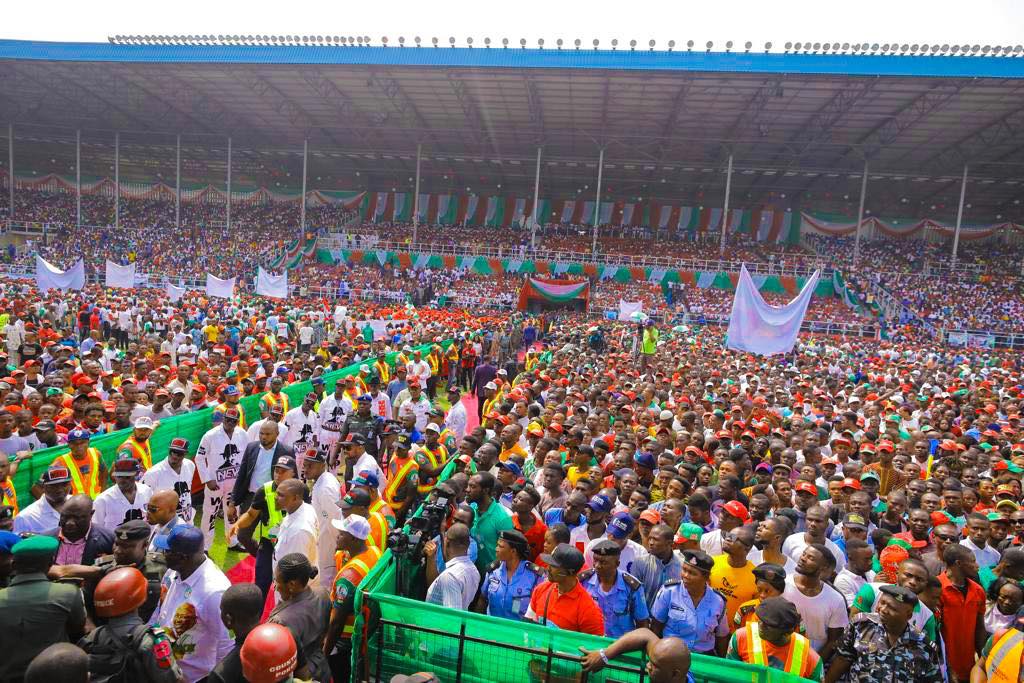
Amplifying the Voice of Nigerian Moral Entrepreneurs in the Age of Toxic Election Campaign

0

Election campaigns serve as a crucial period for political parties and candidates to engage with the electorate and convey their vision and promises. In Nigeria, as in many other countries, media platforms have become instrumental in shaping public opinion during election campaigns.However, recent research conducted by The Center for Research on Development of African Media, Governance and Society and The Positive Agenda Nigeria (now PANSOR Development Initiative) reveals concerning trends of personality attacks and the spread of misinformation by political stakeholders, particularly on Twitter.

Amidst this backdrop, our analyst explores  the role of moral entrepreneurs and the media’s responsibility in amplifying their voices to promote a healthier campaign environment using the same newspapers (Daily Post, The Punch, Vanguard, The Guardian, The Nigerian Tribune and Sahara Reporters) the two organisations used as data sources.

Analysis reveals that the newspapers only gave moral entrepreneurs such as police, civil society organisations, non-governmental organisations, community and religious leaders little space to chide the stakeholders regarding their behaviours that contravened  Electoral Act and campaign guidelines at the beginning of the campaign. However, the space increased at the end of the campaign period.

Our analyst notes that media, comprising both traditional and new platforms, plays a critical role in shaping public discourse and influencing the narrative during election campaigns. It possesses immense power to disseminate information, challenge harmful narratives, and promote ethical conduct among political stakeholders. However, the research findings indicate a missed opportunity during the early stages of the campaign, where mainstream newspapers allocated minimal space for moral entrepreneurs to caution the stakeholders regarding their behaviours that violated Electoral Act and campaign guidelines. This lack of coverage, according to our analyst, potentially contributed to the perpetuation of toxic campaign atmosphere.

Nevertheless, as the campaign period progressed, the media gradually recognized the importance of amplifying the voice of moral entrepreneurs. Increased coverage was observed, reflecting a shift toward highlighting the concerns and messages of police, civil society organizations, non-governmental organizations, community leaders, and religious figures. This positive development reflects the media’s growing recognition of its role as a facilitator of public accountability, encouraging stakeholders to adhere to existing electoral guidelines.

Implications for State and Non-State Actors
The findings of this research carry significant implications for both state and non-state actors involved in Nigeria’s political and electoral institutions.

Strengthening Democracy: The media’s commitment to providing a platform for moral entrepreneurs to voice their concerns reinforces democratic values. By increasing the visibility of responsible actors, the media assists in fostering a healthy political environment that prioritizes issue-based debates and constructive dialogue.

Combatting Misinformation: The media’s expanded coverage of moral entrepreneurs can effectively counter the spread of misinformation and disinformation during election campaigns. By providing accurate information and fact-checking false claims, the media acts as a vital source of trustworthy news, contributing to an informed electorate.

Promoting Accountability: The media’s role in amplifying the voice of moral entrepreneurs encourages greater accountability among political stakeholders. When politicians and parties are aware that their actions and statements will be scrutinized and questioned, they are more likely to adhere to ethical behavior and campaign guidelines, thereby fostering transparency and integrity in the electoral process.

Fostering Civic Engagement: By showcasing the efforts of moral entrepreneurs, the media motivates citizens to actively engage in the political process. When individuals witness the impact of responsible actors on campaigns, they are inspired to participate, either by voting or by becoming advocates for positive change, thereby strengthening the democratic fabric of the nation.

In Nigeria’s evolving political landscape, the media serves as a powerful catalyst for change during election campaigns. Recognizing the significance of its role, the media must prioritize the amplification of the voices of moral entrepreneurs who seek to uphold ethical conduct and accountability among political stakeholders.

By providing substantial coverage and support to these responsible actors, the media can foster a campaign environment that encourages issue-based discussions, combats misinformation, promotes civic engagement, and strengthens democratic values. As Nigeria moves forward, it is crucial for media organizations, electoral institutions, and stakeholders to collaborate in fostering an inclusive and informed electorate, thereby ensuring the growth and sustenance of a vibrant democratic system.