DD
MM
YYYY

PAGES

DD
MM
YYYY

spot_img

PAGES

Home Blog Page 4059

Sustainable Cryptos: DogeMiyagi and Cardano Lead the Way, Will Bitcoin Follow?

0

Bitcoin (BTC) has been a leading force in the crypto revolution, capturing the attention of investors seeking 10x returns. But, it has rightfully faced criticism due to its massive environmental impact.

As climate change becomes a more urgent issue, a new wave of coins are emerging as eco-friendly alternatives that keep up with global demands. Cardano (ADA) and DogeMiyagi ($MIYAGI) are two key players, leading the crypto industry to a more sustainable future.

Will Bitcoin Get Left Behind as Crypto Goes Green?

Bitcoin, the pioneering cryptocurrency, has become a powerful tool for decentralisation and financial freedom. However, its major downfall is its carbon footprint and contribution to greenhouse gases. Bitcoin’s carbon footprint comes from its energy intensive mining process.

It uses a proof-of-work consensus which requires miners to solve complex maths problems to mine new Bitcoin blocks. This process relies on powerful computers to solve the equations which use large amounts of energy. Additionally, the infrastructure needed for mining, including cooling systems and specialised gear, contributes to the waste of technological resources.

Some Bitcoin enthusiasts argue that Bitcoin’s mining process is gradually becoming more energy efficient, but the mining model uses more energy than entire nations like the Netherlands and Argentina combined. This emphasises the demand for environmentally friendly options, and while Bitcoin has led the crypto market, it is in risk of being left behind as investors seek eco-friendly alternatives.

Cardano: Leading the Sustainable Crypto Movement

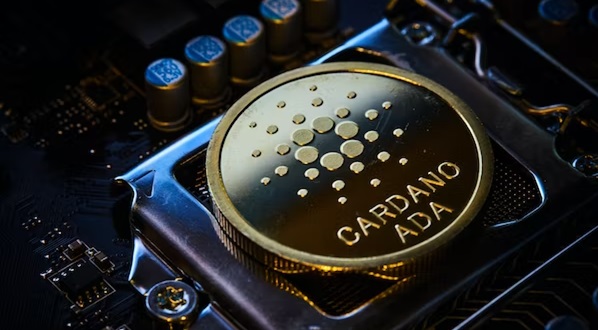
Known as a leader in the sustainable crypto movement, Cardano aims to provide a secure, sustainable infrastructure with a focus on interoperability. It has even been dubbed “the green blockchain” for its commitment to sustainable practices. Unlike Bitcoin, Cardano employs a proof-of-stake consensus mechanism, minimizing energy consumption and avoiding greenhouse gas emissions.

Users need to purchase tokens to join the network, granting them the right to validate transactions and earn more coins. Cardano’s node software can also be run on low-cost devices, making it more accessible. Cardano’s dedication to sustainability has garnered significant investor attention, positioning it as the 7th highest-ranked coin by market cap. Its eco-friendly approach aligns with the growing demand for cryptocurrencies that prioritise environmental responsibility.

DogeMiyagi: Meme Coin Meets Sustainability

As a new coin in the market, DogeMiyagi recognises the flaws of other cryptocurrencies and is committed to distancing itself from destructive mining techniques. Powered by the Ethereum network, DogeMiyagi uses a proof-of-stake consensus, consuming less energy and producing fewer emissions. Ethereum’s energy consumption is estimated to have dropped by 99.98% since moving to a proof-of-stake consensus, which DogeMiyagi takes full advantage of, showing its potential for longevity in the market.
DogeMiyagi is also committed to community, offering users a full decentralised coin. The power is in the hands of its community, and the DAO ensures a collective approach to decision-making. Users will also benefit from rewards, giveaways and NFTs as the project grows.

As environmental concerns become increasingly urgent, the crypto industry is evolving to keep up with the demands of the world around it. Bitcoin’s mining process continues to produce tonnes of energy each year, but investors are now turning to eco-friendly cryptos like DogeMiyagi and Cardano. These coins embody the future of crypto, driven by sustainability and the potential for long-term success.


For more about DogeMiyagi:

Website: https://dogemiyagi.com

Twitter: https://twitter.com/_Dogemiyagi_

Telegram: https://t.me/dogemiyagi

Self-Regulating Nigerian Prank Market

0

The prank market in Nigeria has gained significant traction in recent years, with creators harnessing their creativity to entertain audiences, generate income, and gain visibility. However, this market faces a crucial challenge: distinguishing between pranks that respect boundaries and those that potentially harm others. In response to increased regulatory scrutiny, self-regulation emerges as a potential solution to address concerns and externalities while allowing pranksters to maintain their freedom of expression and creativity. In this piece, our analyst explores the feasibility of self-regulation in the Nigerian prank-making market, its benefits, and the challenges that need to be addressed.

Prank Making Processes

There is no doubt that pranksters invest considerable effort in their content, to executing pranks that elicit desired reactions. However, it is essential to strike a balance between creativity and responsibility, ensuring that pranks do not cross ethical or safety boundaries. Pranksters like Abdullahi Moruff (Trinity Guy) and Kun Zlim have emphasized the importance of assessing targets’ states of mind and mental health before executing pranks. This thoughtful approach demonstrates an understanding of the potential risks associated with harmful pranks.

“The length of time it takes to shoot videos depends on different factors. There are times that it takes four days to make a single video. There are also times my members of my team and I would be outside for as long as seven hours and not be able to generate any content. For some skits, it could take up to three days, to get the reaction I want,” Abdullahi Moruff, aka Trinity Guy, said in an interview with a local newspaper.

“…sometimes, people would stone me and even beat me. But in the end, when I inform them that it was a prank video, everyone laughs, and that means I have been able to entertain them,” Abdullahi Moruff added.

“I study people’s moods before playing pranks on them. As a matter of fact, there were some videos I shot that did not make it to the Internet. If I get the feeling that the person is not healthy, I would call it off,” Kun Zlim said.

Self-Regulation: What is in it?

Despite having defined processes for producing various pranks, our analyst points out that the market still needs self-regulation, a self-sufficient market system that allows market players to proactively identify and address concerns within their own ranks. By developing self-regulatory frameworks, pranksters can leverage their technical expertise and market experience to establish effective and flexible mitigation strategies. Multi-stakeholder self-regulatory frameworks, involving diverse experts, can provide comprehensive insights into the industry’s challenges and offer balanced solutions. Voluntary commitment to self-regulation standards enhances compliance and fosters responsible practices.

In the face of increased regulatory scrutiny, self-regulation offers Nigerian pranksters an opportunity to demonstrate their commitment to responsible content creation. By embracing self-policing measures, they can mitigate the need for burdensome formal regulatory frameworks while effectively addressing concerns regarding potentially harmful content. Self-regulation also promotes collaboration among industry players who share similar business models, enabling them to agree upon jointly accepted rules or codes of conduct.

Challenges for Self-Regulation

Implementing self-regulatory frameworks in the prank-making market may encounter certain challenges. Market participants might be initially hesitant to adopt transparent and substantive requirements, fearing potential limitations on their creative freedom. However, transparent and detailed commitments are crucial to ensure the effectiveness of self-regulation. It is important for market stakeholders to address potential gaps in the self-regulatory framework and identify activities or potential abuses that are not adequately covered.

Effective Implementation: Key Considerations

To successfully implement self-regulation, market stakeholders need to address key questions during the development of the framework. Firstly, they must determine whether the commitments sufficiently address activities or societal impacts that regulators may otherwise consider for formal regulation.

Additionally, the commitments must be sufficiently detailed to provide clarity and guidance. Stakeholders should also identify any potential areas of abuse that are not adequately addressed and work towards closing those gaps. Lastly, involving independent experts in the development and review of self-regulatory frameworks enhances their effectiveness and credibility.

If the players want to continue capturing value from the digital economy, our analyst believes they must proactively engage in self-regulation to address emerging externalities and avoid potential formal regulations as the Trinity Guy case continues to elicit public reactions. Our analyst emphasises that successful implementation necessitates clear requirements, societal consideration, and participation from independent experts. As a result, market participants must ensure long-term inclusivity in the development and implementation of a self-regulatory framework.

#TakeAction on something productive and win your Future

0

You underestimate how prepared you are. You underestimate how ready you are. Yes, get over that indecision and take action. Launch that company. Apply for that graduate program. Apply for that next line job. Unveil that product. Move forward, and you will be surprised at the outcome. Remember: nothing great has ever been accomplished until someone takes action. Action begins a history, and history is TIME.

The biggest victory in life is victory over your time. If you master and own your time, you will win your future. Greatness has been achieved not because of special talent but rather via total dedication, perseverance and commitment through the mastering of time. A man who cannot manage his seconds will wander through the boundless time. Time seems infinite, but time expires easily.

#TakeAction on something productive and see how it would compound. Win that Future. Good luck.

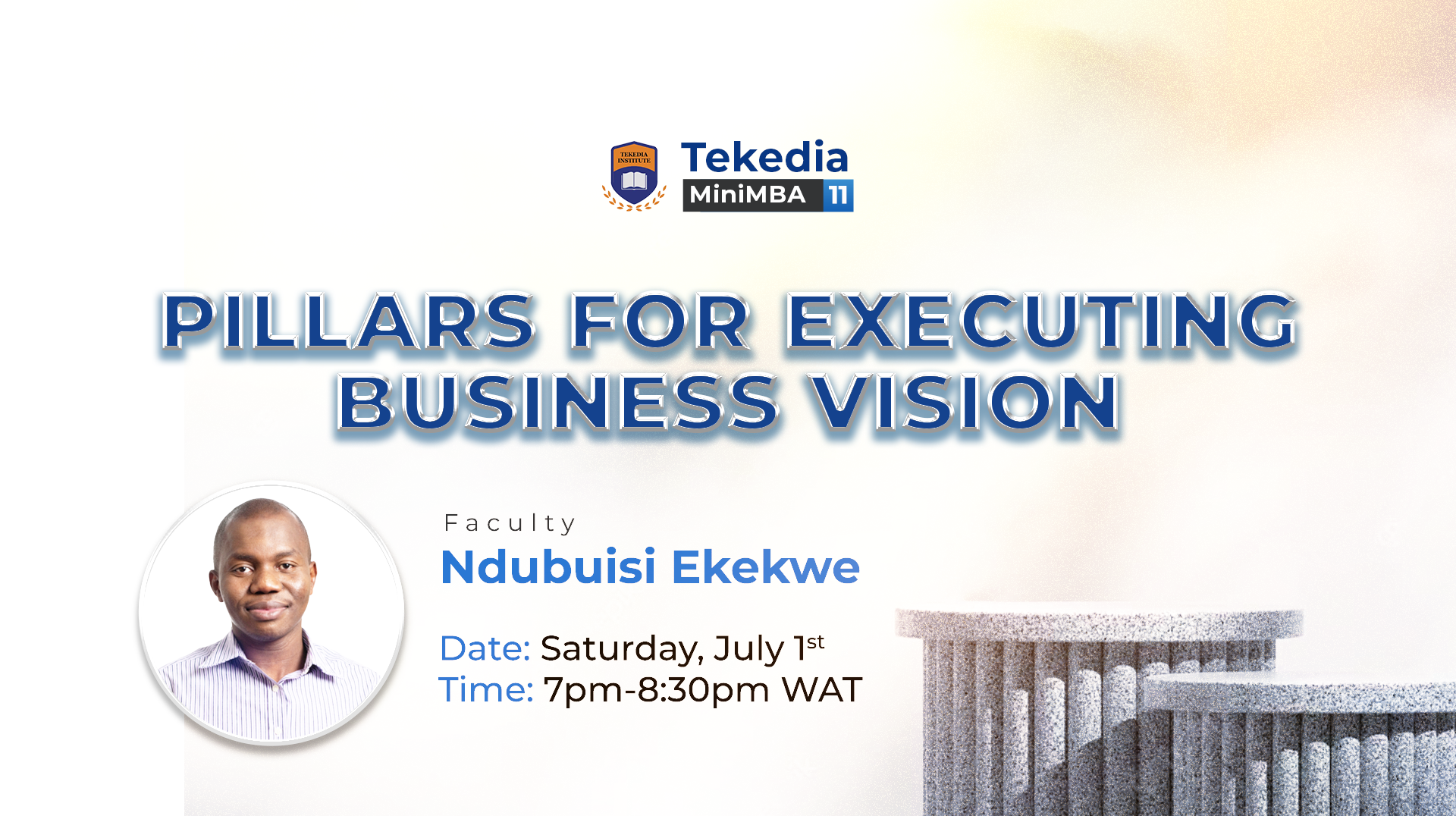
Pillars for Executing Business Vision – Tekedia Live w/ Ndubuisi Ekekwe

0

This evening, I will be teaching on Business Vision and how to execute it, focusing on catalytic pillars which can help companies win their market battles. How do you create a vision and how do you execute it?

We understand that CEOs and ExCos in firms are tasked to do one thing: commit a company to a business model, after a strategic framework. But how do you connect that business model to the business vision upon which that company was founded?

This is a two-part class: we will focus on business vision and mission today, and next week, move into business models and how to deploy winning ones in markets.

This is Tekedia Mini-MBA; more business students study here than any university in Africa. Registration for the next edition opens on Monday.

Petroleum Marketers Debunk Plan to Increase Pump Price to N700/Liter

0

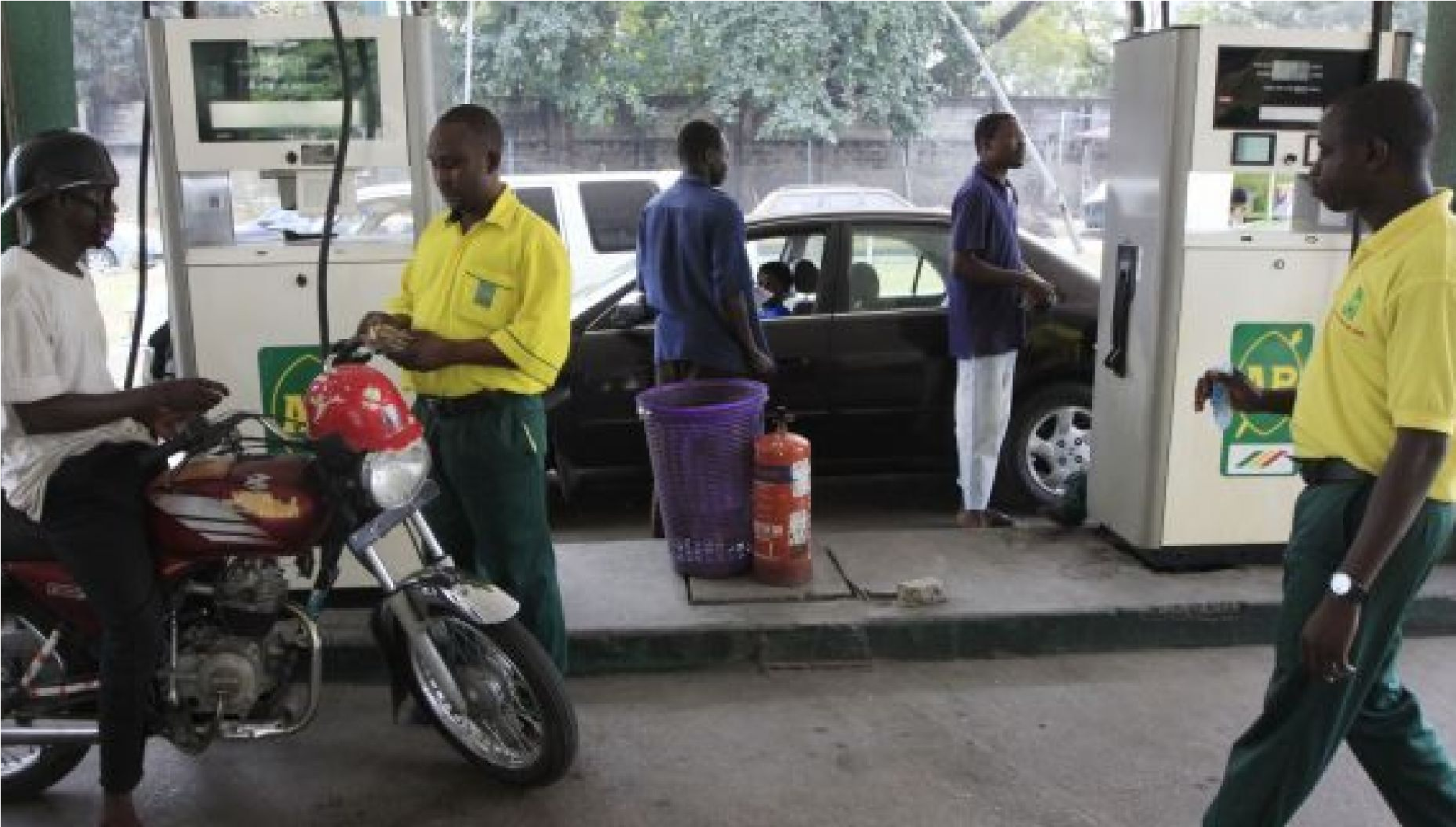
The Independent Petroleum Marketers Association of Nigeria (IPMAN) has debunked the alleged plan to increase the pump price of Premium Motor Spirit (PMS), commonly known as petrol, to N700 per liter in the country’s north and above N600 in the south.

Alhaji Dele Tajudeen, the Chairman of IPMAN Southwest Zone, clarified this matter in an interview with the News Agency of Nigeria (NAN) in Ibadan on Friday.

The projected price increase is based on the realities of the floated FX market that have resulted in a significant depreciation of the naira against the dollar. The naira has fallen up to N769/$1 in the Investor and Exporter window, fueling the belief that given the removal of fuel subsidy, the next batch of imported PMS will be based on current exchange rates.

But Tajudeen urged Nigerians to disregard such speculations and advised against participating in panic buying. He said that the current selling price of petrol would not exceed its present rate.

Furthermore, he commended President Bola Tinubu for eliminating the subsidy on petrol, stating that it was a long-overdue decision.

“Even in PIA bill, it has been clearly stated that the subsidy must be removed.
”So, I want to commend him for removing the subsidy and I want to say that we are in support totally. This is because the subsidy was a scam,” he said.

According to him, the Nigerian National Petroleum Company Limited (NNPCL) retail outlet has a market advantage that will sustain the current market prices. He said the masses should relax because the fuel prices will not rise up to N700 per liter.

“I want to disabuse the mind of the people that they should not panic about it, there is no cause for alarm, we are in control and there is nothing like that.

“So, people should be rest assured that there is no way they can buy petrol more than the price it is being sold now.

“If we look at the price from NNPC retail limited, which is an integral part of NNPC limited, they have more advantages than independent marketers and major marketers.

”So, it was the retail price that they announced they had never given a specific price to the independent marketers.

“However, I have read what somebody put into the paper, it is just speculation it is not a reality. Nothing like that I want to assure the masses.

“There is no how the price can go to N700 as we speak, because even if the FX is N700 or N800 that has not nothing to take the price of petroleum from N500 to N700,” Tajudeen said.

A coalition of Civil Society Organizations (CSOs) has vowed to resist further increment in pump prices, which upon the removal of fuel subsidy last month, jumped from N185 to as high as N557 per liter. The increment has been described as adding more nails to the coffin of suffering Nigerians.

Tajudeen said the deregulation has resulted in different pump prices, which is now determined by the cost of transportation of the products to different locations.

”If you are moving products within Lagos the price may not be more than N300,000 but if you are moving up to Ibadan or there about it could be as much as N500,000.

”And if you are going to Ilorin, it could be as high as N700,000 that would account for differential in prices.

“I want to say with all sense of authority that as of today within Lagos metropolis nobody should sell more than N515 to N520 per liter.

”Though NNPC has given us the price but the reality of it is that what we buy from the market; because NNPC limited is not the only source for our product, we get from private depots.

“So, whatever we buy is what we put our own margin and sell.

”But as of today, the highest you can get anywhere should be around N550; Lagos N510 per liter; Ogun State between N500 and N520,” Tajudeen said.