DD
MM
YYYY

PAGES

DD
MM
YYYY

spot_img

PAGES

Home Blog Page 406

Berkshire Hathaway Strikes $9.7bn Deal for OxyChem, Extending Buffett’s Energy and Chemicals Play

0

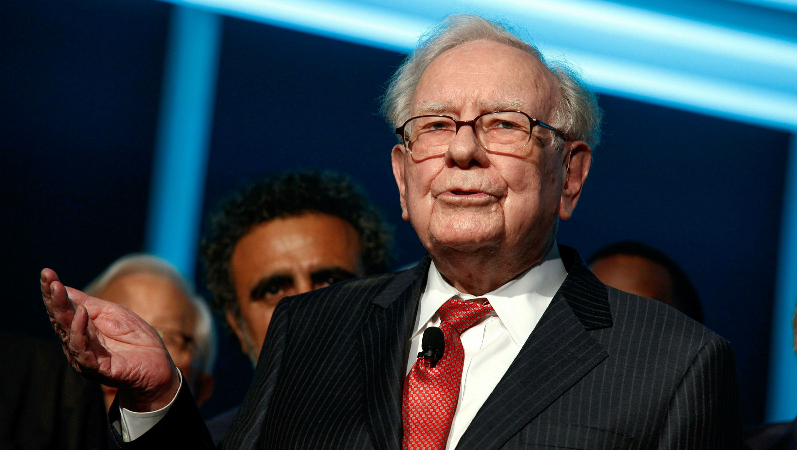
Warren Buffett’s Berkshire Hathaway on Thursday announced a $9.7 billion cash deal to buy Occidental Petroleum’s petrochemical subsidiary, OxyChem, marking its largest acquisition since 2022, when it paid $11.6 billion for insurer Alleghany.

The transaction comes as Berkshire sits on a near-record $344 billion in cash, underscoring Buffett’s strategy of deploying capital into large, established businesses with steady returns.

Occidental shares fell about 6 percent after the announcement, reflecting market unease over the sale of a profitable unit. But the deal gives Occidental the opportunity to strengthen its finances, with CEO Vicki Hollub confirming $6.5 billion of the proceeds will be directed toward debt repayment — a critical move following the heavy leverage the company took on during its $55 billion purchase of Anadarko Petroleum in 2019.

“The problem has been getting our debt down faster, so this resolves the one outstanding issue that I think will now unlock our stock and allow shareholders to feel more comfortable, hopefully, to add to their positions and others to come in,” Hollub told CNBC’s Squawk Box. “So now we’re going to be able to start our share repurchase program again. … This is the last step that we needed in our major transformation that we started 10 years ago.”

Buffett, now 95 and stepping down as CEO at the end of the year, has built Berkshire’s reputation on acquiring what he calls “forever assets.” In chemicals, this marks a return to familiar territory — the conglomerate paid around $10 billion in 2011 for Lubrizol, another specialty chemicals producer. Greg Abel, Berkshire’s vice chairman of non-insurance operations and Buffett’s successor from 2026, called OxyChem a natural fit.

“We look forward to welcoming OxyChem as an operating subsidiary within Berkshire,” Abel said, adding that Hollub’s decision to use proceeds to pay down debt demonstrates Occidental’s “commitment to long-term financial stability.”

The deal is expected to close in the fourth quarter. The Wall Street Journal first reported on the transaction earlier this week.

Berkshire’s relationship with Occidental dates back to 2019, when Buffett provided $10 billion in financing to help Occidental secure Anadarko. In exchange, Berkshire received preferred shares paying an 8 percent dividend, along with warrants to buy common stock. Hollub said Occidental intends to start redeeming Berkshire’s preferred shares in 2029 as it grows cash reserves, but until then, the dividend payments remain a reliable stream for Berkshire.

For Berkshire, the OxyChem deal highlights its evolving energy strategy compared with its other cornerstone holdings. While its utility arm, Berkshire Hathaway Energy, focuses on renewables and long-term infrastructure, and BNSF Railway provides steady transport returns, OxyChem fits into a different part of the industrial cycle — one tied to chemicals essential for water treatment, healthcare, and manufacturing. It also complements Berkshire’s 28.2 percent stake in Occidental, deepening exposure to the energy sector without taking direct control of the oil business, something Buffett has said he does not intend to do.

By contrast, Berkshire’s capital allocation in the past decade has also leaned heavily into insurance, railroads, and Apple — its single largest equity stake. The OxyChem acquisition reflects Buffett’s long-held preference for businesses that generate strong cash flows regardless of economic cycles, a pattern that investors expect Abel will continue after Buffett’s departure.

Occidental, meanwhile, views the divestiture as a long-awaited reset. The debt strain from Anadarko has loomed over the company for years, delaying buybacks and weighing on its stock. Hollub framed the OxyChem sale as the “last step” in a decade-long transformation, signaling to investors that the company is prepared to return cash to shareholders.

The deal, then, is as much about Berkshire’s future as Occidental’s. Buffett, who first stepped into Occidental during one of its most consequential deals in 2019, sees this as a parting move that underscores his belief in the durability of the U.S. energy and chemicals business. It offers a fresh chance for Occidental to regain footing with investors after years of balance-sheet pressure.

Yale Researchers Find No Evidence AI Is Disrupting Jobs Despite Mounting Fears

0

For nearly three years, the launch of ChatGPT and the rise of generative artificial intelligence have fueled widespread warnings that the technology would hollow out white-collar employment. But new research from Yale University’s Budget Lab, published by The Register, suggests that so far, those forecasts have not materialized.

The non-partisan policy research group examined U.S. employment trends since November 2022, when ChatGPT first appeared, and found no evidence of large-scale disruption.

“Overall, our metrics indicate that the broader labor market has not experienced a discernible disruption since ChatGPT’s release 33 months ago, undercutting fears that AI automation is currently eroding the demand for cognitive labor across the economy,” wrote Martha Gimbel, Molly Kinder, Joshua Kendall, and Maddie Lee in a report summary.

Their findings run counter to the drumbeat of predictions from tech leaders and economists who have framed generative AI as an inevitable force of upheaval. Anthropic CEO Dario Amodei told lawmakers in May that within five years, AI could eliminate half of all entry-level white-collar jobs, warning of a massive restructuring of corporate hierarchies. OpenAI CEO Sam Altman has issued similar forecasts in congressional testimony and interviews, suggesting that entire classes of jobs, particularly in legal, finance, and customer service sectors, could be displaced.

Other influential voices have echoed those concerns. Bill Gates has predicted that AI could rapidly accelerate productivity in the workplace, but acknowledged that it could replace clerical roles and reshape professional work. Economists at Goldman Sachs last year estimated that as many as 300 million jobs worldwide could face disruption from generative AI, with advanced economies like the United States especially exposed.

These warnings have seeped into corporate boardrooms. Companies such as IBM and Salesforce have invoked AI in explaining workforce reductions, though Yale’s researchers—and other labor economists—point out that these layoffs often reflect outsourcing decisions and cost-cutting measures rather than direct automation. Smaller firms like Fiverr have also cited AI when announcing job cuts.

Microsoft, one of the technology’s biggest backers, has added to the anxiety. Earlier this year, it released a study on which jobs were most susceptible to AI disruption, identifying roles in administrative support, customer service, and data analysis as particularly exposed. Yet the company later tempered its conclusions, clarifying that the report “does not draw any conclusions about jobs being eliminated.” Microsoft’s own layoffs, analysts note, appear more tied to cost pressures following billions in data center investments than to AI itself.

The Yale team’s results are consistent with other studies that cast doubt on the near-term disruption narrative. In 2023, the United Nations’ International Labour Organization concluded that generative AI would not replace most workers. A study of Danish workers published in April found no measurable impact on wages or employment. Another study in February showed that reduced demand for workers in AI-exposed occupations was offset by productivity-driven hiring gains at firms adopting the technology.

Still, not all data is reassuring. A recent Stanford Digital Economy Lab study claims that recent college graduates entering AI-exposed fields have seen a 13 percent relative decline in employment compared to peers entering occupations less susceptible to automation.

Even with such mixed signals, the consensus from Yale’s research is that the technology has yet to live up to its billing as a job destroyer. Analysts point to enterprise caution: while companies are rushing to experiment with AI, many remain uncertain about its reliability, costs, and long-term value.

This means that for now, fears of an imminent labor market transformation appear overstated. Yale’s researchers argue that the impact of generative AI on jobs so far looks modest and uneven, more of an incremental adjustment than the sweeping wave of automation its champions and critics have described.

Yahoo Reportedly in Talks to Sell AOL to Italy’s Bending Spoons for $1.4 Billion

0

Yahoo is in advanced talks to sell AOL to Italian technology company Bending Spoons for about $1.4 billion, four people familiar with the matter told Reuters, a deal that would underscore how one of the internet’s most iconic names may be leaving American hands for a European upstart.

The Milan-based app developer is negotiating to buy the legacy media brand, though sources cautioned that no final agreement has been signed and talks could still collapse. Yahoo, controlled by private equity firm Apollo Global Management, acquired AOL as part of a $5 billion deal in 2021 when Apollo bought a 90% stake in Yahoo from Verizon.

AOL’s Long Decline

AOL remains etched in internet history as one of the pioneers of online consumer services, famous for its “You’ve Got Mail” notification and dial-up access. In 2000, it merged with Time Warner in a $160 billion deal, then the largest in history, but the merger quickly collapsed under regulatory probes and massive writedowns.

In the years since, AOL lost its dominance to younger tech giants such as Google and Facebook, but still generates revenue through digital advertising and subscription services, including LifeLock identity theft protection, LastPass password management, and McAfee Multi Access malware protection.

A source familiar with AOL’s recent performance said its website traffic grew 20% year-over-year among users aged 25 to 54, outpacing growth among older audiences. The increase was fueled by AOL.com expanding into new content verticals such as Health, Fitness, Animals, Science & Tech, Home & Garden, True Crime, Local, and light entertainment.

Bending Spoons’ Global Expansion

For Bending Spoons, acquiring AOL would add to a fast-growing portfolio of international assets. Founded in 2013, the Milan-based company now counts 300 million monthly users and has become one of Europe’s rare tech “unicorns,” with a valuation of $2.55 billion after a February 2024 funding round.

The company has pursued an aggressive strategy of acquiring struggling but recognizable technology platforms. Last year, it purchased file-sharing service WeTransfer, and just last month it agreed to buy video platform Vimeo for $1.38 billion — its largest deal to date.

Bending Spoons’ co-founder and CEO Luca Ferrari has said the company is working toward positioning itself for a potential U.S. IPO, though no firm timeline is in place.

Comparative Trade Angle

If completed, the AOL sale would be more than just the passing of an American internet relic to a European buyer. It would mark a symbolic shift in global tech trade, where U.S. legacy platforms, once dominant worldwide, are being absorbed by emerging European players looking to expand their digital footprint.

Unlike in past decades when European tech largely played catch-up to Silicon Valley, acquisitions such as Vimeo and potentially AOL show firms like Bending Spoons leveraging U.S. assets to gain global reach. Bankers see the company as one of the few European tech firms capable of challenging American dominance in consumer internet services.

The deal fits a pattern of American private equity divesting legacy media names as growth slows, especially for Apollo, which has been streamlining Yahoo’s portfolio. But it also signals how European capital and strategy are increasingly flowing westward to capture once-dominant U.S. brands and reposition them for the mobile-first, subscription-driven economy. If sealed, the acquisition is expected to reshape Bending Spoons’ profile.

Shein’s First Permanent Stores in France Spark Retail Backlash, Highlighting Europe’s Uneven Fast-Fashion Battle

0

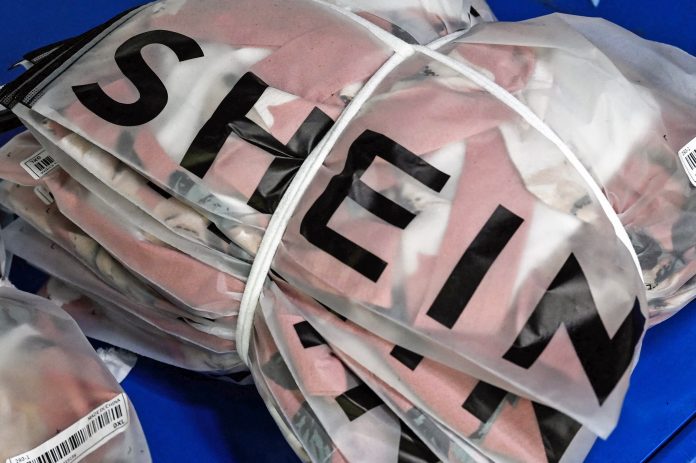
Chinese online fast-fashion giant Shein will open its first permanent stores in France this November under an agreement with department store operator Société des Grands Magasins (SGM), a move that has ignited sharp criticism from French retailers and lawmakers who say the ultra-low-cost brand is destabilizing the sector.

The rollout will see Shein outlets established inside the BHV department store in central Paris and in Galeries Lafayette-branded department stores across Dijon, Grenoble, Reims, Limoges, and Angers. Until now, Shein had relied on short-lived pop-up shops worldwide as marketing tools, keeping its core business strictly online.

SGM president Frédéric Merlin defended the partnership, saying it would bring in younger shoppers.

“A customer might buy a Shein item and a designer handbag on the same day,” he said.

But the plan ran into immediate opposition. Galeries Lafayette, which sold the stores operated by SGM under a franchise agreement, said the move breaches that deal.

“Galeries Lafayette profoundly disagrees with this decision with regards to the positioning and practices of this ultra-fast fashion brand that is in contradiction with its offer and values,” the group said, vowing to stop the openings.

French Retailers Push Back

Domestic players argue that Shein’s entry into permanent retail space risks wiping out what remains of France’s mid-market fashion base.

“In front of the Paris City Hall, they are creating the new Shein megastore, which – after destroying dozens of French brands – aims to flood our market even more massively with disposable products,” said Yann Rivoallan, head of the Fédération Francaise du Pret-a-Porter.

Shein, which sells 12-euro dresses and 20-euro jeans, has already eroded demand for local chains. French retailers such as Jennyfer and NafNaf entered insolvency proceedings earlier this year, squeezed between high operating costs and Shein’s aggressive discounting.

Lawmakers in Paris have backed a draft law regulating fast fashion that could ban Shein from advertising and force companies to account for the environmental impact of short-lifecycle clothing.

A European Divide

Shein’s expansion into France underscores the uneven European response to ultra-fast fashion. In Germany, where online discount retailers such as Zalando already dominate, Shein has faced scrutiny but less aggressive political pushback. German regulators have so far avoided the kind of targeted legislation now debated in Paris, though consumer watchdogs have raised alarms over transparency in pricing and sustainability claims.

In Spain, Shein has tapped into the same cost-conscious demographic that once made Zara a global powerhouse, even as it undercuts Inditex on price. Spanish unions and fashion associations have warned that Shein’s model poses a long-term threat to the country’s textile employment base, which has already shifted heavily to overseas suppliers.

Italy, meanwhile, has been slower to confront Shein. The country’s fragmented retail sector, anchored by small boutiques, is vulnerable to price wars, yet lawmakers in Rome have not advanced regulations comparable to France’s proposed law.

Across the European Union, the pressure is building. Brussels is moving to end the “de minimis” duty exemption for low-value parcels, which has allowed Shein to ship directly from Chinese factories to consumers without import tariffs. That rule change could blunt Shein’s price advantage across the bloc, though it remains uncertain how quickly enforcement will bite.

Shifting Business Model

The French rollout marks a significant departure from Shein’s online-only strategy. Its digital model relied on shipping direct from Chinese factories, minimizing unsold inventory and keeping costs low. Permanent retail locations will require holding local stock, adding overheads that could erode margins.

The shift comes as Shein faces pressure in its largest market, the United States, where the “de minimis” exemption that underpinned its rise is being dismantled. The EU is planning to follow suit, raising the stakes for Shein to establish stronger local roots.

Shein’s first French store, opening in November on the sixth floor of the BHV in Paris, will be followed by launches in Galeries Lafayette-branded locations in regional cities.

Executive Chairman Donald Tang has said the company’s growth lies not just in global capitals but also in smaller towns where fashion choices are limited.

“Customers there have fewer options for fashionable clothes,” he noted.

For Shein, France offers prestige and a gateway to Europe’s fashion heartland. Yet it also exposes the retailer to some of the toughest regulatory and competitive challenges it has faced to date. While German and Spanish markets remain relatively open, France is signaling that Europe may not allow Shein to expand unchecked.

At stake is not only Shein’s ability to transition from digital disruptor to mainstream retailer, but also how Europe navigates the balance between free trade, consumer choice, and protecting domestic industries in an era of hyper-globalized fashion.

Tesla’s Quarterly Sales Rise on Expiring U.S. Tax Credit, but Global Struggles Remain

0

Tesla’s quarterly sales increased for the first time this year, buoyed by a last-minute rush from U.S. consumers eager to claim a $7,500 federal EV tax credit before it expired on September 30.

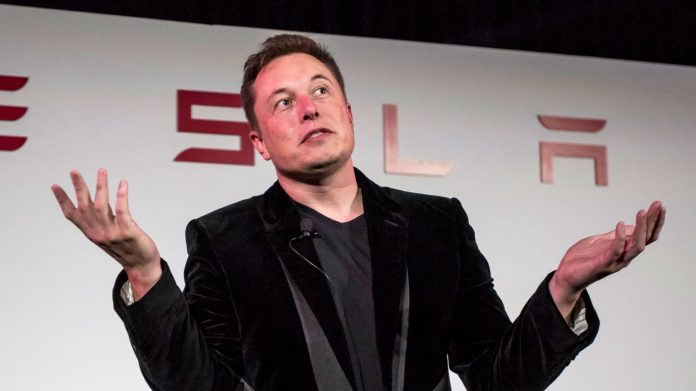
The strong quarter has also helped drive Elon Musk’s personal fortune to a historic $500 billion, cementing his position as the richest man alive. But analysts caution that the real challenge lies in sustaining this momentum, given Tesla’s struggles in China and Europe, where the company faces mounting competitive and political headwinds.

Between July and September, Tesla produced 447,450 vehicles — 435,826 Model 3 and Model Y units and 11,624 “other vehicles” such as the Model S, Model X, and Cybertruck. That represented a 5 percent decline compared to the 469,796 vehicles produced in the third quarter of 2024. Deliveries, however, climbed 7.4 percent year-on-year to 497,099 vehicles, including 481,166 Model 3 and Model Y units and 15,933 other models, up from 462,890 last year.

For a direct-to-consumer automaker like Tesla, deliveries are the clearest measure of sales, and the spike was largely fueled by the deadline for the U.S. EV incentive. The company delivered nearly 50,000 more vehicles than it produced, cutting into excess inventory that had been building throughout the first half of the year.

However, beyond the U.S., Tesla’s position is less secure. In Europe, sales are down 37 percent year to date compared with 2024, a slump worsened by the company’s strained relationship with regulators and consumers amid Musk’s polarizing political views. Analysts say Tesla has yet to fully repair its brand image in the region, where buyers increasingly see alternatives from Volkswagen, BMW, Stellantis, and now, Chinese models, as safer choices.

In China, Tesla is also losing ground to domestic rivals BYD and Geely, whose aggressive pricing and rapid innovation cycles have allowed them to capture a growing share of the world’s largest EV market. Musk has acknowledged that the competition is “fierce,” with Tesla forced to cut prices several times this year to keep pace — a strategy that has pressured margins.

With the U.S. tax credit now expired, some analysts believe that sales could drop sharply in the coming quarters. Musk himself has admitted that Tesla faces “a few rough quarters” as it adjusts to life without incentives. Still, he insists the company’s future lies not in its current EV lineup but in its AI-driven ambitions, including robotaxis and humanoid robots. By the end of 2025, Musk has pledged that half of the U.S. population will have access to Tesla’s robotaxi network, though so far it operates only in Austin and San Francisco.

The latest sales figures arrive amid Tesla’s high-stakes governance drama. Its board has proposed an audacious $1 trillion pay package for Musk, tied to ambitious milestones including producing over a million robots, launching a million robotaxis, and creating $7.5 trillion in shareholder value. If approved at a November 6 shareholder meeting, the package could double Musk’s net worth and potentially make him the world’s first trillionaire.

Musk recently bought $1 billion in Tesla stock — his first open-market purchase in over five years — in what he described as a vote of confidence. Tesla also unveiled its latest “Master Plan,” pivoting from its day-to-day EV operations toward a long-term future centered on AI and robotics.

Still, that future is far from guaranteed. Analysts note that Tesla’s latest growth was tied almost entirely to the federal credit, rather than an organic rebound in global demand. Without significant progress in China and a repaired relationship with Europe, sustaining growth will be difficult. Meanwhile, Tesla’s current lineup is aging, and the company has yet to provide a firm timeline for a cheaper Model Y variant originally slated for volume production in the second half of 2025.

However, Tesla’s results have given Musk another historic milestone — a $500 billion personal net worth. But as the glow of the U.S. tax credit fades, the EV maker faces the bigger test to rebuild trust abroad and secure lasting demand for its next generation of products.

In a surprise turnaround from the first half of the year, Tesla’s global deliveries grew 7.4% in the third quarter compared to the same period last year. The Elon Musk-owned carmaker delivered a record 497,099 Teslas during the three-month period, exceeding analyst expectations of 456,000. Tesla is one of several EV companies that benefited from a rush to purchase electric vehicles before a $7,500 federal tax credit expired Sept. 30. Rivian said Thursday that its deliveries jumped by a whopping 32% in the third quarter.