DD
MM
YYYY

PAGES

DD
MM
YYYY

spot_img

PAGES

Home Blog Page 4061

How To Build You Own Token On Ethereum Blockchain

0

The ability to create your own token on the Ethereum blockchain opens up a world of possibilities. This article explores the process of building your own token, from understanding the basics of tokens and Ethereum to deploying and launching your creation. Apart from this, all your Ethereum trading questions and needs ends at Ethereum Code which is an AI based trading bot. Try now!

Preparing for Token Development

The first step is to define the token’s purpose and use case. Identifying the problem the token aims to solve and understanding its utility is crucial. Defining a clear use case helps establish the token’s value proposition and differentiates it from existing tokens in the same domain.

Token economics and design considerations also play a significant role. Determining the token supply and distribution models is essential for maintaining balance and avoiding issues such as inflation or scarcity. Choosing the appropriate token standard, such as ERC-20, ERC-721, or ERC-1155, depends on the token’s functionalities and requirements. Additionally, planning for token governance and decision-making processes is important. Establishing mechanisms for community involvement and participation in shaping the token’s future helps create a decentralized and inclusive ecosystem.

Researching existing tokens in the same domain is crucial to understanding the competitive landscape. Analyzing their strengths, weaknesses, and adoption rates provides valuable insights for designing a token that offers unique advantages and addresses market gaps. Overall, preparing for token development requires a comprehensive understanding of the token’s purpose, economic considerations, governance models, and the existing market landscape.

Token Development Process

Firstly, it is essential to set up the development environment. This involves installing the necessary tools and software, such as Remix, Truffle, and Metamask. These tools provide the foundation for writing and deploying smart contracts. Next, the focus shifts to writing and deploying smart contracts. Solidity, a programming language specific to Ethereum, is used to write these contracts. They define the rules and functionalities of the token, including its supply, distribution, and other features.

Once the contracts are written, they need to be compiled and deployed on the Ethereum network. After deploying the smart contracts, it is crucial to test and verify their functionality. This involves rigorous testing to ensure that the token operates as intended and meets the specified requirements. The testing phase helps identify and fix any bugs or vulnerabilities that may compromise the security or usability of the token.

Once the token’s functionality is confirmed, it’s time to focus on implementation and integration. This involves implementing the various token functionalities, such as transferring tokens, checking balances, and granting approvals. Additionally, integrating the token with existing platforms or applications allows users to interact with it seamlessly. Throughout the token development process, it is essential to maintain a strong focus on security. Smart contracts are audited to identify and mitigate any security vulnerabilities.

Finally, the completed token is deployed on the Ethereum mainnet, making it accessible to users worldwide. The distribution process is initiated, ensuring that tokens are allocated to their intended recipients. Additionally, listing the token on decentralized exchanges (DEXs) enables trading and liquidity for the token.

Token Launch and Post-Launch Considerations

Before the token launch, conducting thorough security audits is crucial. Smart contracts should be carefully reviewed by experts to identify any vulnerabilities or flaws that could compromise the token’s integrity. This step helps mitigate potential risks and build trust among users and investors. Once the token is ready for deployment, it is essential to plan the distribution process effectively.

DEXs provide liquidity and enable users to trade the token easily. Researching and selecting reputable DEXs that align with the token’s purpose and target audience is crucial for its market accessibility and liquidity. After the token launch, community engagement plays a pivotal role in its success. Building a strong and active community around the token fosters user adoption and support. Communication channels such as social media platforms, forums, and dedicated community channels allow for direct engagement and feedback, creating a sense of inclusivity and shared vision.

Marketing strategies are essential to raise awareness about the token. Developing a comprehensive marketing plan that targets the token’s intended audience and communicates its unique value proposition is crucial. Leveraging social media, content marketing, and collaborations with influencers can help amplify the token’s reach and attract potential users and investors. Ongoing post-launch considerations include continuous monitoring and optimization. Regularly reviewing the token’s performance, addressing user feedback, and implementing improvements enhance its functionality and user experience.

 Conclusion

Building your own token on the Ethereum blockchain is an exciting opportunity to participate in the decentralized revolution. By following the steps outlined in this guide, you can navigate the intricacies of token development, deployment, and distribution. Embrace the potential of blockchain technology and join the vibrant community of token creators, unlocking new avenues for innovation and financial inclusion.
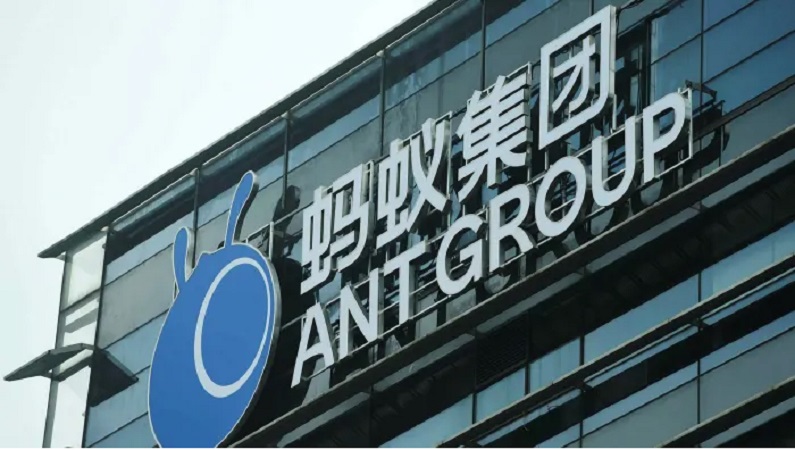

This Ant Is Really Big and Strong – Fined $984 million and Still Alive!

1

Good People, when an “Ant” can pay a $984 million fine, you know you have a really big economy. Yes, “Chinese authorities announced on Friday a 7.12 billion yuan ($984 million) fine for Ant Group, ending a years-long regulatory overhaul of the fintech company and marking a key step to concluding a crackdown on the country’s internet sector.” Jack Ma, China giveth and China taketh.

Shares in Alibaba Group opened 5.4% higher in Hong Kong on Monday after Beijing imposed an almost $1 billion fine on Ant Group, the e-commerce company’s fintech affiliate, for violating laws on consumer protection, among other infractions. Investors hope the massive penalty indicates that China’s crackdown on big tech companies—which arguably started when regulators derailed Ant’s IPO in 2020—is now ending. Ant is offering a buyback program with shares valued 70% lower than its scrapped IPO. Reuters

What is your regulatory strategy in Nigeria? Do not just think it does not matter anymore. It seems governments around the world are fining companies with reckless abandon these days. In the US, they can fine in the morning, and settle in the evening, reaping massive revenue for the government. 

Nigeria has picked up on that playbook, focusing on customer data and privacy violations. Some banks are already in the crosshairs.  Yet, we hope no one will get close to what a special Ant in China will endure as fines.

The penalty amounts to one of the largest ever fines for an internet company in China.

Ant and its subsidiaries had violated laws and regulations in areas including corporate governance, financial consumer protection, payment and settlement business, as well as anti-money laundering obligations, the People’s Bank of China (PBOC) said in a statement.

Ant said it had completed its rectification work. “We will comply with the terms of the penalty in all earnestness and sincerity and continue to further enhance our compliance governance.” It closed Xianghubao in 2021.

“Mberede ka eji ama dike” [You know who a brave man is when he is confronted with unforeseen problems and is able to tackle it]

0

Every day you wake, your number one prayer point for that day should be for God (or for whatever you worship) to keep you away from troubles because just one problem is enough to have all your life savings wiped out, put you in an unrecoverable debt and get your life messed up forever.

I have seen people run into problems that they spent millions of naira solving and they never bounced back or recovered from it. Some had to spend their life savings, sell all their properties, and she even had to borrow to sort out themselves. You may never fully relate until you have been there. 

I am currently handling a case of a client that had N25M in savings as of earlier this year with a flourishing business, as of this moment she’s even struggling to feed. All the savings are gone, she even sold her properties and borrowed more money just to sort out this pending problem; She naively got involved in some fraudulent transactions. She did not just lose all the money she put in, she was also arrested, and detained and she had to refund monies she had no idea how it came about. The case is still in court and all she wishes for is for the whole thing to go away so she can pick up the pieces of her life and start the rebuilding process.

Details of the case of this my client reminded me that the unfortunate thing about life is that even when you do not go looking for problems or even when you are on your own trying to maintain your peace, manage yourself and mind your business, some problems will come looking for you. It is the way that you are able to maneuver and have it sorted that counts and adds a feather to your cap. Old Igbo proverbs say “mberede ka eji ama dike”,  which when loosely translated to English means “You know who a brave man is when he is confronted with unforeseen problems and is able to tackle it”. 

This is why you need to make sure to always have emergency funds for contingencies and also have a good lawyer on standby in case troubles come knocking so you can start tackling them immediately before it becomes too late or blows out of proportion. 

It is part of life that sometimes troubles and tribulations will come even when you do not look for it, you cannot avoid problems in life, it’s part of the roller coaster that makes life bitter-sweet. All we can ever do is hope and wish that the problem that comes is not bigger than us or something too big for us to handle, or what will consume us, if it does not kill you, it will definitely make you stronger.

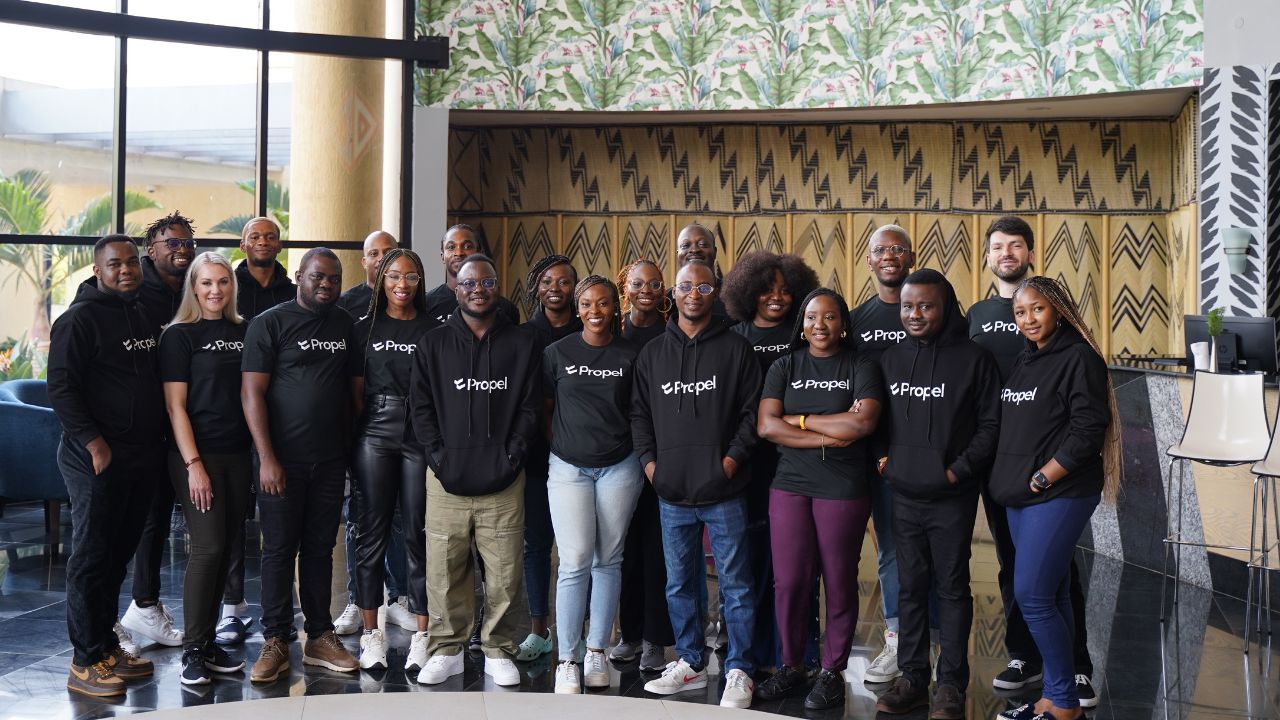
HR Tech Startup Propel, Secures $2.74 Million Fund to Build Ecosystems to Power The Future of Work

0

Berlin-based Nigerian HR-tech startup Propel has secured $2.74 million in seed investment to build ecosystems to power the future of work.

The funding round was led by Amsterdam-based No Such Ventures, with participation from APX (an accelerator by Axel Springer Digital Ventures and Porsche Digital), Golden Egg Check, and Future of Learning Fund.

The startup intends to use the funds raised, to drive the roll-out and adoption of its community-as-a-service platform and drive €1 million in revenue generated for communities by the fourth quarter (Q4) next year.

Speaking on the funds raised, co-founder of Propel Sunkanmi Ola said,

“We realized communities are the building blocks of any tech ecosystem, particularly emerging market ecosystems, but nobody has been building for communities and the distribution layer for the tech talent pipeline had been missing. Most tech communities build their pool and upskill, but the last mile where you convert these talents to jobs is missing and communities struggle in that regard.”

Also commenting, Co-founder and Head of Strategy at Propel, Seun Owolabi said,

At Propel, we’re championing more responsible and regenerative ways of hiring/building talent pipelines. Rather than deploying opportunistic practices like headhunting or poaching, we participate deeply in ecosystems, using proprietary technology to find the best talent within communities.

“And when we place people in jobs, our revenue is shared with the community they belong to, which is reinvested into programs and initiatives needed to get more people into tech. In summary, Propel is where ambitious companies come to find the talent that is just right for their needs and crowd-solve tech challenges while doing good at the same time.”

Founded in 2020 by Sunkami Ola, Seun Owolabi, and Abel Agoi, Propel is powering tech talent communities and connecting them to the global workforce, thereby tackling the global skills shortage.

The startup enables high-growth companies to move at super speed, by supporting their hiring needs, and matching them with tech talents, which enables them to focus on what matters.

By coupling smart assessment protocols with its tiered Work-Experience Model, Propel can drive deep data profiling on every individual in its ecosystem, to make intelligent matching decisions for companies across the world.

In exchange for providing last-mile infrastructure, Propel plugs into the diverse pools of talent within these tech communities spanning multiple skill sets, from design to software development, data science to no-code, and other digital skills. The HR tech startup makes its revenue from hiring and placement fees and rebates.

Propel is trusted by 100+ tech communities and has worked with top companies like Mercedes, Stepstone, Porsche, Orange Telecoms, and Farfetch. The startup has a presence across 15 countries in the world, serving over 400,000 members. Notably, it has placed more than 550 people into job roles across multiple countries.

The company’s goal is to grow to 500 communities with 1 million members across the board in 2024 and generate millions in revenue for communities through commissions from jobs, perks, and finance on the platform.

As the number of unfilled tech jobs rises, Propel seeks to mitigate this problem by connecting tech talents to a community where they can get jobs easily. Hence, the need to build more ecosystems to tackle the global skills shortage.

The startup’s unique, community-focused approach to driving the open talent economy has set them apart and is a solid addition to the Future of Work category.

Twitter Traffic Declines as Threads Continues to Gain Traction

0

Microblogging platform Twitter is currently experiencing a decline in traffic, as Meta’s newly launched Threads continues to gain traction since its launch.

According to IT service management company that provides content delivery network services and Cloud cybersecurity, Cloudflare, it disclosed that Twitter’s website is currently tanking.

On Sunday, co-founder and CEO of Cloudflare Matthew Prince posted a graph on Twitter, showing radar rankings, which reflected how popular domains performed recently.

Twitter was spotted in the 37th position in the domain ranking, a decline from its 32nd position in January 2023. The microblogging platform traffic visibly tanked, as it is expected to decline further, following the launch of rival platform Threads.

This traffic report disclosed by Cloudflare, is coming after Twitter CEO Elon Musk tweeted in June this year, that the microblogging platform had hit an all-time record in user seconds.

Meanwhile, Meta Threads has reportedly garnered over 100 million users in just a few days after its launch, surpassing the record of the OpenAI tool, ChatGPT for the fastest-growing consumer app.

The increase in Threads user base, which has reportedly led to the drastic decline in Twitter traffic has been linked to Musk’s “unpleasant” changes on the platform. Musk revamps since taking over the company last year October, has prompted users to seek alternative platforms like Mastodon and Bluesky, as well as the recently launched Threads by Meta.

Meanwhile, it is understood that Twitter is threatening to file a suit against Meta for launching Threads, which its referred to as a “copycat” version of Twitter.

In a cease and desist letter sent to Meta, Twitter alleges that the social media company poached its laid-off employees to create Threads, which is a typical replica of Twitter.

In the letter sent to Meta CEO Mark Zuckerberg, Twitter lawyer, Alex Spiro, accused the company of engaging in systematic, willful, and unlawful misappropriation of Twitter’s trade secrets and other intellectual property.

However, Musk’s threat to sue Meta following the launch of Threads, indicates that the newly launched platform is so far, the greatest threat to Twitter. With Meta resources and grit, Threads stands a chance to displace Twitter in the microblogging space.

Threads is also finding it easier to garner users because it is directly linked to Instagram, which has more than one billion regular users.

The app which is still new and fresh doesn’t yet support most common social media features that users look out for. Hashtags, for example, haven’t been implemented on the platform. However, Meta will likely add new features in the coming weeks and will also introduce other features lacking on Twitter.

Threads’ imminent achievement of surpassing 100 million user sign-ups, coupled with Twitter’s decline in traffic, marks a significant shift in the social media landscape.

As Meta’s latest venture gains traction, it demonstrates the demand for platforms that provide a distinct alternative to traditional social media while catering to specific community preferences. Whether you’re a creator or a casual poster, Threads offers a new, separate space for real-time updates and public conversations.