DD
MM
YYYY

PAGES

DD
MM
YYYY

spot_img

PAGES

Home Blog Page 4062

Three US States Grant Twitter Licenses to Offer Financial Services

1

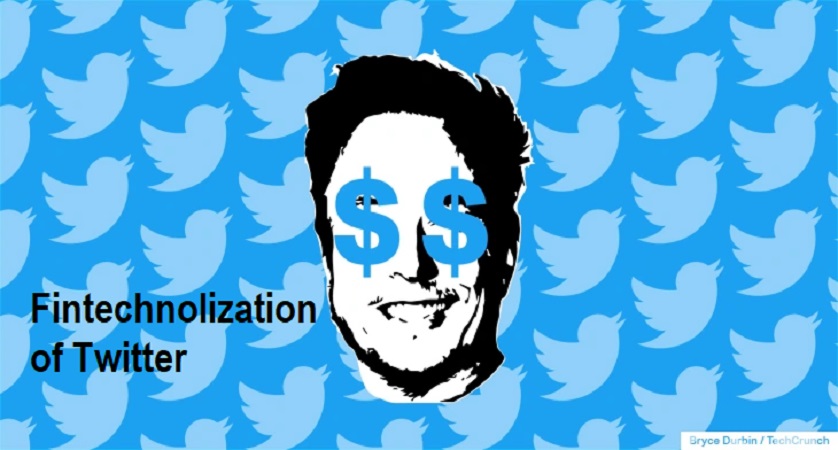
Twitter’s quest to become a payment company has taken its first major step with license acquisition. The company announced Wednesday that it has been granted money transmitter licenses by three US states namely: Missouri, Michigan, and New Hampshire.

Early this year, Twitter made a move to onboard payment into its services as part of Elon Musk’s push to create everything app dubbed X, which was incorporated earlier this year.

A state-approved money transmitter license grants official authorization to an entity or individual to legally participate in the money transmission or payment instrument business.

The aim is to make Twitter a money transmitter in all 50 US states, before expanding the service outside the US – pending approval from regulatory authorities.

The three states’ licenses have set the ball rolling for the social media app, which until its acquisition in October last year by Musk, was solely a space for real-time conversations online.

According to Musk, Twitter aims to launch a payments system by the end of the year, following approvals from both the United States and international markets.

In April, eToro, a social trading company, announced that it has partnered with Twitter to offer financial services within the platform. The partnership would allow Twitter users to access stocks, cryptocurrencies, and other financial assets.

With the licenses, Twitter can now offer financial services such as issuing prepaid cards and providing remittance services involving foreign currencies.

Musk’s “Everything App” vision is tied to X.com — a payment company he started and eventually merged with PayPal. He had last April, set up a trio of holding companies in Delaware with a variation of the name “X Holdings”, as part of his bid to acquire Twitter.
Musk paid $44 billion for Twitter but admitted that it was overpriced. He said in a tweet that buying the company was an “accelerant to creating X, the everything app.”

The Everything App mirrors China’s WeChat app, which has a comprehensive combination of various functionalities such as social media, payments, news, and messaging.

The money transmitter licenses were approved by the states at a time when Meta was launching Threads, a real-time conversation platform that CEO Mark Zuckerberg plans to offer as an alternative to Twitter. The app has recorded 10 million users since it was launched by Instagram on Wednesday.

Zuckerberg said he intends to increase the number of Thread users to 1 billion. “It’ll take some time, but I think there should be a public conversations app with 1 billion+ people on it. Twitter has had the opportunity to do this but hasn’t nailed it. Hopefully, we will,” he said.

However, the news of the money transmitter licenses offers solace to Twitter for the chaos the company experienced during the weekend, following a decision by Musk to limit the number of tweets users can view within the app.

Who Cares About Your Comment?

8

In today’s digital landscape, social media platforms have revolutionized the way we communicate and connect with others. Commenting on posts and engaging in conversations has become an integral part of our online experience. But have you ever wondered why some comments seem to carry more weight than others? This piece  delves into the psychological factors that influence who cares about your comment in the world of social media. 

The Complex Web of Online Interactions 

Within the vast realm of social media, every comment is a thread that weaves a complex web of conversations. When someone posts content, they share their thoughts, ideas, or experiences with others. This act of encoding their message through words, images, or symbols sets the stage for subsequent interactions.Deep within our psyche lies a fundamental need for validation. When someone leaves a comment on our post, whether positive or negative, it serves as a form of acknowledgment. This validation satisfies our longing to be seen, understood, and accepted. It strengthens our sense of social connection, reminding us that our thoughts matter and that we are part of a larger online community. 

The Contextual Puzzle and Psychological Factors at Play 

Decoding a comment is not a straightforward process. The meaning we derive from a comment depends on various factors, including the social, cultural, and personal contexts in which we find ourselves. Comments that resonate with our beliefs and values are more likely to be positively decoded, reinforcing our existing perspectives. Conversely, comments that challenge or contradict our views may be met with resistance or dismissal. 

The significance we attach to comments is influenced by a range of psychological factors. Our self-esteem plays a vital role, as individuals with higher self-worth may place more importance on comments, seeing them as affirmations of their value. Social comparison also enters the picture, as we compare the quantity and quality of comments we receive with those of others. This comparison triggers a sense of validation or competition. Additionally, the fear of missing out (FOMO) drives us to actively seek comments and engagement, avoiding the feeling of being left out or ignored. 

Riding the Emotional Rollercoaster 

Comments have the power to elicit strong emotional responses. Positive comments can evoke joy, satisfaction, and a boost in self-confidence. Conversely, negative comments can trigger feelings of rejection, inadequacy, or anger. These emotional reactions further shape our interpretation of comments and influence our subsequent behavior in online interactions. 

While we may seek validation and connection, we must also recognize that the meaning of comments is subjective and contextual. By cultivating self-awareness, empathy, and respect for diverse perspectives, we can navigate the comment section with greater understanding. Recognizing the psychological intricacies of comment engagement contributes to building healthier and more meaningful online communities, where comments are vehicles for constructive dialogue and connection rather than sources of division.

Tinubu’s Executive Orders Remove 5% Telecom Tax, Address Other Concerns

0

President Bola Tinubu has signed an executive order, abolishing the 5% telecom Excise tax as well as Excise Duty taxes on locally manufactured goods and services.

The move was announced by the Special Adviser to the President on Special Duties, Communications, and Strategy, Dele Alake, on Thursday during a media briefing at the State House in Abuja.

The president also signed three other executive orders, addressing tax policy concerns. They are as follows:
(I) The Finance Act (Effective Date Variation) Order, 2023, which has now deferred the commencement date of the changes contained in the Act from May 28, 2023, to September 1, 2023. This is to ensure adherence to the 90 days minimum advance notice for tax changes as contained in the 2017 National Tax Policy.

(II) The Customs, Excise Tariff (Variation) Amendment Order, 2023. This has also shifted the commencement date of the tax changes from March 27, 2023, to August 1, 2023, and also in line with the National Tax Policy.

(III) The President has given an Order suspending the 5% Excise Tax on telecommunication services as well as the Excise Duties escalation on locally manufactured products.

(IV). Further to his commitment to creating a business-friendly environment, the President has ordered the suspension of the newly introduced Green Tax by way of Excise Tax on Single Use Plastics, including plastic containers and bottles. In addition, the President has ordered the suspension of the Import Tax Adjustment levy on certain vehicles.

The federal government said these decisions are in line with the President’s promise to run a government that will not make life difficult for Nigerians or asphyxiate corporate entities.

The move comes on the heels of the government’s decision to raise taxes and its efforts to curb multiple taxation.

“We wish to state that the intentions behind upward adjustments of some of these taxes are quite noble. They were designed to raise revenue as well as address environmental and public health concerns. However, they have generated some significant challenges for affected businesses, and elicited serious complaints amongst key stakeholders and in the business community,” Aleke said.

Manufacturers and business owners have decried the government’s decision to raise and expand the tax net amid growing economic headwinds orchestrated by fuel subsidy removal and the floating of the foreign exchange market.

Inflation, which stood at 22.41% as of May, is estimated to rise to 30% soon as a result of the policy reforms. This is expected to further squeeze the meager spending power of Nigerians.

Against this backdrop, the federal government has seen itself caught between the devil and the deep blue sea as it pushes to generate more revenue through taxation. The government has introduced an N1,000 Proof of Ownership Certificate levy for vehicles and has announced a partnership with the Market Traders Association of Nigeria (MATAN) to collect VAT from traders and the informal sector.

To ameliorate the impact of these policy reforms, the federal government has been advised to conduct an upward review of the minimum wage to boost spending power through a living wage. The government, however, said it is working with Civil Society Organizations to develop a workable framework for sustainable minimum wage.

Solar Startup Nuru Raises $40million in Series B Round to Address Significant Energy Gap

0

Democratic Republic of Congo (DRC)-based startup Nuru, has raised $40 million in a series B round, to address the significant energy gap in the country.

The series B round was led by The International Finance Corporation (IFC), the Global Energy Alliance for People and Planet (GEAPP), the Renewable Energy Performance Platform (REPP), Proparco, E3 Capital, Voltalia, the Schmidt Family Foundation, GAIA Impact fund, and the Joseph Family Foundation.

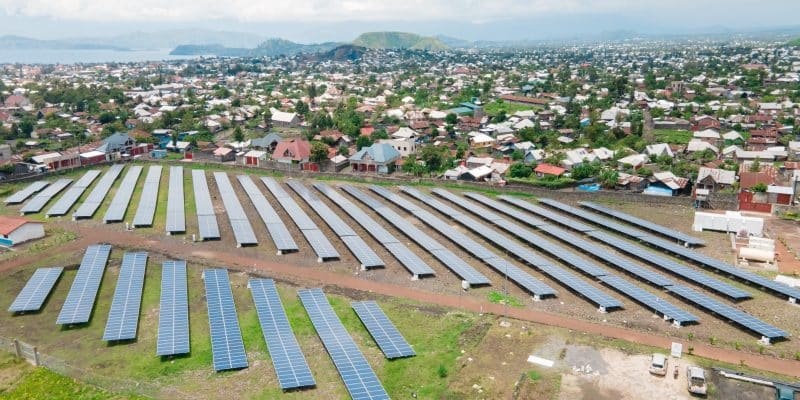
With less than 20% of the population having access to energy, Nuru intends to use the funds to provide a 24-hour power supply for five million people in the country. To achieve this, the company will build three mini-grids in parts of Eastern DRC- Goma, Kindu, and Bunia, with a combined capacity of 13.7 megawatts.

Speaking on the funds raised, co-founder and CEO of Nuru Jonathan Shaw said, “Closing the Series B is a significant milestone in Nuru’s journey, but also demonstrates the viability of the metro grid model in the distributed energy sector in Africa. Nuru extends its heartfelt appreciation to the consortium of investors for their visionary support and unwavering commitment to Nuru’s vision. Together, we will continue to illuminate lives, drive economic growth, and empower communities across the DRC”.

Also commenting on the funds raised, the lead investor in the round, The International Finance Corporation (IFC) country manager Malick Fall said,

“Expanding access to electricity is instrumental to supporting economic growth and improving living standards for people and businesses in the DRC. IFC’s support for Nuru will play a pivotal role in helping to bridge the energy access gap by using an innovative business model, new technology, and more climate-friendly power sources”.

While the IFC’s equity investment also includes financing from the Finland-IFC Blended Finance for Climate Program, the company hopes to close off an additional $28 million in project finance by the end of July.

Nuru’s utility-scale solar mini-grids are designed to provide 24/7 reliable and renewable energy to the communities they are installed. This will help improve climate resilience and sustainable development, which the country desperately needs.

Anticipated outcomes of the Project include the provision of affordable and dependable electricity to approximately 28,000 households and businesses. These beneficiaries currently face challenges related to costly, unreliable, unsustainable, or non-existent access to electricity.

The Project also presents opportunities for commercial and industrial entities, such as telecom tower operators, water pumping stations, substations, agri-processing and milling companies, national banks, and water bottling factories, to become potential off-takers of the generated power.

President Tinubu Signs four Executive Orders: Adjusts 2023 Financial Act and Suspends 5% Tax on Telcom Services

0

President Bola Tinubu has signed four different Executive Orders which include the suspension of the five per cent Excise Tax on telecommunication services as well as the Excise Duties escalation on locally manufactured products; Suspension of the newly introduced Green tax and the suspension of Import tax adjustment levy on some vehicles.

The other executive order is the deferment of the 2023 Finance Act signed by the former president, Muhammed Buhari, which is now slated to commence September 1, 2023 as against initial due date of May 23, 2023. Also deferred is the Customs, Excise Tariff Order to commence on August 1, 2023 as against initial due date of March 27, 2023.

This was made known by the Special Adviser to the President on Special Duties, Communications and Strategy, Dele Alake, while briefing journalists at the State House in Abuja on Thursday.

Mr Alake noted that the effective date variation in the finance act as well as the customs, excise tariff act is to ensure adherence to the 90 days’ minimum advance notice for tax changes as contained in the 2017 National Tax Policy.

According to the President’s Spokesman, the President has issued these orders to cushion the negative impacts of the tax adjustments on businesses and households across affected sectors. He gave the following remarks:

“The President has assured Nigerians that there will not be further tax raise without robust and wide consultations undertaken within the context of a coherent fiscal policy framework.

“Further to his commitment to creating a business-friendly environment, the President has ordered the suspension of the newly introduced Green Tax by way of Excise Tax on Single Use Plastics, including plastic containers and bottles.

“In addition, the President has ordered the suspension of Import Tax Adjustment levy on certain vehicles.

“As a listening leader, the President issued these orders to ameliorate the negative impacts of the tax adjustments on businesses and chokehold on households across affected sectors.

“His Excellency will not exacerbate the plight of Nigerians.”

Alake reiterated the President’s commitment to reviewing complaints about multiple taxation, local and anti-business inhibitions. He also noted that the Tinubu-led administration will continue to promote an enabling environment through friendly policies that would allow businesses to flourish in the country.