DD
MM
YYYY

PAGES

DD
MM
YYYY

spot_img

PAGES

Home Blog Page 4067

Nigeria Needs To Inject Productivity To Sustain Appreciating Naira Position

0

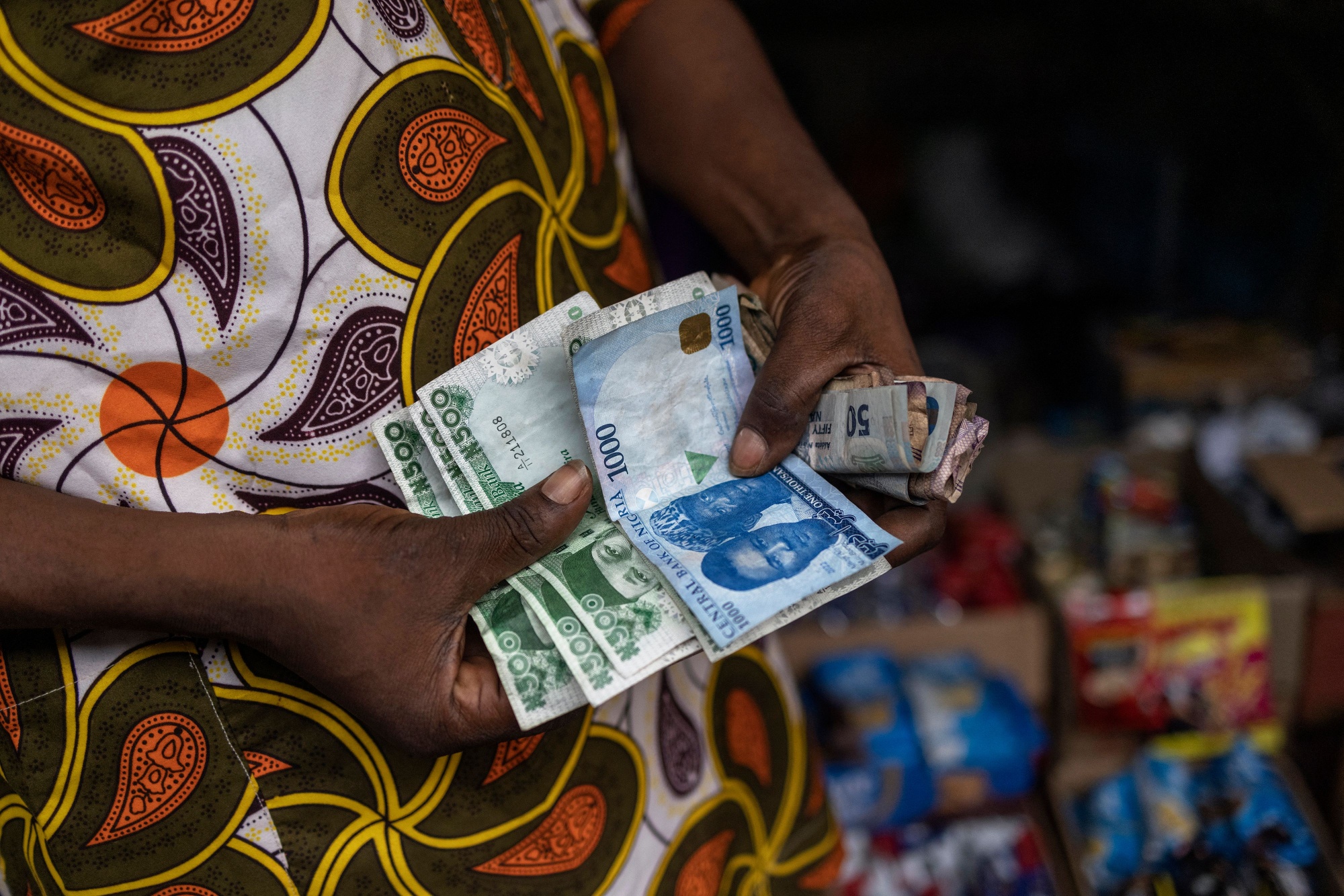
Good News for Naira: “The news that the Central Bank of Nigeria (CBN) has begun to clear some of its FX backlogs has spurred an appreciation of the naira in both the official and parallel exchange markets. The naira rose to N1,004/$1 in the parallel market and around N793.28/$1 in the official window, underscoring a notable performance compared to Wednesday, when it traded at N1,142/$1 and N799.32/$1 respectively, according to FMDQ OTC Securities Exchange.”

Nigerian banks received dollars from investors and importers some years ago, which they then invested with the CBN in a market known as the Forward Dollar Market. When contracts in that Forward market reached maturity, the CBN was unable to make the payment due to a lack of liquidity in foreign exchange.

Now, the CBN is gradually settling that dollar obligation. This development enables Nigerian banks to reimburse their investors and secure additional funds, which in turn helps stimulate trade and improve FX liquidity.

This is a welcome development. Nigeria is working on the Supply side and if that happens, the pricing equilibrium will shift, ECON 101. That said, we need to think today, tomorrow and the long-term.

Why? If you live in Lagos and borrow from loan app A to pay app B, to avoid wahala, remember that one day app B will come for its money. So, to deal with the root cause and avoid wahala, you need to find that money fast to pay B.

Nigeria, as I have noted, has tools to bring Naira down, in the short-term, as we are a resource-rich nation (gas, crude oil, lithium, etc); the challenge is maintaining the stability over the long-term. Fascinatingly, that requires productivity which goes beyond pre-selling crude oil and gas. I wish the team good luck on this. Help us make things in Nigeria and become more productive. If not, loan app B will come knocking and Naira will bleed again.

Comment on Feed

Comment 1: enator Jimoh Ibrahim Oxford economics. He recommended on Channels TV that we should borrow $100billion to clear existing debt and structure the new debt for repayment to start in 10 years. By then you would have developed infrastructure enough to drive productivity in the economy. This is not me, it’s our Senator from Ondo West.

My Response: “He recommended on Channels TV that we should borrow $100billion to clear existing debt and structure the new debt for repayment to start in 10 years.” – nothing new there. We have been doing that since 2015. The problem is that around 2019, they stopped lending us money without big collateral. That was when Emefiele pre-sold crude oil to get some cash. Maybe, we can give Goldman Sachs Ondo West (just joking) for $100b because they will not do it without something these days.

Nigerian Naira Appreciates on Central Bank’s Move to Clear Matured FX Forwards With Banks

0

The news that the Central Bank of Nigeria (CBN) has begun to clear some of its FX backlogs has spurred an appreciation of the naira in both the official and parallel exchange markets.

The naira rose to N1,004/$1 in the parallel market and around N793.28/$1 in the official window, underscoring a notable performance compared to Wednesday, when it traded at N1,142/$1 and N799.32/$1 respectively, according to FMDQ OTC Securities Exchange.

On Thursday, the market was hit with the news that the CBN is clearing its outstanding matured FX forwards with banks, stirring the naira’s unprecedented performance.

The matured FX forwards context

Nigerian banks received dollars from investors and importers some years ago, which they then invested with the CBN in a market known as the Forward Dollar Market. When contracts in that Forward market reached maturity, the CBN was unable to make the payment due to a lack of liquidity in foreign exchange.

Now, the CBN is gradually settling that dollar obligation. This development enables Nigerian banks to reimburse their investors and secure additional funds, which in turn helps stimulate trade and improve FX liquidity.

Some banks such as Citibank, Stanbic IBTC, and Standard Chartered, have confirmed that the CBN has settled some of its FX obligations through statements.

In a statement released by its Treasury and Trade Solutions department, Citi announced, “CBN HAS DONE IT.”

The statement titled ‘Settlement of Matured FX Forwards by CBN’, said, “We have been directed to inform you that the CBN has delivered all outstanding matured forward forex.

“We thank you for your patience and cooperation and value you for your business and partnership. Please speak with your Relationship Manager or your Trade Service Professional for clarification and additional details.

“It is a gradual payment that was done secretly, CBN didn’t make a fuss about it. It started yesterday and continued all through the night.”

The bank encouraged its customers to reach out to their respective Relationship Manager or Trade Service Professional for further clarification on the matter.

Also, announcing the development, Stanbic IBTC said in a statement, “Yesterday, the apex bank began clearing the backlog of outstanding Retail SMIS obligations. The total amount cleared is yet to be ascertained.”

The development, which is said to have cost the CBN around $2.8 billion, follows several moves by the federal government to boost the nation’s FX inflow. In the past few months, the government has intensified efforts to increase dollar liquidity through borrowing. The borrowing has been executed as part of a strategy that involves securing an immediate cash loan using the expected revenues generated from a designated portion of future crude oil production.

Last month, the government moved to securitize the NLNG dividends over a period of time and use it to borrow money to curb the depreciation of the Naira against the Dollar.

The strategy has birthed the $10bn announced recently by the Minister of Finance and Coordinating Minister of the Economy, Wale Edun, at the 29th Nigerian Economic Summit.

“In addition, from the supply of foreign exchange through NNPC, increased production, reduced expenditure, from transactions such as forward sales, from our discussions with sovereign wealth funds, which are ready to invest and provide advanced alongside that investment, there is a line of sight of $10bn worth of foreign exchange in the relatively near future in weeks rather months,” he said.

Experts have reacted to the development, with a note that it will yield positive economic impacts, especially in the aviation sector. The Chief Executive Officer of Dairy Hills Limited, Kelvin Emmanuel, said that besides the appreciation of the naira, the move will help close the gap in FX rates across markets.

He added that the CBN’s action of clearing forex forwards, particularly commercial letters of credit, initially with correspondent banks and subsequently with Nigerian banks, totaling around $2.8 billion, signifies that banks can secure unencumbered credit lines for facilitating the opening of letters of credit for Nigerian corporations that depend on forwards to import goods.

“Supply from the gas forwards signed between the Ministry of Finance incorporated and international banks that are officially external asset managers to the CBN for financialising five-years of dividends from NLNG that the NNPC holds 49 percent, means that the 45 percent black market premium divergence we have seen that the official I&E rates will close ranks significantly and come back within fair value.

“This is necessary to keep the price of PMS, diesel, and Jet A1 within reasonable limits and ensure that consumer goods from durable goods import do not continue inflating, especially going into the festive season,” he said.

Rwanda: The Implications of No Visa Regime in Africa

0

Rwanda is a country that welcomes all Africans with open arms. It is one of the few nations in the continent that does not require visas or fees for African visitors. This means that any African can get on a plane to Rwanda whenever they wish and will not pay a thing to enter our country. This is a gesture of solidarity and brotherhood that reflects our vision of a united and prosperous Africa.

I will share with you some of the reasons why you should visit Rwanda and what you can expect from this beautiful land of a thousand hills. Whether you are looking for adventure, culture, wildlife, or relaxation, Rwanda has something for everyone. Here are some of the highlights of visiting Rwanda:

Experience the thrill of trekking mountain gorillas in their natural habitat. Rwanda is home to more than half of the world’s remaining mountain gorillas, and you can get up close and personal with these majestic creatures in Volcanoes National Park. This is a once-in-a-lifetime opportunity that you don’t want to miss.

Explore the vibrant and cosmopolitan capital city of Kigali. Kigali is a modern and safe city that offers a variety of attractions, such as museums, markets, restaurants, and nightlife. You can also learn about the history and resilience of Rwanda at the Genocide Memorial, which honors the victims and survivors of the 1994 genocide.

Discover the rich and diverse culture of Rwanda. Rwanda is a country with a strong sense of identity and tradition. You can witness the colorful and energetic dances, music, and crafts of the different ethnic groups, such as the Tutsi, Hutu, and Twa. You can also taste the delicious and healthy cuisine of Rwanda, which features fresh fruits, vegetables, grains, and meat.

Implication of No Visa Regime in Africa

Africa is a continent with diverse cultures, languages, and histories. It is also a continent with many challenges, such as poverty, conflict, and disease. One of the ways that African countries have tried to overcome these challenges is by promoting regional integration and cooperation. One of the initiatives that aims to achieve this goal is the African Union’s Agenda 2063, which envisions a “continent of free citizens and expanded horizons, where the full potential of women and youth is realized”.

One of the pillars of Agenda 2063 is the creation of an African passport and the abolition of visa requirements for all African citizens within the continent. This would allow for free movement of people, goods, and services across borders, and foster a sense of African identity and solidarity.

The benefits of such a policy are manifold: it would boost trade, tourism, and investment; it would enhance cultural exchange and social cohesion; it would facilitate labor mobility and skills transfer; it would improve security and peacebuilding; and it would empower African citizens to participate in the development of their continent.

However, implementing a no visa regime in Africa is not without challenges. Some of the obstacles that need to be overcome include harmonizing immigration policies and standards among different countries; ensuring adequate infrastructure and capacity at border posts; addressing security and health concerns; managing migration flows and preventing irregular migration; protecting the rights and welfare of migrants; and balancing national interests with continental aspirations. These challenges require political will, financial resources, technical expertise, and regional coordination.

The no visa regime in Africa is a bold and ambitious vision that has the potential to transform the continent for the better. It is also a realistic and achievable goal that has been endorsed by many African leaders and supported by many African citizens. The question is not whether it can be done, but how it can be done.

The answer lies in the collective commitment and action of all stakeholders, from governments to civil society, from businesses to academia, from media to ordinary people. Together, we can make Africa a continent of free movement and unlimited opportunities.

Enjoy the stunning scenery and biodiversity of Rwanda. Rwanda is blessed with a variety of landscapes, from lush green hills and valleys to volcanic mountains and lakes. You can admire the beauty of nature and wildlife in several national parks, such as Akagera, Nyungwe, and Gishwati-Mukura. You can also see the endangered golden monkeys, chimpanzees, elephants, giraffes, zebras, and more.

Paystack Receives Licenses for Egypt, Rwanda, Côte d’Ivoire; Dubai FSA Approves use of $XRP & $TON; St. Galler Kantonalbank to offer ETH, BTC custodial Services

0

Paystack, the leading online payment platform in Africa, has announced that it has obtained the required regulatory approvals to launch its services in three new markets: Egypt, Rwanda and Côte d’Ivoire. This is a major milestone for the company, which aims to connect millions of African businesses with global customers and enable them to accept payments from anywhere in the world.

Paystack was founded in 2015 by Shola Akinlade and Ezra Olubi, two Nigerian software engineers who wanted to solve the problem of online payments in Africa. They built a simple and secure API that allows merchants to integrate various payment methods, such as cards, bank transfers, mobile money and USSD, into their websites and apps. Since then, Paystack has grown rapidly, serving over 60,000 businesses across Nigeria, Ghana and South Africa, and processing over 50% of all online transactions in Nigeria.

In October 2020, Paystack made headlines when it was acquired by Stripe, the global leader in online payments, for a reported $200 million. The deal was the largest acquisition of a startup from Africa and marked Stripe’s entry into the continent. Stripe said it would support Paystack’s expansion across Africa and leverage its technology to accelerate the development of the internet economy in the region.

Now, Paystack is ready to enter three more African countries: Egypt, Rwanda and Côte d’Ivoire. These markets have a combined population of over 160 million people and a growing demand for online commerce and digital services. Paystack said it has been working closely with the local regulators and partners to ensure compliance with the laws and regulations of each country. The company also said it has hired teams on the ground to provide support and guidance to its new customers.

Paystack’s co-founder and CEO, Shola Akinlade, said: “We are thrilled to bring Paystack’s innovative payment solutions to these vibrant and fast-growing markets. We believe that by enabling seamless and secure online payments, we can unlock new opportunities for millions of African businesses and consumers. We are grateful to our regulators, partners and customers for their support and trust in our vision.”

Paystack’s expansion is part of its broader strategy to become the payment platform of choice for every online business in Africa. The company said it plans to launch in more countries in the near future and continue to improve its product offerings and customer experience. Paystack also said it remains committed to its mission of powering growth for incredible businesses across the continent.

Dubai Financial Services Authority (DFSA) approves use of $XRP and $TON for Dubai International Financial Centre (DIFC)

The Dubai Financial Services Authority (DFSA), the regulatory body for the Dubai International Financial Centre (DIFC), has announced that it has approved the use of two cryptocurrencies, $XRP and $TON, for transactions within the DIFC. This is a major milestone for the DIFC, which aims to become a leading global hub for fintech and blockchain innovation.

$XRP is the native currency of the Ripple network, a decentralized platform for cross-border payments that uses blockchain technology to reduce costs and increase speed and transparency. $TON is the token of the Telegram Open Network, a scalable and secure blockchain platform that supports smart contracts, decentralized applications and file storage.

The DFSA said that it has conducted a thorough assessment of the technical, legal and regulatory aspects of these two cryptocurrencies, and has concluded that they meet the criteria for being classified as virtual assets under the DFSA’s framework. The DFSA also said that it has established appropriate safeguards and controls to ensure the protection of investors and the integrity of the DIFC’s financial system.

The approval of $XRP and $TON means that DIFC-based entities can now use these cryptocurrencies for various purposes, such as remittances, trade finance, tokenization and digital asset custody. The DFSA said that this will enhance the efficiency, diversity and competitiveness of the DIFC’s financial services sector, and will attract more fintech and blockchain companies to establish their presence in the DIFC.

The DFSA also said that it will continue to monitor the developments and innovations in the crypto space, and will collaborate with other regulators and stakeholders to foster a conducive and supportive environment for the growth of the digital economy in Dubai and the region.

St. Galler Kantonalbank to offer Bitcoin and Ethereum custody services

In a major development for the crypto industry, Swiss Bank St. Galler Kantonalbank (SGKB) has announced that it will start offering Bitcoin and Ethereum custody services to its clients. This makes SGKB the first state-backed bank in Switzerland to enter the crypto space.

Switzerland is known for its banking sector, which offers high levels of privacy, security and stability to its clients. However, in recent years, the traditional banking system has faced increasing competition from the emerging crypto industry, which promises faster, cheaper and more transparent transactions.

SGKB said that it decided to launch the new service in response to the growing demand from its customers, who are interested in diversifying their portfolios with digital assets. The bank will provide secure storage and trading of Bitcoin and Ethereum, as well as advisory services for crypto investors.

The bank has partnered with a Swiss fintech company, Crypto Finance AG, to provide the technical infrastructure and regulatory compliance for the crypto service. Crypto Finance AG is a licensed securities firm that offers crypto asset management, brokerage, and storage solutions.

SGKB said that it aims to offer a comprehensive and convenient service for its clients, who will be able to access their crypto assets through their existing e-banking platform. The bank also said that it will apply the same high standards of security, quality, and transparency that it uses for its traditional banking services.

The bank’s CEO, Roland Ledergerber, said that the launch of the crypto service is a strategic move that reflects the bank’s innovation and digitalization strategy. He said that the bank wants to position itself as a leader in the digital asset space and offer its clients the best possible solutions.

The bank’s head of digital banking, Felix Kunz, said that the crypto service is a natural extension of the bank’s existing offerings, which include online trading, robo-advisory, and e-mortgage. He said that the bank sees crypto assets as an attractive investment opportunity and a way to diversify its product range.

The bank’s announcement comes at a time when Switzerland is emerging as a global hub for crypto and blockchain innovation. The country has a supportive regulatory environment and a vibrant ecosystem of startups, investors, and institutions that are active in the crypto space.

SGKB is not the only Swiss bank that is exploring the crypto market. Earlier this year, another state-backed bank, Basler Kantonalbank (BKB), said that it was working on launching a crypto service in collaboration with Bank Cler, its subsidiary. BKB said that it plans to offer Bitcoin trading and custody services to its clients by 2024.

some Swiss banks have decided to embrace crypto and offer services related to digital assets, such as custody, trading and lending. This is a significant development, as it shows that crypto is becoming more mainstream and accepted by the financial establishment.

One of the pioneers in this field is SEBA Bank, which was founded in 2018 and obtained a banking and securities dealer license from the Swiss Financial Market Supervisory Authority (FINMA) in 2019. SEBA Bank aims to bridge the gap between the crypto and the traditional financial world, by offering a range of products and services for both individual and institutional clients.

SEBA Bank allows its customers to buy, sell, store and transfer various cryptocurrencies, such as Bitcoin, Ethereum, Litecoin and Stellar. It also offers a digital wallet app, a debit card that can be used to pay with crypto at over 42 million merchants worldwide, and a crypto lending platform that enables users to borrow or lend crypto against fiat or other crypto assets.

Another Swiss bank that has embraced crypto is Sygnum Bank, which was also founded in 2018 and received a banking and securities dealer license from FINMA in 2019. Sygnum Bank claims to be the world’s first digital asset bank and offers a similar range of services as SEBA Bank, such as custody, trading and lending of cryptocurrencies.

Sygnum Bank also supports tokenization, which is the process of converting real-world assets into digital tokens that can be traded on blockchain platforms. Sygnum Bank has partnered with various companies to tokenize assets such as art, real estate, diamonds and wine. It also plans to launch its own digital Swiss franc (DCHF), which will be backed by fiat currency and enable instant settlement of transactions.

Both SEBA Bank and Sygnum Bank are examples of how Swiss banks are adapting to the changing landscape of the financial industry and embracing the opportunities offered by crypto. By doing so, they are not only catering to the growing demand for crypto services from their customers, but also positioning themselves as innovators and leaders in the digital asset space.

The Swiss banking sector is also facing competition from foreign players that are entering the crypto space. In August, Germany’s largest bank, Deutsche Bank, announced that it had joined forces with a New York-based fintech company, Fidelity National Information Services (FIS), to launch a crypto custody platform. The platform will target institutional investors such as hedge funds, family offices, and asset managers.

The growing interest and involvement of banks in the crypto industry is a sign of the increasing maturity and acceptance of digital assets as a legitimate asset class. It also shows that banks are adapting to the changing needs and preferences of their customers, who are looking for more innovative and diverse financial services.

Japan’s $113 Billion, CBN on Old Naira Notes and MicroStrategy 155 BTC Purchase

0

The Japanese government has announced a massive stimulus package worth 12.7 trillion yen ($113 billion) to tackle the rising inflation and support the economic recovery from the pandemic. The package, which was approved by the cabinet on Friday, includes measures such as cash handouts, tax breaks, subsidies, and infrastructure spending.

The stimulus package is aimed at boosting consumer spending, creating jobs, and enhancing competitiveness in key sectors such as green energy and digitalization. The government expects the package to raise the gross domestic product (GDP) by 1.6% in fiscal 2022 and 0.8% in fiscal 2023.

The stimulus package comes as Japan faces a surge in inflation, which hit a 13-year high of 3.1% in October. The inflation spike was mainly driven by higher energy and food prices, as well as supply chain disruptions caused by the global chip shortage and the COVID-19 outbreak in Asia.

The government hopes that the stimulus package will ease the pressure on households and businesses and prevent a deflationary spiral. The government also plans to introduce a supplementary budget of about 5 trillion yen ($44 billion) to finance part of the package.

The stimulus package is the first major economic policy of Prime Minister Fumio Kishida, who took office in October. Kishida has pledged to pursue a “new capitalism” that balances growth and redistribution, and to tackle the long-term challenges of Japan’s aging population, low birthrate, and public debt.

Kishida has also vowed to strengthen Japan’s alliance with the United States and its cooperation with other democracies in the Indo-Pacific region, amid rising tensions with China over Taiwan and other issues.

The Central Bank of Nigeria (CBN) has announced that the old naira notes will continue to be accepted as legal tender beyond December 31, 2023. This is contrary to some reports that claimed that the old notes would be phased out by the end of this year.

The CBN clarified that the introduction of the new polymer notes in 2019 was meant to enhance the durability and security of the naira, not to replace the old notes. The CBN also stated that the old and new notes will coexist until the old notes are gradually withdrawn from circulation.

The CBN urged the public to disregard any misinformation or rumors about the status of the old naira notes and to report any cases of refusal to accept them as legal tender to the nearest CBN branch or office. The CBN also assured the public that it is committed to ensuring the stability and integrity of the naira as the national currency.

MicroStrategy bought 155 more Bitcoin?for $5.3 million.

MicroStrategy, the business intelligence software company, has announced that it has purchased an additional 155 Bitcoin for $5.3 million in cash. This brings its total holdings of the Bitcoin holdings, worth about $7.6 billion at current prices. As of the end of October, the Tysons, Virginia-headquartered firm co-founded by Michael Saylor was the owner of 158,400 bitcoins acquired at a total cost of $4.69 billion.

The company said that it acquired the Bitcoin at an average price of $34,063 per coin, including fees and expenses. The purchase was made in accordance with its treasury reserve policy, which aims to maximize long-term value for its shareholders.

MicroStrategy has been one of the most vocal and aggressive proponents of Bitcoin as a store of value and a hedge against inflation. The company started buying Bitcoin in August 2020, when it had a market capitalization of about $1.3 billion. Since then, it has raised more than $2 billion through debt offerings and equity sales to fund its Bitcoin purchases.

The company’s CEO, Michael Saylor, has also become a prominent evangelist for Bitcoin, frequently tweeting and speaking about its benefits and potential. He has argued that Bitcoin is a superior asset class than cash, gold, or stocks, and that it is the future of money and technology.

MicroStrategy’s Bitcoin strategy has attracted both praise and criticism from investors and analysts. Some have applauded the company for its bold and visionary move, while others have questioned its risk management and valuation. The company’s stock price has been highly correlated with Bitcoin’s price movements, making it more volatile than its peers.

Despite the challenges and uncertainties, MicroStrategy seems determined to continue buying and holding Bitcoin for the long term. The company said that it remains committed to its digital asset strategy and that it may acquire more Bitcoin as part of its overall corporate strategy.