DD
MM
YYYY

PAGES

DD
MM
YYYY

spot_img

PAGES

Home Blog Page 4068

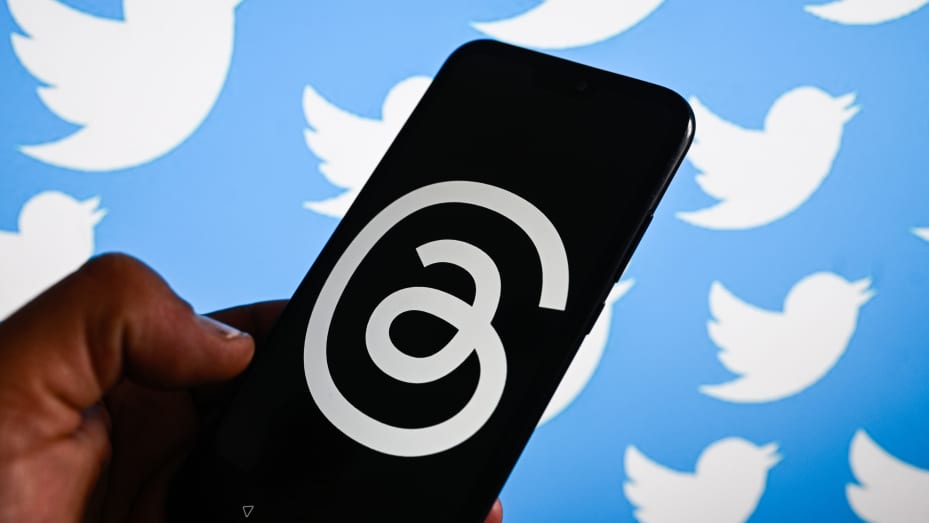
Why Meta’s Threads User Engagement Is Fading, The Power of First-Scaler Advantage

1

When I wrote this piece, making a case that text-based Threads may not do well because most of its native Instagram users are photo-first users, many called me “pro-Musk”, instead of focusing on the thesis of my piece.

Today, early data is showing that my call may be right: “Meta’s Twitter-like platform Threads, has recently recorded a decline in user engagement and daily active users days after its launch. According to data from Sensor Tower, the platform saw a 20% decline in daily active users and a 50% reduction in time spent within a week of a record-breaking 100 million sign-ups.”

Speaking on the decline in user engagement on Threads, the managing director at Sensor Tower, Anthony Bartolacci said,

“The Threads launch really did break the internet, or at least the sensor Tower models. In the 10-plus years, Sensor Tower has been estimating app installs, the first 72 hours of Threads was truly in a class by itself.

“These early returns signal that despite the hoopla during its launch, it will still be an uphill climb for Threads to carve out space in most users’ social network routine. The backing of Meta and the integration with Instagram likely gives Threads a much higher flood than other services, but it will need a more compelling value proposition than simply ‘Twitter, but wiFirsthout Elon Musk”.

In my note when everyone was singing the praises of Threads, I wrote “As an investor, I will not invest in the fact that Threads has 200 million users because it does not.” 

Good People, it is a first-scaler advantage and winner-take-all. Text-based microblogging has been won by Twitter. Instagram natives cannot match that, just like LinkedIn cannot add photo-sharing and expect us to migrate to sharing photos. For Meta to compete against Twitter, it goes beyond having just “users”, you need the right users – and those are people who like to write.

I was a Library prefect in secondary school, it was a lot of work to coordinate the school for debates. There, you understand that it was not about being grammar-smart, it was about being aware, to score points before judges. Suddenly, tactics win because you need to give judges points in styles to get points. The same applies to social media; it is about the styles your users prefer: photo, video, text, etc. Most times, you cannot swap those.

A first-mover advantage can be simply defined as “a firm’s ability to be better off than its competitors as a result of being first to market in a new product category”. The first scaler advantage is the advantage which comes to a firm for being  the first to become extremely popular and ubiquitous by scaling its services in a category.

But note this: the greatest companies in the world are known for one thing: great products. Interestingly, all great products are known by customers. That typically comes because they are well scaled. Extrapolate, you’re talking of  first-scaler advantage, a leverageable compounding competitive advantage which comes with economies of scale as a result of being the first company to achieve scale in that category and improve marginal cost, offering products at highest value and best optimized cost.

Meanwhile, Twitter has started paying creators.

Elon Musk’s company, which is being sued for allegedly not paying some $500 million in severance owed to former employees, began sending out payments this week. But the recipients weren’t the former employees but, rather, influencers and creators who Musk is rewarding for posting on the platform. Many of the recipients who claimed to have received payouts from Twitter live on the far-right side of the spectrum. Andrew Tate, who is being investigated in Romania for allegations of rape and human trafficking, said he received $20,000 from Twitter. (Fortune Newsletter)

Comment on Feed

Comment 1: Ndubuisi, your analysis raises an interesting point. If a prominent platform like Instagram, with its photo-first user base, struggles to compete with Twitter’s text-based microblogging, it begs the question: who else can pose a significant challenge to Twitter’s dominance?

It seems like finding the right user base, those who enjoy writing, is crucial for any platform aiming to take on Twitter. I wonder if we will ever witness a worthy competitor emerge in the socio-microblogging space.

My Response: They have the resources to get those users. If they drop $20k to top 20k users of Twitter, they can create a tribe of text-writers there at Threads. At 200m daily users, Threads could generate $8 billion in annual revenue. So, it is a good math.

Threads engagement cools off. The debut of Meta’s Threads may have been unprecedentedly explosive, but the dust has already started to settle. According to a CNBC report, marketing intelligence firms think the Twitter lookalike’s number of daily active users fell by 20-25% between Saturday last week and Tuesday and Wednesday this week, and one (Sensor Tower) said the time the average user was spending on the platform each day had halved to 10 minutes. (Fortune newsletter)

Comment 2: Twitter thrives on its active community, which fuels the spread of words like wildfire through tweets and retweets. Meanwhile, Instagram users prefer dazzling visuals as their mode of expression. Meta smartly tried to move Instagram users onto Threads, the majority of whom are those who aren’t big on words. Matching up to Twitter’s energy, let alone overthrowing it, will require substantial effort.

Comment 3: I completely agree. I never got fascinated about Threads and didn’t make an attempt to download it. Each of the SM networks have built unique communities of users in and around them. Scalability should check the pulse of users to win all. Thanks Prof. Ndubuisi Ekekwe for your business insights and thought leadership.

Comment 4: Spot on Prof!

The hype is already fizzling out. Curiosity got the better of many SM users and the excitement to join what is presently trending is fading. I am not one that follows a popular trend and I am on Twitter more than on Instagram (visit there once in 2 weeks).
But Meta can focus on e-commerce as so many deals go down on Instagram instead of going after Elon

Comment 5: My erudite professor of an Eastern descent. I never thought you less wiser. In fact, not interfacing with your piece in a day is akin to not visiting my LinkedIn page in a day.

Yes! First scaler advantage has a lot to do with swift propagation and leading advantage in competitive businesses. But of more importance is establishing businesses with commercial intercourse. Meta will definitely never do well in micro blogging business even with the massive followers as the initial turnout towards Threads is basically out of curiosity and not interest in particular. But Meta getting involved in an e-commerce or payment platform venture could do a lot better, even beyond the first timers in the businesses due to the commercial intercourse or alignment with the nature of Instagram and Facebook businesses, which have a lot to do with buying, selling and rendering of services.

My little thinking sir.

Comment 6: You’re spot on. Evidently Elon Musk understood this too which was why he invested U$D44B instead spending a fraction of that amount trying to clone Twitter.

I said it from the onset that the rapid user rise Threads experienced was fuelled more by curiousity than any strong fundamentals.

When it comes to micro blogging, Twitter is the absolute category King.

Aspiring Twitter killers should give up already; you don’t make something obsolete by duplicating it. Unfortunately for Meta, they’re not known for innovation as much as copycatism. For Threads to thrive they must create a compelling differentiated element of microblogging.


Threads Sees Decline in User Engagement And Daily Active Users

0

Meta’s Twitter-like platform Threads, has recently recorded a decline in user engagement and daily active users days after its launch.

According to data from Sensor Tower, the platform saw a 20% decline in daily active users and a 50% reduction in time spent within a week of a record-breaking 100 million sign-ups.

Speaking on the decline in user engagement on Threads, the managing director at Sensor Tower, Anthony Bartolacci said,

“The Threads launch really did break the internet, or at least the sensor Tower models. In the 10-plus years, Sensor Tower has been estimating app installs, the first 72 hours of Threads was truly in a class by itself.

“These early returns signal that despite the hoopla during its launch, it will still be an uphill climb for Threads to carve out space in most users’ social network routine. The backing of Meta and the integration with Instagram likely gives Threads a much higher flood than other services, but it will need a more compelling value proposition than simply ‘Twitter, but without Elon Musk”.

Also, data from Similarweb, an Israeli-based software & data company specializing in web analytics, web traffic, and performance, showed a similar decline in Threads users’ engagement. The app saw a decline of more than 25% in daily active users between its July 7 peak and Monday for Threads users on Android phones worldwide.

Similarweb data suggested that Threads usage dropped by more than half with the average amount of time U.S. users spent on the app dropping from about 20 minutes on July 6 to just over 8 minutes on July 10.

Senior insights manager at the data company David Carr stated that while there was intense interest in checking out the app initially, not every user has made a habit of visiting Threads as often as they might other social apps.

This report is coming after Twitter CEO Linda Yaccarino downplayed the reports of Twitter’s traffic tanking, following the launch of Meta’s Threads.

The new CEO of the Microblogging app on Monday took to her Twitter handle to disclose that last week, Twitter had its biggest usage since February.

Threads has continued to make headlines since its debut, after becoming the fastest-growing app with 100 million users in under a week. The increased number of sign-ups was however expected as it is with new apps and also because several users were searching for Twitter alternatives following Musk’s continuous “unpleasant” changes on Twitter.

Meanwhile, Threads’ traffic decline in user engagement could be linked to the fact that the app is still in its early days, with several interesting features still missing on the platform. For instance, the app does not yet have a direct messaging function and lacks a desktop version that certain users, such as business organizations rely on.

The team at Meta during the launch of the app, however disclosed that in the coming months, new features will be delivered to continue to improve users’ experience.

Though Threads is off to a remarkable start, having leveraged Instagram’s social graph to quickly scale its user base and users’ social connections, the app’s long-term future is uncertain.

FTC Investigates OpenAI Over Handling of Users’ Data by ChatGPT

0

The Federal Trade Commission (FTC) has commenced an investigation on Artificial Intelligence company OpenAI, maker of ChatGPT, over the handling of users’ data by the chatbot.

In a 20-page letter to OpenAI, the FTC asked the company to respond to dozens of requests ranging from how it obtains the data it uses to train its large language models (LLM), to how it generates information about individuals.

The request from FTC, calls for descriptions of how OpenAl tests, tweaks, and manipulates its algorithms, particularly to produce different responses or to respond to risks, and in different languages.

The request also asks the company to explain any steps it has taken to address cases of “hallucination,” an industry term describing outcomes where an Al generates false information.

FTC’s investigation on the Artificial Intelligence company is coming after it received reports that OpenAI’s ChatGPT generated statements about real individuals that are false and misleading.

Recall that in April 2023, a regional Australian Mayor Brian Hood, threatened to sue OpenAI if it does not correct ChatGPT’s false claims that he had served time in prison for bribery, in what would be the first defamation lawsuit against the AI company.

The mayor became concerned about his reputation when members of the public brought to his notice that ChatGPT had falsely accused him as a guilty party in a foreign bribery scandal involving a subsidiary of the Reserve Bank of Australia in the early 2000s.

His lawyers, therefore, sent a letter of concern to OpenAI on 21 March, giving the company  28 days to fix the errors about their client or face a possible defamation lawsuit.

A recent check of Brian Hood on ChatGPT is met with the message, “I’m unable to produce a response”, this suggests that OpenAI has taken down the defamatory info concerning the Mayor.

It is understood that publishing such misleading information could amount to defamation or libel or simply “reputational damage” as the FTC’s current letter to OpenAI reportedly calls them.

OpenAl has been upfront about some of the limitations of its products. For example, the white paper linked to GPT’s latest release, GPT-4, explains that the model may produce content that is nonsensical or untruthful in relation to certain sources.

One of the major shortcomings of ChatGPT is its tendency to produce inaccurate or incomprehensible texts in the midst of generating plausible and compelling responses. This is a widely pervasive issue with language models and ChatGPT is also not immune to this hallucination defect. The company has however continued to warn users that chatGPT can occasionally generate incorrect facts.

Notably, the FTC has issued multiple warnings that existing consumer protection laws apply to AI, even as the administration and Congress struggle to outline new regulations.

The FTC’s demands for OpenAI are the first indication of how it intends to enforce those warnings. If the FTC finds that a company violates consumer protection laws, it can levy fines or put a business under a consent decree, which can dictate how the company handles data.

FTC’s probe comes as the US government is taking its first tentative steps toward establishing rules for artificial intelligence tools. It is worth noting that the Biden administration has previously introduced a “guide” around the development of AI systems in the form of a voluntary “bill of rights” which entails five principles that companies should consider for their products.

These include data privacy, protections against algorithmic discrimination, and transparency around when and how an automated system is being used.

Meanwhile, OpenAI has struck a deal with AP on using AI systems to improve journalism.

The Associated Press announced it’s embarking on a two-year partnership with OpenAI, the generative artificial intelligence company behind ChatGPT. Though the chatbot’s text-generating capabilities have raised questions about whether such technology will ultimately enhance or eliminate newsrooms, the “AP hopes to be an industry leader in developing standards and best practices” for AI use in journalism, writes Axios. Per a joint statement, OpenAI will use stories from the newswire’s “high-quality, factual text archive” dating back to 1985 to train its algorithms, and the AP will purportedly benefit from its partner’s “technology and product expertise.”

  • The AP helped pioneer the use of automation in news gathering, leaning on AI for about 10 years now in coverage of corporate earnings and local sporting events.
  • Generative AI is not used to produce AP news stories, but other newsrooms have attempted to incorporate the technology with mixed results.
  • Authors, visual artists and source-code owners have sued generative AI companies for intellectual property violationswhen their work has allegedly been used to train AI systems.

UI Don, Idowu Olayinka, Enunciates the Relevance of Pop Arts to Africa’s Economy and Global Rating

0

University of Ibadan Don and former Vice Chancellor, Professor Abel Idowu Olayinka, has enunciated the continuing relevance of Pop Arts in promoting cultural and socioeconomic exchanges across the regions of Africa and positioning the continent to have more global relevance.

The professor made this call on Thursday during the unveiling of “Twenti Tiri”, a Pop Art exhibition, at the Cornelius Adepegba Museum of Africa Art (CAMAA), Institute of African Studies, University of Ibadan.

Twenti Tiri which was described as a product of the ingenuity of one of Nigeria’s young minds, Animashaun Quazeem, was lauded by Olayinka as showing ‘’dedication’’, ‘’creativity’’ and ‘’commitment’’. Professor Olayinka who chaired the Pop Art exhibition also commended CAMAA of the Institute of African Studies for the key roles it has been playing towards showcasing and promoting African culture and arts through its numerous and prestigious exhibitions.

According to Professor Olayinka, Pop Art is a creative economy which has transitioned into a formidable movement and redefined the boundaries of artistic expression.

His words: ‘’We come together today to celebrate the vibrant and captivating world of pop Art – a movement that has redefined the boundaries of artistic expression. Pop Art emerged in the mid 20th Century, challenging traditional conventions by embracing popular culture, mass media, and consumerism as subjects and inspirations for artistic creation. It transformed everyday objects, icons and imagery into powerful works of art that captivates our senses and provokes contemplation.

‘’Despite its origins in the western world, pop art has gained global traction and found resonance in various regions, including Africa, where it has been embraced as Afro-pop art. Acclaimed artists such as Yinka Shonibare, Wole Lagunju, and Oluwole Omofemi from Ibadan, Nigeria have notably popularized this artistic movement. Notably Omofemi was commissioned by Tatler Magazine to create a portrait of Queen Elizabeth II, believed to be her final painting before her passing in Septemeber 2022.

‘’Furthermore the transformative artistic endeavours of El Anatsul, a Ghanian-Nigerian sculptor from the Nsukka art school, have garnered widespread recognition for his ability to create captivating, large-scale installations using ordinary everyday materials,’’ Professor Olayinka said.

Commending Animashaun’s artistic brilliance, Professor Olayinka reiterates the increasing relevance of the art and creative industry which has been mostly driven by the youth.

‘’As we pay tribute to the extraordinary talent and artistic vision of Quazeem Animashaun today, we should also acknowledge the path he is pursuing alongside other young artists who, through their innovative approaches and cultural commentary, are great shot at reshaping the Nigerian art world. Quazeem work shows dedication, creativity and unwavering commitment,’’ Olayinka said.

Espousing Olayinka, Professor Ohioma Pogoson, curator at CAMMA, said the Academia and the Nigerian government can look in the direction of Pop Art and art generally for investment opportunities. He said, arts, if properly funded could generate a lot of revenue for the government.

[Updated] SSS Charges Godwin Emefiele

1
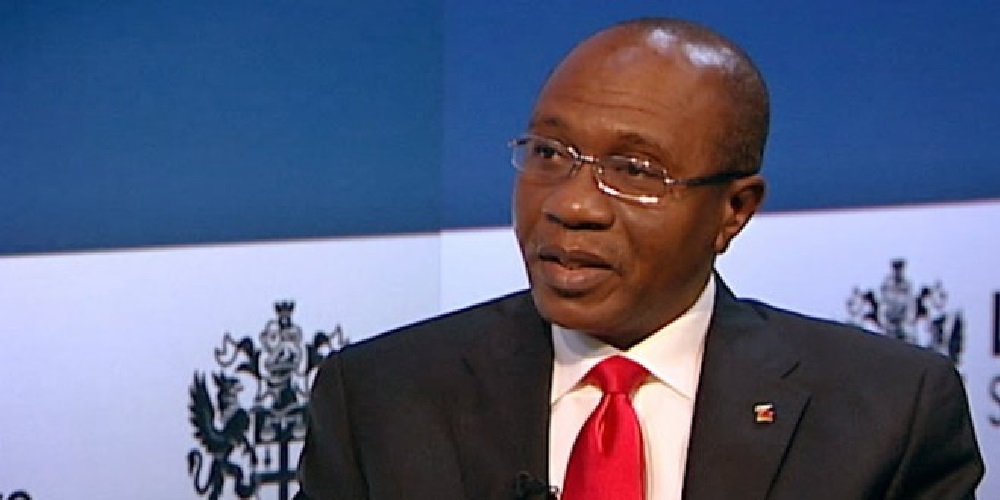
Godwin Emefiele (CBN governor)

It takes a man/woman who has reached the topmost mountain to know the depth of the deepest valleys.  That Godwin Emefiele, the suspended governor of Nigeria’s apex bank, has been charged to court is a lesson for ages. While the details of the charges have not been made public, note this: doing your job poorly in banking is not an excuse; a bank could charge you for sabotage.

As I have noted the challenges we faced as young graduates running a bank’s end of day runs which if you make a single mistake, the bank would not open the next day because “system is down”. Largely, two young men have an enormous power in the night to determine what happens in a bank. If you sleep and do not execute, the penalty may not be just being fired, indeed you could be prosecuted for sabotaging the bank, because the bank would not open for business the next day. (Of course, they paid you so well that it was all blissful.)

So, the case against Emefiele will be intriguing. Here is what the secret police said:

“Sequel to an Abuja High Court Order of today, 13th July 2023, the Department of State Services (DSS) has confirmed that Mr Godwin Emefiele has been charged to court in compliance with the Order,” SSS spokesperson Peter Afunanya wrote.

“In a statement, the Force public relations officer Peter Afunaya, recalls that the Service had, in 2022, applied for a Court Order to detain him in respect of a criminal investigation.

“The statement notes that though Emefiele obtained a restraining order from an FCT High Court, the Service, however, arrested him in June 2023 on the strength of suspected fresh criminal infractions/information, one of which forms the basis for his current prosecution.

“The Service assures the public of professionalism, justice and fairness in handling this matter and indeed the discharge of its duties within the confines of the law,” .

Emefiele will be out soon; Nigeria rarely prosecutes rich men who have access to SANs and amalgam of big lawyers. Yet, I expect fairness and his rights must be respected, as written in the rule book. I understand the emotions but pause that because it takes a “village” of policymakers to wreck Nigeria, and if you look critically, you cannot put it on just one man. From insecurity to porous borders to everything, it goes beyond what happened in the CBN (Central Bank of Nigeria) headquarters. So, Nigeria must modulate, and be factual, on this voyage of prosecuting its central bank governor!

Update: It seems Emefiele has been released