DD
MM
YYYY

PAGES

DD
MM
YYYY

spot_img

PAGES

Home Blog Page 408

From Ethereum to Blazpay: 8 Top Cryptos to Watch This Month, Featuring a New Presale Coin

0
Blazpay - presale coins

The 2025 crypto presale market is more competitive than ever, with both established giants and innovative newcomers battling for attention. While tokens like Ethereum, Solana, and Avalanche remain household names, a fresh wave of high-potential crypto presales is reshaping the conversation and attracting serious interest from early adopters.

The pioneer of this movement is Blazpay ($BLAZ), a project not just promising, but already delivering real-world adoption through cutting-edge Conversational AI. With seamless DeFi management, multi-chain functionality, and gamified rewards, Blazpay is being hailed as one of the top 1000x crypto coins of 2025 and one of the most sought-after presale coins this year.

Below, we break down the standout projects and best presale coins to watch in 2025, starting with Blazpay and moving through established players, giving you a clear view of the high-potential crypto presales that could define the market this year.

1. Blazpay ($BLAZ) – The Next Big Crypto Pre Sale With Conversational AI

  • Current Price: ~$0.006

Blazpay is redefining crypto presales in 2025. Unlike most projects that only sell promises, Blazpay has already built a thriving ecosystem that works today.

Conversational AI Utility: Blazpay’s AI-driven conversational interface simplifies complex Web3 operations, enabling users to execute trades, transfers, payments, NFT management, and portfolio tracking using intuitive natural-language commands.

Proven Adoption: Even before exchange listings, Blazpay has processed millions of transactions and integrated with over 100 blockchains, demonstrating both scalability and real-world utility.

$BLAZ Token Functionality: The $BLAZ token underpins the ecosystem by enabling fee discounts, staking rewards, DAO governance participation, and loyalty incentives for active users.

This combination of practical functionality, early adoption, and scalable infrastructure positions Blazpay as one of the most compelling token presale opportunities of 2025.
Blazpay - presale coin

How to Join the Blazpay Presale

  1. Visit Blazpay.com 
  1. Connect your wallet (MetaMask, WalletConnect, or supported options)
  1. Choose your $BLAZ allocation
  1. Confirm and reserve your tokens

Phase 1 allocations are limited. Once sold out, the price will increase in later stages, creating built-in scarcity and early upside potential.

2. Ethereum (ETH) – The Foundation of Smart Contracts

  • Current price: ~$4142.01
  • Market cap: Over $500B
  • Daily volume: ~$34B+

Ethereum remains the backbone of decentralized applications. Its transition to proof-of-stake has reduced energy consumption by 99%, and with Ethereum 2.0 upgrades, scalability and transaction speed continue to improve. While not a presale, ETH remains a benchmark when comparing high-potential crypto presales like Blazpay.

3. Solana (SOL) – The Speed & Scalability Leader

  • Current price: ~$208
  • Market cap: ~$113B
  • Daily trading volume: ~$34B+

Solana is known for lightning-fast block times and low fees, making it a hub for NFTs, DeFi, and Web3 gaming. Its strong developer ecosystem ensures continued growth, but scalability issues in the past keep eyes on whether it can maintain momentum against fresh projects like Blazpay.

4. Avalanche (AVAX) – Multi-Chain Innovation

AVAX token used for fees, security, and powering decentralized apps

Active ecosystem supported by Avalanche Explorer (AVAScan) with validator, staking, and transaction tracking

  • Current price: ~$30.13
  • Market cap: ~$12B+
  • Daily trading volume: ~1B+

Avalanche excels in subnet architecture, allowing customized blockchain deployments. Its fast finality and developer adoption make it one of the more established platforms, but Blazpay’s multi-chain native design offers a fresh alternative with integrated AI.

5. Ronin (RON) – Gaming Chain Powerhouse

  • Current Price: $0.465
  • Market Cap: $322 million plus
  • Daily trading volume: 6M plus

Built specifically for Web3 gaming, powering Axie Infinity

Offers low-fee transactions optimized for in-game economies

Ronin stands out in the blockchain gaming space, but with competitors rising, the question is whether it can evolve beyond its flagship use case. Meanwhile, Blazpay’s AI utility broadens its relevance beyond gaming into full DeFi management.

6. Harmony (ONE) – Fast and Affordable Blockchain

  • Current Price: $0.009114
  • Market Cap: $134 million plus
  • Daily trading volume: 8M plus+

Harmony focuses on scalability and affordability, with sharding technology enabling fast confirmations. Despite setbacks in previous years, it remains an active ecosystem. Its affordability makes it appealing, though newer presales like Blazpay offer more advanced tech.

7. Stratos (STOS) – Decentralized Data Mesh

~1,538 storage nodes with 29+ PB capacity

  • Price: ~$0.05163
  • Market cap: ~$2M+
  • 24h volume: ~$77K+

Stratos goes beyond finance, offering storage, database, and computation services for decentralized applications. Its ecosystem is still early, but it represents an innovative angle in blockchain infrastructure.

8. Casper Network (CSPR) – Enterprise-Grade Blockchain

  • Current price: $0.009058
  • Market cap: $121M+
  • Daily vol: 3M+

Focus: Enterprise adoption, developer-friendly features, predictable gas fees

Casper Network positions itself as a business-ready blockchain, targeting companies looking for reliable, scalable smart contracts. Its enterprise focus makes it distinct, though the retail buzz leans more toward crypto presales like Blazpay.

Why Blazpay Stands Out

From giants like Ethereum and Solana to niche platforms like Harmony and Stratos, the 2025 crypto landscape is full of opportunities. Yet Blazpay’s presale is different: it’s not just another token launch, it’s a fully integrated ecosystem with AI-powered DeFi management and real adoption already in motion.

That’s why $BLAZ is being seen as one of the best presale opportunities in crypto, a project with the potential to deliver outsized returns and long-term value.

Blazpay - high-potential crypto presales, top 1000x crypto coins 2025


Join the Blazpay Community:

Website – blazpay.com

Twitter – x.com/blazpaylabs

Telegram – t.me/blazpay

Cardano and Sei Highlight Market Activity While Blazpay ($BLAZ) Tops 2025 Token Presales

0
Blazpay - token pre sales

2025 has been a breakout year for coin presales, turning presale tokens into the hottest entry point for those seeking the best presale opportunities in crypto. Unlike previous cycles where hype drove markets, this year’s projects are leaning on strong utilities, adoption strategies, and structured presale phases.

At the center of this momentum sits Blazpay ($BLAZ), a project that isn’t just launching, it’s counting down. Starting at $0.006, Blazpay uses a 14-day cycle or “sell-out” rule: each phase either ends when its token allocation is sold out or when 14 days pass, whichever comes first. This built-in timer creates urgency and scarcity, fueling speculation that it could become one of the top 100x crypto presale stories of 2025.

But $BLAZ isn’t alone. Established names like Cardano (ADA) and Sei (SEI) continue to shape narratives. Cardano leans on research-driven development, while Sei pushes speed and liquidity.

Core Utilities Driving Blazpay

Unlike projects built purely around speculation, $BLAZ anchors its presale in real utility, combining multi-chain functionality with user-centric incentives.

Multi-Chain Native Access
 From the very beginning, $BLAZ is designed to be blockchain-agnostic, allowing seamless interaction across multiple networks. Traders, NFT enthusiasts, and DeFi participants can move assets, manage portfolios, and execute trades without worrying about wallet compatibility, network bridges, or fragmented ecosystems. This cross-chain interoperability eliminates friction, creating a unified environment where users can engage with DeFi in a cohesive and efficient way. By connecting previously siloed blockchains, $BLAZ empowers participants to operate across platforms as if they were a single ecosystem.

Blazpay - token pre sales

Gamified Rewards
To encourage sustained engagement, $BLAZ incorporates interactive, gamified incentives. Users earn rewards, badges, and points for participating in trading, NFT activities, and portfolio management. These mechanics not only make the experience enjoyable but also promote learning, retention, and active participation. By gamifying DeFi, $BLAZ transforms routine transactions into opportunities for growth, education, and community building.

Together, $BLAZ’s multi-chain flexibility and gamified reward system ensure that users don’t just transact—they become active participants in a thriving, educational, and interconnected DeFi ecosystem, positioning the project as a presale with tangible value and long-term utility.

Cardano (ADA): The Steady Veteran

Cardano remains a respected, stable cryptocurrency with steady growth prospects. Its price currently hovers around $0.86 as of early October 2025. Technical and expert forecasts indicate potential for moderate growth through the year, with prices expected to range roughly between $0.84 and $1.12 in the near term, and some bullish analysts targeting up to $1.50–$2.00 by year-end 2025, depending on factors like governance improvements, scaling solutions, and ETF approvals. Cardano maintains strength as a mature ecosystem with a loyal user base, supported by ongoing development and growing institutional interest, but it is not positioned for explosive gains compared to early-stage presale coins.

Sei (SEI): Speed and Liquidity First

Sei focuses on speed and liquidity, positioning itself as a fast blockchain ideal for trading and DeFi applications. Despite recent price volatility around $0.28–$0.30, Sei shows promising adoption metrics like high DEX volume and strategic partnerships, e.g., with Graphene. Analysts see SEI as dependable with moderate growth potential, possibly reaching 5x gains under favorable market conditions and rapid adoption, but its upside is generally more restrained than early-stage coins. Its technical setup indicates a stable price floor with gradual network growth.

Projects Showdown: Different Paths, Different Audiences

Project Dynamics Target Audience / Focus
Blazpay ($BLAZ) Urgency-driven 14-day cycle, low entry price, multi-utility roadmap Early adopters, DeFi users, Long-term buyers, multi-chain participants
Cardano (ADA) Steady, research-backed development Long-term investors, academic, and enterprise use cases
Sei (SEI) Hyper-optimized for speed and traders Active traders, high-frequency users, performance-focused participants


Blazpay ($BLAZ): Redefining Coin Pre Sales with the 14-Day Rule

$BLAZ is positioning itself as more than just another presale; it’s a project designed to redefine DeFi. By unifying trading, payments, NFTs, and portfolio tools across 20+ blockchains, it tackles one of crypto’s biggest pain points: fragmentation.

The 14-Day Cycle Explained

Here’s what makes Blazpay’s presale unique:

  • Dual Triggers: Each phase ends either when tokens sell out or when 14 days pass.
  • Price Rise Each Phase: The token price increases automatically after each cycle.
  • Built-In FOMO: Early buyers get guaranteed lower prices, rewarding quick decisions.

This cycle transforms the presale into an event. Instead of waiting endlessly, buyers know exactly when the next phase will close, making every two weeks a milestone in the project’s momentum.

Blazpay - token pre sales

How to Buy Blazpay ($BLAZ)

  • Go to the official website.
  • Connect your wallet (MetaMask, Trust Wallet, etc.).
  • Fund with ETH, BNB, or USDT.
  • Select your token amount.
  • Confirm the purchase and track tokens on your dashboard.

Final Thoughts

Cardano is known for its stability, and Sei is recognized for its speed, while Blazpay ($BLAZ) emphasizes a structured, time-bound presale model. Its 14-day token cycle aims to provide a clear framework for early participation, and its utilities focus on practical use cases within DeFi. The early-phase pricing offers potential advantages for participants relative to later stages.

In a year marked by active coin presales, $BLAZ is positioning itself as a presale project with distinct features, offering an alternative approach to multi-utility platforms and structured token launches.

Blazpay - best presale opportunities in crypto, top 100x crypto presale

TO JOIN THE COMMUNITY, VISIT


Website – blazpay.com

Twitter – x.com/blazpaylabs

Telegram – t.me/blazpay 

FREQUENTLY ASKED QUESTIONS FAQs

Q1: What is the current Blazpay presale price?

Blazpay is at $0.006 in Phase 1. The price increases every 14 days or once the phase sells out.


Q2: Why is the 14-day cycle important?

It creates urgency, ensuring steady momentum and rewarding early participants.


Q3: Is Blazpay global?

Yes, the presale is open worldwide (subject to regional rules).


Q4: What makes it different from Cardano or Sei?

Cardano and Sei are proven but mature; Blazpay combines utility with an event-driven presale model, giving it both use case potential and growth upside.


Q5: Could Blazpay be the next top 100x crypto presale?

Nothing is guaranteed in crypto, but its 14-day cycle, utilities, and momentum put it in strong contention.

Kodak Returns to Direct Film Distribution With Kodacolor Launch

0

Kodak has stepped back into the spotlight with the surprise launch of two new film products, Kodacolor 100 and Kodacolor 200 — marking the first time in years that the company is not only introducing fresh products but also handling its own distribution.

For photographers, it’s more than a nostalgic announcement. Since Kodak’s 2012 bankruptcy restructuring, film distribution has largely been the domain of Kodak Alaris, a separate business spun off during the company’s financial collapse. Kodak’s decision to take direct control once again signals a strategic shift that could reshape how its products reach consumers, putting the company in sharper contrast with rivals like Fujifilm, which has scaled back its consumer film offerings in recent years.

Rebranded classics, not brand-new emulsions

Kodak described the new films in an Instagram post as “sub-brands of existing Kodak films,” which means they are rebranded rather than completely new emulsions.

Industry observers quickly speculated that Kodacolor 100 is based on ProImage 100 and Kodacolor 200 on Color Plus 200, judging by early sample images.

While some photographers may have hoped for a never-before-seen emulsion, the launch is still a big deal. Film prices have soared dramatically since 2020 — up by at least 50 percent, with some color stocks doubling. Affordable alternatives like Kodacolor, priced at around $9 per roll, offer a more accessible entry point for newcomers and hobbyists eager to try analog without the premium costs tied to more established stocks.

Capacity upgrades fuel comeback

Kodak’s move is closely tied to expanded production at its Rochester, New York factory, which has recently undergone upgrades to boost capacity. The company expects to streamline supply, put more film in photographers’ hands, and potentially help stabilize pricing by cutting out Kodak Alaris as a middleman.

The analog revival has kept demand for film strong, but shortages and sporadic restocks have frustrated photographers while fueling price spikes. Kodak is positioning Kodacolor as both a stabilizer and an accessible line to expand its consumer base.

Strategic contrast with Fujifilm

The decision also highlights Kodak’s diverging path from Fujifilm, its long-time rival. While Kodak is reasserting itself in film manufacturing and distribution, Fujifilm has steadily pulled back from the consumer analog market, focusing instead on its highly successful Instax line and digital imaging businesses. For photographers loyal to 35mm film, Kodak’s decision to bring production closer to its customers contrasts sharply with Fujifilm’s retrenchment, potentially leaving Kodak as the dominant player in the traditional film space for now.

The last time Kodak ventured into chemicals and distribution at this scale was more than a decade ago, prior to bankruptcy. Now, with Kodacolor 100 and 200 set to roll out directly through Kodak, the company is signaling that it wants to rebuild a direct relationship with photographers.

They may not be completely new emulsions, but in a market where cost, access, and stability matter as much as innovation, Kodak’s re-entry into distribution could shape the future of analog film.

Naira Overvalued by 30% Against the Dollar – Rencap Declares

2

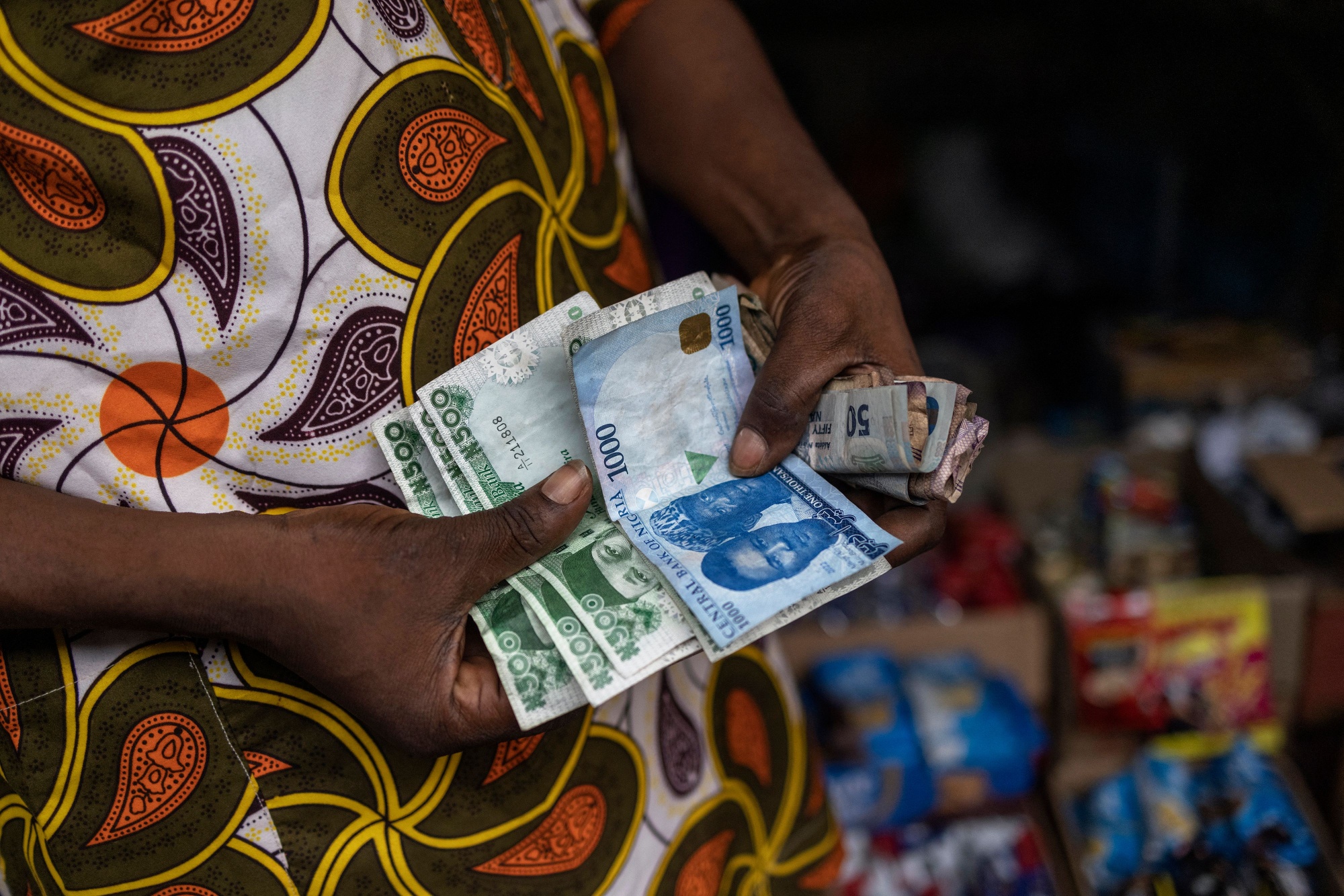
Nigeria’s naira, long at the heart of policy debates, has now been declared the most overvalued currency in Africa by Renaissance Capital Africa (Rencap), which estimates it is overpriced by as much as 30% when measured against the real effective exchange rate model (REER).

The investment house’s findings land at a delicate moment for the economy. The exchange rate is trading at one of its strongest levels in more than a year, supported by external reserves that recently touched $41 billion. Yet, beneath this appearance of stability, the report argues, lies a distortion that could eventually unwind with painful consequences.

A clash over inflation data

Rencap points to Nigeria’s peculiar inflation story as a major contributor to the mispricing of the naira. The country has been experiencing food price deflation throughout 2025, the firm says, which means the official inflation numbers are overstating reality.

The National Bureau of Statistics (NBS) reported inflation above 20% in August. But Rencap’s models suggest inflation was already closer to 12% in October, headed for 10% in December, and potentially as low as 6% in 2026.

The discrepancy stems from Nigeria’s updated Consumer Price Index (CPI) basket, introduced in January 2025, which altered the weighting of items. While the update dragged headline inflation down from 34.8% in December 2024 to 24.48% in January 2025, Rencap argues the revisions created fresh distortions.

For instance, non-alcoholic beverages now account for 12% of the CPI basket — a heavier weight than transport at 11%, and nearly four times telecoms at just 3%. These anomalies, Rencap insists, have caused official CPI to drift away from actual price trends, leaving policymakers with faulty data.

The knock-on effect, according to Rencap, is that the Central Bank of Nigeria (CBN) has been “keeping policy excessively tight.” Despite inflation running closer to 10% in real terms, the policy rate remains at 27%. This places Nigeria’s real interest rate among the highest in the world at 17%. For comparison, Egypt’s real rate stands at 14%, while Argentina’s is just 6%.

Such a tight policy has, in Rencap’s view, engineered artificial stability in the naira. A mix of high interest rates, a relatively steady exchange rate, and a current account surplus has kept the currency anchored at levels that do not reflect its true value.

But stability, the report warns, is fragile. Rencap expects the naira to hold steady at around N1,400–N1,450 to the U.S. dollar through the end of 2025. The real risk lies ahead: once interest rates are eventually cut and credit growth resumes, imports will likely surge. That scenario could trigger a sharp 30% depreciation in the naira between 2026 and 2027.

The report arrives just as foreign portfolio investors are reassessing African markets. With global oil prices stuck in the $60–70 per barrel range and the dollar forecast to weaken, both Nigeria and Ghana are increasingly seen as attractive destinations for local debt.

Rencap notes the two economies are diverging in important ways. Nigeria, with President Bola Tinubu eyeing re-election in 2027, may see its central bank deliberately delay aggressive rate cuts until after the polls. This political calculation could prolong the naira’s artificial strength, keeping it supported in the near term even as fundamental pressures mount.

In short, while investors may be lured by Nigeria’s high yields and apparent currency stability, Rencap’s analysis paints a picture of fragility beneath the surface — an economy propped up by data distortions, political timing, and unusually high interest rates. When the props are removed, the naira could face its sternest test yet.

A history of questionable data

Beyond Rencap’s findings lies a broader debate about the credibility of Nigerian data itself. In recent years, agencies such as the NBS have faced increasing scrutiny over the accuracy of their figures. Critics accuse the bureau of publishing inflation numbers that understate the severity of price pressures in order to shield the government from backlash over economic policies.

Nigeria has a long history of contested economic data, particularly when it comes to growth and inflation. From the controversial GDP rebasing in 2014 that suddenly repositioned Nigeria as Africa’s largest economy, to persistent disputes over unemployment and poverty statistics, data credibility has repeatedly been questioned by analysts, investors, and even lawmakers.

Rencap’s latest critique flips the script. While NBS has often been accused of underreporting inflation, the investment firm now suggests official data may actually be overstating the rate. However, many have pointed to unabating high cost of living in defense of allegations of inaccurate data by NBS. Now, Rencap’s report has created conflicting narratives, deepening doubts over whether policymakers are working with reliable numbers.

Perps Volumes on DEXs Exceeded $1T In September 2025— First Time In History

0

In September 2025, the monthly trading volume for perpetual futures often called “perps” on decentralized exchanges (DEXs) exceeded $1 trillion for the first time in history, reaching approximately $1.05 trillion to $1.14 trillion according to various reports.

This milestone reflects a 48% surge from August’s $707.6 billion and underscores the rapid growth of DeFi derivatives amid increasing competition and innovation in the sector.

Key drivers include fierce rivalry among platforms like Aster which led with over $420 billion in volume, dethroning prior leader Hyperliquid, Hyperliquid $282.5 billion, and Lighter, fueled by advancements in low-latency execution, high leverage up to 50x or more, and incentives like token buybacks and airdrops.

This shift highlights a broader trend where perp DEXs are capturing significant market share from centralized exchanges (CEXs), with on-chain perps now processing daily averages around $38 billion—comparable to major traditional markets.

For context, a year earlier in September 2024, perp DEX volume was only about $131 billion, showing explosive year-over-year growth driven by better infrastructure like sub-second finality and zk-based layers.

While this boom signals maturing DeFi liquidity, it also raises concerns about over-reliance on speculation, as perp volumes often dwarf spot trading and could amplify volatility during downturns.

The $1.05T–$1.14T volume milestone shows perp DEXs are no longer niche, rivaling centralized exchanges (CEXs) in liquidity and scale. Daily averages of ~$38B indicate perps are now a core component of crypto trading, comparable to traditional financial markets.

DeFi is becoming a legitimate alternative to CEXs, attracting institutional and retail traders seeking self-custody and transparency. Perp volumes significantly outpacing spot trading often by 10x or more highlight a speculative frenzy, with platforms offering up to 50x leverage.

While this drives liquidity, it risks amplifying volatility and potential liquidations during market downturns, posing systemic risks to DeFi ecosystems. The surge from $131B in September 2024 to over $1T in 2025 reflects DEXs capturing market share from CEXs, driven by trustless trading and lower counterparty risk.

CEXs face pressure to innovate or risk obsolescence, while DEXs must scale infrastructure to handle growing demand without compromising decentralization. High-volume, high-leverage trading on DEXs may attract regulators concerned about market manipulation, investor protection, and systemic stability.

DEXs may face compliance challenges, potentially requiring KYC/AML integration or decentralized identity solutions to balance regulation with ethos. Platforms like Aster and Hyperliquid use token buybacks, airdrops, and yield incentives to drive volume, which may inflate metrics artificially.

Unsustainable incentives could lead to “mercenary capital” users chasing rewards then exiting, threatening long-term protocol viability. The perp DEX race is undergoing a revolution driven by technological innovation, fierce competition, and user-centric incentives.

Infrastructure improvements allow DEXs to handle $38B daily volumes, with Aster alone processing over $420B in September 2025. These advancements make DEXs viable for high-frequency trading, eroding CEXs’ technical edge and enabling 24/7, permissionless markets.

Aster overtook Hyperliquid as the volume leader $420B vs. $282.5B in September, with Lighter and others rapidly gaining ground. Competition drives innovation in UI/UX, leverage options 10x–50x, and cross-chain interoperability, making perps accessible to diverse users.

This “race to the top” fosters rapid iteration, with platforms differentiating via unique features like portfolio margining or exotic perp pairs. Platforms are deploying aggressive incentives—token airdrops, fee rebates, and buyback programs—to attract liquidity providers and traders.

Aster’s buyback program and Hyperliquid’s points system have fueled user acquisition, though some question their sustainability. These mechanisms mimic Web2 growth hacking, transforming DeFi into a user acquisition battleground, but risk creating incentive-dependent ecosystems.

Perp DEXs prioritize self-custody, reducing reliance on centralized custodians and aligning with DeFi’s ethos. Community governance and open-source protocols allow users to influence platform development, unlike CEXs.

This shift empowers users, fostering trust and resilience, though it demands greater user responsibility for wallet security. Scalability Limits: Even with zk-rollups, network congestion during peak volatility could degrade performance.

High leverage and volume concentration in top platforms Aster, Hyperliquid could lead to cascading liquidations. Global regulators may target DEXs, especially those offering high leverage without KYC. These hurdles force DEXs to innovate under pressure, balancing growth with resilience and compliance.

ConclusionThe $1T perp trading volume milestone underscores DeFi’s meteoric rise and the revolutionary transformation of the perp DEX race. Technological advancements, cutthroat competition, and user incentives are driving unprecedented growth, positioning DEXs as serious contenders against CEXs.

However, the reliance on speculation, high leverage, and incentives raises sustainability and regulatory concerns. The revolution is well underway, but its success hinges on DEXs navigating scalability, risk management, and potential regulatory headwinds while maintaining DeFi’s decentralized ethos.