DD
MM
YYYY

PAGES

DD
MM
YYYY

spot_img

PAGES

Home Blog Page 4080

Resume of Yemi Cardoso, Tinubu’s Nominee for Central Bank Governor of Nigeria

1

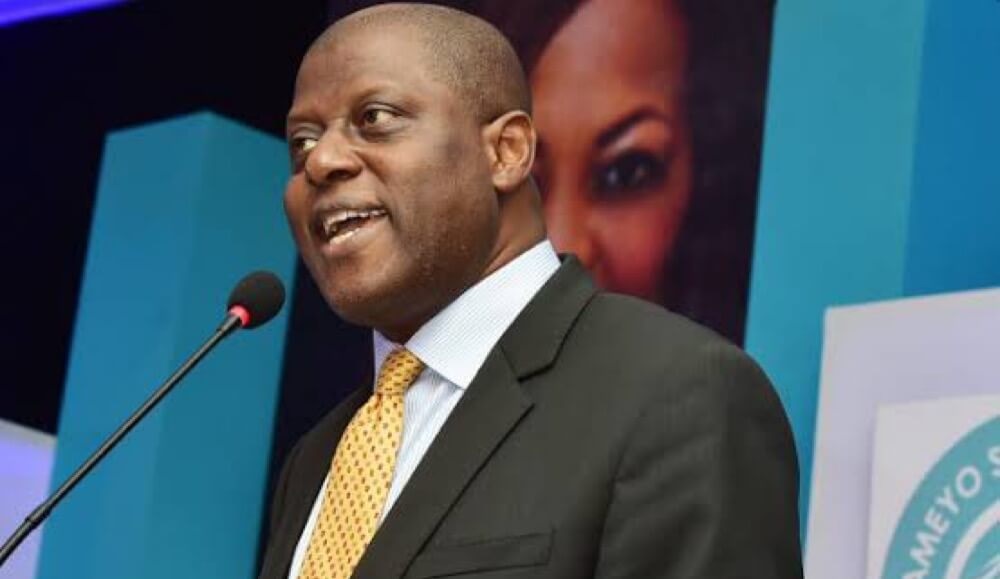
President Bola Tinubu has given his approval for the appointment of Dr. Olayemi Michael Cardoso as the new Governor of the Central Bank of Nigeria (CBN). Dr. Cardoso’s term will initially be for five years.

The nomination of Dr. Olayemi Michael Cardoso signifies that the current acting governor, Folashodun Shonubi, did not meet President Bola Tinubu’s expectations for retention. Shonubi had assumed the role of acting governor at the Central Bank of Nigeria (CBN) following the suspension of Godwin Emefiele.

The announcement of Cardoso’s nomination, as stated in a release by presidential spokesperson Chief Ajuri Ngelale, will be submitted to the Senate for confirmation in accordance with the provisions of the 1999 constitution of the Federal Republic of Nigeria (as amended).

Dr. Cardoso’s appointment aligns with Section 8 (1) of the Central Bank of Nigeria Act, 2007, which grants the President of Nigeria the authority to appoint the Governor and four Deputy Governors for the CBN, subject to confirmation by the Senate.

Additionally, President Tinubu has also approved the nomination of four new Deputy Governors of the Central Bank of Nigeria (CBN). Their terms will initially be for five years, subject to Senate confirmation. The newly nominated CBN Deputy Governors are Mrs. Emem Nnana Usoro, Mr. Muhammad Sani Abdullahi Dattijo, Mr. Philip Ikeazor, and Dr. Bala M. Bello.

Notably, Dr. Cardoso has previously held the position of Chairman at CITIBANK and served as Commissioner for Budget and National Planning during President Tinubu’s tenure as Governor of Lagos State from 1999 to 2007.

Below is the resume of Cardoso:

Dr. Olayemi M Cardoso
Banker
Chartered Broker
Ex-Commissioner, Lagos
Ex Bank Chairman
Over 30 years in private, public, and not-for-profit organizations

EDUCATION

1976-1980: BSc Managerial & admin studies – Aston University
2004-2005: MSc Public Admin – Harvard Kennedy School
2017: Doctor of Business Administration, Aston University

EXPERIENCE

1981-1990: VP Citibank, Nigeria
1990-1997: ED, Citizens Int’l Bank
1997-1999: Principal Partner, FBC Associates
1999-2005: Commissioner, Min. of Planning & Budget, Lagos
2005-2008: Board Member, Chevron Oil Plc
2005-2013: Chairman, World Bank LMDGP Project
2008-2014: Board Member, Harvard Kennedy School
2010-2015: Chairman, EFInA
2015-2019: Member, Cities Alliance
2015-2019: Member, Economic Advisory Council, Office of VP, Nigeria
2014-2020: Chair, West Africa, African Venture Philanthropy Alliance
2010-2022: Chairman, Citi Nigeria
2018-till date: Member of the Board of Advisors, Lagos Business School
2021-till date: Founding Board Member, Nigeria National Advisory Board of Impact Investing

Nasdaq files with SEC for Hashdex mixed Ether ETF

0
NASDAQ

The Nasdaq stock exchange has filed an application with the Securities and Exchange Commission (SEC) to list an Ethereum exchange-traded fund (ETF) from Hashdex, a Brazilian asset manager. The ETF, called the Hashdex Nasdaq Ethereum ETF, aims to track the performance of ether, the native cryptocurrency of the Ethereum network, using both spot and futures contracts.

An Ethereum ETF is a type of investment fund that allows investors to gain exposure to the price movements of ether without having to buy, store, or manage the digital asset directly. Instead, investors can buy and sell shares of the ETF on a regulated stock exchange, just like any other stock or fund.

An Ethereum ETF can hold ether in two ways: spot or futures. Spot ether refers to the actual digital tokens that are bought and stored in a secure custody service. Futures ether refers to contracts that are traded on a regulated futures exchange, such as the Chicago Mercantile Exchange (CME), that allow investors to speculate on the future price of ether.

According to the filing, Hashdex believes that holding a mix of spot and futures ether can provide several benefits for investors. First, it can reduce the reliance on the spot market, which may be subject to price manipulation or liquidity issues in unregulated exchanges. Second, it can enhance the tracking accuracy of the ETF, as futures contracts can help hedge against any deviations between the spot and reference prices of ether. Third, it can lower the operational costs and risks of the ETF, as futures contracts do not require physical delivery or storage of ether.

The filing also states that the ETF’s investment objective is to have its shares reflect the daily changes in the Nasdaq Ether Reference Price, which is calculated by Nasdaq using data from multiple sources, including spot and futures exchanges. The ETF intends to allocate its assets among spot ether, ether futures contracts traded on the CME, and cash and cash equivalents.

Hashdex’s ETF is not the first one to seek approval from the SEC for listing on Nasdaq. In fact, several other fund managers have already filed applications for similar products, such as VanEck, WisdomTree, and SkyBridge Capital. However, Hashdex’s ETF is unique in its approach of combining spot and futures holdings, as most other proposals either focus on one or the other.

So far, the SEC has not approved any spot-based crypto ETFs in the US, citing concerns over market manipulation, investor protection, and custody issues. However, it has approved several futures-based crypto ETFs, such as ProShares Bitcoin Strategy ETF and Valkyrie Bitcoin Strategy ETF, which only hold bitcoin futures contracts traded on the CME.

Hashdex’s ETF may be seen as a compromise between the two approaches, as it tries to balance the advantages and disadvantages of both spot and futures holdings. However, it remains unclear whether the SEC will be receptive to this hybrid model, or whether it will prefer a more clear-cut distinction between the two types of exposure.

If approved by the SEC, Hashdex’s ETF could be a positive development for Ethereum and its ecosystem. It could attract more institutional and retail investors to the second-largest cryptocurrency by market capitalization, increasing its liquidity, adoption, and innovation. It could also provide more legitimacy and credibility to Ethereum as a viable asset class, as it would be listed on one of the most prominent and respected stock exchanges in the world.

However, there are also some potential drawbacks of Hashdex’s ETF for Ethereum. It could increase the volatility and correlation of ether’s price with other assets, as it would be subject to market forces and sentiment that may not reflect its underlying fundamentals or value proposition. It could also introduce more regulatory scrutiny and oversight to Ethereum, as it would have to comply with various rules and standards imposed by the SEC and other authorities.

Ultimately, Hashdex’s ETF is an ambitious and innovative proposal that reflects the growing interest and demand for Ethereum among investors. Whether it will succeed or not depends largely on how the SEC evaluates its merits and risks, as well as how it fits into its broader vision and strategy for crypto regulation.

Is Binance.US Edging towards Insolvency?

0

Binance.US, the American affiliate of the global cryptocurrency exchange Binance, has been going through a major shake-up in its leadership and workforce, according to multiple sources familiar with the situation. The company’s CEO, Brian Brooks, announced his resignation on August 6, after less than four months on the job. Brooks cited “differences over strategic direction” as the reason for his departure but did not elaborate further.

Since then, Binance.US has reportedly laid off at least a dozen employees across various departments, including compliance, marketing, and product. Some of the affected staff had joined the company only a few weeks or months before being let go, sources said. The layoffs represent a significant portion of Binance US’s total headcount, which was estimated to be around 75 to 100 people before the cuts.

The turmoil at Binance.US comes amid growing regulatory scrutiny and pressure on Binance, the world’s largest crypto exchange by trading volume. Binance has faced investigations, warnings, and restrictions from regulators in several countries, including the UK, Japan, Germany, Singapore, and Canada. The US Securities and Exchange Commission (SEC) is also reportedly probing Binance for possible violations of securities laws.

Binance.US was launched in September 2019 as a separate entity from Binance, with its own board of directors and management team. The company operates under a licensing agreement with Binance, which allows it to use the latter’s technology and brand name. Binance.US is registered as a money services business with the Financial Crimes Enforcement Network (FinCEN), but it does not have a federal banking charter or a BitLicense from New York State.

One of the main issues that Binance.US has to deal with is the regulatory uncertainty in the US market. The exchange has been under scrutiny from various authorities, such as the Commodity Futures Trading Commission (CFTC), the Securities and Exchange Commission (SEC), and the Department of Justice (DOJ), for allegedly violating securities laws, facilitating money laundering, and operating without proper licenses. Binance.US has also been banned or restricted in several states, such as New York, Texas, and Florida, limiting its customer base and revenue potential.

Another problem that Binance.US faces is the lack of liquidity and trading volume. According to CoinMarketCap, Binance.US ranks 58th among global exchanges by adjusted volume, with a daily average of $116 million as of September 15, 2021. This is a far cry from its parent company, Binance, which ranks first with a daily average of $24 billion. The low liquidity and volume make it harder for Binance.US to attract and retain customers, especially institutional investors who demand high-speed execution and deep order books.

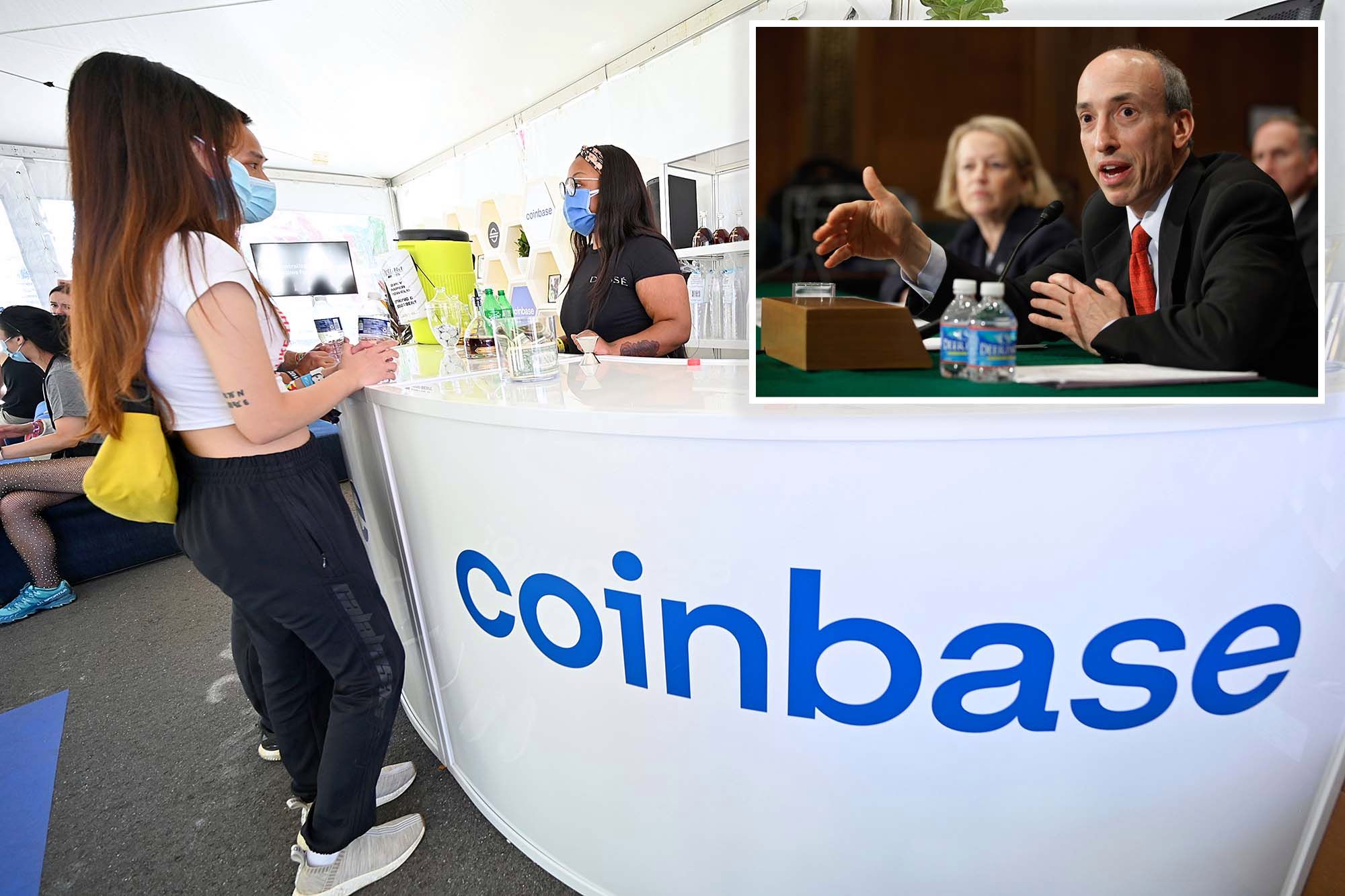
A third challenge that Binance.US has to overcome is the competition from other US-based exchanges, such as Coinbase, Kraken, and Gemini. These exchanges have a more established reputation, a wider range of products and services, and a stronger compliance record in the US market. They also have more resources and partnerships to expand their market share and customer base. For example, Coinbase recently became the first crypto exchange to go public on Nasdaq, raising $4.3 billion in its initial public offering (IPO). Kraken is also reportedly planning to go public in 2022, following a similar route as Coinbase.

All these factors have led some experts to question the viability of Binance.US and its ability to survive in the long term. According to a report by Bloomberg, Binance.US is losing money every month and is struggling to find investors or partners to support its operations. The report also claims that Binance.US has been trying to distance itself from its parent company, Binance, which has been accused of being involved in illegal activities and evading regulations around the world. However, this strategy may not be enough to convince regulators and customers that Binance.US is a trustworthy and reliable platform.

Binance.US is facing a tough situation that may jeopardize its future. The exchange has to deal with regulatory hurdles, low liquidity and volume, and fierce competition from other US-based platforms. Unless it can find a way to resolve these issues and improve its performance, it may be edging unto insolvency.

Binance.US has been trying to expand its presence and legitimacy in the US market, by applying for licenses in various states, partnering with local banks and payment processors, and adding more coins and features to its platform. However, sources said that the company has faced challenges in hiring and retaining talent, securing funding and liquidity, and navigating the complex and evolving regulatory landscape.

It is unclear who will replace Brooks as the CEO of Binance.US, or what the company’s future strategy will be. A spokesperson for Binance.US declined to comment on the personnel changes or the regulatory issues. In a statement on August 6, the company said that it “remains committed to serving our customers and expanding our products and services in line with our regulatory obligations.”

Brian Armstrong Expresses Optimism on Coinbase Lightning Network Integration

0

Brian Armstrong, the CEO of Coinbase, the largest cryptocurrency exchange in the US, has recently shared his views on bitcoin and its future prospects. In a blog post published on September 15, Armstrong praised bitcoin as the “most important asset in crypto” and revealed that Coinbase is working on integrating the C, a layer-2 solution that aims to improve bitcoin’s scalability and speed.

The Lightning Network is a network of payment channels that allows users to transact with each other without having to broadcast every transaction to the Bitcoin blockchain. This reduces congestion and fees on the main network, while also enabling instant and secure payments. The Lightning Network also opens up new possibilities for micropayments, cross-chain atomic swaps, and decentralized applications.

Armstrong began his post by acknowledging the challenges that bitcoin faces, such as high fees, slow transactions, and environmental concerns. He said that while these issues are real, they are not insurmountable, and that bitcoin has a strong community of developers and innovators who are constantly working on improving the network. He also pointed out that bitcoin has several advantages that make it stand out from other cryptocurrencies, such as its security, decentralization, network effects, and brand recognition.

He then proceeded to announce that Coinbase is planning to integrate the Lightning Network into its platform, which will allow users to send and receive bitcoin instantly and cheaply. He said that this will enable new use cases for bitcoin, such as micropayments, gaming, remittances, and tipping. He also said that Coinbase will support other layer-2 solutions and sidechains that are compatible with bitcoin, such as Liquid and RSK.

Coinbase’s decision to support the Lightning Network is a major milestone for the adoption and development of this innovative technology. Coinbase has over 68 million verified users and over $223 billion in assets on its platform, making it a leader in the crypto space. By integrating the Lightning Network, Coinbase will provide its users with a better user experience and a competitive edge over other exchanges that do not offer this feature.

Coinbase plans to roll out the Lightning Network integration gradually, starting with a small group of users in the US, UK, and Germany. Users who want to participate in the beta testing can sign up on Coinbase’s website. Coinbase expects to make the Lightning Network available to all its users by early 2024.

Coinbase’s announcement has been met with positive reactions from the crypto community, especially from Bitcoin enthusiasts and developers. Many see this as a sign of confidence and validation for the Lightning Network, which has been growing rapidly in terms of capacity and adoption in recent years. According to 1ML.com, a website that tracks Lightning Network statistics, there are currently over 29,000 nodes, over 69,000 channels, and over 2,800 BTC ($123 million) locked in the network.

Coinbase’s integration of the Lightning Network is a win-win situation for both Coinbase and its users. Users will benefit from faster and cheaper transactions, while Coinbase will attract more customers and increase its revenue. Moreover, this move will also benefit the Bitcoin network as a whole, as it will reduce the pressure on the main chain and increase its scalability and security.

Armstrong concluded his post by expressing his optimism about the future of bitcoin and its role in the crypto ecosystem. He said that bitcoin is not only a store of value, but also a medium of exchange, a unit of account, and a global reserve currency. He said that bitcoin is the “most important asset in crypto” because it is the foundation of the industry and the gateway for millions of people to enter the world of decentralized finance. He said that Coinbase is committed to supporting bitcoin and its innovation, and that he looks forward to seeing what the next decade will bring for the world’s first cryptocurrency.

Visa Ban Not Yet Lifted for Nigerians – United Arab Emirates Official

0

The United Arab Emirates has responded to the viral claim by the Nigerian government that the Gulf state has lifted the visa ban it placed on Nigerian travelers, following the intervention of President Bola Tinubu.

A CNN report on Friday quoted a UAE official who spoke on anonymity because he is not authorized to speak as saying: “There are no changes on the Nigeria/UAE travel status so far.”

The presidential spokesman, Ajuri Ngelale, had on Monday, announced that Tinubu and the President of the UAE, Mohamed bin Zayed Al Nahyan, reached a “historic agreement” in Abu Dhabi, resulting in the “immediate cessation of the visa ban placed on Nigerian travelers.”

The UAE, in its official statement on the meeting between Tinubu and Mohamed bin Zayed Al Nahyan, did not say anything about the agreement to lift the visa ban.

“His Highness underscored the UAE’s ongoing commitment to fostering ties with countries that share the same aspirations for stability, sustainable growth, and development and prosperity for their people,” the statement said, adding that “the UAE attaches to its relationship with Nigeria, within the framework of its strategic vision for relations with the African continent.”

The Gulf state had last October, announced that it will no longer issue visas to travelers from Nigeria as well as 19 other African countries. The development, which followed a series of disputes emanating from the actions of Africans living in the UAE, resulted in the cancellation of the issuance of a 30-day tourist visa to Nigerians.

Ngelale said in his statement on Monday that Emirates and Etihad airlines are to resume flights immediately, following the agreement.

“Furthermore, by this historic agreement, both Etihad Airlines and Emirates Airlines are to immediately resume flight schedules into and out of Nigeria, without any further delay,” he said.

Emirates airlines had last year suspended its operation in Nigeria, citing its inability to repatriate about $85 million in trapped revenues.

The news that the UAE has lifted the travel ban on Nigerians brought great excitement to Nigerian travelers, who have over the years, seen Dubai as a choice destination.

Before the ban, Emirates Airlines provided two daily flights from Lagos, Nigeria, to Dubai, as well as one daily flight from the capital city, Abuja, to Dubai.

However, skepticism followed the excitement as many questioned the authenticity of the news. The UAE visa portal was still closed to Nigerians days after the announcement by the Nigerian government.

The situation forced Ngelale to issue a follow-up statement, explaining that the two countries will still have to work on the final details.

“Given the agreement struck between the two Heads of State, there is need to allow cabinet officials from both sides to work out the finer details and finalize the cross-sectoral agreements,” he said, adding that “Everyone can now allow the process to work itself out organically, devoid of speculation.”

The Minister of Aviation, Festus Keyamo, also said that there is no fixed timeframe for both Emirates and Etihad airlines to lift the suspension of their flights to Nigeria.

“So, we are beginning to work out all the tiny details. I met with Emirates before I left UAE, and we are working out the details. We cannot say the time frame. Kicking off an airline operation again on a route does not mean you will go and grab one empty plane sitting in a place,” he said.