DD
MM
YYYY

PAGES

DD
MM
YYYY

spot_img

PAGES

Home Blog Page 4093

Provisions of The CBN Framework on the Super-Agent/Shared Agent Network Expansion Facility (SANEF) Loan Fund

0

True financial inclusion has remained a major challenge to development in  Nigeria. Establishment of bank branches as a strategy to improve access may not be viable due to inadequate infrastructure and huge cost. Efforts by various governments, policy makers and regulators to increase access to finance have also failed to yield the desired result. 

In order to enhance the provision of financial services to the excluded population, the Central Bank of Nigeria (CBN) in collaboration with the Body of Bank Chief Executives established the Shared Agent Network Expansion Facility (SANEF). 

This Facility provides financing to CBN-licensed Super Agents and Mobile Money  Operators, to expand their networks to deepen financial inclusion in Nigeria. The Facility will enhance the capacity of the operators to roll-out more financial access points across the 774 local government areas in Nigeria particularly in the financially excluded locations.

What are the objectives of the SANEF Loan Facility?

The objectives of the Facility are to:

i. Enhance the capacity of mobile money operators (MMOs) and superagents to establish financial services access points in under-served and unserved locations.

ii.Increase agents penetration among the unbanked and excluded population.

iii.Provide platform for achieving the financial inclusion targets.

iv.Create jobs and promote inclusive economic growth

What are eligible activities covered by this Facility Framework?

The eligible activities at agent location should include:

– Bank Verification Number capture.

-Collection and submission of account opening and other related documentation.

– Cash in and Cash-Out services.

– Card payment and withdrawal transactions.

-Bill Payments.

– Collections and disbursements for individuals, corporations and governments .

What are the permissible expenditures for which a SANEF Loan Facility can be utilized?

The facility shall be utilized for the following:

I. Associated cost for on-boarding of agents. Twenty five percent (25%) of the agents must be located in financially excluded areas particularly in the North Western and North Eastern States.

II. Agent Recruitment and Training.

III. Device Acquisition for Agent transactions.

  • Signage Procurement and Installation.
  • Branding & Signage Fabrication / Fees.
  • Localized Marketing cost.

VII. Other Administrative costs.

VIII. Any other activities as may be approved by the CBN.

What are the types of loan facilities available under the SANEF framework?

The facility shall be term loans as follows:

Loan limit – N500 Million, with disbursements to be in tranches subject to satisfactory performance.

Tenor – Maximum 10 years

Interest rate – 5 per cent p.a. (2% to CBN, 3% to PFI).

Repayment– Repayments shall be quarterly to the CBN with a moratorium of 2 years on the principal and 1 year on interest

What are the mentioned participating Financial Institutions under the SANEF framework?

The participating Financial Institutions (PFIs) in the SANEF framework are strictly Deposit Money Banks 

Who is qualified to be an eligible obligor under the SANEF framework?

i. Licensed Mobile Money Operators (MMOs).

ii. Licensed Super Agents

What are the eligibility criteria for accessing a SANEF Loan?

i).Obligors need to demonstrate capacity in agent network roll-out and management over a period not less than 6 months of commercial operations.

ii).Obligors shall not have a non-performing facility under any CBN intervention.

III).Verified existing and running technology infrastructure (software, hardware and processes) for agent management. 

IV).Verified existing provision of the services stipulated in Section 2.0 .

V).Verified existing agent structure presence in at least 10 states and 100 LGAs. 

VI).Evidence of agent banking transaction and operations based on returns to the CBN and 6 months transaction data on the CBN’s Global Mobile Payments Regulatory and Monitoring Platform (GMPM).

VII).Certified Financial Systems platform application.

VIII).Payment Card Industry Data Security Standard (PCI DSS) Compliance or other relevant industry certifications (Optional)

Which documentation is needed to access a SANEF Loan? 

Loan applications prepared by legal counsel are to be made to deposit money banks to process and forward applications of eligible companies to the CBN . Consult your lawyer on further documentation required to be attached to a SANEF Loan application. 

Who is responsible for management of the SANEF Loan Facility?

The Development Finance Department of the Central Bank of Nigeria shall be responsible for the management of the Facility.

What are the Financing & Risk Management rules governing the SANEF Loan Facility? 

i. The single obligor limit shall be N500,000,000 (Five Hundred Million Naira).

ii. Loan will be disbursed through PFIs for on-lending to MMOs and Super Agents within the timeframe prescribed by CBN.

iii. Credit risk to be borne by the PFIs.

iv. The facility shall not be used to refinance/restructure an existing facility.

What are the provisions of the framework on monitoring & evaluation?

i. The beneficiaries and their agents shall be subject to on-site and off-site verification and monitoring by the CBN in conjunction with the PFIs during the loan period. 

ii. MMOs and Super Agents under the facility are to onboard agents signed up on to the CBN portal (Portal with Payments System Management Department) for agents.

iii. Monthly returns on agent registration and onboarding status shall be submitted to the CBN.

iv. PFIs shall render quarterly returns on repayment to the CBN.

v. Beneficiaries must submit monthly records of transactions and services to the CBN portal.

vi. The CBN approved SANEF super-agent signage must be conspicuous at all sub-agents locations for easy identification.

Who are the stakeholders in the SANEF Loan framework & what are their responsibilities?

The stakeholders and their responsibilities are:

The Central Bank of Nigeria

I.Formulate & periodically review Regulatory Guidelines.

II.Provide funding.

III.Conduct stakeholder engagement.

Deposit Money Banks (DMBs)

I.Appraise and approve requests.

II.Forward approved requests to CBN.

III.Disburse facility to beneficiaries.

  1. Bear credit risk for loans 

Borrower

i.Adhere strictly to the terms and conditions of the Facility.

ii.Utilize the funds for the purpose for which it was granted.

iii.Make available records for inspection/verification by the CBN and PFI.

iv.Repay loan as at when due.

v.Comply with the Guidelines.

What does the framework say on discontinuation of a discontinued facility? 

The framework provides that a PFI shall remit repaid or discontinued facilities to the CBN within 3 working days.

What are the infractions for violating the rules provided by the SANEF framework?

The following sanctions shall apply:

a).Diversion shall attract a penalty at prevailing lending rate of the PFI and bar the PFI from further participation under SANEF. 

b). Late repayment shall attract additional 1% p.a interest for the period in default.

c). Non-rendition of returns shall attract the penalty stipulated by the Banks and Other Financial Institutions Act (BOFIA). 

d).False returns by a PFI shall attract the penalty stipulated by BOFIA  and the PFI shall be barred from participating under SANEF.

e). Charging of upfront interest shall attract a penalty at prevailing lending rate of the PFI

f).Charging of interest rates higher than prescribed shall attract the penalty stipulated by BOFIA .

g).Delayed disbursement shall attract a penalty at prevailing lending rate of the PFI. 
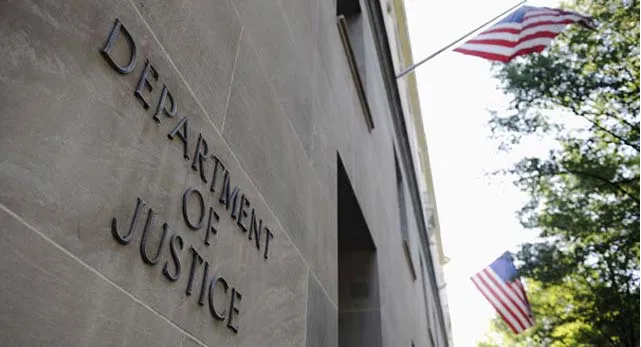
DOJ Charges Russian Hackers Attempting to Launder 647,000 BTC

0

The US Department of Justice (DOJ) has announced that it has charged two Russian nationals for their alleged involvement in a series of cyberattacks that targeted bank, e-commerce platforms, and cryptocurrency exchanges around the world.

According to a press release issued by the DOJ on June 9, 2023, the two defendants, Dmitry Kuznetsov and Alexey Petrov, are accused of conducting a sophisticated and coordinated hacking campaign that resulted in losses of over $200 million for victims in more than 20 countries.

The indictment alleges that Kuznetsov and Petrov used various techniques to compromise the security of their targets, such as phishing emails, malware injections, credential stuffing, and web shell attacks. They also allegedly used proxy servers and virtual private networks (VPNs) to conceal their identities and locations.

The DOJ alleged that Bilyuchenko and Verner gained unauthorized access to a server holding crypto wallets of Mt. Gox in 2011 and transferred the digital assets to bitcoin addresses they controlled. They then used BTC-e, which Bilyuchenko co-founded with another co-conspirator, Alexander Vinnik, to launder the stolen bitcoins for other criminals around the world.

BTC-e was one of the primary ways by which cyber criminals, including ransomware actors, narcotics rings, and corrupt public officials, transferred, laundered, and stored their illegal proceeds. The exchange operated without any anti-money laundering or customer verification procedures and allowed users to exchange fiat currencies and cryptocurrencies anonymously.

The U.S. law enforcement shut down BTC-e in 2017 and arrested Vinnik in Greece. He was extradited to the U.S. in 2022 and pleaded guilty to money laundering charges. Bilyuchenko and Verner remain at large.

The DOJ said that the two Russians “stole a massive amount of cryptocurrency from Mt. Gox, contributing to the exchange’s ultimate insolvency” and that they “operated a digital currency exchange that enabled criminals around the world to launder billions of dollars.”

The indictments are part of the DOJ’s efforts to crack down on cybercrime and illicit use of cryptocurrencies. The agency recently seized two domains that directed users to a darknet cryptocurrency mixer that allowed criminals to launder more than $3 million of digital assets.

The Mt. Gox hack remains one of the most notorious cases of crypto theft and fraud, and its impact is still felt today by many investors who lost their funds. The DOJ’s charges against the two Russians are a significant step towards bringing them to justice and recovering some of the stolen bitcoins.

The DOJ claims that the defendants stole personal and financial information from millions of users, including names, email addresses, passwords, credit card numbers, bank account details, and cryptocurrency wallet keys. They then allegedly used this information to access victims’ accounts and transfer funds to accounts under their control.

The indictment also alleges that Kuznetsov and Petrov laundered the proceeds of their illicit activities through various cryptocurrency platforms and services, some of which they operated themselves. They also allegedly exchanged stolen cryptocurrency for fiat currency using peer-to-peer platforms and money mules.

The DOJ says that it has seized over $100 million worth of cryptocurrency and other assets from the defendants and their associates as part of its investigation. It also says that it has worked closely with law enforcement agencies from several countries, including the UK, France, Germany, Japan, South Korea, and Australia, to identify and apprehend the suspects.

The two defendants are currently in custody in France and Japan, respectively, pending extradition to the US. They face multiple charges of conspiracy, computer fraud, wire fraud, identity theft, and money laundering. If convicted, they could face up to 20 years in prison for each count.

The DOJ’s announcement comes amid growing concerns about the threat posed by cybercriminals to global security and stability. In recent months, several high-profile cyberattacks have disrupted critical infrastructure and services in various sectors, such as energy, transportation, health care, and education.

The DOJ says that it is committed to pursuing and prosecuting those who engage in cybercrime and harm innocent victims. It also urges individuals and organizations to take preventive measures to protect their online security and privacy.

OpenAI Faces its First Defamation Lawsuit Over False Allegation Fabricated by ChatGPT

0

OpenAI is facing what appears to be its first defamation lawsuit over false information generated by its ChatGPT model, against someone.

The lawsuit was filed by Mark Walters, a radio host in Georgia, who claims that ChatGPT produced inaccurate information stating that he had been involved in defrauding and embezzling funds from a non-profit organization.

The information was generated in response to a request from journalist Fred Riehl. Walters filed the case on June 5th in Georgia’s Superior Court of Gwinnett County, seeking unspecified monetary damages from OpenAI.

“ChatGPT’s allegations concerning Walters were false and malicious, expressed in print, writing, pictures, or signs, tending to injure Walter’s reputation and exposing him to public hatred, contempt, or ridicule,” the lawsuit said.

Walters alleges that the chatbot provided false information to Fred Riehl, the editor-in-chief of the gun publication AmmoLand. Riehl had requested a summary of the case Second Amendment Foundation v. Ferguson, which involved accusations against Washington State’s Attorney General Bob Ferguson for allegedly suppressing the activities of a gun rights foundation, per Bloomberg.

However, according to the lawsuit, the chatbot provided Riehl with a summary that falsely stated Walters was being sued for “defrauding and embezzling funds” from the Second Amendment Foundation as its chief financial officer and treasurer. The lawsuit emphasizes that every statement regarding Walters in the summary is untrue.

Walters clarifies that he is not involved in the Ferguson case and has never been employed by the Second Amendment Foundation. Furthermore, the case itself has no connection to financial accounting allegations against anyone.

The incident adds to the growing concerns surrounding the truthfulness and reliability of AI chatbot outputs. Recent controversies have highlighted instances of chatbots providing confidently inaccurate responses.

In April, an Australian mayor announced his intention to sue OpenAI over false claims generated by ChatGPT, suggesting he had been imprisoned for bribery. Additionally, a New York lawyer who used ChatGPT to draft legal briefs potentially faces sanctions after referencing non-existent case law.

In Riehl’s request to ChatGPT, he had asked for the complete text of the Second Amendment Foundation’s complaint. However, the chatbot allegedly generated a completely fabricated summary that bore no resemblance to the actual complaint, including an erroneous case number.

The legal implications of holding a company accountable for false or defamatory information generated by AI systems are unclear. In the US, Section 230 traditionally shields internet firms from liability for third-party content hosted on their platforms. It remains uncertain whether these protections extend to AI systems, which not only link to data sources but also generate new information, including false data, according to The Verge.

Although OpenAI includes a small disclaimer on ChatGPT’s homepage acknowledging that the system may occasionally generate incorrect information, Walters’ defamation lawsuit in Georgia could serve as a test case for this legal framework.

The Verge quoted Eugene Volokh, a law professor specializing in AI system liability, as saying that while he believes libel claims against AI companies are legally viable in principle, this particular lawsuit may be challenging to sustain.

Volokh pointed out that Walters did not notify OpenAI about the false statements, denying them an opportunity to rectify the situation, and there were no actual damages resulting from ChatGPT’s output. Nevertheless, the outcome of this case remains of interest.

Nigerian SEC Declares Binance Operations in the Country Illegal

0

The Nigerian Securities and Exchange Commission (SEC) has issued a clear statement declaring that Binance Nigeria is not registered or regulated by the SEC. This pronouncement effectively renders the operations of Binance, the popular global cryptocurrency exchange, within Nigeria illegal.

In an official statement published on its website, the SEC specifically noted that Binance Nigeria Limited, a subsidiary of Binance, has been actively promoting its web and mobile-enabled platforms to the Nigerian public. However, the regulator firmly emphasized that such activities are in direct violation of Nigerian law.

This announcement by the SEC comes in the wake of recent developments involving Binance US, the United States subsidiary of the global exchange. The U.S. SEC has filed a lawsuit against Binance, alleging that the exchange is operating an illegal securities exchange.

The move by the U.S. SEC is believed to have triggered global scrutiny on Binance operations.

Binance is one of many crypto exchanges with a huge consumer base in Nigeria. Although like other exchanges, it is not regulated. This is due to the government’s previous stance on digital assets.

In early 2021, the Central Bank of Nigeria (CBN) declared cryptocurrencies illegal, forbidding regulated financial institutions from engaging in any kind of transaction involving the digital asset. The development forced a shift to Peer-to-Peer (P2P) platforms, which provided the needed alternative to traders.

Major exchanges including Binance also began to offer P2P services.

But in its statement, the SEC strongly cautioned Nigerians to exercise prudence and refrain from engaging with unregistered and unregulated platforms, specifically mentioning Binance Nigeria as one such platform to avoid.

Many of the P2P operators in Nigeria are not registered because of the CBN’s stance on digital assets.

The SEC’s statement

“The attention of the Securities and Exchange Commission (the Commission) has been drawn to the website operated by Binance Nigeria Limited, soliciting the Nigerian public to trade crypto assets on its various web and mobile-enabled platforms.

“Binance Nigeria Limited is neither registered nor regulated by the Commission and its operations in Nigeria are therefore illegal. Any member of the investing public dealing with the entity is doing so at his/her own risk.

“As the regulator with the statutory mandate of investor protection, the Commission urges Nigerians to be wary of investing in crypto-assets, and crypto-asset-related financial products and services if the service provider/its platform is not registered or regulated by the Commission.

“Nigerian investors are hereby warned that investing in crypto-assets is extremely risky and may result in total loss of their investment.

“By this circular, Binance Nigeria Limited is hereby directed to immediately stop soliciting Nigerian investors in any form whatsoever.

“The Commission shall provide updates on further regulatory actions concerning the activities of Binance Nigeria Limited, and other similar platforms and shall work with other regulators in Nigeria to provide further guidance on this matter.”

This statement by the SEC indicates that the Nigerian government is making a shift from its former stance on cryptocurrency. On Saturday, the Federal Inland Revenue Service (FIRS) published a public notice on the enactment of the Finance Act 2023. The Finance Act provides for a 10% tax on digital assets, including cryptocurrency.

Meanwhile for US, Binance.US has told its customers to withdraw their U.S. dollars, after its payment and banking partners “signaled an intent” to pause dollar fiat channels around June 13.

The news comes in the wake of an Securities and Exchange Commission crackdown on crypto trading giants Binance and Coinbase earlier in the week. Binance.US has said the SEC’s allegations are “unjustified” and that “we will continue to vigorously defend ourselves.” Crypto firms have lobbied U.S. lawmakers — unsuccessfully — to create industry-specific regulations; the Securities and Exchange Commission says existing securities rules apply to cryptocurrencies and crypto exchanges.

Binance and related entities moved about $70 billion through accounts at Silvergate Bank and Signature Bank from 2019 to 2023, according to a filing on Wednesday.

Some crypto exchanges are considering emphasizing their overseas operations — or exiting the U.S. entirely, The New York Times reports. (LinkedIn News)

It is Confirmed – Godwin Emefiele Was Arrested

0

My sincere apologies for deleting the post on the alleged arrest of Nigeria’s suspended governor of the Central Bank. I never really like to break news; I prefer to analyze broken ones. So, when I posted, many commented that it was not true. To avoid spreading non-factual news, I deleted it. But it has turned out that the he was indeed arrested:

“The Department of State Services (DSS) hereby confirms that Mr Godwin Emefiele, the suspended Governor of the Central Bank of Nigeria (CBN), is now in its custody for some investigative reasons,” Peter Afunanya, the spokesperson for the agency, said in a press statement he shared with PREMIUM TIMES.

Yet, early this morning, DSS denied he was arrested. But in the last few hours, they just confirmed they arrested him.  Many things in Nigeria are never straightforward.

So, I am returning my earlier comment: “I am not sure it is the best playbook: arresting the governor of an apex book. If the Nigerian stock exchange operates on data, the market could drop at scale on next trading day. But of course, who cares? That said, we need to modulate, and make sure that we do not criminalize being a bad “student”. I am never a fan of Emefiele but I also will not like him to be staged. He deserves all the due processes as written in the rule books.”

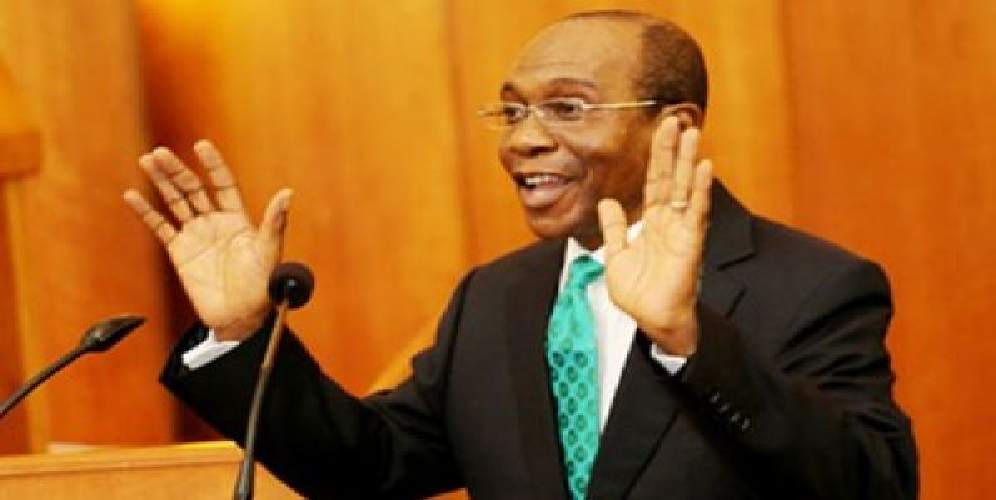
The Governor of the Central Bank of Nigeria (CBN), Godwin Emefiele, has been taken into custody by Nigeria’s secret police, the State Security Service (SSS), hours after PresidentBola Tinubu suspended him from office.

“The Department of State Services (DSS) hereby confirms that Mr Godwin Emefiele, the suspended Governor of the Central Bank of Nigeria (CBN), is now in its custody for some investigative reasons,” Peter Afunanya, the spokesperson for the agency, said in a press statement he shared with PREMIUM TIMES.

Mr Afunanya did not provide details of when and how Mr Emefiele was arrested and where he is being kept. However, PREMIUM TIMES learnt the banker was picked up from his home in Lagos and then flown to Abuja guarded by a detachment of operatives. He was then driven to the SSS’ headquarters in the Asokoro District of the nation’s capital when sources said he was being quizzed.

There were speculations Friday night that the SSS arrested Mr Emefiele shortly after he was suspended. But the law enforcement agency tweeted Saturday morning, saying the top banker was not in its custody.

It is unclear why the SSS is holding the embattled official. But the office of the Secretary to the Government of the Federation said Friday that his office, the CBN, was under investigation.