DD
MM
YYYY

PAGES

DD
MM
YYYY

spot_img

PAGES

Home Blog Page 41

Tim Draper Predicts Bitcoin Could Become the World’s Dominant Currency Despite Corporate Skepticism

0

Venture capitalist Tim Draper remains bullish on Bitcoin’s future, predicting that the crypto asset could one day become the world’s dominant currency.

Speaking during a discussion with James Heckman, Founder and CEO of Roundtable, on TheStreet Roundtable, Draper addressed concerns about volatility, stablecoins, and the long-term role of digital currencies in commerce.

He offered a much more radical outlook on traditional currency. While he agrees that treasuries should prioritize stability, he argues that the U.S. dollar is losing value so rapidly that it is destined to fail.

“If I were running a treasury, I would say, sure, you’ve got to have some money in big banks… you got to have money in Bitcoin”, he said.

According to Draper, declining confidence in fiat currencies could eventually push businesses and consumers toward Bitcoin. “People will get tired of watching a dollar turn into 90 cents to 80 cents to 70 cents and eventually goes straight to zero super fast”, he added.

His comment reflects his view that everyday transactions will increasingly use Bitcoin instead of government issued money. Notably, he considers gold a relic of the past. While gold has long been debated as a market stabilizer, and some stablecoin providers like Tether have amassed billions in the metal to back their treasuries, Draper dismisses the idea that physical commodities can function as practical payment methods in a digital economy.

He stated, “I don’t want gold because gold is like going back into the past,” emphasizing his belief that digital currencies, rather than traditional assets, represent the future of money. To illustrate his point, Draper joked about the difficulty of using gold for daily expenses. “What are you going to do? Shave off gold and say I’d like a cappuccino?”

Meanwhile, strong Gold advocate Peter Schiff, critiques Tim Draper’s recent interview claim that gold fails as a medium of exchange due to poor divisibility, countering that tokenizing gold on blockchains enables fractional ownership and seamless transactions like buying a cappuccino.

This exchange revives the long-standing gold-versus-Bitcoin debate, with Schiff a gold bull and Bitcoin critic defending tokenized gold’s utility, while Draper, a venture capitalist who bought 30,000 BTC in 2014, favors Bitcoin’s native digital properties.

Draper’s recent statement on Bitcoin show how strongly he believes the crypto asset could become a dominant global currency despite ongoing debate and skepticism from many corporate leaders about its stability and practical use today.

Last year May, in an interview with CoinDesk, he stated that Bitcoin will rise to $250,000 by the end of 2025. He said, ‘Once I can buy food, clothing, housing, and pay taxes with Bitcoin, there will be absolutely no reason to hold any dollars; Bitcoin will become the primary source of wealth.’

Notably, he also predicted that as trust in the government weakens and decentralized technology replaces traditional banking systems, there will be a run on fiat currency banks. When Silicon Valley Bank collapsed in March 2023, Draper revealed he received calls from 15 portfolio companies, all stating they were unable to pay salaries. Therefore, he suggested that each company’s finance department hold Bitcoin, allowing them to still pay salaries when banks shut down.

While Bitcoin has not yet fully replaced fiat currencies, adoption is growing worldwide:

  • Merchant Acceptance: Companies such as Block (formerly Square) and select online retailers have begun accepting Bitcoin for payments, making it easier for businesses to transact in crypto.

  • Cross-Border Payments: Bitcoin is increasingly used for remittances and international transactions, particularly in regions where traditional banking is costly or limited.

  • Wallet Growth: Digital wallets supporting Bitcoin have expanded globally, with millions of users now able to hold, send, and receive Bitcoin in daily use.

  • Stablecoins and Micropayments: Stablecoins, pegged to fiat currencies, are often used alongside Bitcoin for day-to-day transactions, reducing volatility concerns while familiarizing users with crypto payments.

Even if Bitcoin hasn’t fully replaced fiat money, its role in daily commerce is expanding. In some communities, Bitcoin is already used alongside stablecoins for practical transactions.

Draper’s vision may not have fully materialized, but the trajectory is clear. Digital currencies are increasingly becoming a viable alternative to traditional money, and Bitcoin remains at the forefront of this transformation.

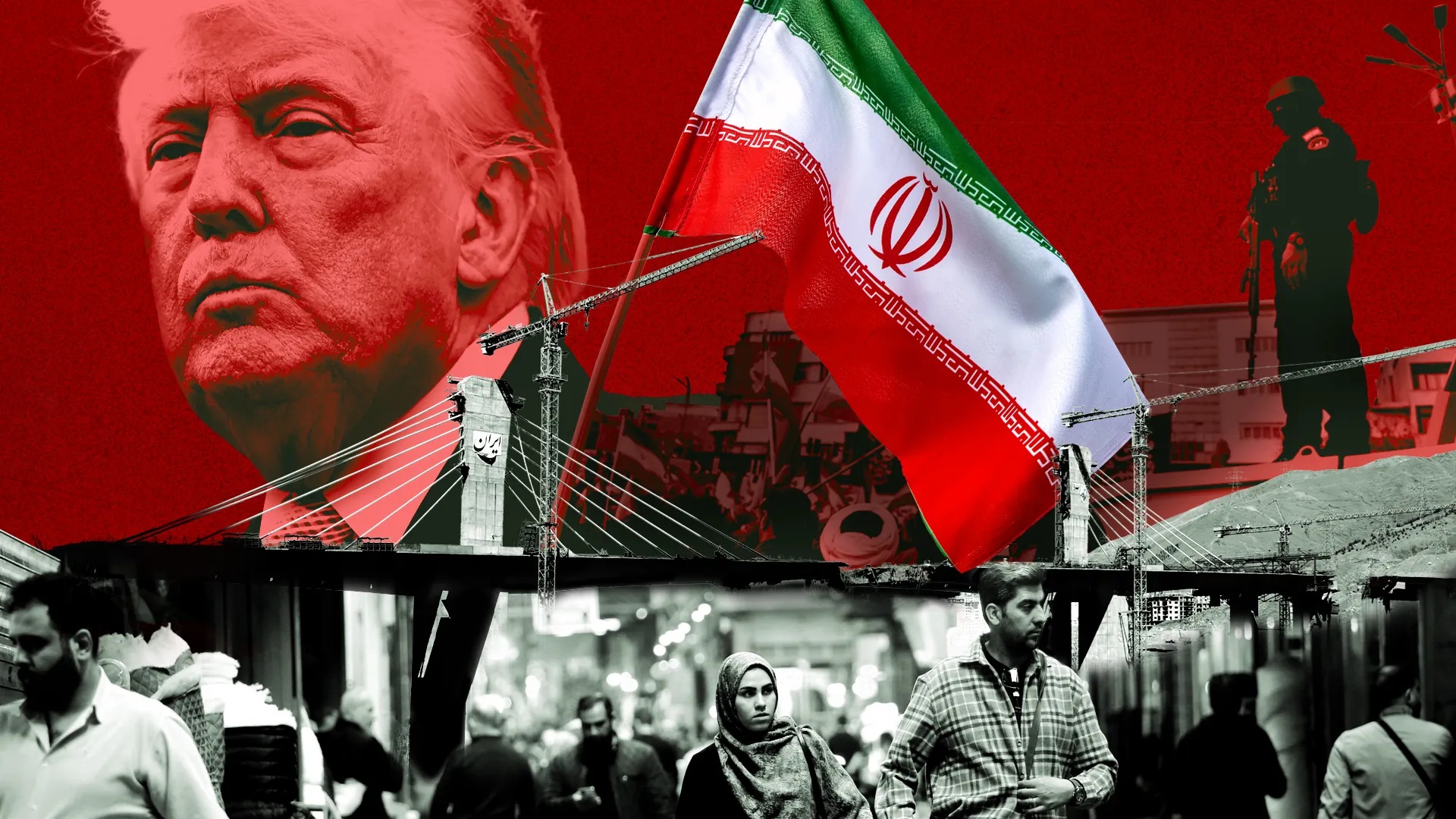
Global Exchanges Push Back Against Potential U.S. Government Intervention in Oil Futures as Prices Surge Amid Iran Conflict

0

Executives from leading derivatives and stock exchanges, including CME Group and TMX Group (parent of the Toronto Stock Exchange), voiced strong opposition on Wednesday to any U.S. government intervention in the oil futures market, warning that such measures could distort price discovery, create unintended consequences, and expose taxpayers to significant risk.

The comments come as the U.S. Treasury reportedly considers options to address soaring oil prices triggered by the ongoing U.S.-Israeli conflict with Iran, now in its second week. On Wednesday, the U.S. government announced the release of 172 million barrels from the Strategic Petroleum Reserve (SPR) — the largest single drawdown since 2022 — aimed at cooling prices that have risen more than 25% since the war began. Brent crude futures jumped nearly 5% on the day, trading above $100 per barrel after earlier surges past $104.

CME Group CEO Terry Duffy, speaking on a panel earlier this week, stated bluntly: “Markets do not like it when governments intervene on oil prices.”

The CME operates the world’s largest energy futures market, including the benchmark WTI crude contract. Duffy argued that government action risks undermining market signals and could lead to greater volatility rather than stability.

An anonymous CEO of another major exchange echoed the concern, telling reporters that Treasury intervention “risked aggravating the problem” by potentially exposing the government to “hefty losses” if energy prices continue rising — a scenario that has played out in past attempts to cap or manipulate commodity prices.

TMX Group CEO John McKenzie was equally direct in his assessment. He said, “I usually find those things lead to unintended consequences. You create a different problem by trying to solve the first problem. The market will sort this out itself.”

The International Energy Agency (IEA) has proposed releasing 400 million barrels from member-country reserves — potentially the largest coordinated drawdown in its history — to counter the supply shock. G7 energy ministers expressed support for using stockpiles, but no formal agreement has been reached.

Analysts, however, have described the proposed volumes as inadequate given the scale of disruption: Saudi Arabia’s Ras Tanura refinery remains offline after a drone strike, Iraqi Kurdistan production is suspended, Israeli gas fields are idled, and the Strait of Hormuz is effectively closed following Iranian threats to attack vessels.

Broader Implications for Oil Market Intervention

Oil’s rapid ascent has intensified inflationary fears, complicating central bank policy paths. Goldman Sachs revised its Fed rate-cut forecast Wednesday, now expecting quarter-point reductions in September and December rather than June, citing energy-driven inflation risks. Traders price only a ~41% probability of a September cut, per CME FedWatch.

Global equities remain under pressure. The StoXX 600 fell 0.6% on early trading after earlier steep declines, while Asian markets were mixed and U.S. futures traded flat. Safe-haven flows have favored the U.S. dollar, which strengthened against major peers despite geopolitical uncertainty.

The exchange leaders’ opposition reflects a long-standing industry view that government attempts to directly influence futures prices — through position limits, margin requirements, or direct trading — often backfire. Historical examples include the 2008 oil-price spike (followed by a crash) and past SPR releases that provided only temporary relief.

A Treasury intervention in futures could involve increased oversight of speculative positions, emergency margin hikes, or even direct market participation — steps that would mark a significant departure from the U.S.’s traditionally hands-off approach to commodity derivatives. Such action would require coordination with the Commodity Futures Trading Commission (CFTC) and could face legal and political challenges.

The market’s focus currently remains on physical supply risks rather than regulatory intervention. With the Strait of Hormuz closed and key facilities offline, analysts warn that sustained disruption could push prices toward $120+ per barrel, triggering broader inflationary pass-through and potential demand destruction.

The coming days — including U.S. inflation data, continued military developments, and any IEA/G7 reserve-release coordination — will be critical in shaping the oil market’s near-term trajectory. However, exchange executives’ public stance signals strong resistance to government interference. It reinforces the view that price signals, not policy edicts, should drive energy markets amid one of the most severe geopolitical supply shocks in recent years.

Iran Tells U.N. It Will Not Close Strait Of Hormuz, Offering Relief To Nations Scrambling To Avert Energy Crisis

0

Iran’s ambassador to the United Nations said Tehran does not intend to shut the strategically vital Strait of Hormuz, offering a measure of relief to governments already scrambling to contain the economic fallout from fears that the waterway could be sealed off during the escalating conflict involving the United States and Israel.

Amir Saeid Iravani told reporters on Thursday that Iran remained committed to freedom of navigation through the narrow maritime corridor, through which roughly one-fifth of the world’s oil supply normally passes.

“We are not going to close the Strait of Hormuz,” Iravani said. “But it is our inherent right to preserve the peace and security in this waterway.”

His remarks came hours after Iran’s new supreme leader, Mojtaba Khamenei, said the “lever of blocking the Strait of Hormuz must continue to be used,” comments that had heightened global anxiety about a potential disruption to energy supplies.

Global Relief After Weeks Of Anxiety

Iravani’s statement appeared aimed at calming markets and governments that had begun preparing for the possibility of a full closure of the Strait — a scenario that analysts say could send oil prices soaring and trigger a major economic shock.

Even the threat of disruption has already rattled global markets, driving crude prices sharply higher and forcing governments to examine contingency plans for energy supply.

The Strait of Hormuz links the Persian Gulf with global markets and serves as the primary export route for oil producers across the Middle East. A complete shutdown could halt millions of barrels of daily oil shipments and disrupt flows of liquefied natural gas and petrochemical products.

Many countries heavily dependent on imported crude have been particularly alarmed. Among them is India, one of the world’s largest oil importers.

Following remarks by Iran’s leadership suggesting the Strait could remain closed, Indian Prime Minister Narendra Modi moved swiftly to engage Tehran. Within hours of the declaration, Modi held urgent talks with Iranian President Masoud Pezeshkian, according to people familiar with the discussions.

The rapid diplomatic outreach underscored New Delhi’s growing concern over supply disruptions and rising energy costs, which have already begun triggering panic buying in parts of the country as consumers and businesses brace for potential shortages.

India relies heavily on imported crude to power its economy, making any disruption to the Strait of Hormuz particularly sensitive for the government.

Shipping through the Strait remains tightly controlled as the conflict continues. According to sources familiar with regional shipping activity, only three countries — Russia, India, and China — are currently being allowed passage through the corridor, highlighting how geopolitical alliances are beginning to shape access to one of the world’s most critical energy chokepoints.

The restrictions have intensified anxiety among oil-importing nations that depend on stable maritime routes to secure energy supplies.

Even limited disruptions could tighten global oil markets and drive up fuel costs worldwide.

Tehran Blames U.S. Actions

In a prepared statement before taking questions, Iravani argued that the current instability in the region was not the result of Iranian actions but rather the escalation triggered by Washington.

“Iran fully respects and remains committed to the principle of freedom of navigation under the law of the sea,” he said.

“However, the current situation in the region, including in the Strait of Hormuz, is not the result of Iran’s lawful exercise of its right of self-defense.”

“Rather, it is the direct consequence of the destabilizing actions of the United States in launching aggression against Iran and undermining regional security.”

Meanwhile, the United States has signaled it may take steps to secure shipping through the waterway if tensions escalate further. Scott Bessent, the U.S. Treasury secretary, said in an interview with Sky News that the United States Navy could escort commercial vessels through the Strait, potentially as part of an international coalition.

Iravani declined to comment directly on those remarks.

Even with Tehran’s assurances, the situation around the Strait remains highly volatile. Analysts say the risk is not limited to a formal closure of the waterway. Military activity, shipping delays, and insurance risks for tankers could still disrupt global supply chains and push energy prices higher.

For an already fragile global economy, the Strait of Hormuz has once again become a focal point of geopolitical risk. While Iran’s statement that it does not intend to close the corridor may ease immediate fears, the continuing conflict means that the stability of one of the world’s most critical energy routes remains uncertain.

Oil Shock From Iran War Rattles Global Markets, Sends European Stocks Lower, and Clouds Rate Outlook

0

European equities slipped on Friday as investors weighed the widening economic consequences of the escalating conflict involving Iran, a confrontation that has rattled energy markets, pushed crude prices above $100 per barrel, and forced traders to rethink the global interest-rate outlook.

The region-wide STOXX Europe 600 Index fell 0.6% in early trading, extending a sharp selloff that has seen the benchmark lose about 6.1% so far in March — its steepest two-week decline in roughly a year.

The downturn underscores how rapidly financial markets have shifted from optimism about falling inflation and imminent interest-rate cuts to renewed anxiety about energy shocks and prolonged geopolitical instability.

Futures tied to the S&P 500 also traded cautiously, slipping 0.1% after the index fell 1.5% in the previous session, reflecting broader global unease.

At the center of the turmoil is the surge in crude prices triggered by disruptions to Middle Eastern energy infrastructure and fears that key shipping routes could remain closed for an extended period. Brent crude futures rose to about $100.30 a barrel, while West Texas Intermediate crude traded near $95.98. Both benchmarks began the year around $60, meaning prices have climbed roughly 40% since the war erupted in late February.

The surge represents one of the fastest oil price rallies in recent years and is already raising concerns that the global economy could face a renewed inflation shock just as central banks believed price pressures were easing. Much of the anxiety stems from the threat to the Strait of Hormuz, the narrow maritime corridor through which roughly a fifth of the world’s oil shipments pass.

Iran’s new supreme leader, Mojtaba Khamenei, has vowed to keep the waterway closed, raising the prospect that tankers transporting crude from the Persian Gulf could remain blocked for weeks or even months. The closure has been a huge cause of concern due to the significance of Hormuz. Sustained disruption to shipments through the strait removes millions of barrels of oil from the global market, tightening supply at a time when demand from major economies remains resilient.

Temporary Relief From Russian Oil License

Oil prices eased slightly on Friday after the United States issued a 30-day license allowing countries to purchase sanctioned Russian oil and petroleum products that had been stranded at sea. The move effectively releases additional barrels into the global market, providing short-term relief to refiners scrambling to secure supply.

But analysts say the measure offers only temporary breathing room and does little to address the deeper issue — the growing risk that Middle Eastern oil flows could remain disrupted for an extended period.

Against that backdrop, currency markets are swinging toward the dollar as investors flee to safety.

The dollar has gained about 2.5% since the conflict began and is on track for its second straight weekly rise. The stronger currency has weighed heavily on most of its peers. The euro slipped 0.5% to around $1.1457, while the Japanese yen weakened sharply to about 159.4 per dollar after briefly touching its lowest level since July 2024.

Authorities in Japan warned they were prepared to intervene in currency markets if volatility intensified, although analysts say sustained dollar strength could limit the effectiveness of any unilateral action.

Inflation fears have also upended central bank expectations, marking a significant shift in interest-rate decisions. Until recently, investors had been betting that central banks would begin cutting rates this year as inflation cooled across advanced economies.

But the surge in energy prices has complicated that outlook. Markets now expect only around 20 basis points of rate cuts from the Federal Reserve this year — less than half the roughly 50 basis points of easing priced in just a month ago. Two-year U.S. Treasury yields, which closely track expectations for monetary policy, climbed to a six-month high on Thursday and have risen about 35 basis points since the war began.

Wolf von Rotberg, equity strategist at Bank J. Safra Sarasin in Zurich, said investors are increasingly focused on how long the conflict might last.

“If we don’t make any progress and just have a status quo for a prolonged period, that would obviously mean that oil prices stay higher for longer, and we have a more pronounced impact on the economy and on inflation,” he said.

Energy Costs Threaten Corporate Profits

Higher oil prices are also raising concerns about corporate profitability and economic growth. Energy costs ripple through nearly every sector of the economy, from manufacturing and transport to agriculture and consumer goods.

If crude remains near $100 or climbs higher, businesses could face sharply rising operating expenses just as demand shows signs of slowing in parts of the global economy. That combination — higher costs and weaker demand — can squeeze profit margins and potentially trigger a broader slowdown.

Jose Torres, senior economist at Interactive Brokers, said the surge in oil prices is reverberating across multiple asset classes.

“Indeed, sinking optimism about Fed rate reductions amid strengthening cost pressures is weighing on traditional safe havens such as silver, gold and government debt,” he said.

Gold rose slightly to around $5,088 an ounce on Friday but remained on track for a weekly decline, reflecting the drag from rising bond yields.

Attention is now shifting to a series of central bank meetings scheduled for next week. Policy decisions are expected from the Federal Reserve, European Central Bank, Bank of England, and Bank of Japan.

Most economists expect policymakers to keep interest rates unchanged while they assess the impact of the energy shock on inflation and growth. The Reserve Bank of Australia, however, is widely expected to raise rates, highlighting how persistent inflation pressures remain in parts of the global economy.

For investors, the key risk is that the conflict could drag on and keep oil prices elevated for months. Such a scenario would complicate efforts by central banks to bring inflation down while avoiding a slowdown in economic activity.

Vasu Menon, managing director of investment strategy at OCBC Bank, warned that markets may face continued turbulence.

“With the possibility of higher oil prices still elevated, investors should be prepared for continued volatility and potentially further downside in the near term,” he said.

Myriad Kicks Off Season 3 on BNB Chain with Partnership with USD1

0

Myriad, a Web3 prediction markets protocol allowing users to trade outcomes on events in crypto, sports, politics, gaming, and more, has officially kicked off Season 3 on BNB Chain.

This marks a major shift: Myriad is migrating its entire market catalog to BNB Chain, adopting USD1; the stablecoin associated with World Liberty Financial as the exclusive settlement asset for a faster, simpler, and more unified experience with deeper liquidity. Full migration to BNB Chain — All markets are now unified there, moving away from previous chains like Abstract.

Powered by USD1 — Markets settle exclusively in this stablecoin, launching alongside new products like “Candles”; short-timeframe markets with continuous liquidity and automated resolution. Myriad Wallet rollout — A new, optimized wallet for fewer approvals and lower gas costs.

Points distributed weekly based on multiple metrics not just one signal, rewarding liquidity provision, trading, referrals, content creation, quests, and more. This sets up for the future MYR ecosystem rewards. Central limit order book (CLOB), liquidity provision (LP) opportunities, and more ambitious upgrades.

Deposit and trade 500 USD1 on BNB Chain for multipliers, earn points via referrals, daily tasks, social engagement, etc. Season 3 is described as pivotal, with even late joiners having time to catch up and compete for rewards. The platform has seen strong growth, with cumulative trading volume over $167M reported recently.

It’s integrated into tools like Trust Wallet’s Predictions tab and aims for broader accessibility, especially in Asia. If you’re into prediction markets, this could be a prime time to jump in— or their BNB-specific page for live markets.

Myriad’s launch of Season 3 on BNB Chain, with full migration of its prediction market catalog and exclusive settlement in USD1, has several notable impacts across users, the platform, BNB Chain ecosystem, and the broader prediction markets space. Previously fragmented across chains, all markets now consolidate on BNB Chain. This eliminates multi-chain bridging hassles, reduces complexity, and creates a single, consistent environment for trading outcomes on crypto, sports, politics, gaming, etc.

Faster, Cheaper, and More Efficient Trading — BNB Chain’s low fees and high speed, combined with USD1; a dollar-pegged stablecoin, aim to deliver quicker settlements, lower gas costs, and a “faster, simpler” interface. The new Myriad Wallet (optimized for BNB) further cuts approvals and friction.

Exclusive USD1 settlement pools liquidity into one stable asset, reducing fragmentation. Upcoming shift to a Central Limit Order Book (CLOB) replacing AMM-style liquidity enables limit orders, slippage controls, dynamic fees, and more precise trading—big upgrades for serious traders.

New Product: Candles Markets — Short-timeframe, continuous-liquidity markets with automated resolution launch alongside USD1, appealing to high-frequency or quick-event bettors. Overhauled points system distributes weekly based on diverse metrics; trading volume, liquidity provision, referrals, content creation, quests, social engagement, rather than one signal.

This rewards broader activity, with multipliers for ?500 USD1 deposited and traded on BNB. Season 3 is called “pivotal” for future MYR ecosystem rewards—even late joiners can compete. Integration into Trust Wallet’s Predictions tab exposes Myriad to millions, especially in Asia where BNB Chain has strong adoption.

Cumulative trading volume has hit over $167M up significantly from earlier milestones like $100M in late 2025, with strong momentum from the migration and incentives. Positions Myriad as the first prediction market to fully adopt USD1 settlement, potentially attracting WLFI-aligned users and boosting USD1 utility and liquidity.

Strengthens BNB Chain’s lead in prediction markets; ecosystem-wide volume already crossed $20B+ earlier in 2026. Myriad’s move adds to players like Opinion Labs, Predict.Fun, etc., driving more TVL, activity, and on-chain volume—especially with low-cost infrastructure appealing for high-frequency prediction trading.

USD1 and WLFI Tie-In

As the first major protocol to go all-in on USD1, it enhances the stablecoin’s real-world use case in DeFi, gaming and predictions, potentially supporting peg stability and adoption amid WLFI’s ecosystem growth. Reinforces on-chain prediction markets’ shift toward efficiency, stable settlement, and mass accessibility via wallets like Trust. It counters fragmentation issues plaguing multi-chain setups and sets a model for others.

Some early community notes mention hype around the updates but call for monitoring execution; CLOB rollout this month, LP opportunities. This positions Season 3 as Myriad’s most ambitious yet—focusing on scalability, user retention via better rewards, and ecosystem alignment.