DD
MM
YYYY

PAGES

DD
MM
YYYY

spot_img

PAGES

Home Blog Page 41

The Best of Online Betting: 1xBet Bonuses, MyStake’s Pivot, and Spartans’ Mansory Jesko Giveaway

0

The digital gaming world thrives on innovation, and in February 2026, the best online betting platforms are continuously redefining the user experience. Whether it is through aggressive bonus structures, navigating complex regulatory environments, or offering prizes previously thought impossible, the industry is moving fast.

Currently, 1xBet is solidifying its foothold in India with accessible rewards, while MyStake is making headlines due to corporate restructuring. Simultaneously, Spartans is carving out a new niche by blending high-stakes transparency with luxury lifestyle rewards.

1xBet: Tailored Incentives for the Indian Market

For players in India, 1xBet has rolled out a suite of attractive incentives for February 2026. The platform is focusing on accessibility, ensuring that both high-rollers and casual fans can participate.

By utilizing specific promo codes during registration or deposit, users can unlock significant value. The flagship sports promotion offers a 150% boost (capped at approximately $731) using the code 1GOALIN. Additionally, those preferring e-wallets can secure cashback deals around $50 when funding accounts via Neteller or Skrill.

Casino enthusiasts aren’t left out, with a package offering up to $1,662 and 100 free spins via the code 1GLCS. With a low entry barrier, requiring a minimum deposit of just $2.22, these bonuses are designed to enhance the experience across major events like the Premier League, T20 World Cup 2026, and the WPL.

MyStake: Navigating Regulatory Changes

While some platforms focus on bonuses, others are navigating the complexities of international compliance. The parent company behind MyStake and sister brands like Donbet and Velobet has recently migrated its operations to a new offshore license following heightened regulatory scrutiny.

Previously operating under Santeda International B.V., these brands now display GTW B.V. as their operator in website footers. This entity holds a B2C license from Curaçao, which was reportedly granted in June but flagged as expired by December. Despite this, industry experts like Jordan Lea suggest that such licensing pivots are a standard response to regulatory pressure, allowing operators to reset. It is understood that local laws may permit MyStake to continue operations while license renewals are processed, though the move highlights the importance of transparency in the best online betting sector.

Spartans: Democratizing Luxury with the Mansory Jesko

Amidst the standard bonus offers and corporate shifts, Spartans is introducing a paradigm shift centered on extreme luxury and fairness. The platform is hosting a historic giveaway featuring the Mansory Jesko Spartans Edition, a vehicle so exclusive it is usually reserved for the ultra-wealthy.

The campaign challenges the status quo by offering this multimillion-dollar hypercar to the community. Built on the legendary Koenigsegg Jesko framework and customized by MANSORY, the car features stealth forged carbon fiber and an interior that rivals high art. Spartans is effectively taking assets that require billionaire status and placing them within reach of everyday players.

What sets this apart is the underlying technology. Spartans utilizes blockchain to ensure the draw is auditable and truly random. This commitment to “fair play” means every registered user has an equal shot at the prize, reinforcing the idea that best online betting should be built on trust, excitement, and tangible, life-changing opportunities.

Final Thoughts

The online wagering ecosystem is more diverse than ever. 1xBet continues to dominate the Indian market through low barriers to entry and generous promos. MyStake serves as a reminder of the shifting sands of global licensing and the need for player diligence.

However, Spartans is setting a new benchmark. By combining the thrill of gaming with the integrity of blockchain and the allure of a one-of-a-kind hypercar, they are proving that the modern player deserves more than just a bet, they deserve a shot at the extraordinary.


Find Out More About Spartans:

Website: https://spartans.com/

Instagram: https://www.instagram.com/spartans/

Twitter/X: https://x.com/SpartansBet

YouTube: https://www.youtube.com/@SpartansBet

Backpack Announces Token Distribution While Pushing for a Major Funding Round 

0

Backpack, the crypto exchange and wallet platform founded by former FTX employees including CEO Armani Ferrante and others, has reportedly outlined its token distribution plans while pursuing a major funding round.

Backpack is in advanced talks to raise $50 million in fresh funding at a $1 billion pre-money valuation, potentially achieving unicorn status. Some sources note the raise could exceed $50M, and the company reportedly generated over $100M in annual revenue in 2025.

This comes as Backpack pushes into tokenization, regulated markets, and growth on Solana. Regarding the native token expected ticker $BP, though not officially confirmed: Total supply: 1 billion tokens. 25% released. The bulk around 240 million or 24% airdropped to early community participants, including those in the Backpack Points program.

An additional ~1% (10 million tokens) reserved for Mad Lads NFT holders (a cultural tie-in from the project’s origins). Remaining 75% (750 million tokens) split into two tranches of 37.5% each (375 million tokens per tranche): One 37.5% unlocks gradually pre-IPO, tied to measurable milestones.

The other 37.5% allocated to a post-IPO company treasury, with no direct team or VC liquid allocations at launch. Team rewards are delayed — accessible only after a U.S. IPO, plus at least a 1-year lockup, then via equity and treasury exposure.

This structure is designed to: Prevent early “dumping” by insiders/founders (a common criticism in crypto). Align incentives with long-term growth and a potential future public offering. Limit retail dilution and put most Day 1 circulating supply in community hands.

The approach draws more from traditional startup equity models than typical crypto token launches, emphasizing community-driven price discovery early on. The news has generated bullish sentiment in crypto circles, with discussions around potential FDV (fully diluted valuation) implications — some community bets and analyses suggest strong odds for higher figures given the $1B equity valuation benchmark and revenue traction.

No exact TGE date has been announced yet, and utility details are expected soon. This positions Backpack as a post-FTX rebuild story with a focus on compliance and sustainable growth.

The Backpack Points program is a loyalty and rewards initiative run by Backpack Exchange (part of the broader Backpack ecosystem, including the self-custodial wallet and ties to Mad Lads NFTs).

It incentivizes user engagement on the platform, primarily through trading and other activities, with the explicit goal of rewarding contributors to the platform’s growth. The program rewards active users who help drive Backpack’s expansion.

Accumulated points have positioned participants for a significant share of the upcoming native token airdrop likely $BP or similar, as confirmed in Backpack’s tokenomics: 24% of the total 1 billion token supply (240 million tokens) is allocated to points holders at the Token Generation Event (TGE).

This makes it one of the largest community-focused distributions in recent crypto launches. The program runs in seasonal phases e.g., Season 1 through Season 4, with an “Epilogue” phase as the final farming window before TGE. Seasons have varied focuses and scoring tweaks. Earlier seasons emphasized factors like asset holding, positions, lending, and profit/loss (PnL).

Later seasons (e.g., Season 3 onward) shifted heavily toward trading volume as the dominant factor often 70-80% weight, combined with overall activity. Earning Points: Primarily based on combined trading volume across Spot and Perpetual Futures markets.

Additional contributions from other products like lending/borrowing, maintaining positions, or overall platform usage. Weekly snapshots capture activity (ending Thursday at 00:00 UTC), with points distributed every Friday at 02:00 UTC.

Leaderboards rank users by total volume/activity, determining share of the weekly reward pool. Criteria are intentionally opaque and evolve to prevent gaming while prioritizing genuine growth contributors.

Holding Mad Lads NFTs for perks like fee reductions or special access, though the main 1% token allocation is separate. Some cross-promotions or badge systems tied to performance. Points are non-transferable and tracked per account. They don’t have direct cash value but serve as the basis for the airdrop allocation — higher points via rank and volume mean a larger share of the 240M token pool.

No fixed conversion rate has been publicly detailed yet; speculation has floated $0.30–$0.50 per point equivalents in community discussions, but this is unofficial. As of early 2026, the program was in its final stages (Season 4/Epilogue), with points farming wrapping up shortly before TGE.

This setup aligns incentives toward long-term platform success rather than short-term farming exploits. It draws from traditional loyalty programs but ties directly to a massive token allocation, rewarding early and consistent traders without immediate insider dumps. Backpack’s approach emphasizes compliance, regulated growth, and community-first distribution.

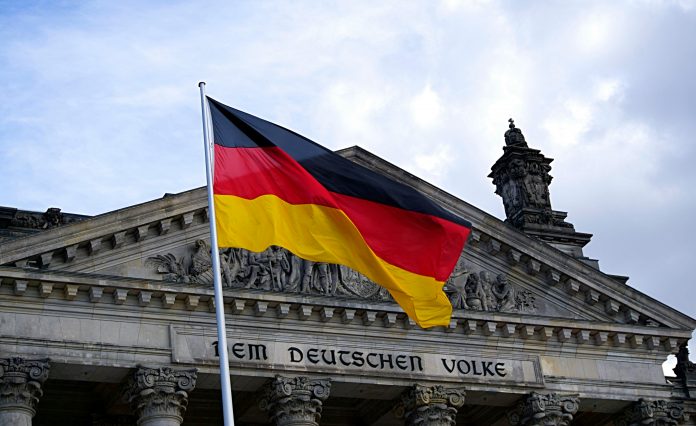
Sentiments Surrounding Metal and Manufacturing Remain Subdued in Germany

0

In late 2025 particularly Q4 and December, German factory orders saw significant increases, with a notable surge of 7.8% month-on-month in December—the largest in two years.

This was driven heavily by large orders in fabricated metal products (+30.2%), machinery, electrical equipment, and defense-related contracts. Excluding volatile large contracts, orders still rose modestly (+0.9%).

This contributed to broader industrial output recovering from prior contractions, with metal products among segments showing growth. However, business sentiment in the metal and manufacturing sectors remains subdued or weak for several reasons.

Persistent challenges like high energy costs, weak export demand despite some recent pickup, competitive pressures, and structural issues in energy-intensive industries. Broader manufacturing indicators show ongoing contraction.

The HCOB Germany Manufacturing PMI rose to 49.1 in January 2026; a 3-month high but still below 50, signaling contraction, with output returning to modest growth but employment declining and input costs including metals rising sharply. Ifo and ZEW sentiment indices reflect cautious or mixed outlooks, with improvements in some export-oriented areas but overall weakness tied to automotive slowdowns, construction softness, and global uncertainties.

Steel-specific production remained under pressure, with declines in 2025 continuing into early 2026 amid bearish demand from autos and construction. While orders have risen boosted by specific factors like defense and capital goods, sentiment stays weak due to fragile underlying demand, cost pressures, inventory reductions, job cuts, and no full recovery yet.

Analysts see potential for gradual improvement in 2026, possibly driven by domestic demand and fiscal support, but the sector isn’t out of the woods—2026 is viewed as a pivotal year for stabilization rather than robust growth. This pattern echoes similar dynamics in related sectors like chemicals seeing slight sentiment ticks but still weak conditions.

The HCOB PMI, or Hamburg Commercial Bank Purchasing Managers’ Index, is a key economic indicator that provides insights into the health and trends of the manufacturing, services, and overall (composite) sectors in the eurozone and specific countries like Germany, France, Italy, and Spain.

It is produced through a partnership between Hamburg Commercial Bank (HCOB) and S&P Global, and has been in existence since the late 1990s. Often referred to as a Purchasing Managers’ Index® (PMI®) or in German as the Einkaufsmanagerindex® (EMI®), it serves as a leading indicator of economic activity, helping analysts, investors, and policymakers gauge whether sectors are expanding, contracting, or stable.

HCOB sponsors the creation of these indices, including flash (preliminary) versions and detailed breakdowns for manufacturing and services. The PMI is widely used because it offers timely data—often released monthly before official government statistics—making it a “high-frequency” tool for tracking economic shifts.

The PMI concept originated from broader global indices developed by organizations like S&P Global (formerly Markit) and the Institute for Supply Management (ISM) in the U.S. HCOB’s involvement began as a sponsorship to focus on European economies, particularly the eurozone.

It builds on surveys that have been conducted for decades, evolving into a standardized measure recognized worldwide. In Europe, the HCOB-branded PMI replaced or complemented earlier versions, emphasizing data for major economies to reflect regional dynamics.

The HCOB PMI is a diffusion index derived from monthly surveys sent to panels of purchasing managers in private sector companies. For the eurozone manufacturing PMI, for example, it draws from responses of around 3,000 manufacturers across countries like Germany, France, Italy, Spain, the Netherlands, Austria, Ireland, and Greece.

Similar panels exist for services and composite indices, typically surveying over 300 executives in manufacturing and another 300 in services. Survey questions focus on key aspects of business activity compared to the previous month, such as: New orders weighted at 30%: Measures incoming business demand.

Suppliers’ Delivery Times (15%): Indicates supply chain efficiency (longer times can signal high demand or bottlenecks).

Stocks of Purchases (10%): Monitors inventory levels. Respondents answer whether each aspect has improved, stayed the same, or worsened.

The index is calculated by assigning percentages to these responses and deriving a weighted average. The formula essentially creates a “diffusion” score: for each component, the percentage of “improved” responses is added to half the percentage of “no change” responses.

This results in a headline PMI figure ranging from 0 to 100. There are two main releases: Flash PMI: A preliminary estimate based on about 85-90% of responses, released around the 23rd-24th of the month.

Final PMI: The complete data, released about a week later. Sub-indices for input costs, output prices, backlogs, and future expectations are also provided, offering deeper insights into inflation pressures, employment trends, and confidence.

The further the reading is from 50, the stronger the rate of change. For instance, a reading of 55 might indicate moderate growth, while 60+ suggests robust expansion. Trends over multiple months are more telling than single readings, as the PMI can be volatile due to seasonal factors or one-off events.

Different sectors have nuances: Manufacturing PMI: Focuses on goods production, sensitive to global trade, supply chains, and commodity prices. Services PMI: Covers non-manufacturing like retail, finance, and hospitality, often reflecting consumer confidence and domestic demand.

Composite PMI: A blend of both, providing an overall economic snapshot. The HCOB PMI is valued for its forward-looking nature, often predicting GDP growth, inflation, and employment trends before official data is available.

It’s a “soft” indicator based on perceptions, complementing “hard” data like industrial production or retail sales. Central banks like the European Central Bank (ECB) use it to inform monetary policy, such as interest rate decisions.

In financial markets, PMI releases can move currencies (e.g., the euro), stocks, and bonds. A surprisingly strong reading might boost investor confidence, while a weak one could signal recession risks. For businesses, it helps in supply chain planning and forecasting demand.

As of early 2026, the HCOB Eurozone Manufacturing PMI stood at 49.5 in January, indicating mild contraction but an improvement from December’s 48.8. This reflected challenges like high input costs and weak orders in countries like Germany, offset by growth in others like France.

The Composite PMI reached 51.3 in early February, showing expansion driven by services. In October 2025, the Composite PMI hit a 17-month high of 52.2, fueled by stronger demand. These figures highlight the eurozone’s uneven recovery post-inflation and energy crises.

Ledger Integration with OKX DEX Accelerates Onchain Plugins 

0

Ledger has announced an integration with OKX DEX. This partnership allows Ledger wallet users via the Ledger Live app to perform non-custodial, on-chain token swaps directly through OKX’s decentralized exchange aggregator, while keeping full self-custody of their assets.

Every transaction is signed directly on the Ledger hardware device, ensuring private keys never leave the wallet and maintaining hardware-enforced protection. This aligns with Ledger’s emphasis on secure, self-custodial trading as an alternative to centralized exchanges.

Swaps are enabled across major chains, including Ethereum, Arbitrum, Optimism, Base, Polygon, and BNB Chain also referred to as BNB Smart Chain. Users can access aggregated liquidity from OKX DEX for better swap rates and execution, without transferring assets to hot wallets or intermediaries.

This targets Ledger’s large user base, over 8 million devices sold, securing a significant portion of global crypto assets to make DeFi trading more accessible and secure. The feature is rolling out soon, integrated directly into the Ledger Live application.

This move is part of a broader push to bridge hardware wallet security with DeFi liquidity. This enhances options for secure, direct on-chain trading without compromising self-custody. The integration of OKX DEX into Ledger Live represents a meaningful step in making secure, self-custodial DeFi trading more accessible and efficient.

By embedding OKX’s advanced DEX aggregator directly into the Ledger ecosystem, users can execute on-chain token swaps without ever compromising their hardware-enforced security. Private keys remain offline on the Ledger device at all times—every swap requires physical approval on the hardware signer.

This eliminates risks associated with connecting to third-party hot wallets, browser extensions, or centralized platforms, which have historically been vectors for phishing, exploits, or key exposure. It’s positioned as a safer alternative to traditional CEX trading or less-secure DeFi interfaces.

Improved User Experience and Accessibility

Swaps happen natively in Ledger Live, reducing friction: no need to bridge assets, manage multiple apps/wallets, or transfer funds off the hardware wallet.

OKX DEX aggregates liquidity from over 400 DEXs across 20+ blockchains with initial support for Ethereum, Arbitrum, Optimism, Base, Polygon, and BNB Chain, using proprietary X-Routing for optimal pricing, faster execution, and lower slippage.

This brings “institutional-grade” liquidity aggregation to Ledger’s 8+ million users, many of whom prioritize long-term holding but now have easier entry into active DeFi trading. Ledger secures a significant portion often cited as over 20% of global crypto assets.

Enabling seamless on-chain swaps could redirect trading volume from centralized exchanges back to decentralized protocols, especially amid growing DEX volumes like $278B in January despite market conditions. It bridges the gap between cold storage holders and DeFi liquidity, potentially increasing on-chain activity without custodial trade-offs.

Competitive Edge for Both Parties

Ledger expands its wallet from a storage tool into a full DeFi gateway building on prior integrations like THORChain or others. OKX gains exposure to Ledger’s massive, security-focused user base, strengthening its position in the aggregator space.

While custody stays with the user, swap routing relies on OKX’s infrastructure. Any issues with OKX DEX like  routing errors, temporary downtime, or—though rare—past security concerns like the 2025 Lazarus Group-related suspension of services could affect availability or execution quality. Users should always verify transaction details on-device.

The rollout focuses on EVM-compatible chains; non-EVM ecosystems like Solana, Bitcoin aren’t mentioned yet, so coverage isn’t fully multichain from day one. Gas fees, network congestion, and impermanent loss risks in DeFi still apply as usual. No evidence suggests this introduces novel vulnerabilities beyond standard on-chain interactions.

Ledger’s hardware security model remains intact, and the integration avoids custodial elements. This partnership accelerates the trend toward “secure self-custodial trading” as a mainstream DeFi entry point. For Ledger holders, it lowers barriers to participating in decentralized markets while preserving the core promise of “not your keys, not your crypto.”

On Jobs, What Is Your Plan B?

0

If you chart the average number of jobs created monthly in the United States since 2021, a clear downward arc emerges, from the exuberant highs of nearly 600,000 jobs per month to figures now hovering below 100,000. Yet unemployment remains relatively low. This is not necessarily because the economy is booming, but partly because immigration has slowed. Fewer new entrants into the labor force are masking a deeper transformation underway in the U.S. economy, a structural redesign of how work is created, allocated, and performed.

This leads to a more personal and pressing question: what is your Plan B? What is your alternative path in a world where there may simply be fewer traditional jobs? Many assume this shift will not affect them. But evidence from the past 12–18 months suggests something more fundamental: the long-standing connection between earning a good degree and being offered opportunity has weakened, if not broken. And this is not any country specific problem; it is global. Yes, there is a clear correlation between the West’s immigrant antagonism and jobs, as many in those places feel that the future is fading for them.

Why is this happening? Many forces are at play, but technology, especially AI, sits at the center. Recently, it took me just 23 minutes to build and deploy a functional website (afrit .org), from idea to live deployment, using modern AI tools and cPanel. I am not particularly gifted in design; more skilled people could do far better. Yet the point remains: what once required teams, budgets, and time now requires minutes and judgment.

Still, many underestimate what this truly means. AI is often framed as a “technology” issue, when in reality it is becoming a work reallocation issue. As its capabilities compound, the conversation will shift. In a few years, headlines will focus less on what AI enables people to build and more on what it has displaced in the labor market. The excitement around technical possibility will give way to anxiety about livelihoods, as a growing number of people confront a more basic question: how to pay the bills in an AI-shaped economy.

A startup in Lagos recently deployed AI for customer support and account reconciliation, and a leading financial institution subsequently reduced those operational units by over 80%. The entry-level roles that once served as gateways into careers are increasingly being absorbed by software. The result is not just automation, it is dislocation, especially for young professionals whose career mobility depended on those early roles.

The future of work is not a distant conversation. It is already here. The real question is no longer whether jobs will change, but whether individuals have thought deeply enough about how they will remain relevant when they do.