DD
MM
YYYY

PAGES

DD
MM
YYYY

spot_img

PAGES

Home Blog Page 412

Citigroup and JPMorgan Recently Adjusted Forecast Prices For BTC, ETH As BTC Reclaims $120k Priceline

0

Citigroup (Citi) has recently updated its year-end 2025 price targets to $132,000 for Bitcoin and $4,500 for Ethereum, citing shifting investor flows toward ether amid macroeconomic factors and sustained ETF demand, though with smaller inflows expected for Ethereum compared to Bitcoin.

These forecasts represent a slight trim for Bitcoin from prior estimates like an earlier $135,000 base case but a lift for Ethereum from $4,300 announced in September.

Citi’s models incorporate user activity, ETF inflows which explain over 40% of Bitcoin’s recent price variation, and Ethereum’s utility in areas like stablecoins and tokenization, with bull cases reaching $199,000 for BTC and $6,400 for ETH.

Separately, JPMorgan has indicated Bitcoin is undervalued relative to gold and could see significant upside to $165,000, driven by institutional adoption, ETF inflows, corporate treasuries, and potential state-level reserves in the U.S.

This aligns with broader JPMorgan views on Bitcoin outperforming gold in the second half of 2025, though exact year-end targets vary across reports some cite $150,000. These predictions come amid Bitcoin trading above $120,060 and Ethereum above $4,483 as of early October 2025, with risks tilted upward due to accelerating institutional demand but tempered by macro uncertainties.

The price targets from Citi $132K for Bitcoin, $4,500 for Ethereum and JPMorgan $165K for Bitcoin by year-end 2025 carry several implications for investors, markets, and the broader crypto ecosystem.

JPMorgan’s higher Bitcoin target $165K reflects growing institutional interest, driven by ETF inflows, corporate treasury allocations, and potential state-level Bitcoin reserves in the U.S. This suggests increasing mainstream acceptance, which could stabilize prices and reduce volatility over time.

Citi’s focus on Ethereum’s utility like the stablecoins, tokenization indicates confidence in its long-term value beyond speculative trading, potentially attracting more institutional capital to ETH-based projects.

Bitcoin’s current price at $120,060k is below both targets, suggesting potential upside of 11–39% by year-end. Ethereum’s price $4,483 is close to Citi’s target, implying limited short-term growth 2–3% unless bull-case scenarios ($6,400) materialize.

ETF inflows, which Citi notes explain over 40% of Bitcoin’s price variation, will likely remain a key driver. Any slowdown in inflows or regulatory hurdles could cap upside potential.
Investment Strategies.

Investors may tilt portfolios toward Bitcoin for higher upside potential, per JPMorgan’s outlook, while Ethereum could appeal to those focused on blockchain utility and diversified crypto exposure.

The bullish forecasts could spur retail FOMO, but macro risks like the interest rate hikes, geopolitical tensions noted by Citi may prompt caution, favoring hedged positions or stablecoin-based strategies.

Rising prices could accelerate development in Ethereum-based DeFi and tokenization, as higher valuations attract more developers and capital. JPMorgan’s mention of state-level Bitcoin reserves signals potential policy shifts, which could legitimize crypto further but also invite stricter regulations, impacting market access and liquidity.

Discrepancies between Citi’s conservative ($132K) and JPMorgan’s aggressive ($165K) Bitcoin targets highlight uncertainty in macro conditions and adoption pace. Investors face risks from market corrections if ETF inflows or institutional interest wane.

Ethereum’s growth may lag Bitcoin’s due to smaller ETF inflows, potentially leading to underperformance relative to expectations. These targets signal a bullish outlook for crypto, with Bitcoin likely to lead due to stronger institutional backing, while Ethereum’s growth hinges on its ecosystem’s expansion.

Investors should weigh these opportunities against macro risks and monitor ETF flows and regulatory developments closely.


BlockDAG Steals the Spotlight as Presale Nears $420M, While Binance Coin Targets $1K & Monero Recovers

0

Market watchers are zeroing in on the Binance Coin (BNB) price prediction as BNB edges toward $945, wondering if $1,000 is within reach. At the same time, Monero (XMR) price rally defied odds, climbing nearly 7% after a rare 51% network attack shook confidence.

BlockDAG (BDAG) is in a league of its own. With presale nearing $420 million, 26.5B coins sold, 312,000 holders, 3 million X1 app users, and 20,000 ASIC miners shipped, it turns adoption into verifiable infrastructure. Unlike BNB or XMR, BlockDAG offers a confirmed user base, proof of delivery, and a limited-time presale price of $0.0015 in Batch 30. For those evaluating the best crypto to invest in, BDAG takes theory and converts it into measurable growth.

BNB Pushes Higher: Will $1,000 Break or $900 Hold?

BNB set a fresh record close to $945, sparking talk of whether $1,000 could fall next. Yet before that, the $900 support level demands attention. If it breaks, BNB could slide back before continuing higher. Charts back this with a rejection at resistance and bearish RSI divergence hinting at fading strength.

Still, every run needs structure. BNB’s rally is fueled by more activity in its ecosystem and growing institutional adoption, both signs of long-term support. Those eyeing an entry may prefer waiting near $900 if it holds, offering a better setup. If not, the risk of a deeper correction grows.

Monero Jumps Despite a 51% Attack, Confidence or Caution?

Monero (XMR) shocked traders by surging nearly 7% even after a rare 51% attack hit its network. In mid-August, Qubic, a mining pool, briefly held majority control of Monero’s hash power, causing an 18-block reorganisation and reversing 117 transactions.

The attack breached Monero’s 10-block safety threshold, raising double-spend concerns and fears of concentrated mining power. Even so, the swift recovery shows the market’s belief in Monero’s resilience. For buyers, this brings a split view: while the incident reveals vulnerabilities, it also reinforces XMR’s role as the top privacy coin. If developers roll out timely security fixes, Monero may retain its stronghold as the most trusted privacy-focused project.

BlockDAG Shows Dominance as Presale Nears $420M

BlockDAG isn’t a routine launch, it’s quickly shaping into the biggest presale of the decade. With almost $420 million raised and 26.5 billion BDAG coins already sold, the numbers speak for themselves. This isn’t empty buzz, it’s solid proof that people view BlockDAG as a rare, once-in-a-generation project. The limited-time Batch 30 price of $0.0015 sends a clear signal: securing a spot now means buying at levels that may look very cheap once the mainnet goes live.

Unlike countless projects that only market promises, BlockDAG has already shown results with more than 312,000 holders, 3 million X1 app users, and over 20,000 ASIC miners distributed worldwide, building a functional ecosystem before launch day even arrives. The Awakening Testnet is live, the presale dynamics are already changing, and anyone holding back could regret waiting.

For long-term buyers, this is not just another trade, it’s an entry into tested infrastructure that has already proven adoption. Yet, the $0.0015 limited-time presale price still remains available. For those chasing shorter-term moves, it’s also a rare chance to capture momentum before exchanges bring in mass liquidity. The signal could not be stronger: this is far more than a presale, it’s the defining event of this market cycle.

Final Thoughts

BNB’s near-$1,000 push and Monero’s XMR price rally both offer compelling setups, but each carries short-term risks tied to technicals and sentiment. BlockDAG, however, is already rewriting the playbook. Its presale is almost at $420M, and the ecosystem highlights the adoption that is happening now. With 3M miners on the X1 app, 312,000 holders, and over 20,000 ASIC miners, the foundation is solid.

The Batch 30 limited-time price of $0.0015 ensures those who act now gain maximum upside ahead of launch. For anyone doing a serious best crypto to invest in assessment, BlockDAG’s numbers overshadow BNB and XMR, combining liquidity, adoption, and long-term strength. Missing this presale isn’t just a lost opportunity; it’s risking sitting on the sidelines while history is being made.

Presale: https://purchase.blockdag.network

Website: https://blockdag.network

Telegram: https://t.me/blockDAGnetworkOfficial

Discord: https://discord.gg/Q7BxghMVyu


Nvidia’s Jensen Huang Calls Elon Musk “The Ultimate GPU” as Tesla CEO Races to Build World’s Largest AI Supercomputer

0

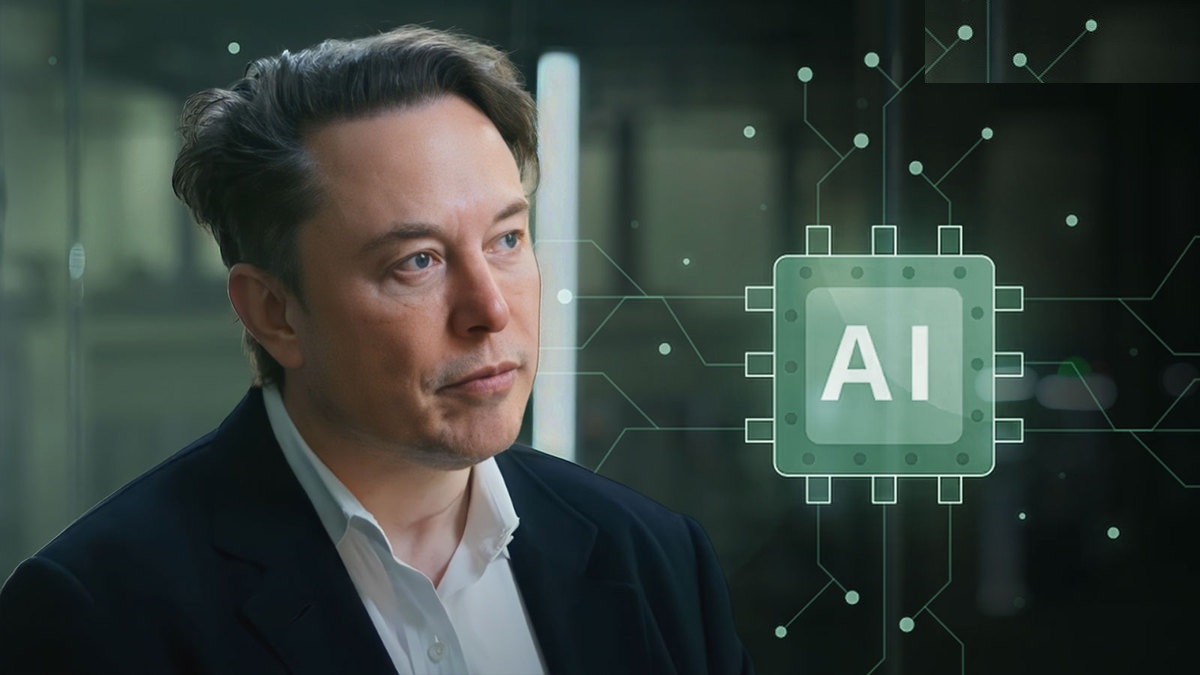
Tesla and SpaceX CEO Elon Musk have earned praise from one of the tech industry’s finest, Jensen Huang, Nvidia’s CEO. Huang, speaking on the “BG2” podcast, likened Musk’s mind to one of Nvidia’s most powerful chips.

He said, according to BI, the way the world’s richest man processes information makes him capable of accomplishing “unique” feats — a comparison that underscores Musk’s outsize role in the global race to build next-generation artificial intelligence infrastructure.

Musk is currently juggling at least five companies, spanning everything from Tesla’s self-driving cars to robotics projects to xAI’s conversational AI companions. Among his most ambitious undertakings is Colossus II, a Tennessee-based supercomputer Musk has described as “the world’s first gigawatt AI training cluster.”

Huang explained that AI supercomputers are among the most difficult projects humanity has ever attempted.

“These AI supercomputers are complicated things,” he said. “The technology is complicated. Procuring it is complicated because of financing issues. Securing the land power and shell, powering it is complicated.”

Calling the effort “unquestionably the most complex systems problem humanity has ever endeavored,” Huang suggested Musk has a distinct advantage: “All of these systems are interoperating and the interdependencies reside in one head, including the financing.”

The podcast hosts compared Musk to a “big GPT” or a supercomputer, to which Huang replied, “He’s the ultimate GPU.” Huang also praised Musk’s urgency and determination. “He has a real desire to build it, and so when will comes together with skill, unbelievable things can happen. Quite unique.”

Building Colossus II

Musk is already moving fast, as documents reviewed by Business Insider show that at least $400 million has been spent on Colossus II, which is under construction outside Memphis, Tennessee. The system will run on 200,000 Nvidia GPUs, with plans to eventually scale up to 1 million GPUs.

That scale makes Colossus II one of the boldest attempts to build infrastructure capable of supporting frontier AI systems. Huang said he “would not be surprised if he gets to a gigawatt before anybody else does.”

It is happening as Nvidia is simultaneously investing $100 billion into OpenAI to support AI data center buildouts. OpenAI, led by Musk’s longtime rival Sam Altman, is also part of the U.S. government-backed Stargate project. Musk’s xAI, by contrast, is going its own way with Colossus II — yet both ventures highlight how dependent the AI industry is on Nvidia’s chips.

The Competitive Lens

Huang’s praise for Musk is not only admiration but also acknowledgment of Nvidia’s stake in the outcome. Musk’s companies, from Tesla to xAI, are major Nvidia customers. Nvidia’s dominance in AI hardware has made its GPUs indispensable to anyone attempting to compete at scale, from Big Tech incumbents like Meta and Google to challengers like Musk’s xAI.

While OpenAI, backed by Microsoft, and Meta, through partnerships with CoreWeave, are locking in long-term infrastructure deals, Musk is attempting to build independent capacity at unprecedented scale. If successful, Colossus II could make xAI less reliant on the same circular financing structures critics say are fueling an AI bubble.

For now, Musk is again positioning himself at the center of the most consequential technology race of the decade. Huang said building a gigawatt-scale AI cluster is a challenge of financing, engineering, and sheer willpower. And in his view, Musk may be the only one who has all three under one roof — or, as Huang put it, “in one head.”

However, the praise stands in sharp contrast to Musk’s own tone when it comes to his peers in Silicon Valley. Musk has frequently taken aim at other tech leaders, often questioning their strategies in blunt terms. In 2023, for instance, he dismissed Apple’s use of OpenAI for powering Siri as “a security violation,” publicly warning iPhone users that they were effectively “handing their data over to a black box.” He has also repeatedly clashed with Mark Zuckerberg, most famously calling Meta’s approach to AI “closed” and “untrustworthy.” On Wednesday, Musk urged his followers to cancel their Netflix subscriptions, prompting a decline in the streaming platform’s shares.

That, many believe, makes Huang’s admiration noteworthy. While Musk is often the first to challenge or ridicule competitors’ business moves, here he is being celebrated as uniquely equipped to solve what Huang calls the “most complex systems problem” ever attempted.

Coinbase Funded New York City Program Is Distributing $12K To 160 Households

0

A pilot program in New York City, funded by Coinbase and administered by the nonprofit GiveDirectly, is distributing $12,000 in USDC, s USD-pegged stablecoin, to 160 low-income young adults selected via lottery.

The initiative, which launched around early October 2025, tests the use of cryptocurrency for unconditional basic income support, aiming to evaluate its potential to reduce poverty, enhance quality of life, and streamline financial aid delivery compared to traditional methods.

Participants receive the funds in Coinbase wallets, where they can hold, spend via crypto cards, transfer to other wallets, or withdraw to bank accounts, with USDC chosen for its stability to minimize volatility risks.

This marks a novel integration of stablecoins into social welfare, potentially informing future policies on digital assets for public assistance in New York’s regulated environment. Early reports highlight participant experiences, such as one recipient who previously lost money on crypto trades but now plans to use the funds for education.

By using USDC and Coinbase wallets, the program bypasses traditional banking barriers, such as high fees or lack of bank accounts, which affect many low-income individuals. This enables faster, direct delivery of funds to recipients, potentially serving the unbanked or underbanked.

While the program promotes crypto adoption, it also highlights potential barriers, such as the need for digital literacy to manage wallets or understand transaction fees. Ensuring equitable access requires education and support for participants unfamiliar with crypto platforms.

Cryptocurrency transfers can reduce administrative overhead compared to traditional welfare systems, which often involve complex bureaucracies and delays. Blockchain’s transparency allows tracking of fund distribution, potentially reducing fraud or mismanagement.

While stablecoins like USDC minimize volatility, transaction fees on blockchain networks could erode benefits for small transactions. The program’s success will depend on minimizing these costs for recipients.

Conducted in New York, a state with stringent crypto regulations the program tests how digital assets can function within a regulated framework for public welfare. Positive outcomes could encourage other jurisdictions to explore similar initiatives.

The pilot’s small scale 160 participants limits broader conclusions, but its results could inform larger programs. Policymakers will need to assess whether crypto-based welfare can scale without compromising security or equity.

The $12,000 grants aim to improve quality of life, with recipients planning to use funds for education, debt repayment, or other critical needs. Early data suggests such unconditional cash transfers can boost economic stability, and crypto’s role could amplify this by enabling instant access.

The program provides a real-world experiment to study how low-income individuals interact with crypto, potentially shaping future financial behaviors or mainstream adoption of digital currencies.

Backing from a reputable nonprofit like GiveDirectly and a major exchange like Coinbase could enhance public trust in cryptocurrencies, countering perceptions of crypto as speculative or risky.

Stablecoins like USDC act as a hybrid between fiat and crypto, offering the stability of traditional currency with the efficiency of blockchain. This program demonstrates how crypto can serve as a practical tool for financial aid, bridging the gap between conventional welfare systems and emerging digital economies.

Recipients can spend USDC via crypto debit cards, transfer it to others, or convert it to fiat, showcasing crypto’s versatility as a medium for everyday transactions.

By providing funds through digital wallets, the program empowers individuals without access to traditional banking to participate in a modern financial system. This deepens crypto’s role as a tool for financial inclusion, particularly for marginalized communities.

The use of blockchain for direct, transparent transfers could inspire new models for welfare distribution globally. For example, smart contracts could automate future payments, reducing reliance on intermediaries and lowering costs.

The program highlights crypto’s potential to bypass slow, centralized systems, offering a blueprint for governments or NGOs to deliver aid in crisis situations where speed is critical.

By integrating crypto into a government-sanctioned pilot, the program normalizes digital currencies for non-tech-savvy populations. Participants’ exposure to USDC and Coinbase wallets could foster broader acceptance and comfort with crypto, paving the way for its use in other public services.

The program aligns with global experiments in universal basic income (UBI), adding a crypto dimension. Positive outcomes could position stablecoins as a preferred vehicle for UBI programs, especially in regions with unstable currencies or weak banking infrastructure.

It also sets a precedent for public-private partnerships, with Coinbase’s involvement showing how crypto firms can collaborate with nonprofits and governments to address social challenges.

While USDC is stable, broader crypto market perceptions could affect trust. Any technical glitches like wallet security breaches could undermine the program.

The New York pilot program positions cryptocurrency, particularly stablecoins, as a viable bridge between traditional welfare systems and digital financial innovation.

By demonstrating efficiency, transparency, and inclusivity, it deepens crypto’s role in social welfare, potentially reshaping how aid is delivered. However, its success hinges on addressing technical, regulatory, and accessibility challenges.

PunkStrategy Achieves ATM Market Capitalization of $150M Fueled By Flywheel Model

0

PunkStrategy ($PNKSTR), an automated trading protocol tied to CryptoPunks NFTs, recently achieved a new all-time high market capitalization of approximately $150 million, driven by its innovative “flywheel” mechanism that uses 10% transaction fees to buy floor-priced NFTs, relist them at 1.2x, and reinvest proceeds into token buybacks and burns.

This surge aligns with broader momentum in NFT Strategy tokens, where similar projects like BIRBSTR up 80% to $12M, PDYSTR up 60% to $11M, and APESTR up 30% to $8M are also pumping, fueled by OpenSea’s integration and a rewards pool worth 20 ETH for select tokens.

Launched in September 2025 by TokenWorks as an art project turned DeFi-NFT hybrid, $PNKSTR has collected hundreds of ETH in fees, acquired over 15 CryptoPunks, and burned portions of its supply, creating perpetual buy pressure and yield for holders.

In parallel, the NodeMonkes Bitcoin Ordinals collection—a 10,000-piece pixel art series inscribed on satoshis since early 2023—has seen renewed interest with a 40% floor price pump, coinciding with the launch of Node Strategy.

This project adapts the PunkStrategy model to Ordinals, attempting an automated flywheel for NodeMonkes despite Bitcoin’s lack of smart contracts, through an open auction that’s already 30% sold out and backed by NodeMonkes founder Rocktoshi.

While Ethereum’s programmability enables seamless automation for $PNKSTR, Ordinals adaptations face technical hurdles like manual processes or PSBT flags for decentralized trading, potentially limiting scalability but tapping into Bitcoin’s on-chain durability.

The surge in PunkStrategy ($PNKSTR) and related NFT Strategy tokens, alongside adaptations like Node Strategy for Bitcoin Ordinals, signals a broader evolution in how NFTs integrate with DeFi mechanics to enhance liquidity and value accrual.

This “flywheel” model—where trading fees fund NFT purchases, relists at a premium, and proceeds drive token buybacks and burns—creates self-reinforcing loops that tie tokenomics directly to underlying NFT markets, potentially stabilizing floors by absorbing flipper inventory and rewarding long-term holders through deflationary supply reductions.

For Ethereum-based projects like $PNKSTR, this has already locked up multiple CryptoPunks, reducing short-term selling pressure while exposing investors to NFT market flows without direct ownership, offering a speculative yet innovative alternative to pure holding.

On the Bitcoin side, Node Strategy’s attempt to replicate this for NodeMonkes Ordinals introduces cross-chain experimentation, potentially expanding Ordinals’ utility beyond static inscriptions by leveraging Bitcoin’s scarcity for durable, on-chain treasuries.

However, Bitcoin’s lack of native smart contracts imposes hurdles like reliance on manual auctions or partial signatures (PSBTs), limiting automation and scalability compared to Ethereum’s seamless execution—this could foster hybrid liquidity tools but risks slower adoption or centralization vulnerabilities.

Overall, these mechanics could catalyze a “NFT-Fi” resurgence, blending collectibles with yield generation and drawing institutional interest as case studies in hybrid assets, though sustainability hinges on sustained NFT demand.

Key risks include extreme volatility from NFT market downturns, whale dumps straining liquidity, and self-referential “left foot stepping on right foot” dynamics that may falter without external inflows.

Protocol exploits, as seen in related NFTStrategy bugs though not directly impacting $PNKSTR, underscore smart contract vulnerabilities, while Ordinals face Bitcoin purist backlash over network bloat and higher fees.

Tax implications also differ: Ethereum NFT strategies may align with DeFi norms, but Ordinals are often treated as collectibles at a 28% capital gains rate, complicating cross-chain plays.

Market effects point to increased trading volumes and floor price support, potentially sparking domino effects for blue-chip collections and inspiring forks across ecosystems—evidenced by proposals for platforms like OpenSea to seed these tokens for mutual fee revenue growth.

If successful, this could redefine NFTs as active economic engines rather than passive art, accelerating 2025’s resurgent liquidity trends, but failure might leave treasuries holding illiquid assets, highlighting the speculative gamble.