DD
MM
YYYY

PAGES

DD
MM
YYYY

spot_img

PAGES

Home Blog Page 4124

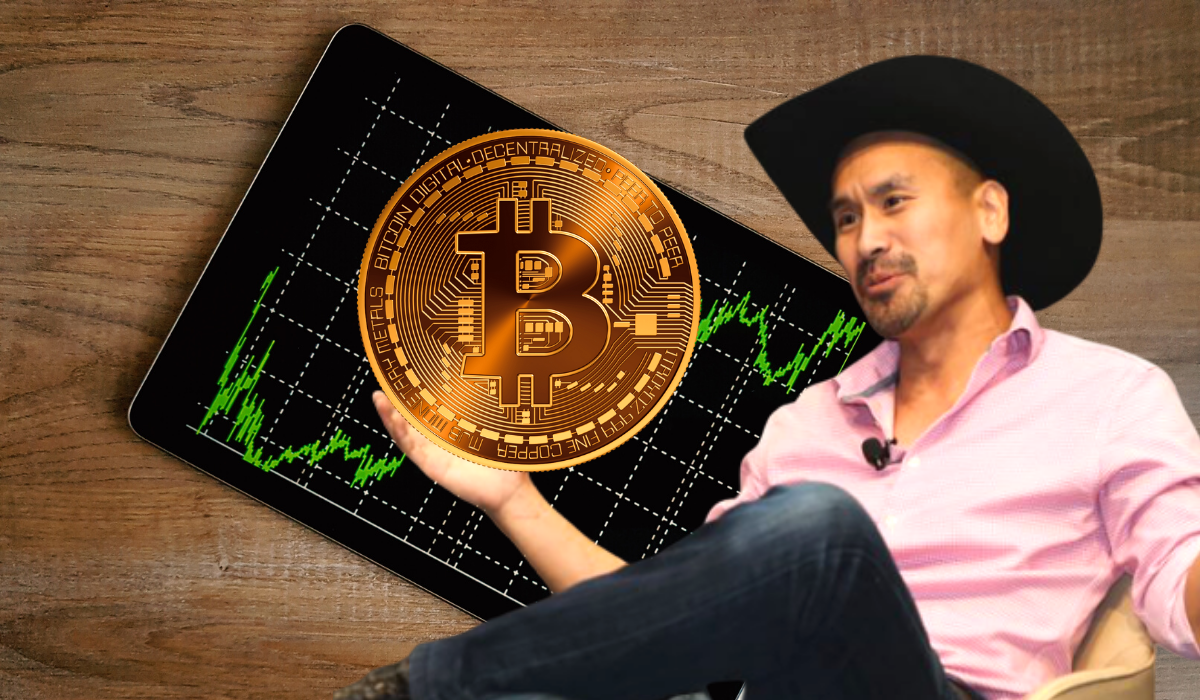
Jimmy Song says Bitcoin went from Code to Global Money

0

Bitcoin is a remarkable phenomenon that has transformed the world of finance and money. It started as a simple computer program written by an anonymous person or group called Satoshi Nakamoto in 2008, and it has grown into a global network of millions of users, miners, developers, and investors. Bitcoin is not controlled by any central authority, government, or corporation. It is a decentralized, peer-to-peer system that relies on cryptography and consensus to secure transactions and create new units of currency.

Bitcoin is more than just a digital asset or a payment system. It is a social and economic experiment that challenges the conventional wisdom and assumptions about money and its role in society. Bitcoin is a form of money that is scarce, programmable, censorship-resistant, borderless, and transparent. It is a money that can be used by anyone, anywhere, anytime, without intermediaries or intermediation costs. It is a money that empowers individuals and communities to have more control over their own wealth and destiny.

Jimmy Song is one of the most influential and respected voices in the Bitcoin community. He is a developer, educator, entrepreneur, and author who has been involved in Bitcoin since 2011. He is the author of Programming Bitcoin: Learn How to Program Bitcoin from Scratch and The Little Bitcoin Book: Why Bitcoin Matters for Your Freedom, Finances, and Future. He is also the co-founder of Blockchain Capital LLC, a venture capital firm that invests in blockchain-related startups.

In a recent interview with CoinDesk, Jimmy Song shared his insights and perspectives on Bitcoin’s evolution and future. He said that Bitcoin went from being a code to being a global money in just over a decade. He explained how Bitcoin’s design and innovation enabled it to overcome various technical, social, and political challenges along the way. He also discussed how Bitcoin’s adoption and impact will continue to grow in the coming years, especially in developing countries where people face high inflation, currency devaluation, corruption, and financial exclusion.

Jimmy Song said that Bitcoin’s success is not only due to its technological features, but also to its cultural and philosophical values. He said that Bitcoin represents a paradigm shift in how people think about money and its role in society. He said that Bitcoin is not just a tool for speculation or investment, but also a tool for freedom and sovereignty. He said that Bitcoin is not only a money for the internet age, but also a money for the human age.

Jimmy Song’s interview is a must-read for anyone who wants to learn more about Bitcoin’s history, present, and future. It is also a testament to the power and potential of Bitcoin as a code that became a global money.

JIM CRAMER tells POWERBALL winner to INVEST IN BITCOIN

You might be tempted to splurge on a new mansion, a yacht, or a private jet. But before you do that, listen to what Jim Cramer, the host of CNBC’s Mad Money, has to say. He says you should invest at least 10% of your winnings in Bitcoin, the world’s most popular cryptocurrency.

Why? Because Bitcoin is the future of money, according to Cramer. He believes that Bitcoin is a hedge against inflation, a store of value, and a digital gold. He also thinks that Bitcoin is more secure and decentralized than traditional currencies, and that it has the potential to skyrocket in value in the coming years. Cramer is not alone in his bullish view on Bitcoin. Many other experts and celebrities have endorsed Bitcoin as a smart investment, such as Elon Musk, Jack Dorsey, Mark Cuban, and Michael Saylor.

Buying Bitcoin is easier than you think. All you need is a smartphone, an internet connection, and a digital wallet. A digital wallet is an app that allows you to store, send, and receive Bitcoin. There are many options to choose from, such as Coinbase, Cash App, or Exodus. Once you have a digital wallet, you can buy Bitcoin from an exchange, a peer-to-peer platform, or an ATM. You can also earn Bitcoin by completing tasks, selling goods or services, or accepting donations.

The quantity and size of your Bitcoin portfolio depends on your risk appetite and your financial goals. Cramer suggests that you allocate 10% of your portfolio to Bitcoin, but you can adjust that percentage according to your preference. Some people invest more, some less. The important thing is to diversify your assets and not put all your eggs in one basket.

Like any investment, Bitcoin comes with risks. The price of Bitcoin is volatile and can change dramatically in a short period of time. You could lose money if the market goes against you or if you sell at the wrong time. You also need to be careful about security and scams. You should always keep your private keys safe and never share them with anyone. You should also avoid phishing emails, fake websites, and fraudulent apps that try to steal your Bitcoin or personal information.

You should also do your own research and educate yourself about Bitcoin before investing. Don’t blindly follow the advice of anyone, not even Jim Cramer. Remember that this is your money and your responsibility. Despite the risks, investing in Bitcoin can also bring you many benefits. Here are some of them:

You can be part of a revolutionary technology that is changing the world of finance and commerce.

You can enjoy lower fees, faster transactions, and more privacy than traditional payment methods.

You can access a global market that is open 24/7 and has no borders or intermediaries.

You can support a decentralized and democratic system that empowers individuals and communities.

You can potentially earn huge returns if the price of Bitcoin continues to rise.

Winning the Powerball jackpot is a once-in-a-lifetime opportunity. Don’t waste it on things that will lose value or make you unhappy. Instead, invest wisely and secure your future with Bitcoin. Jim Cramer knows what he’s talking about. He’s been in the financial industry for decades and has seen it all. He’s not afraid to speak his mind and share his insights with millions of viewers. He’s also a big fan of Bitcoin and believes that it’s the best investment you can make right now.
Become a Member of Tekedia Capital and Co-invest To Own A Piece of Africa’s Finest Startups

0

Every generation, new species of companies transform economies at scale. Using Nigeria as a case study, in the 1990s, new generation banks changed the ordinance of Nigerian banking, offering better services, and advanced the wealth of the nation.

Ten years later, in the 2000s, it was the time for voice telephony when MTN, Glo, Econet(Airtel) and others took over. Those companies created new platforms for new economic architectures.

Another ten years, in the 2010s, we experienced the dawn of mobile internet when our phones became wirelessly-networked digital computational  systems, offering us the opportunities to have bank branches, digital stores, etc in our phones.

In this new decade of 2020s, this is the era of application utility where young people are combining and recombining factors of production to fix market frictions, by using the combinatorial powers of technologies to transform our economies. From logistics to healthcare, education to real estate, fintech to agriculture, and more, the power of mobile internet, anchored on cloud and souped in evolving AI systems, is eating problems away.

At Tekedia Capital, we’re at the center of this transformation. Join our Syndicate today and co-invest in some of the most amazing young companies in Africa and beyond. The next edition begins soon; now is the time to become a member. We’re bringing a company which in 9 months has processed close to $100m in a small West African country! We found it before the BIG growth journey. Go here and become a member.

Binance has officially integrated Bitcoin Lightning Network, BLOCKFI Allegedly lent $217m to Alameda Research

0

Binance, the world’s leading cryptocurrency exchange has announced that it has officially integrated the Bitcoin Lightning Network, a second-layer scaling solution that enables fast and cheap transactions on the Bitcoin network. This is a major milestone for both Binance and the Bitcoin community, as it will improve the user experience and reduce the network congestion and fees for Bitcoin transactions.

The Lightning Network is a decentralized network of payment channels that allows users to send and receive Bitcoin instantly and with minimal fees. The network operates on top of the Bitcoin blockchain but does not require every transaction to be recorded on the main chain. Instead, users can open channels with each other and transact off-chain, only settling the final balance on the blockchain when the channel is closed. This way, the Lightning Network can handle millions of transactions per second, while maintaining the security and decentralization of Bitcoin.

Binance users can now deposit and withdraw Bitcoin using the Lightning Network, by selecting the “Lightning” option in the deposit or withdrawal page. Users will need to have a Lightning wallet that supports the Lightning Network address format (bech32), such as Breez, BlueWallet, Eclair, Phoenix, or Zap. Users can also scan a QR code or copy and paste the Lightning invoice to complete the transaction. Binance supports both public and private channels and does not charge any additional fees for using the Lightning Network.

By integrating the Lightning Network, Binance aims to provide its users with more options and flexibility for their Bitcoin transactions. Binance CEO Changpeng Zhao (CZ) said: “We are always looking for innovative ways to improve our platform and services for our users. The Lightning Network is a game-changer for Bitcoin and its community, and we are thrilled to be a part of it. We hope that by supporting the Lightning Network, we can help boost the adoption and development of this breakthrough technology.”

Binance is not the only cryptocurrency exchange that supports the Lightning Network. Other exchanges such as Bitfinex, OKEx, Kraken, and Bitstamp have also integrated or announced plans to integrate the Lightning Network in the future. The Lightning Network is also supported by various merchants, wallets, applications, and services that allow users to pay with Bitcoin in a fast and convenient way. The Lightning Network is expected to grow further as more users and businesses adopt this innovative technology.

BLOCKFI Allegedly lent $217 million to Alameda Research

In a recent report by The Block, it was revealed that BlockFi, a leading crypto lending platform, had allegedly lent $217 million worth of USDC stablecoins to Alameda Research, a prominent crypto trading firm and the parent company of FTX exchange. The report claimed that the loan was made at a 4% annual interest rate and was collateralized by $300 million worth of unspecified cryptocurrencies.

The report raised some concerns among the crypto community, as some questioned the transparency and risk management of BlockFi’s lending operations. Some also speculated that the loan could be used by Alameda Research to manipulate the crypto market or to arbitrage across different platforms.

BlockFi has not confirmed or denied the report, but issued a statement saying that it “does not comment on specific client relationships or transactions”. The statement also said that BlockFi “adheres to rigorous underwriting standards and robust risk management practices” and that it “works with a diverse set of institutional counterparties across the crypto ecosystem”.

Alameda Research has also not commented on the report, but its founder and CEO, Sam Bankman-Fried, tweeted that he “can’t confirm or deny anything about any specific loans” and that he “doesn’t think there’s anything wrong with lending or borrowing”. He also said that he “doesn’t see any reason why this would affect anything” and that he “doesn’t think it’s a big deal”.

The report comes at a time when BlockFi is facing regulatory scrutiny from several states in the US, which have accused the company of offering unregistered securities through its interest-bearing accounts. BlockFi has denied the allegations and said that it is working with regulators to resolve the issues.

BlockFi is one of the most popular and successful crypto lending platforms in the industry, with over $15 billion in assets under management and more than 450,000 clients. The company offers various products and services, such as interest-bearing accounts, crypto-backed loans, trading, and institutional services.

Alameda Research is one of the most influential and respected crypto trading firms in the industry, with over $100 billion in trading volume per month and more than $1 billion in assets under management. The firm is also behind FTX, one of the largest and fastest-growing crypto exchanges in the world, which recently raised $900 million in a Series B funding round at an $18 billion valuation.

Lagos Leads As Nigeria’s Headline Inflation Hits 22.79% in June 2023

0

The National Bureau of Statistics (NBS) has reported that Nigeria’s headline inflation rate rose to 22.79% in June 2023. This represents a 0.38% increase from the 22.41% recorded in May.

In the June Consumer Price Index (CPI) and Inflation Report released in Abuja on Monday, the NBS said on a year-on-year basis, the June inflation rate was 4.19% higher than the rate in June 2022, which was at 18.6%.
On a year-on-year basis, the headline inflation rate in June 2023 was 4.19 percent higher than the rate recorded in June 2022, which stood at 18.6 percent.

The report highlighted the major contributors to the increase in the headline index, with food and non-alcoholic beverages accounting for 11.81 percent and housing, water, electricity, gas, and other fuel contributing 3.81 percent.

Other factors included clothing and footwear at 1.74 percent, transport at 1.48 percent, furnishings, household equipment, and maintenance at 1.15 percent, education at 0.9 percent, and health at 0.68 percent.

Moreover, the report indicated that the average CPI for the 12 months ending in June 2023 was 21.54 percent, representing a 5.00 percent increase compared to the previous year’s 16.54 percent recorded in June 2022.

In terms of food inflation, the rate for June 2023 on a year-on-year basis was 25.25 percent, marking a 4.65 percent rise compared to June 2022’s rate of 20.6 percent. On a month-on-month basis, food inflation in June 2023 reached 2.4 percent, reflecting a 0.21 percent increase compared to May’s rate of 2.19 percent.

The report indicated significant increases in the prices of various goods and services, such as passenger transport by air and road, gas, vehicle spare parts, liquid fuel, fuels, and lubricants for personal transport equipment, and medical services in June 2023.

On a month-on-month basis, the core inflation rate for June 2023 was 1.74 percent.

Regarding urban inflation, the rate in June 2023 was 24.33 percent on a year-on-year basis, representing a 5.23 percent increase from June 2022’s rate of 19.09 percent. Similarly, the rural inflation rate for June 2023 was 21.37 percent, which was 3.25 percent higher than the rate recorded in June 2022 at 18.13 percent.

An analysis of states’ profiles revealed that Lagos had the highest year-on-year inflation rate at 25.75 percent in June, followed by Ondo at 25.4 percent and Kogi at 25.23 percent. This indicated a considerable increase in the prices of goods and services in Lagos State compared to the same period last year. Additionally, Lagos recorded the highest month-on-month inflation rate at 2.7% in June, signaling a faster pace of price changes compared to other states.

The main driver of this surge was the removal of fuel subsidies by the federal government, leading to a significant rise in the pump price of petrol in Lagos. On the other hand, Borno recorded the slowest rise in headline inflation on a year-on-year basis at 20.4 percent, followed by Zamfara at 20.93 percent, and Ekiti at 21.06 percent.

In terms of the month-on-month inflation rate for all items in June 2023, Ogun had the highest rate at 3.21 percent, followed by Plateau at 3.05 percent, and Jigawa at 3 percent. On the contrary, Zamfara had the slowest rise at 1.40 percent, followed by Delta at 1.42 percent, and Rivers at 1.54 percent.

Regarding food inflation, Lagos had the highest year-on-year rate at 30.37 percent in June, followed by Kwara at 30.8 percent, and Kogi at 29.71 percent. In contrast, Zamfara had the slowest rise in food inflation at 21.38 percent, followed by Sokoto at 21.60 percent, and Borno at 21.75 percent.

On a month-on-month basis for food inflation in June, Kwara had the highest rate at 3.82 percent, followed by Abuja at 3.64 percent, and Ogun at 3.56 percent. Rivers had the lowest increase at 0.75 percent, followed by Zamfara at 1.33 percent, and Adamawa at 1.47 percent.

The NBS said the June Consumer Price Index (CPI) numbers may not fully capture the impact of the fuel subsidy removal and the unification of the exchange rate.

Tesla Announces Plans to Launch First Cybertruck Ahead of Q2 Earnings Call

0

Electric Vehicle automaker Tesla has announced plans to launch its first cybertruck, ahead of the second quarter (Q2) earnings call.

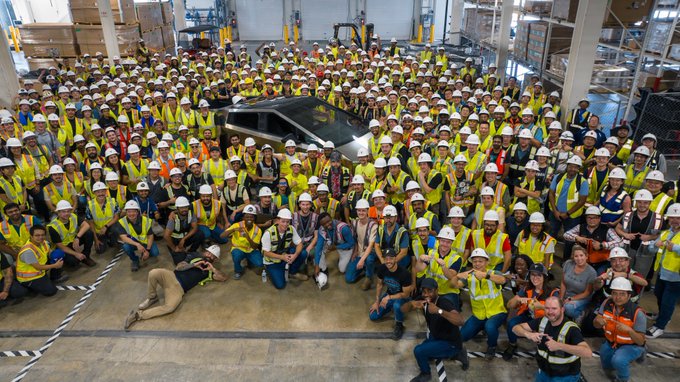
In a recent Tweet on Twitter, Tesla posted the newly manufactured cybertruck, which was surrounded by the company workers, with the caption “First Cybertruck built at Giga Texas!”.

Tesla hasn’t launched a new consumer vehicle since 2020, and it’s widely seen as falling behind other automakers, who have stepped up their EV development to meet surging demand, until the recent roll out of the Cybertruck.

The cybertruck launch was however delayed after the company’s CEO Elon Musk first introduced it in 2019. The truck was initially scheduled for production and delivery in 2021, but the company had to hold back the launch, citing a shortage of sourcing components.

While Tesla attributed the Cybertruck delayed launch to standard supply chain issues, leaked documents however revealed other fundamental flaws in the vehicle’s basic design and engineering.

In January 2022, a whistleblower leaked 100GB of files to German outlet Handelsblatt that showed pre-production prototypes had serious braking, powertrain, suspension, sealing, and structural issues.

The report, which detailed unfulfilled promises from Tesla, showed that the pre-production alpha version of the Cybertruck was still struggling with some basic problems with its suspension, body sealing, noise levels, handling, and braking.

While it is known that Tesla cars have a history of technical issues, the report hints that the Cybertruck’s unusual design may have complicated engineers attempts to properly seal it.

Musk had also stated that the Cybertruck is a hard vehicle to make. “You can’t just use conventional methods of manufacturing,” he said on an earnings call in May. “We had to invent a whole new set of manufacturing techniques in order to build an exoskeleton car rather than an endoskeleton car, so it is clearly not trivial.

However, the content of the report does not deal a fatal blow to the Cybertruck, as a veteran automotive engineer who spoke on condition of anonymity to prevent backlash from Tesla fans, said the company has enormous financial resources which will allow it to address the issues detailed in the report.

Experts suggest that addressing all of these manufacturing and engineering issues is likely to have substantially pushed up the price of the Cybertruck.

Musk initially said the pickup’s price would start below $40,000. However, by 2021 those attractive price estimates had already been removed from Tesla’s website. Musk told shareholders last year that the vehicle’s specifications and pricing had changed since its introduction in 2019.

Experts predict that Tesla’s pickup truck launch will bring the automaker into another profitable EV segment in the U.S. The Cybertruck will have to compete with electric pickups like Ford’s F-150 Lightning, which is available now with a starting price of around $60,000.

Musk believes that Tesla could eventually sell between 250,000 and 500,000 Cybertrucks per year. 

Meanwhile, experts have noted that the odd shape of the vehicle, and particularly its sharp edges, will make it hard for the Cybertruck to meet pedestrian protection rules in Europe, and possibly in other markets.