DD
MM
YYYY

PAGES

DD
MM
YYYY

spot_img

PAGES

Home Blog Page 4124

Terra Classic (LUNC) Rebounds, TMS Network (TMSN) Soars, and Render Token (RNDR) Hits The Bottom This Week

0

Markets have been in a lull lately. Market leaders like Bitcoin and Ethereum have not moved much, with little to no gains for investors. They have been unable to break out of the fatigue resulting from the push and pull of the market forces. In addition, the SEC crackdown on Binance and Coinbase has pushed the market down, even as the dollar rise is pulling the market up. Every altcoin is reacting to the market in its own way – Terra Classic (LUNC) is on a rebound, and TMS Network (TMSN) is soaring, but Render Token (RNDR) has hit its bottom.

Here is what you need to know about these crypto tokens this week.

Terra Classic (LUNC) Is on a Rebound

Terra Classic (LUNC) surprised everyone when it registered a spike in its price this week. Terra ecosystem’s original token Terra Classic (LUNC) has been in a constant downtrend since September 2022. Terra Luna (LUNC) breached the $0.0001 mark multiple times in a single day. It remains on an upward trajectory even now.

At its height, Terra Classic (LUNC) was priced at over $116. The 2022 black swan event took down the entire Terra ecosystem. $45 billion of wealth was wiped off the market, and Terra Classic (LUNC) crashed, losing almost all its value. The rise in the value of Terra Classic (LUNC) has brought hope to its long-time investors. It remains to be seen whether Terra Classic (LUNC) can sustain this upward trajectory or fall back to the red zone.

TMS Network (TMSN) Continues its Roar in the Markets

TMS Network (TMSN) is an upcoming innovative decentralized exchange. TMS Network (TMSN) takes a unique approach to decentralized trading. It offers cryptos, CFDs, forex, and equities for trading on its platform. TMS Network (TMSN) users can invest in any of the 500 cryptocurrencies supported on the platform, or use them to invest or trade other assets. No account creation, no fiat currency, and no KYC verification are required to trade on TMS Network (TMSN).

Armed with a user-friendly interface and MetaTrader software suite compatibility, TMS Network (TMSN) hopes to give traders a familiar trading experience. With TMS Network (TMSN), fiat asset traders can finally experience the benefits of DeFi.

Currently, TMS Network (TMSN) is raising $12 million to fund the creation of the platform, of which it has already raised $6 million. Between the stage 1 presale and the ongoing stage 4 presale, TMS Network’s (TMSN) value has risen by 300% to $1.05. There’s consensus among analysts that TMS Network (TMSN) will grow between 4,000% and 7,000% by the end of this year. 

Render Token (RNDR) Hits Bottom

Built on the Ethereum blockchain, Render Token (RNDR) is meant to create a distributed network for sharing GPU capabilities. Render Token (RNDR) network connects artists that need GPU computing power with GPU owners who can rent it out to them.

While Render Token (RNDR) does provide an acceptable solution to the GPU crisis in the market, it has not received the acknowledgment from the market that it anticipated. As a result, Render Token (RNDR) has attracted little investor interest. The current fall in the price of Render Token (RNDR) to $2.21 can be attributed to traders booking profits. They may have caught on to the bearish pressures surrounding Render Token (RNDR) and exited their positions. It is difficult to say when Render Token (RNDR) will be able to cover those losses and start moving up again.


For more information on TMSN Network (TMSN):

Presale: https://presale.tmsnetwork.io/

Website: https://tmsnetwork.io/

Telegram: https://t.me/tmsnetworkio

Twitter: https://twitter.com/tmsnetwork_io

Imam Ogbomoso and NOA Revitalisation

0

Since its establishment in 1993, the National Orientation Agency (NOA) in Nigeria has been tasked with the crucial responsibility of raising awareness, shaping attitudes, and mobilising citizens to support government programmes and policies. Specifically, on its official website and other numerous publications, it frequently states that it was established “to consistently raise awareness, positively change attitudes, values, and behaviours; accurately and adequately inform; and sufficiently mobilise citizens to act in ways that promote peace and harmony”. While the main objective of the agency is to ensure “that government programmes and policies are better understood by the general public and mobilize favourable public opinion for such programmes and policies”.

However, the agency has faced challenges in effectively fulfilling its mandate, often struggling to bridge the gap between the government and the public. In this piece, our analyst explores the effectiveness of the NOA since its inception and emphasises the significant role played by Chief Imam of Ogbomoso in revitalising the agency through his proactive actions and community engagement during the initial stage of the impacts of fuel subsidy removal by President Bola Ahmed Tinubu. According to the viral sources, the Imam educated his followers about issues around the removal of fuel subsidy, in a video that was recorded during his sermon. The first curator of the video notes that “he is assisting the NOA in doing their statutory work. Religious, traditional, and community leaders should take a cue.”

While the public’s appreciation of his efforts continues, our analyst discovered Nigerians, especially on digital platforms, are not relenting in calling on concerned stakeholders to address structural problems at the agency. One of the key reasons for the NOA’s ineffectiveness has been the government’s failure to transparently inform the public about its policies and programmes. This lack of effective communication has led to misunderstandings, misinformation, and public discontent, as seen during the fuel subsidy crisis in 2012. Former Director General of the NOA, Mr. Idi Farouk, rightly pointed out that the government’s inability to clearly communicate the gains and temporary pains of the subsidy removal fueled the crisis.

In the midst of this communication gap, Imam Ogbomoso emerged as a beacon of hope, actively assisting the NOA in carrying out its statutory work. Through his religious leadership, community engagement, and informative sessions, the Imam played a crucial role in bridging the divide between the government and the people.

Imam Ogbomoso’s actions exemplify the immense influence religious, traditional, and community leaders hold in Nigerian society. These figures often command respect, trust, and loyalty from their followers, making them invaluable partners in mobilising public opinion and facilitating positive change. The Imam’s proactive approach and willingness to collaborate with the NOA showcased the potential for synergy between religious and governmental institutions.

The NOA can draw valuable lessons from Imam Ogbomoso’s initiatives. Firstly, the agency must prioritise transparent and effective communication as a fundamental pillar of its operations. It should actively engage with religious and community leaders, leveraging their reach and influence to disseminate accurate information and foster dialogue. Collaborative efforts, such as joint awareness campaigns and workshops, can go a long way towards creating a more informed and engaged citizenry.

The NOA should proactively engage citizens through various platforms, including social media, town hall meetings, and grassroots outreach programmes. By incorporating feedback mechanisms and actively seeking public opinion, the agency can demonstrate a genuine commitment to representing the interests and concerns of the people.

The Central Bank of Nigeria (CBN) Guidelines on the Management of Reputational Risk

0

Introduction & Background

  1. This framework sets out the Central Bank of Nigeria (CBN) approach to assessment of Reputational Risk as part of the Supervisory Review and Evaluation (SREP) of the banks’ end-to-end Internal Capital Adequacy Assessment Process (ICAAP), and provides guidance to banks on the key elements of effective reputational risk management.
  1. The CBN expects banks to manage reputational risks on a day-to-day basis rather than on ad hoc basis where it is approached as a crisis management issue. The focus should, in particular, not be only on damage control in the aftermath of a reputational event.
  1. This framework is essential given that reputational risk has become a key concern for banks particularly in the wake of the 2008-2009 global financial crisis which resulted in increased stakeholders’ interest in the issues of trust and corporate culture in financial institutions. The CBN therefore expects banks in Nigeria to effectively manage their  reputational risk, which is critical given that trust in the integrity of the individual banks and the overall banking sector is essential in ensuring safety and soundness of banks, and stability of the overall financial system.
  1. Reputational risk is not addressed in the context of Pillar 1 of the Basel Capital Framework though it is a material risk for banks given the rise of social media and the resulting speed at which information including rumours can be disseminated to a much wider audience.

 Definition of Terms 

In the context of this framework, the meaning of reputational risk and  other related terms are as detailed below:

 “Reputation” means perception, opinions and beliefs that a bank’s stakeholders have in respect of the bank, based on their experience with, or expectations of the b

Reputational event” includes any action, incident or circumstance 

in relation to a bank which induces, or is likely to induce, reputational risk for the bank. Reputational event may arise from market rumours, severe regulatory sanctions, operational  shortcomings, questionable judgement, external attacks, bad conduct or heavy financial losses. Such events, if not actively managed, may turn into a full-blown crisis such as a run on the bank.

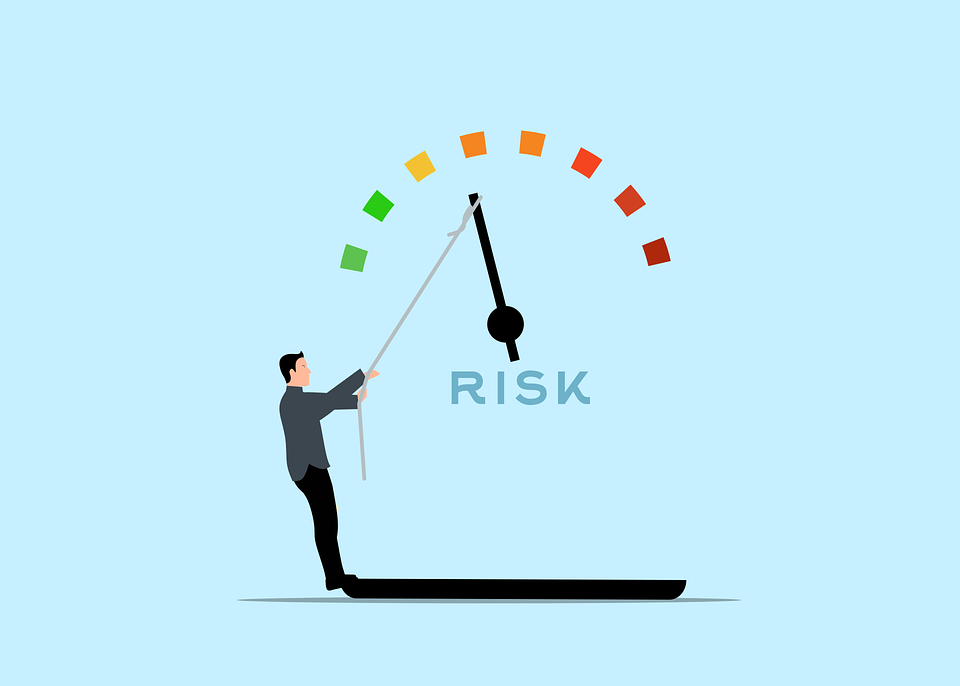
Reputational risk” is the risk of damage to a bank’s reputation as a result of any reputational event, arising from negative publicity about its business practices, conduct or financial condition. Such negative publicity may affect public confidence in the bank; result in decline in its customer base, business volume, revenue, liquidity or capital position. Reputational risk may also arise as a result of negative stakeholder opinion.

Reputational risk management process” is the risk management process adopted by a bank to identify, assess, mitigate, control, monitor and report reputational risk. 

Stakeholders” mean those groups of individuals or organizations that (i) are involved or interested in the affairs of a bank, or (ii) can exert an influence over, or are affected by, the bank and its activities.

Scope of Application 

-In line with the expectation of Principle 15 of the revised “Core Principles for Effective Banking Supervision” issued by the Basel Committee on Banking Supervision (BCBS) in September 2012, the CBN requires all banks in Nigeria to establish an effective process for the management of reputation risk. The adopted process should be appropriate for the size, geographical spread, product range and complexity of its operations.

 -These guidelines are applicable to all the Deposit Money Banks (DMBs) in Nigeria, including the specialized non-interest financial institutions. The principle of proportionality will however be applied by the CBN in the supervisory assessment of the banks’ processes and methodologies. -The CBN has not prescribed any specific methodology for measuring and quantification reputational risks capital charge under Pillar 2. The discretion in respect of approaches to be adopted is left to the banks.  

Objectives

This framework focuses on the following:

  1. Ensuring that banks value their institution’s reputation and assesses risks to that value. This includes understanding the contribution of the institution’s reputation to its value creation and how this can be measured in absolute or relative terms;
  1. Drawing banks’ attention to various sources of reputational risk; 
  1. Providing banks with guidance on the key elements of reputational risk management;
  1. Promoting the adoption of a formalized and structured approach  to managing reputational risk;
  2. Elaborating on the CBN’s approach to supervisory review of reputational risk

Guidelines on the Internal Governance of Reputational Risk

Overall Reputational Risk Strategy

-Though it does not appear in most balance sheets (except for acquisitions), reputation is increasingly being recognized as a valuable asset particularly to financial institutions for which the confidence of key stakeholders is critical to their survival. Business strategy and approach to its implementation can, in particular, have significant impact on the reputation of a bank. 

The board of a bank should therefore have a very good understanding of their organization’s reputation and its key drivers including vulnerabilities. This knowledge is very important in strategic and risk management decision-making. 

-It is the responsibility of the bank’s board to ensure that: 

(i) sufficient focus is given to reputational risk management, and 

(ii) the bank has appropriate governance structures and policies in place to facilitate the provision of reliable, timely and complete information on the bank’s reputation and the underlying risks and vulnerabilities. Hence, the overall ownership of reputational risk management resides with the Board.

-The banks’ strategy for management of reputational risk, including the risk tolerance levels and the management actions to mitigate against the impact of reputation risk events should be approved by the board. 

Banks should also be able to fully demonstrate to the CBN that the risk management objectives of Reputational Risk Strategy are fully aligned with the overall strategic objective of the bank.

– Banks are expected to implement appropriate governance framework to support the management of reputational risk. The framework should, among others, set out clear objectives in relation to management of reputational risk as well as define the responsibilities of all parties involved in the management of the risk. The responsibilities and lines of authorities should be adequately documented and disseminated to all the relevant parties. There should also be an effective process for monitoring the performance of assigned responsibilities, and for triggering early corrective actions before any damage to reputation is caused as a result of either internal or external events.

– Banks are expected to carry out self-assessments of their reputational risk management practices and subject the same to independent third-party reviews. 

Risk Management Framework and Responsibilities

– The banks’ board should ultimately be responsible for the oversight of Risk Management Framework and challenge of the adequacy of the level of the internally estimated capital to cover all the bank’s material risks including reputational risk, where applicable. The board may however delegate the responsibility for the monitoring and management of reputational risk to bank’s senior management or other board committees.

-Banks are expected to continuously promote staff awareness of reputational risk in their respective businesses, operations or functions. 

This should particularly be the case for those staff that interact on an ongoing basis with external stakeholders such as depositors, investors, media, market participants, equity analysts, rating agencies, suppliers, vendors, etc.

– Banks are required to continuously identify key risks (e.g. strategic, operational risks, etc) that could significantly affect the bank’s reputation or business and should bring them to the Board’s attention in a timely manner.

– Banks should ensure that they have Service Level Agreements (SLAs) for all their outsourced activities. The bank should also have a process in place to effectively monitor the performance of external service providers (e.g. outsourced telephone banking operations, Information 

Technology (IT) support, debt collection services, etc.).

Reporting of Reputational Risk

– Banks should ensure that the approach to identification of reputational risk events and the strategies in place to mitigate reputation risk are reported to the board and senior management at least on a quarterly basis while supervisory benchmarks (metrics) should be reported as part of the annual Internal Capital Adequacy Assessment Process (ICAAP) submission to the CBN. The reports to the board and senior management should include reputational risk indicators reflecting stakeholder confidence to provide a gauge of a bank’s reputation which include : 

– Early warning indicators such as a sudden increase in customer complaints, breaches of internal controls, operational errors, system outages, fraudulent incidents and any significant deterioration in other performance indicators.

-Industry, market, political, legislative or social developments which may have implications on the bank’s performance and reputation.

-The progress in the implementation of remedial action plans arising from either the SREP, internal self-assessment or internal audit reviews, and 

-Other relevant issues or developments.

Risk Identification, Assessment, and Control

General Requirements

– Banks are required to adopt a systematic approach to identification, assessment, mitigation and control of any risk or potential threat that may adversely affect their reputation. The approach should be relevant to their business model and risk profile, and should be tailored to their individual circumstances and needs. 

– Banks are expected to document the results of their reputational risk identification and assessment exercise, as well as the proposed action plans to mitigate it.

Risk Identification

– Banks are required to develop processes and procedures for the identification of reputational risk that :

a).Defines the types of risk events they would expect to capture and the areas of their focus in their risk assessment and management.

b). Establishes the key sources of reputational risk they are exposed to on the basis of the bank’s circumstances. These sources of risk may be classified by risk category, business activity or area of operations.

c). Describes the risks identified in terms of the nature of risk and the potential consequences that the risks may bring to their reputation.

d).Takes into account any risks arising from new business projects which may affect reputation.

e).  Establishes procedure to ensure that the risks identified are subject to ongoing review and no major risk areas or events are missed.

– Banks are expected to involve all relevant staff (e.g. those representing major departments, business or functional units) in the identification of reputational risk. In doing so, banks should adopt techniques that are appropriate to their individual circumstances. These may include the use of: interviews, questionnaires, risk identification workshops, or self assessments.

– Stakeholder analysis constitutes an important part of banks’ risk identification process; particularly given that reputation is largely about  stakeholders’ trust and confidence.

As stakeholders’ expectations and concerns changes over time, banks should conduct regular stakeholder monitoring to facilitate the identification of new issues and threats.

Banks are required to conduct stress testing or scenario analysis to assess any secondary effects of reputational risk on liquidity position.

Supervisory Approach to Reputational Risk

– Reputational risk is one of the inherent risks which the CBN has identified as risks that should be assessed under ICAAP. Banks are thus required to establish a sound and effective system to manage all its material risks. 

– The CBN will use a combination of techniques, such as qualitative analysis, peer group comparison and supervisory judgment, in its assessment of appropriateness of banks’ approach to management of reputational risk. Based on its assessment results, the CBN will assign one of the four risk score for reputational risk, i.e., Low, Moderate, Above Average, or High.

– The effectiveness of the banks’ reputational risk management strategy will be assessed by the CBN as part of its SREP. The assessment will mainly focus on the quality of policies, systems, processes, procedures and controls established by banks.

To facilitate this assessment, the CBN may require banks to provide the following, amongst others :-

– Policies, codes of conduct, guidelines and procedures relevant to reputation risk management;

– Documentary evidence in support of the banks’ processes for risk identification, assessment, control, monitoring and reporting (including early warning systems), as well as other available measures to mitigate against reputational risk; 

-Management reports submitted to the Board and senior management to facilitate the management of reputational risk; 

– Minutes of Board or committee meetings addressing reputational risk management; 

– Report of any independent review or audit relating to reputational risk management; 

The following are the proposed supervisory benchmarks (metrics) for use as the basis for peer group comparison of the level of reputational risk across Nigerian banks, and to facilitate the supervisory challenge of the appropriateness of the banks’ reputational risk management framework including, where applicable, estimates of internal capital to cushion against the potential crystallization of reputational risk. Supervisory benchmarks (metrics) shall be reported as part of the annual Internal Capital Adequacy Assessment Process (ICAAP) submission to the CBN. 

The benchmarks are:

  • a) Frequency, nature of and changes in complaints from customers and other third parties;
  • b) Staff turnover at different operational and management levels;
  • c) Number and nature of reported unethical practices, failure to comply with any market rules and conducts that could undermine orderly development and growth of the economy;
  • d) Number and nature of regulatory sanctions from official bodies, i.e., financial regulator, tax authorities etc;
  • e) Fraud rate (internal and external);
  • f) Number of negative mentions in the traditional and social media;
  • g) Increased costs of raising funds from the capital or money market;
  • h) Average number of years of industry experience for the key office holders;
  • i) Current and recent changes in external credit ratings;

Reputation Impact on Business

0

The inner brain’s need to find solutions that make life easier is the traditional motivation for construction. The agenda has already been structured whether a new protocol is introduced or the old protocol is destroyed. However, the result of such action may be a significant roadblock to one’s own development and growth; “Such is life.”

Reputation is the foundation of all outstanding people and opens up fantastic avenues for success in a certain direction. An old proverb that sums up how ancient men attained enormous potential toward good repute is that nothing good comes easily. It is difficult to describe, but this is just the truth based on the ancient curriculum’s accepted practices in a variety of learning and development areas. terrible reputation is more difficult to handle than terrible conscience.
At this point, I refer to your real-life legacy in the worldwide society, which may result from your good standing in any industry. Reputation paved the door for growth and a customer-based firm in the commercial world. The historical overview of Thomas Edison shows that despite his animosity toward Nikolai Tesla, he had a wonderful reputation and is still regarded as the greatest inventor ever. A significant barrier to getting it right during the presidential election is Atiku’s historical account of his contributions to the public good as a public worker. His followers maneuver behind a smoke cover at all times, and he is unaware of their crafty claim that “Adamawa allocation is still in the bank during his tenure as the state governor.” The failure to complete the task during the elections is due to the unfavorable reputation. It’s time, in my opinion, to associate with people who have a solid reputation in the system by taking the necessary action to stay on course.
By joining the progressive team in power to accomplish things on the dark side of manipulation, Tinubu presents a smoke screen to the populace. This is the political culture in Africa. World, welcome.

REPUTATIONAL IMPACT ON BUSINESS

Thomas Edison’s production history is a classic notion that all aspiring and mid-level businesspeople should take the time to investigate.

The media has always been a powerful promotional and marketing tool for goods and services. The Direct Current (DC) in electricity was discovered and invented by Thomas Edison, a brilliant English scientist. This idea was widely publicized in many media outlets, which used its capability to showcase it on their timelines. Unlike Thomas Edison, Nikolai Tesla did not publicly announce his discoveries. Although this dude’s reputation in science is excellent, something actually occurred. Always speak less if it’s necessary, because the only way to survive in secret is to hide your intentions. Every human being, by nature, possesses folly, greed, and selfishness. Because of his extreme greed, Thomas Edison spread false information about Nikolai Tesla’s invention. His reputation was nearly ruined by this approach. However, as I stated previously, “It is better to cope with a bad conscience than a bad reputation.” Both scientists were nominated even during the nomination process, but Thomas Edison declined the prize since Nikolai Tesla was involved. He even criticized Nikolai Tesla’s innovation when it was used to test the first electrocution of a criminal using its invention (DC), which failed to result in the criminal’s death. However, Thomas Edison also took advantage of the chance to research and come up with further theories for a future prototype and phototype. He was always on the main page because of this.

Reputation is a valuable asset that should be properly gathered and stored. It must be strictly protected, especially when it is first established, expecting any attacks. Once it is established, resist the need to react angrily or defensively to the defamatory remarks made by your adversaries since these reactions show insecurity rather than confidence in your reputation.

However, Edison’s career was almost destroyed by his refusal to say anything less. Fortunately, thanks to his solid reputation and hard work, his avaricious attack on Nikolai Tesla’s innovation was successfully avoided.
Yes, it is well known that Thomas Edison is a major lover of the media. Thanks to his continued research and hypotheses, he was able to make a lot of smoke glasses and defeat Nikolai Tesla. This succinct historical review clarifies the role reputation plays in business and how it protects Thomas Edison’s reputation while also breaching the taboo against talking too much. But Edison’s stubbornness to say anything less nearly cost him his career. Fortunately, his avaricious attack against Nikolai Tesla’s invention was successfully avoided because of his strong reputation and diligence.
Yes, Thomas Edison is well-recognized for being a passionate supporter of the media. He was successful in defeating Nikolai Tesla and producing numerous smoke glasses as a result of his ongoing research and theories. This brief historical overview emphasizes the importance of reputation in the business and demonstrates how Thomas Edison’s reputation was protected while simultaneously breaking the taboo against excessive speech.

THE INSIDER

This most recent summarization is evidence of modern development. Otedola describes the argument he had with Tony Elemelu at the beginning of the story, subtly criticizing him by portraying Tony Elemelu as a ruthless individual out to get him. Otedola didn’t say anything less, which is why Tony Elemelu was portrayed as greedy throughout the entire incident. Business is what this is and always will be. Always keep your motivation a secret and speak less if required. Tony Elemelu consistently employs a smoke screen mentality to achieve his goals. In Africa, corporate growth is being built on the reputation of the two gentlemanly men.

It’s incredibly depressing to read how 55% of Nigerians summarize this narrative and blame Tony for having an underlying greedy mindset. Tony Elemelu and Otedola have established a strong reputation, both good and bad, but the positive reputation outweighs the negative, allowing them to dominate the industry. This story’s summary states clearly that human nature is one of rivalry and cunning. In a kind of food web and chain of commerce, Mr. A intends to play the game, and Mr. B intends to acquire Mr. A. I didn’t interpret that as an attitude of greed, but rather as a mental game of hiding intent, talking less, and employing a smoke cover to reclaim the initiative. Tony Elumelu here.

However, this demonstrates that trust in business is the way of selling whether the product seems to look dynamic or rigid. This is an open room to relational capital by spreading your wings, it simply attracts your partnership growth towards giving the product a greater pillar.

TODAY BUSINESS

New developments are released in business nowadays to combat existing technology. The space of this new age’s new technology is occupied by dead ideologies. Because outdated culture can never be completely destroyed, it must take time before new technology is introduced to the technical community. New products are constantly advertised against outdated ones in Africa, namely Nigeria, with the help of media-speaking gangs. You made a comparable product that has no reputation and is preparing to compete with an already-established product with a solid reputation. This product has been around for a while.

How can the new product remain competitive in the market?

The key goal of establishing a solid reputation is to stay on the safe side while establishing a specific dream. You can swim in the reputation of your ancestors to leave a prosperous legacy. It may also project a negative image of wrongdoing, theft in public, and subpar leadership. The historical analysis of Sani Abacha’s approach to measuring power by using dictatorship is a significant example that casts doubt on his contributions to the public good and contributes to his legacy’s unappreciated status.

Nobody has nice things to say about them; instead, if one of his offerings begins to show an interest in politics, history will come out to attack him, which would undoubtedly put an end to the dream, even if he is in the proper structure given the political character of Nigeria. History will always be the most potent weapon in the world since it only speaks about the most painful primary and secondary facts. You might be asking how I combine politics and business to prove a point rather than just concentrating on the corporate world. If there is no political system in a country, then money obligations can never be started. Business and government are two sides of the same coin. Kuda Bank will constantly uphold a positive reputation in order to stay on the course rather than compete with Zenith Bank or other banks through advertising. We all know that the world is a competitive place, and many products are working hard to intimidate other items. Promote your growth rather than take on the competitors. Getting such recognition is important for maintaining one’s corporate reputation. Different user-effective system expansion introduced recently attracts trusteeship. Imagine that a first bank system problem prevented people from accessing their money in the first place owing to climate change, which also significantly reduced network bandwidth. Users will make every effort to switch to another bank, which negatively impacts the company’s standing as a financial institution. This is a problem. has been a tradition for certain financial institutions in Nigeria, but First Bank has already built a strong legacy (good reputation) that allows customers to continue to have faith in their services. You see, the bank has been struggling with its conscience and is unquestionably doing a lot of effort to address network problems in order to maintain a sound banking system. Their ability to survive is a result of their sterling reputation and brave trusteeship.

ASTRONG REPUTATION CHANGES MARKET

Even if the new product has excellent characteristics that can surpass the previous one, it will never surpass the latter if it has no reputation. Reputation is the market that draws risk-taking customers. Thomas Edison’s standing allowed him to speak out against Nikolai Tesla’s invention, which almost ended his career. Because of this, it is preferable to deal with an already poor conscience rather than a negative reputation.

A notorious criminal in the area launched savings software to help people save money and make it possible for them to conduct simple transactions at reduced costs. hello there Would you be willing to tolerate this or welcome this new product and begin saving there?
Due to human perception and awareness of numerous natural science ideas, the percentage of responses to this question must unquestionably be quite high and below 100%. Despite the fact that he introduced a feature (save and earn 20%), many customers would still reject the product due to its poor reputation both locally and globally. Different branches of reputation were shared in the global sector. among others: politics, business technology, and education. Reputational branches are similar to an ocean’s bank in that they provide several pathways, however, keep in mind that a river’s bank is always clean. This merely means that a positive reputation from the start will prevail over future wrongdoing. I’m not here to go into all the different types of reputation, but if you’re reading this, you already know which industry you belong in.

Early this year, I came to understand that constructing a mystery around your intentions makes it difficult for others to learn about the product’s nature and origin. Utilizing social media, add smoke by making them true. But if your reputation is on the line, never criticize an already successful product. My bankruptcy is caused by the notion of human relationship capital investing in and helping the wrong side. This actually occurred because I wasn’t secretive about my intentions and future objectives, which led them to ask for my help as I was developing my financial portfolio. I responded to that right away, lost all I had stored, and had to start again.

Early this year, I came to understand that constructing a mystery around your intentions makes it difficult for others to learn about the product’s nature and origin. Utilizing social media, add smoke by making them true. But if your reputation is on the line, never criticize an already successful product. My bankruptcy is caused by the notion of human relationship capital investing in and helping the wrong side. This actually occurred because I wasn’t secretive about my intentions and future objectives, which led them to ask for my help as I was developing my financial portfolio. I responded to that right away, lost all I had stored, and had to start again.

Mark Manson’s Book: The subtle art of not giving a fuck, actually helps me to comprehend the nature of pain and how to bounce back ten times higher than before instead of always blaming past errors. This strongly underlined the idea of not caring about how things turn out and always saying less if required. In addition, it also showed that there is potential for improvement in hiding your intentions. Everyone in the world is a lord of smoke screens, and the world is a competitive arena, as summed up in the Otedola narrative.

To Sum Up

Except in cases where there is a secret project of cunning, the beginning decides the end. Reputation can take many different shapes, depending on the type of business. Some people have a reputation for cunning, which the public has accepted, but they nonetheless manage to maintain a fantastic business strategy. Like Thomas Edison, embrace the media, and never attempt to assist procedure till it is time to depose the ruler. Because it takes time to change an established protocol or law, if you’re adding a new technology into the system, please welcome the old one and gradually align the two. Over time, things will undoubtedly change. Always say less in a business setting, keep your intentions hidden as you build, and utilize the media as a smoke screen to accomplish your goals. The remedy to starting out with a bad reputation is to follow or join a respectable group or organization and perform the necessary by being a supportive element towards the union. It is ensured that things will turn out well because people desire to make decisions.

Former Nigerian Government Officials and Returning Back Official Properties

0

One of the major issues every new government in Nigeria (both at the local, state and federal level) encounters is the recovery of public/ official properties from the previous officeholders; those properties that were assigned to them to aid them in the stress-free discharge of their official functions. 

It is embarrassing to see that men and women who served in government and who claimed to be people of integrity will steal public properties adding to the public funds they have been pilfering while in active service. It is expected of you as a past public official; whether elected or appointed that as a matter of Integrity, morality and ethics it is expected of you that after your time in the office, you take your personal belongings and leave the official properties behind for the office. It is both unethical and criminal to take what does not belong to you. 

You cannot resign from your job or get sacked in an organization and you also want to go along with the company’s property, unless the company gifted you those items, you can be prosecuted for the crime of stealing, but since it is government properties people are now seeing coveting them as a normal thing; no, it’s not, that’s stealing and I am here to remind you that you are a thief. 

Nigerian politicians are fond of converting public or official properties into their personal private use after they have left office. Official properties are properties of the public and it was purchased with taxpayers’ money and should therefore be returned after your time in office, anything other than that amounts to stealing. 

The Abia state government is currently chasing around immediate past public officials to return public properties in their confers. The state governor had to issue an ultimatum some days ago threatening to take drastic action against past officials who refuse to return any public property with them. It should not always be like this. 

Same goes with past state governors. Some governors will hand over power and will refuse to return official vehicles and vacate official residences they were assigned to, converting them into private use. The immediate past governor of Zamfara State, Bello Matawalle refused to return government vehicles even after much pleadings from the new government, the new governor had to send police to his house some days ago to recover some government-owned vehicles. About 40 official vehicles, some of which were newly purchased and never been used were recovered from his residence. 

The system where past administrations will have to sweep the confer and loot both finances and material things or whatever is left once they are about to leave office leaving the new administration with an empty treasury is criminal and officials who have been engaging in this crime should be prosecuted. Law enforcement agencies need to start going after past government officials; whether elected or appointed who after leaving office refuse to hand over official vehicles, residences, gadgets etc back to the government because it is criminal.