DD
MM
YYYY

PAGES

DD
MM
YYYY

spot_img

PAGES

Home Blog Page 4132

Tax Increase Will Impact Household Expenditure and Businesses Negatively in Nigeria – Yemi Kale Warns

0

As the heat of subsidy removal rages on, economic experts have been expressing their concerns over the potential negative impacts the federal government’s decision will have on the economic well-being of Nigerians.

Experts have offered various bits of advice on the concerns, which hang mainly on the unaffordable cost of living that the subsidy removal is expected to unleash if not mitigated.

The subsidy removal was announced by President Bola Tinubu on Monday, during his inaugural speech. He cited the government’s inability to sustain the payments as a reason for the abrupt ending of the subsidy.

Against the backdrop of depleted oil revenue, the Tinubu administration plans to raise taxes, according to his statements during the presidential election campaign.

But Dr. Yemi Kale, Chief Economist at KPMG Nigeria and former Chief of the National Bureau of Statistics (NBS), said the government’s plan to raise taxes on household expenditure and private business will impact the Nigerian business ecosystem negatively.

Kale expressed the concern while speaking at the Nairametrics Q2 2023 Economic Outlook Webinar held on Saturday.

“In terms of public finance, I am one of the few people that do not believe in increasing taxes. I’m not one of the people that is a fan of pushing up taxes, particularly in a recession and when the economy is struggling with fragile growth,” he said.

Kale explained that in the Nigerian economic model, household consumption expenditure and private investment are the two largest contributors to GDP.

“When you increase taxes, you are squeezing the household consumption expenditure, and you are also squeezing the earnings of business thereby squeezing business expansion and so on.

“What happened in the last eight years is that the government model was public sector driven. They expanded government expenditure; they expanded government investment. That’s why you have so much infrastructure development. But they did not expand government investment and consumption because the economy was expanding, and they were getting more revenue.

“They did that in two ways, one was to tax consumers and businesses, they squeeze their consumption expenditure, they squeeze the ability of private investment to grow and at the same time, they expanded the economy by debt. And then to repay the debt, again, they turn to squeeze consumers’ expenditure,” he said.

According to the report, increased public expenditure and investment by approximately 30% has led to a contraction of household consumption by about 3% and stagnant private investment.
Over the years, Nigerian businesses have been groaning under the burden of multiple taxations that has compounded other poor policy-induced plights.

Nairametrics quoted Kale as suggesting that the government should avoid tax increases and instead focus on harmonizing existing taxes and improving public-sector efficiency.

“I’m not a fan of increasing taxes. I prefer harmonizing the multiple taxes that are out there, I’m a bigger fan of more efficient, public-sector expenditure. For example, getting rid of wasteful expenditures like fuel subsidies. When you look at the revenue agencies, you find out that as the revenue goes up, they will find more things to spend and increase the expenditure…

“I think the target should be to harmonize the taxes and expand the tax net using technology and a more efficient expenditure structure. If we were able to do this in terms of public finance, if we can reform the public sector, I think that’s when every other thing ties in properly. And will see some significant growth,” he added.


Sparklo (SPRK) Presale Attracts Shiba Inu (SHIB) And TRON (TRX) Investors

0

The crypto and blockchain sector has seen rapid transformations in recent months, characterized by intense competition among new projects and coins as they fight for recognition and investor attention. Amid this competitive landscape, Sparklo has emerged as a notable contender. Sparklo has managed to pull investors from renowned projects like Shiba Inu (SHIB) and TRON (TRX) towards its presale.

>>>> BUY TOKENS <<<<

Sparklo (SPRK): trade precious metals in a secure platform

Sparklo is a new project that will revolutionize precious metals investment by introducing fractionalized NFTs that represent silver, gold, and platinum. This innovative platform will cater to both novice and experienced investors, providing them with the opportunity to buy and sell precious metal investments.

Sparklo native token, SPRK is ERC-20-based and seamlessly integrates with existing Ethereum wallets. The platform’s security has been verified by Interfi Network, ensuring a safe investment environment for users. To further build trust, Sparklo will lock the team’s token for 100 days and liquidity for 1000 years, minimizing the risk of a rug pull.

Furthermore, Sparklo has strategic plans to collaborate with jewelry stores, enabling fractional trading and investment, as well as offering new products and exclusive discounts to SPRK holders. Currently, in its second presale stage with a price of $0.030 per token, Sparklo presents an attractive investment opportunity for investors to consider.

>>>> BUY TOKENS <<<<

1 million Shiba Inu (SHIB) holders in losses

Shiba Inu (SHIB) has recorded a substantial price drop lately. According to IntoTheBlock’s Break Even Price indicator, the price movement has had a notable impact on Shiba Inu (SHIB) investors. Among the analyzed Shiba Inu (SHIB) addresses, around 1 million addresses, accounting for 79.74%, find themselves in a loss.

Also, recent data from Etherscan reveals that there has been a large transfer of Shiba Inu (SHIB) to exchanges like Huobi, signaling a potential sell-off. According to CoinGecko, Shiba Inu’s (SHIB) price has spiked a little trading at $0.00000851 by press time. This reflects a 0.51% price increase within the last 24 hours, but a decline of -2.26% over the past 7 days.

>>>> BUY TOKENS <<<<

TRON (TRX) price analysis

Since March 11th, TRON (TRX) price has demonstrated an upward trajectory. Initially, Tron (TRX) faced difficulty surpassing the $0.071 level, but on May 20th, it successfully broke through. This breakthrough resulted in a new yearly high of $0.080 on May 23rd. Unfortunately, the Tron (TRX) has lost its bullish momentum by press time.

As of today, the price of TRON (TRX) stands at $0.076002. This signifies a decline of 1.53% in price over the last 24 hours, but a notable increase of 7.72% over the past 7 days. If the bearish run lingers, there is a possibility of TRON (TRX) falling back to the $0.071 area.

Find out about the Sparklo (SPRK) presale using the links below:

Website: https://sparklo.finance

Presale: https://invest.sparklo.finance

Twitter: https://twitter.com/sparklo_finance

Telegram: https://t.me/sparklofinance

Cardano (ADA) Prepares for CIP-1694 Upgrade But Investors Turn to Game-Changing Investment Platform, Sparklo (SPRK)

0

The fast pace at which the cryptocurrency industry evolves necessitates that projects constantly implement upgrades to keep up with the latest technologies and trends. That is the case with Cardano (ADA) as it prepares for a major network improvement via CIP-1694. However, it is currently being outshined by a next-gen Web3 investment platform, Sparklo, which has introduced a new way to trade gold, silver, and platinum.

>>>> BUY SPARKLO TOKENS <<<<

Sparklo (SPRK) to become a crypto market leader

Sparklo is a new alternative investment platform looking to transform the traditional precious metal sector. Sparklo will combine the benefits of investing in gold, silver, and platinum, with the benefits of operating on a blockchain. On Sparklo, every investor will get the opportunity to own fractional NFTs that represent portions of gold, silver, and platinum stored in secured vaults.

There are three stages in the Sparklo roadmap, the first of which focuses on the essential aspects of building a solid infrastructure. In the second stage, Sparklo will put measures in place to ensure the sustainability of the platform including locking its liquidity for 100 years, locking the team’s allocated tokens, listing on Uniswap, releasing a staking app, and submitting applications to CoinMarketCap and CoinGecko.

You can join the community AMA session with the Sparklo team on June 5 to learn more about the project. With an all-around fail-proof concept, Sparklo has been projected to achieve a position in the top 100 on CoinMarketCap in the coming months. Now will be a great time to invest in the project as you can get a SPRK token for as low as $0.030 with up to 50% purchase bonuses for a limited time.

>>>> BUY SPARKLO TOKENS <<<<

Cardano (ADA) unveils CIP-1694 for decentralized governance

Cardano (ADA), the most actively developed blockchain network, is preparing for an upgrade that will further decentralize the network. In a YouTube video, Charles Hoskinson, the founder of Cardano (ADA) a new network Improvement Proposal (CIP-1694). According to Hoskinson, CIP-1964 will begin a new era of decentralization on Cardano (ADA), by making it a community driven blockchain.

Hoskinson said the upgrade is expected to go live in July but could change as the Cardano (ADA) development team discusses its implementation. The news has not had a major impact on the price of Cardano (ADA). Over the last 24 hours, the price of Cardano (ADA) is marginally up by 0.8% to trade at $0.3615. While Cardano (ADA) continues to trade flat, many investors are bullish about the prospects of Sparklo.


We definitely believe that Sparklo (SPRK) is a very promising investment opportunity which you should check out below

Website: https://sparklo.finance

Presale: https://invest.sparklo.finance

Twitter: https://twitter.com/sparklo_finance

Telegram: https://t.me/sparklofinance

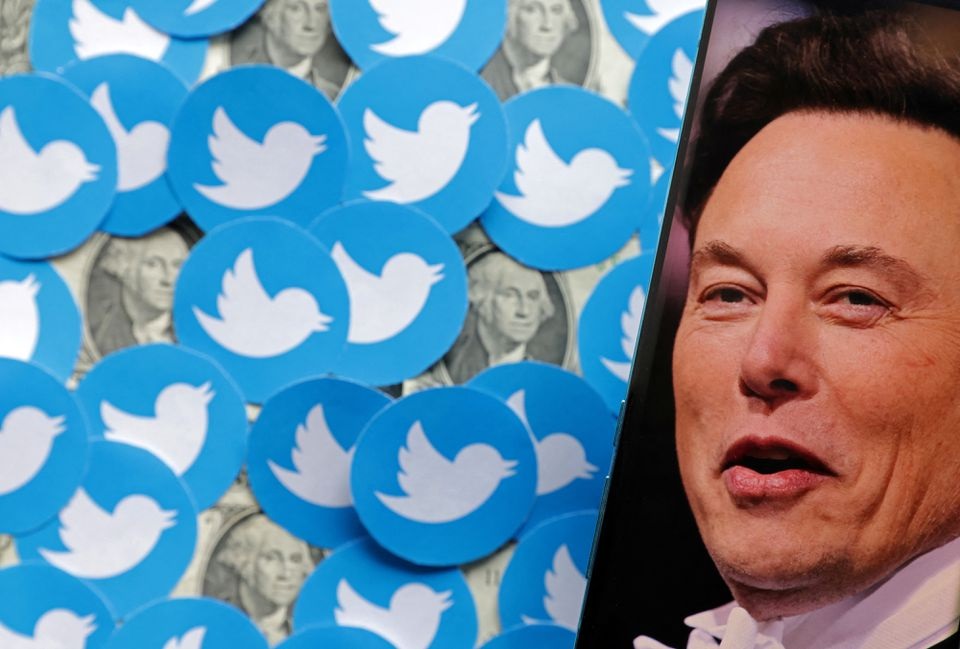
Two Twitter Top Executives Resign in A Space of One Week as Platform Faces Brand-Safety Concerns

0

Two Twitter top executives tasked with brand safety have left the company in a space of one week, as the platform faces growing brand safety concerns.

On Thursday, Twitter’s vice president of trust and safety Ella Irwin resigned from her position. Soon after, the company’s head of brand safety and quality, A.J Brown also resigned from the company.

As head of Trust and Safety, Irwin helped oversee Twitter’s policies on harassment, hate speech, and violent content rules which were relaxed under Musk. She was also involved in account suspensions and would respond to Twitter users whose accounts were blocked.

She however did not state why she was leaving, but her departure came shortly after Musk criticized Twitter’s handling of tweets about a conservative media company’s documentary that questions transgender medical treatment for children and teens.

Following her resignation, she wrote on Twitter,

“In all seriousness, I did resign but this has been a once-in-a-lifetime experience and I’m so thankful to have worked with this amazing team of passionate, creative, and hardworking people. Will be cheering you all and Twitter as you go!”

Irwin is the second head of Trust and Safety to resign since Musk took over the company. The first, Yoel Roth, resigned last November. Roth had emerged since Musk’s acquisition as a leading voice at the company about its ongoing moderation efforts and work to limit an uptick in hate speech. He joined Musk on a Twitter Spaces discussion on Wednesday to assuage concerns about the platform’s handling of harmful content amid the changes.

Although, even before Twitter’s two top executives resigned from the company, Musk has been downsizing the number of workers tasked with safety and content moderation as part of the company’s widespread layoffs.

In November 2022, three of Twitter’s top security, safety, and privacy executives resigned, following Musk’s takeover of the company. Recall that Twitter’s chief information security officer and chief compliance officer resigned as the company started implementing changes that would allow users to more easily impersonate major brands and government officials.

Reports reveal that the departures came just hours before Musk sent his first email to Twitter employees, titled “Difficult times ahead” and implementing a mandatory return-to-work policy.

Meanwhile, when it comes to executive departures, Twitter is reportedly not alone. Bloomberg reports that Apple Inc., which is known for its stability at the top, is facing a new challenge, an unprecedented level of turnover in its executive ranks.

Reports reveal that over a stretch that began in the second half of 2022, Apple has lost about a dozen high-ranking executives. Most of these people carried the title of vice president, which is just below the senior vice president level that reports to Chief Executive Officer Tim Cook. They are some of the most important figures at Apple, responsible for the day-to-day operation of many core functions.

My Response to Donna Haraway’s MAKING KIN, NOT BABIES Proposal for Slowing Global Population Growth

0

In God’s will, the essence of the continued existence of living and non-living things is practically hinged on production and reproduction. While He has the power to ensure the reproduction of living things through sexual intimacy between males and females, He gives human beings the opportunity to produce and reproduce non-living objects through their instincts. In recent times, the reproduction of human beings has been more questioned because of the rapid growth of the human population, which some scholars believe is impacting the environment, especially man-to-animal living relationships. Moreso, scholars are calling human attention to the fact that non-living things, especially animals, need to be accorded the same respect they are giving to themselves.

Donna Haraway is one of the scholars who has been following this school of thought for some time. This has led her to propose that “making kin, not babies,” is partially better to make society more beneficial for both humans and animals, where humans create more relationships with animals, fostering symbiotic connections with them with a view to practicing ecological and social responsibility rather than solely focusing on increasing the population through procreation.

Like Haraway, Dow and Lamoreaux challenge traditional notions of kinship and population issues by emphasising the complex relationships between humans and their environments; however, Dow and Lamoreaux do not align with Haraway’s view of a partial reduction of the human population by halting the production of babies. Indirectly, Haraway expects the world to reduce human production by strategically or systematically halting women’s reproductive capacity while efforts are deployed to create strong bonds with animals by seeing them as crucial to human sustained existence.

Haraway specifically points out that making kin, otherwise, not babies, so as to be part of, over the next couple of hundred years, moving human numbers down, radically down. But radically down where environmental justice is a means and not just an end, so that we pay serious attention to multispecies flourishing, including issues of race and class and region for human beings, as means of making kin, not babies.

Dow and Lamoreaux oppose this view with the concept of reproductive justice, which promotes individuals’ freedom from prejudice, coercion, and inequalities to make autonomous decisions about their reproductive lives. It includes the right to choose not to have children, access to reproductive healthcare, and social and economic circumstances. In my view, Dow and Lamoreaux cannot also be exonerated from the “less baby” production idea of Haraway because the scholars speak to the idea that humans have the right to decide whether they want babies or not. This aligns more with the idea of using rigorous family planning to reduce baby production. In this regard, Dow and Lamoreaux make the case for individual decision-making, which is most likely to be supported by a capitalist system. In another way, this has the tendency to contribute to Haraway’s depopulation idea.

In all these submissions, my position is that there is absolutely nothing humans can do to stop natural reproduction if God, who creates living and non-living things, wants it. Humans can only come up with different ideas or strategies for halting the natural growth of the human population and possibly using man-made methods of ensuring the extinction of certain animals that He has informed them (humans) to protect for their own social and environmental protections towards sustained healthy living.

While I agree with the fact that we need to protect animals and foster sustained relationships with them, we also need to be cautious of animals that are likely to negatively impact our lives. For instance, based on my cultural backgrounds and religious orientations, there are animals that I should not be rearing, playing with, or eating. This does not mean working against their reproductive capacity. After all, in an interview with Paulson, Haraway says, “Nobody can be kin to everything, but our kin networks can be full of attachment sites.” With this statement, It is clear that our kinship with animals, plants, and humans should be strong enough to make society livable for everyone without being keen on reducing natural population growth.