DD
MM
YYYY

PAGES

DD
MM
YYYY

spot_img

PAGES

Home Blog Page 4141

European Union Pledges €5.4m for Teachers Training in Northwest Nigeria

0

In a bid to address the critical issue of out-of-school children, particularly in the North West region of Nigeria, the European Union (EU) has pledged an additional €5.4 million to bolster the capacity of teachers. This commitment aligns with the EU’s dedication to improving access to quality education and empowering youths in the region.

The North West region is grappling with a staggering 8.33 million out-of-school children, according to the 2022 Nigeria Multidimensional Poverty Index (NMPI).

EU Commissioner for International Partnerships, Jutta Urpilainen, unveiled this development during the official launch of the €40 million intervention program on education and youth empowerment in the North West through the Global Gateway initiative, held in Abuja.

Commissioner Urpilainen emphasized the need for teachers to possess upgraded skills and knowledge to nurture students who can contribute to solving Nigeria’s challenges and those faced by the continent at large. She stated, “There is no education without teachers and that’s why we also have to invest in teacher training.”

“Actually, this component is complemented by a €5.4 million separate programme that we signed today, which is dedicated to teachers aiming to build their resilience and capacity in challenging environments. We have to remember that there is no education without teachers and that’s why we also have to invest in teacher training.

She further detailed the objectives of the program, emphasizing the importance of empowering youths through vocational education and promoting behavioral change campaigns to challenge harmful social norms, particularly those impacting girls.

Urpilainen highlighted that the program aims to equip Nigerian youths with essential skills for success in the labor market. She underscored the collaborative nature of the program, designed in consultation with Nigerian authorities to ensure it addresses local needs effectively.

“This ambitious programme launched today has been designed with Nigerian authorities to ensure the ownership and an adequate response to the local needs. The EU is not only targeting the youth through this specific programme, but it is also bringing the youth to the driving seat and this is why as the EU, we set up the Youth Sounding Board, also here in Nigeria, as well as in many countries, to make sure that what we do is for the youth but also by the youth.

“We have to include young people in the decision making; we have to create spaces and structures where young people feel that they are visible and they watch this and this is precisely what the European Union is doing,” she said.

Governor Umar Namadi of Jigawa State, speaking on behalf of the North West zone governors, expressed gratitude to the EU for its support in tackling the issue of out-of-school children. He affirmed the commitment of the governors to prioritize education in their respective states and emphasized that support from the EU would significantly contribute to revitalizing education in the region.

In his remarks, Minister of Education, Tahir Mamman, stressed the critical role of education in shaping the future of the country. He cautioned against neglecting education, highlighting the potential consequences on welfare and security. Minister Mamman urged state governors to give prominence to education and youth empowerment, emphasizing the government’s readiness to allocate a substantial portion of the budget to education.

The EU’s investment in access, skills, and quality education, coupled with youth empowerment in Northwestern Nigeria, is seen as a comprehensive initiative that addresses various aspects critical to transforming the region.

The program’s primary goal is to ensure access to quality education for out-of-school children, with a specific focus on the inclusion and retention of girls in schools.
Opolo-ODA SKRIBE Programme first Cohort Graduate amidst Encomiums from Participants, Stakeholders

0

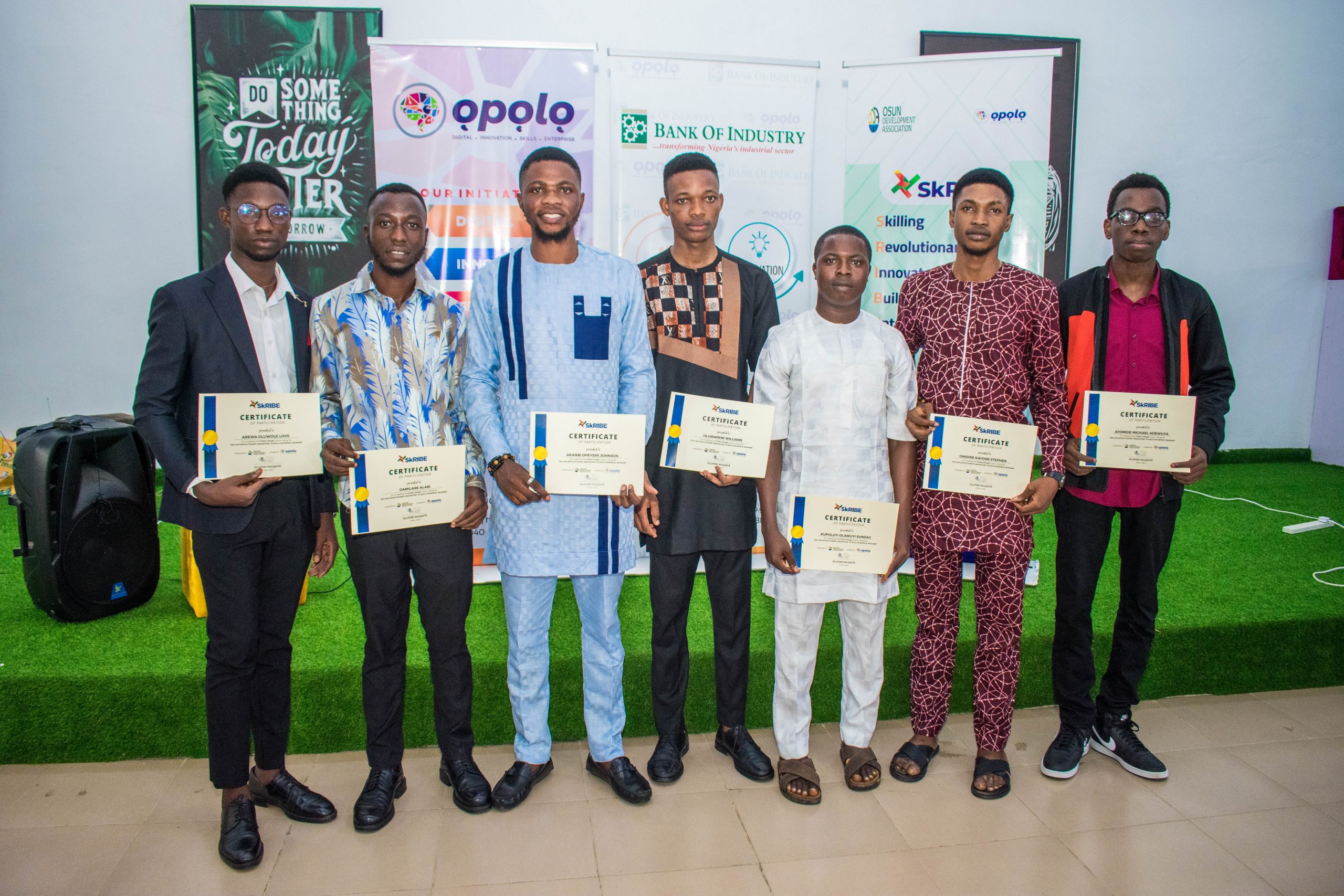
The Opolo-ODA SKRIBE Programme, a groundbreaking initiative aimed at fostering innovation and equipping young minds with the skills needed to thrive in the digital era, has concluded the training of the first cohort of participants with resounding success. The program brought together luminaries from the tech and educational sectors, including Mr. Patrick Akinwuntan, the Chairman of the Technology and Innovation Group of   Osun Development Association; Mr. Sunkanmi Oriyomi, the Osun State Manager of the Bank of Industry (BOI);Team Lead of Opolo Global, Mr. Femi Kalejaiye; Mr. Oluwaseun Owojori, Federal Polytechnic, Ayede; and former Director General of Oodua Chambers of Commerce, Mr. David Awotipe;  among other stakeholders.  The event garnered applause from participants who recognized the invaluable contributions of sponsors and organizers of the 3-month training programme in product design and management.

In his opening remarks, Mr. Patrick Akinwuntan, Chairman of the ODA Technology and Innovation Group, emphasized the critical role of technology in today’s world. He highlighted the need for fostering digital literacy and innovation to prepare the youth for a rapidly changing job market. Akinwuntan stated, “The Osun Development Association is proud to be a major sponsor  of the SkRIBE programme, dedicated to nurturing young talents and preparing them to thrive in the digital age. Our commitment to education and innovation aligns perfectly with the goals of the SKRIBE programme.” He therefore congratulated the graduating participants on the milestone and urged them to make their portfolios visible online and conduct themselves professionally in the course of rendering their services. He also advised them to practice the new skills acquired with the fear of God and the ethos of the Omoluabis the state is known for.

In his own welcome speech, the Team Lead of Opolo Global Innovation Limited, Mr. Femi Kalejaiye underscored the significance of partnerships in driving education and technological advancement thanking the ODA and other supporting organization for sponsoring the programme. He stated, “I would like to extend my heartfelt gratitude to the Osun Development Association for their unwavering support and commitment to empowering the youth of Osun State. Your vision and dedication to fostering innovation and human capital development have played a pivotal role in the success we are here to celebrate today.”

Kalejaiye noted that “over the course of the programme, our 19 participants were immersed in the world of product management and design. They were challenged, inspired, and equipped with the tools necessary to thrive in the tech-driven world. And I am proud to share with you that the dedication and hard work of these young individuals have already borne fruit as five of our participants have secured remote internship opportunities with companies in the United States, a testament to their remarkable talent and the quality of training they received.”

In his goodwill message, the State Manager of the BOI, Mr. Sunkanmi Oriyomi, said the support of the bank for the hub is a long term thing with the aim continually nurturing the youths and supporting them to do their business.The Opolo-ODA SKRIBE Programme, spanning 3 months, featured a wide range of training sessions and hands-on activities focused on product design and management. Participants had the opportunity to learn from experts in the tech industry, preparing them to become UI/UX professionals.

Participants expressed their gratitude to the sponsors and organizers. One participant, Badmus Kazeem, shared his enthusiasm, saying, “kudos to the organizers, our instructor and sponsors of this program which has given me more insight on what Product Design is all about and a big opportunity as well to compete strongly in the labour market.”

Another participant, Ayomide Michael Adewuya also recounted his experience during the programme “I can say that my learning experience from this programme has been fantastic, mostly due to the resources provided to us, the prowess of our trainers and the freedom to learn, create and express ourselves in a comfortable environment.” In his own words, Damilare Alabi, another participant, said “the training introduced me to the process of designing a product and the benefit of focusing on the users when designing.”The only female participant, Ogunwande Mobolaji Aishat, described her experience during the programme as awesome. She said “My learning experience was amazing, we were provided with adequate resources and conducive environment to ease our learning and an excellent instructor as well.”

As part of the programme, participants made presentations on their projects. One of them, Johnson Akanbi developed an application that would assist students to pay their school fees through loans via the app. He called it EduLoan.  Similarly, Oluwole Arewa, also developed an app that helps people to monitor  burnt calories and check body fitness.

SkRIBE, shortened for Skilling Revolutionary Innovators to Build Enterprise, is a cohort-based intensive incubation capacity-building program aimed at incubating fifty thousand 50,000 digital natives and enthusiasts, across the 6 geopolitical zones of Nigeria. This group of individuals will be skilled and empowered on low and mid-code digital skills, with a primary focus on Digital Media Management, Data Science and Analytics, Artificial Intelligence, Networks and Information Security (Cybersecurity), Web and Mobile Development, Product Design and Management, Blockchain, Robotics, and STEMI education.


What Nigeria Needs Now, And Lessons from Mbakwe, Rimi and Jakande

1

Nigeria is wasting time on some of the cost cutting ideas I have been reading lately. Simply, the government is not sincere.  How do you expect the citizens to tighten their belts when we’re still expanding wasteful bureaucracy? Yes, we continue to create an illusion of abundance, when we’re shouting that Nigeria has no funds!

In some states, we have a governor who appointed dozens of aides and yet expects workers to tighten their belts. In the federal government, we can now fly presidential jets to watch a polo game, and yet claim that Nigeria is broke. Nonsense!

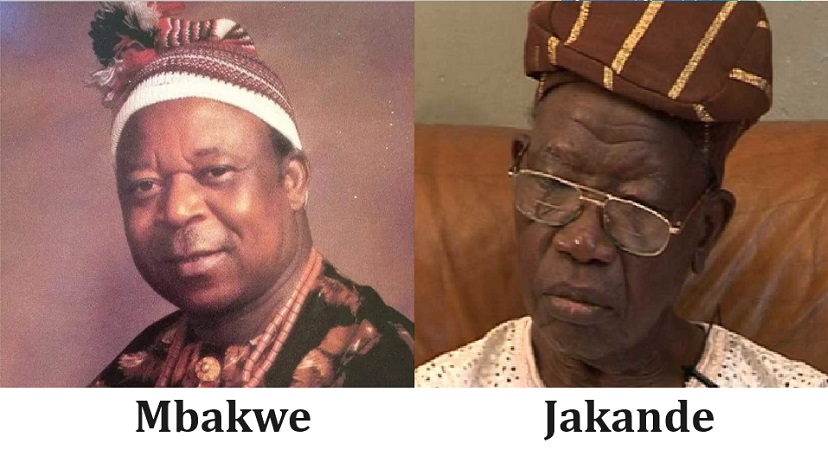
Nigeria does not need to attend Harvard or LSE to understand a people’s oriented leadership. We have case studies in Mbakwe (Imo State) and Jakande (Lagos State). These men served and people believed them.

Their authentic leadership and believability helped them to tap into the resources of their citizens to develop their states. Mbakwe raised money for the state budget on radio and tv stations, challenging pupils, students, workers, businesspeople, etc to donate and contribute funds to advance the state. And they responded – and he executed great projects. Jakande and Rimi (Kano State) were also doing great things, through common-sense trusted leadership.

So, here is the summary: the National Assembly, Executives at federal and state levels, etc should cut their salaries, expenses, etc by at least 40% before we can truly believe that Nigeria has no money. Until then, I am not sure many will understand.

Good People, beyond what anyone is telling you about Nigeria, our problem is clear: TRUST SCARCITY. And with that, no one is connected to any grand national mission. That must change if we hope to advance as a nation. Yes, if we return to the playbooks of Mbakwe and some of his peers, the national project becomes possible.

Nigeria does not have a dollar scarcity problem or whatever scarcity you may think. Our challenge today is TRUST scarcity. I had planned to drop my Option #2 on how to fix the forex problem, but after reading comments on the Option #1 on social media, I came to this conclusion: it is beyond US dollar scarcity, the real challenge is TRUST scarcity. And Nigeria needs to focus on that.

Comment on Feed

Comment: The reduction in salaries will likely have minimal impact.

My Response: We’re not talking of the savings. It is about a mindset shift. If the National Assembly shows a mindset of austerity, then NLC, etc will pick the signals. But you cannot buy N200m plus SUV per lawmaker and you ask workers to manage N30k monthly!

Comment 2: How do we find these trusted people

My Response: Elect people who can inspire you – and you can believe.

Visa, MasterCard want a Slice of Africa’s Mobile Money

0

Africa’s mobile money market is booming, with over 560 million registered accounts and $495.3 billion in transactions in 2020, according to the GSMA. The continent is home to some of the most innovative and successful mobile money services in the world, such as M-Pesa, MTN Mobile Money, Orange Money and Airtel Money.

Mobile money is a digital payment service that allows users to store, send and receive money using their mobile phones, without the need for a bank account or a physical card. Mobile money has been a lifeline for millions of Africans who lack access to formal financial service.

These services allow users to send and receive money, pay bills, buy airtime, access loans and savings, and more, using their mobile phones. They have also enabled financial inclusion for millions of people who lack access to formal banking services.

However, mobile money is not without its challenges. One of the main barriers to growth is interoperability, or the ability of different mobile money platforms to connect and exchange value with each other and with other payment systems. Currently, most mobile money transactions are limited to users within the same network or country, which limits the potential for cross-border and regional trade.

This is where global payment giants like Visa and MasterCard see an opportunity. Both companies have been investing in partnerships and initiatives to tap into Africa’s mobile money market and offer solutions for interoperability, security and convenience.

For example, Visa has launched Visa Direct, a service that allows users to send and receive money from any Visa card or mobile money account in the world. It has also partnered with M-Pesa, MTN Mobile Money and other providers to enable users to link their mobile money accounts to Visa cards or virtual cards that can be used for online shopping or at any Visa merchant.

MasterCard has also been active in the mobile money space, launching Mastercard Send, a service that enables cross-border remittances and business payments from any Mastercard card or bank account to any mobile money account. It has also collaborated with Airtel Africa, Orange Money and other providers to offer users Mastercard-branded virtual or physical cards that can be linked to their mobile money accounts.

Both Visa and MasterCard have also joined forces with the African Development Bank (AfDB) and other stakeholders to launch the Africa Digital Financial Inclusion Facility (ADFI), a fund that aims to accelerate digital financial inclusion across the continent by supporting innovative projects that leverage mobile money and other digital platforms.

By partnering with mobile money providers, Visa and MasterCard are not only expanding their reach and customer base in Africa, but also enhancing their value proposition and competitiveness in the global payment industry. They are also contributing to the development of Africa’s digital economy and financial inclusion agenda.

MasterCard has collaborated with MTN Group, Africa’s largest mobile operator, to launch a mobile money platform that allows MTN customers to pay online and in-store with a Mastercard virtual card or QR code. It has also joined forces with Ecobank, a regional banking group, to launch a digital payment solution that integrates Ecobank’s banking services with multiple mobile money wallets.

Both Visa and MasterCard see Africa as a strategic market for growth and innovation, as the continent is undergoing a rapid digital transformation and has a large population of young and tech-savvy consumers. By partnering with local players and leveraging their global expertise and network, they hope to capture a slice of the lucrative mobile money pie and contribute to the development of Africa’s digital economy.

However, they also face some challenges and risks. For one thing, they have to contend with the regulatory and operational complexities of operating in different markets with different rules and standards.

But some analysts are skeptical about the motives and impact of these global players entering the African mobile money space. They argue that Visa and MasterCard are mainly interested in tapping into the huge transaction fees that mobile money generates, rather than improving the lives of the unbanked and underbanked.

They also warn that these partnerships could pose a threat to the local innovation and competition that have made mobile money so successful in Africa. They fear that Visa and MasterCard could use their dominant position and influence to dictate the terms and conditions of the mobile money ecosystem, potentially undermining the autonomy and sovereignty of the African operators and regulators.

Both companies have launched products and services that enable mobile money users to link their accounts to physical or virtual cards, access ATMs, shop online and pay at merchant locations. They have also partnered with local mobile operators, banks and fintech startups to offer innovative solutions that cater to the needs and preferences of African consumers. Visa and MasterCard have been expanding their presence and partnerships in Africa, aiming to tap into the growing demand for digital payments and financial inclusion.

Moreover, they question whether Visa and MasterCard can truly understand and cater to the needs and preferences of the African mobile money users, who have different cultural and behavioral patterns than their counterparts in other regions.

How To Register A Licensed Shipping Company and Joint Venture Vessel for Cabotage Waivers, HMOs In Nigeria

0

Maritime Law :- How To Register A Licensed Shipping Company In Nigeria & Register a Joint Venture Vessel For a Cabotage Waiver

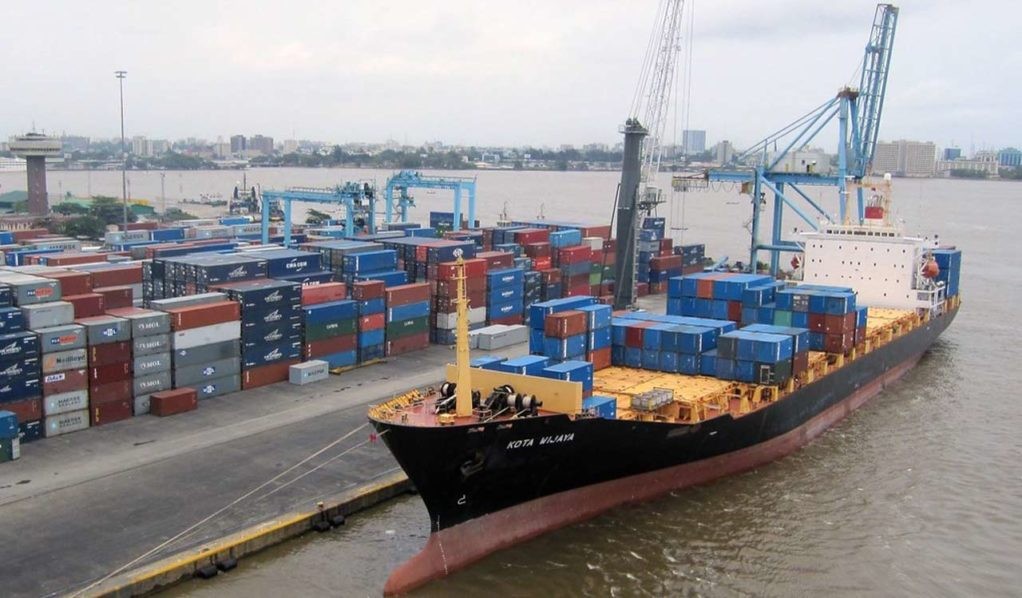
This article will be dealing with the registration of shipping companies in Nigeria and its regulatory requirements. Shipping companies are corporate entities engaged in rendering services revolving around the transportation of cargo by sea or from port to port.

We will thus be looking at the provisions of the regulatory framework on shipping company registration in Nigeria as follows :-

Which agency is in charge of shipping company registration in Nigeria?

The Nigerian Maritime Administration and Safety Agency (NIMASA) is statutorily empowered with jurisdiction over the licensing and registration of shipping companies in Nigeria.

What is the minimum share capital for shipping companies in Nigeria?

The minimum share capital for shipping companies in Nigeria is 25 Million Naira.

What are the requirements for applying for registration as a shipping company in Nigeria?

– An application letter

– A receipt of payment for 110,000.00 Naira being the combined regulatory registration and application fee.

– A copy of the applicant’s memorandum and articles of association (MEMART)

– Evidence of filing annual returns

– Bank reference

– A current tax clearance certificate

– An audited account ir financial statement of account (you will need a financial statement if your company is less than 18 months old and audit reports if your company is over 18 months old).

What are the requirements for Cabotage waivers involving Joint Venture Vessels?

– Relevant Cabotage application forms

– A certificate of registry

– A detailed crew list

–  A certificate of minimum safe manning

– Evidence of NIMASA registration

– A copy of the Joint Venture agreement

– Copies of the applicant’s memorandum and articles of association (MEMART)

– A Certified True Copy (CTC) of the Certificate of Incorporation of the applicant

– A current tax clearance certificate.

How To Set Up A Licensed Health Maintenance Organization (HMO) In Nigeria

A Health Maintenance Organization (HMO) is a company registered solely to manage the provision of healthcare services through health care facilities.

This article will be looking at how to register a HMO and the overall regulatory framework governing the creation/registration of HMOs in Nigeria.

Who is eligible to set up a HMO in Nigeria?

– Any group of people or an organization of individuals of proven and impeccable character may be eligible to firm a company and apply for registration as a HMO.

Which agency is in charge of regulating the registration of HMOs in Nigeria?

HMOs are regulated in Nigeria by the National Health Insurance Scheme (NHIS).

What are the functions of HMOs in Nigeria?

– The collection of contributions from registered employers and employees under private health insurance where applicable.

– The collection of contributions from voluntary contributors.

– Effect timely payments to primary facilities and fee-for-service to secondary and tertiary facilities.

– Ensure effective processing of claims (secondary services).

– Rendering to the scheme monthly returns on capitation and fee-for-service payment within 30 days of the following month.

– Collection & Submission of encounter date forms from Healthcare facilities to the NHIS.

What are the requirements for high-level employees of HMOs (Directors, CEOs, Managers or Secretaries) in Nigeria?

– No HMO shall appoint or have I Its employment a director, Chief Executive, manager or secretary if he :-

a). is of unsound mind or incapacitated by ill-health;

b). is convicted of any offence involving dishonesty or fraud;

c). is not a fit and proper person for the position;

d). is guilty if serious misconduct in relation to his duties.

What are the regulatory requirements for shareholders of a HMO in Nigeria?

– A company seeking HMO licensing shall have a minimum of 7(Seven) shareholders of proven integrity.

– The NHIS shall have the right to investigate their sources of funds.

– The NHIS shall have the right to conduct a background check on the shareholders.

– State governments may invest in HMOs. Such HMOs must meet all NHIS requirements and shall be accredited by NHIS.

What is the minimum share capital for HMOs in Nigeria?

The share capital requirements for HMOs in Nigeria are :-

– State HMOs – 100 Million Naira

– Zonal HMOs – 200 Million Naira

– National HMOs – 400 Million Naira

What are the regulatory requirements for HMOs regarding drug administration?

– HMOs should ensure that facilities adhere to the generic drug policy of the scheme.

– The NHIS shall negotiate the prices of drugs to ensure availability of drugs at affordable costs.

– The NHIS, HMOs & pharmacy facilities shall co-operate to build acceptable channels for the distribution of drugs and materials to eliminate fake & counterfeit drugs.

– The NHIS shall adopt drug utilization review programs in order to streamline the management of pharmaceutical care services.