DD
MM
YYYY

PAGES

DD
MM
YYYY

spot_img

PAGES

Home Blog Page 4156

New York State Department of Financial Services (NYDFS) releases Draft on Crypto and Cybersecurity Guidance

0

The New York State Department of Financial Services (NYDFS) has issued a draft guidance on how it will evaluate the cybersecurity practices of cryptocurrency firms that operate under its supervision. The guidance, which was published on September 21, 2023, aims to provide clarity and transparency to the crypto industry and to enhance the security and resilience of the state’s financial system.

The NYDFS is the state agency that regulates financial services and products in New York, including banking, insurance, securities, and cryptocurrencies. The NYDFS was created in 2011 by merging the New York State Banking Department and the New York State Insurance Department.

The draft guidance outlines the minimum standards that crypto firms must meet to comply with the NYDFS’s existing cybersecurity regulation, which was adopted in 2017 and applies to all entities licensed or authorized by the department. The regulation requires crypto firms to implement a comprehensive cybersecurity program, conduct periodic risk assessments, adopt policies and procedures for incident response and recovery, and report any breaches or attempted breaches to the NYDFS within 72 hours.

According to the draft guidance, the NYDFS will assess the cybersecurity program of each crypto firm based on its specific business model, activities, risks, and complexity. The department will also consider the following factors:

The type, volume, and value of crypto transactions and assets that the firm handles or stores; The degree of integration and interoperability of the firm’s systems and platforms with other financial institutions and service providers; The extent to which the firm relies on third-party vendors or service providers for its crypto operations; The nature and scope of the firm’s compliance with applicable laws and regulations, including anti-money laundering (AML) and sanctions requirements; The level of innovation and adoption of emerging technologies and best practices in the crypto industry

The draft guidance also provides examples of specific cybersecurity controls that crypto firms should implement, such as: Encrypting all data in transit and at rest, using strong encryption algorithms and keys.

  • Segregating crypto assets across multiple wallets and storage devices, using cold storage for a significant portion of assets; Implementing multi-factor authentication (MFA) and biometric verification for access to systems and platforms; Using hardware security modules (HSMs) or other secure devices for key management and generation; Conducting regular audits and penetration tests of systems and platforms, both internally and externally, establishing clear roles and responsibilities for cybersecurity personnel and providing them with adequate training and resources

The NYDFS is seeking public comments on the draft guidance until October 22, 2023. The department will then finalize and issue the guidance, which will become effective on January 1, 2024. Crypto firms that are subject to the NYDFS’s supervision will have to comply with the guidance by July 1, 2024.

The draft guidance is part of the NYDFS’s ongoing efforts to foster a regulatory environment that supports innovation and growth in the crypto industry, while protecting consumers and investors from fraud and cyberattacks. The department has been one of the most active regulators in the U.S. in terms of issuing licenses and approvals for crypto firms, such as BitLicense, Trust Charter, Conditional BitLicense, Virtual Currency License, Stablecoin Approval Order, BitLicense No-Action Letter, etc.

The NYDFS’s draft guidance is also in line with the global trend of increasing regulatory scrutiny and oversight of the crypto industry, as more countries and jurisdictions are developing or updating their rules and standards for crypto-related activities. Some of the recent examples include:

The BitLicense was introduced by the New York State Department of Financial Services (NYDFS) in 2015, and it is considered one of the most comprehensive and stringent regulatory frameworks for crypto businesses in the US. The BitLicense aims to protect consumers, prevent money laundering, and promote financial stability in the crypto space.

However, the BitLicense also imposes a high barrier to entry and a heavy compliance burden on crypto businesses that operate in New York. The application process for obtaining a BitLicense can take up to a year or more, and it requires extensive documentation, background checks, audits, fees, and reporting obligations. The NYDFS has granted only 29 BitLicenses since 2015, and many crypto businesses have opted to leave New York or avoid serving New York customers rather than applying for a BitLicense.

In June 2020, the NYDFS issued a guidance on how crypto businesses can obtain a conditional BitLicense, which allows them to operate under the supervision of an existing BitLicense holder while they complete their full application process. This is intended to streamline and expedite the licensing process for new entrants.

In July 2020, the NYDFS issued a proposal for a new framework for regulating stablecoins, which are cryptocurrencies that are pegged to fiat currencies or other assets. The proposal outlines the requirements for issuing, redeeming, holding, and trading stablecoins in New York, as well as the standards for ensuring their safety and soundness.

In October 2020, the NYDFS issued a greenlist of approved cryptocurrencies that can be used by licensed crypto businesses in New York without prior approval from the regulator. The greenlist currently includes 10 cryptocurrencies: Bitcoin (BTC), Bitcoin Cash (BCH), Ethereum (ETH), Ethereum Classic (ETC), Litecoin (LTC), Binance USD (BUSD), Gemini Dollar (GUSD), Paxos Standard (PAX), Pax Gold (PAXG), and Ripple (XRP).

In November 2020, the NYDFS issued a guidance on how crypto businesses can self-certify their compliance with the regulator’s cybersecurity requirements. The guidance outlines the minimum standards for cybersecurity policies and procedures that crypto businesses must implement and maintain.

In January 2021, the NYDFS issued an alert to crypto businesses about potential risks associated with ransomware attacks. The alert urges crypto businesses to implement robust security measures to prevent and mitigate ransomware incidents, as well as to report any suspicious activity to the regulator.

The Financial Action Task Force (FATF), an intergovernmental body that sets global standards for AML and counter-terrorism financing (CTF), issued revised guidance on how countries should apply its recommendations to virtual assets and virtual asset service providers (VASPs) in June 2021.

The European Commission, the executive branch of the European Union (EU), proposed a comprehensive legislative framework for crypto markets in September 2020, called Markets in Crypto-Assets (MiCA), which aims to harmonize the rules and regulations for crypto activities across the EU.

The U.K.’s Financial Conduct Authority (FCA), the country’s financial regulator, banned the sale of crypto derivatives and exchange-traded notes (ETNs) to retail investors in October 2020, citing high risks of harm from price volatility, complexity, lack of transparency, and market abuse.

New York is one of the most important financial hubs in the world, and it is also a key player in the emerging crypto industry. However, the state has some of the strictest regulations for crypto businesses and investors, which can pose significant challenges and opportunities for both newcomers and veterans.

ApeCoin DAO Voting to Acquire sister DAO

0

ApeCoin DAO, the decentralized autonomous organization that aims to empower apes in the crypto space, is currently holding a governance vote on whether to create a sister DAO dedicated to acquiring and managing NFTs. The proposal, which was submitted by one of the ApeCoin DAO members, argues that NFTs are a valuable asset class that can generate revenue and exposure for the ape community. ApeCoin DAO is powered by its native token, APE, which is used for voting, staking, and rewarding the community members.

The sister DAO would have its own treasury, governance token and smart contracts, but would share the same vision and values as ApeCoin DAO. The vote will end on September 30th and requires a minimum quorum of 51% and a majority of 60% to pass.

NFTs, or non-fungible tokens, are unique digital representations of art, music, games, collectibles and other forms of creative expression that are stored on a blockchain. NFTs have exploded in popularity and value in recent months, attracting celebrities, artists, investors and enthusiasts from all over the world. Some of the most notable NFT projects include CryptoPunks, Bored Ape Yacht Club, Art Blocks and Loot. NFTs are not only a way to showcase and own digital art, but also a way to participate in a vibrant and diverse community of creators and collectors.

One of the projects that ApeCoin DAO supports is yugalabs, a blockchain-based gaming ecosystem that leverages the power of non-fungible tokens (NFTs) and metaverse. Yugalabs allows users to create, play, and trade their own games and NFTs on a scalable and interoperable network.

ApeCoin DAO has a strategic partnership with yugalabs, which gives it a significant stake in the gaming platform. ApeCoin DAO also provides funding, marketing, and technical support to yugalabs, as well as access to its large and active community of ape enthusiasts.

As a result of this collaboration, ApeCoin DAO and yugalabs have achieved remarkable growth and success in the blockchain gaming industry. According to the latest data, yugalabs has over 1 million registered users, 10,000 active games, and 100,000 NFTs minted on its platform. ApeCoin DAO has also seen its token price increase by over 500% since the launch of yugalabs, reaching a market capitalization of over $200 million.

ApeCoin DAO believes that NFTs are a natural fit for the ape culture, which is based on collaboration, innovation and fun. By creating a sister DAO focused on NFTs, ApeCoin DAO hopes to expand its influence and reach in the crypto space, as well as support talented artists and creators who share the ape ethos. The sister DAO would also provide educational resources and guidance for apes who want to learn more about NFTs and how to get involved.

The sister DAO would be funded by a portion of the ApeCoin DAO treasury, as well as by donations and fees from NFT sales and auctions. The sister DAO would also have its own governance token, which would be distributed to ApeCoin DAO members who participate in the vote and the NFT activities.

The proposal has received positive feedback and support from many ApeCoin DAO members, who see it as an opportunity to diversify their portfolio, express their creativity and connect with other like-minded apes. However, some members have also raised concerns and questions about the feasibility, legality and security of the sister DAO. Some of the issues that have been discussed include:

How to ensure that the sister DAO complies with the relevant laws and regulations in different jurisdictions regarding NFTs and DAOs.

How to protect the intellectual property rights and royalties of the artists and creators who collaborate with the sister DAO.

How to prevent fraud, theft and hacking of the NFTs and the smart contracts.

How to balance the interests and preferences of different stakeholders within the sister DAO.

How to measure and evaluate the success and impact of the sister DAO.

These and other issues are being debated and addressed by the ApeCoin DAO community in an open and transparent manner. The proposal also includes a detailed roadmap and timeline for the launch and operation of the sister DAO, as well as a contingency plan in case of unforeseen circumstances or challenges. The proposal encourages all ApeCoin DAO members to do their own research, ask questions and voice their opinions before casting their vote.

The vote is currently ongoing on Snapshot, a platform that allows decentralized governance voting using off-chain signatures. As of September 22nd, 2023, 14:15 GMT+00:00, the vote stands at 67% in favor, 28% against and 5% abstain, with 54% of the total ApeCoin DAO token supply participating. The vote will close on September 30th at 23:59 GMT+00:00.

ApeCoin DAO is confident that its current position in yugalabs will bring more benefits and opportunities to its community and ecosystem. ApeCoin DAO believes that yugalabs is one of the most promising and exciting projects in the blockchain gaming industry, and that it has the potential to become a leader and pioneer in the metaverse.

ApeCoin DAO is one of the most innovative and active DAOs in the crypto space, with a mission to empower apes to take control of their own destiny. By creating a sister DAO for NFTs, ApeCoin DAO hopes to take another step towards achieving its vision of a decentralized, democratic and diverse ape society.

Nigerian Business Leaders Kick Against a Planned Nationwide Strike by the Organized Labour Over Fuel-Subsidy Removal

0

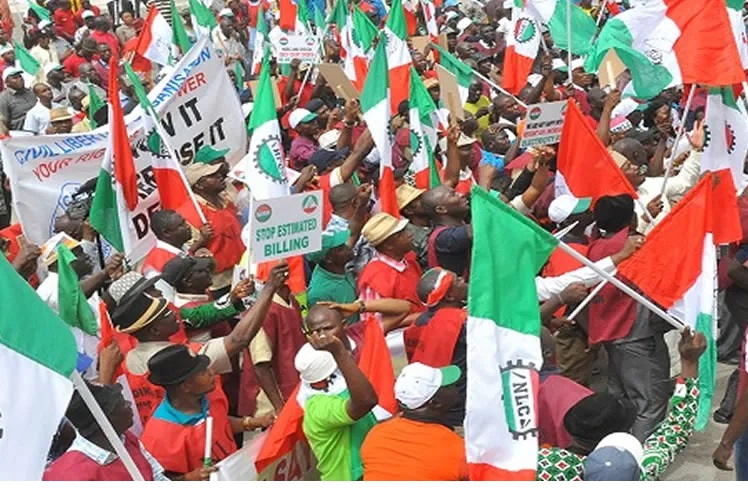
Some members of the Nigerian business community have shown concerns that the planned nationwide strike by the organised labour over workers’ welfare in the post-subsidy regime may aggravate the dire economic situation of the country rather than assuage it.

The Nigerian Labour Congress which is demanding a review of the minimum wage, tax exemptions and allowances for public sector workers, among others in the post-subsidy era had earlier given a 21-day ultimatum to the federal Government to provide palliative to Nigerians to cushion the effect of the fuel-subsidy removal.

Following the expiration of the NLC’s ultimatum yesterday, the leadership of the congress (NLC) is scheduled to convene on Tuesday to take a decision on the strike.

The Nation reported that the Congress’ threat to shut down commercial and economic activities across the country after its recent warning industrial action did not go down well with the business community who believes such action would not agure well with the country and the generality of its citizens.

The Director-General of the Manufacturers Association of Nigeria (MAN), Segun Ajayi-Kadir was reported to have said a national strike at this time would only complicate the present economic situation.

His words: “Like we have always said, when the labour union goes on strike, the economy is negatively impacted. It is not the Government that suffers, but the masses.
“There are fears that if that strike is accompanied by violent protests, it will have implications for maintenance of peace.

“Whichever way you look at it, I think strikes by the labour union even at the normal time will negatively affect the economy, not to mention now that our economy is going through a lot of challenges.

“You are aware that this administration is barely 100 days old and there are quite a number of policy initiatives the government has taken that are supposed to help the pace for economic reflation in the country.

“Those policies are yet to fully mature to start to yield any positive outcomes. In my own opinion, all hands should be on deck to get the economy on the path of recovery and reflation of the economy.

“A strike at this time is going to set back the process and may lead to further hardship for the people and the economy.”

Mr Segun Ajayi-Khadir appealed to government and labour to quickly resolve their differences on the issue, adding that the labour need to begin to look for alternative means of pressing its demand rather depending solely on strike actions which invariably ground the economy and ultimately affect the people the union intended to speak for.

Mr Peter Adebola, a stock market operator, was also reported as saying the stock market activities may be heavily impacted if the indefinite nationwide strike threatened by the organised labour holds.

“All stock market macroeconomic indicators would also go down. This is because the macroeconomic indicators that would influence the stocks would be negative,” Mr Adebola said.

The stock market expert reportedly noted that the disturbance in the stock market due to the strike is highly probable if the Nigeria Union of Petroleum and Natural Gas Workers (NUPENG) and Petroleum and Natural Gas Senior Staff Association of Nigeria (PENGASSAN) join the action.

Coinbase CEO Brian Armstrong Proposes That AI Should Not be Regulated But Decentralized

0

CEO of Coinbase Brian Armstrong has recently proposed that Artificial Intelligence (AI) should not be regulated, rather it should be centralized.

Armstrong who posted on the X platform (formerly Twitter), stated that regulation on AI will hinder its progress, which has unintended consequences and can kill competition/innovation, despite best intentions.

He further noted that just as other innovations have enjoyed free regulations which have spurred unhindered progress, the same should be applied to AI, for innovations to emerge.

In his words,

“Count me as someone who believes AI should not be regulated. We need to make progress on it as fast as possible for many reasons (including national security).

“And the track record on regulation is that it has unintended consequences and kills competition/innovation, despite best intentions. We’ve enjoyed a golden age of innovation on software and the internet largely due to it not being regulated. AI should do the same. The best protection is to decentralize it and open source it to let the cat out of the bag”.

Armstrong’s proposition is coming against the widespread propositions and calls across the globe for Artificial Intelligence to be regulated to mitigate its negative effects.

Calls for AI regulation have continued to intensify as AI becomes more integrated into new technologies and various aspects of society. The need for AI regulation is driven by concerns related to ethics, safety, accountability, and the potential societal impact of AI systems.

Tech leaders such as Tesla and X CEO Elon Musk, Google CEO Sundar Pichai, and OpenAI CEO amongst other international bodies, have all called for the regulation of AI.

Also, earlier this month, the President of the European Commission, Ursula von der Leyen, called on the European Union to take the lead in developing a global regulatory regime for AI similar to the intergovernmental panel on climate change.

The goal is to foster safe and responsible AI development by pulling together the best minds in government, commerce, science, and other circles.

This was followed by U.S. President Joe Biden’s address at the United Nations which he pledged to work with world leaders to harness the power of Artificial Intelligence for good while protecting citizens from its most profound risk.

Also, the UN Education, Scientific and Education Organization (UNESCO) has called on all countries of the world to fully implement its Recommendation on the Ethics of Artificial Intelligence, which was approved unanimously by all member states in 2021.

The framework lists a broad range of values and principles to help guide the development and implementation of Al, but it also provides a readiness assessment tool to help regulators determine if users have the skills, and competence to properly utilize the Al-driven resources at their disposal.

It also calls for periodic repotting by regulatory authorities, detailing progress in their state’s governance of Al.

These leaders and institutions have noted that while AI has enormous potential to bring about transformation in the society and different industries across the globe, there are also considerable dangers to be wary of.

Check Out Some of The dangers That Have Intensified The Call For AI Regulation

1. Ethical Concern: Al can raise ethical questions, especially when it comes to decision-making processes and potential biases in Al algorithms. There are concerns about Al systems making unfair or discriminatory decisions, which has prompted calls for regulations to ensure fairness, transparency, and accountability.

2. Algorithmic Bias: Al systems can inadvertently perpetuate biases present in their training data. This can result in discriminatory outcomes in areas like hiring, lending, and criminal justice. Regulation is seen as a way to address and mitigate algorithmic bias.

3. Privacy: The use of Al in data analysis and surveillance raises concerns about privacy violations. Regulations, such as data protection laws (e.g., GDPR in Europe), aim to safeguard individuals’ personal information and limit the misuse of Al for surveillance purposes.

4. Safety: Al systems, particularly in sectors, like autonomous vehicles and healthcare, have the potential to impact human safety. Regulations are needed to establish safety standards and requirements for Al systems to prevent accidents and harm.

5. Accountability: Determining liability and responsibility in cases where Al systems make decisions that result in harm can be complex. Regulation may clarify the legal framework for holding individuals or organizations accountable for Al-related actions.

6.) Bias in AI research: Some researchers and policymakers argue that biases in AI research funding, and development priorities need to be addressed to ensure that AI benefits all of humanity.

While Coinbase CEO Brian Armstong is against the regulation of AI, which he believes would hinder innovation, it is widely believed that the goal of AI regulation is to strike a balance between promoting innovation and protecting the interests and well-being of individuals and society globally.

Tinubu’s Baffling Desperation to Block the Release of His Academic Record At Chicago State University

0

Nigerian President Bola Tinubu has been battling to keep his academic records with the Chicago State University (CSU) sealed, following a suit by his co-contestant in the last presidential election, Atiku Abubakar.

The legal tussle stems from the claim by Tinubu to be a graduate of the university and the allegation by a large section of Nigerians that the president is impersonating someone else.

The educational background of Bola Ahmed Tinubu, who contested the Nigerian presidential election under the All Progressive Congress (APC), has been a subject of controversy and secrecy.

In the last election, he informed the Independent National Electoral Commission (INEC) that he did not attend primary and secondary schools. This contradicts his earlier claim that he attended St. John’s Primary School, Aroloya, Lagos, and Children Home School Ibadan. However, he claimed to possess two degrees from two American universities, both of which he said were stolen by unidentified soldiers during the military regime of the 1990s.

These details were revealed in an affidavit submitted by Tinubu to INEC as part of his eligibility requirements for the 2023 presidential elections. He did not mention his primary and secondary education as he left the sections unmarked in his affidavit, though he mentioned that he obtained a degree in business and administration in 1979, seemingly alluding to his prior assertions of attending Chicago State University.

However, a document obtained from Chicago State University has raised questions about the academic credentials that Tinubu claims, as they appear to belong to a female individual with the same name.

It is based on these controversies that Atiku filed a lawsuit on August 2 to force CSU to release all necessary documents relating to Tinubu’s time at the school.

“I woke up this morning wondering how we got to this cul de sac. In 1999, Bola Tinubu claimed he attended St. John’s Primary School, Aroloya, Lagos, before proceeding to Children Home School in Ibadan,” Atiku wrote amid the trial. “According to him, his next port of call in his educational journey was Government College Ibadan and, Richard Daley College and Chicago State University in the United States. Curiously, in 2023, Tinubu settled with attending only Chicago State University.”

“I am scratching my head. How is that possible? Methinks that all well-meaning Nigerians should be as confused as I am with Tinubu’s declaration that he had no primary and secondary education, yet he has a university degree. You may wish to #AskTinubu how he attained this feat so that we can learn from his ingenuity,” he added.

Atiku, who ran for president under the Peoples Democratic Party (PDP), seeks to unravel the mystery surrounding Tinubu’s education at Chicago State University, as it would help in his case challenging the outcome of the controversial presidential election, which INEC declared Tinubu the winner. The former Vice President and Peter Obi, the Labour Party’s presidential candidate, are appealing the judgment of the Court of Appeal that upheld Tinubu’s victory.

Atiku’s prayer for a subpoena to obtain Tinubu’s academic records, which was eventually granted, has been vehemently opposed by Tinubu. The president said making his academic record public would infringe on his privacy rights under the Family Educational and Privacy Rights Act (FERPA), a U.S. law that protects the academic records of students.

But Judge Jeffrey Gilbert of the United States District Court for the Northern District of Illinois, in his ruling on September 19, said President Bola Tinubu weakened his education privacy rights when he submitted a contentious certificate to run for office in 2022.

He added that the need to confirm the genuineness or otherwise of the certificate Tinubu submitted to the INEC outweighed Tinubu’s personal concerns over its consequences – thus ordering CSU to release the records within two days.

“Here, the court finds that applicant’s interest in obtaining Intervenor’s records from CSU outweighs intervenor’s privacy rights because intervenor put his diploma at issue by submitting it to the INEC,” Judge Gilbert said in his ruling.

The judge said Mr Abubakar satisfied the burden and met the criteria for Section 1782, the statute that allows the U.S. to turn over records “for use in a proceeding before a foreign tribunal.”

However, Tinubu hurriedly appealed the ruling. This time, his lawyers argued before Judge Nancy Maldonado of the United States District Court for the Northern District of Illinois in Chicago, that “Severe and irreparable harm will be done to Bola Tinubu if the records are released.”

This latest push by the president to block his academic records from being released has stirred the curiosity of many Nigerians, who are believed to be in a struggle to come to terms with the “illegitimacy” of his presidency and his drug trafficking past.

Their questions have been; why would a President, who has been praised by his supporters as a brilliant student, be this desperate to stop his alma mater from releasing his academic record to the public? What is he trying to hide?

Judge Maldonado has placed an immediate stay on the release of Tinubu’s CSU record, following his appeal. She agreed with Tinubu’s lawyers that the matter might be too severe for Tinubu to bear and granted a stay until further argument on the matter.

‘This needs to be handled with care,” Mrs Maldonado said.

However, Nigerians who have been desperately seeking the details of Tinubu’s academic records – and have forced Chicago State University to protect its social media accounts due to their barrage of inquiries on the matter, can’t wait for the Court of Appeal’s judgment.