DD
MM
YYYY

PAGES

DD
MM
YYYY

spot_img

PAGES

Home Blog Page 4157

Amazon’s Self Pick-Up Is Part of A Winning B2C Ecommerce Model; Konga Does It

0

If Amazon executes the customer self-pickup and influences the behaviour of customers, it will solve a fundamental scaling paralysis in its business model: logistics. Yes, e-commerce is not just “electronic” or “digital” since after the clicks, atom-level infrastructure would be required to move those items from warehouses to homes.

When you run the numbers, the real cost of ecommerce is in the meatspace (physical domain), and not in the digital space. With that, logistics becomes what significantly determines margins since you have to move the items, incurring distribution costs.

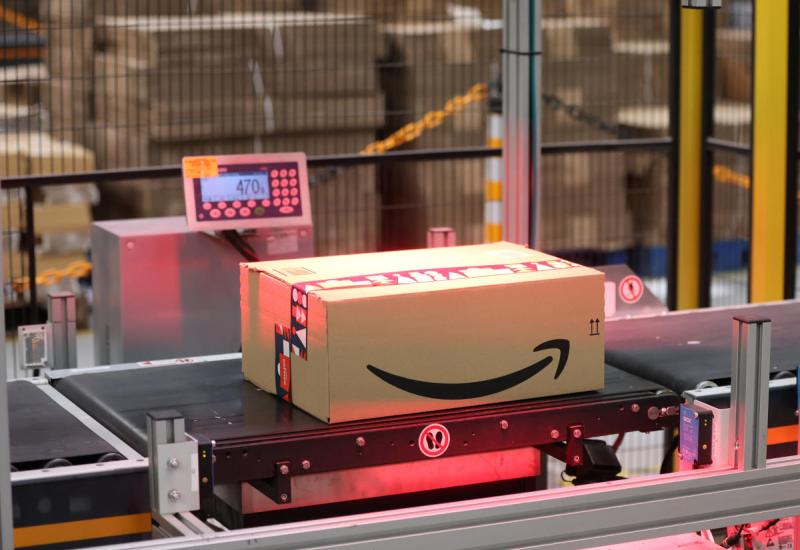
So, if Amazon delivers on this playbook, it will unlock more vistas in the ecommerce sector: “Amazon will pay some customers $10 to come and pick up their orders at locations such as Whole Foods, Amazon Fresh or Kohl’s stores, versus shipping them to a home address. The move is an effort to cut costs on deliveries and returns”.

Yes indeed, a hybrid model where you link online and offline assets will help any B2C ecommerce. Konga is doing that in Nigeria, using many physical stores within their Group to scale the mission.

Amazon will pay some customers $10 to come and pick up their orders at locations such as Whole Foods, Amazon Fresh or Kohl’s stores, versus shipping them to a home address. The move is an effort to cut costs on deliveries and returns, reports Reuters. While the e-commerce giant has “worked for years to train consumers to expect fast, no-fee deliveries and returns,” it is currently facing a drop in consumer demand, amid an uncertain global economy. Amazon has tried to contend with the slowdown after its explosive growth during the pandemic, by hiking its Prime membership fees, as well as raising the minimum order price for free grocery delivery. The Information recently reported that Amazon is charging a $1 fee to some customers if they return packages via a UPS store, if there is an Amazon pickup/return location closer to their delivery address.

That said, more American shops are leaving offices and moving closer to customers. Why not if people are working from homes! Yes, since they’re not coming to offices, move the stores closer to where they live. If this trajectory picks up, you may be surprised that ecommerce growth may dip as most of the buyers can pick items right by the corner side, with no need to order online since stores are closer to homes. When that becomes the order of the day, paying attention to the cost of logistics becomes strategic for a company.

Strip malls and other suburban shopping venues have found a new lease on life, as eateries and clothing stores follow workers from city offices to their homes. During the second half of last year, the availability of urban retail rose above that of suburban retail for the first time in at least a decade, real-estate firm CBRE said. One restaurant chain, Dig, which had been struggling recently in Manhattan, Philadelphia and Boston, is opening stores in the burbs and residential areas of cities. “We just want to be where the mouths are,” said CEO Tracy Kim. Sweetgreen’s suburban footprint has grown to 50% of its salad-selling restaurants from 35% before the pandemic. High-end retailer Nordstrom last week announced it was closing up shop in downtown San Francisco amid drooping sales and rising crime.
The fight for the leadership of Nigeria’s 10th Assembly

0

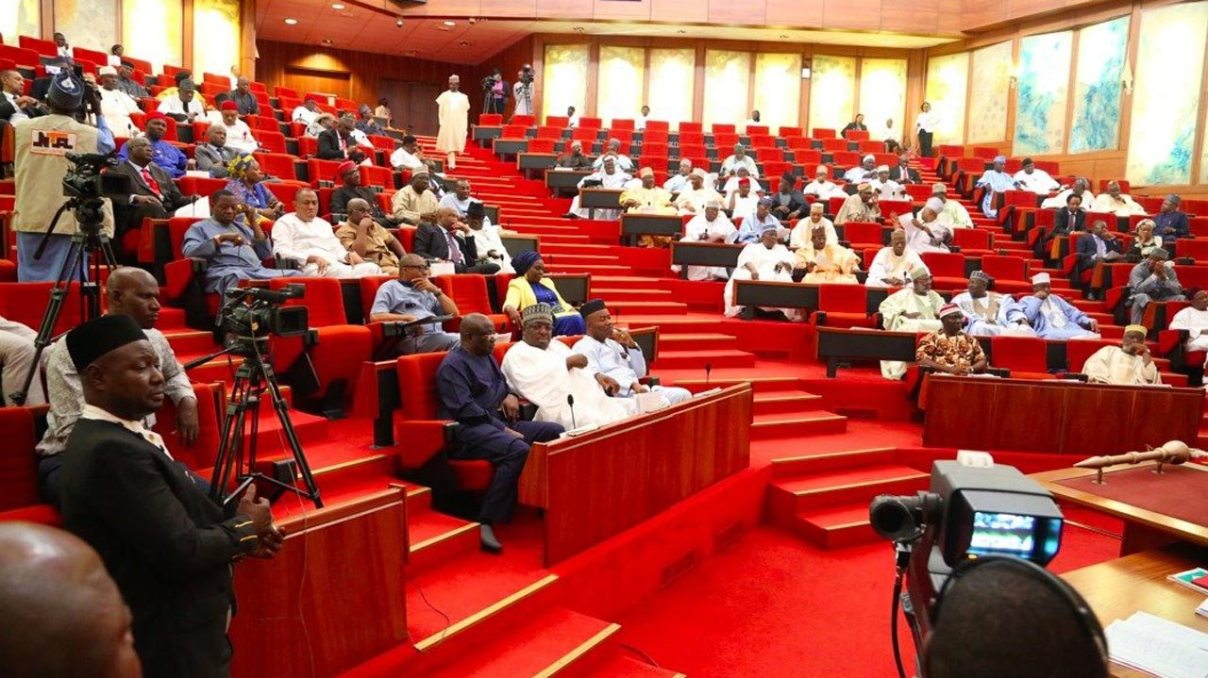
Ahmed Lawan and Femi Gbajabiamila will be bowing out by June as the Senate president and speaker of the House of Representatives respectively. Constitutionally, it has been provided in S. 50(1)(a&b) that there shall be a president and deputy president of the Senate and speaker and deputy speaker of the House of Representatives, hence that position as a matter of constitutional provision must never be vacant no matter what.

The NWC of the All Progressive Congress, the ruling party had anointed Godswill Akpabio of Akwa Ibom state to step into the shoes of Ahmed Lawan and Deputy Senate President zoned to the North West, with Senator Barau Jubrin of Kano anointed to fill in the Deputy Senate president position. Speaker, House of Representatives North West-Hon. Abass Tajudeen (Kaduna); Deputy Speaker (South East), Hon. Ben Kalu (Abia).

According to the long-standing tradition of the National Assembly or what they refer to as the standing order, lawmakers serving two or more terms are to be elected or selected as Presiding officers. This is to say that only ranking lawmakers are eligible to contest for leadership positions in the parliament. This is one of the major factors that determine who emerges as Senate president, his deputy and Speaker and his deputy. 

Aside from this rule of ranking; other factors play a critical role in determining those who emerge as principal officers of the Senate; it includes federal character; this is to say that in determining the parliamentary leadership, the federal character is to be taken into consideration;

There is also the factor of rotation; this unspoken rule also plays a heavy part. Sometimes leadership is to be rotated from one region to the other. It is not just an unspoken rule, it is enshrined in some political parties’ constitutions that powers or some positions are to be rotated regionally. 

There is also the factor of Individual contributions to the presidential/general elections; party members contribute largely in terms of finance or resource during the election so as to be compensated with one elective role or the other. Politics is a game of interest and never charity. The selection of principal officers in the parliament also serves as a way of compensation to heavy contributors.

Party man/ party loyalty; who is likely to bend to the whim and caprices of the party. A party will never allow a person who is always at loggerheads with the party to emerge as a consensus candidate or a principal officer in the parliament. 

There is also the factor of power balancing; Balancing power amongst different ethnic groups and religious affiliations. 

Consolation and fulfillment of promises. People are sometimes given other political positions as consolation prices.  Some party men stood down and threw their weight of support to an emerging candidate during presidential primaries because they were either promised or given money, or promised positions in either cabinet or the parliament. 

These and many more are some of the selfish factors that will play a huge role in deterring who emerges as the president of the senate and the speaker of the House of Representatives and other principal officers in the 10th assembly. 


They’re Stressing the Blue Bird with the Idea of Deleting Inactive Accounts

1

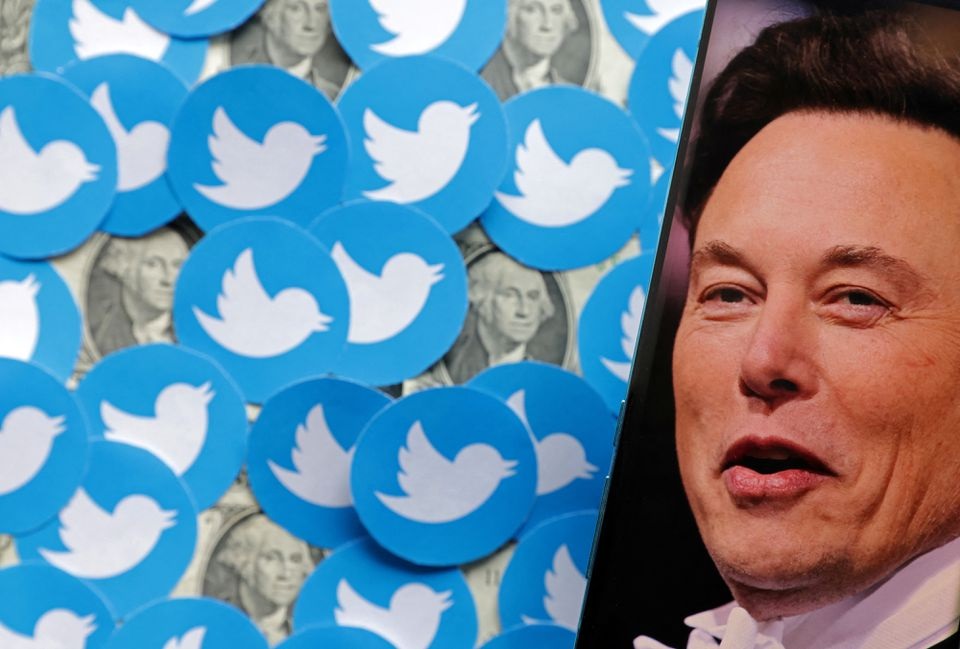
Twitter’s plan to delete inactive accounts and make them available for new users make no strategic fundamental sense, over the long-term, and every user should see those calls as weak: “Twitter CEO Elon Musk has announced the platform will begin purging accounts that have been inactive for years, adding a warning that follower counts could drop”. Yes, if you are a global town square, you must be open to archive history, and  part of doing that is making sure that the past can live in the present.

Twitter should kill the idea, period. They archived official  tweets of the Obama Presidency. Yes, that account is also inactive. Would you delete it just because it is not tweeting? What of those who had gone to touch the face of heaven?

 Elon Musk should pause this latest development for the health of Twitter, an innocent blue bird, that seems stressed these days.

Twitter CEO Elon Musk has announced the platform will begin purging accounts that have been inactive for years, adding a warning that follower counts could drop, TechCrunch writes. Earlier this year, The New York Times reported that the company was considering auctioning them off to increase revenue, as some accounts may include coveted names newer users would like to use. Currently, Twitter’s policy requires users to sign in every 30 days to maintain their handles, but this latest development raises questions about what will happen to accounts held by people who have passed away. Musk had previously tweeted that Twitter could free up to 1.5 billion usernames.

Comment on Feed

Comment 1: Indeed Elon should reflect on the importance of not deleting data….

“Data is a precious thing and will last longer than the systems themselves.” – Tim Berners-Lee, inventor of the World Wide Web.

“Deleting data is like burning bridges behind you, it may feel good at the moment but it will limit your options in the future.” – Unknown

“Data is the new oil. It’s valuable, but if unrefined it cannot really be used.” – Clive Humby, British mathematician and entrepreneur.

“The price of light is less than the cost of darkness.” – Arthur C. Nielsen, founder of ACNielsen Corporation.

“To be data-rich and insight-poor is worse than being data-poor and insight-poor.” – Doug Laney, data expert and author.

Africa Records $1.26 Trillion in Mobile Transactions in 2022

0

The African continent hit a new milestone in mobile money transactions after it recorded $836.5 billion in transaction value in 2022, which was about two-thirds of the global transaction value at $1.26 trillion.

The transaction value is a significant increase from previous years, which grew by 22% between 2021 and 2022, from $1 trillion to around $1.26 trillion. However, the share of cash-based transactions in the overall transaction mix declined, with cash-in and cash-out transactions dropping nearly two percentage points. This is due to a significant rise in digital transactions, particularly interoperable bank transfers, and bill payments.

Registered mobile money accounts grew by 13% year on year, from 1.4 billion in 2021 to 1.6 billion in 2022. This can be attributed, in part, to regulatory changes in Sub-Saharan Africa, particularly in Nigeria and Ethiopia where mobile money adoption rose rapidly.

Also, the number of mobile money agents grew from 12 million in 2021 to around 17 million in 2022, a staggering 41% year-on-year increase. Much of this growth was in Nigeria where a liberalized regulatory regime has led to an increase in MMPs.

According to a GMSA report, in West Africa, the transaction value recorded was $277 billion, in North Africa $4.7 billion, in Central Africa $57.6 billion, in East Africa $491.8 billion, and in Southern Africa transaction value recorded was $5.3 billion.

Mobile money adoption in Africa in West Africa last year had the highest number of new accounts of all sub-regions worldwide. Within West Africa, Côte d’Ivoire, Ghana, and Senegal have been mobile money leaders, followed closely by Benin, Burkina Faso, and Mali. Between 2020 and 2022, these countries were the main drivers of growth in the region. 

Data from the nationally representative 2022 GSMA Consumer Survey shows that access and usage of mobile money in Nigeria have grown since the recent PSB launches. Among all adults that are aware of mobile money and have used a mobile phone, mobile money account ownership has grown from 16% to 22% in the last year. Of all adults with a mobile money account, 88% have one registered in their name.

Speaking on the growth of mobile money in different regions across the globe, the DG GSMA Mats Granryd said,

The habit of using digital payments, enforced by the pandemic, has stuck, leading to mobile money activity growth outstripping new registrations in many countries. Some of the key contributors to the growth of mobile money in the past few years have been regulatory changes in large markets. In Nigeria, for example, new licenses have seen many new mobile money players emerge, and with this a 41% growth in the number of registered agents. Not only has this created employment for millions of new agents, but mobile money services are now accessible to more people in Africa’s largest economy.”

As the world moves towards a post-COVID era, mobile money services have continued to show resilient growth. The growth experienced in 2020 and 2021 could be attributed to pandemic-induced policy and regulatory measures, such as cash transfers and salaries being paid digitally. However, the continued rise in bulk disbursement values shows that mobile money use has been sustained beyond the peak of the pandemic.

After Exiting Transcorp, Otedola Accuses Tony Elumelu of Backstabbing

0

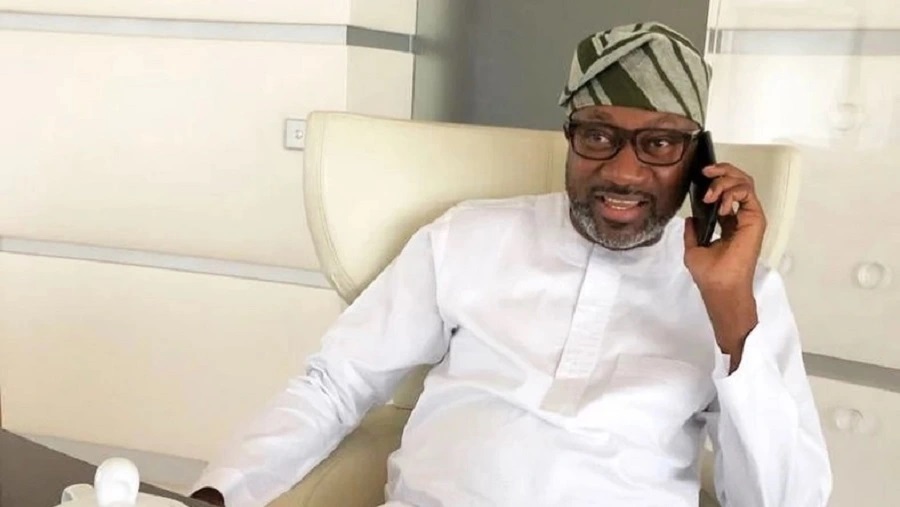
Weeks after Femi Otedola acquired 6% of Transcorp, which triggered a scramble for the conglomerate’s shares as they doubled within weeks, the billionaire investor has issued a statement, shedding light on the events that led to some the decisions surrounding the deal, which became a notorious topic last month.

Recall that Tony Elumelu, via his special purpose vehicle, Heirs Holdings, quickly increased his stake in Transcorp to 25.5%, cementing his place as the company’s biggest shareholder. This was after Otedola agreed to sell his entire 6% stake to Heir Holdings.

While there has been a lot of media speculations about what really transpired between the billionaires, Otedola’s statement on Monday reveals that there is more to the story than people know. He talked about his business relationship with Elumelu, dating back to 2005, and the motive behind his move to acquire Transcorp for N250 billion.

He said Elumelu had double-crossed him in 2012, after he informed the UBA chief of his intention to go into power business, specifically the Ughelli Power Plant.

Read the full statement below:

“In 2005, while Tony was the Managing Director of Standard Trust Bank he approached me to get funds to acquire UBA. I enthusiastically gave him $20 million, which was N2 billion at that time to buy the necessary shares in UBA for the acquisition. After a short period of time, the share price moved up and I decided it was a good moment to sell and get out of the bank. However, Tony appealed to me to hold on to the shares as he was convinced that there were future prospects – so I kept the shares.”

“I became Chairman of Transcorp Hotel in 2007 with a shareholding of 5% and unknowingly Tony gradually started buying shares quietly.”

“By the following year in 2008, I went bankrupt in Nigeria. Tony proceeded to take my shares in UBA to service the interest on my loans and he also took over my shares in Africa Finance Corporation, where I was the largest shareholder.”

“Shortly after, Albert Okumagba informed me that an American firm wanted to acquire my shares in Transcorp, which I then agreed to sell. However, this supposed American firm turned out to be Tony Elumelu. The revelation of this prompted me to resign as Chairman of the hotel.”

“Years later in 2012 Tony said he wanted to see me so we met in my office where I had previously had a meeting with foreign investors who had not yet departed the premises. Curious to know, he asked what sort of meeting I had had and I disclosed that I wanted to go into the power business, specifically Ughelli Power Plant. Tony quietly went ahead to bid for Ughelli and he outbid me by offering to buy the plant for $300 million.”

“And as some would say: the rest is history.”

“Fast forward to the present…”

“I offered to buy Transcorp Plc for N250 billion, but unfortunately, my offer was rejected. My goal was to maximize the company’s potential as a Nigerian conglomerate with a market cap of at least N2 trillion instead of the current N40 billion, but it seems some shareholders have a different vision.”

“As a businessman, I believe in healthy competition and market dynamics. Two captains cannot man a ship, and I respect the majority shareholder’s decision to buy me out. This is the nature of the game.”

“But let me be clear: my offer was made with the best intentions for Transcorp Plc and its shareholders. I saw an opportunity to unlock the company’s full potential and create value for everyone involved.”

“It’s important for investors to understand that free entry and free exit are crucial to healthy markets. The scramble for shares after my acquisition is a testament to the value that Transcorp Plc can offer, and I hope the company continues to thrive under new leadership.”

“My message to Transcorp Plc and its shareholders is this: I remain committed to the growth and success of Nigerian businesses, and I will always be looking for ways to create value for all stakeholders. Stakeholders are unfortunately always shortchanged by getting stipends while the owners and managers of the business live a jet-set lifestyle, which is detrimental to the stakeholders. Thank you for the opportunity to engage in this exciting chapter of Transcorp’s history.” Femi Otedola

Meanwhile, Transcorp power led by Elumelu has won the bid to take over Abuja Electricity Distribution Company (AEDC), according a statement issued by Vice-President Yemi Osinbajo on Tuesday.

“At the meeting of the National Council on Privatization (NCP), the council approved Transcorp Power consortium as the preferred bidder of the acquisition of the Abuja Distribution Company,” he said at the commissioning of the Afam 3-fast power plant in Oyigbo LGA, Rivers state.

This means that Transcorp Power has been delisted from the routine evaluation and monitoring of the Bureau of Public Enterprises (BPE), underlining a milestone for the company.