DD
MM
YYYY

PAGES

DD
MM
YYYY

spot_img

PAGES

Home Blog Page 4177

SBM Intelligence Report Reveals 84.51% of Nigerians Were Affected by The CBN Naira Redesign Policy

0

A recent report by research firm SBM Intelligence revealed that 84.51% of Nigerians were affected by the Central Bank’s naira redesign policy which led to a cash crunch in the country.

The report which was titled “Strapped: Impact of the Cash Scarcity on Individuals and Businesses”, highlighted the impacts of the naira redesign policy and how it affected Nigerian citizens.

The report revealed that 38.03% of people interviewed fell between the age bracket of 40-49, followed by the 30-39 age range, which comprised 36.62% of those interviewed. The age category represented in the survey was those who were 50 and older, at 9.86%, while the youngest age bracket is 18-29, comprising 15.49% of people surveyed.

From the total number of people interviewed, 84.51% revealed that the CBN’s naira redesign policy impacted them, while 15.49% of people said they were indifferent or not affected.

Following the scarcity of cash, Nigeria’s agricultural sector suffered from depressed spending, which affected farmers’ ability to pay for labor and resulted in reduced production. Also, trade volumes were negatively impacted as most transactions in rural areas and the country’s informal sector are cash-based.

To deal with the scarcity, traders resorted to reducing the value of their produce. Some sellers offered discounts to customers paying with cash, whilst increasing the price for those paying with transfers. Livestock sellers, including those who use CFA francs, preferred naira notes to bank transfers. In some states like Benue, traders bartered their goods to meet their needs. Some sellers had to swap their products for reduced value to get much-desired produce in return.

In the area of transportation and feeding, the impact of cash shortage was heavily felt, as most transportation workers had to resort to the use of PoS machines to ease payment for their passengers. Food vendors slashed prices and battered their goods to obtain other essentials.

SBM report revealed that employed Nigerians affected by the cash shortage were 78.38%. Those who were entrepreneurs, traders, or self-employed overwhelmingly reported being affected by the cash crunch were 96.15%. Meanwhile, 13.51% of the employed class said they were unperturbed by the cash squeeze.

The 18-29 age bracket were the least who were able to access cash, with 45.5% of them unable to get the naira, during the federal government botched currency swap, followed by those aged 30-39 with 34.62% of them failing to access the naira.

With one-quarter of the activities contributing to the size of the economy in rural areas, much of the Nigerian trade volume, largely cash-based also takes place in these places. Following the shortage of cash to fuel transactions, electricity, transportation, and logistical costs, Nigerian manufacturers were forced to produce less and hold a high stock of unsold goods.

The CBN’s flawed attempt to introduce new banknotes within a short time devastated businesses and individuals, meanwhile, the policy failed to achieve its stated goals of curbing money laundering, accelerating electronic payments adoption, and abating inflation. This was reflective not only of the institutional shortcomings of the regulator and the government printing company but also of the fundamental
the flaw in the design and implementation of the policy.

Few experts in the country have disclosed that whatever may have been the benefits of the naira redesign policy have been canceled out by the economic and social waste and gridlock it has created, noting that Nigerians are still suffering from it, after the presidential election has come and gone.


Aave (AAVE) In Decreases 23.4% as Investors Move Forward with Sparklo (SPRK)

0

With the recent collapse of numerous centralized banks and the high level of distrust that investors and traders have in traditional FIAT currencies due to the high level of inflation, everyone is beginning to look into the Web3 space for alternatives through which they can diversify their holdings.

But while some investors might head towards the direction of making investments within well-established projects like Aave (AAVE), others might have a higher level of risk tolerance and begin investing in presale stage projects that have historically provided investors and traders with the most significant returns.

Sparklo (SPRK) offers a 75% bonus during its second stage presale

Sparklo is a new and innovative platform that has the objective of opening the precious metals space and enabling anyone the opportunity to begin investing in silver, gold and platinum through the usage of blockchain technology. With Sparklo, users have the opportunity to buy fractions of NFTs that are backed by the physical asset itself or just buy an entire NFT, after which they can get the physical, underlying asset delivered to them anywhere.

The Sparklo cryptocurrency is currently undergoing Stage Two of its presale and at this point in time, it trades at just $0.022, with a 75% bonus available on all purchases only today. SPRK is built on top of Ethereum and follows the ERC-20 token standard.

When we look at the security behind Sparklo, the platform has been fully audited by the InterFi Network and alongside that, the team has locked the liquidity for a total of 100 years. Moreover, the team also completed a KYC verification process. With all of this in mind, we believe that Sparklo will become one of the top investments for 2023, especially after analysts predicted a climb of 1,500% in its value throughout the upcoming months.

>>>> BUY SPRK TOKENS <<<

Aave (AAVE) decreased in value by a total of 23.4% in the last month

Aave (AAVE) held a competition at the ETHGlobal event in Lisbon, Portugal. Specifically, the Developer Relations Engineer of Aave (AAVE), Jessica Glover, took to Twitter and recorded a video going over all of the news. Up to $10,000 got rewarded from Aave (AAVE)  Grants and Glover ran a worship service from Workshop Room 2. Aave (AAVE) Grants DAO is the community-led grants program that funded the rewards.

Despite the announcement of this massive event, the value of the Aave (AAVE)  cryptocurrency has been in decline. On May 15, 2023, Aave (AAVE)  traded at $63.81. In the last 30 days, Aave (AAVE) decreased in value by 23.4% and in the last week alone, the altcoin saw a decline of 4%.

Find out more about the presale:

  • Buy Presale: https://invest.sparklo.finance
  • Website: https://sparklo.finance
  • Twitter: https://twitter.com/sparklo_finance
  • Telegram: https://t.me/sparklofinance

Sparklo (SPRK)’s Stage Two Presale Offers 75% Bonus and Casper (CSPR) Traders Begin Diversifying After Dip

0

Cryptocurrency enthusiasts are consistently on the lookout for new, exciting projects through which they can gain the ability and opportunity to diversify their holdings and experience solid returns. While initially, well-established projects like Casper (CSPR) gained a high level of appeal, as of recently, even those have begun to decline in their value.

As a result, some of the savviest investors out there have begun diversifying their holdings with projects that are in the presale period. One of the most notable projects to gain a significant level of attention is Sparklo.

Sparklo (SPRK) introduces fractional NFT ownership of precious metals

Sparklo will enable anyone the opportunity to gain fractional ownership of precious metals, such as silver, gold and platinum, all through the usage of blockchain technology. There are non-fungible tokens (NFTs) that are minted and fractionalized on top of the platform, which represent the real-world asset. If an investor buys a fraction, they get exposure, but if they buy the entire NFT, they can get it delivered to them anywhere.

The Sparklo platform is also secure, as it has been audited by the InterFi Network and its team completed a KYC procedure. Moreover, the team will also lock the liquidity for 100 years. The network is built on top of Ethereum and the native SPRK token follows the ERC-20 token standard.

During the stage two presale stage, the value of the SPRK token is at just $0.022. During this point in time, the presale is also offering a 75% bonus on any purchases made for the SPRK token today and analysts predict a 1,500% jump in its value by the end of December 2023. As a result, Sparklo represents one of the best investment altcoins for 2023 and anyone can buy it using the links below.

>>>> BUY SPARKLO TOKENS <<<

Casper (CSPR) sees massive 17.6% decline in value

The Casper (CSPR) team went over how anyone can improve blockchain governance and decentralization with Casper (CSPR)’s weighted key management feature, as accounts on the network can associate other key pairs through a multi-signature scheme for sending transactions. Casper (CSPR) also made an announcement on May 14, 2023, that the consensus and transaction validation procedure is now open to everyone in a permissionless blockchain network. Moreover, through being permissionless, Casper (CSPR) enables decentralization, transparency and value exchange between participants.

Despite this, the value of the Casper (CSPR) cryptocurrency has been in decline. On May 15, 2023, the altcoin traded at $0.050089, indicating that it decreased in value by 17.6% in the last two weeks.

Find out more about the presale:

  • Buy Presale: https://invest.sparklo.finance
  • Website: https://sparklo.finance
  • Twitter: https://twitter.com/sparklo_finance
  • Telegram: https://t.me/sparklofinance

Theorising the Interplay of Images, Data and Power from Military and Platform Perspectives

0
Source: Dreamstime.com

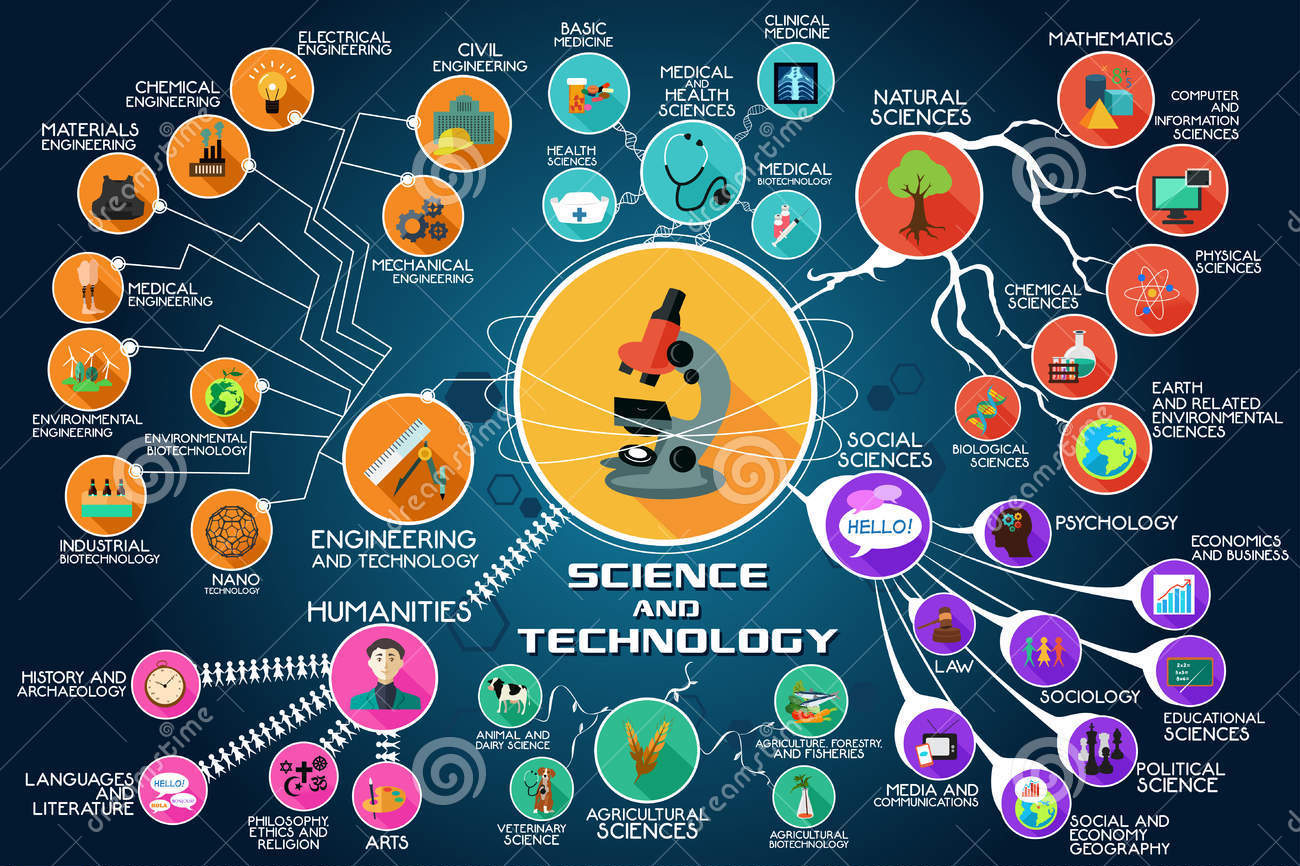
Since the creation of man and objects several years ago by God, the world has been awash with different forms of data collected, analysed, used, and transformed into different values by man. In all the stages expected for sourcing and transforming data, some individuals and organisations dominate the stages because of the types of power they have. In this piece, our analyst uses Images of the World and the Inscription of War, a 1989 film by Harun Farocki that presents a free-associative cinematic view on technology, perception, and morality, and a recent article by Anne MacKenzie and Anna Munster on how digital platforms curate and display images to users for an examination of the interplay of images, data, and power on digital platforms.

While Farocki leverages the military as the main actor in how various images during World War II were collected, transformed, and utilised, MacKenzie and Munster use digital platforms to establish how technological devices and architecture are assisting platforms in today’s data curation from users and reorganise the data in ways to reveal different perceptions from the users. MacKenzie and Munster argue that digital platforms create “image ensembles,” which are assemblages of images that are organised by algorithms and displayed to users based on their preferences and behaviours. In both contexts, there are similarities and differences in the existing power imbalance as well as ideologies.

In the film, the military and state have different functions. The power of the military is primarily represented through the images of tanks, soldiers, and military operations, which is evident in the opening sequence of the film, which shows tanks moving across the water and barren landscape, accompanied by the sound of their engines and the clanging of metal. The soldiers are shown in uniform, carrying weapons, and executing military manoeuvre with precision. However, the possible attention expected from the inhabitants of the land, watching the military officers while walking and moving their artillery, is synonymous with the “platform seeing’ concept proposed by MacKenzie and Munster, which refers to how users interact with images on digital platforms, such as scrolling, clicking, liking, and sharing. The authors note that this type of seeing is characterised by “invisualities,” which are ways in which certain images and perspectives are rendered invisible or marginalised by the platform’s algorithms.

The marginalisation could be further situated within the film’s power of the state, which is denoted through the images of government officials and bureaucratic institutions such as SS War Industries, commandants house, registration building, military headquarters, execution wall, gas chamber, medical experiment blocks, and penal barracks, which are expected to perform certain tasks with precision, like what is expected of Google’s, Facebook’s, and Amazon’s algorithms in today’s digital world.

Through the use of symbols and propaganda, ideology’s power is portrayed, which encourages soldiers to embrace state ideology and view their adversaries as evil. The forceful inculcation of state ideology, as the film exemplifies, is in tandem with the authors’ views about platform seeing as “blind seeing,” which influences algorithmic invisibilities and biases of platforms. As the authors posit, ideological power has already established a power differential among military officers and between the military and the state. On the other hand, the invisibilities and biases on digital platforms are reinforcing power structures and social inequalities between the owners and the users in today’s digital world.

Since the film and article demonstrate how those who hold the powers use different approaches to convey their ideas or messages to the inhabitants of the land (during the war) and the users, objectivity is hard to find in the images they handpicked. For example, in the film, the make-up for the women before photography represents a misrepresentation of ‘truth’.

Meanwhile, the dominance of ‘visual’ and the sense of ‘seeing’ in navigating the world today lies in the ability to use optics, cameras, screens, and artificial intelligence (AI), which has enabled humans to see objects and phenomena that are too small or far away to be seen with the naked eye. However, the dominance of visual perception is not universal across cultures, and some cultures may prioritise different forms of sensory perception or ways of knowing.

Some of the techniques and technologies used in the film for image curation and transformation into valuable data raised ethical and social questions about the use and control of visual information during the war. For instance, drawing and filming the nakedness of women raises stigmatisation and subjugation issues. In today’s world, this is also worth thinking about as platforms continue their aggressive deployment of artificial intelligence for data curation and commodification. We have seen how digital platforms helped the virality of users’ spreading the nudity of another user through AI.

Government’s Plan to Disburse $800m World Bank Loan to “Poor” Nigeria will Worsen Inflation – Yemi Kale

0
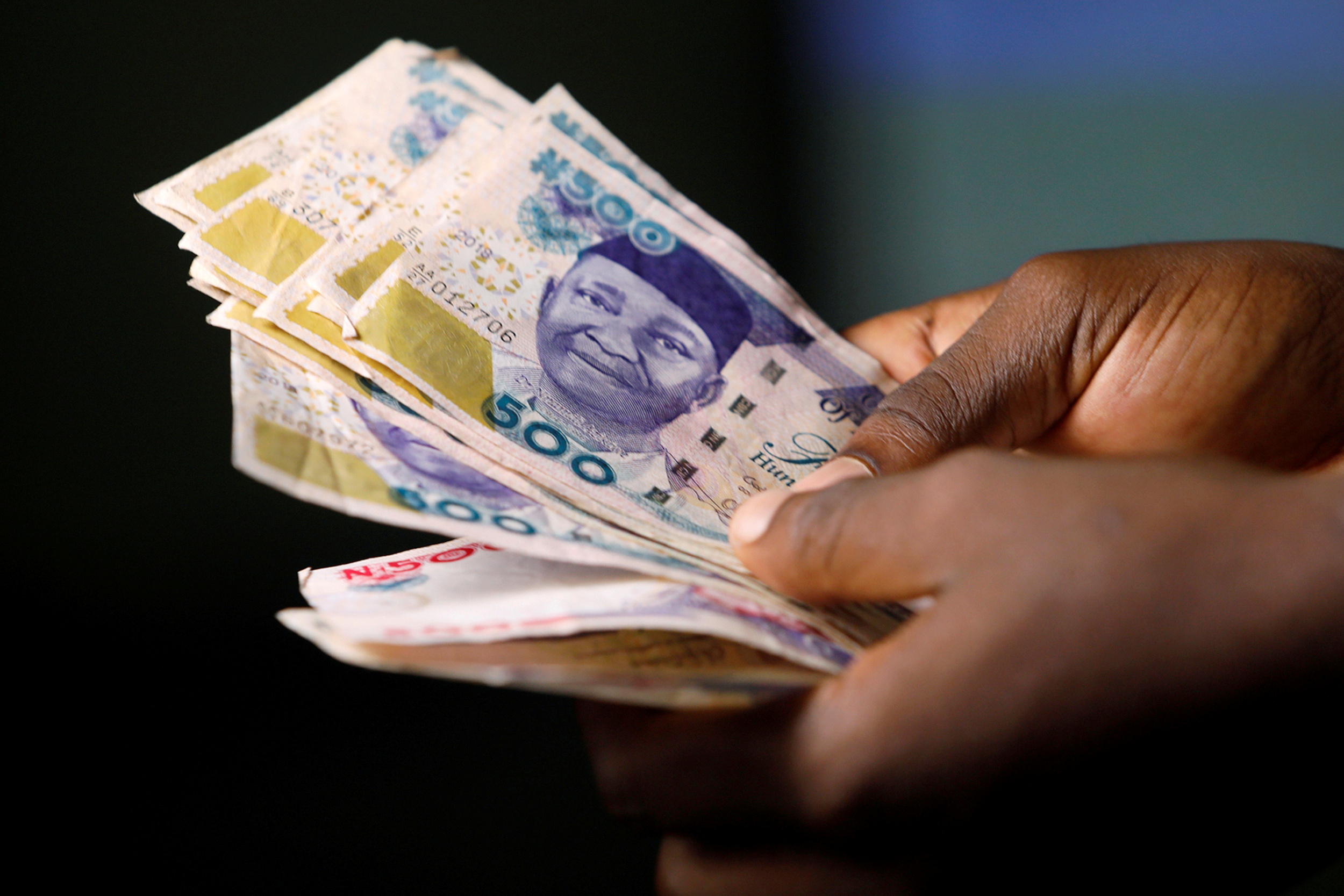
Nigerian naira banknotes are seen in this picture illustration, September 10, 2018. REUTERS/Afolabi Sotunde/File Photo

Former head of the Nigerian Bureau of Statistics (NBS), Dr. Yemi Kale, has voiced his concern over the federal government’s move to secure a $800 million World Bank loan to be disbursed among poor Nigerians.

Kale, who is now a partner, Chief Economist, and Head of Research at KPMG Nigeria, said the move may compound the nation’s inflation.

The move by the federal government to secure additional loan days before President Muhammadu Buhari leaves office is facing heavy backlash.

The Socio-Economic Rights and Accountability Project (SERAP) , among other concerned Nigerians, has asked the World Bank to decline the loan request as Buhari has no justification for seeking the loan. The non-governmental organization said there is a transparency concern to be addressed and asked the World Bank to wait on the incoming administration.

Kale’s statement came on the heels of a report by the NBS that headline inflation has climbed 22.22% in April.

Also, the budget office lamented last week that Nigeria now has a limited borrowing space due to its poor debt-to-revenue ratio, which will spell trouble for the country if it exceeds its limits.

Against this backdrop, Kale said borrowing $800 million to be disbursed among 10 million poorest households in the country will further stoke inflation.

Buhari had approached the Senate, seeking approval for the loan which he said will be disbursed to cushion the effect of fuel subsidy removal, previously scheduled for June, 2023.

Kale said that besides exacerbating Nigeria’s public debt stock, another challenge with the loan will be how to properly identify the 10 million households.

“Minus the obvious debt issue and the inevitable challenges with properly determining, targeting, and disbursing to the 10 million “poorest” households, this could worsen inflation. Why not more non-cash-based palliatives? Eg., tech-based transport vouchers or health/education support, etc,” he said.

Given how the Central Bank of Nigeria has consistently raised interest rate in the past months, Kale said it is now obvious that the country’s inflation is not driven by demand but by the cost of transportation.

“Both inflation and the money supply appear to have been unaffected by MPR since September 2021. Rather, inflation has surged and the money supply is unbothered, suggesting the drivers of inflation are not demand. Seems to be more transport cost-driven. We are just increasing finance costs and squeezing growth,” he said.

The former Statistician-General of Nigeria advised the government to deploy the fund to issue tech-based transport vouchers to Nigerians or use the fund for education or health support rather than distributing cash.

There is concern that the loan, if approved, will never reach the “poorest” Nigerian households as claimed by the federal government as it will be diverted by corrupt government officials.