DD
MM
YYYY

PAGES

DD
MM
YYYY

spot_img

PAGES

Home Blog Page 4177

Pakistan Announces Ban on Crypto and Blockchain Related Activities

0

Pakistan has recently announced its decision to ban cryptocurrency services and trading in the country, citing the need to prevent illegal digital currency transactions and comply with the Financial Action Task Force (FATF) conditions.The ban was partly in response to concerns over terrorism financing and money laundering, as Pakistan currently faces an economic crisis with high inflation and a growing debt burden.

The ban was announced by Minister of State for Finance and Revenue Aisha Ghaus Pasha, who said that cryptocurrencies will never be legalized in Pakistan. She said that the State Bank of Pakistan (SBP) and the Ministry of IT & Telecom have started work to block cryptocurrency services and websites dealing with the instrument in Pakistan. The Senate Committee on Finance also directed authorities to prohibit the use of cryptocurrencies in Pakistan.

The ban has sparked mixed reactions from the crypto community and the general public. Some have welcomed the move as a necessary step to protect the country’s financial system and national security, while others have criticized it as a backward and oppressive measure that stifles innovation and freedom.

According to some experts, the ban will have a negative impact on the country’s economy and society, as it will deprive people of an alternative and decentralized form of money that can hedge against inflation and currency devaluation. Pakistan’s rupee has slid 3.3% to an all-time low against the dollar of 300 per greenback last week, amid political turmoil and corruption allegations against former Prime Minister Imran Khan.

Moreover, the ban will also affect the growing number of crypto enthusiasts and investors in Pakistan, who have been using digital currencies as a way to access global markets and opportunities. According to Zeeshan Ahmed, country general manager at Rain Financial, a Gulf-based trading platform for cryptocurrencies, the annual trading volume for Pakistan-based wallets has gone up to $25 billion, up from $18 billion to $20 billion a year ago.

The ban will also hamper the development of the crypto industry and ecosystem in Pakistan, which has seen some promising initiatives and projects in recent years. For example, PakCoin, a local cryptocurrency launched in 2015, claims to have over 100,000 users and merchants across the country. Another example is Urdubit, Pakistan’s first bitcoin exchange, which was founded in 2014 and shut down in 2018 due to regulatory uncertainty.

The crypto ban in Pakistan is not a new phenomenon, as the country has been issuing warnings and restrictions on digital currencies since 2015. However, the latest announcement seems to be more definitive and sweeping than before, leaving little room for hope or compromise. The crypto community in Pakistan is now facing a dilemma: whether to comply with the ban and risk losing their assets and opportunities, or to defy it and risk facing legal consequences and penalties.

How Bitcoin Pizza Came into Existence

0

Bitcoin is a revolutionary digital currency that has changed the way people transact and store value. But do you know how it all started? One of the most iconic events in Bitcoin’s history is the Bitcoin Pizza Day, which marks the first time someone used Bitcoin to buy a real-world good.

Bitcoin Pizza Day is a reminder of how far Bitcoin has come from its humble beginnings to its current status as a global phenomenon. It is also a celebration of the innovation and creativity of the Bitcoin community, which continues to push the boundaries of what is possible with this technology.

The story goes back to May 22, 2010, when a Florida programmer named Laszlo Hanyecz posted on a Bitcoin forum that he was willing to pay 10,000 bitcoins for two pizzas delivered to his house. He wrote: “I’ll pay 10,000 bitcoins for a couple of pizzas… like maybe 2 large ones so I have some left over for the next day. I like having left over pizza to nibble on later.”

At that time, Bitcoin was still a new and obscure technology, with no established market value or widespread adoption. Hanyecz had mined some bitcoins on his computer, but he had no idea what to do with them. He thought it would be cool to exchange them for something tangible, like food.

Luckily, someone took up his offer and agreed to order two pizzas from Papa John’s and deliver them to Hanyecz in exchange for 10,000 bitcoins. The pizzas cost about $30, which means Hanyecz paid around $0.003 per bitcoin. The person who accepted the deal was a British man named Jeremy Sturdivant, who went by the nickname “jercos” on the forum.

The transaction was completed and Hanyecz posted a picture of the pizzas on the forum, confirming that he had received them. He wrote: “I just want to report that I successfully traded 10,000 bitcoins for pizza. Thanks jercos!”

The event was recorded on the Bitcoin blockchain as transaction hash ID a1075db55d416d3ca199f55b6084e2115b9345e16c5cf302fc80e9d5fbf5d48d.

Little did Hanyecz know that his pizza order would go down in history as the first documented case of Bitcoin being used to purchase a physical good. The day of the transaction, May 22, is now celebrated as Bitcoin Pizza Day by the Bitcoin community around the world.

The significance of Bitcoin Pizza Day is not only that it demonstrated the potential of Bitcoin as a medium of exchange, but also that it showed how much Bitcoin has appreciated in value over time. The 10,000 bitcoins that Hanyecz spent on the pizzas are now worth over $200 million at the current market price of around $20,000 per bitcoin.

The value of the 10,000 bitcoins used in the transaction has also skyrocketed over time, reaching hundreds of millions of dollars at current prices. This makes the pizzas arguably the most expensive ones ever bought in history. However, Hanyecz does not regret his decision and has said that he enjoyed the pizzas and was happy to be part of the early days of bitcoin.

That means Hanyecz paid about $10 million per pizza, making them the most expensive pizzas ever bought. Of course, Hanyecz did not regret his decision, as he later said: “It wasn’t like Bitcoins had any value back then, so the idea of trading them for a pizza was incredibly cool.”

The bitcoin pizza transaction has become part of the folklore of cryptocurrency and is celebrated every year on May 22 as Bitcoin Pizza Day. On this day, bitcoin enthusiasts around the world commemorate the event by buying goods (often pizza) with bitcoin or other cryptocurrencies. Some also use the occasion to reflect on how far bitcoin has come since its inception and how much potential it still has.

The bitcoin pizza transaction may seem trivial today, but it was a milestone in the history of cryptocurrency. It demonstrated that bitcoin could be used as a medium of exchange for goods and services, not just as a store of value or a speculative asset. It also showed that bitcoin could facilitate cross-border transactions without intermediaries or fees. Moreover, it inspired other people to experiment with using bitcoin for everyday purchases and created a sense of community among early adopters.

Tesla and Musk Return To Business 101 – Advertising Is Part of the Soul of Business

1

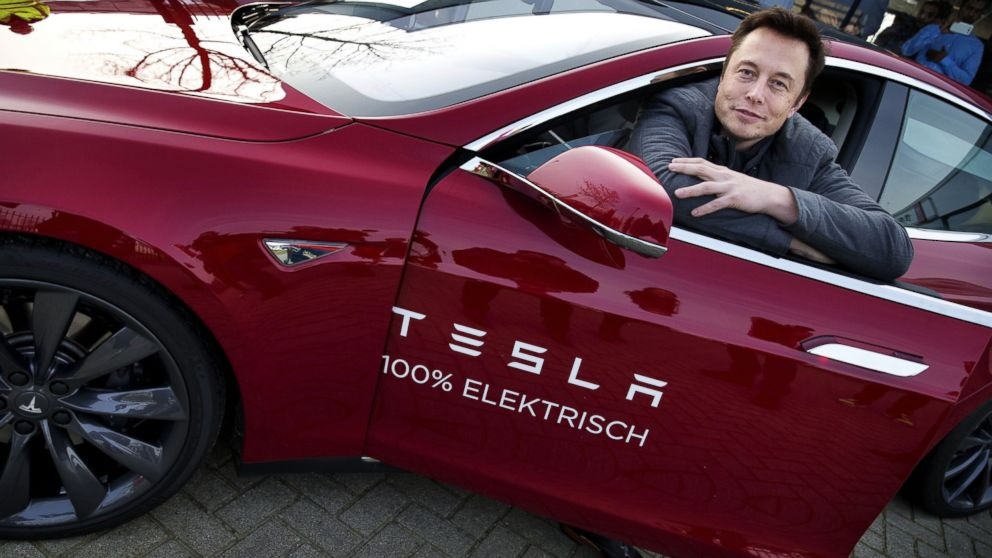
For years, Tesla has not done traditional advertising. Yes, you have not seen a Tesla ad on a TV. But that is going to change, according to Elon Musk: ‘“He said that in his experience as CEO of Twitter, a company that is highly dependent on advertising, has shown him that “advertising is awesome, and everyone should do it.”’

Tesla CEO Elon Musk said the company will try conventional advertising, marking a shift from the electric vehicle maker’s approach to sales.

Musk said this on Tuesday during the automaker’s 2023 annual meeting of shareholders. The shift is coming amid growing competition in the EV market and dwindling sales that have seen Tesla lost its dominant position in markets like China.

Tesla is known for not paying for conventional advertising, relying on other avenues of marketing to promote its products. The automaker uses emails, word-of-mouth and referrals in addition to Musk’s tweets, which promote Tesla models, to reach a large audience.

Why not? If you do not advertise your products, you may not be fair to those who do not know your product exists. In other words, even though you are not closing deals, you are also not helping people, since you are depriving them of the opportunity to know about a great product. Tesla has great features that if people know about them will get them to patronize the brand.

In the Igbo Nation, the market women will say, “ahia oma na-ere onwe ya” [ a good product sells itself] but check carefully, the women have paid extra fees to be at the junction in the market. In all my grandmother’s “shades” (minimized stores), in Oriendu Market in Ovim, she tried to be at intersection- or T-junctions.

There is a reason for that, being at a  T-junction means you are going to lead into the product category from one side of the market. Being in the middle is not good. In other words, the women actually pay more money to the owners of the shades and stores to position their garri, yam, etc before customers – and that is an advertising awareness!

And sure, beyond advertising, the product has to work. Indeed, the product selling itself means unlocking referrals from the current customers. But those initial customers need to know that your product exists and that is where advertising comes into play.

This playbook will help Tesla! Welcome Tesla to traditional advertising which has been called the “soul of business”

Tesla Will Try Conventional Advertising – Elon Musk

0

Tesla CEO Elon Musk said the company will try conventional advertising, marking a shift from the electric vehicle maker’s approach to sales.

Musk said this on Tuesday during the automaker’s 2023 annual meeting of shareholders. The shift is coming amid growing competition in the EV market and dwindling sales that have seen Tesla lost its dominant position in markets like China.

Tesla is known for not paying for conventional advertising, relying on other avenues of marketing to promote its products. The automaker uses emails, word-of-mouth and referrals in addition to Musk’s tweets, which promote Tesla models, to reach a large audience.

“Our owners become our ambassadors,” Musk told Advertising Age in 2010 when Tesla was celebrated as one of “America’s hottest brands.”

Tesla’s key to successful unconventional advertising is its reliance on the quality of its products. This, boosted by word-of-mouth from early customers, helped the company to its status as a leader in the EV industry.

Tesla’s market value has plummeted by more than half since April last year – a development largely attributed to Musk’s acquisition of Twitter and he spending more time running the social media company while paying less attention to Tesla.

China’s BYD recorded the highest sales in 2022 with sales of 1.86 million electric cars while Tesla was left a distant second with 439,770 China-made vehicles delivered to locals. Tesla announced price cuts for some of its car models across its markets as the downturn in sales mounts.

Musk has also lost his place as the world’s richest man to Louis Vuitton’s Bernard Arnault as Tesla shares Plunged.

Against this backdrop, Musk is willing to give traditional advertising a try as Tesla pushes to regain its dominance in China and other EV markets.

“We’ll try a little advertising and see how it goes,” TechCrunch quoted Musk as saying Tuesday in response to a question from Kevin Paffrath, AKA Meet Kevin, a YouTuber and financial analyst whose ETF ticker, PP, counts Tesla as its largest position.

Musk agreed with Paffrath that Tesla could advertise features like over-the-air updates that improve airbag deployments, or counter common beliefs that Teslas are “super expensive” when in reality “the starting price for Tesla is below the average car price in the U.S.”

He said that in his experience as CEO of Twitter, a company that is highly dependent on advertising, has shown him that “advertising is awesome, and everyone should do it.”

“I think I hear your sort of larger point, which is that there are amazing features and functionality about Teslas that people just don’t know about, and although there’s obviously a lot of people that follow the Tesla account and my account…it is preaching to the choir, and the choir is already convinced,” he said.

Understanding Smart Contracts

0

Smart Contract is a self-executing agreement that is written in code and deployed on a blockchain network. A smart contract can facilitate, verify, and enforce the terms of a contract between two or more parties without the need for intermediaries or trusted third parties.

Smart contracts were first proposed by Nick Szabo in 1994 as a way to extend the functionality of electronic transactions to the digital realm. He envisioned smart contracts as computerized protocols that could enforce the terms of a contract using cryptography and logic. Since then, smart contracts have evolved with the development of blockchain technology, especially on platforms like Ethereum.

Smart contracts are composed of code and data that reside at a specific address on the blockchain. They can receive and send transactions, store and manipulate data, and interact with other smart contracts. They can also have a balance of cryptocurrency that they can use to pay for their execution.

Smart contracts are executed by a network of nodes that run the blockchain. Each node follows the same set of rules and verifies that the smart contract code is executed correctly and consistently. Once a smart contract transaction is confirmed, it becomes part of the immutable ledger and cannot be changed or reversed.

Smart contracts have many potential applications in various domains, such as finance, supply chain, insurance, healthcare, and more. For example, a smart contract can be used to automate the payment of dividends to shareholders, to track the delivery of goods and services, to manage insurance claims, or to verify the identity and credentials of patients and providers.

Smart contracts are immutable, meaning that once they are deployed on the blockchain, they cannot be modified or deleted. This makes it difficult to fix bugs, update features, or resolve disputes that may arise from the contract execution.

Smart contracts are deterministic, meaning that they will always produce the same output given the same input and state of the blockchain. This makes it hard to incorporate external data or events that may affect the contract logic, such as market prices, weather conditions, or user inputs.

Smart contracts are transparent, meaning that anyone can view the code and the transactions of the contract on the blockchain. This may raise privacy and security issues for some users who do not want their data or activities to be exposed to the public.

Smart contracts are costly, meaning that they consume computational resources and network fees to execute on the blockchain. This may limit the scalability and efficiency of some applications that require high throughput or low latency.

Therefore, smart contracts are not a one-size-fits-all solution for every use case. They require careful design, testing, and auditing to ensure their correctness, security, and performance. They also require a clear understanding of the legal and regulatory implications of using them in different jurisdictions and contexts.