DD
MM
YYYY

PAGES

DD
MM
YYYY

spot_img

PAGES

Home Blog Page 4182

Policing Deviant Musicians in Nigeria

0

In any media system, music is a component that is essential for the full creation of media products, particularly when those products are meant to enliven people through rhymes that deal with a variety of psychological issues and unite them despite cultural and linguistic differences. When this strategy is used, one can say that music nourishes love and sustains the required social cohesion. However, one could say that music turns into a destructive tool in the hands of those who are expected to uphold the norms when the artistes create content and act in ways that are in opposition to the accepted and existing norms.

This position has already been captured in the previous two pieces by our analyst with the examination of what Nigerians have been saying on digital platforms about Seun Kuti’s police assault. As stated in one of the pieces, Nigerians used the incident to reenact similar discourses they expressed some months ago when Habeeb Olawunmi, popularly known as Portable or Dr Zeh, harassed police officers at his clubhouse. Clearly, the majority of people on digital platforms and those who spoke with mainstream media outlets called out the two musicians, labelling them as deviants and disrespectful.

As the conversations continue, our analyst discovers that different moral panics are being created by moral entrepreneurs. One of the moral panics observed in several tweets is the idea that Seun Kuti is a danger to society because of his supposed disrespect for law enforcement. This is evident in tweets such as “Seun Kuti is a menace to society; he has no respect for law and order” and “Seun Kuti should be ashamed of himself for slapping a police officer; this is unacceptable behaviour.” The focus is on Seun Kuti’s actions as a threat to society rather than the actions of the police officer.

Similarly, in relation to Portable’s police assault, there is also a moral panic that focuses on the supposed threat he poses to society. This is evident in tweets such as “Portable is a menace to society; he has no respect for authority” and “Portable’s behaviour is unacceptable and should not be tolerated.” Specifically, both Seun Kuti’s and Portable’s actions are being framed as deviant and threatening to society, which is leading to the creation of moral panics by the users. However, it is essential to consider the larger social and political context in which these incidents occurred and question the power dynamics at play between law enforcement and citizens.

A Framework for Policing the deviant musicians

Community Policing: The police should work closely with the communities where musicians live and work to identify and prevent deviant behaviour. This will involve building relationships with community leaders, educating them on what to look out for, and working together to address issues as they arise.

Regular Training: The police should receive regular training on how to deal with musicians and other members of the creative industry. This will include training on cultural sensitivity, de-escalation techniques, and the appropriate use of force.

Accountability: Police officers who violate the rights of musicians should be held accountable for their actions. This will involve a system for investigating complaints, and appropriate disciplinary measures for officers found to have acted improperly.

Collaboration: The police should collaborate with other government agencies, such as the National Council for Arts and Culture, to create guidelines for the conduct of musicians. These guidelines should be reviewed periodically and updated as necessary.

Rehabilitation: Finally, the police should work with musicians who have been found to have engaged in deviant behaviour to rehabilitate them. This will involve counselling, mentorship, and other forms of support to help them reintegrate into society and become positive role models for others.

USSD and Why Nigeria’s Finest Banking Product Must be Saved with Telcos

1

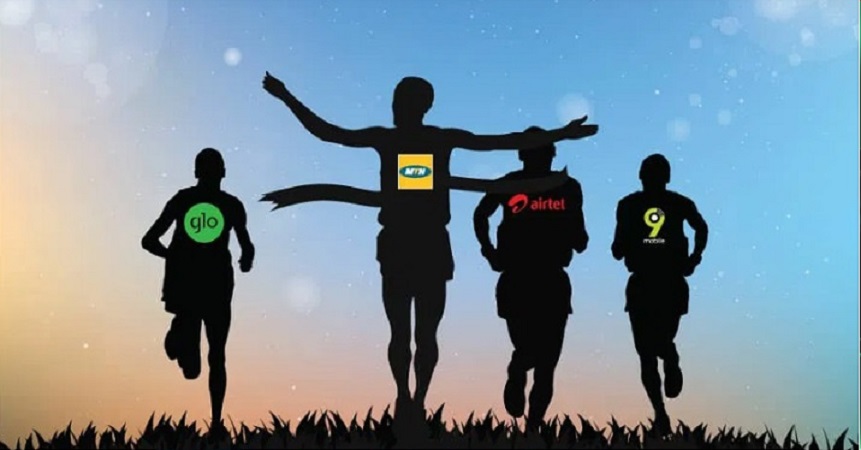
It is a very big paralysis and we hope this does not happen. Yes, “Nigerian mobile network providers will stop their Unstructured Supplementary Service Data (USSD) to banks until the financial service providers clear a total of N120 billion ($259 million) debt they accumulated in about nine years.” 

Good People, when you see Aneke the bird dancing by the roadside, pay attention, someone is playing the drum. The amazing USSD system which has advanced Nigerian banking is possible because of the telcos.  It would be very bad if that drum stops playing; it must not happen. A service level agreement ought to have defined payment and compensation.

The telcos need to be compensated and those comparing the US system with Nigeria do not understand the differences in the two systems. In the US, most phone lines are under contracts, and those not under contracts require that you have credits to receive calls and messages. 

So, if your bank is sending a payment confirmation, you will “pay” to receive it, and that means the telcos are paid by you. In Nigeria, you do not need to have credits to receive calls or messages, creating  an entirely different scenario for the compensation of telcos.

My recommendation? Banks should ask for discounts for regular messaging service and send some money to telcos. Someone has to pay the telcos, but it must be discounted due to the volume involved here. Nigerian telecom users must not be asked to cover these fees since by design, receiving messages in Nigeria have always been free! And initiating USSD transactions largely happen from the banks’ side.

How Can CRM’s Help Streamline Your Business Workflow?

0

Customer Relationship Management (CRM) refers to businesses’ strategies and technologies to manage and analyse their interactions with existing and potential customers. It focuses on building strong, long-lasting customer relationships by understanding their needs, preferences, and behaviours. CRM systems enable businesses to streamline and automate various customer-related processes, such as sales, marketing, and customer service.

By centralizing customer data and providing actionable insights, CRM helps businesses personalize their interactions, deliver exceptional customer experiences, and foster customer loyalty. With effective CRM software monday.com, businesses can enhance customer satisfaction, increase sales and revenue, and gain a competitive edge in today’s customer-centric marketplace.

Customer Relationship Management (CRM) software can help streamline your business workflow by centralizing customer information, automating processes, and providing insights into customer behaviour. The software helps businesses personalize their interactions, deliver exceptional customer experiences, and foster customer loyalty. With effective Customer Relationship Management, businesses can enhance customer satisfaction, increase sales and revenue, and gain a competitive edge in today’s customer-centric marketplace.

Here are some ways as to how CRMs can benefit your business workflow:

Centralized Customer Information
A CRM system centralizes customer information, including contact details, interactions, purchase history, and preferences, into a single database accessible to all departments. This ensures that all teams have access to the same accurate and up-to-date customer data, eliminating the need for manual data entry and reducing the risk of errors.

Automating Processes
A CRM system automates lead generation, lead nurturing, and customer segmentation, freeing up time and resources for other tasks. For example, a CRM can automatically send personalized emails to leads based on their behaviour on your website or social media pages. This automation ensures that leads are nurtured at every stage of the sales funnel, increasing the chances of conversion.

Improved Communication
A CRM system can improve organizational communication by providing a centralized platform for all customer-related activities. Teams can collaborate and share information, eliminating the need for manual handovers and reducing the risk of miscommunication. Moreover, a CRM can integrate with other communication channels, such as email and social media, providing a seamless experience for customers across all touchpoints.

Efficient Sales Processes
A CRM system can help streamline sales processes by providing real-time insights into the sales pipeline, enabling sales teams to prioritize leads and opportunities. A CRM can also automate tasks such as lead scoring and deal tracking, reducing the need for manual intervention and increasing the speed of the sales cycle.

Improved Customer Service
A CRM system can improve customer service by providing a centralized platform for customer interactions. Customer service teams can access customer information and interactions history, enabling them to provide personalized and timely support. Moreover, a CRM can automate tasks such as case assignment and resolution tracking, ensuring that customer issues are addressed promptly.

Accurate Reporting and Analysis
A CRM system provides insights into customer behaviour and business performance, enabling you to make data-driven decisions. A CRM can generate reports on key metrics such as lead conversion rates, sales pipeline velocity, and customer satisfaction, providing a holistic view of your business performance. Moreover, a CRM can integrate with other analytics tools, such as Google Analytics, to analyse customer conduct across multiple channels.

Scalability
A CRM system can scale with your business needs, ensuring that it can accommodate the increasing volume of customer data and interactions. Cloud-based CRMs can handle millions of records and can be accessed from anywhere, making them ideal for businesses with remote or distributed teams.

Implementing a CRM system can improve communication, sales efficiency, customer service, and business performance. Moreover, CRMs can scale with your business needs, ensuring that they can accommodate the increasing volume of customer data and interactions.

Solana price analysis: SOL price moves down to $21.37 as an inventive trading platform rises on the horizon

0

Solana’s price has fallen to $21.37, as per the latest price analysis. The market has seen slight volatility, but the trend remains bearish. The bears are pushing the price downwards, and the resistance is at $22.22 while the support level is at $21.07. The one-day and four-hour price charts continue the bearish trend, with indicators suggesting further downside potential. The MACD and RSI indicators are currently in the bearish zone, and both EMA’s are sloping downwards, indicating a path of least resistance towards the downside.

Meanwhile new hybrid trading exchange Tradecurve.io has burst onto the scene and is already being tipped for 80x price growth. 

Solana Bears Dominate: SOL Downfall to $21.37 in 1-Day Chart Analysis

According to the latest price analysis, Solana (SOL) continues to experience a bearish trend on the 1-day price chart. The bears have regained their momentum and are driving the price down consistently. The market experience slight volatility in the last 24 hours, but the overall trend seems bearish. The current price is at $21.37, which is a significant decline from its recent highs.

SOL/USD 24-hour price chart. Source: TradingView

Solana’s price levels have declined and met the $21.07 support level, while resistance remains at $22.22. Bears are determined to maintain their bearish slide, pushing the price further below its current value, resulting in a 4.08 percent decrease in the last 24 hours.

The exponential moving averages all show a bearish trend, with the 50-day EMA ($22.25) closest to the candlesticks, and the 200-day EMA ($25.00) further away, indicating that the market is likely to continue its downward trend.

The MACD indicator confirms the bears’ control of the market momentum, being in the bearish zone with the signal line above the candlesticks. The RSI indicator indicates no oversold or overbought conditions at this time. In summary, Solana’s 1-day price analysis indicates a bearish trend, and bears are expected to dominate the market in the near future. 

An inventive trading platform rises on the horizon

While Solana (SOL) experiences a bearish trend, an innovative trading platform has been making waves in the crypto space. Tradecurve ($TCRV) is a new trading hybrid exchange that will allow users to trade cryptocurrencies, stocks, forex, and commodities from one account. With high leverage starting from 500:1 and algorithmic trading, Tradecurve offers unique and exclusive features, including VIP account services, deposit bonuses, and negative balance protection.

Tradecurve allows users to deposit crypto and use it as collateral to trade derivatives without the need to complete strenuous KYC requirements. This hybrid exchange enables users to trade global asset classes while protecting their privacy through DeFi capabilities.

TCRV is the native token of the platform, and is available to purchase via the presale at a current price of $0.01. With so many analysts bullish about this project the price of the token is expected to grow upwards of 2000% over the next few months.

As the crypto market continues to fluctuate, innovative platforms like Tradecurve (TCRV) may provide a much-needed solution for savvy traders looking to diversify their portfolios and trade with ease.

Buy presale: https://app.tradecurve.io/sign-up

Website: https://tradecurve.io/

Twitter: https://twitter.com/Tradecurveapp

Telegram: https://t.me/tradecurve_official

Sparklo (SPRK) Gains Huge Momentum With Stage Two Presale After IOTA (MIOTA) Reaches New Milestone

0

The blockchain space is growing exponentially and there are currently over 24,000 cryptocurrencies for investors and traders to pick from. As a direct result of this, the decision can be difficult to make when it comes to choosing the right cryptocurrency to diversify with. While some might go towards a more safe route and invest in IOTA (MIOTA) or other well-established projects, as evident by its recent decrease, this cannot always guarantee significant returns in value.

Many of the savviest investors out there know that the most significant gains in the Web3 space are often made through projects in their presale stages and Sparklo is one such project. Today, we will jump into everything it has to offer.

Sparklo (SPRK) to change the way investors get into silver, gold and platinum bars

Sparklo is one of the latest and most innovative blockchain-based platforms that is being developed with the objective of making it as simple as possible for people to begin making investments in precious metals online. Through the usage of Sparklo, anyone will be able to purchase fractions of an NFT, which is directly backed by the underlying physical asset, which can be a gold bar, silver bar, or platinum bar.

Moreover, Sparklo has also been audited by the InterFi Network and is fully secure, the team completed a KYC verification process and they will also lock the liquidity for a total of 100 years in order to maintain as much security as possible. The SPRK token is based on the Ethereum blockchain and follows the ERC-20 token standard.

During its stage two presale period, as of May 15, 2023, the SPRK token trades at a value of just $0.022. Today, there is a 75% bonus on any purchases made of the altcoin for investors, so if an investor buys 10,000 SPRK, they would receive 17,500 as 7,500 would come as a bonus. Analysts have also predicted that the value of the SPRK token will increase by 1,500% by the end of the year and this makes it one of the most significant projects to invest in throughout 2023.

>>>> BUY SPRK TOKENS <<<

IOTA (MIOTA) reaches new Shimmer EVM milestone but dips in value

On May 15, 2023,  the IOTA (MIOTA) team shared updates surrounding the nearing end of the Treasures of Shimmer event and showcased that some of the most significant milestones that the Shimmer EVM reached were 10 million in total transactions, an average block time of 1.2 seconds and over 6,000 created smart contracts.

Moreover, the IOTA (MIOTA) team also showcased an entire playlist published on YouTube surrounding all of the information developers need.

As for the value of the IOTA (MIOTA) cryptocurrency, on May 15, 2023, IOTA (MIOTA) traded at $0.179496. In the last 30 days, IOTA (MIOTA) saw a significant decrease in its value by 20.3%, which worried investors.

Find out more about the presale:

  • Buy Presale: https://invest.sparklo.finance
  • Website: https://sparklo.finance
  • Twitter: https://twitter.com/sparklo_finance
  • Telegram: https://t.me/sparklofinance