DD
MM
YYYY

PAGES

DD
MM
YYYY

spot_img

PAGES

Home Blog Page 4186

Court grants FTX Clearance to Liquidate $3.4B in Crypto Assets

0

FTX, one of the largest cryptocurrency exchanges in the world, has obtained a court order to liquidate $3.4 billion worth of crypto assets from its customers who defaulted on their margin trading positions. The exchange, which is based in Hong Kong and registered in Antigua and Barbuda, filed a petition with the High Court of Hong Kong on September 7, seeking authorization to sell the crypto assets of more than 800,000 customers who had negative balances on their accounts.

According to the petition, FTX had suffered massive losses due to the extreme volatility of the crypto market in August and September, when several major cryptocurrencies plunged by more than 50%. The exchange said that it had tried to contact the defaulting customers and request them to deposit more funds or close their positions, but most of them failed to do so.

According to the company’s quarterly report, FTX’s total revenue decreased by 35% from $1.2 billion in Q2 to $780 million in Q3, while its net income fell by 50% from $600 million to $300 million. The company also saw a decline in its trading volume, user base and market share, as many investors withdrew from the crypto space or switched to other platforms.

FTX’s CEO Sam Bankman-Fried said that the company was prepared for the market downturn and had taken measures to mitigate its impact, such as reducing its leverage ratio, increasing its liquidity reserves and diversifying its revenue streams. He also expressed confidence that the crypto market would recover soon and that FTX would regain its momentum and growth.

“We are not discouraged by the temporary setback. We believe that crypto is the future of finance and that FTX is well-positioned to capture the opportunities that lie ahead. We have a strong team, a loyal community and a solid product that offers a superior trading experience. We will continue to innovate, improve and expand our services to meet the needs and expectations of our customers,” he said.

The court granted FTX’s request on September 13, giving the exchange the green light to liquidate the crypto assets of the defaulting customers at the best available market prices. The court also ordered FTX to deposit the proceeds of the liquidation into a separate account and report back to the court within 30 days.

FTX said that it regretted having to take this drastic action, but it was necessary to protect its solvency and the interests of its other customers. The exchange also said that it would try to minimize the impact of the liquidation on the crypto market and avoid causing further price fluctuations.

One of the main challenges that FTX faces is how to protect its users and funds from potential losses due to market volatility, hacking, or other unforeseen events. In this blog post, we will explore some of the steps that FTX takes to mitigate against loss and ensure a secure and reliable trading experience for its customers.

The liquidation order is one of the largest in the history of the crypto industry and reflects the high risks involved in margin trading, which allows traders to borrow funds from exchanges or other platforms to amplify their profits or losses. Margin trading can be very profitable in a bull market, but it can also lead to huge losses in a bear market, especially if traders do not have enough collateral or fail to monitor their positions closely.

Elon Musk’s Starlink Made $1.4 Billion in 2022, Falls Short of $7 Billion Projection

0

Starlink, an Elon Musk-owned satellite internet constellation that provides coverage to over 60 countries, is reported to have made $1.4 billion in revenue in 2022, up from $222 million in 2021, but however fell short of the $7 billion projection.

According to a report from Wall Street, the revenue which was a significant increase from 2021, however, fell short of Musk’s projections during a 2015 presentation to investors.

The Wall Street wrote,

“Starlink is bumping up against a reality articulated by many skeptics of satellite Internet. The majority of the world’s population that the business could serve and that can afford high-speed broadband lives in cities. In those regions, Internet service is readily available, usually offers cheaper monthly costs than Starlink, and doesn’t require specialized equipment”.

According to WSJ, Musk who is known for his aggressive goal setting as he did with the 2015 projections, has however stated a more modest ambition for Starlink, pointing out that low-earth orbit satellite ventures have a history of going bankrupt.

SpaceX president and COO Gwynne Shotwell said in February that Starlink is expected to turn a profit this year. While Starlink’s profit or loss for the year 2023 remains unknown, the company recorded significant profits in the first three months of this year after two annual losses.

SpaceX’s first quarter (Q1) 2023 numbers reportedly included a $55 million profit on $1.5 billion in revenue.

Starlink subscriber numbers are up since 2022, but not by a huge amount. SpaceX reported that the satellite internet constellation had about 1.5 million users in May 2023.

Reports reveal that Starlink has been slower to sign up customers than Musk expected, signing up roughly one million active subscribers by the end of 2022, a major decline from the 20 million subscribers Musk expected to have.

According to McKinsey & Company, the uptake of satellite internet has been limited for various reasons. Among those reasons, two major reasons are high costs and poor performance.

However, Starlink has addressed performance issues by using a low Earth orbit satellite constellation. It has also managed hardware costs by slashing the prices of Starlink terminals.

On a step forward on profitability, SpaceX’s Vice President of Starlink Jonathan Hofeller announced that the company was no longer losing money producing Starlink terminals. He further noted that mass-producing Starlink terminals was one of the internet provider’s keys to success.

Starlink currently boasts the largest network of low-Earth orbit (LEO) broadband satellites, with over 4,700 satellites in orbit. This technical feat has allowed the company to provide high-speed internet to remote areas where traditional cable or fiber is unavailable.

The satellite internet constellation has entered the European market and demonstrated the technology’s promise while previously raising its support for Ukraine’s telecommunications needs, during the Russian invasion.

Unlike conventional internet providers, which rely on hundreds of miles of cabling, Starlink uses a constellation of low-orbit satellites to provide the world with high-speed internet access.

Starlink’s service has continued to spread across the globe, as it now covers many of the countries with the lowest internet adoption rates.

The satellite internet ambition is to penetrate mobile dead zones, which has driven much of its work and has grown its subscriber base.

Automotive Startup Mecho Autotech Raises $2.4 Million Pre-Series A Fund to Expand Operations Across Nigeria

0

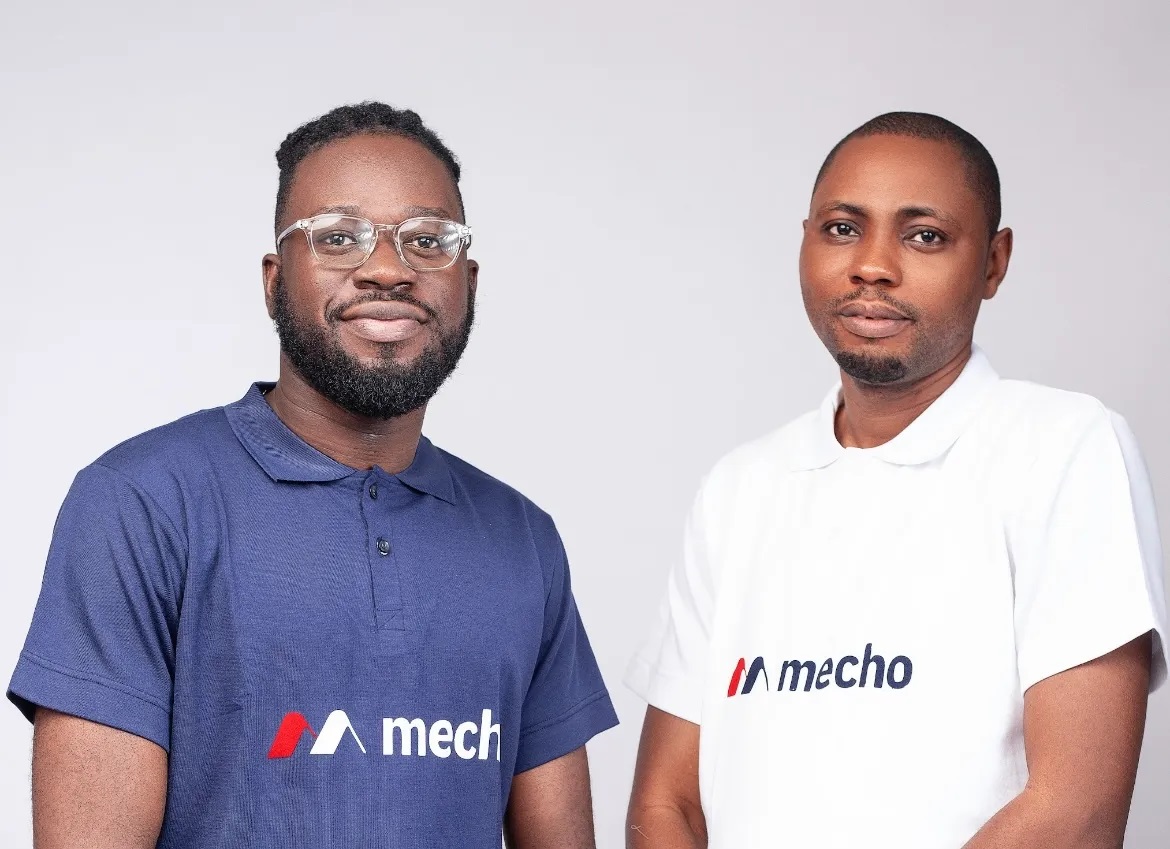
Mecho Autotech, a Nigerian mobility startup that offers automotive spare parts, vehicle repairs, and maintenance services, has announced the raise of $2.4 million pre-series A fund to expand operations across Nigeria.

The pre-series A round saw participation from Global Brain Corporation, uncovered fund, and ventures platform. According to the startup, the funds will enable it to launch a B2B distribution platform for aftermarket spare parts which is estimated to be worth $8 billion.

Spare parts account for 80% of the value, with the Nigerian vehicle owners paying an average of $650 annually. With over 12 million registered vehicles, of which 90% are imported and pre-owned, the automotive after-sales industry in Nigeria is highly fragmented and informal. This results in a disjointed aftermarket spare parts supply chain.

With this, Mecho Autotech disclosed that the company will leverage its existing partnership with Asian aftermarket spare parts manufacturers to provide spare parts to vendors and workshop owners at an affordable rate. Mecho believes that it will increase the availability of high-demand spare parts.

By solving spare parts stockouts, the startup believes that it can help solve one of the biggest problems in the industry.

Speaking on this, co-founder and CEO, Olusegun Owoade, at Mecho Autotech said,

In our original business model, our core focus was on vehicle maintenance and repair. But we soon realized a much larger issue there, was an extreme scarcity of high-quality spare parts in the market. Spare parts vendors face frequent stockouts and struggle to access inventory financing. In our marketplace, vendors can source inventory from leading aftermarket spare parts manufacturers and access credit”.

Since its inception in 2021, Mecho Autotech has seen more than 6,000 cars from B2B and B2C clients undergo repairs and maintenance from over 110 approved workshops, three of which it owns.

As of February 2022, the startup had 40 B2B customers who own over 20,000 vehicles, and has serviced over 2,000 vehicles. It has onboarded more than 7,000 third-party mechanics across over three workshops in Lagos servicing B2B customers.

Mecho Autotech collects data on spare parts demand through its separate apps tailored to supply chain players, so as to gauge supply in the market.

Notably, the mobility startup has disclosed that it will develop an app in Q4 2023, allowing vendors to receive inventory finance and manage their inventory sales, the same service will also enable workshops to access working capital and acquire spare parts.

Also, in partnership with local banks, Mecho will offer credit of up to 10 million naira to automotive supply chain players, including inventory financing (vendors), working capital (workshop owners), and financing for vehicle maintenance and parts procurement (corporate fleet owners).

Mecho Autotech’s vision is to drive efficiency in the automotive spare parts supply chain through technology and financing. Tekedia Capital is an investor in Mecho Autotech.

The startup is confident in its ability to create significant positive change within the sector and make quality spare parts more accessible for vehicle owners and workshop operators across Nigeria.

X Secures a License in Mississippi, Will It Impact Dogecoin (DOGE)? Polygon (MATIC) and Everlodge (ELDG) Price Prediction

0

Recently, X secured its eighth payment transmitter license in the United States, specifically in Mississippi. This move could have significant implications for various cryptocurrencies in the future, including Dogecoin (DOGE), Polygon (MATIC), and Everlodge (ELDG). This article explores the potential impact of X’s licensing on these cryptocurrencies and provides price predictions.

Join the Everlodge presale and win a luxury holiday to the Maldives

Dogecoin (DOGE): Potential Impact

Dogecoin (DOGE) has gained substantial popularity due to endorsements and tweets by influential figures like Elon Musk. With X’s licensing expansion, Dogecoin could benefit if cryptocurrency was ever used as a payment service on X. In fact, it could see an increase in accessibility and legitimacy.

This development may drive more mainstream adoption of Dogecoin, potentially leading to a positive price trend. But, while predicting cryptocurrency prices is challenging, the increased exposure and accessibility could contribute to the Dogecoin value stability and potential growth.

Due to all these reasons, market analysts remain bullish on Dogecoin and its long-term growth potential. As a matter of fact, they predict that the Dogecoin price will sit between $0.089 and $0.098 within Q4 of 2023.

Polygon (MATIC): Bullish Signs

Polygon (MATIC), an L2 scaling solution for Ethereum, has been gaining traction as it addresses Ethereum’s scalability issues. X’s licensing expansion and cryptocurrency payment implementation will indirectly benefit Polygon, as it could lead to more exposure.

In recent Polygon crypto news, the project partnered with Mirae Asset Securities, Korea’s largest financial group. By working with Polygon, they aim to explore practical ways to integrate tokenized securities and enhance interoperability within South Korea’s economic infrastructure.

This strategic move positions Polygon as a strong candidate for those seeking exposure to projects bridging the gap between the traditional finance sector and the blockchain industry. Therefore, experts in the field forecast that the Polygon price will surge to $0.87 by December 2023.

Everlodge (ELDG): A Revolutionary Project

Everlodge (ELDG), a cryptocurrency project focused on revolutionizing real estate markets, could also be influenced by X’s licensing expansion. An increased accessibility to cryptocurrencies brought about by X’s platform may attract more potential investors to projects like Everlodge.

Additionally, the growing interest in cryptocurrency could lead to greater demand for real estate fractionalization, Everlodge’s primary offering. Fractional ownership opens the door for investors who may not have the capital to buy entire properties but can now diversify their portfolios by investing in multiple fractional shares.

It accomplishes this by digitizing and minting high-end hotels and vacation homes into NFTs, which are then fractionalized. As the property value rises, so will the value of the NFT. Also, Everlodge allows those in the Rewards Club to earn free nightly stays in these properties. Additionally, these can be resold – adding another income stream to individuals.

However, only those who hold the ELDG native token gain access to the Rewards Club. Thus, people are flocking to the ELDG presale, which is now in Stage 2, and one token costs just $0.016. But, thanks to its real-world ties to the hospitality industry (worth $4.5T in 2022), its long-term growth potential is immense. Some experts even foresee a 30x pump on launch day.

Find out more about the Everlodge (ELDG) Presale

 Website: https://www.everlodge.io/

Telegram: https://t.me/everlodge

Can Solana Pump to $50 After XRP’s Win Against the SEC?

0

Solana (SOL), a prominent blockchain platform known for its high throughput and scalability, has been a subject of interest in the crypto community. With the recent legal victory of XRP against the SEC, questions are arising about the potential impact on other cryptocurrencies, including Solana.

Could Solana pump to $50 in the wake of this legal decision? This article explores Solana’s recent price performance, its current market cap, and the factors that could influence its potential rise to $50.

Solana’s Recent Performance

Solana’s price has experienced significant fluctuations over the past month. Starting June 1st, 2023, at a price of $20.494, Solana saw highs reaching $22.294 and lows dipping to $12.699. The price closed at $18.855 on June 30th, 2023, reflecting a decrease of approximately 8% over the month, but then slightly increasing throughout August.

The volume of Solana traded also varied throughout the month, with spikes in trading activity corresponding to significant price movements. The highest volume was observed on June 10th, 2023, with 2,775,770 SOL traded, coinciding with a sharp price drop.

As of the end of August 2023, Solana’s market cap stands at approximately $7.6 billion, calculated based on the closing price of $18.855 and the circulating supply of 35.01 billion SOL. This market cap places Solana among the top cryptocurrencies by market value, reflecting its prominence and acceptance within the crypto community.

XRP’s Win Against the SEC

XRP’s legal victory against the SEC is a significant milestone in the crypto industry. The SEC’s lawsuit against Ripple, the company behind XRP, had alleged that XRP was a security, subjecting it to specific regulations. The win sets a precedent that may influence the legal standing of other cryptocurrencies, potentially creating a more favorable regulatory environment.

The legal victory of XRP may signal a shift in the regulatory landscape, fostering a more accommodating environment for cryptocurrencies. A more favorable regulatory climate could boost investor confidence and lead to increased investment in Solana and other cryptocurrencies.

Positive news and developments within the crypto industry, such as XRP’s win, can create a bullish sentiment that benefits the entire market. If the legal victory leads to increased optimism and interest in cryptocurrencies, Solana could benefit from the positive momentum.

Broader economic conditions, including global economic trends, interest rates, and inflation, can influence the price of cryptocurrencies. A favorable economic environment that supports investment in riskier assets like cryptocurrencies could contribute to Solana’s potential rise to $50.

Solana’s Road to $50: How Likely is it?

Solana’s potential to pump to $50 after XRP’s win against the SEC is a complex question that requires consideration of various factors, including Solana’s technological strength, the regulatory climate, market sentiment, and broader economic factors.

Solana’s recent performance shows resilience and potential, but the path to $50 is fraught with uncertainties and challenges. The legal victory of XRP is a positive sign for the crypto industry, but its direct impact on Solana’s price is not easily quantifiable.

Investors and enthusiasts must approach this question with careful analysis, recognizing both the opportunities and risks. The dynamic nature of the crypto market, potential regulatory changes, and the interplay of multiple factors make predictions challenging.

In the end, Solana’s potential to reach $50 is an intriguing prospect that reflects the ever-evolving world of cryptocurrency. Whether or not Solana reaches $50, its journey offers valuable insights into the factors that drive price movements and the broader forces that shape the crypto landscape. It underscores the importance of understanding the complex interplay of technology, law, market dynamics, and global economics that define the future of digital assets like Solana.