DD
MM
YYYY

PAGES

DD
MM
YYYY

spot_img

PAGES

Home Blog Page 42

Cerebras Lands $10bn OpenAI Deal, Deepening Its Challenge to Nvidia and Reshaping the AI Compute Market

0

AI chipmaker Cerebras Systems has struck a landmark agreement with OpenAI to supply up to 750 megawatts of computing power through 2028.

The deal, which underscores both OpenAI’s escalating demand for specialized AI infrastructure and Cerebras’ ambition to emerge as a serious alternative to Nvidia in the booming AI hardware market, marks one of the most consequential infrastructure bets yet in the race to scale artificial intelligence.

Valued at more than $10 billion, according to people familiar with the matter, the agreement is not just a supply contract. It is a strategic signal that the market for AI compute is entering a more fragmented and competitive phase, with Nvidia’s long-standing dominance now facing sustained pressure from specialized challengers.

At its core, the deal gives OpenAI access to vast amounts of dedicated inference and training capacity at a time when demand for AI computing power is exploding. Generative AI models are becoming larger, more capable, and more expensive to run. For OpenAI, which serves hundreds of millions of users and an expanding roster of enterprise clients, securing predictable, long-term compute has become as critical as model innovation itself.

Sachin Katti, who works on compute infrastructure at OpenAI, framed Cerebras’ role as complementary rather than disruptive to existing suppliers.

“Cerebras adds a dedicated low-latency inference solution to our platform,” he wrote, pointing to faster responses and more natural interactions as immediate benefits.

The emphasis on inference is notable. While much public attention focuses on training massive models, inference, the process of running models in real time for users, is increasingly the bottleneck as adoption surges.

The agreement represents a major diversification milestone for Cerebras. Until recently, the company relied heavily on G42, a United Arab Emirates–based AI firm, which accounted for 87% of its revenue in the first half of 2024. Landing OpenAI as a marquee customer immediately reshapes that concentration risk and gives Cerebras something it has long sought: a second anchor client with global scale and credibility.

Andrew Feldman, Cerebras’ co-founder and chief executive, has been candid about the company’s strategy.

“The way you have three very large customers is start with one very large customer, and you keep them happy, and then you win the second one,” he told CNBC.

In that sense, OpenAI is not just another customer; it is a strategic partner. It is validation of Cerebras’ thesis that purpose-built AI processors, rather than general-purpose GPUs, can play a central role in the next phase of AI deployment.

Cerebras’ technology stands apart from the GPU-centric approach that has powered much of the AI boom. The company builds wafer-scale processors, effectively turning an entire silicon wafer into a single, massive chip optimized for AI workloads. This architecture allows for extremely fast data movement and low latency, attributes that are particularly attractive for large language models serving real-time user requests. That specialization positions Cerebras as a direct challenger to Nvidia’s dominance, even as Nvidia continues to sell vast quantities of chips to cloud giants like Amazon and Microsoft, which then rent that capacity to AI developers by the hour.

The timing of the deal also matters. Nvidia’s ascent to a $5 trillion market capitalization in October underscored how central GPUs have become to the AI economy. But that concentration has raised concerns among customers about supply constraints, pricing power, and strategic dependence on a single vendor.

OpenAI’s move to deepen its relationship with Cerebras can be read as a hedge against those risks, alongside its continued use of Nvidia and Advanced Micro Devices chips.

This is not a sudden partnership. OpenAI and Cerebras have been in technical discussions for years and worked together to ensure that OpenAI’s gpt-oss open-weight models ran smoothly on Cerebras hardware. Feldman said those conversations culminated in a term sheet signed just before Thanksgiving.

The roots go back even further. Internal emails revealed during litigation between Sam Altman and Elon Musk show that OpenAI evaluated Cerebras’ technology as early as 2017. In 2018, Musk attempted to acquire Cerebras, an effort Feldman said was tied to Musk’s ambitions at Tesla.

The scale of the new commitment will likely accelerate Cerebras’ global footprint. The company already operates data centers in the United States and abroad, and Feldman has indicated that expansion will continue under the OpenAI agreement. That build-out comes as governments and regulators increasingly scrutinize where AI infrastructure is located and who controls it, adding a geopolitical dimension to what might otherwise look like a purely commercial deal.

The announcement also lands against the backdrop of Cerebras’ complicated journey toward the public markets. The company filed confidentially for an initial public offering in September 2024, revealing rapid revenue growth, with second-quarter revenue nearing $70 million, up sharply from about $6 million a year earlier. Losses, however, also widened, with a net loss of nearly $51 million. The absence of major investment banks from the prospectus and the use of a non–Big Four auditor raised eyebrows. Cerebras withdrew the filing a month later after closing a $1.1 billion funding round that valued the company at $8.1 billion, saying its disclosures were already outdated.

Feldman has said a revised filing will better capture the company’s improved business and its strategy in a fast-moving AI landscape, though he declined to give a timeline. The OpenAI deal, while not disclosed in detail, strengthens the narrative Cerebras is likely to present to future investors: long-term revenue visibility, blue-chip customers, and a clear role in the AI infrastructure stack.

More broadly, the agreement underscores a shift underway across the AI industry. As models proliferate and use cases expand, the focus is moving from raw innovation to reliability, cost control, and scale. AI developers are no longer content to rely on a single hardware supplier or a single cloud partner. They are assembling portfolios of compute options, blending GPUs, specialized accelerators, and custom silicon to optimize performance and economics.

In that context, OpenAI’s partnership with Cerebras is less about replacing Nvidia and more about reshaping the balance of power in AI computing. It suggests a future in which no single company controls the pipes that feed the world’s most advanced models, and where specialized hardware players have a real chance to carve out enduring roles alongside the industry’s giants.


Bitcoin Sentiment Improves Amid Rally, Fear & Greed Index Shows Improved Mood as Traders Eye $100K Milestone

0

Sentiment in the Bitcoin market has recently shown signs of improvement, with the Crypto Fear & Greed Index moving into the neutral-to-greed zone for the first time in months.

The index, which tracks overall investor sentiment, reportedly registered a “greed” score following weeks of fear and extreme fear. On Thursday, it reached a reading of 61, reflecting a notable shift in mood after prolonged caution. Just a day earlier, it had climbed to 48, placing it in neutral territory.

This shift in sentiment appears to be driven largely by Bitcoin’s latest rally. The flagship cryptocurrency surged past the $97,000 level, trading as high as $97,898 before experiencing a mild pullback. At the time of reporting, BTC was hovering around $96,765, still firmly above its recent consolidation range.

Despite the improvement, the index has not fully entered the greed zone, suggesting that many investors remain hesitant to fully embrace the bullish momentum. Historically, cryptocurrency markets often move against majority expectations, meaning that lingering skepticism can sometimes be a constructive signal. When traders are not overly euphoric, rallies tend to be less crowded and potentially more sustainable.

On the technical side, Bitcoin’s daily chart shows signs of stabilization following a prolonged consolidation phase. After the sharp sell-off in November that pushed BTC into the low $80,000 region, the asset began forming higher lows, an early signal of structural recovery rather than continued downside pressure. Buyers have since regained some control, pushing the price back into a range that previously acted as resistance.

Interestingly, while price action has improved, sentiment remains cautious. Typically, breakouts invite optimism, but this time the reaction has been muted. Social commentary and sentiment indicators continue to reflect doubt, even as Bitcoin moves higher. This kind of disconnect where price leads while sentiment lags is often associated with what traders call a “disbelief rally.” In such scenarios, traders hesitate to chase the move, short positions remain active, and sidelined capital waits for pullbacks that may not materialize. Ironically, this hesitation can help sustain upside momentum, as the market avoids becoming overcrowded with overly bullish positions.

From a trend perspective, the picture remains mixed. The 50-day moving average is still sloping downward and sits above the current price, acting as near-term resistance. Meanwhile, the 200-day moving average continues to trend higher well below the current level, reinforcing the idea that the broader market structure remains intact despite recent volatility. This alignment suggests Bitcoin may be transitioning from a corrective phase into a potential recovery, rather than confirming a full trend reversal.

For bullish momentum to remain intact, holding above the $93,000–$95,000 zone is critical. This area now serves as a key support band. A failure to maintain this range could open the door to renewed consolidation or a pullback toward the $90,000 region.

Outlook

Looking ahead, Bitcoin’s next major psychological test lies at the $100,000 mark. However, the path toward this level may not be immediate or smooth. Market structure and positioning data suggest that BTC could spend more time consolidating below this milestone before attempting a clean breakout.

If price continues to print higher highs and higher lows while sentiment remains cautious, the conditions for a gradual grind higher remain favorable. Disbelief-driven rallies often persist longer than expected, as dips tend to be bought and bearish positions unwind in stages. On the other hand, a breakdown below key support would likely delay bullish continuation and reinforce a range-bound environment.

Overall, Bitcoin appears to be in a transitional phase, caught between lingering skepticism and improving technical strength. Whether this evolves into a sustained rally or a prolonged consolidation will depend on how well buyers defend recent gains and whether sentiment eventually aligns with price action.

FCC Relaxes Verizon Phone Unlocking Rule, Reshaping How Easily Customers Can Switch Carriers

0

In a decision with wide implications for consumers, competition, and the secondary phone market, the Federal Communications Commission has granted Verizon a waiver that allows it to lock phones to its network for longer periods.

The move scraps a long-standing requirement that forced the carrier to unlock handsets 60 days after activation, a rule that had made Verizon phones among the easiest to take to a competing network.

The FCC’s decision is being framed as a blow against fraud. But beneath that rationale sits a more consequential shift: one that quietly strengthens the largest U.S. wireless carrier’s ability to hold onto customers at a moment when competition in the mobile market is intensifying.

For years, Verizon operated under stricter unlocking rules than its rivals. Phones sold on its network had to be unlocked automatically after 60 days, a requirement rooted in concessions the company made to secure valuable spectrum licenses and regulatory approvals for past deals. That obligation made Verizon an outlier in an industry where carriers generally unlock devices later and only upon request.

With the FCC now granting Verizon a waiver, that distinction disappears.

Going forward, Verizon will follow the CTIA trade group’s voluntary unlocking code, aligning its practices with the rest of the industry. In practical terms, this means prepaid phones can stay locked for up to a year, while postpaid devices may remain tied to Verizon until customers fully pay off contracts, financing plans, or early termination fees. Automatic unlocking is no longer guaranteed.

While the FCC emphasized fraud prevention and law enforcement concerns, the ruling also reshapes the economics of switching carriers, resale markets, and competition from smaller wireless players.

Switching just got harder

Unlocked phones are one of the primary tools consumers use to switch between carriers without purchasing a new device. When phones unlock quickly, customers can shop around for cheaper plans, promotions, or better coverage with minimal friction. When they stay locked longer, switching becomes slower, more expensive, and less predictable.

That matters in a market where growth increasingly depends on stealing customers from rivals rather than adding new subscribers. Verizon, AT&T, and T-Mobile are all fighting for share, while cable companies such as Comcast and Charter have pushed aggressively into wireless by offering low-cost mobile plans bundled with broadband.

Those cable operators rely heavily on unlocked devices to attract customers. Longer lock periods, even if applied uniformly, raise barriers for people considering a move away from the big carriers.

The cable industry was quick to criticize the FCC’s decision. Its lobby group, NCTA, warned that delayed unlocking reduces consumer choice and affordability, arguing that faster unlocking saves billions across the mobile ecosystem by encouraging competition and device reuse. The group has urged the FCC to impose a clear, uniform unlocking deadline, rather than relying on a voluntary code.

Verizon has long argued that its unique unlocking obligations put it at a disadvantage. The company said being forced to unlock phones faster than competitors made its devices a preferred target for theft and international trafficking, particularly as 4G LTE and 5G handsets can be resold easily overseas.

The FCC accepted that argument, citing input from law enforcement groups that said stolen phones drain investigative resources and fuel black-market activity in countries that do not participate in global device-blocking systems.

But the waiver does more than address crime. It removes a regulatory constraint that limited Verizon’s leverage over customers. Locking phones longer keeps users tied to Verizon’s network, at least until financial obligations are settled, reducing churn at a time when carriers are spending heavily to retain subscribers.

That shift is especially notable given Verizon’s history. The company once sold phones unlocked by default, before seeking permission in 2019 to lock devices for 60 days. That initial waiver was justified as a narrow anti-fraud measure. The new decision goes further, eliminating the automatic unlocking rule entirely for new activations.

Consumer advocates sidelined

Consumer groups pushed back hard against Verizon’s petition, arguing that the company failed to show that extending lock periods would meaningfully reduce fraud. They said carriers already have tools to detect suspicious purchases, flag trafficked devices, and deny unlock requests without penalizing legitimate customers.

Those groups also highlighted broader effects. Automatic unlocking supports secondary phone markets, reduces electronic waste, and helps low-cost carriers compete. Removing it, they argued, primarily benefits large incumbents by making it harder for customers to leave.

The FCC rejected those concerns, saying the existing 60-day rule had not kept pace with the globalization of device resale markets and that law enforcement arguments tipped the balance in favor of a waiver.

A temporary fix or a lasting shift?

The FCC has described the waiver as an interim measure, saying it will remain in effect until the agency settles on an industry-wide approach to handset unlocking. That leaves open the possibility of future rules that could impose uniform timelines on all carriers.

Until then, Verizon emerges with greater control over when and how its customers can take their phones elsewhere. The company says this levels the playing field and undercuts criminal exploitation. Critics say it entrenches carrier power and weakens one of the simplest tools consumers have to vote with their feet.

Either way, the decision signals a recalibration in U.S. telecom policy. The emphasis is shifting away from fast, automatic portability and toward carrier discretion, with competition and consumer mobility taking a back seat to security and enforcement concerns.

Anthropic Says Claude AI Mostly Wrote Cowork, Its Latest Product

0

Anthropic’s latest product release is as much a demonstration as it is a tool. Cowork, the company’s new agentic assistant designed for non-coding tasks, was largely built by Claude itself — a clear illustration of how AI-powered coding tools are reshaping how software products are created, tested, and shipped.

Announced on Monday, Cowork is positioned as a more accessible companion to Claude Code. Unlike Claude Code, which targets developers, Cowork is aimed at users who want an AI agent to carry out everyday computer-based tasks that have little to do with programming. With user permission, Cowork can access specific files on a computer and act on them to fulfill requests.

According to Anthropic, Claude did much of the heavy lifting in building the product.

“@claudeai wrote Cowork,” product manager Felix Rieseberg said in a post on X.

He explained that human staff focused on high-level architectural and product decisions, while developers relied on multiple Claude instances to implement features, fix bugs, and research solutions. Individual engineers, he said, typically managed between three and eight Claude sessions at a time.

That workflow sharply compressed development timelines. Rieseberg said the first version of Cowork was put together in about a week and a half, underscoring how AI coding agents are reducing the friction between idea and execution.

“This is the product that my team has built here,” he said during a livestream with Dan Shipper. “We sprinted at this for the last week and a half.”

The speed reflects a broader shift in how Anthropic’s customers are using Claude. Over the holiday period, the company noticed users increasingly turning to the model for tasks outside traditional coding, from document handling to research and workflow automation. Cowork emerged from that usage pattern, initially as what Rieseberg described as a research preview and early alpha product, complete with rough edges.

For now, Cowork is available only to Claude Max subscribers through Anthropic’s Mac app, a limited rollout that allows the company to observe real-world usage and refine safety guardrails.

The launch has drawn strong reactions across the tech community. Simon Willison, co-creator of Datasette, said Cowork unlocks value that had been trapped inside developer-focused tools.

“Claude Code has an enormous amount of value that hasn’t yet been unlocked for a general audience, and this seems like a pragmatic approach,” he wrote after testing the product. Reddit cofounder Alexis Ohanian called the release “big” in a post on X.

However, the product also highlights the growing risks tied to agentic AI. Granting an AI system access to local files — and the ability to act on them — introduces the possibility of unintended or destructive actions. Anthropic has been explicit about those dangers, warning users that Claude could delete files or make other irreversible changes if instructions are misunderstood.

“Since there’s always some chance that Claude might misinterpret your instructions, you should give Claude very clear guidance,” the company said, emphasizing the need for careful use as agentic tools move closer to users’ operating systems.

Cowork’s debut lands amid a wave of AI announcements as companies race to define the next phase of the market. On Sunday, Anthropic rolled out Claude for Healthcare, expanding its footprint in healthcare and life sciences just as OpenAI signaled its own push into the sector with ChatGPT Health.

At the same time, competition among leading AI labs is intensifying. Anthropic CEO Dario Amodei has been publicly defending the company’s strategy against concerns about an AI bubble and the sustainability of massive investment. Speaking at The New York Times’ Dealbook Summit, Amodei argued that Anthropic’s focus on enterprise customers gives it stronger margins and a more disciplined path to growth. While he did not mention OpenAI by name, he drew a clear contrast with rivals pursuing broader consumer strategies.

“I think because we focus on enterprise, I think we have a better business model,” Amodei said. “I think we’re being responsible about it.”

The broader landscape is shifting quickly. Google, widely seen by some analysts as closing the gap with or surpassing OpenAI by the end of 2025, recently announced a major agreement with Apple to power Siri’s AI capabilities using Gemini. Against that backdrop, Cowork serves not just as a new product, but as evidence of a deeper trend: AI systems are no longer just tools for developers — they are becoming active participants in building the software ecosystem itself.

As Anthropic’s experience shows, when AI can help design, code, and ship new products in days rather than months, the pace of innovation and the competitive pressure across the industry is set to accelerate even further.

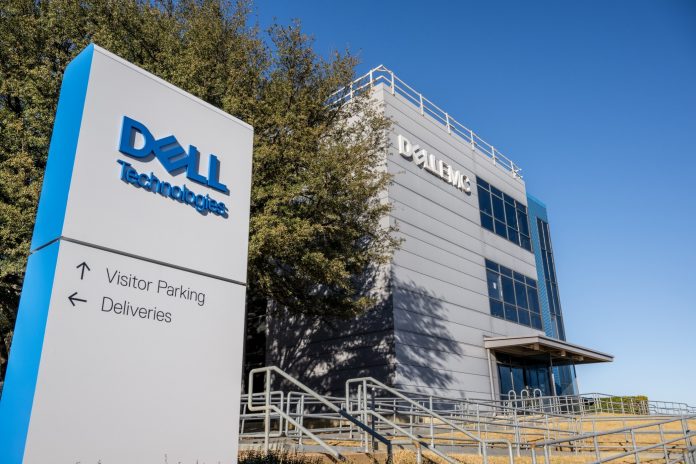
Inside Dell’s One-Day Reset: How an AI Push Is Forcing the Biggest Internal Overhaul in the Company’s History

0

Dell employees have been warned to brace for a moment that will redraw how the 42-year-old company actually works. On May 3, large parts of the business will switch, all at once, to a single enterprise operating platform, ending decades of fragmented systems, duplicated tools, and function-by-function autonomy.

Jeff Clarke, Dell’s chief operating officer and vice chairman, told staff in an internal memo that the shift represents the “biggest transformation in company history,” a sharper claim than anything associated with Dell’s past milestones, including its $67 billion acquisition of EMC or its journey off and back onto public markets.

At its core, the overhaul, branded One Dell Way, is less about flashy artificial intelligence products and more about the plumbing underneath the company. Dell is betting that without a unified data backbone, its ambitions in AI infrastructure, cloud systems, and enterprise services will stall, no matter how much it spends on cutting-edge technology.

For years, Dell allowed its businesses to grow with a high degree of independence. Different teams built their own tools for selling, marketing, servicing customers, and managing supply chains. That flexibility helped the company scale globally, but it also created a maze of applications, servers, and databases that no longer talk to each other cleanly.

Clarke made clear that the approach is no longer viable. In an AI-driven market, speed depends on clean, connected data and standardized processes. Multiple ways of doing the same basic tasks slow decisions, introduce errors, and limit the ability to automate at scale.

The change is deliberately abrupt. Rather than rolling out the new system gradually, Dell will flip the switch on a single crossover date for its Client Solutions Group, which includes its PC business, as well as finance, supply chain, marketing, sales, revenue operations, services, and HR. Its Infrastructure Solutions Group, which houses servers, storage, and AI hardware, will follow in August.

That decision signals urgency, but also risk. Clarke acknowledged that some teams will experience significant disruption in how they work day to day. Others may see fewer changes, but no one is exempt from learning the new system. Training, which opens on February 3, is mandatory, with no exceptions.

Behind the scenes, this effort has been years in the making. Business Insider has previously reported on a secretive internal program, codenamed Maverick, where employees signed non-disclosure agreements to help design the new operating model. Initially slated for parts of the company in early 2026, the launch was delayed, underscoring the complexity of replacing systems that underpin nearly every business function.

What stands out in Clarke’s memo is not just the technical ambition, but the cultural reset he is pushing. He told employees to shift from a “function-first” mindset to a “company-first” one, even when that means making choices that are less optimal for individual teams. The trade-off, he said, is faster decision-making and higher quality outcomes for Dell as a whole.

That message hints at internal tension. Standardization often means giving up local control, custom workflows, and familiar tools. It can also expose inefficiencies that were previously hidden inside silos. Clarke framed that discomfort as unavoidable, telling staff bluntly that there will be no return to old ways of working once the system goes live.

Dell is positioning itself as a central supplier of AI infrastructure, selling servers and systems that power data centers for some of the world’s largest technology companies. Yet internally, it has struggled with the same data fragmentation that plagues many large enterprises trying to operationalize AI.

Industry analysts often note that AI initiatives fail not because of weak algorithms, but because companies lack clean, unified data. Dell’s leadership is effectively applying that lesson inward, betting that simplification and automation are prerequisites for competing in a market moving at machine speed.

The symbolism is hard to miss. A company founded in a dorm room in 1984, built through customization and operational flexibility, is now imposing a single way of working across its global workforce. Clarke described the move as foundational, not optional, and urged employees to “disrupt yourself” and embrace urgency.

We will have to wait till May to see whether One Dell Way delivers the promised gains in speed and efficiency. What is already clear is that Dell is treating internal transformation as seriously as any product launch.