DD
MM
YYYY

PAGES

DD
MM
YYYY

spot_img

PAGES

Home Blog Page 42

Amazon Reportedly Plans to Cut Thousands of Jobs Next Week, Exposing a Deeper Reset Inside the Company

0

Amazon is preparing for another round of corporate job cuts that underscores how deeply the company is reshaping itself after years of expansion, even as its leadership offers shifting explanations around artificial intelligence, culture, and long-term strategy.

According to two people familiar with the matter who spoke to Reuters, Amazon plans to begin a second wave of layoffs as early as next week, with the scale expected to roughly match the cuts announced in October. That earlier round eliminated about 14,000 white-collar roles, putting the company roughly halfway toward a broader plan to reduce close to 30,000 corporate positions.

If the latest cuts go ahead as outlined, Amazon will have completed one of its most sweeping restructurings outside the pandemic period.

The layoffs are expected to affect several of Amazon’s most prominent units, including Amazon Web Services, the core retail business, Prime Video, and the human resources division known internally as People Experience and Technology. The widespread nature of affected teams suggests the exercise is not a targeted response to a single underperforming unit, but a cross-company effort to shrink layers of management and rethink how work gets done across the organization.

People familiar with the plans cautioned that details could still change, reflecting the uncertainty that has become a hallmark of Amazon’s internal planning in recent years.

When Amazon announced the October cuts, the company pointed directly to artificial intelligence, telling employees in an internal note that “this generation of AI is the most transformative technology we’ve seen since the Internet.” The message echoed a broader narrative across the technology sector, where companies have increasingly tied job reductions to the efficiency gains promised by generative AI and automation, particularly for corporate and support roles.

Yet that explanation was later tempered by Chief Executive Andy Jassy, who told analysts on the company’s third-quarter earnings call that the layoffs were “not really financially driven and it’s not even really AI-driven.” Instead, he framed the reductions as cultural, aimed at addressing what he described as excessive bureaucracy and too many layers of management that had built up during Amazon’s rapid hiring over the past decade.

This means the two accounts point to a more nuanced reality. AI may not be directly replacing tens of thousands of jobs at Amazon, but it is clearly influencing how leadership thinks about productivity, staffing, and scale.

Tools that automate reporting, customer support, internal analytics, and parts of software development make it easier to justify leaner teams, even if executives stop short of saying AI is the primary driver. At the same time, Jassy’s focus on culture signals frustration with slower decision-making and internal complexity as Amazon grew into one of the world’s largest employers.

The timing of the cuts also reflects broader pressures on the business. Growth at AWS, long Amazon’s profit engine, has slowed compared with its earlier years, even as competition in cloud computing intensifies, and capital spending on AI infrastructure accelerates. Prime Video continues to absorb high content costs, while the retail business operates on tight margins in many markets. Trimming corporate headcount offers a way to contain costs while preserving investment in strategic priorities such as AI chips, data centers, and logistics automation.

The latest planned cuts add to a prolonged period of instability for employees. Since late 2022, Amazon has announced multiple rounds of layoffs across devices, retail, advertising, cloud, and HR, eroding the perception that any team is insulated from restructuring. Even business units seen as central to Amazon’s future have faced reductions, reinforcing the sense that efficiency, rather than growth alone, now defines the company’s internal calculus.

More broadly, Amazon’s move mirrors a shift across Big Tech, where companies are trying to reconcile massive spending on AI with demands from investors for discipline and returns. Framing layoffs around culture rather than profits or automation allows executives to position the changes as strategic and proactive, even as they acknowledge that the era of unchecked hiring is over.

If the coming round proceeds as expected, it will further cement a reset underway under Jassy: flatter teams, fewer managers, and a workforce shaped by both technological change and a deliberate push to remake how the company operates.

Risk, Reward, and Revenue

0

The iGaming industry has grown exponentially over the past decade, transforming from a niche market into a global entertainment powerhouse. What was once limited to small-scale online poker rooms and casino websites has evolved into a multi-billion-dollar industry with sophisticated platforms, diverse gaming options, and an emphasis on player safety. Understanding the business model behind iGaming’s success provides insight into why it continues to attract millions of users while simultaneously creating safer, more responsible gaming environments.

One key element of iGaming’s success is the diversity of game offerings. Platforms provide everything from poker and roulette to themed slot games, virtual sports, and bingo. This variety caters to a wide audience, accommodating both casual players and seasoned gamblers. By offering multiple avenues for entertainment, operators can appeal to different interests and keep players engaged over the long term. Games such as casino games online with Bally Bet exemplify this approach, combining high-quality graphics, interactive features, and accessible betting options to create a compelling user experience.

Safety and responsible gaming are also central to the iGaming business model. Regulations in many markets require platforms to implement measures that protect consumers, including age verification, self-exclusion tools, and spending limits. By creating a safer environment, operators not only comply with legal requirements but also build trust with players. Transparency in odds, secure payment systems, and fair play policies further reinforce the industry’s commitment to ethical gaming practices. These measures ensure that users can enjoy the excitement of risk and reward without exposing themselves to unnecessary harm.

Another factor contributing to iGaming’s revenue success is the use of data analytics and personalized marketing. Platforms track gameplay patterns to understand user preferences, optimize game offerings, and tailor promotions to individual players. This data-driven approach maximizes engagement and encourages repeat visits, creating a sustainable revenue stream. It also allows operators to refine their offerings in real time, ensuring that the gaming experience remains fresh, exciting, and aligned with user expectations.

Bonuses and reward systems are a crucial component of the business model. Welcome bonuses, free spins, loyalty points, and other incentives serve a dual purpose: they enhance player experience while encouraging longer play sessions. These features create a sense of progression and accomplishment, like levelling up in video games, and contribute directly to player retention and profitability. Well-designed reward systems can make players feel valued and connected to the platform, fostering a loyal user base that is essential for long-term success.

User experience and interface design are equally important in sustaining engagement. Intuitive navigation, responsive controls, and visually appealing graphics ensure that players can focus on the gameplay rather than technical frustrations. High-quality platforms also integrate seamless payment solutions, instant withdrawals, and customer support, all of which contribute to a positive perception of the brand. When combined with entertaining content, these factors make iGaming platforms highly attractive to a broad demographic of users.

The scalability of digital platforms has further fuelled the industry’s growth. Unlike traditional casinos, which are limited by physical space and operating hours, online platforms can accommodate thousands of players simultaneously and operate around the clock. This flexibility increases potential revenue, expands market reach, and allows operators to experiment with innovative game types and features without the constraints of a physical venue. The ability to scale quickly and efficiently is a hallmark of successful iGaming businesses.

Finally, partnerships and collaborations have strengthened the iGaming business model. Collaborations with software developers, payment providers, and even entertainment brands ensure that platforms stay at the cutting edge of technology and content. These partnerships allow operators to offer unique gaming experiences while maintaining high standards of quality, security, and innovation, further reinforcing the appeal to players worldwide.

In conclusion, the success of iGaming is built on a balanced business model that emphasizes risk, reward, and user safety. By focusing on both entertainment and consumer protection, iGaming operators have transformed online gaming into a dynamic and sustainable market, attracting millions of players while fostering a safe and enjoyable environment. As the industry continues to grow, the interplay of innovation, technology, and responsible business practices will remain key to maintaining engagement and trust.

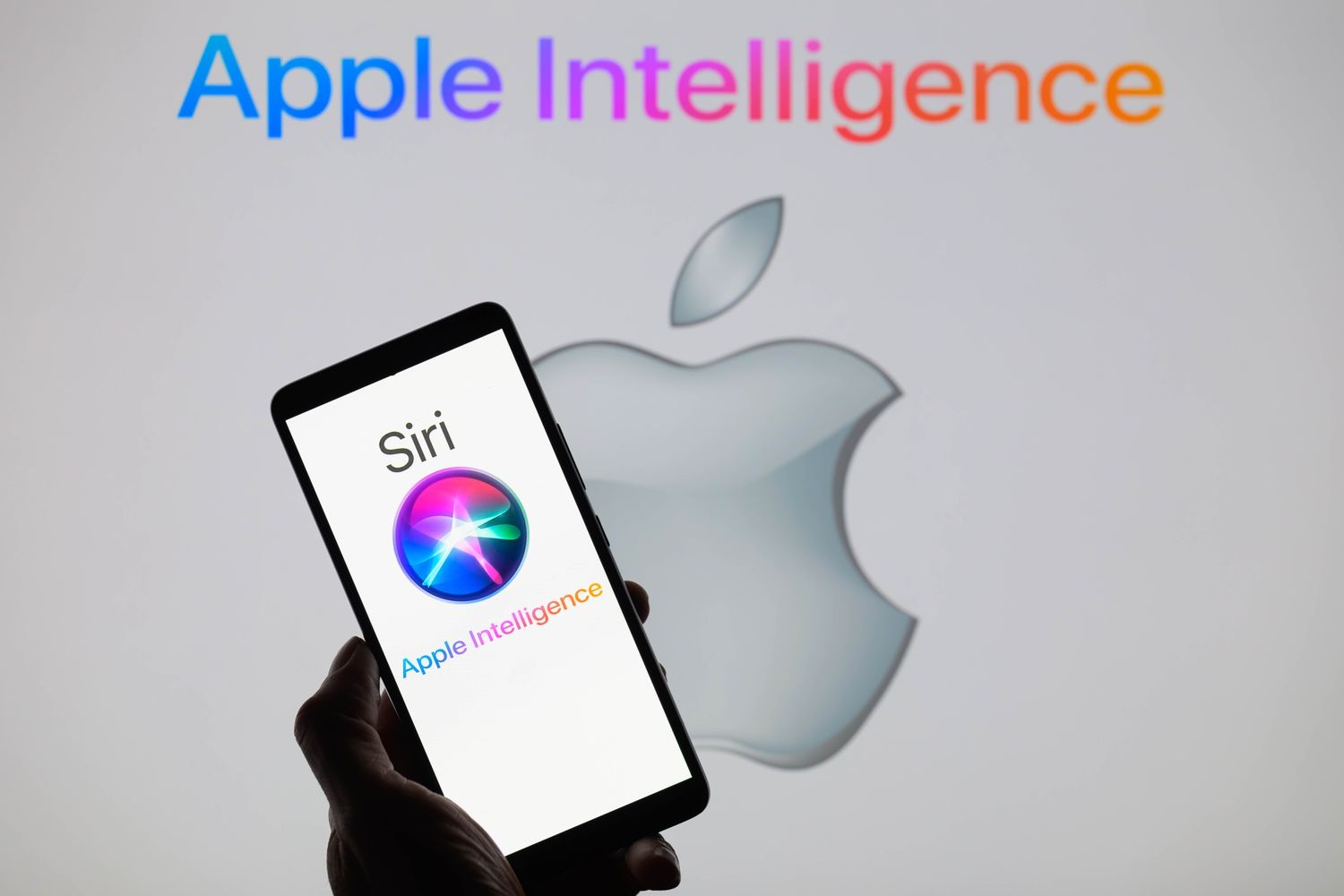
Apple Reportedly Plans to Revamp Siri, Turning it Into Company’s First AI Chatbot

0

Apple is preparing its most far-reaching redesign of Siri since the voice assistant debuted more than a decade ago, signaling a strategic shift as the company races to catch up with rivals that have moved faster and louder in generative artificial intelligence.

According to Bloomberg News, Apple plans to revamp Siri later this year by turning it into the company’s first true AI chatbot. The new system, internally code-named Campos, will be embedded deeply across iPhone, iPad, and Mac operating systems, effectively replacing the current Siri interface. People familiar with the matter said the redesigned assistant will support both voice and text-based interactions and serve as a central feature of Apple’s next major software releases.

The move reflects growing urgency inside Apple following the muted reception of its “Apple Intelligence” rollout in 2024. While the company framed that launch around privacy, on-device processing, and selective AI features, it struggled to generate the momentum enjoyed by competitors such as OpenAI, Google, and Microsoft, whose chatbots quickly became everyday tools for consumers and businesses.

Campos is designed to address that gap. Rather than responding to short commands or queries, the new Siri is expected to handle more conversational exchanges, reason across tasks, and operate more seamlessly across apps and system functions. Bloomberg described it as a shift from an assistant that reacts to instructions to one that can act as a continuous interface between users and their devices.

Central to that ambition is Apple’s decision to rely more heavily on external AI technology. Earlier this month, the company struck a deal with Google to use its Gemini models to power Siri, a notable departure for Apple, which has traditionally emphasized in-house development of core technologies. Under the plan outlined in the report, Campos will run on a higher-end version of Google’s model, comparable to Gemini 3, known internally as Apple Foundation Models version 11.

The partnership gives Alphabet a significant win, embedding its AI models inside Apple’s ecosystem of more than a billion active devices worldwide. For Apple, it underscores a pragmatic recalibration. Rather than waiting to fully close the gap with its own large language models, the company appears willing to integrate best-in-class technology to accelerate its AI roadmap and remain competitive.

People familiar with the project told Bloomberg that the chatbot capabilities will roll out later this year and that Campos will be the most prominent addition to Apple’s upcoming operating systems. The expectation inside the company is that Siri will evolve from a standalone feature into a system-level layer that can interact more fluidly with apps, files, settings, and services, potentially changing how users navigate Apple devices.

Siri has long been seen as lagging behind competitors in accuracy, flexibility, and usefulness, becoming a symbol of Apple’s slower pace in conversational AI. Investors and developers have increasingly questioned whether Apple’s cautious approach has cost it valuable ground in a market now defined by rapid iteration and scale.

At the same time, Apple is exploring how AI could extend beyond traditional devices. Separately, The Information reported that the company is developing an AI-powered wearable pin equipped with multiple cameras, microphones, a speaker, and wireless charging. The device, which could be released as early as 2027, would place Apple in a growing field of AI-first hardware experiments aimed at creating always-on, context-aware computing experiences.

Taken together, the Siri overhaul and the reported wearable project suggest Apple is entering a more aggressive phase in its AI strategy. The company appears increasingly open to partnerships and bolder product shifts as it seeks to reposition itself alongside, rather than behind, its Big Tech peers.

This also means that Campos is not just a software update for Apple. It is a test of whether the company can adapt its tightly controlled ecosystem to a world where AI-driven interfaces are becoming the primary way users interact with technology, while still preserving the reliability, integration, and user trust that have long underpinned its business.

Recalibrating China-Africa Shared Future: African Youth Perspectives

0

Authors: 

  • Dr. Kaze Armel, Lecturer, Xiangtan University, School of Law, China-Africa Research Institute
  • Dr. LI YAN, Lecturer, Yunnan University, School of Marxism

Introduction

Africa and China have a long history of economic and political relations, dating back to the 1960’s when many African countries were gaining their independence from colonial powers. While establishing their first diplomatic relations, China has supported newly formed African states through foreign aid and investment, signaling China-Africa shared future, whether it is economically or politically. Since 2009, China has become Africa’s largest trading partner, a major source of infrastructure financing, and key player in regional and global affairs, and China’s modernization has been a source of inspiration to many countries from the Global South, especially African countries. However, in recent years, many critics have raised concerns about the nature and impact of China’s engagements in Africa, derailing China-Africa shared future willingness. Some suggest that China’s presence in Africa is mainly motivated by economic and political factors, considering that loans, grants, and infrastructure-for-resources are the main strategies for wooing Africans. Some other argue that China is exploiting remaining natural resources on the continent, others go beyond by imploring that China is creating debt traps, or undermining governance and human rights standards. Why such connotations? Is it because China has threatened colonial powers interests in Africa or is it about the overhyped debate about African countries’ high external debt problem? It is impertinent for African youth to understand those critics and take responsibility in addressing well China-Africa relations in the new era.

China-Africa Relations turned into critics: Its foundations

Ever since academics, policy makers and diplomats have been on hand to report China’s arrival on the African continent, its implications or engagements on the continent has been greeted with extremes of approval and dismay. Over the past few decades alone, there has been a spate of books, articles, studies, and commentaries, mostly in the West regarding China’s engagements in Africa. They reflect both fascination and apprehension, as they criticize China’s intake in many African countries resources share. Over the last century, many European empire-builders present on the African continent at the time applauded the import of Chinese contract laborers, who they believed would open up the continent by shouldering work on the new infrastructure such as roads and railways and in the Rand goldfields of South Africa, which their African counterparts were unwilling to perform. Others saw China’s presence as a lethal threat. They believed that Chinese laborers would slip out of their compounds, subvert the morality of the unspoilt natives, steal European jobs and businesses. In recent years, the critics practically remained the same, as China is still being seen as a threat to Europeans or post-colonial powers’ interests on the continent.

Another growing chorus of critics argue that China’s non-interference in Africa’s political affairs has done little to improve governance or uplift the lives of ordinary Africans, that somehow China is indirectly encouraging cycles of corruption, dependency, and stagnation. Apart from those critics, other argue that the growing influence of China in Africa raised concerns of Africa’s debt sustainability, environmental impact, and on top of that, support of authoritarian regimes. All these claims have overlooked China’s contribution to Africa’s recent development. A simple example is China’s willingness to fund Africa’s prestigious infrastructure such as costly expressways, railways, dams, etc. which many Western powers would not consider investing in. Many China’s funded infrastructure on the continent such as the expressway that connect Nairobi in Kenya and Kampala in Uganda; Bujumbura in Burundi to Kinshasa in DRC, etc. have actually made life easier for African elites and simple citizens. China has even moved to recalibrate its infrastructure finance by introducing the concept of “small and beautiful (???)” projects. These projects are being seen implemented on a large scale in many African countries, and no African host country can deny the huge impact of them, especially on simple African citizens. This is where African youth need to step up and bring a new light into this matter and address well China’s engagements in Africa. It is important for African youth to be good examples in painting well this picture and not be led astray by western media propaganda.

How to better address China-Africa relations critics: African Youth intake

It is impertinent for the youth, especially African youth to master the know-how in addressing China-Africa relations critics. We are living in a digital era, when it is easy to get access to information, and even more easy to be led astray by what is being perpetuated on different internet platforms. As African youth, I believe it is our responsibility to know how to get true information regarding China’s presence on the continent.

Firstly, it is important for African youth to be aware that it is not a question whether Africa is losing by engaging with China. On the contrary, Africa is actually also a winner, but it is up to Africa to know how to engage with China in a way that maximizes its benefits and minimize risks.

Secondly, it is our responsibility as African youth to address well China-Africa relations. China and Africa relations are being criticized not only by few Western media, but also by a handful of African media. African youth need to have a nuanced understanding of the opportunities and challenges that China’s growing presence on the continent bring. For instance, in trade and investment, African youth should step up and guide the narrative by supporting our African country leaders while refuting critics over China’s dept-trap allegations by addressing solutions rather than joining the unbalanced opinions perpetuated on different platforms.

Thirdly, the future of China-African relations, or even the turn of China-Africa critics narratives relies in our hand. It is up to China-Africa youth to find another way, a better way of addressing them. China-African youth connections, China-Africa youth collective efforts in handling China-Africa relations critics, whether using in a responsible way available platforms to spread well balanced China-Africa relations histories, build a more healthy and safe platforms to present our collective efforts in addressing those critics, either through academic think-tanks, or meetings or dialogues, will determine whether China-Africa relations will continue to grow even stronger.

Conclusion

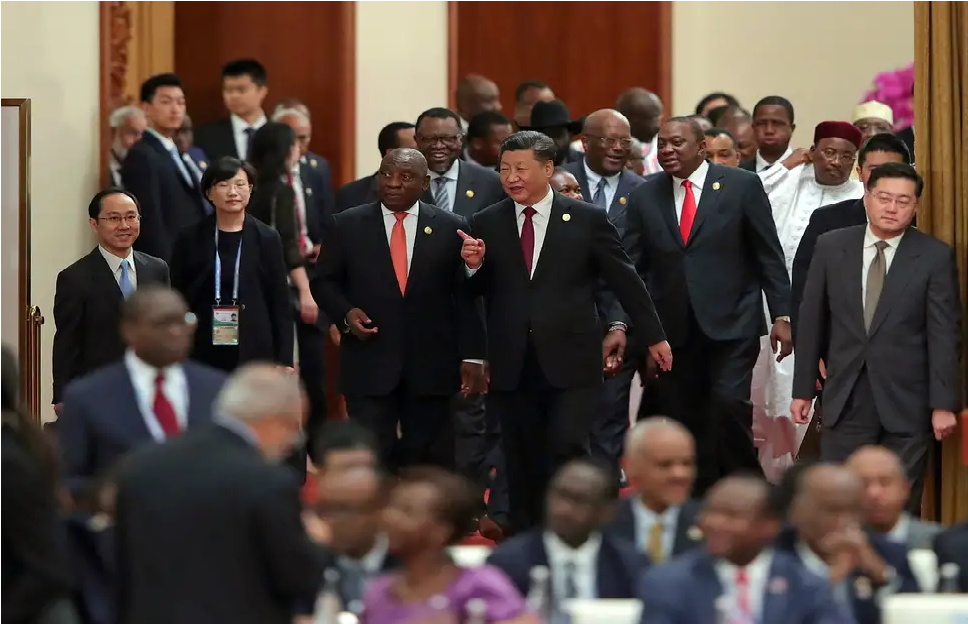
China is considered as the “Asian Power”, and is likely to change its status from an emerging and developing country to a developed one. China despite being an emerging power, it is the biggest economy among all Global South, but it has never abused its power over its African counterparts, in a way, signaling its global power status, far different than what the US is showing to the African continent, for instance by bailing on the 2025 G20 meeting hosted by South Africa, imposing unbearable tariffs on African countries, or even the decision to freeze foreign aid on the continent. This should be a signal to African youth to better follow and understand where the biased China-Africa relations critics are headed. It is our responsibility as China-Africa youth to be able to distinguish what Western powers controlled media are feeding the youth on several platforms. As we live in a digital era, it is easy to be misguided by those critics, and if we are not careful, could lead us into an anti-China propaganda. China and Africa share the same values, as it is being witnessed in China’s many engagements on the continent. Even at the 2024 Beijing Forum on China-Africa Cooperation, Chinese President Xi Jinping repeatedly emphasized that China and Africa relations are now being elevated to an all-weather China-Africa community with a shared future for the new era. This declaration reaffirms what China-Africa youth should be engage in hands in hands in addressing China-Africa common concerns. For now, it is important for China-Africa youth to engage together and making sure that China and Africa whether faced with geopolitical shifts, or even common issues such as climate change, peace and security, etc., China and Africa will remain each other’s trustworthy true partners.

ChatGPT Indicates Ozak AI Could Reach $30 in a Multi-Year Arc, Turning Early Entries Into 214,000%+ Success Stories

0

Ozak AI ($OZ) is gaining rapid recognition as one of the most promising AI-powered crypto projects as new predictive models now including ChatGPT-based simulations indicate that the token could follow a multi-year trajectory toward the $30 range. Built on a fusion of artificial intelligence tools and decentralized physical infrastructure (DePIN), Ozak AI operates as a smart, scalable, cross-chain intelligence network designed to unlock long-term value. The project’s blend of automated analytics, decentralized compute, and token-driven growth positions it distinctively at the forefront of the next generation of AI crypto ecosystems.

Presale Momentum Builds as Early Pricing Enhances Future ROI Potential

The Phase-7 presale of Ozak AI continues to accelerate in strength, reflecting consistent demand from retail users and early-stage investors. With the token priced at $0.014, the project has now sold 1.10 billion $OZ, raising $5.85 million in funding. This momentum showcases strong confidence in Ozak AI’s fundamentals despite a cautious broader market environment.

Analysts note that early presale pricing provides a substantial entry advantage, especially when framed against the long-term listing target of $1.00 and a multi-year upward model projecting potential valuations as high as $30 by the late stages of the decade. For traders who recognize the exponential growth patterns that once propelled early ETH and SOL holders into life-changing ROI territories, Ozak AI now represents a similarly early-stage opportunity.

Core Technological Edge: AI Intelligence Layer Meets Decentralized Infrastructure

Ozak AI’s architecture is defined by its combination of AI-powered infrastructure and DePIN capabilities, allowing the network to process complex datasets, generate predictive analytics, and automate intelligence-driven workflows. This structure removes reliance on centralized servers, enabling Ozak AI to scale more efficiently as demand for on-chain AI grows across sectors such as trading, gaming, enterprise automation, and autonomous systems.

The project’s cross-chain compatibility ensures seamless interoperability across multiple blockchain ecosystems, strengthening its role as an adaptable intelligence layer. Token utility extends across staking, governance, and ecosystem-based rewards, allowing the community to participate meaningfully in growth while benefiting from long-term token appreciation. Reinforcing this foundation is the successful audit completed by @sherlockdefi, which reported zero outstanding issues and validated Ozak AI’s commitment to secure, transparent development.

Ecosystem Expansion Through High-Impact Partnerships and Global Visibility

A key driver of Ozak AI’s rising valuation models is its expanding network of strategic partnerships. The collaboration with Hive Intel (HIVE) significantly enhances data capabilities, giving Ozak AI access to rich, multi-chain insights from wallet behavior and NFT activity to DeFi flows and token metrics thereby improving the precision of its predictive systems.

The integration with Weblume extends Ozak AI’s utility into the development space by enabling creators to embed real-time AI-driven market signals directly into dashboards and decentralized applications without requiring deep technical expertise. This no-code compatibility accelerates adoption while transforming Ozak AI into a foundational layer for Web3 builders.

The partnership with Meganet, a rapidly growing decentralized bandwidth-sharing network with millions of active nodes, broadens Ozak AI’s computational bandwidth. The combination of Meganet’s distributed infrastructure and Ozak AI’s predictive agents supports high-speed analytics, efficient compute execution, and cost-effective data intelligence.

Why ChatGPT Models Predict a Multi-Year Rise Toward $30

The $30 projection does not arise from speculative marketing but from structural analysis. ChatGPT’s modeling incorporates multiple factors: early token pricing, presale velocity, infrastructure-based utility, partnership-driven expansion, and the macro trend of rising AI adoption. Unlike purely transactional tokens, Ozak AI is positioned as a scalable intelligence layer, allowing it to grow in parallel with the broader AI economy, an industry expected to expand exponentially through 2026–2029.

Historical comparisons offer context. Ethereum surged from cents to thousands of dollars as smart contracts became indispensable. Solana delivered extraordinary multiples as high-performance blockchain infrastructure gained adoption. Ozak AI operates in a similarly formative environment, but within the even larger trajectory of decentralized artificial intelligence. This is why the projected ROI curve potentially reaching 214,000%+ from current presale levels is drawing serious attention.

Conclusion

Ozak AI’s rising momentum, strengthened by rapid presale progress, powerful technical underpinnings, and expanding strategic alliances, positions it as a standout candidate for long-term exponential growth. ChatGPT’s projection of a potential ascent toward $30 underscores the belief that early adopters could see transformative gains throughout the coming years. As AI and DePIN ecosystems converge into the next major crypto sector, Ozak AI offers a rare combination of innovation, scalability, and value-creation potential. For those seeking an early entry into an AI-driven cycle that is only beginning to unfold, Ozak AI stands out as one of the most compelling opportunities available.


For more information about Ozak AI, visit the links below:

Website: https://ozak.ai/

Twitter/X: https://x.com/OzakAGI

Telegram: https://t.me/OzakAGI