Here are the secrets from the world’s most successful startup accelerator, Y Combinator.
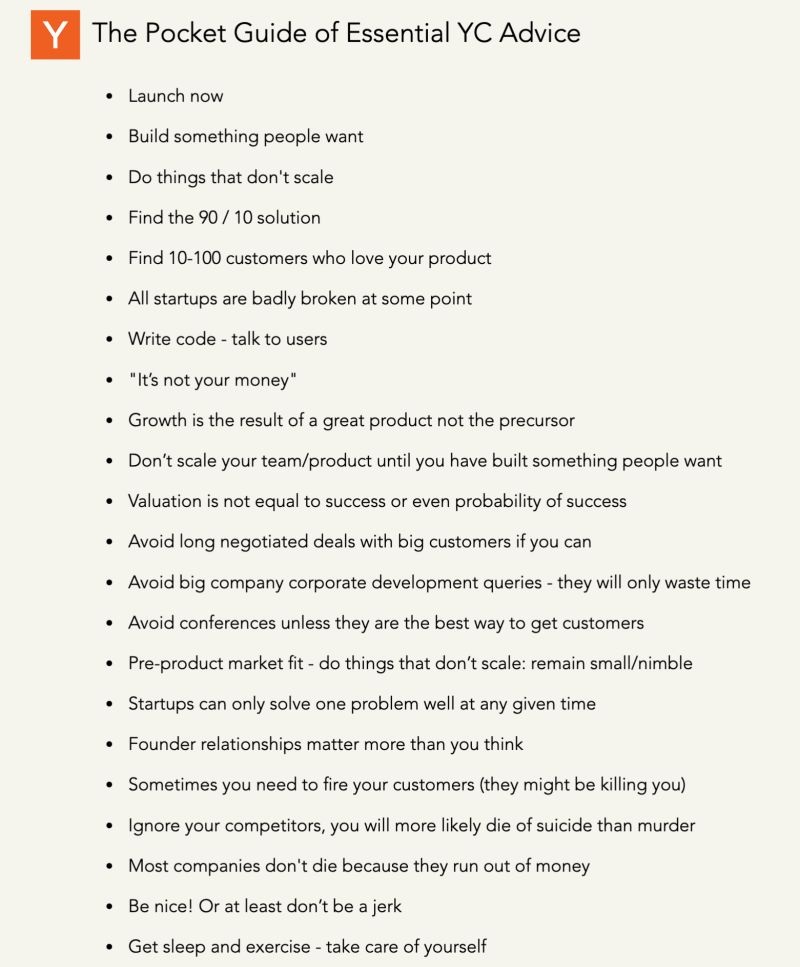



Here are the secrets from the world’s most successful startup accelerator, Y Combinator.
Sometime in 2011, the Economic and Financial Crimes Commission (EFCC) in a sting operation arrested one Mr Ezengbuma Okonkita, a renowned Nigerian politician. He was arrested and immediately charged to court for embezzlement of public funds and money laundering.
High figures of money were found lodged in his different bank accounts in different currencies; the money which he admitted had been embezzled.
The Efcc instituted a criminal action against him but his lawyers advised him to go into a plea bargain with the Efcc since there is incontrovertible evidence stacked against him and his putting up a defense will expose him to lengthy criminal charges and lengthy trial time.
He negotiated a deal where he insisted that he is ready to forfeit all the money found in his account to the government but on the paramount condition that he will not be sent to jail by the EFCC.
The Efcc for reasons best known to them accepted the deal and he forfeited the money to the Nigerian government and the criminal case was brought to a close.
**************
I painted the above hypothetical scenario so as to draw similarity to what happened with the case of Mr Ahmed Tinubu v The US Government where he struck a deal with the US government and the contents of the deal is for him to forfeit $460,000 to the US government and the prosecution will not send him to jail.
Mr Ezengbuma Okonkita or his supporters cannot later in the future claim that he was never found guilty because he was not sent to prison.
Plea bargain and forfeiture of proceed of crime only takes place when the accused person admits his guilt and due to the fact that there is a stack of evidence against him alluding to the fact that he committed the crime he decided to strike a deal with the prosecutor which will involve him remitting the proceed of crimes back to the government. You can not forfeit your property to the government or to the court if you are not admitting to committing the offense you are charged with, that is not how criminal justice works.
Money is not forfeited except if a crime has been committed or the money in question is the proceeds of a crime. If a crime has not been committed, the person asked to forfeit his hard-earned money would put up a defense and make his case but where no case is made, it simply means that the accused person is admitting guilt or admitting the criminal charges leveled against him by the prosecution.
Mr Ahmed Tinubu, the president-elect is not a father Christmas to have forfeited a whooping sum of $460,000 to the US government for no reason; he only entered into a plea bargain with the prosecutor where he agreed to forfeit money and be kept out of prison and that is what is called plea deal in the criminal justice system.
Forfeiture in layman’s definition simply means the loss or giving up of something as a penalty for committing a crime or giving up something which is a proceeds of crime.
When the Government has a strong case, the Government may offer the defendant a plea deal or the accused person may by himself request for a plea deal to avoid trial and perhaps reduce his exposure to a more lengthy sentence. A defendant may only plead guilty if they actually committed the crime and admits to doing so in open court before the judge and will accept as part of the bargain to forfeit some of his belonging to the government.
It is as simple as this!
It is now very embarrassing that some senior citizens, especially reputable senior lawyers from the APC camp who obviously know the facts and the law will for the sake of politics throw caution to the wind and try to twist the facts to deceive the general and to confuse their gullible supporters. Instead of sticking to this stale watery defense that the $460,000 forfeited was for taxes or was for a fine in civil forfeiture, they should rather come up with something else more concrete and believable.
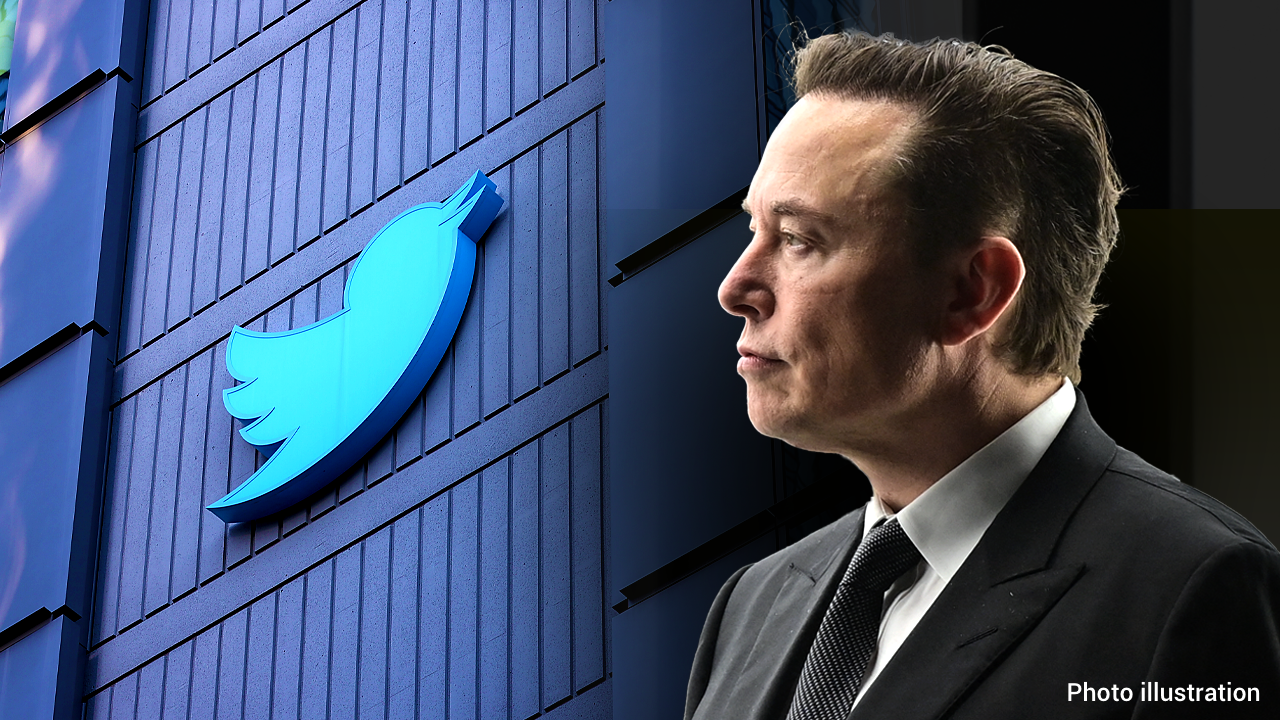
Micro-blogging platform Twitter through its CEO Elon Musk has announced the final date for the removal of free verification badges on Twitter accounts.
Musk took to his Twitter handle to disclose that the final date for removing legacy Blue checks is on the 20th of April 2023. He tweeted, “Final date for removing legacy Blue checks is 4/20”.
Final date for removing legacy Blue checks is 4/20
— Elon Musk (@elonmusk) April 11, 2023
This final date for the removal of free checkmarks is coming after Musk had earlier disclosed that the activity would commence on April 1,2023. The company through its Twitter Verified handle disclosed that on April 1st, it will begin winding down its legacy verified program and removing legacy verified checkmarks of accounts that the company had previously deemed to be notable or authentic. It further added that unless users have signed up for Twitter Blue, which starts at $8 per month, they would retain their badge.
On April 2, Twitter changed the language in the description of verified users, which reads, “This account is verified because it is subscribed to Twitter Blue or is a legacy verified account.
Also, Twitter launched a program for businesses and organizations to charge $1,000 per month for verification badges (gold for brands, companies, and nonprofits and grey badges for government accounts. Twitter however waived that fee for its 500 top advertising clients that have been previously verified.
Musk’s decision to remove free checkmarks has been followed by widespread criticism from different users and several celebs who said that they would rather lose their checkmark than pay the sum. Top news organization New York Times publicly stated that it would not be paying for Twitter Blue checkmark.
On the 1st of April, only 12,305 of roughly 420,000 legacy verified accounts subscribed to a paid Twitter Blue plan, which is just above 3 percent of the celebrities, pro athletes, influencers, and media personalities who make up the platform’s power users.
While Twitter Blue provides some additional features such as being able to edit tweets and write longer posts, the major selling point promoted to users is the ability to simply get a checkmark next to their username by paying $8 per month or $11 on mobile devices.
Musk officially launched Twitter Blue in November last year, but quickly suspended the service as users started paying for a verification badge to impersonate companies and brands. To combat this, Twitter rolled out a feature that showed who paid for Twitter Blue and who was a legacy verified account. Twitter Blue was then relaunched in December.
It is understood that Musk is making the switch to paid verifications in order to generate revenue for the company, however, it has been followed with only very few positive responses, while many are reluctant to try the new service. Musk hopes that Twitter Blue subscriptions will one day make up for the loss of half of its advertisers, meanwhile, analysts believe that the company has a lot of work ahead of itself.
Elon Musk told the BBC in a spontaneous interview that running Twitter has been “quite painful” and “a rollercoaster.” Since taking the helm of the social media platform in October, Musk has cut its workforce from around 8,000 to about 1,500 employees. But he admits it hasn’t been an easy ride. “This hasn’t been some kind of party,” Musk said, noting that the last few months have been stressful. The serial entrepreneur claims that Twitter is now “roughly breaking even,” and that most of its advertisers have returned. However, he added that he would sell the business if the right buyer came along.
Musk also said that he has “shot himself in the foot” with his tweets on numerous occasions. “I think I should not tweet after 3am.” Twitter will adjust the BBC’s label from “government funded media” to “publicly funded” media after the broadcaster objected.
NPR said Wednesday it would quit Twitter after Twitter first labeled it as “state-affiliated media,” before changing it to “government-funded media,” following heavy criticism. Twitter Inc. is no longer an independent company, but rather a part of a new shell called X Corp, reports Bloomberg, citing a court document. (LinkedIn News)
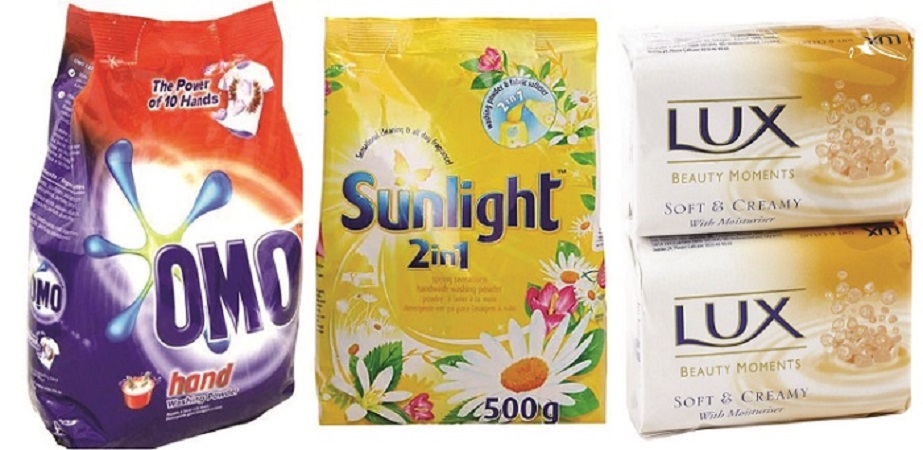
It is what it is: markets release waves and only great companies have the right antennas to pick the signals. Those which do not, fade over time. This can be at a company- or brand-level. We’re seeing that play out in Nigeria as Unilever Nigeria discontinues some iconic brands in the nation.
Yes, Omo and Lux are gone: “On 17th March 2023, Unilever Nigeria Plc announced changes in its business model to exit Homecare and Skin Cleansing categories. These categories are margin dilutive and the exit is part of the company’s aim to make its operation in Nigeria competitive and profitable.”
Unilever’s Lux has no chance in this age where many Nigerians are becoming “whiter” and “fairer” to the extent you may mistake your ex-classmates a few years down the line. So, Nivea (which whitens skin) killed Lux while Ariel took down Omo. The Ariel frontal assault on Omo was through sachetization (making small packages) where Omo’s big box was disintermediated. Since that happened in the 1990s, Omo has not recovered. Omo used to be the king and its main competitor was Elephant. But Ariel arrived and knocked them out.
As a student in FUTO, I was among the regional sales network for Royal Crown, a haircare maker. My distribution center was then Hotel De General Nwankpi in Orlu. It was a great business and I saw first hand how innovation worked. Kessingsheen Hair Cream was very popular.
But Royal Crown came and caused wahala. But Royal Crown then quickly faded with the likes of Soulmate using effective pricing and stylist support system to win market share. Stylists (yes, hairdressers) were the most important entry points.
For the fall of Omo and Lux, you will read about high prices of local raw materials and forex difficulties as the core reasons why Unilever is exiting this personal care category. Those are nonsensical excuses when you consider that Ariel is also a foreign product (from P&G), and Germany-based Nivea has no production plant in Nigeria, which means they are also operating within the same market dynamics.
Innovate or exit!
Unilever Nigeria Plc is being compelled to buy dollars above the market rate because rationing of foreign-exchange by the West African nation’s central bank has caused a shortage of the U.S. currency.
The local unit of Unilever Plc bought the greenback from money changers and lenders at between 440 to 450 naira on an average in the first-half of the year, Adesola Sotande-Peters, finance director at the company, said at an investor conference call in Lagos. That compares with 411.54 naira to a dollar at 4.01 p.m. in Lagos on Thursday.
Nigeria, Africa’s biggest crude producer, has been rationing dollars as the pandemic-induced slowdown, and a slump in oil prices put pressure on reserves. That’s increasing costs for some companies, while others such as Bua Cement Plc are cutting imports. Reserves have dropped about 5% this year to $33.6 billion as of Aug. 10.
Last month, the Central Bank of Nigeria halted the sale of foreign exchange to money changers, sucking out $5.72 billion of annual supply.
Unilever hasn’t seen an increase in dollar supply since the central bank’s latest policy, Sotande-Peters said. “We are still waiting to see how liquid banks will be” to meet a lot of customers’ demand, she said.
The maker of Close-Up toothpaste and Lux soap in Nigeria needs foreign exchange to import petrochemicals, a raw material for many of its products, according to the finance director.In order to ameliorate the impact of the dollar shortage on operations, Unilever is increasing local sourcing of raw materials to enable it be “forex neutral in the very near future,” Carl Cruz, managing director said at the same conference call.
Comment 1: This was also how Cowbell used sachetization to push Peak milk to coma until they woke up although the market had gone far when they woke up. Big Cola divided the Coca-Cola market through direct sales and free chilling of drinks at strategic locations, Indomie is practically competing with itself in the market by having different product designs and flavours just to distract the customers from comparing other products in the market, Flutterwave is doing same. They have many payment gateways in the market that are doing the same thing. Innovation is key for any business that must survive in this era.
Comment 2: I must agree it is what a market like Nigeria demands, people can’t store for long and don’t have extended cash. In short they spend on what they need. The semo packages have resulted to something like this too. If companies understood localisation and not generalization, they would have know that is how garri Is still in business (we measure in units, cups).
Comment 3: Prof Ndubuisi Ekekwe
1. I have observed that a major challenge with Multinationals is their globalization standardisation strategy at the expense of localisation. For many of them, they find it hard to adapt their product offering to conform to the local market. “Sachetization” is not a global strategy but it suits our local market.
KFC also had this issue of clash between globalization and localisation of product offering.
Help is often a rewarding activity when it is quick and easy to do, and most importantly, doesn’t cost anything… (well, perhaps it might burn a very small bit of online data for those who are not unmetered!) but it should not take long.
I’ve been using Chat GPT a bit recently to find how exposed it is to different brands and products, and to examine in what way it influences commercial ecosystems.
I had been asking a few questions about Web3 and Blockchain. Then I asked this question:
Disambiguate ‘9ja Cosmos’ from ‘Cosmos’
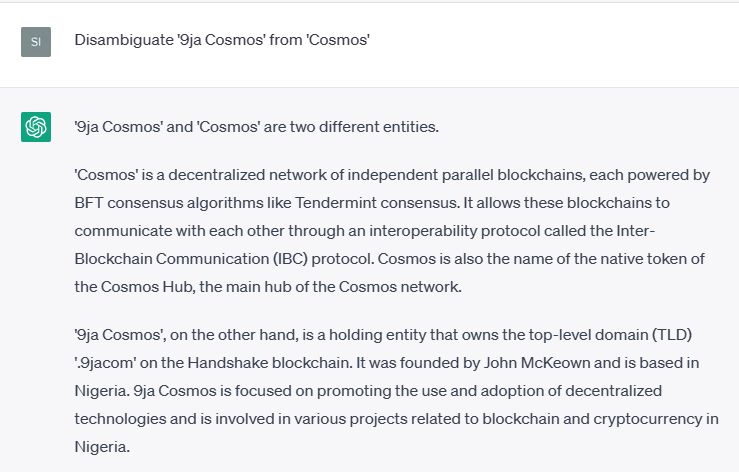
Though I had become a bit concerned about some replies about other things it had said earlier.
It seemed to regularly contradict itself. For example:
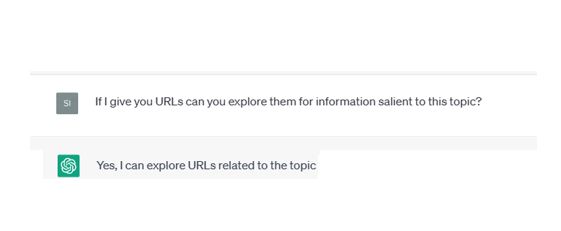
I asked it a question about its capability to use online resources:
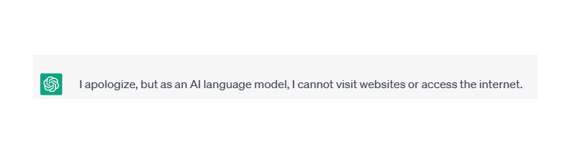
But in a similar context later when asked the same, it said:
When a friendly Discord Channel member asked cold, he was told:
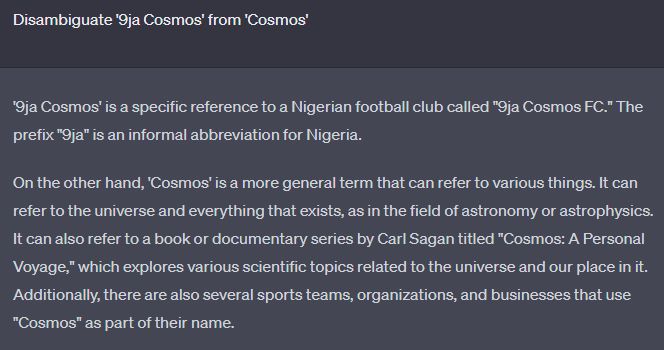
But here’s the thing… There isn’t even a ‘9ja Cosmos FC’. It doesn’t exist. There isn’t even a ‘Naija Cosmos FC’.
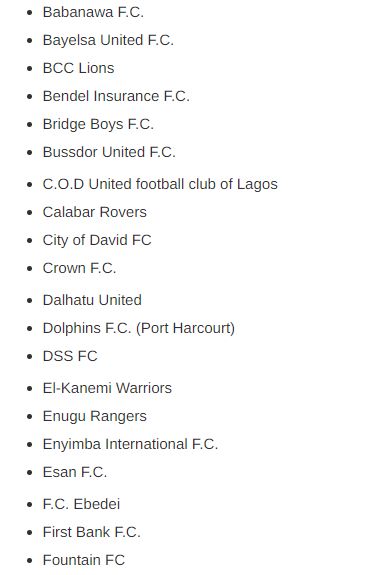
So for those who can access Chat GPT, I would like you to pose this to it:
Disambiguate ‘9ja Cosmos’ from ‘Cosmos’
and see what other strange results it can come up with. Testing ‘Information Markets’ is important. If you get the opportunity to try, please share any responses! Thanks.
9ja Cosmos is here…
Get your .9jacom and .9javerse Web 3 domains for $2 at:
All reference sites accessed between 12/04/2023
nigerianinfopedia.com/nigerian-football-clubs-list-football-clubs-nigeria/
chat.openai.com/auth/login