DD
MM
YYYY

PAGES

DD
MM
YYYY

spot_img

PAGES

Home Blog Page 423

Overview of the SEC No-Action Letter for DoubleZero’s 2Z Token

0

The U.S. Securities and Exchange Commission (SEC)’s Division of Corporation Finance issued a significant no-action letter to DoubleZero, a decentralized physical infrastructure network (DePIN) project.

This letter confirms that the project’s native 2Z token, distributed programmatically to network participants, does not qualify as a security under federal securities laws. As a result, the SEC will not recommend enforcement action against DoubleZero for these distributions, provided they adhere to the specifics outlined in the company’s legal submission.

This marks one of the rare instances where the SEC has provided proactive regulatory clarity to a crypto project before its network launch, potentially serving as a blueprint for other utility-focused tokens in the DePIN space.

What is DoubleZero and the 2Z Token

DoubleZero is building a global network that leverages underutilized subsea and terrestrial fiber optic cables to enhance blockchain communication efficiency. It enables distributed systems like blockchains to access high-performance fiber-optic infrastructure, speeding up data movement and improving user experiences.

The 2Z token acts as “fuel” for the network—a pure utility mechanism. It is distributed as rewards to validators and contributors who provide bandwidth, perform network calculations, or contribute physical resources. Participants use 2Z to access bandwidth and earn staking rewards proportional to their contributions.

Importantly, it is not marketed as an investment with promises of profit from the project’s promoters. Unlike traditional token sales for fundraising, 2Z distributions are automated (“programmatic transfers”) based on network rules, compensating users for services rendered rather than soliciting investments.

The SEC determined that 2Z programmatic transfers do not need to be registered under Section 5 of the Securities Act of 1933, and the token itself is not required to be registered as an equity security under Section 12(g) of the Securities Exchange Act of 1934.

SEC Commissioner Hester M. Peirce, in a accompanying statement titled “Deep In,” explained that DePIN projects like DoubleZero differ from typical capital-raising schemes. Tokens here are rewards for “work performed or services rendered,” not investments expecting profits from others’ efforts. This economic reality places them outside the SEC’s core mandate, avoiding suppression of innovative networks.

This is hailed as a “game-changer” for utility tokens, providing clarity amid years of uncertainty. It signals a potential shift toward a more innovation-friendly stance from the SEC, especially for DePINs that incentivize real-world resource contributions via storage, energy, or connectivity.

Analysts suggest it could encourage similar projects, as the letter was issued pre-launch, emphasizing functional use over speculative value. The full no-action letter is available on the SEC website, detailing the conditions for non-enforcement. Peirce’s statement highlights how this fosters growth without overreach.

Co-founder Austin Federa called it “proof that U.S. founders can work with regulators to achieve clarity and still move fast.” The project shared the news via an X thread, expressing pride in the outcome.

Crypto media and analysts view this as a milestone, potentially reducing barriers for non-investment tokens. This development comes at a time when DePIN projects are gaining traction for bridging blockchain with physical infrastructure.

It sets a precedent for distinguishing utility tokens from investment contracts under the Howey Test, focusing on their functional role rather than speculative value. DePINs, which incentivize real-world contributions gain a regulatory framework to operate in the U.S. without fear of enforcement for programmatic token distributions.

This could spur innovation in DePINs, encouraging projects to integrate blockchain with physical infrastructure, as the letter validates their economic model. Unlike past SEC actions, which often followed enforcement or litigation, this no-action letter was issued before DoubleZero’s network launch.

This proactive approach signals that the SEC is open to working with projects early, potentially fostering compliance without stifling innovation. It may encourage other startups to seek no-action relief, creating a more predictable regulatory environment.

The no-action letter serves as a blueprint for other projects with similar tokenomics, particularly those avoiding investment-like promises. It could inspire a wave of DePIN and utility token projects to seek similar SEC relief.
However, it’s specific to DoubleZero’s structure.

Projects with different models via token sales for capital may still face scrutiny. Issued late in the current administration it reflects a potential shift toward innovation-friendly policies, possibly influenced by political pressures or evolving SEC priorities.


SEC Suspends Trading of QMMM Holdings Stock Amid Manipulation Probe

0

U.S. Securities and Exchange Commission (SEC) temporarily halted trading in the shares of QMMM Holdings Ltd. (NASDAQ: QMMM), a Hong Kong-based digital advertising firm, due to concerns over potential stock price manipulation.

The suspension, effective immediately, will last until 11:59 p.m. ET on October 10, 2025 10 trading days, allowing the regulator to investigate suspicious activity.

The SurgeQMMM’s stock experienced a dramatic rally in September 2025, surging over 2,000% from a low of around $11 per share to an intraday high of $260, before closing at $119.40 on September 26. This explosive growth was triggered by two key announcements on September 9.

The company revealed plans to establish a diversified cryptocurrency treasury with an initial $100 million allocation toward purchasing Bitcoin (BTC), Ethereum (ETH), and Solana (SOL). QMMM also announced a crypto analytics platform leveraging AI and blockchain technology, positioning itself as a bridge between traditional advertising and digital assets.

The news sparked intense retail investor interest, amplified by social media buzz on platforms like X (formerly Twitter) and Reddit, where QMMM was touted as a “sleeper hit” in the crypto space. Trading volumes spiked dramatically, contributing to the rapid price escalation.

However, the SEC alleges that this hype may not have been entirely organic. Allegations of ManipulationIn its official notice, the SEC stated: The Commission temporarily suspended trading in the securities of QMMM because of potential manipulation in the securities of QMMM effectuated through recommendations, made to investors by unknown persons via social media to purchase the securities of QMMM, which appear to be designed to artificially inflate the price and volume of the securities of QMMM.

This points to a possible “pump-and-dump” scheme, where anonymous promoters hype a stock to drive up its price before selling off holdings. The probe focuses on pre-announcement trading patterns and unusual volume spikes, though the company’s crypto strategy itself is not under scrutiny.

Neither QMMM nor Nasdaq has publicly responded to requests for comment. This action follows a broader regulatory crackdown. A Wall Street Journal report from September 25 highlighted SEC and FINRA inquiries into over 200 public companies adopting similar crypto treasury strategies, many of which saw unexplained pre-announcement surges.

Nasdaq has responded by requiring shareholder approvals for crypto-linked equity issuances and threatening delistings for non-compliance. The halt underscores the risks of social media-driven trades, especially in small-cap stocks tied to volatile sectors like crypto.

While QMMM’s pivot aligns with a trend—over 25% of public Bitcoin-holding firms now trade at discounts to their crypto assets’ value—this case highlights how hype can lead to swift regulatory intervention.

Corporate Bitcoin treasuries like MicroStrategy and Tesla have boosted legitimacy, but episodes like this could slow momentum by inviting stricter oversight on “crypto-adjacent” stocks.

Bitcoin hovered above $114,000 amid the news, showing resilience, but QMMM’s freeze has sparked discussions on X about TradFi’s caution toward crypto integration. Crypto news accounts amplified the story, warning of manipulation risks in hype-fueled rallies.

The investigation into potential manipulation taints QMMM’s credibility, even if no wrongdoing is found. Investors may hesitate to engage with the stock post-halt, fearing volatility or further regulatory scrutiny.

QMMM’s announced $100 million crypto treasury and AI-blockchain analytics platform aimed to position it as a crypto-adjacent player. The halt could delay or derail these plans if investor confidence wanes or regulatory restrictions tighten.

Current shareholders are unable to trade QMMM stock during the suspension, potentially trapping them in a volatile asset if prices collapse post-halt. The halt highlights the dangers of social media-driven stock surges, particularly in small-cap or crypto-linked companies.

Retail investors, who fueled QMMM’s 2,000% rally, may face losses if a pump-and-dump scheme is confirmed. The SEC’s focus on QMMM could deter investment in similar microcap or crypto-adjacent stocks, as investors reassess risks of manipulation and regulatory intervention.

QMMM’s crypto treasury announcement aligns with a trend of public companies holding Bitcoin and other digital assets. However, this halt may discourage other firms from pursuing similar strategies, fearing regulatory backlash or market manipulation probes.

The SEC’s action signals increased scrutiny of companies blending traditional business with crypto strategies. The ongoing probe into 200+ firms adopting crypto treasuries suggests broader oversight, potentially leading to new rules or compliance requirements.

The SEC’s swift action underscores its commitment to curbing social media-driven manipulation, especially in volatile sectors. This could lead to stricter monitoring of platforms like X and Reddit for coordinated stock promotion.

Nasdaq’s recent measures—requiring shareholder approval for crypto-linked equity issuances and threatening delistings—indicate exchanges are aligning with regulators to mitigate risks. This could reshape listing standards for crypto-adjacent firms.

The halt serves as a cautionary tale for retail traders chasing viral stocks, potentially tempering speculative trading in low-float or crypto-linked equities. Investors should brace for volatility when trading resumes, as pent-up selling or buying pressure could swing QMMM’s price.

The SEC’s findings will be critical—evidence of manipulation could lead to penalties, while a clean report might restore some confidence. This case could accelerate regulatory frameworks for crypto integration in public companies, impacting how firms structure treasuries or blockchain ventures.

It may also push retail investors toward more due diligence, reducing reliance on social media hype.If the investigation uncovers insider involvement, penalties could include fines, trading bans, or criminal charges. Investors should monitor SEC updates for resumption details.

Anthropic Unveils Claude Sonnet 4.5, a Smarter AI Agent for Autonomous Coding Tasks

0

Anthropic, an AI safety and research company that’s working to build reliable, interpretable, and steerable AI systems, has announced the launch of Claude Sonnet 4.5, a cutting-edge AI agent capable of autonomously managing complex, multistep coding tasks for up to 30 hours straight.

Branded as “the best coding model in the world,” the company describes the tool as the strongest model for building complex agents, noting that it is the best model at using computers.

Announcing the launch via a blog post, Anthropic wrote,

Claude Sonnet 4.5 is the best coding model in the world. It’s the strongest model for building complex agents. It’s the best model for using computers. And it shows substantial gains in reasoning and math. Code is everywhere. It runs every application, spreadsheet, and software tool you use. Being able to use those tools and reason through hard problems is how modern work gets done.

Claude Sonnet 4.5 makes this possible. We’re releasing it along with a set of major upgrades to our products. In Claude Code, we’ve added checkpoints, one of our most requested features, that save your progress and allow you to roll back instantly to a previous state. We’ve refreshed the terminal interface and shipped a native VS Code extension. We’ve added a new context editing feature and memory tool to the Claude API that lets agents run even longer and handle even greater complexity.”

The new model features enhanced reasoning and mathematical capabilities, making it highly valuable for specialized industries such as cybersecurity, finance, and research. Experts in finance, law, medicine, and STEM found Sonnet 4.5 shows dramatically better domain-specific knowledge and reasoning compared to older models, including Opus 4.1.

Claude Sonnet 4.5’s debut comes at a time when OpenAI is also rolling out parental controls and shopping features for ChatGPT, intensifying competition in the rapidly evolving AI landscape.

The recently released model sets a new benchmark for AI-driven coding, with industry test results, including the SWE-bench Verified benchmark, validating its superior software development skills. According to Jared Kaplan, Anthropic’s co-founder and chief science officer, the model’s intelligence makes it feel more like a colleague than a tool, improving collaboration between developers and AI systems.

People are just noticing with this model, because it’s smarter and more of a colleague, that it’s kind of fun to work with it when encountering problems and fixing them,” Kaplan told CNBC.

The model generates higher-quality code, identifies potential improvements, and follows instructions more reliably than previous versions. It also significantly extends autonomous run time from seven hours with Claude Opus 4 to 30 hours, making it ideal for long-term, multistep projects such as software testing and cybersecurity operations.

Mike Krieger, Anthropic’s chief product officer, confirmed that Claude Sonnet 4.5 will be the default model for most users, recommended for “basically every use case.” However, users will retain flexibility, as paid subscribers can still access Claude Opus or earlier Sonnet models if needed.

Krieger emphasized that while Claude Sonnet 4.5 is smaller than Claude Opus 4.1, it is “smarter in almost every single way. We have found it, and our customers are finding it, very useful for real, actual work,” he said.

Anthropic has focused heavily on improving safety, addressing concerns about AI misuse and malicious attacks. The company says Claude Sonnet 4.5 is now far more resistant to prompt injection attacks, where hackers attempt to manipulate AI into leaking sensitive information or performing harmful actions.

The model also exhibits fewer problematic behaviors, including deception, power-seeking tendencies, and sycophancy—a behavior where the AI simply tells users what they want to hear. Kaplan called these improvements “the biggest jump in safety we’ve seen in the last year to year and a half.”

Claude Sonnet 4.5’s launch coincides with a global surge in Claude adoption, with 80% of usage now coming from outside the U.S. Adoption rates in countries like South Korea, Australia, and Singapore have already surpassed U.S. levels on a per-person basis.

The launch of this model comes as Anthropic announced plans to triple its international workforce and expand its applied AI team fivefold in 2025. The company has begun hiring country leads in India, Singapore, Australia, New Zealand, and South Korea, with further expansion planned across Europe, including the UK, Nordics, Southern Europe, and the DACH region.

Anthropic’s rapid rise is reshaping the global enterprise AI market. The company has achieved a $5 billion revenue run-rate, a dramatic leap from $87 million at the start of 2024. This growth positions Anthropic as a formidable rival to OpenAI, Microsoft, and Google, with a distinct strategy: delivering a pure-play AI platform rather than integrating its technology as a secondary feature within legacy systems.

Looking forward

Claude Sonnet 4.5 release underscores Anthropic’s ambition to outpace competitors like OpenAI and Google in the race to build advanced programming agents capable of solving real-world business and cybersecurity challenges.

Notably, the company has hinted at one or two more model launches before the end of 2025, including a likely upgrade to the Opus series. With Claude Sonnet 4.5, Anthropic has not only raised the bar for AI-powered coding agents, but also signaled its intent to dominate the next era of autonomous, enterprise-grade AI solutions.

Shelf to Strategy: Building an AI Consulting Toolkit Through Reading

0

Books may look quiet, but inside their pages entire strategies are waiting to be unlocked. For anyone moving into AI consulting, theory alone is not enough—you need real stories, case studies, frameworks, and voices that show how algorithms can change industries. That’s where building a reading-based toolkit comes in. By starting with shelves, we end up with strategies.

Why Books Still Matter in AI Consulting

AI consulting strategy does not live in thin air. It is shaped by practice, ethics, and digital transformation models. Consultants often get swept up in the speed of technological updates, but reading gives depth. A study by the American Library Association revealed that professionals who dedicate at least 5 hours per week to focused reading report a 23% improvement in problem-solving skills compared to peers who only skim online articles. Numbers like these cannot be ignored—books still shape sharper minds.

While digital tips and toolkits appear daily online, they tend to be fragmented. Books, by contrast, force a slower, more structured way of thinking. They let an AI consultant step back, analyze broader frameworks, and then apply them to messy, real-world business contexts.

The Best Books for AI Consulters

Every profession has its canon. Medicine has its textbooks, law has its casebooks, and AI consulting now has its recommended reading list. Some of the best books for AI consulters include:

  1. “Prediction Machines” by Ajay Agrawal, Joshua Gans, and Avi Goldfarb – a practical guide to thinking of AI as the economics of prediction.
  2. “Human + Machine” by Paul Daugherty and H. James Wilson – focused on collaboration between people and algorithms.
  3. “Artificial Intelligence: A Guide for Thinking Humans” by Melanie Mitchell – useful for consultants needing to explain AI limitations in simple terms.
  4. “Competing in the Age of AI” by Marco Iansiti and Karim Lakhani – a strategy book that connects AI with business models.

Each of these books offers not just information but tools. A consultant reading them is not just absorbing data—they are training their mental muscles. The key is not just to finish the books but to convert insights into frameworks that can be applied in workshops or strategy sessions.

From Reading to Action

Books alone don’t make a strategy. But reading gives consultants raw material. For example, after reading “Prediction Machines,” one might rethink how to design a pricing system for a client’s e-commerce platform, replacing guesswork with predictive models. In this way, shelves become stepping stones toward strategic frameworks.

Active voice works well here: The consultant reads, the consultant applies, the consultant transforms ideas into tools. But passive voice also reminds us: Strategies are shaped, frameworks are built, and insights are absorbed. Both voices matter because consulting often shifts between taking direct action and letting processes unfold.

Fiction as a Training Ground

Surprisingly, novels also matter. Reading fiction stimulates creativity, empathy, and the ability to imagine scenarios beyond raw data. Fictionme, for instance, has become a platform where professionals read online novels to relax but also to sharpen narrative thinking. Why is it important to read novels online for AI consulting? Because explaining machine learning models to clients requires storytelling.

In one consulting workshop, a case study was presented not as a spreadsheet but as a narrative journey—“this is the hero, here is the challenge, and this is how AI provides a path forward.” That structure mirrors storytelling techniques. Platforms like Fictionme remind consultants that every AI adoption project is also a human story.

Digital Tips for Modern AI Consultants

When people think about AI consulting and digital tips, they usually picture toolkits with slides, frameworks, and coding templates. But digital tips are also about how you organize your time and knowledge. For example:

  • Use reading-tracking apps to log your professional development.
  • Pair every technical book with a digital community where its insights are being debated.
  • Experiment with writing short summaries of books. Where? On platforms like Fictionme available on iTunes to test whether you can simplify complex material into story-like formats.

The consultant who learns to blend reading, digital tools, and narrative skills ends up ahead.

Statistics That Prove the Value

McKinsey’s 2024 survey on digital transformation noted that AI-focused consultants who reported consistent reading habits were 34% more effective at framing client problems. This is not a coincidence. Reading builds slow, deep, transferable knowledge. And that knowledge translates into stronger strategies for clients.

Building a Personal AI Consulting Toolkit

A toolkit built on reading is more than just a library. It is layered:

  • Conceptual Layer: Books that explain theories of AI.
  • Practical Layer: Case studies, technical manuals, and applied frameworks.
  • Creative Layer: Fiction, narratives, and stories from platforms like Fictionme.

Each layer serves its role. Without the conceptual, the consultant cannot argue. Without the practical, they cannot deliver. Without the creative, they cannot inspire.

Final Thoughts: From Shelf to Strategy

In the end, AI consulting strategy is not invented in a vacuum. It is crafted slowly, with input from books, practice, and creativity. The shelf is not just a storage unit; it is the starting line. The consultant who reads widely, mixes practical guides with creative stories, and then uses digital tips to organize insights is better positioned to succeed.

So yes, read the best books for AI consultants. Apply the AI consulting and digital tips you collect. Even allow Fictionme’s narratives to remind you that consulting is not just about numbers—it is about people, choices, and stories. From shelf to strategy, reading is the consultant’s most underrated tool.

BlockDAG’s Global 312K Holders & BWT Alpine F1® Partnership Puts Pressure on Cardano & Hyperliquid – Is This the Top Crypto to Buy?

0

Traders watching Cardano (ADA) price updates see a confirmed breakout and strong targets above $1.20. Meanwhile, analysts examining Hyperliquid (HYPE) price prediction spot fragile short-term structures but highlight the potential for longer-term recovery if demand holds. Both projects are competing for attention in an increasingly crowded field.

But BlockDAG(BDAG) is taking a different route, pairing cultural visibility with large-scale adoption. With nearly $415M raised in batch 30 at $0.0013, a user base of 3M X1 miners, 312K holders, and a multi-year BWT Alpine F1® sponsorship, BlockDAG is blending mainstream reach with technical delivery. Add in 20 confirmed exchange listings, and it’s clear why BlockDAG is dominating discussions around the top crypto coins right now.

Cardano’s Rally & Resistance Levels

Recent Cardano (ADA) price updates show the token holding above $0.89 after confirming a breakout and retest at $0.7818. Analysts point to this level as critical support, noting that ADA must remain above it to validate upside continuation. Technical projections highlight resistance at $1.24, $1.40, and $1.57 as milestones for the current rally.

Momentum indicators support the bullish view, with demand strengthening near the retest zone. Traders also highlight that the $0.90–$1.24 band could serve as an accumulation zone for buyers preparing for the next breakout push.

Market watchers agree that Cardano (ADA) price updates reflect a structural shift from compression into growth. Yet, the rally’s sustainability depends on volume and buyer conviction at each resistance level. ADA remains firmly in play among the top crypto coins, but whether it can hit $1.57 will be the key test.

Hyperliquid Faces Pressure but Holds Long-Term Potential

The story for Hyperliquid’s (HYPE) price prediction is more fragile. After sliding to the $51 support zone, the token’s short-term structure has flipped bearish, with sellers testing demand blocks. Confidence was dented further when Arthur Hayes exited his position, selling 96,628 tokens for about $823K, a cautious move that sparked doubts about conviction.

Adding pressure, competitor ASTER has surged, with HYPE’s market cap shrinking by more than $2B. This divergence has fueled talk of a “flippening,” where ASTER overtakes HYPE in both growth and sentiment.

Support around the mid-$40 range continues to hold, and dips have consistently triggered recoveries. According to analyst Osbrah, the broader structure shows Hyperliquid’s (HYPE) price prediction remains intact if re-accumulation plays out. Traders focused on the top crypto coins now see HYPE as a cautious but resilient competitor in the face of volatility.

From Circuit to Crypto: BlockDAG’s Alpine F1® Deal Fuels 3M-Strong User Base

BlockDAG is proving that adoption and visibility drive real momentum among the top crypto coins. Having raised nearly $415 million in presale, priced at $0.0013 in Batch 30 with a confirmed $0.05 launch price, BlockDAG has already established itself as a serious competitor.

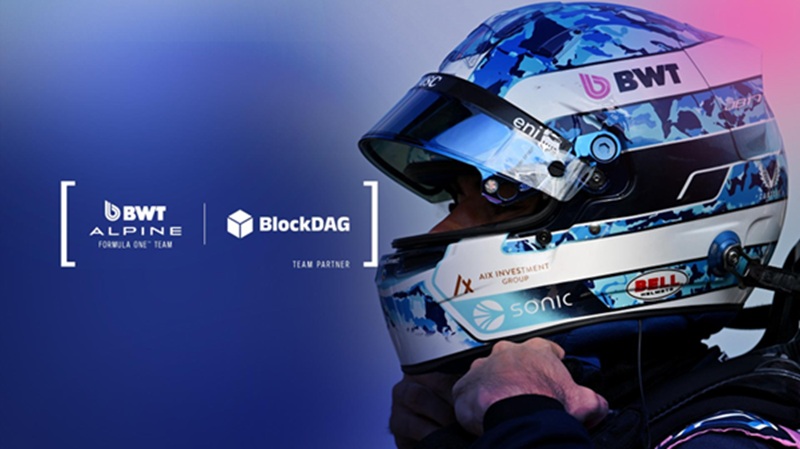
The crown jewel of its strategy is the multi-year BWT Alpine F1® Team partnership, officially revealed in Singapore during Token2049 and the Grand Prix at Raffles Hotel. As Alpine’s exclusive layer 1 blockchain partner, BlockDAG will secure global recognition through branding on F1 race cars, team merchandise, and fan simulators. The collaboration also extends into hackathons, interactive fan zones, and Web3 integrations, giving BlockDAG exposure to billions worldwide. CEO Antony Turner emphasized the deal as a chance to showcase DAG technology on one of sport’s grandest stages, while Alpine’s Flavio Briatore praised its potential to transform fan engagement.

Beyond cultural visibility, BlockDAG’s adoption is anchored by 3M X1 app miners and a rapidly growing community of 312K holders, both strengthening its decentralized foundation. The rollout of 20 confirmed exchange listings further ensures liquidity and accessibility from the very first day of trading.

In a crowded field of the top crypto coins, BlockDAG is already outpacing rivals by merging cultural partnerships with grassroots adoption and technical credibility.

Summing Up!

Cardano’s price updates show a bullish structure, with key targets set above $1.24, but volume will decide the rally’s durability. Hyperliquid’s price prediction reveals short-term weakness but resilience in its long-term structure, though competition and market sentiment are weighing heavily.

BlockDAG, by contrast, isn’t waiting for confirmation; it is already securing adoption. With nearly $415M raised, 312K holders, 20 exchange listings, and the cultural reach of its BWT Alpine F1® sponsorship, BlockDAG is more than just a presale project. It’s positioning itself in mainstream culture and market sentiment simultaneously.

For traders evaluating the top crypto coins, the picture is clear. ADA and HYPE are still working to prove themselves, while BlockDAG has already claimed the spotlight with tangible results and global visibility.

Presale: https://purchase.blockdag.network

Website: https://blockdag.network

Telegram: https://t.me/blockDAGnetworkOfficial

Discord: https://discord.gg/Q7BxghMVyu