DD
MM
YYYY

PAGES

DD
MM
YYYY

spot_img

PAGES

Home Blog Page 4239

Tesla Slash Prices of Its Model 3 Sedan And Model Y Vehicles in The U.S to Boost Demand

0

Electric Vehicle manufacturer Tesla has once again slashed the prices of its Model 3 Sedan and Model Y Vehicles in the U.S. to boost demand.

On its website, Tesla slashed the prices of its Model 3 Sedan by $1,000 and its Model Y vehicles by $2,000, bringing the prices to $41,990 and $49,900 respectively.

Recall that the automaker recorded an impressive first quarter (Q1) result where it delivered 422,875 vehicles globally. The S and X Models made up 10,695 of those deliveries.The strong first-quarter sales were a result of Tesla implementing dramatic price cuts in January as a response to disappointing numbers in the final quarter (Q4) of 2022.

Comparing the number of deliveries for the first quarter of the year, with those for the last quarter of 2022, reveals that deliveries rose by four percent. While deliveries of the more mass-market cars, the Model 3 and Model Y, increased by 6 percent. Tesla has set a target of $1.8 million in deliveries this year.

Tesla CEO Elon Musk disclosed that the price cut on some of its vehicle models was necessitated because the higher interest rate environment was hurting demand.

After the January reductions, the company reversed some earlier cuts, and Musk suggested the price adjustments fueled buyer interest. Tesla discovered that small changes in the price of its vehicles have a big effect on demand. The company is slated to report quarterly results for the first quarter on April 19.

Meanwhile, analysts express concerns that Tesla’s industry-leading profit margins could be at risk. Several industry analysts suggest that Tesla’s increase of delivery by 4 percent in the first quarter of this year is not an impressive figure, as they express worry over the economy and also an increasingly strong presence from rivals who are finally marking their presence in the EV sector after Tesla had long dominated the industry.

Morningstar analyst Seth Goldstein said,

When Tesla reports financial results later this month, we will look for management’s plan in response to the U.S. Treasury Department’s guidance on the Inflation Reduction Act. Based on the updated results, the least expensive version of the Model 3 will likely be ineligible for the $7,500 tax credit as the battery is produced in China. This has the potential to weigh on Tesla’s sales growth in the U.S. as the lack of a credit may turn some consumers away. This will likely keep Tesla’s sales volumes toward the lower end of management’s 2023 guidance for 1.8-2 million vehicles”.

Some other analysts predict that Tesla could be forced to introduce further price cuts because rivals such as Ford, have also cut prices in response to Tesla’s move.

Nigeria’s Hollow Democracy: Author Chimamanda Asks Biden Not to Congratulate Tinubu, Nigeria’s President-elect

0

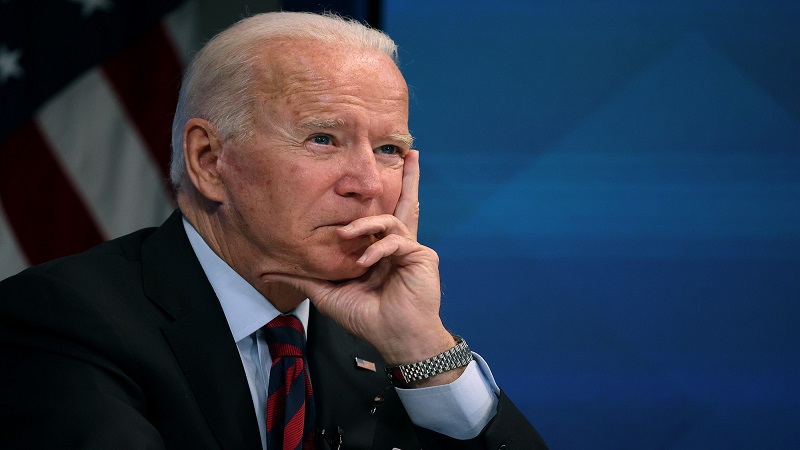
Dear president Biden,

Something remarkable happened on the morning of February 25, the day of the Nigerian presidential election. Many Nigerians went out to vote holding in their hearts a new sense of trust. Cautious trust, but still trust. Since the end of military rule in 1999, Nigerians have had little confidence in elections. To vote in a presidential election was to brace yourself for the inevitable aftermath: fraud.

Elections would be rigged because elections were always rigged; the question was how badly. Sometimes voting felt like an inconsequential gesture as predetermined “winners” were announced.

A law passed last year, the 2022 Electoral Act, changed everything. It gave legal backing to the electronic accreditation of voters and the electronic transmission of results, in a process determined by the Independent National Electoral Commission (INEC). The chair of the commission, Professor Mahmood Yakubu, assured Nigerians that votes would be counted in the presence of voters and recorded in a result sheet, and that a photo of the signed sheet would immediately be uploaded to a secure server. When rumors circulated about the commission not keeping its word, Yakubu firmly rebutted them. In a speech at Chatham House in London (a favorite influence-burnishing haunt of Nigerian politicians), he reiterated that the public would be able to view “polling-unit results as soon as they are finalized on election day.”

Nigerians applauded him. If results were uploaded right after voting was concluded, then the ruling party, the All Progressives Congress (APC), which has been in power since 2015, would have no opportunity for manipulation. Technology would redeem Nigerian democracy. Results would no longer feature more votes than voters. Nigerians would no longer have their leaders chosen for them. Elections would, finally, capture the true voice of the people. And so trust and hope were born.

By the evening of February 25, 2023, that trust had dissipated. Election workers had arrived hours late, or without basic election materials. There were reports of violence, of a shooting at a polling unit, and of political operatives stealing or destroying ballot boxes. Some law-enforcement officers seemed to have colluded in voter intimidation; in Lagos, a policeman stood idly by as an APC spokesperson threatened members of a particular ethnic group who he believed would vote for the opposition.

Most egregious of all, the electoral commission reneged on its assurance to Nigerians. The presidential results were not uploaded in real time. Voters, understandably suspicious, reacted; videos from polling stations show voters shouting that results be uploaded right away. Many took cellphone photos of the result sheets. Curiously, many polling units were able to upload the results of the House and Senate elections, but not the presidential election. A relative who voted in Lagos told me, “We refused to leave the polling unit until the INEC staff uploaded the presidential result. The poor guy kept trying and kept getting an ‘error’ message. There was no network problem. I had internet on my phone. My bank app was working. The Senate and House results were easily uploaded. So why couldn’t the presidential results be uploaded on the same system?” Some electoral workers in polling units claimed that they could not upload results because they didn’t have a password, an excuse that voters understood to be subterfuge. By the end of the day, it had become obvious that something was terribly amiss.

No one was surprised when, by the morning of the 26th, social media became flooded with evidence of irregularities. Result sheets were now slowly being uploaded on the INEC portal, and could be viewed by the public. Voters compared their cellphone photos with the uploaded photos and saw alterations: numbers crossed out and rewritten; some originally written in black ink had been rewritten in blue, some blunderingly whited-out with Tipp-Ex. The election had been not only rigged, but done in such a shoddy, shabby manner that it insulted the intelligence of Nigerians.

Nigerian democracy had long been a two-party structure—power alternating between the APC and the Peoples Democratic Party—until this year, when the Labour Party, led by Peter Obi, became a third force. Obi was different; he seemed honest and accessible, and his vision of anti-corruption and self-sufficiency gave rise to a movement of supporters who called themselves “Obi-dients.” Unusually large, enthusiastic crowds turned up for his rallies. The APC considered him an upstart who could not win, because his small party lacked traditional structures. It is ironic that many images of altered result sheets showed votes overwhelmingly being transferred from the Labour Party to the APC.

As vote counting began at INEC, representatives of different political parties—except for the APC—protested. The results being counted, they said, did not reflect what they had documented at the polling units. There were too many discrepancies.

“There is no point progressing in error, Mr. Chairman. We are racing to nowhere,” one party spokesperson said to Yakubu. “Let us get it right before we proceed with the collation.” But the INEC chair, opaque-faced and lordly, refused. The counting continued swiftly until, at 4:10 a.m. on March 1, the ruling party’s candidate, Bola Tinubu, was announced as president-elect.

A subterranean silence reigned across the country. Few people celebrated. Many Nigerians were in shock. “Why,” my young cousin asked me, “did INEC not do what it said it would do?”

It seemed truly perplexing that, in the context of a closely contested election in a low-trust society, the electoral commission would ignore so many glaring red flags in its rush to announce a winner. (It had the power to pause vote counting, to investigate irregularities—as it would do in the governorship elections two weeks later.)

Rage is brewing, especially among young people. The discontent, the despair, the tension in the air have not been this palpable in years.

How surprising then to see the U.S. State Department congratulate Tinubu on March 1. “We understand that many Nigerians and some of the parties have expressed frustration about the manner in which the process was conducted and the shortcomings of technical elements that were used for the first time in a presidential election cycle,” the spokesperson said. And yet the process was described as a “competitive election” that “represents a new period for Nigerian politics and democracy.”

American intelligence surely cannot be so inept. A little homework and they would know what is manifestly obvious to me and so many others: The process was imperiled not by technical shortcomings but by deliberate manipulation.

An editorial in The Washington Post echoed the State Department in intent if not in affect. In an oddly infantilizing tone, as though intended to mollify the simpleminded, we are told that “officials have asserted that technical glitches, not sabotage, were the issue,” that “much good” came from the Nigerian elections, which are worth celebrating because, among other things, “no one has blocked highways, as happened in Brazil after Jair Bolsonaro lost his reelection bid.” We are also told that “it is encouraging, first, that the losing candidates are pursuing their claims through the courts,” though any casual observer of Nigerian politics would know that courts are the usual recourse after any election.

The editorial has the imaginative poverty so characteristic of international coverage of African issues—no reading of the country’s mood, no nuance or texture. But its intellectual laziness, unusual in such a rigorous newspaper, is astonishing. Since when does a respected paper unequivocally ascribe to benign malfunction something that may very well be malignant—just because government officials say so? There is a kind of cordial condescension in both the State Department’s and The Washington Post’s responses to the election. That the bar for what is acceptable has been so lowered can only be read as contempt.

I hope, President Biden, that you do not personally share this cordial condescension. You have spoken of the importance of a “global community for democracy,” and the need to stand up for “justice and the rule of law.” A global community for democracy cannot thrive in the face of apathy from its most powerful member. Why would the United States, which prioritizes the rule of law, endorse a president-elect who has emerged from an unlawful process?

Compromised is a ubiquitous word in Nigeria’s political landscape—it is used to mean “bribed” but also “corrupted,” more generally. “They have been compromised,” Nigerians will say, to explain so much that is wrong, from infrastructure failures to unpaid pensions. Many believe that the INEC chair has been “compromised,” but there is no evidence of the astronomical U.S.-dollar amounts he is rumored to have received from the president-elect. The extremely wealthy Tinubu is himself known to be an enthusiastic participant in the art of “compromising”; some Nigerians call him a “drug baron” because, in 1993, he forfeited to the United States government $460,000 of his income that a Chicago court determined to be proceeds from heroin trafficking. Tinubu has strongly denied all charges of corruption.

I hope it will not surprise you, President Biden, if I argue that the American response to the Nigerian election also bears the faint taint of that word, compromised, because it is so removed from the actual situation in Nigeria as to be disingenuous. Has the United States once again decided that what matters in Africa is not democracy but stability? (Perhaps you could tell British Prime Minister Rishi Sunak, who quickly congratulated Tinubu, that an illegitimate government in a country full of frustrated young people does not portend stability.) Or is it about that ever-effulgent nemesis China, as so much of U.S. foreign policy now invariably seems to be? The battle for influence in Africa will not be won by supporting the same undemocratic processes for which China is criticized.

This Nigerian election was supposed to be different, and the U.S. response cannot—must not—be business as usual. The Nigerian youth, long politically quiescent, have awoken. About 70 percent of Nigerians are under 30 and many voted for the first time in this election. Nigerian politicians exhibit a stupefying ability to tell barefaced lies, so to participate in political life has long required a suspension of conscience. But young people have had enough. They want transparency and truth; they want basic necessities, minimal corruption, competent political leaders, and an environment that can foster their generation’s potential.

This election is also about the continent. Nigeria is a symbolic crucible of Africa’s future, and a transparent election will rouse millions of other young Africans who are watching, and who long, too, for the substance and not the hollow form of democracy. If people have confidence in the democratic process, it engenders hope, and nothing is more essential to the human spirit than hope.

Today, election results are still being uploaded on the INEC server. Bizarrely, many contradict the results announced by INEC. The opposition parties are challenging the election in court. But there is reason to worry about whether they will get a fair ruling. INEC has not fully complied with court orders to release election materials. The credibility of the Nigerian Supreme Court has been strained by its recent judgments in political cases, or so-called judicial coronations, such as one in which the court declared the winner of the election for governor of Imo State a candidate who had come in fourth place.

Lawlessness has consequences. Every day Nigerians are coming out into the streets to protest the election. APC, uneasy about its soiled “victory,” is sounding shrill and desperate, as though still in campaign mode. It has accused the opposition party of treason, an unintelligent smear easily disproved but disquieting nonetheless, because false accusations are often used to justify malicious state actions.

I supported Peter Obi, the Labour Party candidate, and hoped he would win, as polls predicted, but I was prepared to accept any result, because we had been assured that technology would guard the sanctity of votes. The smoldering disillusionment felt by many Nigerians is not so much because their candidate did not win as because the election they had dared to trust was, in the end, so unacceptably and unforgivably flawed.

Congratulating its outcome, President Biden, tarnishes America’s self-proclaimed commitment to democracy. Please do not give the sheen of legitimacy to an illegitimate process. The United States should be what it says it is.

Sincerely,

Chimamanda Adichie.

Binance CEO Expresses Admiration on Individual Who Inscribed ‘Bitcoin Whitepaper’ on macOS

0

On Thursday, Binance CEO, Changpeng Zhao popularly known as CZ-Binance recently expressed his admiration for a mystery individual who has been spreading the gospel of Bitcoin in an unconventional way.

In the ever-evolving world of cryptocurrencies, there are many unsung heroes who have made significant contributions to the ecosystem. Recently, CZ, the Co-Founder and CEO of Binance, took to Twitter to praise one such individual who found a unique way to promote the Bitcoin whitepaper.

As you might already know, on April 5, Andy Baio, a former CTO of Kickstarter, published a blog post in which he said:

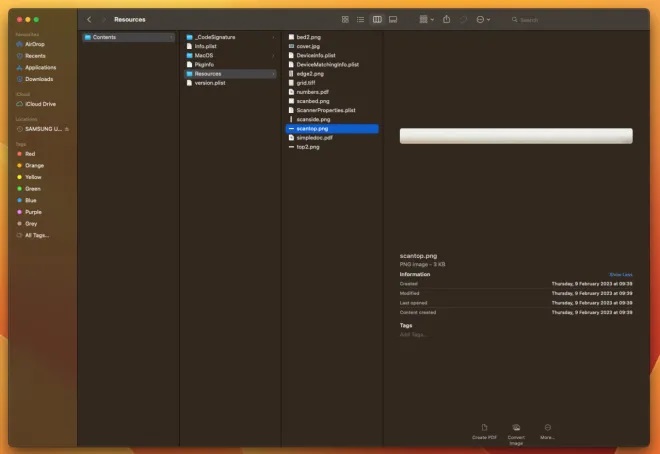
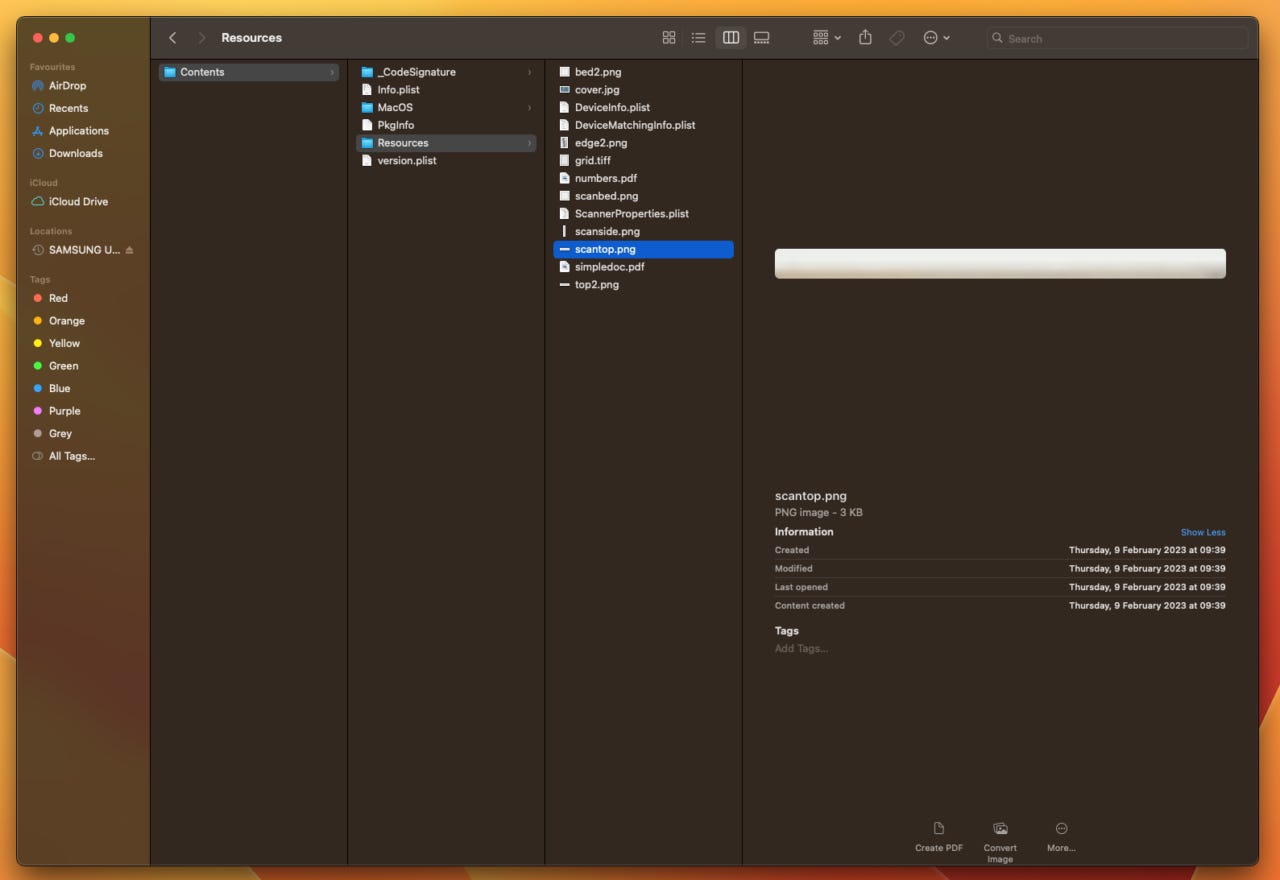
While trying to fix my printer today, I discovered that a PDF copy of Satoshi Nakamoto’s Bitcoin whitepaper apparently shipped with every copy of macOS since Mojave in 2018. I’ve asked over a dozen Mac-using friends to confirm, and it was there for every one of them. The file is found in every version of macOS from Mojave (10.14.0) to the current version, Ventura (13.3), but isn’t in High Sierra (10.13) or earlier.

On April 6th, CZ tweeted his appreciation for the person who managed to put the Bitcoin whitepaper on every Mac, saying, “Who is the guy that put the #bitcoin whitepaper on every Mac? I want to buy him a drink in person.” This interesting move has undoubtedly helped increase awareness about the foundational document of the flagship cryptocurrency.

Not content with just Mac users having access to the whitepaper, CZ followed up his tweet on April 7th, saying, “Will also buy a drink for the bull who puts the bitcoin whitepaper in every copy of Windows. Everyone should be carrying it.”

Meanwhile, on April 6th, crypto analytics firm Santiment reported on Twitter that Bitcoin traders are currently transacting at a loss at twice the rate of profit. They noted that this is the first time in five weeks that this ratio has been negative, suggesting that FOMO-driven investors might be losing faith in the rally.

On a more positive note, on April 5th, Michael Saylor, Co-Founder and Executive Chairman of MicroStrategy, announced the company’s acquisition of an additional 1,045 Bitcoin for approximately $29.3 million. This brings MicroStrategy’s total Bitcoin holdings to 140,000, acquired for around $4.17 billion at an average price of $29,803 per Bitcoin.

As of press time on April 7th, Bitcoin is trading at around $27,940 across crypto exchanges, representing a slight 0.06% decrease over the past 24 hours. However, the year-to-date performance remains strong, with a 67.81% increase.

CZ’s tweets about the Bitcoin whitepaper exemplify the ongoing efforts to raise awareness and promote understanding of digital currencies. As more people become familiar with the technology behind Bitcoin, the potential for mainstream adoption continues to grow, making this an exciting time for cryptocurrency enthusiasts everywhere.

Nigerian House of Reps Passes Bill to Stop the Emigration of Medical Practitioners

0

The amendment of the Medical and Dental Practitioners Act, aimed at stopping the migration of Nigerian-trained medical professionals, passed second reading in the House of Representatives on Thursday.

The amendment, which has generated a lot of controversy, was sponsored by Ganiyu Johnson (APC, Lagos), following the mass exodus of medical practitioners in the country – resulting in brain-drain in the health sector. The amendment seeks to mandate medical professionals trained in Nigeria to work in the country for five years before they could be fully granted their practicing license.

While the majority of the House supported the bill, which they said would make quality healthcare available in Nigeria, some lawmakers opposed it.

Abia PDP lawmaker, Uzoma Abonta, said the bill would infringe the rights of doctors to move freely. Benue LP House member, Mark Gbillah, who was among the few lawmakers to oppose the bill, said the issue that needs to be tackled is brain-drain, not restricting the fundamental rights of Nigerian medical professionals.

“I want to suggest that we look at how to rework this bill in itself because as a professional myself I do not think you should be able to practice anything without your license,” he said.

“A person in such a critical field as medicine, how would you give somebody a temporary license or what would that imply? You would need a license to be certified to practice. So the issue we are trying to cure is brain drain.”

Gbillah added that what is needed is to apportion more resources to the medical profession, instead of attempting to pass a bill that will infringe the fundamental human rights of the health practitioners.

Johnson had defended the bill, saying that it was only fair for medical practitioners, who enjoyed taxpayer subsidies on their training, to “give back to the society.”

The bill was passed for second reading after the Speaker of the House, Femi Gbajabiamila sided with Johnson and others. He said the proposed bill was not infringing the rights of medical practitioners because section 45 of the 1999 Constitution allows the government to suspend certain rights due to certain conditions.

“Let me clear the issue of fundamental human rights that has been raised… If you go to section 45(1) of the Constitution, it actually allows you to deviate from your fundamental human rights under certain conditions.

“One of these conditions concerns public health. So if the government feels that to safeguard public health this restriction should be put then we have not violated anybody’s human rights,” he said and put the bill to vote.

However, the bill has received backlash from a throng of Nigerian medical professionals supported by others. They said the House should have focused on improving training of medical students, upgrading of government hospitals and better welfare of doctors, which have fueled the culture of strike in the Nigerian health sector.

“A dumb proposal imho. You can’t force patriotism if the leaders don’t put the country first. What this bill would do is encourage people to seek medical degrees outside the country,” a medical practitioner wrote on Twitter. “A better proposal would be one that prevents government officials from seeking medical treatments outside the country.”

Brain-drain has taken the center of discussions in Nigeria recently due to the mass exodus of professionals to developed countries in search of better working conditions. But in this crisis, the health sector appears to be the most-affected, with doctors, pharmacists, and nurses leaving the country in high numbers.

Nigeria is said to be left with one doctor to 5,000 patients against the recommendation of at least one doctor for not more than 600 patients by the World Health Organization.

This shortage is notably buoyed by the growing number of medical practitioners leaving the country yearly. A survey conducted by the Nigerian Polling Organization (NOIPolls) in partnership with Nigeria Health Watch, in 2017, revealed that about 88 percent of medical doctors in Nigeria were looking for opportunities to work abroad.

In 2021 in Abuja, more than 500 Nigerian doctors turned up at a one-day recruitment program the Saudi health ministry organized to pick Nigerian doctors for work in Saudi Arabia.

Also, a 2022 UK immigration report showed that 13,609 Nigerian healthcare workers were granted working visas in 2021, significantly compounding the country’s meager healthcare workforce.

Against this backdrop, the House of Representatives had been expected to address the fundamental issues forcing the medical practitioners out of the country, instead of seeking a legislative shortcut to the challenge.

Interswitch Records New Milestone, Processed 1.2 Billion Transactions in March 2023

0
Interswitch

One of Africa’s leading technology-driven companies focused on payments, Interswitch, has recorded a new milestone after it processed 1.2 billion transactions in March in Nigeria alone.

The company disclosed that the recent milestone is the highest it has ever processed in a single month in the country, which is a testament to the trust that customers have placed on the platform.

Speaking on the recent milestone achieved, The Chief Executive Officer/Founder of Interswitch Limited, Mr. Mitchell Elegbe said, “We are thrilled to have processed 1.2 billion transactions in March within Nigeria alone. This milestone is a testament to the trust that our customers have placed in us and our commitment to delivering innovative and secure digital payment solutions across Nigeria and beyond.

This milestone is one that was made possible by our proactive investment in cutting-edge technologies that truly power the financial landscape. As we continue to grow and expand our operations, we remain committed to driving financial inclusion and helping businesses and individuals unlock the full potential of digital technologies.”

He further noted that Interswitch’s success emphasizes the hard work and dedication of employees and highlights the fact that the firm is on the right path to achieving its set objectives.

Interswitch’s broad network and robust payments platform have been instrumental to the development of the Nigerian payments ecosystem and provide Interswitch with credibility to expand across Africa. In 2019, the company partnered with Visa, the world leader in digital payments to advance the digital payments ecosystem across Africa.

In October 2020, Quickteller launched the Qtrybe community, a community of 50 exceptional students from Nigerian tertiary institutions to serve as ambassadors of Quickteller and Interswitch on their campuses.

Today, the Fintech company is a leading player with critical mass in Africa’s rapidly developing financial ecosystem and is active across the payments value chain, providing a full suite of Omni-channel payment solutions.

The company has effectively bridged the divide between consumers, institutions, and merchants with innovative payment solutions such as Verve, the largest domestic card scheme in Africa with 100% payment acceptance in Nigeria and acceptance in over 185 countries globally. Interswitch has continued to develop innovative solutions to drive seamless payment technology for the 21st century, actively supporting Africa’s journey toward a cashless future.

The company was established as a common African financial services provider and maintains exclusively a wide array of interconnected datacenters in Africa. It has over 11,000 ATMs on its network, with more users in Nigeria than anywhere else.