DD
MM
YYYY

PAGES

DD
MM
YYYY

spot_img

PAGES

Home Blog Page 4240

Why Corporate Organizations Set Up the R&D Team

0

Growth-oriented organisations often require new solutions that can enable them to meet new and emerging business needs and expand their market reach and influence. Most organizations set up a research and development unit to help them meet these needs.

An efficient R&D department can be a major source of new growth; it can help companies to deliver innovative products and new technologies and support operational and sales improvements that can increase productivity and profitability.

The R&D department is to the company much like the brain is to the human body system. The brain receives information from the sense organs, interprets them and provides feedback that enables the body to avoid danger or grab opportunities around it. Similarly, the R&D team helps the organization to identify relevant data, analyze these data, develop insights therefrom and recommend policies that can help the company to mitigate risks and maximize opportunities.

As the strategy hub of the organization, the R&D unit is generally known to perform some key functions including market research, process analysis, product development, monitoring and evaluation etc.

The following are key activities of the R&D:

Drive Innovation. The R&D unit inspires innovation through continuous engagement in a series of researches across the different areas of influence of the business. The team mostly  directs resources to understand new industry trends and new competitive landscape of a business, and make recommendations that help the business to maximize its competitive advantage.

In doing market research, emphasis is often placed on questions such as who are our customers/clients and what do they need? What is our target market? Who are our competitors, and what are their unique selling products? How are we different in the common market? How can we leverage our strength for competitive advantage and business growth?

Product Development. Organizations depend on their R&D team or Business development unit to design solutions to identify market problems or gaps. The team thoroughly inquires into existing socio-economic problems or market needs, proffer solutions and specify directions and parameters for developing solutions into products or services affordable to the targeted people or market.

In addition to developing new products, the R&D review existing products or offerings of the organization to ensure they are still relevant and functional to the market. If otherwise, it seeks new solutions.

System auditing and quality control check. The team keeps track of and justifies or modifies the products, processes and policies of the company. It prioritizes knowledge about what has failed in the past internally and externally and what has worked well.

Promoting the brand. The team directs resources that generate intellectual contents and foster intellectual discourse. It can also optimize data storytelling to inform positive sentiment and acceptance of the brand in its market. Gathering data and creating compelling stories out of them with specific reference to how the business positively influences the lived experience of people in its setting.

Knowledge –driven partnership. Some Organisation’s R&D units are equipped to partner other brands including research institutes, academics and business ventures towards exploring new possibilities for extending business intelligence and creative solutions.

In a globally competitive economy where only  businesses that innovate stand out in the market, no doubt, a business that hopes to maintain a competitive edge and stay ahead of others recognises and prioritizes the role of R&D in its collective operations.

While SMEs rely on their R&D to scale up operations or at least stay in business, the big businesses too massively fund their R&D departments to continue to enjoy market dominance. Essentially, the R&D department is to a company much as the brain is to the body system.
Twitter Partners With Multi-Asset Investment Company eToro to Enable Users Buy And Sell Stocks

0

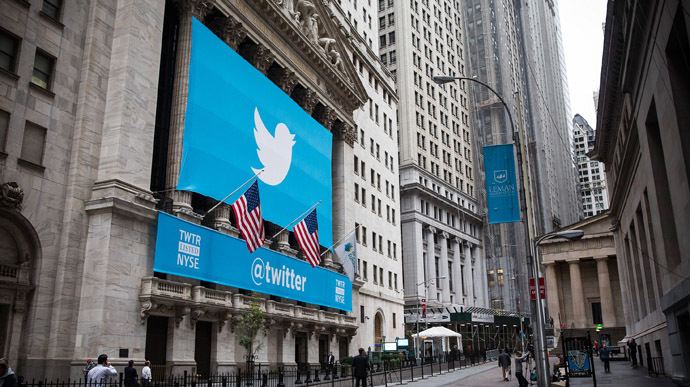
Micro-blogging platform Twitter has partnered with social trading and multi-asset investment company that focuses on providing financial services eToro, to enable users to buy and sell stocks.

Through this partnership, Twitter users will be able to access market charts on an expanded range of financial markets to get up-to-date prices for stocks, ETFs, commodities, and cryptos by simply searching using a $Cashtag symbol. This collaboration aims to provide a seamless experience for Twitter users, enabling them to click through the eToro platform for more comprehensive information on the asset and the option to invest.

Speaking on its recent collaboration with Twitter, eToro CEO, and Co-founder Yoni Assia said, “Financial content on social media has provided education to many who have felt excluded by more traditional channels. Twitter has become a crucial part of the retail investing community. It is where millions of ordinary investors go every day to access financial news, share knowledge, and converse.

“As the social investing network, eToro was built on these very principles, community, knowledge-sharing, and better access to financial markets. There is power in shared knowledge and by transforming investing into a group endeavor, we can yield better results and become more successful together.”

Also commenting on the partnership with eToro, Vice President of Global Sales and Marketing at Twitter Chris Riedy said, “Twitter is what is happening and what people are talking about right now. We believe real change statutes with conversion and finance and investing are a growing part of that conversation. We are pleased to partner with eToro to provide Twitter users with additional market insights and greater access to investment capabilities. Twitter will continue to invest in growing the FinTwitter community”.

It is interesting to note that Twitter in December 2022, added pricing data for $Cashtags, and the feature has been widely adopted with more than 420 million searches for $Cashtags since the start of the year. Some of the most commonly used $Cashtags include $TSLA (Tesla), $SPY (SPDR S&P 500 ETF), and $BTC (Bitcoin). The increased use of $Cashtags is part of a growing trend to financial discourse on Twitter, with a recorded 498 million global tweets about business and finances in the first 90 days of 2023.

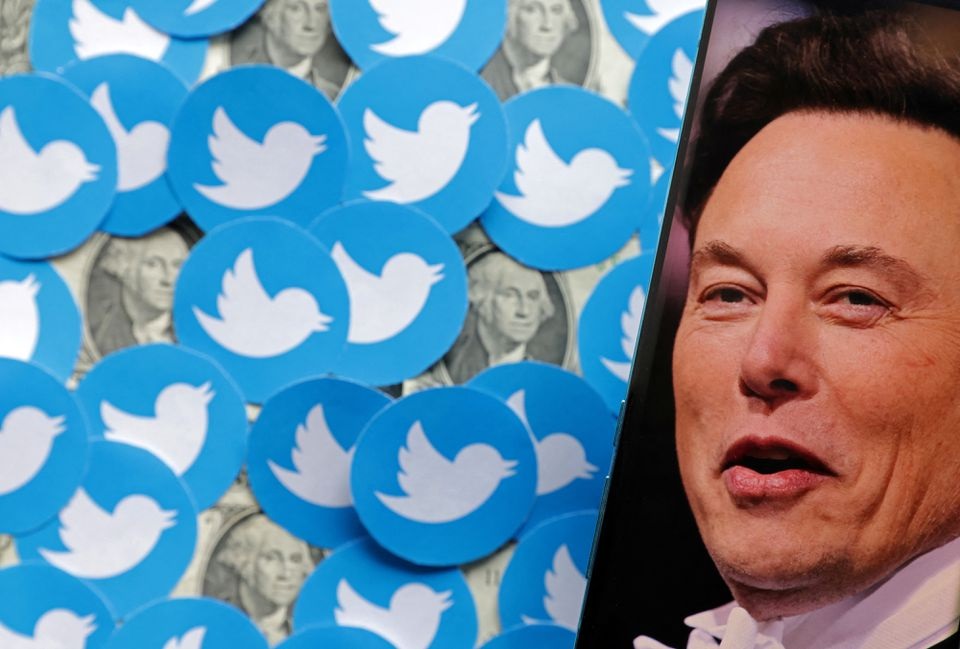
Twitter’s partnership with eToro, a multi-asset investment platform is part of Elon Musk’s plan to transform the platform into a super app that will offer financial services. In a recent report, Musk recently merged the social media platform into his X Holdings Corp., signaling a move toward his vision of making Twitter an everything app.

Recall that when he purchased the platform for a $44 billion deal in October 2022, he tweeted that “Buying Twitter is an accelerant to creating X, the everything app”.  Also, while speaking at a conference in November last year, Musk said, “There’s a product plan I wrote in July of 2000, where I thought it would be possible to make the most valuable financial institution in the world. That’s part of why I think Twitter will be ultimately extremely valuable because I’m going to execute the X.com game plan from 22 years ago with some improvements.”

Meanwhile, experts have stated that there is no guarantee that anyone will switch to Twitter as a default payment method, but some could see it happening. Daniela Hawkins, who advises on digital transformation in the financial industry at consultancy firm Capco, stated that if Musk can build a user-friendly interface and win the trust of users who have grown leery of security and privacy risks associated with social media apps, it could be a winning strategy.

The Fintechnolization of Twitter

0

I called it fintechnolization: “a construct that every digital platform must have a maturity state of offering a fintech solution. I had watched all great digital platforms on how they ended up providing fintech solutions even when they began in an unrelated sector.” Today, we’re reading that Twitter has started that translation by adding a financial service component.

“Twitter has entered into a partnership with eToro, a social trading company, to offer financial services on Twitter, suggesting that Elon Musk is setting off his ambition to make the microblogging app a big financial hub. eToro revealed the move in an interview with CNBC, saying the partnership will allow Twitter users to access stocks, cryptocurrencies and other financial assets.”

“As we’ve grown over the past three years immensely, we’ve seen more and more of our users interact on Twitter [and] educate themselves about the markets,” Yoni Assia, eToro’s CEO, told CNBC.

“There is very high quality content, real-time content on financial analysis of companies and what’s happening around the world. We believe this partnership will enable us to reach those new audiences [and] connect better the brands of Twitter and eToro.”

Twitter has already transmuted into X Corp and has started executing a new playbook which will make the microblogging company to become an operating system of digital mobile economy, enabling payment, booking for events, and broad buying and selling of items.

In business, the greatest innovation happens in the business model phase because the whole constellation of organizing factors of production is encapsulated on how to capture value. Elon Musk understood that depending on adverts for a text-based product is challenging (people have to click to be served and that is a lot of work); so, he is expanding the playbook via subscriptions and now fintechnolizing the core DNAs of Twitter. Twitter 2.0 looks promising.

The financial sector is evolving rapidly:

When U.S. banks release their first-quarter earnings in the coming week, analysts expect to see the steepest deposit decline of the past decade, Bloomberg reports. According to estimates, deposits at JPMorgan Chase, Wells Fargo and Bank of America could be down as much as $521 billion from a year ago — the result of consumers’ waning trust in the banking system, following two high-profile bank failures, and savers’ desire for higher yields amid rising inflation.

Asked about Berkshire Hathaway’s sales of bank stocks, CEO Warren Buffett said more banks are likely to fail — which should worry shareholders but not depositors: “Nobody is going to lose money on a deposit in a U.S. bank.” Buffett also said he is cooling on the banking sector but not on Bank of America, where he remains the largest stakeholder.

Meanwhile, Twitter 2.0 is expanding with the re-launch of its creator subscription program which will provide a means for users to monetize their tweets, and build a business in the app. Substack may not be laughing on this Elon Musk playbook which can go directly at the heart of Substack’s core business of subscription-based blogging.


Comment on Feed

Comment 1: Twitter partnering with eToro and I think it’s pretty exciting news! It’s great to see social trading platforms gaining more recognition and popularity in the industry. I’m curious to see how this partnership will develop and what kind of impact it will have on both companies. Have you had any experience using eToro or similar social trading platforms before? I’d love to hear your thoughts on the topic.

My Response: eToro will have new 300m users. That is huge. Twitter users will not need to leave Twitter to pay for things since most of those things are discovered in Twitter. Why find a trending stock on Twitter and go to Robinhood to buy it when Twitter can allow you to do the same right there? This is a symbiotic playbook and it is significant!

Twitter Partners eToro , A Social Trading Company, In Its Push to Become A Financial Hub

0

Twitter has entered into a partnership with eToro, a social trading company, to offer financial services on Twitter, suggesting that Elon Musk is setting off his ambition to make the microblogging app a big financial hub.

eToro revealed the move in an interview with CNBC, saying the partnership will allow Twitter users to access stocks, cryptocurrencies and other financial assets.

Starting Thursday, a new feature will be rolled out on the Twitter app. It will allow users to view market charts on an expanded range of financial instruments and buy and sell stocks and other assets from eToro, the company told CNBC exclusively.

The move comes on the heels of Musk’s push to establish a super app dubbed X Corp. that will put together all his businesses, making it easy for users to do a lot of things within the app. The move mirrors Chinese tech giant Tencent’s super app, which has seen its social media app – Wechat – metamorphosed into a payment giant serving millions of people.

Twitter has set the ball rolling by making it possible to view real-time trading data from TradingView on index funds like the S&P 500 and shares of some companies such as Tesla. CNBC had reported that the financial service can be done using Twitter’s “cashtags” feature — you search for a ticker symbol and insert dollar sign in front of it, after which the app will show you price information from TradingView using an API.

An eToro spokesperson told CNBC that the partnership will see Twitter cashtgs expanded to cover far more instruments and asset classes. eToro uses TradingView as its market data partner. The spokesperson explains that the feature will provide users with the ability to click a button that says “view on eToro,” which takes you through to eToro’s site, and then buy and sell assets on its platform.

“As we’ve grown over the past three years immensely, we’ve seen more and more of our users interact on Twitter [and] educate themselves about the markets,” Yoni Assia, eToro’s CEO, told CNBC.

“There is very high quality content, real-time content on financial analysis of companies and what’s happening around the world. We believe this partnership will enable us to reach those new audiences [and] connect better the brands of Twitter and eToro.”

Musk has been seeking ways to increase Twitter’s revenue since he generously dumped $44 billion on the platform’s acquisition late last year. He admitted that the twitter was overpriced but said in a tweet that buying the company was an “accelerant to creating X, the everything app.”

Musk owns the domain “X.com” — a payment company he started and eventually merged with PayPal.

X Corp.’s merger with Twitter was submitted on March 15 following the company’s set up on March 9 in Nevada, per the records filed in the state. But Musk had in last April, set up a trio of holding companies in Delaware with a variation of the name “X Holdings”, as part of his bid to acquire Twitter.

eToro, which was founded in 2007 in Israel, offers online brokerage services that let users buy and sell stocks, cryptocurrency and index funds. Its partnership with Twitter marks a significant move in the company’s push to become everything app.

eToro has more than 32 million registered users across Europe, Asia and the United States, according to Assia. One of the company’s most popular features, which allows people to mimic the trading strategies of other users, is expected to form the driving force of the partnership’s growth.

However, analysts have doubted Musk’s chances to succeed in his quest to develop X Corp. as a super app.

“Musk could create a parent structure, similar to Alphabet, where he has all his companies,” said Mandeep Singh, analyst for Bloomberg Intelligence. “I don’t see how he can layer e-commerce or payments in Twitter right when larger peers such as Alphabet and Meta have struggled to become an everything app on the consumer side.”

But Assia told CNBC that “Fintwit,” or financial twitter, has become a popular trend on the app, which many people use to find breaking news and updates on stocks and other assets. He said he worked with the same team at Twitter on the stock market data tool that he had worked with on previous partnerships with the company.

It is not clear what other plans Musk is exploring in order to make Twitter his dream everything app. But he said in a Morgan Stanley conference last month that he wants Twitter to become “the biggest financial institution in the world.”

However, this will force a lot of changes on twitter, including an increase of headcount that Musk drastically reduced from 7,500 to 1,500 in a bid to cut costs.

DMA Petitions NASS Over Medical Brain-Drain Bill

0

The umbrella body of Nigerian medical practitioners in diaspora, Diaspora Medical Associations (DMA), has issued a petition against the National Assembly over the bill seeking to compel medical and dental graduates to fulfill five-year compulsory services within Nigeria before they could be granted full license to practice.

In its letter entitled “Re: A position statement from diaspora medical associations – Bill seeking to restrict newly-qualified medical doctors and dentists from leaving Nigeria,” dated April 11, 2023 and addressed to the Speaker of the House of Representatives, Femi Gbajabiamila, the medical body disclosed its contrariant posture to the recent NASS’ bill purported to be the antidote of medical brain-drain in Nigeria.

In the letter, the medical body claimed the bill is counterproductive and will not actualize the intended goal of curbing brain drain in the country. The body also noted that focusing on one aspect of a problem without taking a holistic approach to a sustainable solution would be ineffective.

The body also copied the Senate President, Ahmad Lawan; the Chairman, Senate Committee on Health, Dr Ibrahim Oloriegbe; and the Chairman, House Committee on Health, Dr Tanko Sununu.

Signatories of the petition include the President, the Nigerian Doctors’ Forum, South Africa, Dr Emeka Ugwu; the President, Association of Nigerian Physicians in the Americas, Dr Chinyere Anyaogu; the President, Medical Association of Nigerians Across Great Britain, Dr Chris Agbo; the President, Canadian Association of Nigerian Physicians and Dentists, Dr Nnamdi Ndubuka; and the President, Nigerian Medical Association-Germany, Dr Al Amin Dahiru.

In its statement, the DMA said, “We recognise the problems posed by the exodus of Nigerian medical professionals from our health system, including, but not limited to decreased access to health care services, lack of quality of care, care delivery deserts the inability to adequately enact health care and public health policy due to lack of manpower and leadership resource.

“The major cause of brain drain includes a poor care delivery framework from a failure to invest in the health care to foster a conducive environment. The system does not promote professionalism, growth, work satisfaction, or a high-reliability culture.

“Other major drivers include very poor welfare packages, high levels of insecurity, limited opportunities for employment, subspecialty training, sociopolitical and economic instability. The majority of these issues stem from outside the health care system and are outside of an individual’s control.

“Indeed, good governance and commitment to future investment in health care would improve conditions in the country that will allow security, good education for children, improved compensation, as described in the Abuja Declaration.”

“Young professionals leave the country in search of better opportunities. Many are frustrated by the consequences of governance failures that have progressively worsened over the past 30 years.

“The unfortunate reality is the health care system is in a state of serious neglect, training and career development opportunities are limited, further impairing earning potential. Insecurity is rampant. Equity and justice are lacking for the average Nigerian.

“The Diaspora Medical Associations are invested in crafting effective solutions and are willing to participate in fostering solutions to that extent.”

However, the doctors called on the Speaker to embrace the purposeful systemic solution and ensure that a ‘quick fix’ attempt does not worsen the situation. They also pledged to support positive changes, and growth of the health sector to stop and reverse the brain drain in Nigeria.