DD
MM
YYYY

PAGES

DD
MM
YYYY

spot_img

PAGES

Home Blog Page 4247

Problem Solving and Problem-solving Techniques in Business Management

2

Businesses exist essentially to solve problems. The internal and the external conditions of a business depend on the sophistication of the problem-solving methods adopted in the management of the business. Hence, it is often thought that problem-solving is an integral part of business management.

Problem solving is defined as involving ‘’logical and systematic approach to defining the problem, generating solutions, and then choosing and implementing the best option’’. Problem solving skills and processes are designed to prevent or overcome difficulties needed to improve during stable periods.

An effective problem-solving is one that informs a realistic and sustainable solution. However, there are key things to put into consideration before moving to solve a problem. Without this, a problem solving effort may go wrong or even complicate the existing problems.

You need to ask and ascertain if there is a problem at all in order to avoid investing your resources and time on a needless course. This could be done by doing the following:

  1. Putting your observation to further analysis to identify a probable cause of the problem
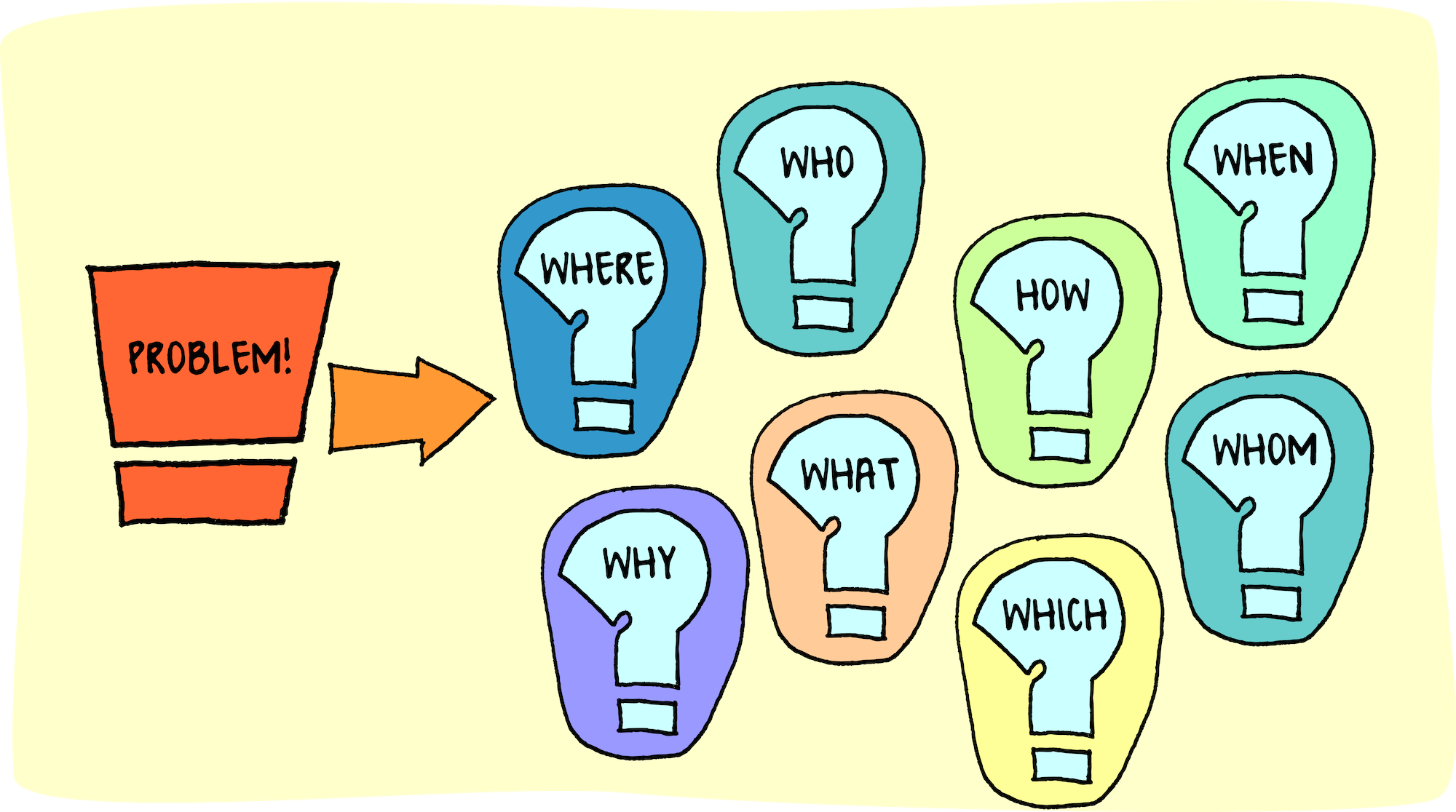
  2. Tracing the problem down to specific context, such as asking what, who, when, where and how.
  3. Creating an environment where problems are openly acknowledged and discussed
  4. Creating an environment that preempt difficulties before they develop into crisis
  5. Understanding the resources available at your disposal and how best they can be deployed in the course of problem solving.

Some Problem-solving techniques

There are various problem-solving techniques that you can adopt depending on the context and the nature of the problems to be solved. They are discussed as follows:

Cause and effect Analysis

For every effect there is a cause. Therefore, cause and effect analysis is the process of analyzing the effects of the problem to identify the actual cause of the problem and how to deal with it. This is also referred to as a diagnostic analysis. For example, Doctors observe the symptoms of the illness to decide what the cause is and so that they could know what treatment to prescribe. Examples of cause and effect analysis are the five whys by Toyoda and the Pareto principle analysis.

Pareto 20-80 percent Principle

This method is based on the assumption that 80 percent of problems are caused by 20 percent of possible factors. Therefore, assessing the trouble-making 20 percent is necessary. This can be useful in organizing the data so that the most significant factors influencing the problems are clearly illustrated. The Pareto 80/20 rule in Problem-solving encompasses four steps which are as follows:

  • Identifying the main problem
  • Determining the factors causing it and how they do this
  • Listing the biggest factors contributing to the problem
  • Developing a solution targeting each factor individually

The five whys

This was developed by Sakichi Toyoda in the 1930s and it became popular in the 1970s. It is a method of unearthing the layers of causes until the root cause or centre of gravity of a problem is reached. The five whys method is based on the assumption that by interrogating the apparent answers at each successive level or phase of the analysis, one will have identified the root cause of a problem by the fifth level or phase.

System Thinking

System thinking is the process of inquiry into a problem and solving it from the perspective of the whole or the general system. This method is based on the assumption that nothing exists in isolation, therefore it must be considered in terms of its connection to other things. For example, administrative error in staffing and training could impact sales performance resulting in low liquidity and high turnover induced by poor and inconsistent emolument.

Design thinking

Design thinking is the process of inquiry into problems and solving them from the perspective of the end users. This method is based on the assumption that the product sells because there is a use case for it. Therefore, analysis and solution development must begin from the point where the solution is needed and will be used. Design thinking is an iterative process which includes five stages namely; empathy, defining the problem, ideating, developing the prototype, and testing.

Domain-led Analysis

It is a process of interrogating a complex problem from a field of discipline. For example, the Covid-19 pandemic which is fundamentally a health and pharmaceutical problem had several implications that cut across other aspects of the society including the economy, politics, culture and social relations etc. The complex nature of the problem necessitated its analysis and recommendations to it from different professional fields.

What to avoid when problem solving

Paralysis by analysis. Analyzing and discussing an issue for too long when the time could be cultivated on something else. This is often the case when people become obsessed with the situation, seeking the perfect answers and focussing too much on defensive measures

Hubris. Open-mindedness is an essential way of reaching an effective solution. However, when a problem-solving opportunity is restricted to some set of individuals perhaps because of their positioning in the management structure, the possibility of reaching an effective, comprehensive solution becomes narrow.

Knowing-doing gap. You know exactly what to do but are not doing it, perhaps because you are looking for the right timing or the right resources to execute the plan as conceived.

Resources:

Good Small Business Guide 2012: How Start and Grow Your Own Business

Mali, Burkina Faso Deploy Warplanes to Niger As ECOWAS Defense Chiefs Say D-Day Set for Military Intervention

0
Empty white clear flag waving against clean blue sky, close up, isolated with clipping path mask alpha channel transparency

The leaders of the Economic Community of West African States (ECOWAS) said the bloc has agreed on an undisclosed date to send troops to Niger Republic if dialogue with the military junta fails to restore the democratic government of deposed President Mohamed Bazoum.

ECOWAS Commissioner for Political Affairs, Peace and Security, Abdel-Fatau Musah, made the announcement at the end of the meeting of West African army chiefs in Accra on Friday.

“We’ve already agreed and fine tuned what will be required for the intervention,” he said.

“All member states of ECOWAS present here today have all committed elements, they have committed their own equipment, they have committed their own resources to undertake this mission, so I tell you we are ready to go anytime the order is given.”

ECOWAS members have been coordinating a possible armed intervention aimed at reversing the coup in Niger. The bloc said most of its 15 member states are willing to contribute to the joint force, except for countries under military rule – Mali, Burkina Faso, and Guinea – and Cape Verde.

“The D-day is also decided,” Musah added.

He stated that while “all options are on the table” including mediation and sanctions, ECOWAS will not hold an “endless dialogue,” reiterating the bloc’s determination to restore constitutional order in Niger.

“We want to get back to constitutional normalcy, and the decision is that the coup in Niger is one coup too many for the region, and we are putting a stop to it at this time, and we are drawing the line in the sand,” he said.

In response to this announcement, Burkina Faso and Mali have reportedly deployed warplanes to Niger. The two West African countries, which are also under military rule, have pledged allegiance to the Niger coupists, vowing to resist any attempt by ECOWAS to restore a democratic government.

“The disastrous consequences of a military intervention in Niger could destabilize the entire region,” the governments of Burkina Faso and Mali said in a joint statement broadcast on Niger’s national television.

According to the television station, the military leaders from Burkina Faso, Mali, and Niger convened Friday in the Nigerien capital Niamey to decide on “concrete measures” in case ECOWAS chooses to “escalate a war.”

Also, thousands of people lined up outside the main stadium in Niamey on Saturday to register as volunteer fighters or to help with other needs in case the junta in Niger requires support against a possible military intervention by regional countries, according to a video posted by VoA.

Since July 26, when the Niger military junta led by General Abdourahmane Tchiani, overthrew the democratic government of President Bazoum, all efforts by ECOWAS to restore constitutional order have failed.

The expiration of the seven-day ultimatum issued on July 30 to the coupists by the bloc’s leaders gave rise to the push for military intervention, which they said is the last resort.

With diplomacy failing, all parties are gearing up for a possible military action, which has been largely opposed, mainly because of its potential to escalate the humanitarian crisis in northern Nigeria and Niger.

The United Nations (UN) has once again urged Niger’s military authorities to promptly restore the elected government of President Bazoum.

“The people have already been through so much hardship over the years, now; the very people they elected to build a pathway to end their destitution have been removed by force against the constitutional order and detained by the coup leaders. They must be released at once and democracy restored,” Spokeswoman for UN High Commissioner for Human Rights, Ravina Shamdasani, said in a statement.

AfriLabs Expands to Eswatini And Five New African Cities to Nurture And Support Innovative Ecosystems

0
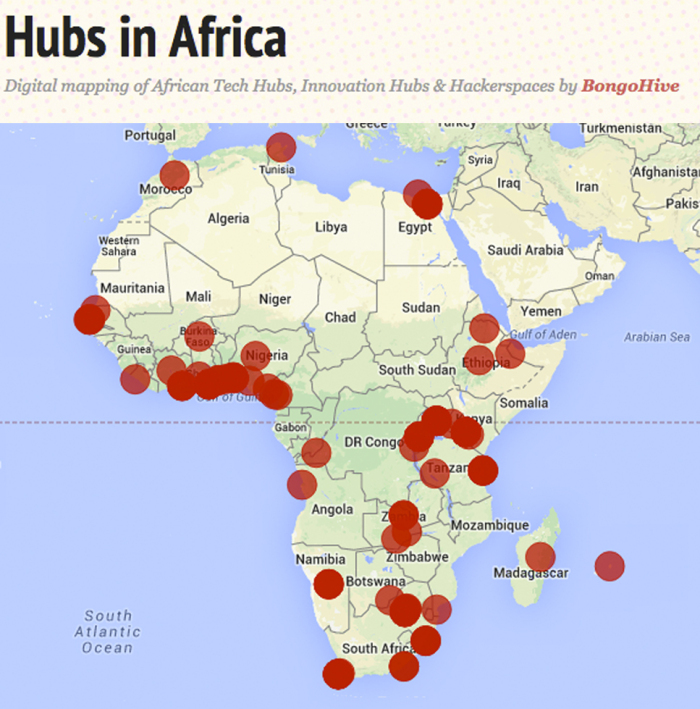
Figure 4.1: Regional Distribution of Innovation Spaces in Africa (Sources: AfriLabs, Africa.co, Tekedia, BongoHive Zambia, Fab Foundation). Please note this may not be comprehensive as new ones are emerging regularly.

AfriLabs, a pan-African network of innovation hubs and technology centers that support startups, entrepreneurs, and innovators across the African continent, has expanded to a new country, Eswatini, and five new African cities. These cities include Zanzibar, Ota, Matsapha, Musanze, and Baidoa.

AfriLabs’ latest expansion heralds exciting new opportunities for Africa’s digital economy, as expanding its reach will strengthen its efforts to achieve a digitalized Africa by 2030, as they continue to connect hub members to a network of other stakeholders.

For AfriLabs, one major goal of the pan-African network is to improve the local African innovation ecosystems by providing better support for the creation of investment-worthy digital startups and businesses.

AfriLabs Director of Community, Mayssa Mrabet has expressed optimism about the impact of the expansion. In her words, “We will continue nurturing, supporting, and celebrating innovative ecosystems across the continent. This is a major step towards our goal of achieving a digitalized Africa by 2030”.

Also speaking on AfriLabs expansion, the founder and CEO of Eureka Geo in Cameroon, Mely Monique said,

“Becoming a member of AfriLabs is a unique chance for us to be part of the African digital ecosystem and access numerous opportunities”.

Check Out AfriLabs New hubs

  • Novation City in Morocco
  • Privilege Access in Cameroon
  • Eureka Geo in Cameroon
  • Cube Zanzibar in Tanzania
  • Thousand Hills Hub in Uganda
  • Somaliland Innovation Zone (SIZ) in Somaliland
  • Southwest Innovation Hub in Nigeria
  • Kabarak University Innovation and Business Incubation Center in Kenya
  • Moolu Venture Lab in Nigeria
  • The Stalwart Hub in Ghana
  • Platinum Hub in South Africa
  • Ubulu Africa in Nigeria
  • Hebron Startup Lab in Ghana
  • WAN-Hive Ghana
  • Green Tech Innovation in South Africa
  • Royal Science and Technology Park-Business Incubator (RSTP) in South Africa

AfriLabs expansion is a significant step taken towards the growth and development of the African digital economy, which will help to create a more connected and vibrant innovation ecosystem on the African continent.

Founded in 2011, AfriLabs has made significant contributions to Africa’s digital ecosystem by fostering innovation, supporting startups, and promoting collaboration among various stakeholders in the technology and entrepreneurship sectors.

Some of the key contributions of AfriLabs to Africa’s digital ecosystem include:

  1. Supporting Startup Growth: AfriLabs provides a platform for startups to access resources, mentorship, training, and funding opportunities. By offering a conducive environment for innovation, these startups can develop their ideas and products, leading to the growth of homegrown solutions to local and global challenges.
  2. Networking and Collaboration: AfriLabs connects a diverse network of innovation hubs, co-working spaces, and tech communities across the continent. This connectivity facilitates knowledge sharing, collaboration, and the exchange of best practices among different regions, helping to create a more unified and robust digital ecosystem.
  3. Capacity Building: AfriLabs organizes workshops, training programs, and events that equip entrepreneurs with the skills and knowledge they need to succeed in the tech industry. These capacity-building initiatives contribute to the development of a skilled workforce and promote technology-driven entrepreneurship.
  4. Access to Funding: Through partnerships, events, and programs, AfriLabs provides startups with opportunities to access funding from investors, venture capitalists, and other sources. This financial support is crucial for startups to scale their operations and bring their products to market.
  5. Showcasing African Innovation: AfriLabs showcases African startups and innovations on a global stage, increasing their visibility and promoting a positive image of African technology and entrepreneurship.

Overall, AfriLabs has continued to play a crucial role in catalyzing the growth of Africa’s digital ecosystem by creating a network of support, knowledge sharing, and resources for startups and tech entrepreneurs across the continent.

Nigeria Underperforms in Africa’s GDP Per Capita Ranking; Nigeria 18th, Seychelles 1st

0

GDP per capita (i.e. gross domestic product divided by total population) is the most efficient way of measuring productivity in economies. It indicates a nation’s standard of living (think of what everyone will get if the whole “wealth” of a nation is shared equally). Here is how Africa stands, using 2022 data, courtesy of Nairametrics:

Africa – $2,705


#1: Seychelles – $15,875

#2: Mauritius – $10,216

#3: Gabon – $8,820

#4: Botswana – $7,738

#5 Equatorial Guinea – $7,053

#6: South Africa – $6,776

#7: Libya – $6,716

#8: Namibia – $4,911

#9: Egypt – $4,295

#10: Algeria – $4,274


#18: Nigeria – $2,184

Indeed, Nigeria is even below the African mean. We’re really a poor country despite what many of us think. Private jets, big suits, etc cannot hide the fact. Conclusion: Nigerians must get to work!

Comment on Feed:

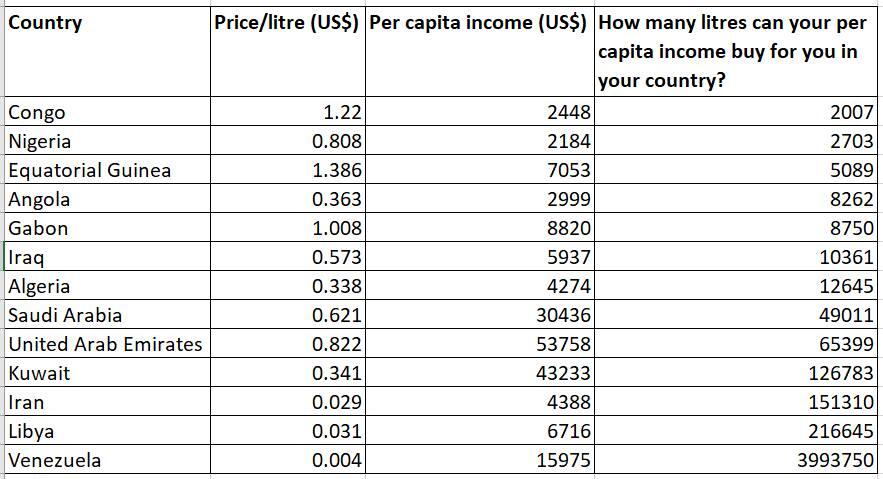
Comment 1A comparison of OPEC countries using price per litre of petrol versus their respective per capita income. Among the 13 OPEC member States, the price per litre of petrol goes from $0.004 in Venezuela to $1.386 in Equatorial Guinea. The per capita income goes from a low of $2184 for Nigeria and a maximum of $53,758 for UAE.

Based on what I would call “petrol access” for people in each of the 13 OPEC countries, I divided the per capita income by the price per litre in each country to get the quantity of petrol or number of litres which the income can purchase.

Congo came out with the lowest of 2007 litres followed by Nigeria with 2703 litres. Venezuela came out with the highest of about 4 million litres. The five countries with the lowest access to petrol (Congo, Nigeria, E.Guinea, Angola, and Gabon) are in sub-Saharan Africa. And from the data, it can be seen that the reason is because of a combination of low income and high price per litre. Libya would have been in the same category if not for its remarkably low price of petrol.

Why do countries in sub-Saharan Africa think it is okay to have high energy prices? High energy prices evidently a major factor that explains the prevalent poverty and low income across sub-Saharan Africa?

Comment 2: Prof … Forgive me … But GDP per capita is not in any way the almighty ,all powerful metric to determine the productivity of an economy or even the health of any Economy.
It is just one among many other parameters that should be assessed all together to know if an Economy is strong , viable and healthy. It is a bit as if you say because someone has headaches , then the person has malaria , which is not the right diagnosis. It could be that the person has overworked , the person thinks too much , the person is constipated ,etc. It could be anything , not only malaria. A typical case is Russia ,which is a strong economy that produces more than it consumes , that has almost zero debt compared to the most indebted country on earth , etc.

Also , African economies are not really evaluated for the simple reason that most businesses in Africa are informal , hence no data to really evaluate our strength. Like I laugh when I hear foreign agencies say Africans live with less than a dollar per day . Lol it can’t even buy yam or tomato , yet we eat.

Why the government is interested in the blockchain community

0

The global market has an impact on the creation of new technology, but this impact can also be destructive to new advancement. The global government is the market, and laws were enacted on their turf without the product being accepted or rejected.

The first and last readings of the bills that brought in so much technological research on how a product or a technology is for global progress or destruction, however, allowed for the passage of this acceptance. There are currently many differences in societal perception, attitude, and domestic acceptability of new products. “Truthfully, the world government controls the world market.”

The value and the policies that led us to believe that the paper bearing the faces of dead people and the writing of numbers indicating what number or currency is money was started by the global government. The paper is usually accepted for use as a payment and other business obligation medium in this introduction. Money currently holds a lot of power.

Even if the manufacturer will not be able to rest due to governmental regulations and consumer attacks on the goods, expectations, and demand from the worldwide market for items are quite high.

Why is blockchain technology so despised by the government?

“Where you invest and embrace is where you benefit,” This reference is well worth reading again since an unidentified person with a healthy brain and a high IQ will invest in a field that is not profitable for him and is growing. The blockchain community errs in this area. Most likely, ongoing Blockchain education from various fields and perspectives has been training those who conduct studies in this area. Binance, CoinmarketCap, CoinGecko, and others are among them.
There are currently high expectations for the global space program, which is why certain nations have rejected the technology.

Blockchain technology is a fantastic system to learn about and it offers a terrific way to speed up financial transactions and payments, both legally and illegally, that were created under computer control. The sender and the receiver are the only parties required to provide an explanation of what actually transpired in this decentralized transaction mechanism, which is simply known as an anonymous transaction.

The international government has no control over or knowledge of what is going on in this area. Because it differs from native banks, where everything is centralized and under the jurisdiction of the local government, blockchain technology is not profitable to the global government. The government is better equipped to control the nation’s financial institutions thanks to their centralized nature, which is 100% manipulable at any time. Implementing taxes, laws, and other legislative measures to control and manage the wealth of her citizens.
“The government does not benefit from Blockchain Technology,” is where the hostility erupted and governmental attacks are intense

Why does the government employ the deceptive phrase “Is a massive destruction to financial institutions on the people”?

This technique was developed in response to the restrictions on international transactions. Not only that but blockchain technology was actually created by governmental policies on payment and tax regulations. Well, if you don’t know, anonymous peer-to-peer transactions on the Dark Web are where Blockchain technology was born. Satoshi finished the history up to that point, which caused this technology to rapidly advance in tandem.

The government uses a brief history of how this technology came into existence as a hook to convince the populace to oppose progress and development. Web 1.0 was rejected by the so-called world government because it would “destroy the world population,” according to their reasoning.

The purpose of the bait was to mislead people into rejecting Blockchain technology as well as to manage and influence her financial situation. However, mistakes made in the Blockchain area including scams, difficult pull, money wasted, and unidentified developers seriously endanger the public and lead them to believe in the world government. Yes, that is accurate to state, since more and more educational resources from the blockchain field are sought after as the technology advances and allows users to explore without fear.

KYC Was Introduced

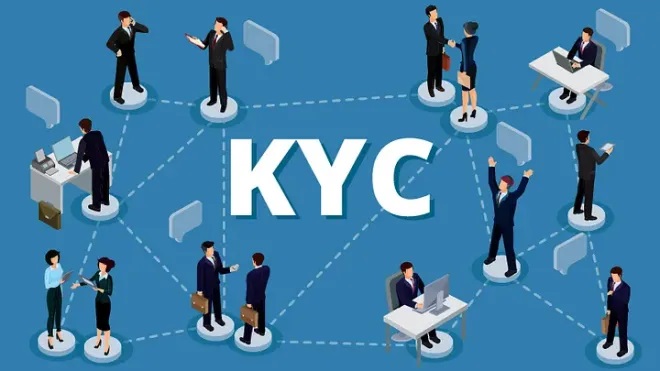
They claim that the implementation of KYC was made in order to find users and by-products to understand their customers because the government couldn’t defeat them. For futures trading, spot trading, and asset management, a centralized exchange was built through research and development. Similar restrictions and rules were created for local financial institutions. Since the decentralized genesis of the technology appears to be detrimental to users, centralized exchanges serve as the native global financial institution in blockchain technology.

However, when Blockchain technology advanced, it became far more secure, running as a chain under computer control and printing out secret phrases and private keys that the user acquired when creating an account or wallet. By using these terms, the user takes responsibility for anything that occurs to them. Even in our local financial institution, there have been instances of theft or unreported financial errors that were not the fault of the individual, but the local bank was unable to resolve the issue. We all know that their top responsibility is to defend the interests of the clients, but given what I see going on in my neighborhood every day, I find it painful to use a local financial institution.

Network problems, transaction restrictions, tax increases, and different users using the same phone number to receive bank alerts are all factors. Perhaps the problem is not with the local banks, but rather with the communication network. “My brother gets a notification whenever another user withdraws” Good day, Access Bank.

Rather than their personal benefit, the authorities did not expect much from blockchain technology

The international government expected the blockchain community to provide open centralized and decentralized education that improves and enables people to use and understand blockchain technology in a private and public manner.

The government’s attitude toward embracing new technology will change with the introduction of free educational learning to native and online schools, especially native centralized and decentralized schools focusing on urban and rural development. This is due to the clear and significant contribution that education enables to people’s growth.

Knowledge, study and a shift in perspective promote growth and progress. But ignorance or a lack of education jeopardizes user development, which leads to the user rejecting and despising new products and technologies.

A system with central control over education is called centralized. The government is referred to in the latter. School boards are allowed complete autonomy in the management of their institutions at the decentralized level. In a centralized system, school boards are contractually required to adhere strictly to governmental requirements. Not all users of modern technology, particularly new technology, are knowledgeable. If this concept were to be put into practice, I believe that Blockchain will unquestionably be accepted by most people as a form of exchange similar to money.

To Conclusion

Whether on a formal or informal level, learning is an ongoing assessment that must happen. Beyond its own interests, the government expects blockchain technology to defend the riches of its citizens. Additionally, for the banking institution’s protection. The world has to be introduced to a new, big blockchain education initiative that will undoubtedly lead the way for centralized and decentralized schools in both urban and rural areas.

Since blockchain technology is the future, let’s embrace the new system this time around and profit from it. “Is here to stay and the future is now, embrace the new system”.