DD
MM
YYYY

PAGES

DD
MM
YYYY

spot_img

PAGES

Home Blog Page 427

Stablecoin Market Cap Hits Historic $300B Milestone

0

The total market capitalization of stablecoins has indeed crossed $300 billion for the first time, marking a significant acceleration in crypto adoption during 2025. This surge reflects stablecoins’ evolution from trading tools to essential infrastructure for DeFi, cross-border payments, and institutional finance.

As of late September 2025, the market cap stands at approximately $307 billion according to CoinMarketCap, though slight variations exist across trackers—CoinGecko reports $299 billion, and DeFiLlama shows $295.5 billion. These discrepancies arise from differences in how platforms account for circulating supply and chain-specific data.

The sector added nearly $4 billion in the past week alone, building on a 120% increase since January 2024. It first surpassed $200 billion in December 2024 and has since doubled, driven by regulatory clarity like the U.S. GENIUS Act passed in July 2025.

Tether (USDT) remains dominant, with over 60% of issuance on Ethereum ($162B), followed by Tron ($77B), Solana ($13B), and BNB Smart Chain ($12B). Stablecoins are no longer just a crypto safe haven—they’re bridging traditional finance and blockchain. Institutional players like JPMorgan, PayPal, and BlackRock are integrating them for faster, cheaper settlements, cutting cross-border costs by 40-60%.

In emerging mamarket like Nigeria, Argentina, they’re hedging inflation and powering $5B+ in annual remittances. Yield-bearing variants like USDe are also gaining traction, blending stability with DeFi returns.

Traders are calling it a “surging” phase toward global payment rails, with whales accumulating amid regulatory tailwinds. This milestone signals stablecoins could hit $400B by year-end if U.S. legislation keeps momentum.

The stablecoin market cap crossing $300 billion has far-reaching implications for crypto, finance, and global economies: Stablecoins like USDT and USDC are becoming standard for banks like JPMorgan and fintechs PayPal. to settle transactions, cutting costs by 40-60% compared to traditional systems like SWIFT.

This signals a shift toward blockchain-based rails in traditional finance. The U.S. GENIUS Act and similar global frameworks legitimize stablecoins, encouraging institutions to allocate capital. Expect more regulated issuers and higher trust, potentially pushing market cap to $400B by 2026.

Stablecoins underpin over 70% of DeFi TVL $150B+ enabling lending, borrowing, and yield farming. The $300B milestone suggests DeFi could scale further, with USDe and DAI driving innovation in yield-bearing assets. Larger market caps deepen liquidity pools, reducing volatility in crypto markets and attracting more retail and institutional traders.

In countries like Nigeria and Argentina, stablecoins hedge against inflation, Nigeria’s 25%+ inflation rate and power $5B+ in remittances annually. This milestone reflects growing reliance on stablecoins as alternative currencies. Stablecoins cut remittance fees from 6-10% to under 1%, potentially reshaping $800B global remittance markets.

Historical depegging events like UST in 2022 highlight risks. Tether’s dominance 58% share raises concerns about transparency and reserve backing. While clarity boosts growth, stricter rules could limit issuers or impose reserve requirements, impacting scalability.

CBDCs could challenge stablecoin dominance, especially if governments prioritize control over decentralized systems. X posts highlight trader optimism, with “whale” accumulation signaling bets on stablecoins as a crypto bull market catalyst. However, some warn of over-reliance on Tether, citing systemic risk if confidence wanes.

This milestone cements stablecoins as critical infrastructure, driving efficiency in finance and crypto while posing risks that need careful monitoring. The path to $400B looks plausible, but regulatory and stability hurdles loom. Overall, it’s a bullish sign for crypto’s maturation, but watch for risks like peg stability and evolving regs.


Snapchat Monetizes Memories, Puts Storage Behind Paywall as Investors Eye Recurring Revenue Play

0

After nearly a decade of offering Memories as a free digital time capsule, Snapchat is drawing a line. The company said Monday that access to the feature will now be capped at 5GB, with additional storage pushed behind a paywall.

The new tiered system includes an introductory plan of 100GB for $1.99 per month, bundled as a standalone subscription. Snapchat+ subscribers ($3.99 monthly) will see their allotment raised to 250GB, while Snapchat Platinum subscribers ($15.99 monthly) will be granted a hefty 5TB of storage.

In an email to TechCrunch, Snapchat explained that when Memories launched, it was not expected to balloon into a repository of this scale. But user behavior told a different story: more than 1 trillion Memories have now been saved, underscoring the feature’s durability.

“It’s never easy to transition from receiving a service for free to paying for it, but we hope the value we provide with Memories is worth the cost,” Snapchat wrote in a blog post. “These changes will allow us to continue to invest in making Memories better for our entire community.”

To ease the transition, the company will offer 12 months of temporary storage for Memories that exceed the new 5GB limit. Users can also download their archives directly to personal devices. If no plan is chosen after that period, Snapchat says older Snaps will be preserved while newer ones exceeding the threshold will be deleted.

Snap insists the change won’t affect most of its user base, noting the “vast majority” remain under 5GB of saved Memories. Instead, the move targets what it calls “power users” — those with thousands of Snaps stored on its servers.

Investor Lens on Monetization

The policy shift is more than a product tweak — it is a signal to Wall Street. Snap has struggled to stabilize its advertising-dependent revenue model amid stiff competition from Meta and TikTok. The company is creating what investors often prize most: a recurring subscription stream tied to an emotionally sticky product by introducing paid storage.

Photos and videos, unlike premium filters or experimental AR features, are rarely abandoned by users once they’re archived. Analysts say this creates a strong incentive for subscribers to keep paying rather than face the risk of losing digital memories. That dynamic mirrors Apple’s iCloud and Google One, both of which have become reliable profit engines in their respective ecosystems.

However, the move reflects a broader trend for Snap, where platforms are monetizing infrastructure as much as content. The enormous costs of storing over one trillion Memories — a data set rivaling mid-sized cloud platforms — have become difficult to justify under a purely free model. Snap is attempting to avoid the backlash that often accompanies a universal paywall by selectively charging heavy users while keeping access free for casual ones.

Comparisons to Rivals

The structure resembles what Apple did with iCloud, initially offering free tiers before capping storage at 5GB and building out paid tiers that today contribute billions annually to its services revenue. Google Photos made a similar pivot in 2021, when it ended unlimited free storage. Both companies successfully conditioned users to see storage as a subscription commodity rather than a permanent free service.

Snap’s difference is its narrower focus: unlike Apple and Google, it does not control the hardware ecosystem. That means its leverage is primarily emotional — the attachment users have to Snaps as personal history. Analysts say that could either prove more fragile than ecosystem lock-in or, conversely, even stickier given the intimacy of Snapchat’s role in teen and young adult social lives.

Market Behavior

Some analysts believe that from a financial-market perspective, Snap’s move could shift investor narratives around the stock. Instead of being viewed purely as an ad-tech play competing against larger social platforms, Snap is attempting to reposition itself with hybrid economics: advertising for scale, subscriptions for stability.

The recurring storage subscriptions are believed to be sticky revenue, and investors tend to reward that stability. The bigger question, however, is whether Snap can scale these offerings enough to materially shift its revenue mix.

The introduction of Snapchat Platinum at $15.99 per month with 5TB of storage also places the company closer to enterprise-style pricing tiers seen in cloud computing — albeit aimed at consumers. If uptake is meaningful, markets may begin to value Snap less like a purely ad-driven social platform and more like a consumer-facing SaaS hybrid, a framing that could alter expectations on margins and cash flow.

For now, Snap is careful to stress that most users will not feel the change. But in financial markets, the focus will be on the minority who do. If even a small slice of Snapchat’s 400 million daily active users converts to paid storage, analysts say it could open a new recurring revenue channel worth hundreds of millions annually.

Intuit’s Fish Bait Acquisition Construct And Winning Competition

0

There are fundamental constructs that distinguish companies that don’t just run, but actually TRANSFORM their sectors. This is the crux of the matter, and the reality is that business success demands reinvention as the customer’s needs and context evolve over time. The companies that become true transformers possess a genius for staying ahead of customer Needs and Expectations, operating at the level of Perceptions (see my NEP Customer Centricity framework as explained in Harvard Business Review ). Yes, they are simply ready, no matter what tide comes in.

One such masterful practitioner is Intuit, the American giant best known for its tax software. A defining attribute of Intuit’s strategic playbook is its remarkable willingness to offer most things for free. One could almost accuse the firm of having an aversion to revenue! You will observe competitors diligently building products and solutions right on the very platforms Intuit has architected. Yet, there is a powerful, almost inevitable catch: after a few seasons, these competitors become effectively invisible. In the mind of the customer, they are simply folded into the Intuit business.

And so, for decades, Intuit has managed to quietly swallow competitors without the necessity of buying them. I have christened this model the Fish Bait Acquisition Construct. It is a sophisticated maneuver where you deliberately extend the ‘free’ offering to competitors. As they become comfortable and dependent on these freebies—the bait—you effectively set a trap. Over time, their independent strength is hollowed out, their value proposition weakened. The inevitable end game is that they eventually come to you, practically begging you to take over their remaining assets.

In this AI era, we are going to witness this fish bait acquisition construct at scale as foundation model companies “bait” app-level players with goodies. Do not go for those goodies mindlessly!

Avoiding Common Mistakes During Zendesk Setup: A Practical Guide

0

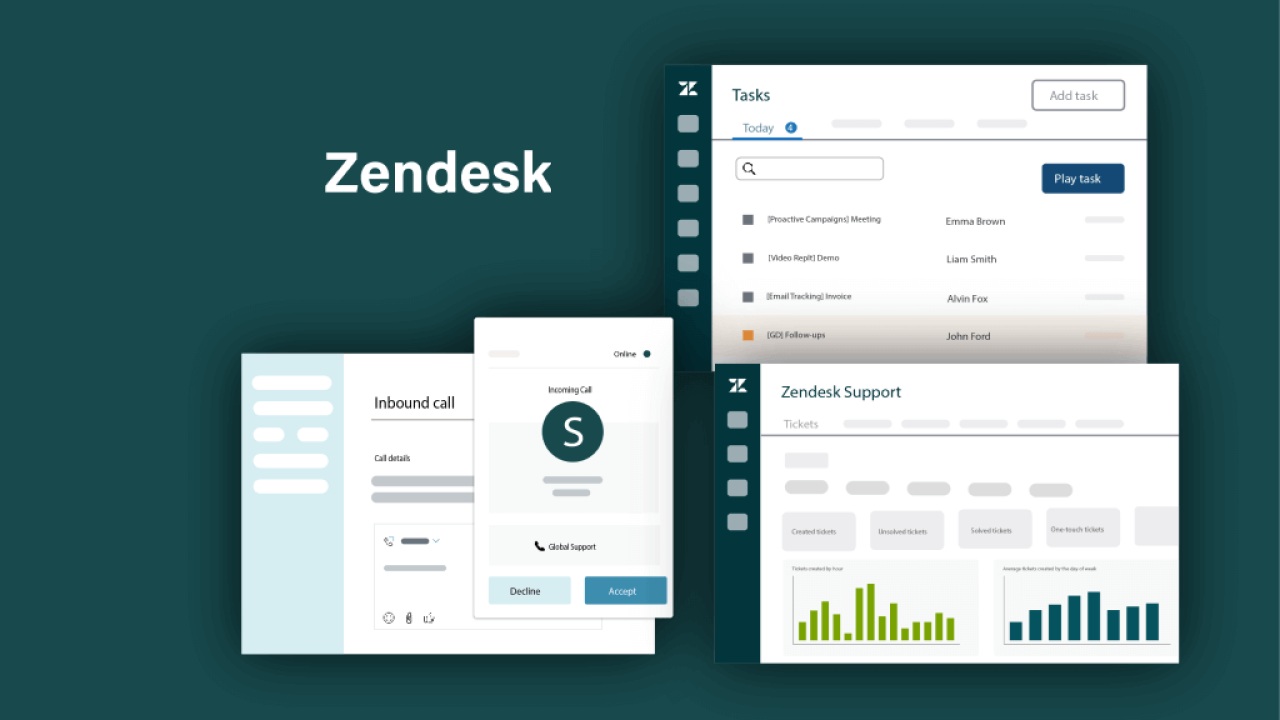
Setting up Zendesk is a smart step toward improving your customer support experience. And in many cases, it is. Still, plenty of teams hit unexpected bumps in the road during their Zendesk implementation journey. Why? Because while the tool itself is powerful, the way you configure it makes all the difference. Think of it like moving into a new house: the structure is ready, but how you arrange the furniture determines whether you are comfortable or tripping over your coffee table every morning.

The good news is, you can learn from the mistakes others have already made. In this blog post, we will explore common pitfalls during Zendesk setup, show you how to sidestep them, and share real-world examples that prove these lessons are not just theory. By the end, you will feel more confident in building a help desk that works seamlessly for both your agents and your customers.

Jumping in Without a Plan

One of the biggest mistakes is diving into Zendesk setup without a clear plan. Companies often rush, thinking speed will solve everything. Instead, they end up creating confusion for both customers and agents.

A small e-commerce brand I worked with rushed their rollout before the holidays. They skipped planning, created ticket fields on the fly, and ended up with a messy queue. Agents spent more time figuring out where tickets belonged than answering customer questions.

To avoid this, define your goals before touching the system. If your aim is faster response times, design workflows with that in mind. If customer self-service is the priority, start by shaping a strong Help Center.

Making Workflows Too Complicated

Zendesk has plenty of options: triggers, automations, macros, and SLAs. It is tempting to use them all at once, but that usually backfires.

For instance, a SaaS company created 50 triggers before launch. Within weeks, tickets were bouncing between agents because rules overlapped. Customers noticed delays, and frustration grew. After reducing automations to about a dozen, things started running smoothly.

The key is to keep it simple at first. Automate the basics, then add complexity only as your team grows comfortable.

Forgetting Agent Training

Even the best Zendesk implementation will flop if your team is not trained. Agents need to know how to use macros, views, and shortcuts. Without training, they fall back on slow, manual processes.

At a travel agency I visited, agents typed every reply by hand because no one had explained macros. Productivity plummeted until proper training was introduced. Afterward, response times dropped by nearly 40 percent.

Training does not have to be overwhelming. Start with short workshops, then back it up with an internal guide agents can revisit anytime.

Ignoring Reporting and Metrics

Data is what keeps your support team on track, yet many companies ignore it during Zendesk set up. They assume that if customers are not shouting, everything must be fine.

A retail company learned this the hard way. They ignored Zendesk Explore reports for six months. When they finally looked, they saw doubled response times and weekend backlogs. By then, CSAT had already dropped significantly.

From the start, identify which metrics matter most. Use dashboards to track them and review results regularly. A few numbers can reveal problems before they grow out of control.

Neglecting the Customer Experience

Zendesk is designed for agents, but customers are the ones who feel the impact. If your system is clunky, they will not care how smooth your backend workflows are.

A subscription box company made this mistake. Their ticket forms were long and complicated, with endless dropdowns. Customers gave up and vented on social media instead. After simplifying forms and adding a Help Center with FAQs, ticket volume dropped by 25 percent.

When setting up Zendesk, keep the customer’s view in mind. Submit a ticket yourself, test live chat, and browse your Help Center. If it feels clunky, customers will notice.

Key Mistakes to Avoid

Here are the five most common mistakes during Zendesk setup:

  • Jumping in without a clear plan
  • Overcomplicating workflows
  • Forgetting to train agents
  • Ignoring reporting and data
  • Neglecting the customer experience

Best Practices for a Smooth Zendesk Implementation

To make your Zendesk implementation successful, keep these best practices in mind:

  • Start with clear goals and map the customer journey before configuring.
  • Keep workflows simple, adding complexity only when necessary.
  • Train agents early and provide ongoing resources.
  • Monitor data from day one to spot issues quickly.
  • Always test the system as if you were the customer.

Wrapping It All Up

Launching Zendesk can be exciting, but it is also a delicate process. The most common mistakes, rushing in without a plan, overcomplicating workflows, skipping agent training, ignoring data, and neglecting the customer experience, are all avoidable if you take a thoughtful approach.

Think of your Zendesk implementation as planting a garden. You cannot just throw seeds into the ground and hope for the best. You need to prepare the soil, water regularly, and pull out weeds before they take over. Do it right, and you will cultivate a thriving support system that benefits both customers and agents.

So, before you finalize your Zendesk setup, pause and ask yourself: Am I setting my team up for long-term success, or am I rushing toward a quick launch? With the lessons shared here, you will be far better equipped to make Zendesk a powerful ally instead of a daily headache.

Trump Announces 100% Film Tariff, Threatening Hollywood and Global Cinema Trade

0

US President Donald Trump on Monday said he would impose a 100 percent tariff on all foreign-made films, an unprecedented move that extends his protectionist trade agenda into cultural industries and risks disrupting the global movie business.

The announcement, made in a post on Trump’s Truth Social platform, claimed that America’s moviemaking industry was being stolen by international rivals.

“Our movie making business has been stolen from the United States of America, by other countries, just like stealing candy from a baby,” he wrote.

The measure, if enforced, would directly threaten Hollywood’s reliance on international co-productions and box office revenue while also striking at foreign film industries that depend on exporting movies to the lucrative US market. Netflix shares dropped 1.5 percent in early trading following the announcement.

It remains unclear what legal authority Trump would use to apply a tariff on films. But trade lawyers point out that films are often categorized as intellectual property or services rather than goods, which complicates the use of tariffs. Studio executives have expressed confusion about how the measure could be enforced in an era where movies are funded, shot, and edited across multiple borders.

The president had first floated the idea in May without offering details, leaving the industry “flummoxed,” especially over how co-productions would be classified. Modern blockbusters often combine American financing with European post-production, Asian special effects, and international talent, raising questions about how the line between foreign and domestic films would be drawn.

Shockwaves Beyond Hollywood

While the policy has alarmed Hollywood studios, its ripple effects would extend far beyond the United States. Foreign film industries that have steadily grown their footprint in the US market now face the prospect of losing access or watching ticket prices double under tariffs.

  • China, now the world’s second-largest movie market, has long used cultural exports as soft power. Big-budget titles such as The Wandering Earth and Wolf Warrior 2 have found audiences abroad, while Chinese studios increasingly partner with American distributors. A 100 percent tariff would make these imports far more expensive, eroding their competitiveness and possibly pushing Beijing to retaliate against US films seeking entry into Chinese theaters.
  • India, home to Bollywood, Tollywood, and a sprawling regional film ecosystem, would also be affected. Indian films like RRR and Pathaan have enjoyed breakthrough success with US audiences in recent years, boosting the global profile of the industry. A tariff would blunt that momentum, especially for mid-budget productions that rely on the diaspora market in North America. For Indian studios, which already operate on thinner margins than Hollywood, doubling the cost of entry into the US market could prove prohibitive.
  • Nigeria’s Nollywood, the world’s second-largest film industry by volume, has built an expanding audience base in the United States through streaming platforms and theatrical releases targeting African diaspora communities. Films like The Wedding Party and King of Boys have gained international traction. With a 100 percent tariff, Nigerian films could lose affordability and exposure in US cinemas, slowing Nollywood’s global expansion at a critical moment when it is beginning to gain wider recognition.
  • Europe has long been a steady exporter of prestige cinema, with French, British, Italian, and Spanish films regularly securing US theatrical releases, awards recognition, and festival distribution. Co-productions between Europe and Hollywood are also a pillar of the industry, from arthouse dramas to streaming hits. A tariff would complicate financing structures and undermine cultural exchange, potentially reducing the flow of European films into the US while inviting retaliatory measures from Brussels.

Hollywood’s Global Dependence

The irony is that Hollywood itself depends heavily on foreign markets. Overseas audiences account for the majority of box office receipts for many blockbusters, while production is often outsourced abroad for cost and tax benefits. Trade analysts warn that targeting foreign films could spark retaliation from China, India, or Europe, making it harder for American studios to distribute their own films internationally.

Trump has introduced uncertainty into one of America’s most successful export sectors by venturing into cultural industries. Films and related services have traditionally delivered a trade surplus for the US, with Hollywood productions dominating global markets. Tariffs, analysts argue, risk undermining that advantage.