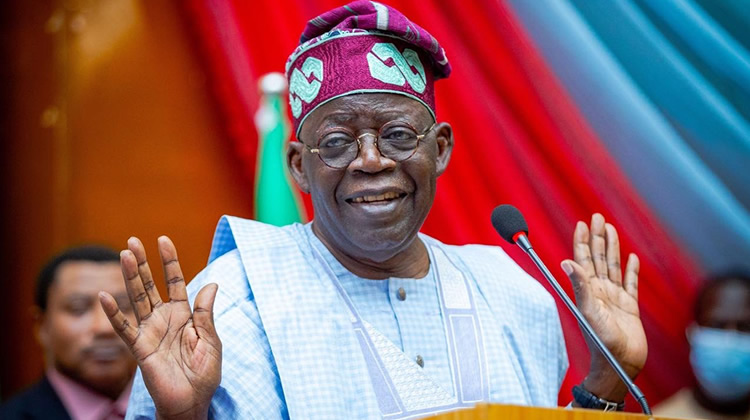
The APC team has responded to the open letter Nigerian novelist wrote to Joe Biden, asking the US leader not to recognize Bola Tinubu’s victory in Nigeria’s 2023 presidential election.
CHIMAMANDA – NIGERIA’s POSITIVELY GROWING DEMOCRACY
By Dele Alake
The noted and internationally acclaimed Nigerian novelist and essayist, Chimamanda Ngozi Adichie, deserves a great deal of pity and sympathy for her so utterly biased piece titled ‘Nigeria’s hollow democracy’ published in the latest edition of ‘The Atlantic’ magazine. It is a piece that does little credit to the image and reputation of a leading Nigerian thinker who ought to be a voice of truth and reason in a time when passions run high and truth is almost indistinguishable from falsehood, in a situation in which many people are heavily emotionally invested in an election which, unfortunately, has not gone the way they expected. But that is the often difficult to anticipate way of elections in liberal democracies at varying levels of development. Chimamanda’s piece is a sad reminder that the possession of brilliance and high intellect by an individual provides no immunity against prejudice, bias and bigotry albeit disguised in the deceptive garb of elevated and high minded discourse.
Chimamanda at least makes one honest admission in a write up made up largely of rumours, hearsay, presumptuous conjectures and outright falsehood. She supported Mr Peter Obi, candidate of the Labour Party (LP) in Nigeria’s February 25, 2023, presidential election and hoped he would win “as many polls had predicted “. Peter Obi did not win. He came third in a closely fought election in which Bola Tinubu of the All Progressives Congress (APC) came first and Atiku Abubakar of the main opposition, the Peoples Democratic Party (PDP) came second. Chimamanda had pinned her hopes on a possible Obi victory partly on predictions of flawed opinion polls some of which were predicated on statistically negligible and thus unreliable sample sizes and others on no discernible empirical basis whatsoever. Opinion polls do not win elections. After all, most opinion polls had predicted a Hilary Clinton victory in the 2016 presidential election in America. Donald Trump won and that did not make America’s democracy hollow.
The writer can of course afford the luxury of pronouncing Nigeria’s democracy ‘hollow’ from the distance of her foreign abode all because her favoured candidate, Peter Obi, fell short in the election. She avers that Nigerians went out to vote on the morning of February 25 with high hopes mainly because of the promise by the electoral umpire, the Independent National Electoral Commission (INEC) to upload results of the exercise online from polling units in real time to enhance transparency. The INEC has admitted that its system suffered unanticipated glitches on that day which made it impossible for it to upload the polling units results of the presidential elections on its portal immediately as promised but it began to do so once the technical hitches had been resolved. Chimamanda gives her readers the impression that the deployment of technology implies that some machine would magically conjure puritanical results online, portraying and guaranteeing the transparency and credibility of the exercise. No, it is the results as recorded physically on INEC forms provided for the purpose from the polling units, signed by polling agents of political parties, electoral officials and security agents that are uploaded and there is ample opportunity for parties contesting the outcome of the elections to prove if there are discrepancies between the figures on those physical result sheets and the electronic results uploaded on the INEC portal.
Without the slightest shred of evidence, Chimamanda avers that INEC’s inability to upload results of the presidential elections online as promised on February 25 was not due to technical hitches but rather deliberate human mischief and manipulation to rig the election. In her words, “If results were updated right after voting was concluded, then the ruling party, the All Progressives Congress (APC), which has been in power since 2015, would have no opportunity for manipulation. Technology would redeem democracy. Results would no longer feature more than voters. Nigerians would no longer have their leaders chosen for them”. This is a mischievous distortion of reality and utterly laughable. The introduction of the Bimodal Voters Accreditation System, BVAS, in the 2023 election for the first time ever indeed helped to ensure that only duly accredited voters could vote. It was now no longer possible for party agents in collusion with unscrupulous electoral officials and security agents to simply thumbprint ballot papers and stuff ballot boxes in favour of certain parties and candidates. This is one of the reasons for the significantly lower vote count in this election relative to previous elections where millions of votes, substantially imaginary, were allotted to parties in various state constituencies.
To demonstrate that the February 25 presidential election was discredited, Chimamanda writes that “There were reports of a shooting at a polling unit, and of political operatives stealing or destroying ballot boxes. In Lagos, a policeman stood idly by as an APC spokesperson threatened members of a particular ethnic group who he believed would vote for the opposition “. It is unfortunate that an intellectual of Chimamanda’s stature would rely on rumours and hearsay to pronounce authoritatively on an issue as important as the 2023,elections in her country. She quotes “cousins” and “relatives” in Lagos to back up grievous allegations of violence and massive vote rigging in the election. For crying out loud, there are over 176,000 polling units across Nigeria. From what percentage of these polling units did she get her reports and how credible were these sources? In Lagos State, there are approximately 13,500 polling units. The exaggerated reports of violence and malpractices in the state did not occur in up to 1% of these polling units in one or two local government areas. How reliable and accurate then is the information which the writer feeds her readers?
In any case, a careful scrutiny of the results of the elections shows that it was a close and tight contest which speaks to its credibility. The winner, Bola Tinubu won in 12 states just like the second placed Atiku Abubakar who also won in 12 states. Peter Obi who came third won in 11 states and the Federal Capital Territory, Abuja, which for the purpose of the election counts as a state. Tinubu scored 8,794,726 votes, Atiku had 6,984,520 votes while Peter Obi won 6,202,533 votes. The candidate who came fourth, Rabiu Kwankwaso of the New Nigerian Peoples Party (NNPP) recorded 1,496,687 votes, the majority of which he got from Kano State, his political stronghold in the North. It was however only Tinubu who met the constitutional requirement of scoring 25% of the votes cast in each of at least two-thirds of the states of the federation including the FCT, which translates to 24 states. Tinubu met the 25% requirement in 30 states, Atiku in 21 and Obi in 15. If the APC’s votes in the election, according to Chimamanda’s narrative, were rigged and fictitious, what does she say about the votes recorded by the other parties particularly her favourite candidate, Peter Obi?
It is instructive that Peter Obi and Rabiu Kwankwaso broke away from the PDP to contest the election on the platforms of the LP and NNPP respectively. Had the PDP contested the election as one with Obi and Kwankwaso in its fold, winning the election would have been an uphill, almost impossible, task for the APC. But contesting on three separate platforms against the ruling party as they did, the victory of the APC was logically and empirically inevitable.
Chimamanda betrays her ignorance of Nigerian politics and unwittingly misled her readers when she wrote that “Nigerian democracy had long been a two-party structure -power alternating between the APC and the PDP – until this year, when the Labour Party, led by Peter Obi, became a third force. Obi was different; he seemed honest and accessible, and his vision of anti-corruption and self-sufficiency gave rise to a movement of supporters who called themselves “Obi-dients”. Unusually large, enthusiastic crowds turned up for his rallies”.
First, politics in this dispensation in Nigeria since 1999 has not always alternated between the APC and PDP. In 1999, Nigeria had a virtual three party system with the PDP and All Nigeria Peoples Party (ANPP) splitting the North, the PDP dominant in the South-East and South-South and the Alliance for Democracy controlling the South-West. After the 2003 elections, the polity became a one-party dominant system with the PDP in control of large swathes of the country, the ANPP with reduced influence in the North and the AD reduced to controlling only Lagos State in the South-West. In the 2007 and 2011 elections, the PDP remained nationally dominant although the AD had been rebranded into the Action Congress of Nigeria (ACN) and regained control of the South-West while the Congress for Progressive Change (CPC) and the All Progressives Grand Alliance (APGA) had emerged as powerful regional political parties in the far North and South-East respectively. It was not until 2013 that the APC was created as a merger of the CPC, ACN, a faction of the PDP and a faction of the APGA, which then went on to win the 2015 elections and has since then been the ruling party at the centre.
Secondly, contrary to the romantic picture of Peter Obi painted by the writer, he has always been part and parcel of Nigeria’s political establishment. He was governor of Anambra State for eight years on the platform of the APGA, a period during which he recorded no remarkable accomplishments beyond claims that he saved humongous amounts for the state while leaving behind largely decrepit and dilapidated infrastructure. After his tenure as governor of Anambra state in 2006, Obi promptly dumped the APGA, decamped to the then ruling PDP and became an appointee of the President Goodluck Jonathan administration. He was the Vice presidential candidate of the PDP in the 2019 election and had the party won, he would have been seeking reelection along with his principal, Atiku, in this year’s election. It was only in May last year that Obi quit the PDP and joined the LP when he saw that he could not win the PDP primaries. There is absolutely nothing new or fresh about Obi except in the jaundiced eyes of the Chimamandas of this world. The novelist does not hesitate to regurgitate rumours and baseless innuendos about the President-elect but chose to be silent on widely publicized revelations in the Panama Papers of Peter Obi hiding humongous questionable wealth in notorious tax havens around the world.
Thirdly, Chimamanda writes most laughably about “Unusually large, enthusiastic crowds” that turned up for Obi’s rallies. This is comic. Did larger crowds turn up for Obi’s rallies than for Tinubu or Atiku? How did Chimamanda measure the enthusiasm of one party’s campaign crowd relative to the other? Yes, Obi received excited and enthusiastic receptions in the various church assemblies that he concentrated his campaign on in the run up to the election. Large and enthusiastic crowds received him in the various South-East states where his Igbo kith and kin are found as well as many of the South-South states with close ethno-cultural and Christian religious affinity to the South-East. It is not surprising that those were the only two out of the country’s six geopolitical zones that he won despite his marginal victories in Lagos in the South-West as well as Nasarawa and Plateau states in the North-Central. By the way, Chimamanda does not explain Obi’s victory in Lagos, Tinubu’s stronghold, in an election she says was badly rigged and lacking credibility. Nor does she throw logical light on Atiku’s victories in states like Katsina, Kaduna, Jigawa, Yobe, Kebbi or Osun in the South-West in the presidential election.
Obi targeted Igbo and Christian votes in his campaigns and he got his victories in the South-East and South-South. He won two out of six states in the North-Central and did not have up to 25% of the votes cast in either the North-West or North-East. He had no realistic electoral path to victory in the presidential election. Victory in two out of the six geopolitical zones cannot give any candidate victory in a presidential election in Nigeria. What is most tragic about Chimamanda’s letter to President Joe Biden is that she wrote as an unrepentant Igbo jingoist masquerading as an objective intellectual and patriotic Nigerian. The point is that she is Igbo like Peter Obi and wanted him to win for purely primordial reasons. Many allude to her novel on the Nigerian civil war, ‘ Half of a Yellow Sun’, as depicting her essentially ’Igbocentric’ perception of reality. This is understandable. After all, she is human.
That Obi did not win the election does not make Nigeria’s democracy hollow. From 2011, there have been incremental and noticeable improvements in the country’s elections as witnessed in 2015, 2019 and now 2023. It can credibly be argued that Nigeria’s democracy is positively growing as we have had 24 years of civil rule uninterrupted by the military interventions that had hitherto been so detrimental to the country’s political development. The writer argues that the INEC Chairman should have paused the collation of results process to investigate grievances by political party agents as she alleged was done in the governorship elections of March 18. Grievances raised at the national collation Centre ought to have been addressed at the previous levels of the collation at local government and state levels. The governorship elections were declared inconclusive in Adamawa and Kebbi states and shifted to April 15 because the margin of victory was lower than the number of registered voters in areas where it was not possible to conduct elections on March 18, not because of grievances with the collation process. In any case, the Electoral Act provides for aggrieved parties in elections to seek redress through the judicial process and that is currently under way. So what exactly is the point of Chimamanda’s letter to President Biden? Is it to seek external intervention in the ongoing process?
Still stressing that the failure to upload the results of the presidential elections substantially marred the exercise and insinuating that this was deliberate, Chimamanda wrote, “Curiously, many polling units were able to upload the results of the House and Senate elections, but not the presidential election…The Senate and House results were easily uploaded. So why couldn’t the presidential results be uploaded on the same system?” We can thus presume that she finds the National Assembly elections credible and acceptable because they were uploaded. But the Senate and House of Representatives elections results reflected the electoral supremacy of the APC in the elections. They were a validation of the outcome of the presidential election which incidentally took place on the same day and at the same time as the legislative elections. 98 of 109 Senate seats have so far been declared. The APC won 57, PDP 28 and LP won 6. In the House of Representatives, 325 out of 360 seats have been declared. The APC won 162, the PDP 102 and the LP 34. Truth is the APC’s victory in this election cannot be credibly denied.
Amazingly, throwing all caution to the winds, Chimamanda writes “Many believe that the INEC Chair has been “compromised” but there is no evidence of the astronomical US-dollar amounts he is rumored to have received from the President-elect”. This is incredible. Chimamanda will be lucky if she does not have to prove this weighty allegation in court.
~Alake former editor of Nigeria’s Sunday Concord newspaper is the Special Adviser Communications to President-elect Bola Tinubu
Like this:
Like Loading...