DD
MM
YYYY

PAGES

DD
MM
YYYY

spot_img

PAGES

Home Blog Page 4276

Criminal Proceedings, Charges and Bails Under Nigerian Law

0

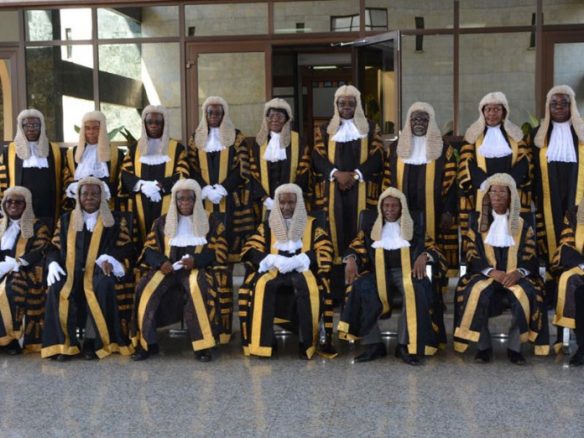
The Constitution of The Federal Republic of Nigeria is the legal benchmark for the administration of criminal justice in Nigeria. Other supporting laws like the Administration of Criminal Justice Act provide for the procedures to be applied & followed in criminal proceedings.

This article will be focused on the process of criminal proceedings in Nigeria and how they are commenced. Further focus will be on the topics of :-

– Who has the power to commence criminal proceedings in Nigeria.

– The limits if any on the powers to commence criminal proceedings under Nigerian law.

– How criminal proceedings can be terminated before judgment.

Who has the power to commence criminal proceedings in Nigeria?

Criminal proceedings in Nigeria can be commenced by :-

  1. The Attorneys-General of the Federation & the states of Nigeria
  1. The Nigerian Police Force
  1. Private Persons
  1. Special Prosecutors e.g. the Economic & Financial Crimes Commission (EFCC).

What are the limits of these powers to commence criminal proceedings?

The Attorney-General has virtually unlimited powers to commence and terminate criminal proceedings by way of a withdrawal or discontinuance (nolle prosequi). It should be noted however that where a nolle prosequi is entered, an accused person can be charged again without creating a situation of double jeopardy.

The power of an Attorney-General to discontinue a matter can be done orally by him or writing through an officer in his chambers. 

The closest thing to a limit on the powers of the AG is the constitutional requirement to have regard to public interest, the interest of justice and the need to prevent the abuse of legal process, which includes the requirement to obtain the consent of a High Court Judge before preferring a charge. 

The powers of the police are also limited up to the extent where criminal proceedings can be taken over by the Attorney-General. The police may withdraw charges against a suspect in certain instances, the effect will depend on the stage of the trial.

Private persons can institute criminal proceedings, but usually only under the approved list of an Attorney-General & in some jurisdictions, with a limitation to offences of perjury and non-indictable offences.

How are criminal proceedings commenced under Nigerian law?

Criminal proceedings are commenced through various means under various jurisdictions in the country, but the main methods of commencing criminal proceedings are :-

  1. Charges 
  1. Complaints 
  1. First Information Reports 

Charges Under Nigerian Law

Charges are the most common means of commencing a criminal suit in Nigeria and usually consist of documentation detailing the nature of the offence or offences alleged and the details of the persons being accused of committing those offences. 

This article will be focused on charges, especially on the topics of :-

– The requirements of a valid charge

– What makes a charge defective

– The rules of drafting charges

– The amendment of charges 

What are the requirements for a charge to be declared valid?

A valid charge must have :-

– Certainty of persons accused

– The particulars of the offences alleged

– Certainty of a unity of purpose where parties are accused jointly

When will a charge be deemed defective or invalid?

A charge is defective when :-

– It does not accurately identify the accused

– It does not give particulars of an offence alleged

– It alleges an offence not known to law

– It alleges an offence beyond the jurisdiction of the court before which it is brought

What are the rules of drafting?

The major rules of drafting are :-

  1. The rule against ambiguity – which requires clarity in the language contained in a charge
  1. The rule against duplicity – this is to prevent unnecessary repetitions in a charge
  1. The rule against misjoinder of offences 
  1. The rule against misjoinder of offenders

Are there any exceptions to the rules of drafting?

Yes there are. The rule against duplicity in particular has the following exceptions :-

  1. Offences defined in the alternative
  1. All acts done as a manifestation of an intention to commit treason
  1. The use of statutory forms
  1. Identical offences in a single transaction

For the rule against the misjoinder of offenders, the exceptions are :-

  1. Where more than 1 person are accused of the same offence
  1. Where more than 1 person commits different offences in the course of the same transaction
  1. Where 1 person is accused of committing an offence and another of abetting or being an accessory
  1. Multiple offenders committing a number of offences in proximity and at the same time in the course of a bigger event :- offences of attempted murder and robbery during a riot.

For the rule against the misjoinder of offences, the exceptions are :-

  1. Different offences committed in the course of the same transaction
  1. A set of acts that constitute offences under different laws and charged on the same charge sheet
  1. Charging an accused alternatively where an act does not neatly fit into an alleged offence
  1. The commissioning of an offence on several occasions

Can charges be amended?

Yes, they can. A charge can be amended before an accused makes a plea or if it is defective or even before the judgment stage of a criminal suit.

A defective charge can be amended if :-

– The defect is curable

– The amendment is not intended to just bring an alleged offence within the court’s jurisdiction.

– The amendment will not cause injustice

– The defect is not frivolous
Bail Under Nigerian Law 

The practice of Bail is in line with the rights afforded to an accused by virtue of the Nigerian Constitution (as amended), which states that an accused can still have an exercisable right to his freedom pending the determination of a criminal suit for which he can be punished with a term of imprisonment.

It should be understood that Bail under Nigerian law can be either as of right or with the permission of a court . Hence this article will be focused on the topics of :-

– The types of Bail available under Nigerian law

– The necessary considerations for the grant of Bail

– The grounds for the revocation of Bail under Nigerian law

What are the types of Bail available under Nigerian law?

The following types of Bail are available in Nigeria :-

  1. Police/Administrative Bail 
  1. Bail pending the trial of an accused
  1. Bail pending the appeal against a trial court’s decision

What are the conditions for police bail?

The police may grant bail to a person arrested without a warrant for a minor offence such as a misdemeanor . The police can also grant bail for offences punishable with a fine or less than an imprisonment term of 3 years. 

It should be also understood that the failure to meet the conditions of bail resulting in continuous detention is not a violation of a suspect’s constitutional right. 

What are the limitations on the right to bail if any?

The right to bail will be limited where a person is accused of an offence punishable by death except with cogent and very compelling reasons exist to grant bail.

How are bail applications carried out?

Bail applications are carried out either by orally for police bail and at the summary court level or by written applications/motions on notice. 

What are the major considerations to be factored in especially by a court when dealing with an application for bail?

The most important factors to consider when dealing with a bail application are :-

  1. Whether the accused will appear for his trial
  1. The nature of the offence and punishment prescribed
  1. Possibility of the accused interfering with official investigations of the offences alleged
  1. Prevalence of the offence
  1. The protection of the accused
  1. Criminal records of the accused
  1. The health condition of the accused

What can an accused do if his bail application is granted?

Where a bail application is refused by a court, a second application should be made to a higher court thought this would not be classified as an appeal.

What are the conditions for granting Bail pending appeal?

The applicant must :-

– File an appeal

– Comply with conditions imposed by the court

– Not have a breached bail granted during trial

– Show exceptional circumstances e.g. where the duration of the appeal might outlast the duration of the possible sentence or a serious health condition of the accused. 

What are the grounds for the revocation of Bail?

The bail of an accused can be revoked and a bench warrant of arrest issued where :-

– The accused fails to make a court appearance without good cause or violates his bail conditions

– The bail surety of the accused applies to be discharged from his bond. 
Lyft Needs a Lift – and my 2017 Call That This Company Is Destined for Acquisition or Merger

1

It is a cycle and patterns repeat: Uber and Lyft will merge or Uber will acquire Lyft. That was my call in  July 2017 when I wrote: “Government will see their struggles, and will dismiss any antitrust concern. The result: it will bless their union. 

As they become peer-competitors and rivalries, they will destroy the sector. Similar rivalries have ended together: Elance/Odesk (now UpWork),  Groupon / LivingSocial,  Sirius / XM and  Rover / DogVacay. Please add DraftKings and FanDuel to the list.”

Sure, the government blocked DraftKings and FanDuel merger. But if you watch sports in America, you will see that these two companies are enjoying their co-opetition. 

Back to Lyft, here is hard news: “Lyft has announced a major C-suite shakeup. Co-founders Logan Green and John Zimmer are stepping back from their day-to-day roles as CEO and president, respectively; board member and former Amazon exec David Risher will take over as CEO from April 17. Lyft stock has tumbled some 70% over the past 12 months as Uber has sped ahead in the ride-hailing race, now controlling 74% of the U.S. ride-share market, according to research firm YipitData. Meanwhile, the fact that Risher — a veteran of Amazon and Microsoft — hasn’t run a for-profit business in years is fueling sale rumors, The Information notes.”

The regulator may not like a merger but the fact remains that there are not many companies which will lift Lyft. Unlike Uber which is highly diversified on products and geography, Lyft is just a small thing. Do not invest in companies that cannot build natural moats in markets, they hardly create value!

Apple Launches ‘Apple Pay Later’, its Buy Now, Pay Later Service

0

Apple has launched its Buy Now, Pay Later service that it announced more than eight months ago, becoming the latest big name to jump on the trend that allows customers to pay for online purchases in installment.

The Cupertino giant plans to execute the feature known as Apple Pay Later by allowing customers to split payments for purchases into four installments that will span over six weeks, after making the first installment at the time of purchase.

The feature also allows users to apply for a loan within the Wallet app, ranging from $50 to $1000, with no interest or fees, to make online or in-app purchases.

“There’s no one-size-fits-all approach when it comes to how people manage their finances. Many people are looking for flexible payment options, which is why we’re excited to provide our users with Apple Pay Later,” said Jennifer Bailey, Apple’s vice president of Apple Pay and Apple Wallet. “Apple Pay Later was designed with our users’ financial health in mind, so it has no fees and no interest, and can be used and managed within Wallet, making it easier for consumers to make informed and responsible borrowing decisions.”

Apple said it will roll out the payment option to select users in the United States now, with plans to offer it to all eligible customers over the next several months.

Apple Pay Later, which is fully integrated into Apple’s digital wallet and attracts zero interest and no late fees, was announced in June last year. Apple said users can apply for a loan within the Apple Wallet app without it affecting their credit score. Once they select the amount they would like to withdraw, a soft credit pull will be conducted to make sure they are in “a good financial position” to take on a loan, the company said in a release.

The launch now sets Apple up to compete with the likes of Affirm, Klarna, and Afterpay in the buy now, pay later space.

Buy now, pay later saw an increase in adoption as inflation forced consumers to tighten their spending in the past few years. Other companies that offer BNPL service had sought partnership for expansion. Affirm partners with Amazon and Stripe.

Affirm shares dropped 7% on the news of Apple’s launch of BNPL.

Apple users will be able to track and manage upcoming loan payments in the Wallet app. Any loan application can also be done in the app with no impact on credit, according to the company.

Apple’s Pay Later option is enabled through the Mastercard Installments program, so merchants that accept Apple Pay do not need to do anything to implement Apple Pay Later for their customers, the company said.

Approved users will see a “Pay Later” option while using Apple Pay to check out online and in apps on iPhones and iPads. They will also be able to apply for a loan right at checkout. Apple said purchases using the software will be authenticated using Face ID, Touch ID or a passcode.

“Once Apple Pay Later is set up, users can also apply for a loan directly in the checkout flow when making a purchase,” Apple said.

The company said users can see the amount due for their existing loans, as well as the total amount due in the next 30 days, in Apple Wallet. Users will be asked to link a debit card as their loan repayment method. Credit cards won’t be accepted.

Apple has debuted its “buy now, pay later” (BNPL) service in the U.S., the tech giant’s latest push into financial services and a major challenge to BNPL stalwarts Affirm and Klarna. The service, called Apple Pay Later, will split purchases into four equal payments spread over six weeks. The zero-interest, no-fee loans of $50 to $1,000 will be made through a subsidiary, Apple Financing. Apple said the service, which will live in the Wallet app, will initially be available to “randomly selected” users before being rolled out to “eligible” customers in the coming months.

Twitter to Show Only Verified Accounts on its “For You” Feature in Latest Push to Promote Paid Verification

0

Elon Musk has announced the next phase of his push to implement monetized Twitter verification checkmark. The app’s chief executive said starting April 15, Twitter algorithm will only show verified accounts on the “For You” timeline.

The latest move is geared toward ensuring equality and fighting potential influx of advanced AI-powered bots that can beat “prove you’re not a robot” tests. Musk has touted paid verification as an ideal way to keep bots, which have been a major concern for him, out of Twitter.

“Given that modern AI can solve any “prove you’re not a robot” tests, it’s now trivial to spin up 100k human-like bots for less than a penny per account,” he said. “Paid verification increases bot cost by ~10,000% & makes it much easier to identify bots by phone & CC clustering.”

Musk who argued that the verification checkmark is the “only realistic way to address advanced AI bot swarms taking over,” added that “it’s ok to have verified bot accounts if they follow terms of service & don’t impersonate a human.”

Besides increased visibility, Twitter will hence, allow only verified accounts to participate in polls. With these privileges, Musk admitted that “paid account social media will be the only social media that matters.”

While Musk is keen to eliminate legacy verification, he said accounts attached to verified organizations will be automatically verified.

Twitter’s “For You” feature has become a key way to give posts a wider reach. Musk is believed to have integrated it into monetized blue check in a bid to woo users to subscribe for paid verification. This means that you have to be a paid user, a brand, or a government official to be recommended by Twitter’s algorithm.

Twitter’s struggle with depleted revenue has aggravated since Musk purchased the platform in late October. Musk’s acquisition of the social media company triggered mass exodus of advertisers, plummeting its earnings. Twitter generates about 90 percent of its revenue from ads.

Though he is hopeful for a comeback that will see Twitter sit at $250 billion value, the Tesla CEO told employees in an internal email that the microblogging app is now valued at $20 billion, less than half the $44 billion he paid for it.

The paid verification checkmark is likely going to be embraced more by brands and accounts seeking wider reach. Analysts suggest that Twitter has only 385,000 paying users at the moment.

The company said it will remove all legacy verification checkmarks starting April 1. But several users have criticized the decision, saying it defeats the objective, which is to distinguish real account owners from impersonators.

Musk said the new idea is “more about treating everyone equally” and that “there shouldn’t be a different standard for celebrities.”

To curb the likelihood of impersonation, Twitter ruled that you have to verify your identity to have a subscription. Meta is another social media platform that has adopted the idea – rolling out paid verification feature that will boost the reach of subscribers.

However, Musk may be forced to recruit more workers as pressure piles on Twitter to abide by European Union laws that requires that social media platforms have content moderation teams. Musk disbanded Twitter’s content moderation team last year as part of his efforts to cut cost and promote free speech. It’s part of the reasons advertisers left Twitter.

Pan African Payment Startup Kora Rolls Out USD-Card Acquiring Service to Improve Merchants Experiences

0

Pan-African payments startup, Kora, has launched USD card-acquiring service, allowing merchants on its platform to accept payments in US dollars.

By introducing USD card-acquiring, Kora plans to enable its merchants to create global businesses and contribute to accelerating Africa’s participation in global trade.

Speaking on the launch of the new service, Kora’s head of product Sandra Israel-Ovirih disclosed that it will be a game changer for African businesses selling to a global market.

In her words, “Incorporating USD card payments has been a priority for a while now. We understand that many businesses operate in a global marketplace and need a seamless payment system to handle cross-border transactions. This will be a game changer for African businesses selling to a global market.”

Also commenting on the service is the company’s CEO Nsofor Dickson who said,

We want the merchants we serve to scale globally. Giving them the option to accept USD is an important milestone in this effort. The focus is on Africa. But despite an increase in Africa’s participation in global trade, our contribution is still only around 3%. Giving African businesses the ability to accept global payment will accelerate Africa’s contribution to global trade. Our next step is launching a multicurrency bank account product that allows our merchants to access banking solutions currencies like EUR, GBP and USD via the Kora platform.”

The USD card-acquiring product is the latest in a series of merchant-facing initiatives launched by the company this year. Experts believe that Kora’s latest product launch will have a significant impact on Africa’s participation in global trade.

Founded in 2018 by Dickson Nsofor and Bryan Uyanwune, Kora was built to help Africans in the diaspora make remittances into the African continent. So far, the startup has evolved into a payment infrastructure that fosters payments made by indigenous and international businesses in and out of Africa.

With a single integration, Kora powers businesses to accept payments, make payouts to customers and settlements across multiple payment channels. As a pan-African payment infrastructure, it offers a robust payment API for payment collections, disbursements, and cross-border settlements with offices in Nigeria, Canada, and the United Kingdom.

Earlier in 2022, the company received a commercial PSSP license from the Central Bank of Nigeria (CBN). Later in the year, Kora expanded to the United Kingdom by partnering with the municipal government in Birmingham to open its first fully operational UK office.

At the 2022 Commonwealth Games opening ceremony, Kora was announced as a new Commonwealth-sourced foreign direct investments (FDI) project for the West Midlands. Since its launch, it has onboarded top locals and international brands like Payfuture, GiG, Juice Africa, and dLocal. The company said in a statement that it’s currently available to businesses across 25 African countries