DD
MM
YYYY

PAGES

DD
MM
YYYY

spot_img

PAGES

Home Blog Page 4278

Beyond Banning Binance for Naira Stability, Why Nigeria’s Bureau De Change Operators Are Wrong

1

Naira is crashing and the Association of Bureau De Change Operators of Nigeria (ABCON) is blaming Binance. Its president, Alhaji Aminu Gwadebe, wants Binance banned in Nigeria. Right now, the disparity between the official and parallel market rates has widened; the I&E window hovers around N782/$1 while the black market has hit N930/$.

If you know about Binance, you will know that Binance trading is becoming the anchorage of both the investors and exporters window and the parallel market, which is unfortunate.

So, we have to do something that can stop? Binance. It’s a competition; we need to ban Binance and the only way to do so is if you have liquidity.

As I speak, Binance is the most liquid market; they do 1.2 million transactions per second. So it’s a very liquid market but that is not a scary status, we can break it through our local content and peculiarities.” Alhaji Aminu Gwadebe

This remains my position: “Nigeria will either pause the full floating of its currency or return back to fuel subsidy within 6 months. Nigeria’s weakest currency stability point remains that it has to continue importing petrol since it does not have any working refinery. That creates a vicious circle since those importing fuel will mark up prices, to cushion for the next round of import, working to stay ahead of currency deterioration, in a system with no official benchmark.”

Binance is not Nigeria’s problem. Our challenge is that we do not have parity on the demand and supply of Naira, and using basic economics, Naira will keep losing value since more people are looking for USD than supplying it in Nigeria. 

Floating or swimming Naira does not remove the play of fundamental economics in markets, and until Nigeria can have more USD, Naira will continue to lose value. But I expect the government to put a pedal very soon!

More so, according to the African Development Bank, in its  “Africa Economic Outlook 2023”, “Currency weaknesses in some of Africa’s more globally integrated economies (Kenya, Nigeria, and South Africa) are expected to persist in 2023, largely due to potential capital outflows as investors search for safe assets in advanced economies”.

Yet, with great policies, Nigeria can rise. The young people are very creative and can deliver great results if they are supported. For example, they continue to rake in revenue on Spotify and other ecosystems, demonstrating new potential sources of earning US dollars besides hydrocarbons.

“The number of Nigerian artists who generated more than 5 million NGN and 10 million NGN in royalties from Spotify alone has increased by nearly 25% over the last year. This figure represents revenue generated from Spotify alone and does not consider earnings from other services and recorded revenue streams, concert tickets, or merch.

“In 2022, revenues generated by Nigerian artists from Spotify alone reached over 11,000,000,000 NGN. While Nigerian music industry revenues overall have grown 63% from 2021 to 2022 (according to IFPI), revenues generated by Nigerian artists – from Spotify alone – grew 74% over this same period,” Spotify stated in the report. 

Meanwhile, the apex bank thinks the reason Naira is crashing is due to “the diversion of diaspora remittances to the black market.”

The acting central bank governor stated this amid the naira’s fall to N930 per dollar at the parallel market on Thursday, which marks its worst performance since the CBN floated the FX market in June.

“With those remittances, the dollars have come in, we know the dollars have come in but we don’t see them in the official system. So, they must be going somewhere and somewhere,” he said.

“And the challenge with the black market, unofficial market or parallel market or whatever name you want to call it, it is as a result that it is not regulated, and it becomes an easy place to have criminal activities.

“We investigate bankers, not just bankers, anybody who has committed an offense, the first thing they want to do is to run to the black markets, change it to the dollars because it is less money to carry around.

“Some of the funding in the black markets are actually from diaspora remittances. That’s why it is important we need to know a lot of what’s going on there. We can’t play the sentiment game. If we don’t understand the dynamics, we usually go with the literature which does not necessarily work for us,” Shonubi said.

To BRC 69 or not to BRC 69? That is the Amazonian Question!

0

So we have reached the stage with Sinosignias and the Sino Amazons where all the product elements are ready and we are looking at the implementation side.

The Sinosignia is off the Handshake Blockchain, so it is as secure as a Bitcoin is.

Imagine a specific Bitcoin that is not on a Centralized Exchange. It’s owner downloaded it to a hardware wallet. Imagine in a moment of emotion, they threw that hardware wallet in a fire and burnt the book where they had their seed phrase.

Imagine the next day they were unlucky and got involved in a tragic and fatal accident.

Try to steal that specific bitcoin. This is how hard it is to steal a Sinosignia!


The Sino Amazon (artwork) side of the product therefore does not need to be so secure, because the product pair is anchored in the Sinosignia. Any tokenization solution will do as long as it is cheap and fast.

So we have been looking at options for a good while, and the leaders in the field so far have been Optimism and Solana.

9ja Cosmos is very vocal about the drawbacks of Eth L2s – but remember, the product does not rely on the artwork mint solution for its security. There is no bridge between both elements of the product at a technical level. They reside in different wallets.

Then along came BRC 69 which seems extremely interesting.

It’s interesting, because it promises to reduce the mint cost over BRC 20 by up to 90% through a recursive algorithm.

The nature of a recursive function is that it solves a particular problem by calling a copy of itself and solving smaller subproblems of the original problems. Many more recursive calls can be generated as and when required.

Anybody that spent at least 75% not asleep in maths class and honestly passed maths JAMB should know this.

Therefore a recursive process needs to find some common elements in the feed data in order to execute on this. I’m guessing the ‘up to’ caveat depends on how many common elements it can find.

It doesn’t take a lot more than 2 brain cells to look at a series like the Bored Apes and immediately see where recursion can play a role, from an image rendering perspective.

My concern is that while the Sino Amazons have huge contributions from AI, and Midjourney is used as the finishing tool, there are about 4 separate AI ecosystem stages minimum, and there is organic input also, and not in the same order, or following any specific production path.

We have a variable organic end-to-end with AI input, not an AI end-to-end with some organic overview.

I’m therefore highly suspect of the claim of BRC 69 to be able to reduce the fees by 90%. Anybody that is familiar with file compression systems will understand an analogy how some types of files can be subject to huge file compression, while a compression tool can hardly reduce the size of certain other types of files at all.

How the ‘recursive’ process reduces gas fees needs more ‘down the rabbit hole’ explanations for those that are going to risk the success of a major product launch on it.

At the moment I’m not convinced of the ‘recursive’ process performance, and how variable it is.

I am also not sure it is an open protocol. Every cryptojournalist who has produced an article about it only mentions Luminex.

This is bad in two ways –

If it is a proprietary protocol, it has no ‘competitive community’ within which to encourage continuous improvement and the emergence of ‘best of breed’.

If it’s not a proprietary protocol, then the question begs – why is it so unattractive that only Luminex is the only provider with a blockchain anchor?

It’s risky when a technology is a one horse race. It’s ominous when its available to all and yet there is only one primary mover.

Engagement with Luminex has not yielded any great depth of understanding and the main engagement agenda seems to be to convert the prospect to a (refundable) deposit of $5000

They tell you, your project will go through a review and verification process.

You need to provide more documentation on your project, but there is no prescribed list that drills down to explain these expectations.

They tell you ‘the partnership can only work out after the review & verification process has been completed. Note: for the process to begin you’ll make a refundable deposit of $5000’.

Apparently there is a ‘hand holder’ assigned once you make your deposit, however, that is a bit of a mexican stand off, as what this so called ‘hand holder’ is empowered to reveal, should be what you need to know, before parting with the $5000.


9ja Cosmos has been very frugal so far in its execution on bringing products to market, and so far, $5000 would represent a major slice of cumulative items of expenditure. This would represent a significant outgoing as a single item. The promise of it being a refundable deposit holds absolutely no solace for us at all, as it would represent assets beyond reach, and therefore, all the while, not working in the best interests of 9ja Cosmos.

There does not seem to be any detailed documentation online about BRC 69 to the standard provided by the documentation on taproot upgrade or bitcoin ordinals.

If any Tekedians would like to reach out to us bringing extra visibility on BRC 69, we would be happy to receive opinions.

The Amazons are becoming impatient with me!


Thank you to those who have come out to support the new 9ja Cosmos page

We do however need the strong support of ‘Tekedians’ to move the needle forward, so more followers for the page are urgently needed.

9ja Cosmos is here… 

Get your .9jacom and .9javerse Web 3 domains  for $2 at:

.9jacom Domains

.9javerse Domains

Visit 9ja Cosmos

Follow us on LinkedIn HERE

All reference sites accessed 10/08/2023

cnet.com/culture/internet/bored-ape-yacht-club-nfts-explained/

luminex.io

geeksforgeeks.org/introduction-to-recursion-data-structure-and-algorithm-tutorials

thedefiant.io/yield-guild-games-token-halves-in-a-day-after-500-rally

publish0x.com/hifi-finance/brc-69-standard-claims-to-reduce-transaction-costs-by-90-per-xmyqglo

decrypt.co/147270/new-bitcoin-standard-brc-69-removes-data-limit-ordinals


US SEC Files Letter with SDNY, Seeking Leave for Interlocutory Appeal in Ripple Case

0

The Securities and Exchange Commission (SEC) has filed a letter with the Southern District of New York (SDNY) requesting permission to file an interlocutory appeal in the ongoing lawsuit against Ripple Labs and its executives. An interlocutory appeal is a legal procedure that allows a party to appeal a judge’s ruling on a preliminary matter before the final judgment is issued. The SEC wants to challenge Judge Sarah Netburn’s decision to grant Ripple access to the agency’s internal communications regarding cryptocurrencies, especially Bitcoin and Ethereum.

The SEC argues that Judge Netburn’s order was “based on a misunderstanding of the governing law and an erroneous application of the relevant facts.” The agency claims that its internal deliberations are protected by the deliberative process privilege, which shields government officials from disclosing their opinions, recommendations, and advice on policy matters.

The SEC also contends that Ripple’s request for the agency’s communications with foreign regulators is irrelevant and overly burdensome, as it would require the SEC to review thousands of documents from dozens of countries. The agency says that such communications are not subject to discovery under the Federal Rules of Civil Procedure or the Hague Convention.

The SEC asserts that allowing Ripple to access its internal and external communications would “undermine the SEC’s ability to carry out its statutory mandate and protect investors.” The agency says that it would also “create a dangerous precedent for future enforcement actions.”

Ripple, on the other hand, maintains that the SEC’s communications are relevant and necessary for its fair notice defense. Ripple argues that the SEC failed to provide clear guidance on the legal status of XRP, the digital asset at the center of the lawsuit. Ripple claims that the SEC’s own statements and actions created confusion and inconsistency in the market, and that the agency treated XRP differently from Bitcoin and Ethereum, which it declared as not securities.

Ripple also accuses the SEC of engaging in “regulation by enforcement,” by suing Ripple without warning or prior notice. Ripple says that it needs to see the SEC’s internal and external communications to prove that the agency did not act in good faith and violated Ripple’s due process rights.

The letter filed by the SEC is not a formal motion for interlocutory appeal, but rather a request for leave to file one. The SDNY will have to decide whether to grant or deny the SEC’s request. If granted, the SEC will then have to file a motion for interlocutory appeal with the Second Circuit Court of Appeals, which will have to decide whether to accept or reject the appeal.

The reason why the SEC sued Ripple Labs in the first place is because it alleges that Ripple sold XRP as an unregistered security, in violation of the federal securities laws. The SEC claims that XRP is not a currency or a commodity, but rather an investment contract that represents a share in Ripple’s enterprise. The SEC says that Ripple raised over $1.3 billion through its sales of XRP, without disclosing the risks and benefits of investing in XRP to potential buyers. The SEC seeks to stop Ripple from selling XRP, impose civil penalties, and require Ripple to return the funds it obtained from investors.

The lawsuit also names Ripple’s co-founder and former CEO, Christian Larsen, and its current CEO, Brad Garlinghouse, as defendants. The SEC argues that XRP is not a currency, but a security, and that Ripple failed to register it as such or seek an exemption from the registration requirements. The SEC alleges that Ripple and its executives misled investors about the nature, status, and utility of XRP, and engaged in manipulative and deceptive conduct to increase demand and price for XRP. The SEC seeks injunctive relief, disgorgement of ill-gotten gains, civil penalties, and a permanent ban on Ripple and its executives from participating in any future securities offerings.

Ripple has denied the SEC’s allegations, Ripple maintains that XRP is a currency, not a security, and that it has been operating in compliance with the law. Ripple also claims that the SEC’s action is an attack on the entire cryptocurrency industry and will harm millions of XRP holders who have done nothing wrong. Ripple argues that the SEC is applying an outdated and inconsistent framework to regulate digital assets, and that it is ignoring the clear regulatory guidance and precedent that exist for cryptocurrencies like XRP.

The outcome of this legal battle could have significant implications for the future of XRP and the cryptocurrency industry as a whole. The case is expected to continue until at least early 2024, unless a settlement is reached before then.

Genesis Trading Sees Institutional ‘Land Grab’ for Crypto

0

Genesis Trading, a leading cryptocurrency brokerage firm, has observed a surge in demand from traditional financial institutions for exposure to digital assets. The company’s CEO, Michael Moro, said in a recent interview that the crypto space is witnessing an “institutional land grab” as more established players enter the market. Genesis Trading thinks the second quarter of the year will be remembered as the time when the establishment came running on a “land grab” for crypto.

Moro explained that Genesis Trading provides two main services to its clients: over the counter (OTC) trading and lending. OTC trading allows investors to buy and sell large amounts of cryptocurrencies without affecting the market price, while lending enables them to earn interest on their idle crypto holdings or borrow crypto for various purposes.

According to Moro, Genesis Trading has seen a significant increase in both OTC trading and lending volumes in the past year, especially from institutional investors such as hedge funds, family offices, endowments, and pension funds. He said that these investors are looking for ways to diversify their portfolios and gain exposure to the high returns and low correlation of crypto assets.

Moro also noted that the institutional interest in crypto is not limited to Bitcoin, the largest and most popular cryptocurrency. He said that Genesis Trading offers trading and lending services for more than 20 different digital assets, including Ethereum, Litecoin, Bitcoin Cash, and stablecoins. He added that some of the newer and more innovative crypto projects, such as decentralized finance (DeFi) and non-fungible tokens (NFTs), are also attracting attention from institutional clients.

Moro attributed the growing institutional adoption of crypto to several factors, such as the improved regulatory clarity, the increased availability of custody and infrastructure solutions, and the enhanced education and awareness of the crypto industry. He said that Genesis Trading is committed to providing its clients with the best execution, liquidity, and service in the crypto space, and that he expects the institutional demand for crypto to continue to grow in the future.

According to the company’s report, Genesis facilitated over $42 billion in spot trading volume, a 287% increase from the previous quarter. The report also highlighted the growing demand for crypto lending and borrowing services, as well as the expansion of the company’s derivatives and prime brokerage offerings. Genesis highlighted a number of “landmark announcements” including the slew of applications for spot bitcoin ETFs and a “drumbeat” of new trading venues and products offered by traditional finance.

One of the main drivers of this growth, according to Genesis CEO Michael Moro, is the “land grab” mentality of the established players in the financial industry. Moro said that many of these institutions are realizing the potential of crypto as an asset class and a technology and are eager to gain exposure and market share before their competitors do. He cited examples such as PayPal’s integration of crypto payments, Visa’s acquisition of CryptoPunk NFTs, and Morgan Stanley’s investment in Grayscale Bitcoin Trust.

Moro also noted that the regulatory environment for crypto is becoming more favorable but not clear, especially in the US, where several crypto-native officials have been appointed to key positions. “It is becoming increasingly clear that as long as there is regulatory scrutiny without clear guidance on rules and regulations, financial services firms will continue expanding their operations abroad,” Genesis added. Moro mentioned Gary Gensler, the chairman of the Securities and Exchange Commission (SEC), who has taught courses on blockchain and digital currencies at MIT; Brian Brooks, the former acting comptroller of the currency, who is now the CEO of Binance.US; and Hester Peirce, an SEC commissioner who is known for her pro-crypto stance.

Moro concluded that Genesis is well-positioned to capitalize on the growing interest and adoption of crypto by institutional investors. He said that the company’s mission is to provide a full suite of services that cater to the needs and preferences of different types of clients, from hedge funds and family offices to corporates and high-net-worth individuals. He added that Genesis is constantly innovating and expanding its product offerings, such as launching a new platform for NFT trading and custody.

ECOWAS Orders “the deployment of the ECOWAS standby force to restore constitutional order in the Republic of Niger”

0

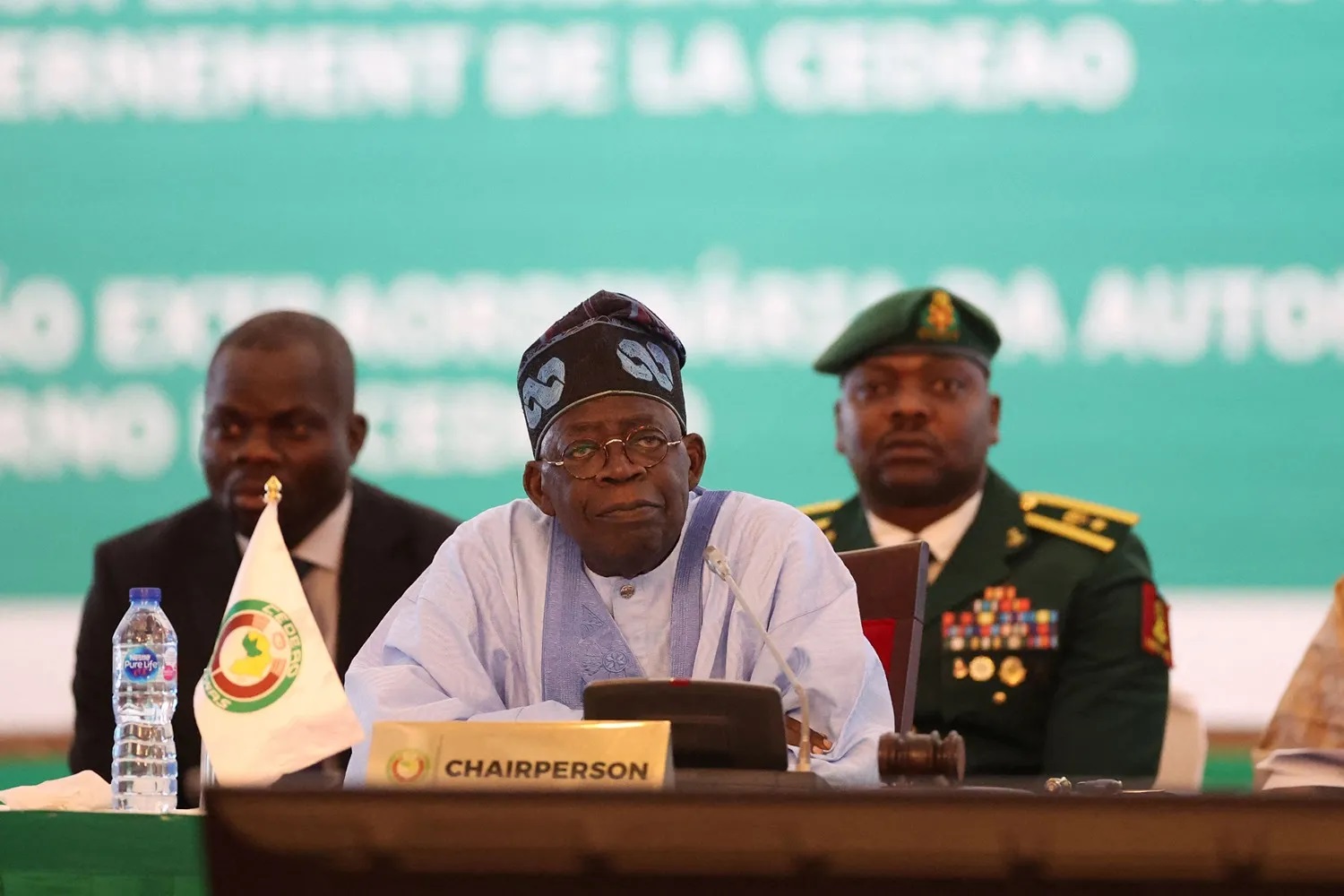
The Economic Community of West African States (ECOWAS) has directed the deployment of troops against the Niger Republic junta. Following the summit held on Thursday in Abuja by its members, the regional bloc has decided to use force to reinstate the ousted President Mohamed Bazoum

The Extraordinary Summit on the political situation in Niger Republic was attended by eight leaders from member countries, along with the Foreign Ministers of Liberia and the Gambia.

President Mohamed Ould Ghazouani of Mauritania and his Burundian counterpart, Everiste Ndayishimiye, who were invited by their fellow leaders, participated in the second ECOWAS extraordinary summit.

The communiqué, which was read by the President of ECOWAS Commission, Omar Alieu Touray, reads partly: “Direct the committee and its Chief of Defence Staff to activate the ECOWAS standby force with all its elements immediately.

“Order the deployment of the ECOWAS standby force to restore constitutional order in the Republic of Niger.”

The bloc, which had earlier adopted diplomacy over war, said all efforts made to dialogue with the junta have been defiantly rejected by the coup leaders.

The military junta, led by Gen. Abdourahamane Tchiani, has begun to form a transitional government, defying warnings and threats from the ECOWAS leaders and Western governments.

On Wednesday, Tchiani signed the decree for an interim government made up of 21 ministers, according to the ActuNiger news portal.

The junta had on Monday appointed a former Minister of Economy and Finance Ali Mahaman Lamine Zeine, Niger Republic‘s new Prime Minister.

In addition, the junta has designated Amadou Didilli to lead the nation’s High Authority for Peace Consolidation (HACP), while Abou Tague Mahamadou has been selected as the inspector-general overseeing the army and national gendarmerie.

Ibro Amadou Bachirou takes on the role of the Chief of Staff for the junta leader’s private office, and Habibou Assoumane is appointed as the commander of the presidential guard.

Following the coup on July 26, ECOWAS, backed by Western leaders issued a 7-day ultimatum to the junta to reinstate Bazoum or risk sanctions with potential military action.

However, the coup plotters disregarded ECOWAS’ warnings and asserted their determination to oppose any external interference within their borders.

They also cut diplomatic relations with Nigeria, Togo, France, and the United States, while imposing an indefinite closure of the Nigerien airspace.

However, ECOWAS’ decision to use military force to restore the democratic government of Bazoum is expected to result in escalated conflict. Nigeria’s President, Bola Tinubu, has been advised to explore other options, including sanctions, but war.

With seven Nigerian states sharing a border with Niger, there is concern that a military conflict will exacerbate the fragile security of the two countries. The neighbors have had to deal with the impact of the activities of Islamic terrorists.

Although it has suspended its early plan to deploy troops to Niger, ECOWAS seems determined this time to use what it had described as a last resort. The bloc has called on the African Union (AU), partner countries, and institutions to support its resolution.

Tinubu’s speech at the ECOWAS Extraordinary Summit on Niger Junta

Distinguished Ladies and Gentlemen,

1. Let me commence by welcoming you all to the Second Extraordinary Summit on the Socio-Political Situation in the Republic of Niger, within the space of ten days.

Your presence here, despite the short notice, demonstrates the unwavering dedication of our esteemed community to finding a lasting solution to the political situation in the Republic of Niger.

2. Today, we gather with a profound sense of urgency and firm determination, building upon the commitments made during our first Extraordinary Summit, on the grave political crisis befalling our sister nation.

During that initial meeting, we voiced our solidarity with the people of Niger and their democratically elected President, H.E Mohamed Bazoum, by condemning the military takeover and the unjust detention of their democratically elected President.

Your Excellencies, Distinguished Ladies and Gentlemen,

3. As you may recall, we called on the junta to rescind its decision of toppling a legitimate government. We proceeded to impose sanctions with the hope that this resolute measure would catalyze the restoration of the constitutional order in Niger.

Regrettably, the seven-day ultimatum we issued during the first Summit has not yielded the desired outcome. We have also made diligent efforts through the deployment of various ECOWAS mediation teams, to engage the military junta for a peaceful resolution of the political situation.

One of the facilitators, former Head of State of Nigeria, General Abdulsalami Abubakar, would update us on the outcome of his mission to Niamey.

4. Similarly, as part of coherent diplomatic initiatives, Special Envoys were dispatched to non-ECOWAS nations, particularly Libya and Algeria.

During these engagements, the Envoy designated for Libya had the privilege of an audience with the President of Libya.

This discourse resulted in an unequivocal expression of support for the resolutions adopted by ECOWAS aimed at restoring constitutional governance in Niger.

In Algeria, the Envoy was received by the Minister of Foreign Affairs on behalf of the President of the country.

These initiatives are aimed at presenting a cohesive and united stance regarding the ongoing circumstances in Niger, thus showing a collaborative and concerted approach among African nations.

Your Excellencies, Distinguished Ladies and Gentlemen,

5. Following the resolution of our previous Extraordinary Summit to initiate a meeting of the ECOWAS Chiefs of Defense Staff, the meeting of the Chiefs of Staff Committee was duly held from 2nd to 4th August 2023.

The outcome of that meeting, as well as a Memorandum by the President of the ECOWAS Commission on current socio-political developments in Niger, will be presented during this Summit.

These will offer critical insights that will inform our collective decision-making process at this meeting.

6. Today’s Summit provides a significant opportunity to meticulously review and assess the progress made since our last gathering.

It is essential to evaluate the effectiveness of our interventions and identify any gaps or challenges that may have hindered progress.

Only through this comprehensive assessment can we collectively chart a sustainable path towards lasting peace, stability, and prosperity in Niger.

7. Moreso, in reaffirming our relentless commitment to democracy, human rights, and the well-being of the people of Niger, it is crucial that we prioritize diplomatic negotiations and dialogue as the bedrock of our approach.

We must engage all parties involved, including the coup leaders, in earnest discussions to convince them to relinquish power and reinstate President Bazoum.

We must exhaust all avenues of engagement to ensure a swift return to constitutional governance in Niger. 

8. More specifically, as leaders of our respective nations, we must recognize that the political crisis in Niger not only poses a threat to the stability of the nation but also has far-reaching implications for the entire West African region.

By remaining steadfast in our adherence to the principles of democracy, good governance, and the rule of law, we can restore peace, stability, and prosperity in the Republic of Niger, thereby fostering an environment conducive to growth and development for all.

Esteemed Excellencies, Distinguished Ladies and Gentlemen,

9. I am confident that this 2nd ECOWAS Extraordinary Summit on the Socio-Political Situation in the Republic of Niger will be a defining moment in our journey towards a stronger, more resilient, and integrated West Africa.

Let us seize this opportunity to make a lasting impact on the lives of our fellow Africans as we strive to build a future defined by peace, progress, and prosperity.

10. In conclusion, I extend my gratitude to each of you for your attention to this critical issue. I trust that our deliberations will be productive and fruitful, leading us to find an amicable solution to the political crisis in Niger.

As we continue to work together in solidarity and harmony, we can ensure a prosperous future for the entire West African region.

With these remarks, I hereby declare this Extraordinary Summit open.

Thank you all, for your attention.