DD
MM
YYYY

PAGES

DD
MM
YYYY

spot_img

PAGES

Home Blog Page 4283

Price control on consumer goods in Nigeria

0

The Nigerian market is free and mostly unregulated. A market where prices of goods are not controlled or regulated by the government. Sellers and producers of consumers goods are allowed to peg their prices wherever tickles them and wherever satisfies their greedy urge, they are only forced to readjust the price by competitors or by other market factors and never by the Nigeria government, unlike other countries where the government mandates services providers and sellers on the price range they are to peg for a product or service. 

The reason why price control is important in every consumer market is that human beings are naturally greedy and in a free market, especially a market where there is no competition or where there are high demands that surpass the supply, there will always be a strong urge to take advantage of consumers’ desperation and rip them off. Some desperate consumers can pay anything for a service or product out of desperation even when they know that they are being ripped off by the service providers.

In choice cities like Abuja, Lagos or Port Harcourt, landlords and house owners charge arbitrarily for rent on houses with the perception that if a particular tenant cannot afford to pay the rent, there are other tenants who are willing to pay whatever rent that is fixed on the house because of the high demand of houses in those cities.

Transport companies as well do raise their fare arbitrarily, without any control or regulations. I learnt that Good is Good Motors just because they are the market leaders in terms of road transportation in Nigeria does charge passengers arbitrarily because they know that passengers are eager to desperately pay any fare for their transport services hence why they are taking advantage of desperate passengers. I was shocked to the bone when I was told that GIG Motors charges the whooping sum of N30,000 for a one-way ride from Lagos to Abuja, while other road transport companies charge within the range of N10,000- N15,000.

Well, we actually have in Nigeria a price control board, an agency under the Federal Ministry of Commerce and Industry and we also have the federal consumer protection commission (FCPC). The primary statutory duties of these agencies are to protect consumers, make sure they are not being cheated or ripped off by producers and service providers and fix prices for some popular basic consumer goods.

The price control act of 2004 was specifically enacted to control and regulate how service providers fix the price of their goods and services and curtail the arbitrary charge fixed by market leaders. This act in its section 1 established the price control board to oversee these functions. This act as well established price control measures which is aimed at ensuring that Nigerians have access to basic services and products at affordable prices.

But it really does appear that these agencies have been sleeping on duty. Most Nigerians do not even know that there are government agencies that have been charged to control prices and are also charged to prosecute service providers who charge exorbitant prices. They need to be more proactive now than before because producers and service providers due to the economic hardship and high cost of raw materials are shifting all the burden; both tax and price burden to the final consumers.

You as a consumer also have a part to play. Once you feel that you are being ripped off by a service provider or by a seller, you should contact or report to the FCPC or the Price Control Board.
Techies: Make Abia Home, Tech Thrives in Abia

0

Innovators, builders, makers and entrepreneurs in the Abia Technology & Innovation Network (ATIN), I want to publicly thank all for the vision which all of you have articulated, and shared with us, as we work to craft a great vision for Abia State. In many conversations with Governor-elect, Dr Alex Otti, he noted that he wants Abia to be a home for all techies.

In the next coming days, I will be meeting all of you to understand and know how Abia can become a destination for the development, application and deployment of modern technology in Africa. We want to serve and meet your needs, expectations and perceptions, because we want all of you!

Nigeria’s GDP is about $0.5 trillion. We are about 220 million people. The GDP of the United States is about $24 trillion for 330 million people. Do they have four heads? No. At parity, the GDP of Nigeria should not be less than $3 trillion and the implication is that everything we have now should be 6x multiple. So, you have 6 Dangotes, 6 Elumelus, 6 Innoson Motors, 6 Lagos and 6 “Everything”. To join the ATIN network, contact Tochukwu Clinton Chukwueke; he is based in Aba and runs Clintonel Innovation Centre.

As we welcome the ATIN techies, we’re also reaching out to Startup Founders who want to make Abia a part of their homes. Franklin Peters (FIMS), CEO of BoundlessPay, is coordinating that. Abia has the market and we’re a hub to serve many states. We need you in God’s Own State! #MakeAbiaHome.

Prof Ndubuisi Ekekwe

Co-Chair, Abia State Economic Transformation Transition Council

#SCALE, do not just grow

0

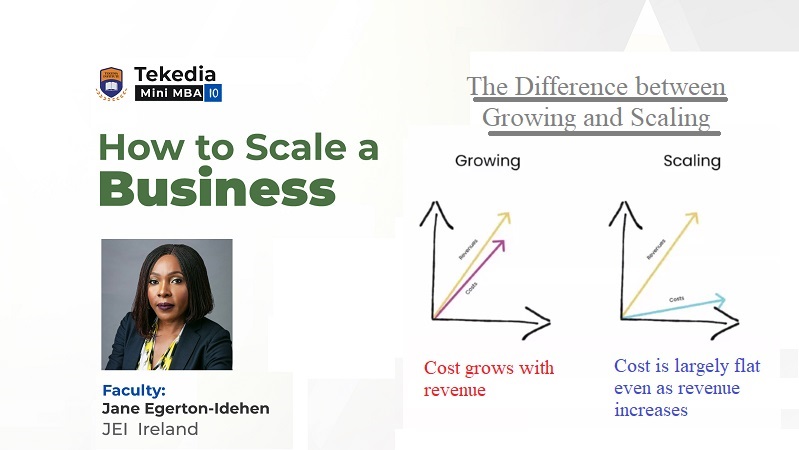
She is one of the leading growth makers in the world of digital economy. She has led growth teams in MTN, Ericsson, Meta (parent of Facebook), etc. She is teaching at Tekedia Mini-MBA on “How to scale a business”. I picked this from her Zoom slide. Jane Egerton-Idehen, thank you so much – that was a masterpiece on scale.

Look at those two plots to understand if you’re growing or scaling. You need to scale and what that means is clear: revenue must grow fast (exponentially) even when cost remains in the linear phase.  How can that happen? It means you have taken care of your marginal cost, meaning that servicing more customers will not trigger and accelerate higher costs. #SCALE, do not just grow.

Tekedia Institute Mini-MBA: a temple for the mastery of entrepreneurial capitalism where the best business leaders teach.

HedgeUp (HDUP) Presale Defies Bear market conditions. Could Solana (SOL) and Cardano (ADA) beat the odds?

0

Despite the bearish market conditions currently plaguing the cryptocurrency world, a few standout projects have managed to defy the odds and gain significant attention from investors. HedgeUp (HDUP), a groundbreaking DeFi platform for alternative assets, is one such project, with its presale generating substantial interest. The question remains: can established cryptocurrencies like Solana (SOL) and Cardano (ADA) follow suit and overcome the challenging market environment? Let’s examine each of these projects and their potential to thrive amid market adversity.

HedgeUp (HDUP) – A Resilient Presale Amid Market Turbulence 

HedgeUp (HDUP) has captured the attention of investors with its unique approach to hedging against market volatility by providing access to alternative assets such as real estate, art, and collectibles. The platform’s native token, HDUP, is currently in its second presale stage, selling for $0.013, with the next stage price projected at $0.020. HedgeUp (HDUP) aims to launch its token on 24th June 2023.

Despite the broader bearish market, HedgeUp’s (HDUP) presale has demonstrated resilience and growth potential. The platform’s focus on diversification and its commitment to offering a range of investment options make it an attractive choice for investors seeking refuge from market volatility.

Solana (SOL) – Aiming for Scalability and Adoption 

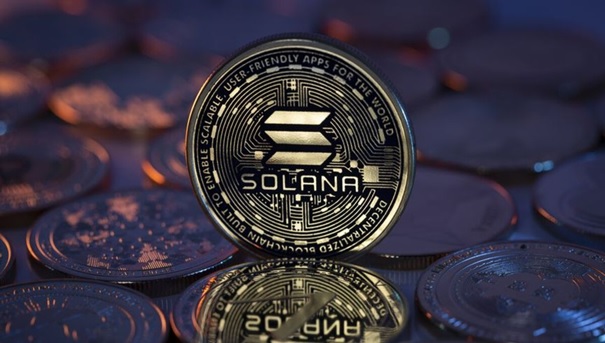
Solana (SOL), a high-performance blockchain platform known for its speed and scalability, has attracted considerable attention since its inception. The platform boasts an impressive ecosystem of projects and partnerships, which has helped it maintain a strong presence in the market.

Despite the bearish market conditions, Solana’s (SOL) ongoing developments and commitment to improving its infrastructure could propel it to new heights. The platform’s ability to process thousands of transactions per second and its focus on attracting new projects to its ecosystem make it a strong contender for weathering the current market storm.

Today, Solana (SOL) is priced at US$22.12, with a 24-hour trading volume of $733.69 million. In the past 24 hours, SOL has decreased by 2.4%. It currently sits 3.09% below its 7-day all-time high of $22.92 and 7.9% above its 7-day all-time low of $20.57. SOL has a circulating supply of 392.8 million tokens.

Cardano (ADA) – A Smart Contract Contender 

Cardano, another established cryptocurrency, has positioned itself as a key player in the smart contract arena. With the recent launch of its Aiken toolkit, Cardano aims to simplify smart contract development and attract a larger developer community to its platform.

Although Cardano has faced challenges amid the bear market, its ongoing developments and focus on improving its ecosystem could help it emerge stronger. The platform’s commitment to offering innovative solutions for smart contract development and integration makes it a promising candidate for overcoming market adversity.

Cardano is trading at US$0.4124, with a 24-hour trading volume of $517.6 million. Over the last 24 hours, ADA has experienced a 0.34% increase. It currently stands 1.29% below its 7-day all-time high of $0.4166 and 8.8% above its 7-day all-time low of $0.3778. ADA has a circulating supply of 34.7 billion tokens and a maximum supply of 45 billion ADA.

In Conclusion 

HedgeUp (HDUP), Solana (SOL), and Cardano (ADA) each demonstrate the potential to thrive amid challenging market conditions. While HedgeUp’s presale has displayed resilience and attracted investor interest, both Solana and Cardano have continued to forge ahead with ongoing developments and improvements to their respective ecosystems.

As the bear market persists, the success of these projects will depend on their ability to innovate, attract new users, and remain adaptable to the ever-changing cryptocurrency landscape. Investors seeking opportunities in these uncertain times should keep a close eye on HedgeUp (HDUP), Solana, and Cardano, as each project offers a unique approach to tackling the challenges posed by the current market climate.


For more information about HedgeUp (HDUP)

Website: https://hedgeup.io/

Presale: https://app.hedgeup.io/sign-up

Telegram: https://t.me/HedgeUpChat

Twitter: https://twitter.com/HedgeUpOfficial

Nigerian Government Suspends Fuel Subsidy Removal

0

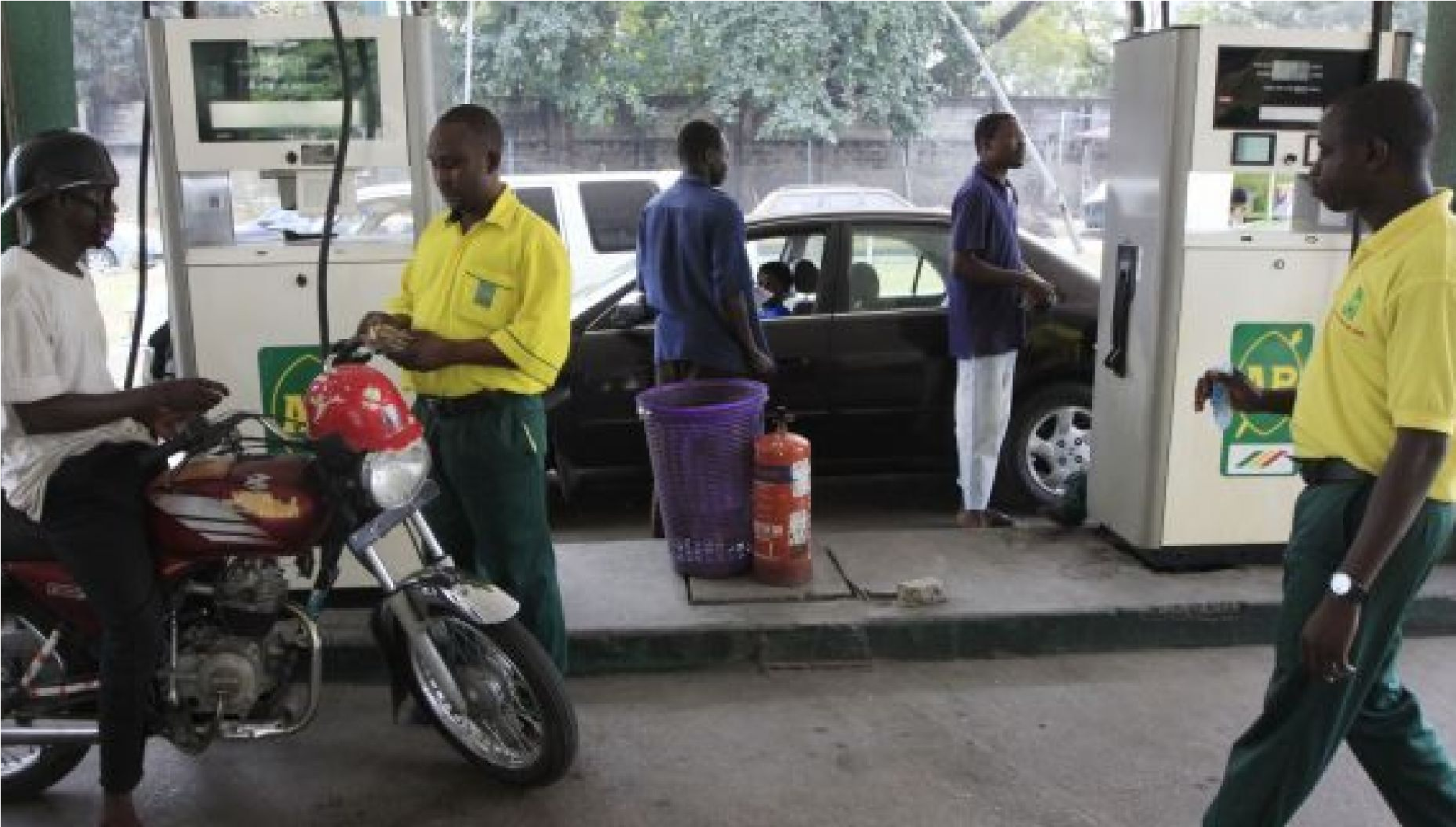
The National Economic Council, NEC, has suspended the planned removal of subsidy on petroleum products by the end of President Muhammadu Buhari’s administration.

The Minister of Finance, Budget and National Planning, Mrs. Zainab Ahmed disclosed this while briefing State House correspondents at the end of the NEC meeting presided over by Vice President Yemi Osinbajo at the Presidential Villa, Abuja.

According to the minister, the NEC concluded in its meeting that it is not a favourable time for the action.

She stated that the Council deliberated on the matter and resolved that it cannot be removed for now, but it equally agreed on the need to continue the discussion on the matter and the necessary preparatory work in conjunction with states and representatives of the incoming administration.

Mrs Zainab Ahmed explained that the planned subsidy removal should be due in June because the Petroleum Industry Act, PIA and the 2023 budget provided subsidy till June, hence any delay may require the amendment of the PIA and the budget provision.

She, however, noted that there was no deadline given for the subsidy removal and that the incoming administration will have to make decision on when it is possible to do so.