
DD
MM
YYYY

PAGES

DD
MM
YYYY

spot_img

PAGES

Home Blog Page 4287

Interswitch Reaches A Milestone of 1.2bn Transaction Volume Per Month

0

The inadvertent shift to electronic transactions, orchestrated by the naira redesign policy of the Central Bank of Nigeria (CBN), has propelled a high volume of transactions across fintech platforms. At the end of the first quarter of the year, the result is beginning to trickle in.

Interswitch has announced that it reached a new transaction milestone with over 1 billion transactions processed in the month of March 2023. The threshold, which represents 58% growth over the total volume of transactions the company processed in February, underscores the weight of the naira redesign policy on the nation’s digital transactions in the past few months.

The policy created a high level cash crunch that forced both individuals and businesses to rely on online transfers to execute transactions. With banking platforms overwhelmed, the people turned to neobanks and payment platforms.

For companies like Interswitch, which processed a total of 2.7 billion transactions in 2019, it’s a turning point.

Mitchell Elegbe, Founder and Group Managing Director, Interswitch, said the company’s focus on innovation has been key to their success, adding that switching 1.2 billion transactions in a single month further reinforces the company’s position as an enabler in the Nigerian payment ecosystem.

“We are thrilled to have processed 1.2 billion transactions in the month of March within Nigeria alone. This milestone is a testament to the trust that our customers have placed in us and our commitment to delivering innovative and secure digital payment solutions across Nigeria and beyond.

“This milestone is one that was made possible by our proactive investment in cutting-edge technologies that truly power the financial landscape. As we continue to grow and expand our operations, we remain committed to driving financial inclusion and helping businesses and individuals unlock the full potential of digital technologies,” he said.

He noted that the success underscores the hard work and dedication of employees of Interswitch and highlights the fact that the firm is on the right track to achieving its set objectives.

Interswitch is poised to continue its growth trajectory by expanding its product offerings, deepening its partnerships, and investing in innovative technologies that propel the growth of digital payments in Africa and beyond.

The high volume of processed payment transactions is believed to cut across all fintech platforms, though most of them are yet to file their report for the last quarter. However, it is not clear if the momentum will be maintained going forward as the CBN is working frantically to pump more cash into circulation, following a Supreme Court judgment annulling its earlier approach to the implementation of the naira redesign policy.
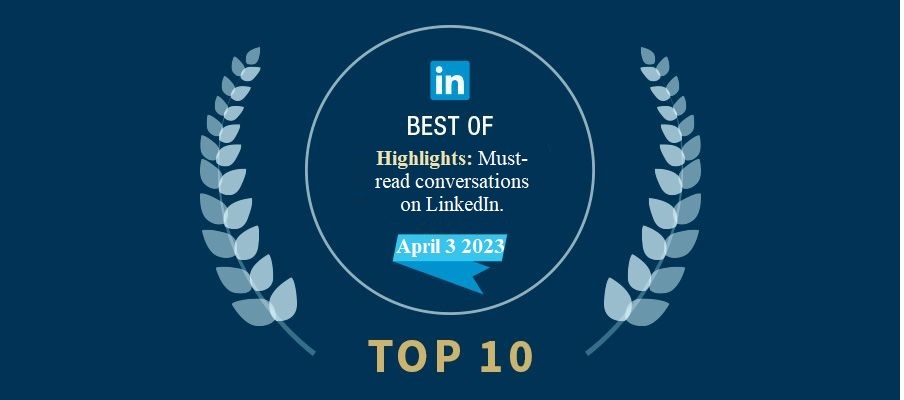

Ndubuisi Ekekwe Makes LinkedIn’s Top 10 Posts

0

In the Igbo Nation, it takes the killing of one leopard to be called a killer of leopards. Good People, today, we made LinkedIn’s Top 10. And that is amazing. We will continue to share thought-leadership on how to combine and recombine factors of production to advance the missions of firms. LinkedIn is the 21st century business-square for professionals, to co-learn, deepen capabilities, accelerate innovation and advance communities, nations and our world. I am truly honoured.

Today’s roundup of the Top 10 posts on LinkedIn includes:

– Allie K. Miller on how industries can develop policies around AI
– Reid Litman offers advice on how to make the office more meaningful to you
– RJ Bardsley on breaking out of the “innovation slump”
– Donna Morris on how generative AI is changing work
– John Tejeda breaks down the UFC and WWE merger
– Chris T. Pernell, MD, MPH, FACPM on the challenges Black female executives face in the workplace
– Ndubuisi Ekekwe on how The NYT lost its Twitter verified check mark
– Burcin Kaplanoglu on AI systems “bigger picture”
– Rashida Peters on what Louisiana State University’s Angel Reese exemplified  during the NCAA Women’s Basketball Championship
– Brad Berens, Ph.D. breaks down Apple’s self-disruption

The Blue Bird’s New Words: “This account is verified because it’s subscribed to Twitter Blue or is a legacy verified account”

1

Twitter scored an own-goal with the blue tick’s old explanation. Yes, a line, and that will help its business: “This account is verified because it’s subscribed to Twitter Blue or is a legacy verified account.” Just like that, you may not know who is paying and who is not paying, masking the feelings of some who may not like to be accused that they’re paying.

Indeed, it is a very important distinction which will help the blue bird company to deal with the perception game where successful or popular people have to pay to be seen as being “important”.

Get the gist: pay and you become a legacy verified account because there is no difference between a subscriber and a legacy verified account since the tick is the same. You may not like Elon Musk, but understand that his experimentation could change how companies monetize social digital platforms, if he thrives here.

Sure, there is a huge risk since the algorithms are prioritizing the checkmarks and not necessarily the contents, for what people see. If that remains, the mission of Twitter may be lost. Who comes to read those with ticks? People come to get informed!

Meanwhile, we made the Top 10 posts on LinkedIn” today and also got featured by LinkedIn News editors.

Payment Startup Moni Rolls Out Range of Business Loans to Enable Businesses in Africa Scale

0

Y-combinator-backed payment fintech startup Moni has recently rolled out a new range of business loans that enables small business owners in Africa to take advantage of the power of their communities to access the working capital they need to run and scale their businesses.

With 22% of businesses according to a PWC 2020 report, stating that obtaining finance for their business is the most pressing challenge they face, Moni seeks to solve this challenge by providing these businesses with the required capital/loans they need.

Speaking on the rollout of loans to businesses, CEO and co-founder of Moni Femi Iromini said, “Our community-powered business loans product is just one of the ways we are innovating around our unique context in Africa to make the most of what is already in place to deliver the financial services business owners need to create long-lasting wealth for themselves and their communities. We have ample evidence to show that this approach works and we are excited to be bringing more businesses on board to drive the economic development we all want to see on the continent.”

Founded in 2017, Moni is a community-powered, digital financial services platform that leverages the concept of community and social trust to deliver a range of products and services that makes it easier for Africans to build lasting businesses and wealth. The startup has built a risk platform that enables small business owners to take advantage of a good social reputation to access the working capital, loan savings, and insurance they need to scale their various business activities.

Moni’s lending system heavily draws on a four-point system. The first deals with the process of getting loans. For most lending startups, the process requires signing up, providing certain documents, getting verified, and then applying for a loan.

But on Moni, after signing up, users who need a loan join a cluster. Only after getting approved can they begin their loan applications. Essentially, clusters are groups of individuals who know each other and can vouch for one another, but the startup also takes it a step further by conducting additional checks.

The second part deals with recourse in the event of a default. If a business owner defaults on a loan from a bank, they often get their properties repossessed, but on Moni, the inability of one user to repay a loan affects every other person in the cluster. By getting every member committed to the outcome of an individual’s activity, Moni has been able to reduce default rates to 1%.

Finally, the startup has launched a savings feature, Moni Vault, which can be used for group savings. Essentially, the startup has leveraged the social capital of its users to provide financial services.

In 2022, Moni disbursed more than $22 million in loans to more than 11,000 SMEs, with a 99 percent repayment rate. The company is now building on the success of its community-powered model to deliver game-changing financial services to a wider range of African SMEs who have previously been underserved by the traditional financial system.

MONI platform is accessible from any feature or smartphone, and enables every citizen to identify themselves, and provides them with basic financial services. Its technology works on any carrier network anywhere in the world.

Since its inception, Moni has served over 10,000 businesses, even expanding beyond Nigeria into the Benin Republic. The startup is building the bridge between the now and the future of banking and financial services, with a mission to provide simple low-cost mobile personal banking tools for everyone, everywhere, and credit in real-time.

Apple Wins Appeal Against UK Antitrust Watchdog CMA to Investigate Its Market Dominance

0

Tech giant Apple has won an appeal against the Competition and Markets Authority (CMA), the UK’s principal authority responsible for competition and consumer protection to investigate its market dominance.

Apple had successfully argued that the antitrust watchdog had no power to investigate its position in the mobile browser market.

Recall that the CMA last November disclosed that it was conducting a probe into Apple’s dominance in the mobile phone market. The antitrust regulator further revealed that it received widespread support for its proposals which saw it launch an investigation into Apple’s cloud gaming and mobile browsers.

According to the CMA’s interim Chief Executive Sarah Cardell via a statement, she disclosed that many UK businesses and web developers disclosed that they feel they are being backed by restrictions set by Apple.

The CMA noted that Apple and Google have a strong hold over mobile device operating systems, app stores and browsers. It said 97 percent of UK web browsing in2021 happened on either Apple or Google’s browser engines.

In its victory over the CMA investigation into its market dominance, Apple said the CMA should have opened the probe at the same time its first published its report on mobile ecosystems last June. The Competition Appeal Tribunal (CAT), the court that oversees CMA cases, agreed with Apple, stating that the regulator gave notice of its investigation too late.

Apple, which was pleased with the CAT decision, disclosed that it would continue working to deliver support for developers and a safe and secure experience for users.

On the other hand, the CMA was displeased with the judgment, refusing it access to investigate Apple’s market dominance. It wrote in a statement, “We are disappointed with today’s judgment. We made this market investigation reference to make sure that the UK consumers get a better choice of mobile market services and that UK developers can invest in innovative new apps.

Our concerns, and the reasons why we launched our market investigation, we’re not challenged by Apple. Given the importance of today’s judgment, we will be considering our options including seeking permission to appeal.”

Since the launch of its first phone, Apple has continued to dominate the mobile market. It has been a trend setter and has attracted a large number of loyal customers who buy every product they launch.

It is interesting to note that with 38 Apple stores In the United Kingdom, Apple remains undisputed in the smartphone and tablet computer markets. In 2021, Apple’s iOS accounted for over half of both the mobile and tablet operating system market share.