DD
MM
YYYY

PAGES

DD
MM
YYYY

spot_img

PAGES

Home Blog Page 429

Nvidia’s Jensen Huang Says China Is Nanoseconds Behind the U.S. in Semiconductor

0

Nvidia’s chief executive Jensen Huang has issued one of his most pointed warnings over China’s unrelenting pace in tech innovation. He warned that China is advancing at breakneck speed in semiconductor development, and U.S. restrictions risk accelerating that progress rather than containing it.

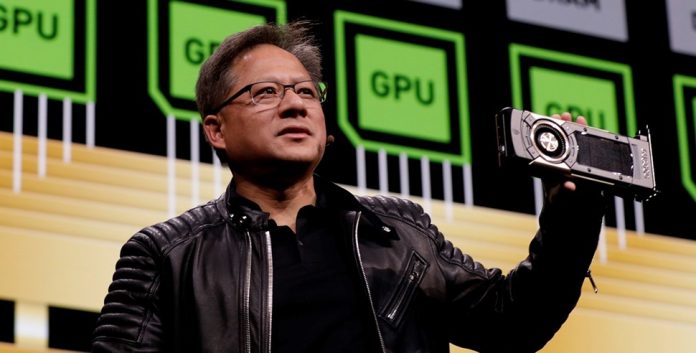
Speaking on the BG2 podcast, Huang described China as “nanoseconds behind” the United States in chipmaking. He painted a picture of a rival that is “formidable, innovative, hungry, fast-moving, underregulated,” driven by an engineering workforce molded by the punishing “9-9-6” culture of working from 9 a.m. to 9 p.m., six days a week.

For Nvidia, one of the challenges is Washington’s ban on shipping its flagship A100 and H100 accelerators to China, which has forced the company to scramble for alternatives. It rolled out the H20 GPU, a cut-down processor designed specifically to comply with U.S. export rules. After months of uncertainty, the Commerce Department began granting licenses in August, allowing shipments to resume. Nvidia is also preparing a successor to the H20 that would push performance higher while still staying under Washington’s regulatory ceiling.

But as Nvidia adapts, China is pressing forward with its own counteroffensive. Huawei has launched volume shipments of its Atlas 900 A3 SuperPoD, built on the domestically produced Ascend 910B chip. The company has laid out a roadmap through 2027, targeting chips that could match or even surpass today’s leaders. Importantly, Huawei’s ecosystem is CUDA-free, a deliberate move away from the proprietary software platform that cemented Nvidia’s dominance in China, where the company once held a 95% market share.

Chinese hyperscalers are rallying behind that shift. Baidu, Alibaba, Tencent, and ByteDance have either built in-house processors or deepened their reliance on local startups. Tencent even confirmed that its infrastructure has been fully adapted to Chinese-designed chips, signaling how far Beijing’s self-reliance drive has advanced.

Huang insists both sides would benefit from renewed openness. “They [China] publicly say… they want China to be an open market, they want… companies to come to China and compete in the marketplace… and I believe and I hope that we return to that,” he said.

For Nvidia, the H20 may lack the power of its flagship hardware, but it offers a way to keep Chinese customers within Nvidia’s orbit rather than losing them entirely to homegrown rivals.

A wider industry contrast

Nvidia’s balancing act stands in contrast to the paths chosen by rivals like AMD and Intel. AMD, which has also been hit by U.S. restrictions, has moved more cautiously in tailoring chips for China. Its MI300 accelerator family, seen as a competitor to Nvidia’s H100, has no sanctioned China-specific version yet. Reports suggest AMD is weighing whether to design compliant hardware for the Chinese market, but it risks cannibalizing margins while exposing itself to regulatory whiplash.

Intel, by contrast, has leaned heavily into government partnerships, positioning itself as the cornerstone of Washington’s domestic semiconductor push. Through multibillion-dollar subsidies under the CHIPS Act, Intel is expanding U.S. foundry capacity, while simultaneously threading the needle in China. The company still supplies certain lower-performance products into the Chinese market, but CEO Lip-Bu Tan has largely aligned Intel’s strategy with U.S. policymakers’ vision of securing advanced manufacturing at home, especially after President Donald Trump accused him of having ties with China.

The divergent playbooks underscore the pressure facing the industry. Nvidia, with a 95% market share in Chinese AI accelerators before the bans, has the most to lose if Beijing achieves chip independence. AMD, with less exposure, has more freedom to wait out the policy climate. Intel, straddling between being both a design house and manufacturer, is doubling down on subsidies while limiting its China bets.

Nvidia’s $2.5 trillion market capitalization has been built on riding the AI wave, and China — one of the world’s largest buyers of advanced chips — remains too important to abandon. The H20, though technically hobbled compared to its top-tier models, represents a compromise: a way to maintain relevance in China without crossing Washington’s red lines.

Although Beijing recently warned Chinese companies to stay off H20, the strategy reflects Huang’s broader point — that trying to wall off China could accelerate Beijing’s push toward full independence. Huawei’s Ascend roadmap, hyperscaler investments, and CUDA-free software ecosystems are already evidence of that momentum. Against this backdrop, Nvidia is betting that staying inside China’s ecosystem — even with constrained offerings — is better than being shut out altogether.
Elon Musk’s X is Digging in its Heels in India After a Major Legal Setback, Vowing to Appeal a Court ruling that Upheld New Delhi’s Tougher Content Removal Regime

0

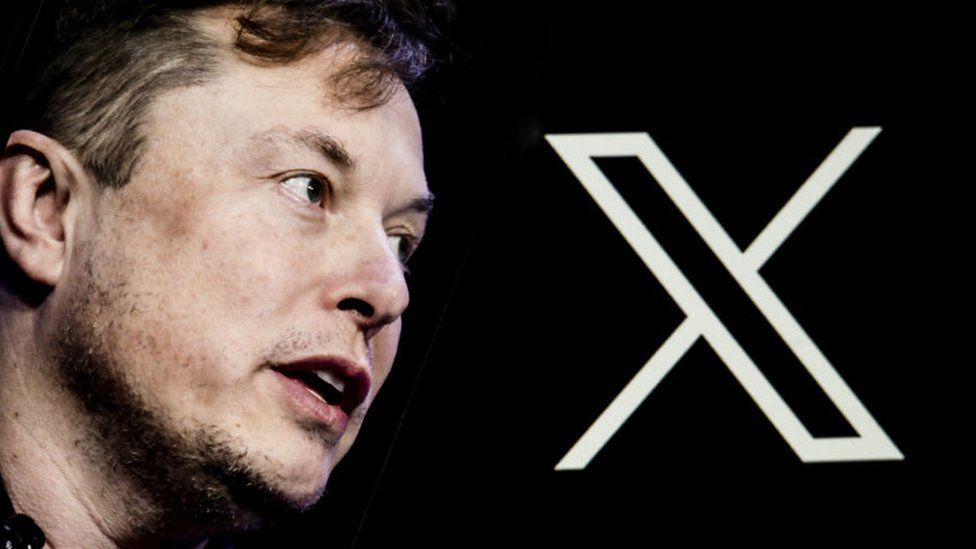
Elon Musk’s X is refusing to back down in India, vowing to appeal a court ruling that upheld New Delhi’s expanded content removal regime — the latest turn in a rocky relationship between the billionaire and the world’s largest democracy.

The social media company said on Monday it was “deeply concerned” by the judgment, which quashed its petition challenging India’s tightened takedown mechanisms. X warned that the framework had “no basis in the law,” violated Supreme Court precedents, and undermined Indians’ fundamental rights to freedom of speech and expression.

Prime Minister Narendra Modi’s government has defended the system, arguing it tackles a flood of unlawful content and ensures accountability online. Under new rules introduced in 2023, far more government officials can issue takedown requests and submit them directly to platforms through a portal launched in October that year. Last week, a judge reinforced the state’s position, saying every company operating in India “must accept that liberty is yoked with responsibility.”

In its response, X stressed that it “respects and complies with Indian law,” but disagreed with the view that it had no right to question the framework simply because it was incorporated abroad. The platform, owned by Musk since 2022, has consistently framed the dispute as a fight for free expression.

Musk’s fallout with India

Musk’s dealings with India have been fraught for years, long before this court challenge. His flagship company, Tesla, has repeatedly sparred with New Delhi over import duties, which Musk has called among the highest in the world. Attempts to negotiate tax breaks for bringing Tesla cars into the country have stalled, frustrating his broader ambitions in one of the fastest-growing automotive markets.

On the social media front, X (then Twitter) had already clashed with Indian regulators in 2021 when it resisted government orders to block accounts critical of the Modi administration during protests by farmers. That standoff escalated into raids on Twitter’s offices in New Delhi and a broader push by the government to force the platform into compliance. Musk’s ownership has not changed the pressure: since 2023, the government has leaned more heavily on its content removal powers, and X has become the most vocal challenger.

A global pattern of clashes

Musk’s struggle in India is part of a wider pattern of friction between X and regulators worldwide. In Brazil, the company faced the threat of a nationwide suspension earlier this year after refusing to comply with Supreme Court orders to block accounts accused of spreading disinformation. In Europe, the platform is under investigation for alleged failures to curb hate speech and disinformation under the EU’s new Digital Services Act. Musk has often presented these disputes as battles for free expression, positioning himself as a “free speech absolutist” against what he describes as heavy-handed governments.

But many believe that his approach is inconsistent. In Turkey, for instance, X has been accused of yielding to government demands to restrict opposition voices ahead of elections. The push-and-pull has created uncertainty for X’s global standing, leaving users, advertisers, and policymakers questioning how far Musk is willing to go in defending speech when his companies face commercial or legal risk.

India’s stakes in the fight

The battle in India carries outsized importance. With over 800 million internet users, the country represents one of the most critical growth markets for global tech firms. Yet it is also among the most tightly regulated, with frequent demands on platforms to remove politically sensitive or security-related content. For Musk, India is both a potential goldmine for X’s user growth and a difficult market that has already complicated his automotive ambitions with Tesla.

Thus, by appealing the ruling, X is effectively betting that higher courts might still rein in New Delhi’s powers. But if the government’s position is upheld, the decision could cement India’s authority to dictate digital speech at a scale unmatched in most democracies. That leaves Musk — who has championed “absolute free speech” as a core principle for X — facing a choice: adapt to India’s regulatory strictures or risk exclusion from one of the largest and fastest-growing online communities in the world.

Cloudflare Explores NET Dollar Stablecoin Launch As Gate Looks Into L2 Creation

0

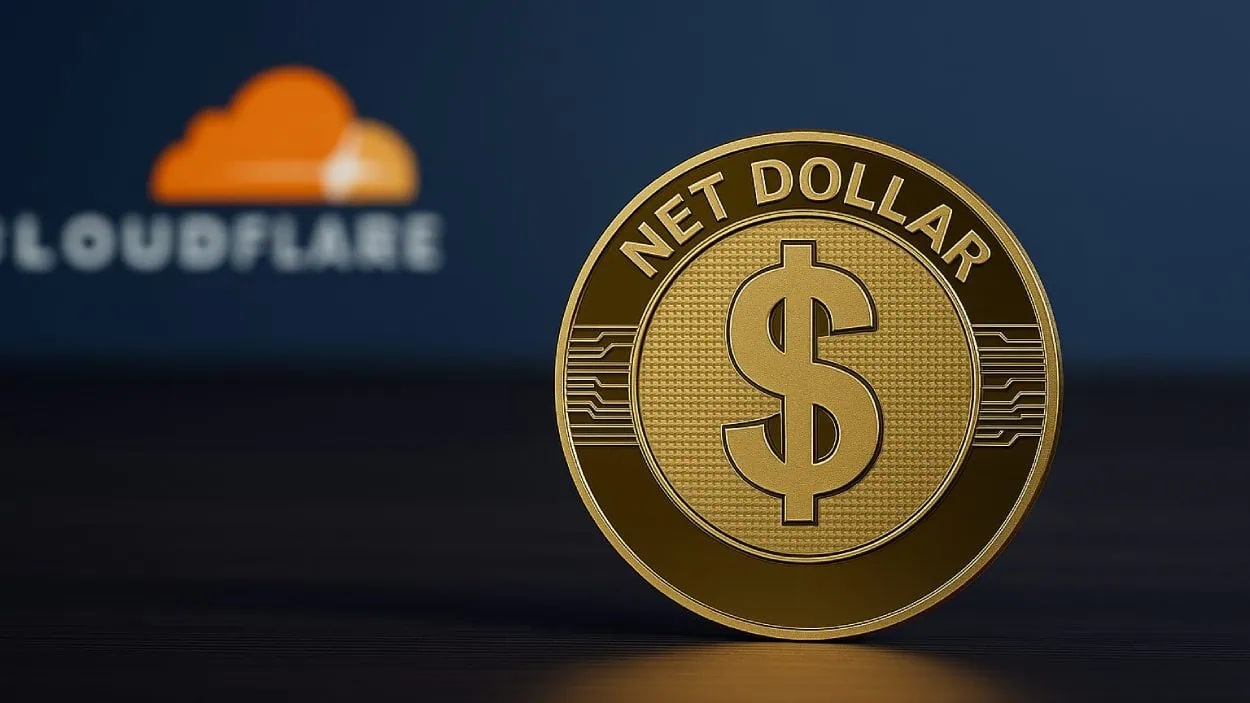
Cloudflare, the global cloud infrastructure provider, revealed plans to launch NET Dollar, a fully U.S. dollar-backed stablecoin designed to facilitate instant, secure, and programmable transactions in an AI-driven “agentic web.”

loudflare, Inc. (NYSE: NET), the leading connectivity cloud company, today announced plans to introduce NET Dollar, a new U.S. dollar-backed stablecoin that will enable instant, secure transactions for the agentic web. NET Dollar will help power a new business model for the Internet that rewards originality, sustains creativity, and enables innovation in an AI-driven world.

AI is fundamentally changing how humans interact with the web. Instead of driving every interaction themselves, humans are beginning to delegate tasks to autonomous AI agents to book a flight, order groceries, manage calendars and more. For this to happen, the underlying financial system will also need to evolve. The AI-driven Internet will need money that is instant, global, and secure so that AI agents, developers, and creators can transact instantly, automatically, and reliably.

This ecosystem envisions autonomous AI agents handling tasks like booking travel, ordering goods, or managing schedules without human intervention, with payments occurring seamlessly across networks.

CEO Matthew Prince highlighted that NET Dollar could redefine the internet’s business model by enabling microtransactions, pay-per-use services, and fractional payments, shifting incentives toward rewarding original content creators, developers monetizing APIs, and AI firms compensating data sources fairly.

The stablecoin will leverage Cloudflare’s vast network—handling 78 million HTTP requests per second across 330+ cities in 120 countries—for real-time settlement and global interoperability, integrating with open standards like the Agent Payments Protocol and x402.

No exact launch date was specified, but it’s slated for “soon,” positioning Cloudflare alongside players like Tether (USDT) and emerging entrants in the booming stablecoin market, projected to reach $1.9 trillion in issuance by 2030 in Citi’s base case.

Gate Crypto Exchange’s L2 Announcement

In a parallel development on the same day, September 25, 2025, Gate (formerly Gate.io), a leading centralized crypto exchange with over 23 million users and support for 3,600+ tokens, officially launched Gate Layer, its high-performance Layer 2 (L2) network built on the Optimism (OP) Stack.

Secured by GateChain as the settlement layer and using the upgraded GT token as native gas, Gate Layer aims to deliver faster, cheaper, and more secure Web3 services globally, addressing blockchain inefficiencies like high fees and slow finality.

Key specs include over 5,700 transactions per second (TPS), 1-second block times, and EVM compatibility for easy dApp migration via tools like MetaMask. It supports cross-chain transfers to Ethereum mainnet and other L2s via LayerZero, with GT staking enhancing consensus and security.

To bootstrap the ecosystem, Gate introduced three flagship products: Perp a decentralized perpetual futures DEX, Gate Fun a memecoin launchpad inspired by Pump.Fun and Meme Go a meme token trading/monitoring platform.

The launch coincides with a GT tokenomics overhaul, elevating GT from an exchange utility to the “fuel” of Gate’s Web3 infrastructure, complete with staking rewards and ecosystem incentives. This positions Gate among eight major exchanges including Coinbase’s Base and Kraken’s Ink racing to own L2s, capturing DeFi value like trading, lending, and staking.

Cloudflare’s entry into the stablecoin space with NET Dollar represents a pivotal convergence of cloud infrastructure, AI, and blockchain, potentially reshaping the internet’s economic foundation.

As a U.S. dollar-backed asset designed for the “agentic web”—where AI agents autonomously handle tasks like booking flights or ordering goods—NET Dollar enables instant, programmable microtransactions across global networks. This could disrupt traditional revenue models reliant on advertising and slow bank transfers, shifting toward pay-per-use and fractional payments that reward creators for original content, developers for APIs, and AI firms for data usage.

By leveraging Cloudflare’s network—processing 78 million HTTP requests per second across 330+ cities—NET Dollar promises real-time settlement and interoperability via standards like the Agent Payments Protocol and x402.

This could unlock a $1.9 trillion stablecoin market by 2030 (base case), or up to $4 trillion in a bull scenario, fueling AI-driven economies where agents become primary users for everyday transactions. However, fragmentation risks loom, as competing stablecoins from tech giants could create silos, complicating adoption unless interoperability standards prevail.

NET Dollar’s full USD collateralization ensures stability and trust, positioning Cloudflare—already powering 20% of websites—as a leader in secure, AI-native finance. It complements existing systems while addressing pain points like cross-border delays, potentially accelerating mainstream AI commerce.

Developers and projects like OPUS are already integrating, signaling ecosystem momentum. Challenges include regulatory scrutiny for stablecoins and proving utility beyond hype, but Cloudflare’s developer trust could drive rapid uptake.

This move drags enterprises onchain, rewiring treasury, payroll, and BI tools for real-time flows, while pressuring legacy SaaS to adapt or perish. It underscores stablecoins’ role in AI, with Galaxy Digital’s Mike Novogratz predicting agents as top users.

Implications of Gate Exchange’s Gate Layer L2 Network

Gate’s launch of Gate Layer, an OP Stack-based L2 secured by GateChain and fueled by the upgraded GT token, intensifies competition in the blockchain scaling wars, empowering centralized exchanges (CEXs) to capture DeFi value directly.

With 5,700+ TPS, 1-second blocks, and EVM compatibility, it slashes fees—e.g., $30 for a million transfers vs. $700 on Base—while enabling seamless cross-chain bridges via LayerZero. This positions Gate among eight CEXs including Coinbase’s Base and Kraken’s Ink building L2s to retain users and bootstrap ecosystems.

GT’s overhaul—from exchange utility to L2 gas token—includes dual deflation (burns from trading fees and network usage), with 60% of supply already burned, tightening scarcity and incentivizing staking for security.

Flagship dApps like Perp (perp DEX), Gate Fun (memecoin launchpad), and Meme Go (meme tracker) leverage Gate’s 23 million users for instant liquidity, fostering DeFi innovation in trading, lending, and staking. This “All in Web3” strategy could sustain long-term growth by reducing reliance on external chains.

Gate Layer enhances scalability and cost-efficiency, addressing blockchain bottlenecks and appealing to global users via MetaMask integration. It signals a trend where CEXs evolve into full-stack Web3 providers, deepening liquidity and control over on-chain activity.

Risks include OP Stack saturation and execution challenges, but Gate’s dual security GateChain settlement + GT staking mitigates single points of failure. Broader implications: L2 proliferation could fragment liquidity but drive Ethereum ecosystem TVL, with exchanges like Gate prioritizing speed over decentralization.

Both launches, highlight 2025’s theme of infrastructure convergence: Cloudflare bridges AI/web with payments, while Gate fortifies crypto trading/scaling. Together, they could enable hybrid ecosystems—e.g., AI agents settling trades on low-cost L2s via stablecoins—accelerating Web3 adoption amid projected stablecoin volumes hitting $1 trillion annually by 2030.

Implications of WLFI’s Governance Vote to Use 100% of Treasury Liquidity Fees for Token Buyback and Burn

0

World Liberty Financial (WLFI), a decentralized finance (DeFi) protocol backed by the Trump family, has successfully passed a community governance proposal to allocate 100% of its treasury liquidity fees toward buying back WLFI tokens on the open market and permanently burning them.

This deflationary mechanism aims to reduce the token’s circulating supply, reward long-term holders, and potentially support price stability amid recent volatility. The proposal focuses exclusively on fees generated from WLFI’s protocol-owned liquidity (POL) positions across Ethereum, BNB Chain, and Solana.

Fees from community or third-party liquidity providers remain unaffected and can still be used for other purposes. The proposal passed with near-unanimous support—99.84% in favor, 0.06% against, and minimal abstentions—based on participation from over 5,600 voters.

Voting concluded around September 19, 2025, with implementation set to begin the week of September 25, 2025. Fees accrue to WLFI’s treasury from its controlled liquidity pools estimated at ~0.125% on $3.5B daily trading volume, potentially yielding ~4.375M tokens burned daily.

These funds are swapped for WLFI tokens and sent to a burn address, with all transactions executed manually and verified on-chain for transparency. This serves as the foundation for a broader buyback-and-burn program, with plans to incorporate other protocol revenues as the ecosystem expands.

Early sentiment is positive, though some note the program’s scale depends on trading volume growth. This move follows WLFI’s turbulent launch on September 1, 2025, which saw a 40% price drop in the first few days.

It’s positioned as a strategic response to stabilize and grow the token, especially with integrations like Apple Pay and a debit card on the horizon. By permanently removing WLFI tokens from circulation, the burn mechanism reduces the total supply ~24.66B currently.

If trading volume remains at ~$3.5B daily, burning ~4.375M tokens per day could reduce supply by 10% ~2.47B tokens in roughly 564 days. This gradual reduction may increase scarcity, potentially driving upward pressure on the token price over time.

The current token price ~$0.19–$0.20, down 57% from its ATH of $0.46 has faced volatility. Regular buybacks signal consistent demand, which could reduce sell-off pressure and stabilize prices, especially in bearish markets.

The move aligns with DeFi trends favoring deflationary models (e.g., BNB, LUNA pre-crash). Positive community sentiment on X, with users calling it a “scarcity pump,” suggests potential for short-term price boosts, though sustained impact depends on broader adoption.

By reducing supply, the burn benefits holders who retain tokens, as their share of the total supply becomes relatively larger. This discourages short-term speculation and encourages long-term commitment. The announcement may attract speculative traders anticipating price increases, potentially leading to short-term volatility.

However, if buybacks are modest relative to trading volume, sharp price spikes may be limited. Transparent execution on-chain verification of buybacks and burns could strengthen trust in WLFI’s governance, especially given its high-profile backing and scrutiny. Any mismanagement or delays could harm credibility.

Allocating 100% of liquidity fees to burns prioritizes token value over other potential uses. This could limit WLFI’s ability to fund new features or partnerships unless other revenue streams like USD1 stablecoin or debit card fees grow significantly.

The burn’s effectiveness depends on trading volume. If volume drops due to market downturns, the buyback program’s impact diminishes. Conversely, growth in WLFI’s ecosystem via Apple Pay integration or retail apps could amplify fee generation and burns.

WLFI’s deflationary approach mirrors successful DeFi protocols, potentially attracting users and liquidity providers seeking value-preserving assets. However, it must compete with established players like Uniswap or Curve, which prioritize different fee structures.

The move reinforces the trend of deflationary tokenomics in DeFi, potentially pressuring other protocols to adopt similar mechanisms to remain competitive. It could set a precedent for newer projects to prioritize token burns over inflationary rewards.

Since only protocol-owned liquidity fees are used, community and third-party liquidity providers are unaffected, preserving incentives for external liquidity provision. However, reduced protocol fees for other purposes might limit WLFI’s ability to incentivize new pools.

Given WLFI’s high-profile Trump family backing, aggressive token burns could draw attention from regulators, especially if perceived as a mechanism to manipulate token value. Compliance with securities laws like SEC oversight will be critical.

Diverting all liquidity fees to burns may constrain WLFI’s ability to fund development or marketing, potentially slowing ecosystem growth compared to competitors. If the burn fails to deliver immediate price gains, short-term holders may lose confidence, leading to sell-offs.

Clear communication and realistic expectations are essential. Manual execution of buybacks and burns introduces operational risks (e.g., errors or delays). While on-chain transparency mitigates some concerns, any missteps could erode trust.

The burn aligns with WLFI’s broader vision (e.g., USD1 stablecoin, debit card, retail app), signaling a focus on long-term value creation. Successful integrations with mainstream platforms like Apple Pay could drive adoption, increasing fees and burn impact.

The near-unanimous vote (99.84% in favor) demonstrates strong community alignment, which could bolster WLFI’s decentralized governance model. Future proposals will likely build on this momentum.

As a Trump-backed project, WLFI’s success or failure will influence perceptions of celebrity-endorsed DeFi protocols. A well-executed burn could legitimize such ventures, while missteps could fuel skepticism.

The decision to use 100% of treasury liquidity fees for WLFI token buybacks and burns is a bold move to enhance token value and align with DeFi’s deflationary trends. It could stabilize prices, reward holders, and strengthen community trust, but its success depends on sustained trading volume, transparent execution, and balanced treasury management.

Gold Breaks $3,800 as Fed Rate Cut and Shutdown Fears Fuel Safe-Haven Rush

0

Gold prices smashed through a historic threshold on Monday, climbing above $3,800 per ounce for the first time as expectations of a U.S. Federal Reserve rate cut combined with political gridlock in Washington to fuel a flight into safe-haven assets.

Spot gold surged 1.5% to $3,816.79 per ounce by 0923 GMT, after touching a record $3,819.59 earlier in the session. U.S. gold futures for December delivery advanced 1% to $3,846.60, according to Reuters.

The rally came as the U.S. dollar index slipped 0.3%, making greenback-priced bullion cheaper for overseas buyers. The shift in currency markets reflects mounting bets that the Fed will move ahead with interest rate cuts in the coming months, easing pressure on non-yielding assets such as gold.

President Donald Trump is set to meet Democratic and Republican congressional leaders later Monday to hammer out a deal to extend government funding. Without an agreement, a shutdown could begin on Wednesday, raising uncertainty in financial markets already on edge.

“With the Fed set to cut further rates over the next six months, I think there should be more upside for the yellow metal, targeting a level of $3,900/oz,” said UBS analyst Giovanni Staunovo. “Concern about the U.S. government shutdown is also supporting demand for safe-haven assets like gold.”

The latest Personal Consumption Expenditures (PCE) Price Index, released Friday, matched expectations and reinforced dovish market sentiment. According to the CME FedWatch Tool, traders are now pricing in a 90% chance of a 25-basis-point cut in October and a 65% probability of another cut in December.

Gold thrives in precisely these conditions — lower rates, a weaker dollar, and rising geopolitical or economic uncertainty. Already up more than 45% year-to-date, bullion has transformed into the standout asset of 2025, eclipsing equities and many commodities in performance.

Many brokerages have turned bullish, with ETF flows adding momentum. SPDR Gold Trust, the world’s largest gold-backed exchange-traded fund, reported its holdings climbed 0.89% to 1,005.72 metric tons on Friday.

“We think official demand and ETF holdings are playing a pivotal role in gold strength, while jewellery demand and recycled supply are restraining factors,” Reuters quoted Deutsche Bank as saying in a note.

A Broader Metals Surge

The rally has not been confined to gold. Spot silver rose 2.1% to $46.94 an ounce, its highest in more than 14 years. Platinum climbed 2.5% to $1,606.77, a 12-year high, while palladium edged up 0.7% to $1,279.15.

“Silver and platinum-group metals are responding to two primary things — increased industrial activity on rate cuts and higher levels of inventory holding as nations seek to ensure they have adequate availability in a world of supply chain uncertainty,” said independent analyst Ross Norman.

Analysts note that the rally evokes memories of past surges in safe-haven demand during moments of market upheaval. In 2011, gold briefly topped $1,900 an ounce amid fears of a eurozone debt crisis and a U.S. credit rating downgrade. The scale of today’s move, however, dwarfs those past milestones — underscoring how the combination of Fed policy, political brinkmanship, and investor anxiety is creating a perfect storm for precious metals.

With shutdown fears looming and rate cuts appearing increasingly inevitable, many market participants see room for the rally to extend further. But the sharp climb also raises questions over sustainability: whether gold is now behaving less like a safe haven and more like an overheating asset class, drawing in speculative flows that could mirror past bubbles.

Investor Psychology Shifts

What makes the current surge notable is how it is reshaping investor behavior. Portfolio managers traditionally used gold as a hedge against inflation or crisis, but with equities wobbling and bond yields under pressure from the prospect of looser Fed policy, allocations are shifting more decisively toward bullion and other metals.

ETF inflows, particularly into SPDR Gold Trust, show retail and institutional investors alike treating gold less as a secondary hedge and more as a primary asset. Market strategists note that some investors are reducing equity exposure to fund these positions, while others are treating gold as a substitute for Treasuries in the short term, given concerns about U.S. fiscal stability.

For central banks and sovereign wealth funds, the calculus is similar: diversify reserves in a world where U.S. fiscal politics appear increasingly unstable, and where the dollar may weaken further if the Fed opens the door to multiple rate cuts.

That convergence of traditional safe-haven buying with speculative momentum is what makes this rally unusual. If sustained, it could alter long-standing patterns of portfolio construction, with gold playing a more dominant role in multi-asset strategies than at any point since the late 1970s.

However, investors currently appear unmoved by warnings of overheating. In a year where the yellow metal has already outpaced nearly every major asset, the path toward $3,900 — and perhaps beyond — looks increasingly plausible.