DD
MM
YYYY

PAGES

DD
MM
YYYY

spot_img

PAGES

Home Blog Page 431

BlockDAG’s Global 312K Holders & BWT Alpine F1® Partnership Puts Pressure on Cardano & Hyperliquid – Is This the Top Crypto to Buy?

0

Traders watching Cardano (ADA) price updates see a confirmed breakout and strong targets above $1.20. Meanwhile, analysts examining Hyperliquid (HYPE) price prediction spot fragile short-term structures but highlight the potential for longer-term recovery if demand holds. Both projects are competing for attention in an increasingly crowded field.

But BlockDAG(BDAG) is taking a different route, pairing cultural visibility with large-scale adoption. With nearly $415M raised in batch 30 at $0.0013, a user base of 3M X1 miners, 312K holders, and a multi-year BWT Alpine F1® sponsorship, BlockDAG is blending mainstream reach with technical delivery. Add in 20 confirmed exchange listings, and it’s clear why BlockDAG is dominating discussions around the top crypto coins right now.

Cardano’s Rally & Resistance Levels

Recent Cardano (ADA) price updates show the token holding above $0.89 after confirming a breakout and retest at $0.7818. Analysts point to this level as critical support, noting that ADA must remain above it to validate upside continuation. Technical projections highlight resistance at $1.24, $1.40, and $1.57 as milestones for the current rally.

Momentum indicators support the bullish view, with demand strengthening near the retest zone. Traders also highlight that the $0.90–$1.24 band could serve as an accumulation zone for buyers preparing for the next breakout push.

Market watchers agree that Cardano (ADA) price updates reflect a structural shift from compression into growth. Yet, the rally’s sustainability depends on volume and buyer conviction at each resistance level. ADA remains firmly in play among the top crypto coins, but whether it can hit $1.57 will be the key test.

Hyperliquid Faces Pressure but Holds Long-Term Potential

The story for Hyperliquid’s (HYPE) price prediction is more fragile. After sliding to the $51 support zone, the token’s short-term structure has flipped bearish, with sellers testing demand blocks. Confidence was dented further when Arthur Hayes exited his position, selling 96,628 tokens for about $823K, a cautious move that sparked doubts about conviction.

Adding pressure, competitor ASTER has surged, with HYPE’s market cap shrinking by more than $2B. This divergence has fueled talk of a “flippening,” where ASTER overtakes HYPE in both growth and sentiment.

Support around the mid-$40 range continues to hold, and dips have consistently triggered recoveries. According to analyst Osbrah, the broader structure shows Hyperliquid’s (HYPE) price prediction remains intact if re-accumulation plays out. Traders focused on the top crypto coins now see HYPE as a cautious but resilient competitor in the face of volatility.

From Circuit to Crypto: BlockDAG’s Alpine F1® Deal Fuels 3M-Strong User Base

BlockDAG is proving that adoption and visibility drive real momentum among the top crypto coins. Having raised nearly $415 million in presale, priced at $0.0013 in Batch 30 with a confirmed $0.05 launch price, BlockDAG has already established itself as a serious competitor.

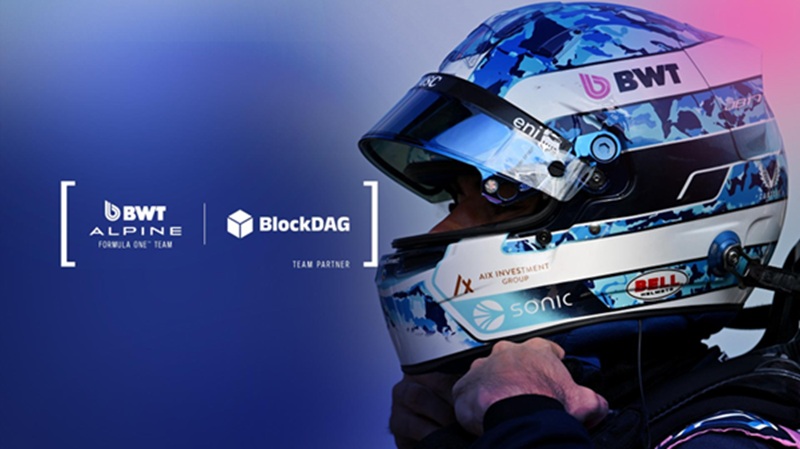
The crown jewel of its strategy is the multi-year BWT Alpine F1® Team partnership, officially revealed in Singapore during Token2049 and the Grand Prix at Raffles Hotel. As Alpine’s exclusive layer 1 blockchain partner, BlockDAG will secure global recognition through branding on F1 race cars, team merchandise, and fan simulators. The collaboration also extends into hackathons, interactive fan zones, and Web3 integrations, giving BlockDAG exposure to billions worldwide. CEO Antony Turner emphasized the deal as a chance to showcase DAG technology on one of sport’s grandest stages, while Alpine’s Flavio Briatore praised its potential to transform fan engagement.

Beyond cultural visibility, BlockDAG’s adoption is anchored by 3M X1 app miners and a rapidly growing community of 312K holders, both strengthening its decentralized foundation. The rollout of 20 confirmed exchange listings further ensures liquidity and accessibility from the very first day of trading.

In a crowded field of the top crypto coins, BlockDAG is already outpacing rivals by merging cultural partnerships with grassroots adoption and technical credibility.

Summing Up!

Cardano’s price updates show a bullish structure, with key targets set above $1.24, but volume will decide the rally’s durability. Hyperliquid’s price prediction reveals short-term weakness but resilience in its long-term structure, though competition and market sentiment are weighing heavily.

BlockDAG, by contrast, isn’t waiting for confirmation; it is already securing adoption. With nearly $415M raised, 312K holders, 20 exchange listings, and the cultural reach of its BWT Alpine F1® sponsorship, BlockDAG is more than just a presale project. It’s positioning itself in mainstream culture and market sentiment simultaneously.

For traders evaluating the top crypto coins, the picture is clear. ADA and HYPE are still working to prove themselves, while BlockDAG has already claimed the spotlight with tangible results and global visibility.

Presale: https://purchase.blockdag.network

Website: https://blockdag.network

Telegram: https://t.me/blockDAGnetworkOfficial

Discord: https://discord.gg/Q7BxghMVyu

Shiba Inu, Pepe Coin, and Cardano Are on Track for 10x Returns By 2026, but This Coin Will Crush Them With a 100x Jump

0

Shiba Inu (SHIB) became a household name with one of the most incredible rallies in history. Pepe Coin (PEPE) followed suit, proving meme tokens still had plenty of room to run. And as of 2025, Cardano (ADA) remains a respected altcoin with its smart contract adoption. All three are expected to post 10x returns by 2026, impressive by most standards. Yet another token has entered the spotlight for investors chasing the kind of outsized gains that transform portfolios. Little Pepe (LILPEPE), currently priced under $0.005, is being tipped by analysts as the coin capable of delivering a staggering 100x jump, crushing SHIB, PEPE, and ADA’s projections.

Shiba Inu’s Familiar but Limited Growth

SHIB began at a minuscule price and skyrocketed to its peak in a few months. This unprecedented rally delivered astronomical returns, with a total percentage gain exceeding 45,000,000% and solidified SHIB’s place among the top meme projects. But today, SHIB is a very different asset. Analysts expect SHIB could still climb as much as 10x by 2026, especially if its Shibarium Layer-2 network gains further adoption. But for investors hoping to catch lightning in a bottle again, SHIB’s best days of growth are already behind it.

Pepe Coin Shows the Meme Market Still Works

Pepe Coin rise proved that meme coins weren’t done making headlines or changing investor fortunes. Like SHIB, PEPE is still forecasted to deliver up to 10x gains in the next cycle.

However, with its already established run, PEPE doesn’t carry the same early-stage potential as younger projects. It will likely grow, but the chances of it being the number-one story of 2025 are fading as fresher contenders step forward.

Cardano Offers Stability, Not Explosive Returns

Cardano (ADA), currently priced around $0.82 with a market cap near $29 billion, could climb to the $8 range by 2026, representing a strong 10x gain for long-term holders. That’s excellent by traditional standards, but compared to meme coins or smaller caps, it is a steady bet, not a moonshot.

Little Pepe (LILPEPE): The 100x Candidate

The real excitement in 2025 is surrounding Little Pepe (LILPEPE). At first glance, it looks like another meme coin designed to capture community energy, but the project is going much further. It is building an Ethereum Layer-2 blockchain tailored to meme coins, making launches faster, cheaper, and safer by protecting against sniper bots. That unique utility is paired with explosive meme energy. LILPEPE’s presale has already raised over $26.2 million in Stage 13 at $0.0022 per token, with over 16 billion tokens sold. The project has been audited by CertiK and is listed on CoinMarketCap, rare achievements for a token still in presale. Community growth is adding fuel to the fire. A $777,000 giveaway and a special promotion for buyers between Stage 12 and Stage 17 are drawing huge attention, keeping LILPEPE trending. This kind of viral momentum drove SHIB and PEPE to their historic runs.

How High Can LILPEPE Go?

Short-term forecasts suggest LILPEPE could rally to $0.10 after listings, delivering a 45x gain from the presale price. Longer-term projections see it climbing to $1 to $3 by 2026. That’s where the 100x potential becomes clear. A $1,000 investment at $0.0022 could grow to $100,000 if LILPEPE reaches $0.22, and even more if it pushes into the $3 range. That kind of upside dwarfs SHIB, PEPE, and ADA’s expected 10x performance and cements LILPEPE as one of the most exciting opportunities in the market today.

Conclusion

Shiba Inu, Pepe Coin, and Cardano remain strong plays with solid forecasts. Each is on track to deliver 10x gains by 2026, which would satisfy most investors. But for those searching for the kind of exponential upside that defines bull market legends, Little Pepe (LILPEPE) stands in a league of its own. With its booming presale, viral campaigns, CertiK audit, CoinMarketCap listing, and ambitious Layer-2 roadmap, LILPEPE has everything it needs to surpass its rivals. If SHIB, PEPE, and ADA are set for 10x, LILPEPE looks positioned to deliver 100x, making it the coin that could rewrite crypto history in 2025.


For more information about Little Pepe (LILPEPE) visit the links below:

Website: https://littlepepe.com

Whitepaper: https://littlepepe.com/whitepaper.pdf

Telegram: https://t.me/littlepepetoken

 Twitter/X: https://x.com/littlepepetoken

What a $500 Stake in Ozak AI Could Look Like in 2026—With Bonus Insights on How Other Major Coins Compare in Growth Potential

0

Crypto investors in 2025 are another time exploring possibilities where small investments should translate into life-changing wealth. While mounted gamers like Bitcoin, Ethereum, and Solana stay cornerstones of the market, the spotlight is more and more turning to presale projects with explosive upside ability. Among those, Ozak AI stands out.

Its mixture of artificial intelligence and blockchain utility, coupled with early-level pricing, is sparking exhilaration among both whales and retail buyers. The real query is: what should a $500 investment in Ozak AI today be really worth by using 2026, and the way does it evaluate to putting the equal quantity into different most important coins?

Ozak AI: The $500 Growth Story

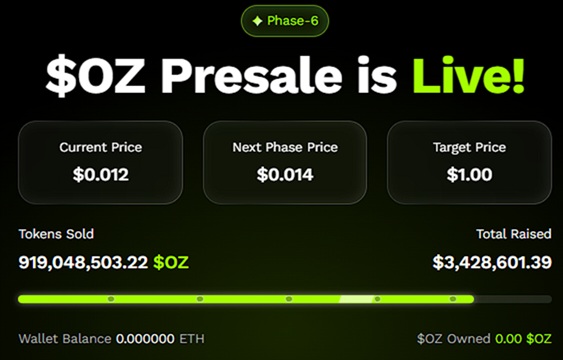
Ozak AI is currently in Stage 6 of its presale, with tokens priced at $0.012 every. To date, it has raised extra than $3.4 million and bought over 915 million tokens, highlighting both strong momentum and investor confidence. For $500, customers can stable 41,666 OZ tokens, a figure that offers huge exposure compared to the constrained quantities one could purchase in better-priced belongings like Bitcoin or Ethereum.

If Ozak AI hits $0.10 by 2026, the $500 stake would be worth $4,166. At $0.50, that number rises to $20,833, and at the ambitious target of $1.20, the same $500 grows into $50,000. These scenarios highlight the asymmetric opportunity that presale projects like Ozak AI bring—small amounts of capital with the potential for exponential growth.

Ozak AI’s Partnerships That Boost Confidence

What sets Ozak AI apart from typical presale hype tokens is its foundation of partnerships that strengthen its roadmap. Its collaboration with Perceptron Network (@PerceptronNTWK), with more than 700,000 active nodes, provides critical infrastructure for scaling AI-driven systems. In addition, partnerships with SINT and HIVE further enhance its ecosystem. SINT contributes AI agents and voice-driven execution, while HIVE integrates blockchain data APIs with Ozak’s 30ms market signals, ensuring real-time insights for traders and bots.

For investors, these alliances offer more than hype—they provide reassurance that Ozak AI is building an ecosystem with real-world use cases. This is why whales are actively accumulating tokens in OZ presale stages, validating its potential as a long-term project.

Bitcoin (BTC)

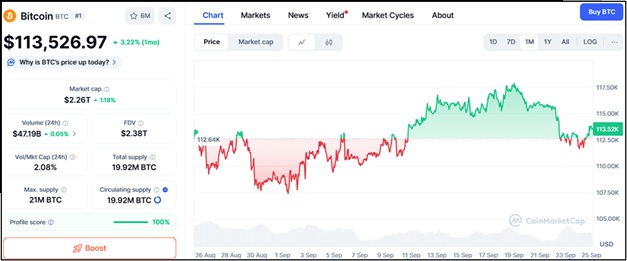
Bitcoin remains the most trusted asset in crypto, trading around $112,755 in mid-2025. For $500, an investor can acquire just 0.0044 BTC. If Bitcoin rises to $150,000 via 2026, that stake could grow to about $660. While BTC gives limited upside as compared to Ozak AI, it offers extraordinary balance, making it the anchor of most portfolios. For investors seeking exponential returns, but, Bitcoin does not give you the 100x multiples that when described it.

Ethereum (ETH)

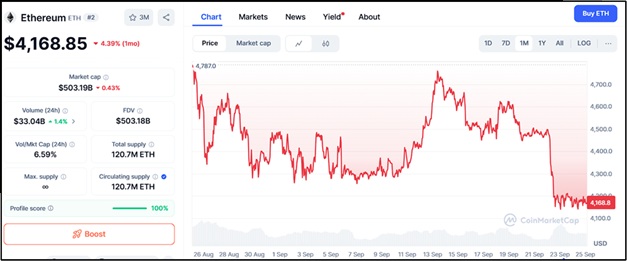
Ethereum continues to strengthen decentralized finance and NFT ecosystems, buying and selling close to $4,196. A $500 funding these days secures around 0.119 ETH. Should Ethereum climb to $5,200, the allocation would be worth about $618. While Ethereum remains critical for long-term portfolios, its sheer length limits how an awful lot it could grow. For many, ETH is a dependable boom play however now not the automobile for transformative ROI in the next cycle.

Solana (SOL)

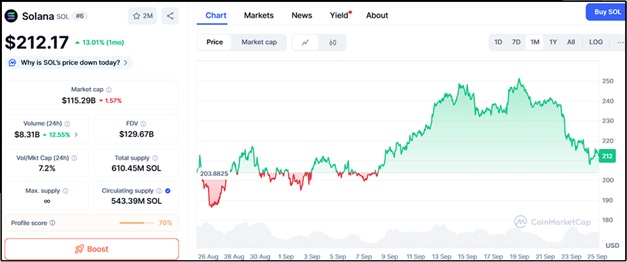
Solana has become a major force with its high throughput and thriving DeFi ecosystem. At $220, a $500 stake secures about 2.27 SOL. If Solana reaches $300 by 2026, that investment would be worth $681. Solana offers strong potential as a growth asset, but like Ethereum, it cannot compete with the explosive upside of early-stage tokens like Ozak AI.

Comparing Growth Potential

The comparison makes the differences clear. A $500 stake in Bitcoin, Ethereum, or Solana would likely grow to $600–$700 by 2026, reflecting steady but modest gains. In contrast, Ozak AI offers a pathway to potentially $4,000, $20,000, or even $50,000, depending on adoption and execution. This disparity explains why both retail investors and whales are treating Ozak AI as one of the most exciting opportunities of the cycle.

A $500 stake in Ozak AI today buys tens of thousands of tokens at just $0.012, with projections suggesting life-changing returns by 2026 if the project succeeds. While Bitcoin, Ethereum, and Solana continue to deliver steady growth and remain safe anchors in any portfolio, they cannot match the explosive upside of Ozak AI’s presale opportunity. For investors chasing transformative gains, Ozak AI may be the project that defines the next bull cycle.

About Ozak AI

Ozak AI is a blockchain-based crypto project that provides a technology platform that specializes in predictive AI and advanced data analytics for financial markets. Through machine learning algorithms and decentralized network technologies, Ozak AI enables real-time, accurate, and actionable insights to help crypto enthusiasts and businesses make the correct decisions.


For more, visit:

Website: https://ozak.ai/

Telegram: https://t.me/OzakAGI

Twitter : https://x.com/ozakagi 

3 Biggest Mistakes That Will Slow Down Your Casino Withdrawal

0

The speed of your casino withdrawal depends on more than just the operator’s processing time. Several common mistakes can add unnecessary delays, sometimes extending what should be a straightforward transaction into a prolonged ordeal. This happens to thousands of inexperienced players daily, and in most cases, it’s entirely preventable.

Understanding what causes the biggest delays before you request a payout can save you considerable time and frustration, so below, we take a closer look at the three most common reasons.

1. Skipping Account Verification Until Withdrawal Time

The single biggest cause of delayed withdrawals is incomplete account verification. Many players create accounts, deposit money, and start playing without completing the Know Your Customer (KYC) process. This works fine until they try to withdraw funds—then everything grinds to a halt.

Online casinos are legally required to verify your identity before releasing winnings to prevent money laundering. This is the same standard fraud and Anti Money Laundering (AML) measure you are subject to when signing up to online banking methods, like MuchBetter or Skrill. This typically involves uploading documents like a government-issued ID, proof of address, and sometimes proof of payment method ownership.

You can send in these documents at any time after you create your account, and we recommend you send them in sooner rather than later. The verification process itself can take 24-72 hours, but that’s only if your documents are accepted on the first try. Blurry photos, expired documents, or mismatched information can result in rejection and force you to resubmit, creating a cycle that extends delays even further.

When you wait until after requesting a withdrawal to submit these documents, you’re adding several days to your payout timeline. Even if you’re choosing a same-day payout casino, like those offered here, your winnings will be delayed until the KYC process is complete.

Smart players verify their accounts immediately after registration, long before they need to withdraw anything. This proactive approach means your documents are already approved when you request a payout, eliminating this common bottleneck entirely. If the casino offers same-day payouts, you’ll get your funds within 24 hours. Easy!

2. Choosing the Wrong Withdrawal Method

Not all payment methods are created equal when it comes to withdrawal speed. Selecting a method that differs from your deposit method—or choosing one with inherently slow processing times—can significantly extend your waiting period regardless of whether your KYC steps are complete.

Bank transfers, for instance, might take 3-7 business days even after the casino processes your withdrawal request. Credit card withdrawals often face similar delays due to banking protocols. These options are the slowest and should be avoided if you value speed. Meanwhile, e-wallets like PayPal, Skrill, or Neteller typically process instantly once approved.

Online casinos also have specific rules about withdrawal methods. You must use the same payment method for your withdrawal as you used to deposit. Again, this is a standard anti-money laundering measure. However, not all deposit methods can be used for withdrawals.

If you deposited with a voucher like Paysafecard,  you must withdraw to a different method, for example, MuchBetter. Before doing so, you need to verify ownership of the said payment method before the transaction is processed. Since it may take a few days to verify your new payment method, it will definitely slow down your withdrawal request.

3. Ignoring Wagering Requirements and Bonus Terms

Few things frustrate players more than discovering their withdrawal is blocked due to unfulfilled bonus conditions. The biggest culprit is the wagering requirements—the number of times you must play through a bonus before withdrawing—and they are often misunderstood or overlooked entirely.

If you accepted a welcome bonus or free spins promotion, you’ve agreed to specific terms that dictate when you can cash out. These requirements might stipulate that you wager the bonus amount anywhere from 20x to 50x before withdrawal becomes possible. Attempting to withdraw before meeting these conditions will result in automatic rejection and potentially forfeiture of bonus funds.

The situation becomes more complex with maximum bet restrictions during bonus play. Many casinos limit your per-spin or per-hand stakes while clearing a bonus. Exceeding these limits—even unknowingly—can void your bonus and any associated winnings, creating disputes that delay legitimate withdrawals. Always read the specific terms of any promotion you accept, and track your progress toward meeting requirements.

Even if you follow the conditions to the letter, bonus offers will typically slow down withdrawals, especially if you profited from them. This typically triggers a deeper check to ensure you haven’t broken any conditions, and it may slow down your withdrawal request.

The Path to Faster Payouts

Most withdrawal delays stem from player error rather than casino negligence. By completing verification early, understanding bonus terms, choosing appropriate payment methods, and maintaining accurate information, you can avoid the mistakes that trap so many players in unnecessary waiting periods.

Taking these preventive steps transforms withdrawal from a stressful uncertainty into a predictable process, letting you enjoy your winnings without the frustration of unexplained delays.

Visa Bets on Stablecoin to Speed up Cross-Border Payments, Unveils Pilot Program

0

Global payments leader Visa has unveiled a new pilot program to test stablecoins for cross-border transfers. This will give businesses a faster and more flexible way to move money internationally.

The initiative will allow banks, remittance providers, and financial institutions to pre-fund Visa Direct with stablecoins instead of traditional fiat currencies.

By treating stablecoins as money in the bank or available balances for payouts, Visa aims to eliminate businesses needing to lock up large sums of cash days in advance.

“We’re bringing stablecoins to Visa Direct, our push payments platform, enabling real-time money movement to billions of endpoints,” a Visa spokesperson said. “By doing so, we’re creating a world where payments can be settled in stablecoins, unlocking instant, global, and programmable payouts.”

Visa says the pilot will reduce settlement times from days to just minutes, helping businesses free up liquidity more quickly. Importantly, recipients can still receive payments in their local currency, making the system accessible worldwide. The program is expected to roll out with select partners and limited availability by April 2026, marking a major milestone in Visa’s stablecoin strategy.

Visa pilot program comes amid growing momentum for stablecoins following the passage of the U.S. GENIUS Act, the first federal law offering regulatory clarity for the sector. With the global stablecoin market now worth over $300 billion, analysts view the asset class as a trillion-dollar opportunity.

Visa has identified two key use cases driving stablecoin adoption:

1.) Protecting savings in emerging markets with volatile currencies.

2.) Faster, cheaper cross-border transfers for businesses and consumers.

Earlier this year, Visa partnered with Stripe-owned Bridge to enable developers to issue stablecoin-linked Visa cards and struck a deal with Yellow Card, a payments company with a strong African presence, to explore liquidity and treasury applications. It has also tested stablecoin settlement for card issuers and acquirers and launched the Visa Tokenized Asset Platform to help banks manage stablecoin issuance.

The pilot coincides with increased regulatory activity across the G7 nations. Reports reveal that Seven (G7) regulators are moving on stablecoins, with the US enacting its new law, the European Union enforcing Markets in Crypto-Assets (MiCA) regulation and Japan already running a live regime. So far, the market has been dominated by dollar-pegged tokens such as Tether’s USDT and Circle’s USDC.

Regulation is now catching up with the technology, and countries are beginning to allow stablecoins tied to their own currencies. The G7’s drive to regulate is part of a wider contest over digital money, while BRICS nations are sidestepping private stablecoins in favor of state-issued digital currencies aimed at challenging dollar dominance.

The G7 regulation comes as the market capitalization of Stablecoins has crossed $300 billion. The surge reflects stablecoins’ evolution from trading tools to essential infrastructure for DeFi, cross-border payments, and institutional finance. Also, their utility in moving money quickly across borders has fueled concerns that they could erode the market dominance of some payment companies and regional banks.

Meanwhile, BRICS nations are favoring state-backed central bank digital currencies (CBDCs) over private stablecoins, framing digital money as part of the broader contest against U.S. dollar dominance.

“Cross-border payments have been stuck in outdated systems for far too long,” said Chris Newkirk, Visa’s president of commercial and money movement solutions. “Visa Direct’s new stablecoin integration lays the groundwork for money to move instantly across the world, giving businesses more choice in how they pay.”

While stablecoins have historically been dominated by dollar-pegged tokens like Tether’s USDT and Circle’s USDC, regulators are beginning to allow local currency-backed stablecoins, broadening their potential impact.

Visa’s move illustrates how financial incumbents are shifting from competition to collaboration, leveraging stablecoins as tools to strengthen their infrastructure rather than disrupt it.

By combining instant settlement, global reach, and regulatory momentum, Visa’s stablecoin pilot could mark a turning point in the evolution of cross-border payments, transforming them from slow, costly processes into seamless, real-time transactions.