
DD
MM
YYYY

PAGES

DD
MM
YYYY

spot_img

PAGES

Home Blog Page 4314

Big Eyes Coin Sets Its Sights On The Moon With Over 31 million In Presale, Poised To Follow In The Steps of Shiba Inu’s Success in the Crypto World

0

Big Eyes Coin (BIG) is a promising new cryptocurrency that has recently caught the attention of investors and crypto enthusiasts alike. With an impressive presale that raised over 30 million, BIG is setting its sights high and aims to replicate the success of other popular meme coins like Shiba Inu (SHIB).

With its growing popularity and ambitious plans, BIG has the potential to make a significant impact on the world of cryptocurrency. Read on!

Shibarium: The Revolutionary DEX Set to Boost Shiba Inu’s Popularity and Growth

Shiba Inu, the popular meme coin, has been making waves since its inception and has gained a significant following among traders and investors. Some even consider it as the “Dogecoin killer,” which is a remarkable feat.

Shiba Inu’s team has been constantly exploring ways to expand their network and attract more investors due to the increasing popularity of the cryptocurrency. It is created on the Ethereum network, and users can exchange it for other cryptocurrencies or fiat money, making it a versatile asset.

To further its growth and appeal, the team has introduced Shibarium, a decentralised exchange (DEX) that aims to address some of the common issues plaguing other DEXs. Shibarium aims to provide a fast, affordable platform that is specifically designed for trading SHIB and other tokens in the Shiba Inu ecosystem, addressing high fees and slow transaction speeds.

The introduction of Shibarium is expected to draw in more investors to the Shiba Inu ecosystem. With its unique features and the rising popularity of Shiba Inu, many investors are likely to find Shibarium an attractive investment opportunity.

Overall, the team’s efforts to expand and enhance the Shiba Inu ecosystem through the introduction of Shibarium highlights their commitment to creating a dynamic and accessible cryptocurrency that meets the needs of investors and traders alike.

Big Eyes Coin’s Loot Box Campaign: A Chance for Huge Returns and Positive Impact

Get ready for the crypto event of the year, as Big Eyes Coin (BIG) has just announced their Loot Box campaign! With $31 million already raised in their presale, this campaign is sure to excite crypto enthusiasts everywhere.

There are three different types of boxes available: the Cute Box ($100), the Kitty Vault ($500), and the Super Saiyan Box ($1K). Each box promises a random prize when opened, but token holders will always receive an amount equal to or more than what they’ve spent. And with the potential to win up to $5K worth of BIG, it’s no wonder that this campaign has everyone buzzing.

But that’s not all – BIG is also committed to making a difference in the world. With 5% of their total supply going towards saving the fish in the ocean, you can feel good knowing that your investment is also making a positive impact.

And the excitement doesn’t stop there. BIG is also building a blockchain ecosystem where users can breed and grow NFTs, which means more opportunities for wealth generation and access to future features, events, and content.

So, what are you waiting for? Choose your Loot Box and get ready to potentially generate some serious wealth while also making a difference in the world. The BIG community is waiting for you!


To Learn More About Big Eyes Coin (BIG):

Presale: https://buy.bigeyes.space/

Website: https://bigeyes.space/

Telegram: https://t.me/BIGEYESOFFICIAL
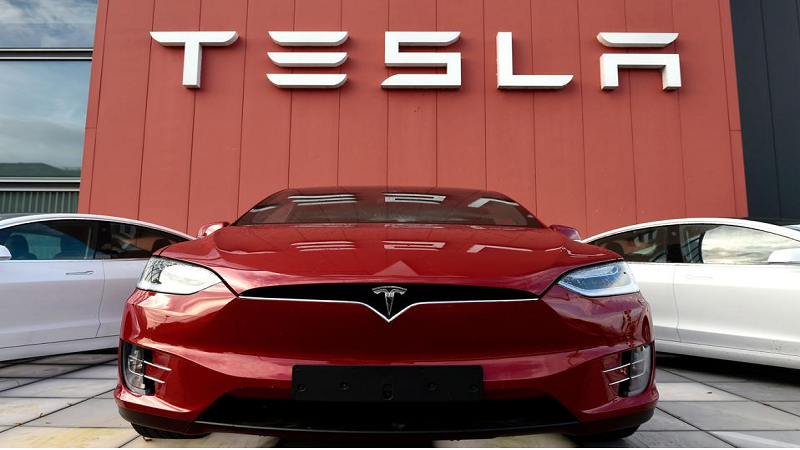
Tesla Leads Germany in February EV Sales

0

Recent report by German KBA, a German automobile registration company has revealed that Tesla leads Germany in February Electronic Vehicle sales, beating other brands including its domestic competitors by a significant margin.

According to the February sales report, Tesla sold a total 11,952 vehicles led by Tesla’s most popular EV, model Y, which was put at 6,442 units. Following Tesla are German domestic brands such as Volkswagen, Audi, and Mercedes which made 6,972 units, 4,767 units, and 4,029 units in EV sales respectively.

Teslarati’s Willaim Johnson wrote: “Tesla’s leadership in Germany does seem to be resulting in some profound changes from other brands. Most recently, VW announced a price cut on its next-generation VW ID.3, bringing it closer to competing with the Model Y. However, it remains more expensive than its segment competitor, the Tesla Model 3.

“Other brands have not followed VW in introducing price cuts, at least not in Europe, but have continued expanding their lineups to compete in more market segments. Mercedes is the best example of this approach, as it now sells a market-leading eight distinct models.

“Overall, the KBA noted that the EV market grew by 2.6% during February, a strong indicator that the market continues to gain interest in electric mobility. Hopefully, no matter the market leader, this interest can continue to grow and lead to a far more sustainable economy overall” the reporter noted in a news article published on the California-based Tesla news’ platform.

Flutterwave Secures New Licenses In Rwanda to Deepen Operation in East Africa

0

Flutterwave has continued to deepen its presence in the African market amid growing competition. The Africa’s largest fintech announced Wednesday it has secured Electronic Money Issuer and Remittance Licenses from the National Bank of Rwanda.

The licenses will help the company expand its operations in East Africa where it is expected to meet competition from top players such as LipaLater (Kenya), ImaliPay (Kenya), Credrails (Kenya), and Nala (Tanzania).

Olugbenga “GB’ Agboola, Founder and CEO of Flutterwave said Rwanda is important to the company’s plan to deepen its presence in East Africa.

“From our first transaction to over 400 million now, we’ve remained committed to our vision of connecting all parts of Africa through payments and connecting Africa to the world. As a country well known for fostering innovation and promoting the use of digital technology, Rwanda has always been important to our expansion plans in East Africa,” he said.

“We are delighted for the vote of confidence in being granted these licenses. With them, we will leverage our extensive global reach and continuous growth in emerging markets to provide MSMEs in Rwanda with the tools they need to stimulate the economy, facilitate seamless cross-border transactions for Rwandans and support the expansion drive of global and Rwandan businesses,” he added.

Flutterwave said in a statement that the licenses will help it to offer other services in addition to being a Payment Service Provider. The services include money deposit and withdrawal, electronic funds transfer, as well as inbound and outbound remittance services to the 13.46 million people living and working in Rwanda.

Flutterwave will be deploying a range of products in Rwanda, including Send by Flutterwave, its cross-border money transfer solution. Also available will be Flutterwave for Business and its suite of products, including Store, payment links, invoices and checkout to help individuals and businesses in Rwanda make the most of the booming eCommerce market.

Rwanda has a vibrant economy being spurred by hundreds of small scale businesses. Micro, Small & Medium Enterprises (MSMEs) in Rwanda account for about 97% of businesses and contribute almost 55% to the total GDP, according to Rwanda’s National Institute of Statistics. That makes MSMEs critical to job creation and the economic growth of the country.

Leah Uwiroheye, Flutterwave’s East Africa Regional Lead, Regulatory and Government Affairs, described the licenses as starting point for the company.

“This is a great achievement for the company. As Rwanda continues executing important reforms to enhance the ease of doing business and implementing its Fintech Strategy 2022-2027, Flutterwave keeps contributing towards achieving a cashless economy by innovating and employing digital technology to support businesses and stimulate the economic growth of countries where we operate. The licenses will enable us to provide safe, secure and seamless payment services for individuals and businesses in Rwanda. This is definitely a starting point for Flutterwave as we continue to expand across East Africa,” she said.

When Interest Rates Go Up And Why Banks Struggle [video]

0

Many questions on this topic from our Tekedia Institute learners. Very happy to share publicly here. During Live class on Saturday, I will discuss in detail via a presentation titled Investment Portfolios and Personal Economy, and next week, we will deepen the lecture with scenario mapping.

Yours truly will wear his ex-banking cap and doctorate in banking & finance over the next two weeks. After that, we will return back to engineering.

#PersonalEconomy with Tekedia Mini-MBA

Comment on Feed

Comment: I have followed most of your postings on SVB and I think it can be added that as rates rises, future bonds cash-flows are discounted at higher rates which will make the price fall (hence the inverse relationship between bonds and interest rates) Also, the bank could have hedged their interest rates risk; when rates are rising, the ideal thing to do is to shorten duration. The market had expected Fed to raise rates long before they started to raise. I wonder what the bank’s asset & liability management were thinking-betting on fed not raising rates? Anyway just thought I should add that Keep up the good work

My Response: Great point but note another thing happened: startups were not raising money and decided to draw down from their money in the bank. That pushed SVB to look for capital, triggering the need to sell bonds before they could have liked to sell to boost liquidity. If the startups had not requested for their money, SVB would have just waited for a better time to sell.

On that video, I had a minor “mis-spoke” there. On the bond rate, I would have said bond price, not rate, on a sentence there.

Strategic Leadership: Why Great Companies Adapt their Management Models to Time

0

The question of leadership invariably surfaces in virtually all forms and levels of human organisation. However, in corporate management, leadership goes pari passu with a functional management structure. The intersession of leadership and management informs strategic leadership. Strategic leadership encompasses the responsibility of the senior executives which involve making board, long-term plans and directing the organisational resources.

Strategic leadership has been defined as a practice in which ‘’executives use different styles of management to develop a vision for their organisation that enables the organization to adapt to or remain competitive in a changing economic and technological climate’’. Strategic leaders are able to use this vision to motivate employees and departments, fostering among them a sense of unity and direction in order to implement change within their organisation.

The inability to bring leadership together with good management technique has been largely responsible for the failure of many businesses. According to a report by Small Business Administration cited in investopedia.com, the most common reasons small businesses fail were due to lack of effective management system followed by lack of funding, inability to retain talents faulty business model, unsuccessful marketing initiatives etc. Even where funding and talents seem not to be the problem, some businesses have failed solely due to poor management of financial and human resources.

From the first industrial revolution to the fourth, corporate leadership has engendered new meaning impacted by socio-economic changes. Across periods of human evolution, the economic mode of production and the social relations of production have changed, and businesses and entrepreneurs have had to change or refine their leadership and management models at one point in time or another.

The continuing technological revolution and the increasing globalization of business and economic activity does not only cause intermittent market disruptions across ages but also dictates particular leadership and management style necessary for a firm to adapt to a new competitive landscape.

In the last twelve decades, corporate leadership and management have transitioned from ‘’command and control’’ approach to ‘’people-centric’’ model, and now managers have increasing demand to develop tech-skills and the capacity to transform in the cloud. Also, from the great financial crisis of 2008 to the outbreak of Covid19 pandemic in 2019 the global economy has been on its transition from web2.0 to web3, and corporate leadership has been centred on digital-data and blockchain.

Generally, business survivability and sustainability has been associated with the type of leadership and the management structure featured by the business relative to time. Therefore, strategic leaders are expected to be flexible and broadminded with regards to the design and implementation of the management structure.