DD
MM
YYYY

PAGES

DD
MM
YYYY

spot_img

PAGES

Home Blog Page 4320

The Hardest of Changing People’s Health Behaviour

0

Every year, a significant number of projects are being planned and executed by profit and non-profit organizations towards addressing one public or personal health challenge or another throughout the world. In most cases, these organisations paid attention to knowledge, attitudes and people’s health practices, spending huge amounts of money on correcting their unhealthy behaviour. Despite various interventions at the local, national, regional, and global levels, diseases of various types continue to spread in varying proportions. For example, despite numerous strategic marketing and health promotion campaigns, mental health disorders have remained one of the most prevalent diseases worldwide since 100 BC.

Making people adhere to medication, decrease risky sexual activity and promote physical activity, for example, has been difficult for health professionals over the years. This is most noticeable in developing countries, and it is driving up the demand for health practitioners to acquire critical behavior change skills and knowledge. In the previous analysis, our analyst examined strategic notes that health professionals and their allied experts could consider for health promotion. In the current piece, our analyst takes a look at the role of the total process planning model for initiating and executing efforts to change people’s uptake of the right health behaviours.

Project management is crucial in the promotion of health and in social marketing for health. As there are issues to be managed, there are methods for managing projects. Typically, important steps include pre-planning, situation assessment, identification of goals, audiences, and objectives, identification of strategies, activities, and resources, development of indicators, and review of programme plans. At the pre-planning stage, data gathering and interpretation, assurance of participation of stakeholders, time allotment, provision of money and other resources and decision making are prioritized.

The five stages of the Total Process Planning model are scope, develop, implement, evaluate, and follow-up.  The problem is stated, important stakeholders are involved, potential audiences are identified, and the scope includes some initial behavioral goals. Additionally, concepts that will help the audience reach the highest level of behavior change are developed. The campaign proposition is tested in the second stage by examining the social marketing mix, the barriers to change, finding incentives or rewards, segmenting the target audience, and then fine-tuning goals and objectives. Indicators of success are still chosen during this phase, and campaign elements are pre-tested, improved, and adjusted. The intervention is launched during the third stage of implementation. Impact measurement takes place during the evaluation phase. Since being proactive is essential for success, this stage (monitoring and evaluation) lasts from the start of the project to its conclusion. The final stage is follow-up, which encourages a transition from short-term to medium- and long-term impacts as a result of evaluation’s key actions.
Olam Agri Partners University to Promote Research-Driven Climate-Smart Agricultural Solutions in Nigeria

0

Award winning food and agribusiness company, Olam Agri has partnered with Asian global research institute, Nanyang Technological University based in Singapore, to enhance digital solutions and sustainable innovation in the Nigerian food and agribusiness industry.

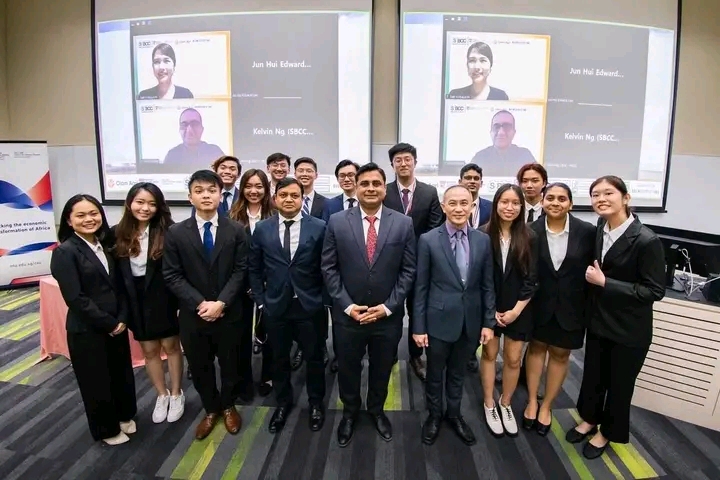
Through the partnership which ushered the 2023 Singapore Business Case Competition, an African-centered innovative competition organized by the Singapore-based University, Olam, the lead sponsor of the contest, has demonstrated its commitment to push the frontiers of Climate smart Agricultural practices in Africa

Held between February 25 and March 11 the 2023 SBCC welcomed participants who delivered pitches on climate-smart solutions to improving Nigeria’s agriculture and food security problems. Panel of judges at the competition selected across industries include Saki Kobayashi, Co-founder of EnerScale, Amit Jain, Director of NTU-SBF Centre for African Studies, and representative of Olam Agri.

The overall winner of the competition, team TPG Consulting, presented solutions that seek to optimise fish farming, meet rising local demands for aquatic foods, mitigate challenges in the poultry segment, reduce cattle herd migration, utilize tech to raise efficiency in handling seed-to-harvest circles in key crop areas, reduce agriculture waste, raise the employment potential of agriculture amongst others.

The team won a $1,500 prize in addition to an all-expense paid trip to Nigeria to implement their solutions.

Saki Kobayashi remarked that the participating teams at the contest demonstrated knowledge and outstanding performance on how to leverage technology and creativity to solve crucial challenges in Nigeria’s agricultural sector.

According to Amit Jain; “The participants at this year’s SBCC contest had the opportunity to test their knowledge, analytical thinking, and communication skills by solving real-life business problems. The teams presented climate-smart solutions targeted at solving agricultural challenges in Nigeria.

“I believe this competition will provide the participants a foretaste of the economic transformation taking place in Africa today.” he added.

Ashish Pande,Country Head for Olam Agri Nigeria also gave the following remarks:

“We are glad to have allowed the smart, young minds to come up with idea case studies that are capable of improving the resilience of our food supply chain. Especially, the ideas represent a huge leve

“The latest investment actions are parts of our signature value chain development drive through the Seeds for the Future project. The actions demonstrate our commitment to helping Nigeria achieve its agriculture development and economic growth agenda,” he added.

Where are we with the cash crunch in Nigeria?

0
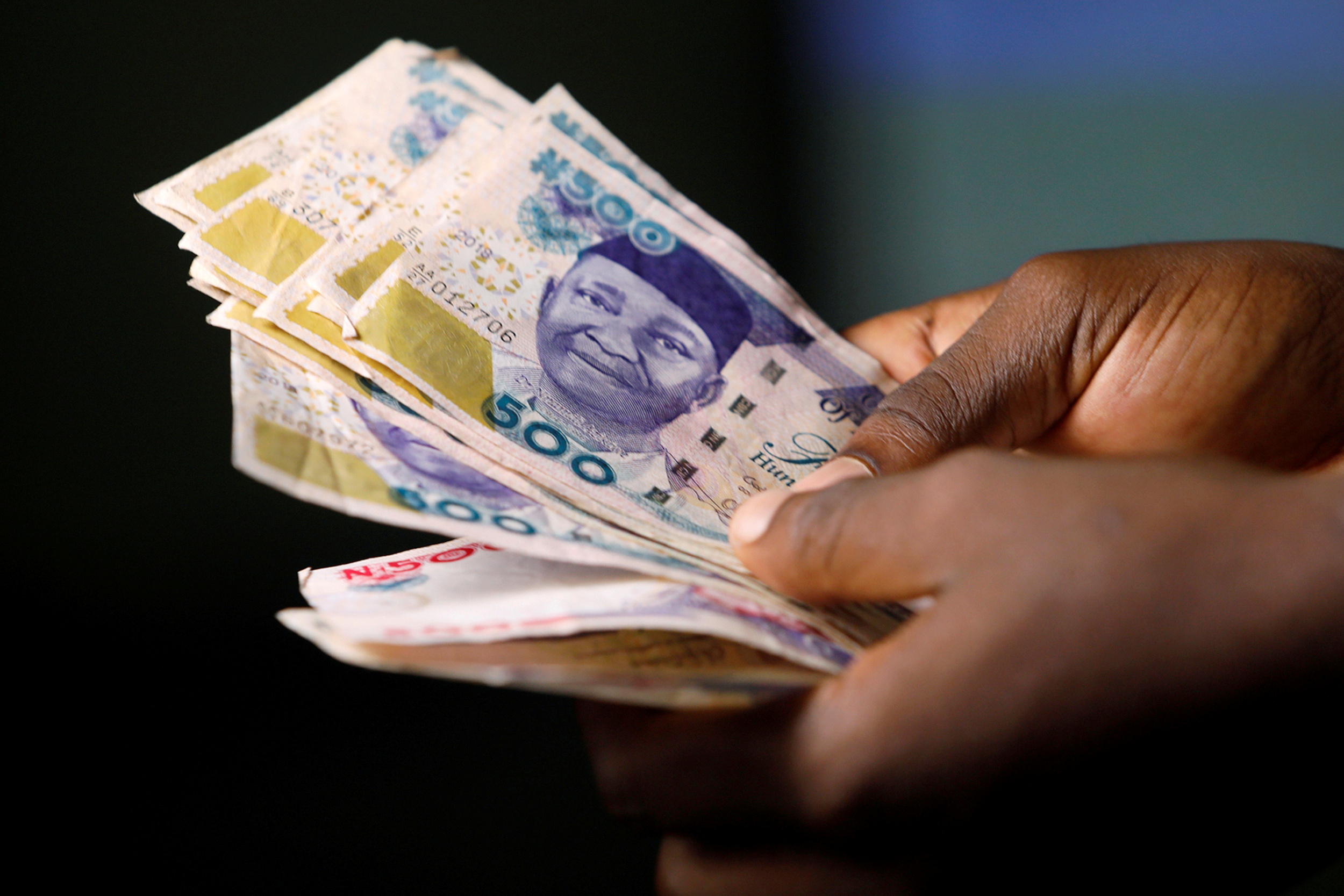
Nigerian naira banknotes are seen in this picture illustration, September 10, 2018. REUTERS/Afolabi Sotunde/File Photo

Since this year the average Nigerians and even the above-average Nigerians have been faced with unfathomable hardship due to the Naira redesign policy.

Of a truth, I can now testify that the Nigerian banking system is not technologically advanced to handle and accommodate a cashless (less cash) economy. 

We have experienced pathological bank app failures, hanging and unfinished transactions that got people stranded in the la la land and the banks’  USSD has been shitty. I personally have lost count of how many transactions I initiated with the Bank app or the USSD that did not complete. More than 10 transactions I have done since January have been hanging in the air; money I transferred to someone since January is yet to deliver up to this day and the bank mobile complaint service is not working and they no longer pick up their calls for complaints, if you try going to banks to lay a physical complaint you will be met with a sea of people queueing up under the scorching sun for one banking problem or the other. 

Well, the purpose of the Naira redesign which caused the nationwide cash crunch is to reduce the volume of currency in circulation but I do not know if that purpose has been met and if it is a sustainable long-term purpose. 

In obedience to the Supreme Court judgement which held that the old naira notes still subsist to be legal tenders until the 31st of December 2023, the CBN issued a directive to that effect but when customers are issued the old naira notes from the banks, the street vendors and the market sellers always refuse to accept it as a means of exchange for their wares; maybe they are not yet aware that the old notes are now back to being a legal tender until 31st of December 2023 or they are just scared of next the CBN could possibly do; even banks, when customers take old notes for deposit in the bank the banks always refuse to accept it. 

A netizen narrated that yesterday he was issued old notes in the bank and when he went to the market to use them to purchase items the vendor refused to accept the old notes from him, with that frustration, he took the old notes back to the bank to redeposit it or to exchange it for new notes but the bank that issued him the old not like an hour ago refused to accept the old notes stating that it is a policy that they should only issue the old note to customers and not to accept it as deposits; if that is not confusion I wonder what it is.

This whole policy which ought to be a welcomed development was not properly managed by the CBN hence why it became a colossal failure. The banking system got overwhelmed, protests and riots erupted because of this, banks were destroyed with bank staff attacked, and people suffered a lot; this makes me wonder if there will ever be any good the redesign policy will achieve that can compensate for the damage it had already done to individuals and to the Nigerian economy. 

i-DICE: Nigerian Government Launches $600m Programme to Boost Startups and Tech Innovation

5

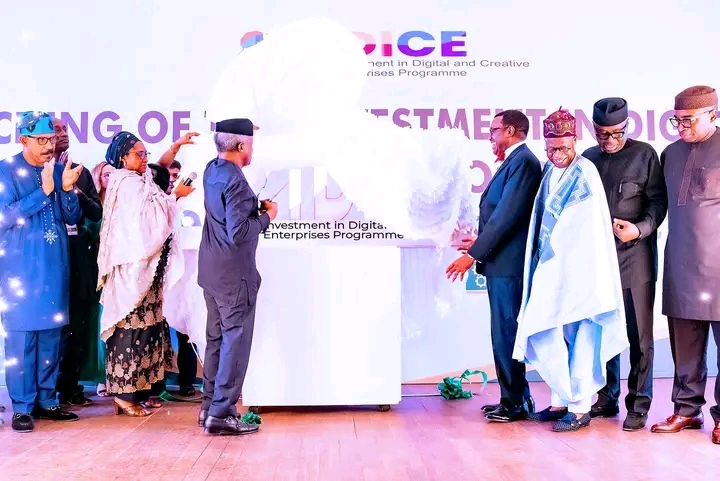
The Nigerian tech ecosystem and creative industry have received a fresh $600 million financial boost from the Investment in Digital and Creative Enterprises (i-DICE) programme, which was launched on Tuesday by Vice President Yemi Osinbajo, in Abuja.

The programme which was launched at the State House is designed to support young Nigerian entrepreneurs between the ages of 15 to 35, who are involved in early stages of creative, innovative and technology-enabled ventures. i-DICE provides access to capital to tackle capacity limitation and other constraints of Start-ups.

Delivering the keynote address at the event, Osinbajo calls for more action from governments and stakeholders, in addition to programmes like i-DICE, to spur innovation in Africa.

“I think it is now imperative to commence a coordinated approach towards innovation on the continent, bringing together all stakeholders to coordinate efforts at scaling up investments and building programmes that provide the right enabling environment and produce talent pipelines that support the growth of innovation on the continent,” he said.

The Vice President added that the government must provide more support for startups and small businesses, and investors must provide more funding.

“This is why the Investment in Digital and Creative Enterprises Programme is important,” he said.

Osinbajo, who also spoke on behalf of the Nigerian government, said the programme, which was launched in collaboration with many development partners from Africa, is designed to support innovation across very critical pillars including policy, infrastructure, access to finance and talent.

These pillars have been identified as very critical to the growth and sustenance of innovation on the continent, he said.

i-DICE is supported by funding from the African Development Bank (AfDB)-$170m, the Islamic Development Bank (IsDB)-N70m and the Agence Française de Développement-$116m. There is also a Federal Government of Nigeria counterpart contribution of $45 million through the Bank of Industry loans for qualifying start-ups.

The Vice President disclosed that $271m is expected from private sector and institutional investors.

He described the launch of the i-DICE Programme as a significant milestone by the Nigerian government, demonstrating its commitment to creating jobs and entrepreneurial opportunities for the youths.

He added that the programme is part of the present administration’s efforts in supporting the growth in the tech and innovation sectors.

“As a government, we have consistently provided support to the innovation ecosystem over the last 8 years. In 2018, we established the Technology and Creativity Advisory Group. The Advisory Group brings together stakeholders in the technology and creative industries, to contribute directly to policy formulation, articulation and the design of the technology and creative sectors of our economy.

“The Group has influenced various government policies for the growth of the economy. For instance, the Ministry of Communications and Digital Economy, working with NITDA has established a Center for Artificial Intelligence and Robotics, the Ministry has also led the coordination of our partnership with Microsoft to increase Nigeria’s technology talent pipeline by training five million Nigerians in various technology skills,” he said.

Speaking at the event, the President of the AfDB, Dr. Akinwunmi Adesina, who was also duly thanked by the Vice President for making the idea a reality, said that programmes like the i-DICE is needed now, especially as Nigeria is leading Africa’s digital technology. He said such ideas will create an enabling environment for startups.

“The i-DICE Programme is timely, strategic, and transformative as it will build the ecosystems to support more competitive entrepreneurs powered by digital technologies.

“That is why we like i-DICE: it is visionary, sees the future and prepares Nigeria for it. That future is here. Every aspect of life is being transformed digitally,” Adesina said.

Tekedia Mini-MBA’s “Singularity and Business Opportunities” Module [video]

0

I invite you to register for the next edition of Tekedia Mini-MBA to master the future which is before us. This is the #best school. Begin here.

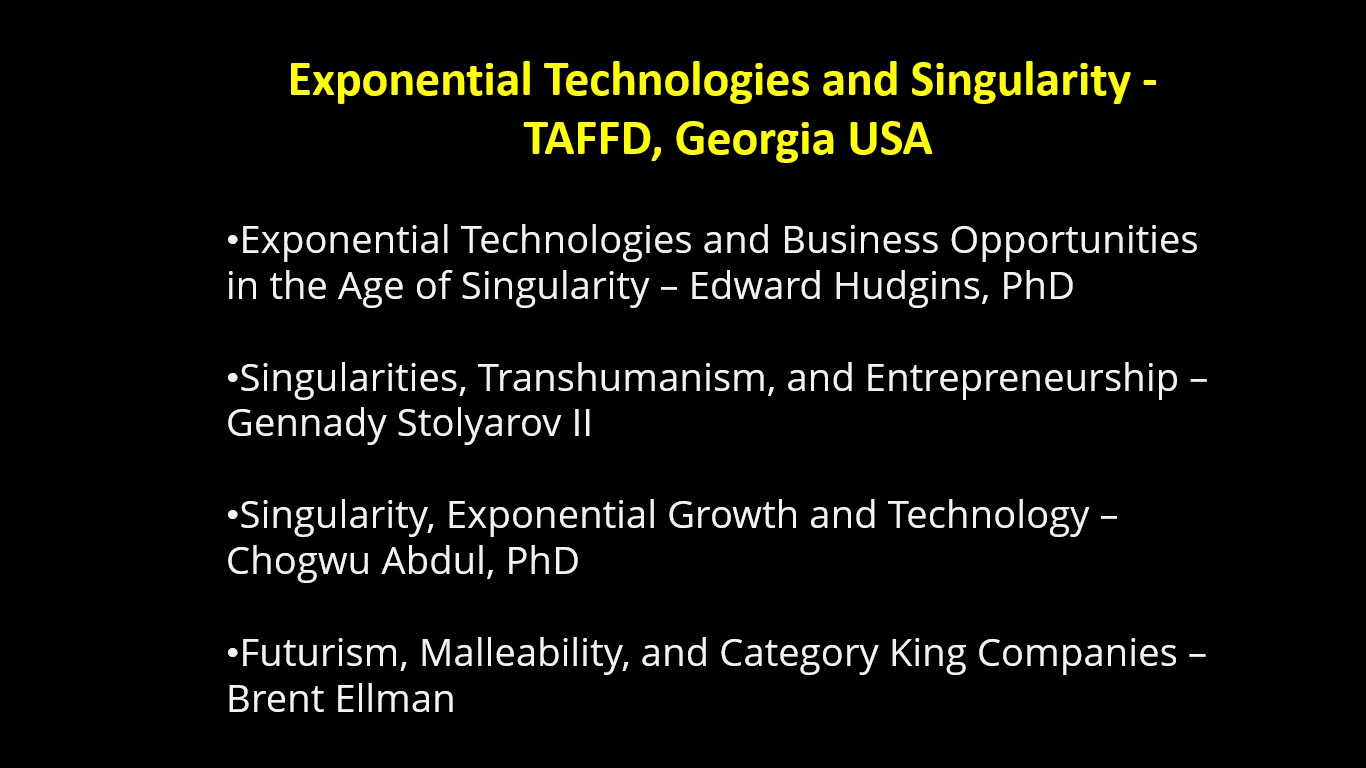
Singularity is a “hypothetical point in time at which technological growth becomes uncontrollable and irreversible, resulting in unforeseeable changes to human civilization”. During the Tekedia Mini-MBA, for one week, we will assume the world has entered the age of singularity. But instead of panic, we want to examine the promises and business opportunities when machines possibly become smarter than humans!

Edward Hudgins, PhD
Chogwu Abdul, PhD
Gennady Stolyarov II
Brent Ellman