DD
MM
YYYY

PAGES

DD
MM
YYYY

spot_img

PAGES

Home Blog Page 4322

Key Characteristics of Bitcoin

0

Bitcoin is a decentralized digital currency that operates on a peer-to-peer network of computers. It was created in 2009 by an anonymous person or group using the pseudonym Satoshi Nakamoto. Bitcoin has several key characteristics that distinguish it from other forms of money and payment systems.

Limited supply

Unlike fiat currencies that can be issued by central banks at will, Bitcoin has a fixed supply of 21 million coins that will ever be created. This limit is enforced by the rules of the Bitcoin protocol, which require that new coins are generated at a predictable and decreasing rate. The last Bitcoin is expected to be mined around the year 2140. This scarcity makes Bitcoin a deflationary currency, meaning that its purchasing power tends to increase over time.

Cryptographic security

Bitcoin transactions are secured by cryptography, which is the science of encoding and decoding information. Each transaction is verified by a network of nodes (computers running the Bitcoin software) using a mathematical process called hashing. Hashing involves applying a function to a piece of data to produce a unique and fixed-length output, called a hash. Hashes are used to create digital signatures, which prove that the sender of a transaction has the right to spend the coins. They are also used to create proof-of-work, which is a way of ensuring that the nodes agree on the state of the Bitcoin ledger.

Transparency and Immutability

Bitcoin transactions are recorded in a public and distributed ledger, called the blockchain. The blockchain is a chain of blocks, each containing a batch of transactions and a reference to the previous block. The blockchain is maintained by the network of nodes, which validate new blocks and append them to the chain. Anyone can access and verify the blockchain, which ensures transparency and accountability. Once a transaction is confirmed by the network, it cannot be reversed or altered, which ensures immutability and finality.

Pseudonymity and privacy

Bitcoin users do not need to reveal their real identities or personal information to transact with each other. Instead, they use pseudonyms, called addresses, which are strings of alphanumeric characters derived from their public keys. Addresses are like account numbers that can receive and send bitcoins. Users can create as many addresses as they want and use different ones for different purposes. However, addresses are not completely anonymous, as they can be linked to each other by analyzing the transaction history on the blockchain. Users can enhance their privacy by using techniques such as mixing services, encryption, or anonymous networks.

Innovation and adaptability

Bitcoin is an open-source project that welcomes contributions from anyone who wants to improve it. The Bitcoin protocol is designed to be flexible and adaptable, allowing for upgrades and enhancements through a process called consensus. Consensus is achieved when a majority of nodes agree on a set of rules that govern the network. Consensus can be reached through various methods, such as soft forks, hard forks, or user-activated upgrades. These methods allow for innovation and experimentation, while preserving the core principles of Bitcoin.


Polygon (MATIC) Price Prediction: Uwerx (WERX) Prepares To Outrank 

0

Uwerx is an upcoming freelance-based project bringing blockchain technology to the fast-growing freelance sector. The COVID-19 pandemic led to an increase in the gig economy, and Uwerx is aiming to capitalize on this increase to bring huge profits to its investors.

This article will explore why analysts have high hopes that Uwerx can outrank Polygon (MATIC) and Polkadot (DOT).

Polygon’s (MATIC) Price Experiences A Dip

When Polygon (MATIC) launched into the coin market, it made a lot of waves as a Layer 2 solution for Ethereum’s (ETH) scalability issues. The project provided instant, scalable, and secure transactions.

Polygon (MATIC) has been on an upward trend since June 2022, but it has dipped in value in the last seven days. The project trades at $0.80 with a market cap of $7,459,387,891. This new price represents a -9.74% decline from the past seven days.

While the price of Polygon (MATIC) has dipped, analysts believe the project will still recover. They are convinced that Polygon’s (MATIC) unique hybrid consensus mechanism still makes it relevant in the crypto space. As a result, they predict the project to reach $1.53 by the third quarter of 2024.

Polkadot (DOT): Still Facilitating Interoperability

Polkadot (DOT) has gained significant attention in the crypto space due to its innovative approach to scalability. The platform focuses on providing a decentralized web where blockchains can seamlessly connect. This quality has captivated the coin market’s interest and attracted developers to the Polkadot (DOT) network.

The team behind Polkadot (DOT) aims to expand the project’s global presence; as such, they are making important strides to give Polkadot (DOT) more exposure. The project has partnered with Kusama (KSM) and Mythical Games in the last month, and its developers believe these partnerships will translate to a rise in value for Polkadot (DOT).

The current value of Polkadot (DOT) is $5.17, representing a 1.94% rise in the last 24 hrs. Analysts predict the project will trade at $9.10 by the last quarter of next year. However, they are convinced that Uwerx is a better option for investors seeking massive profits by the end of this year.

Uwerx (WERX) Continues To Keep Investors Interested

How can a project in its presale stage hold investors’ attention throughout different presale stages?

The answer to this question lies in the fundamental factors: features and benefits. Uwerx’s impressive features are the major reason investors have continued engaging with the project. It is also why the project has amassed over 5,546 signups, 1,620 Twitter followers, and 1,685 Telegram members.

Uwerx aims to improve the gig economy with blockchain technology. With Forbes reporting that 78% of businesses say they’ll rely on freelancing instead of hiring additional personnel in 2023, the gig economy is set to grow significantly in the coming years.

Uwerx is in the fifth presale stage, and WERX tokens currently trade at $0.05245with a 15% purchase bonus. This current price is a 720% increase from the first presale price of $0.005. This is a sign that the Uwerx presale has succeeded so far.

This presale success prompted the Uwerx team to raise the presale token allocation to 427,500,000 tokens out of the total supply of 750,000,000 tokens. They also reduced the developers’ token allocation to 7% and increased WERX’s proposed launch price to $0.095 – $0.115.

Uwerx achieved this presale success due to the agile methodology approach that its developers adopted. The method involved releasing the project in stages and making adjustments as they progressed.

These moves underscore Uwerx’s commitment to providing a transparent and community-driven platform.

The project recently introduced a new feature that will give users an alternative means to make money from the platform. This feature is the Uwerx Vault, which allows users to save their tokens for a desired period to earn exciting rewards.

True to its community-centric approach, the Uwerx team held a poll asking the community to vote on a test airdrop. The poll result showed that 98.2% of users favored the test airdrop, which the team believes will help users confirm their receiving wallet addresses.

A different poll had 82.8% of users voting for the immediate lock of developers’ liquidity. The team followed the poll results and locked their liquidity on June 7, 2023.

The Alpha version of the Uwerx platform has launched with some functionalities. These include the Landing page, Signup page, Login/Sign In page, Forgot Password, and a Freelancer or Client Initiation page. It also features a My Activity Page, Hiring Dashboard Page, Job Creation Process pages, Initial Step of Job Creation, and Initial Step of Finding Talent pages.

The team will move onto the Beta version soon so that users can start interacting with the platform. Users can also send feedback to feedback@uwerx.network.

Since SolidProof and InterFi Network have audited Uwerx, investors are confident that the project can protect their funds.

Additionally, the Uwerx team will forfeit all smart contract ownership, which will take effect once WERX tokens list on centralized exchanges. This move will prevent a rug pull and assure investors of the team’s commitment to promoting transparency.

Crypto analysts have checked all these fascinating features of Uwerx and predict the project will outrank Polygon (MATIC) Vs. Polkadot (DOT) this year. They predict the WERX token to go above $2.7 by the end of this year. That will translate to over 6485.3% profits if you buy now.

So, don’t wait until Uwerx launches. Capitalize on the current 15% purchase bonus to buy WERX tokens through the links below:


Presale: invest.uwerx.network

Telegram: https://t.me/uwerx_network

Twitter: https://twitter.com/uwerx_network

Website: https://www.uwerx.network


Casino Management: Essential Books for Aspiring Casino Operators

0

Casino management! It’s a thrilling world, teeming with challenges, complexities and excitement. Imagine overseeing an energetic, bustling casino floor, navigating the labyrinth of customer relations, and staying current with the latest innovations in gaming tech, such as online slots. This dynamic industry necessitates an extensive toolkit of expertise and know-how.

Understanding the Basics

“Casino Operations Management” by Jim Kilby, Jim Fox and Anthony F. Lucas

This textbook lays the groundwork for anyone interested in casino management. It covers every operational aspect of a casino, from the mathematics of casino games and player relationships to casino layout and human resource management. With a practical approach, the authors offer an indispensable resource for learning the nuts and bolts of casino operations.

“Introduction to Casino Management” by Anthony Lucas and Jim Kilby

Penned by the same authors as the previous book, this text dives deeper into the theoretical aspects of casino management. It’s essential for understanding the business analytics behind casino operations. Topics covered include revenue management, marketing strategies, and the implications of gaming regulations.

Focusing on the Player Experience

“Casino Customer Service” by Isadore Sharp

In a highly competitive industry like casino gaming, outstanding customer service is crucial. Isadore Sharp, a hospitality industry veteran, shares invaluable insights on how to deliver the best service to retain customers. The book provides detailed scenarios and practical techniques that can be applied immediately.

“Delivering Wow: How to Provide Stellar Customer Service Across All Touchpoints” by Doug Lipp

Customer service extends beyond face-to-face interactions. In this book, Doug Lipp delves into creating a consistent and positive customer experience across all touchpoints. This is especially relevant in today’s digital age, where customers may first encounter your casino on a mobile app or a website.

Mastering the Technology

“Roll the Bones: The History of Gambling (Casino Edition)” by David G. Schwartz

While not strictly a management book, “Roll the Bones” offers a rich historical perspective on casino gaming, including the evolution of technology in the industry. By understanding the past, casino operators can better anticipate future trends and shifts in the market.

 “Casino Digital Transformation: Reimagining the Casino as a Digital Enterprise” by Marcus Clarke

Given the increasing importance of digital platforms in the casino industry, this book is a must-read. Clarke comprehensively discusses everything from online slots and live dealer games to customer relationship management (CRM) systems, and the impact of big data and AI on casino operations.

Grasping the Legalities

“American Casino Guide” by Steve Bourie

“American Casino Guide,” a yearly release, gives a comprehensive sweep of the US casino scene. It’s brimming with legal must-knows for casino operators, right down to a meticulous state-by-state rundown of gambling laws and rules.

“Casino Law: Cases and Materials” by Robert C. Hannum and Robert M. Jarvis

An academic text, “Casino Law” delves into the legalities of running a casino. It covers topics such as regulatory law, anti-money laundering measures, and contract law, with real-world case studies to illustrate key points.

Developing the Business Strategy

“Beating the Odds: The Business of Managing a Casino” by Sudhir H. Kale

This volume invites readers into the nuanced world of casino strategic management, beyond everyday operations. With a wealth of industry knowledge, Kale enlightens on brand cultivation, audience identification, and the art of retaining a competitive edge.

“Profitable Customer Engagement: Concept, Metrics, and Strategies” by V. Kumar

As the title suggests, this book is all about maximizing customer engagement to boost profits. Kumar presents a variety of strategies, including loyalty programs and personalized marketing, that casino operators can use to drive customer spending and encourage repeat visits.

In Conclusion

From mastering the basics to understanding the nuances of the customer experience, keeping up with technology, legal issues, and business strategies, these books offer a comprehensive guide to casino management. By devoting time to study these materials, aspiring casino operators can equip themselves with the necessary knowledge to succeed in this dynamic and competitive industry. The casino world awaits those who are ready to spin the wheel and play their cards right.

The Key Scalping Candlestick Patterns Every Trader Should Know

0

The ever-evolving world of trading presents a plethora of strategies designed to maximize profitability. Among these strategies, scalping stands out for its fast-paced, adrenaline-fueled nature, hinged largely on the effective understanding and application of candlestick patterns. 

If you’re on a quest to enrich your scalping skills, certain patterns are essential to your trading repertoire. This article delves into these key patterns, with a specialized exploration of the butterfly pattern in forex trading. Here is about forex trading chart patterns.

Understanding Candlestick Patterns

As a cornerstone of technical analysis, candlestick patterns offer traders a visual way to comprehend market sentiment and predict potential price changes. 

Each candlestick represents a specific period – be it minutes, hours, days, or more – and paints a picture of the opening, closing, high, and low prices during that period. 

The ‘body’ of the candlestick, the area between the open and close price, and the ‘wicks’ or ‘shadows’ that extend from the body, reflect the highest and lowest prices reached.

 By studying these patterns, traders can glean invaluable insights about market trends and potential reversals.

The Role of Candlestick Patterns in Scalping

In scalping, a trading style characterized by short-term, frequent trades, the goal is to profit from minimal price changes. A trader may hold a position for mere minutes, making speed and precision crucial. 

In this environment, candlestick patterns are paramount. They provide visual signals of market sentiments and key reversal points, enabling traders to time their market entries and exits with a higher degree of accuracy.

 Key Candlestick Patterns Every Scalper Should Know

  1. Bullish and Bearish Engulfing Patterns* The engulfing pattern, as the name suggests, occurs when a larger candle ‘engulfs’ a smaller one.

A bullish engulfing pattern transpires when a smaller bearish candle (indicating a price drop) is followed by a larger bullish candle (indicating a price rise), hinting at a possible upward price reversal. 

Conversely, a bearish engulfing pattern, where a larger bearish candle follows a smaller bullish one, suggests a potential downward reversal. These patterns can guide scalpers to spot opportune moments to enter or exit trades.

2. Hammer and Shooting Star Patterns: A ‘hammer’ pattern emerges after a price decline and signifies a potential bullish reversal. 

It is characterized by a small body and a long lower wick. Conversely, a ‘shooting star’ forms after a price rise and suggests a bearish reversal. It has a small body and a long upper wick. These patterns provide scalpers with valuable clues to anticipate potential price swings.

3. Doji Patterns: A ‘doji’ is a special candlestick that forms when the opening and closing prices are virtually identical, illustrating market indecision. 

Variations of the doji, including the long-legged, dragonfly, and gravestone doji, can yield useful hints about impending price movements.

Special Focus: The Butterfly Pattern in Forex

Distinct to the harmonic family of patterns, the butterfly pattern is characterized by four price swings (‘X-A’, ‘A-B’, ‘B-C’, and ‘C-D’) that collectively form an ‘M’ or ‘W’ shape. It’s a potent tool for predicting potential price reversals with mathematical precision.

Spotting a butterfly pattern involves following a sequence of Fibonacci retracement and extension levels. The pattern typically surfaces at the culmination of a trend, with point ‘D’ marking the potential reversal point.

 In forex scalping, it’s vital to wait until the pattern completes (at ‘D’) before making any trading decisions.

Trading with the butterfly pattern typically involves placing a stop loss just beyond point ‘D’, and targeting at least a 38.2% retracement of the ‘C-D’ swing for a profitable exit.

Practical Tips for Using Candlestick Patterns in Scalping

Recognizing patterns accurately takes practice and patience. Remember, not all patterns guarantee a price reversal, so it’s essential to corroborate them with other technical analysis tools like trend lines, support and resistance levels, or other indicators for added validation. 

One common pitfall to avoid is making trading decisions based on incomplete or misidentified patterns, which can lead to misguided conclusions and potential losses.

 Case Studies

Consider a hypothetical scenario involving a forex trade where a trader identifies a bearish engulfing pattern in a currency pair experiencing an uptrend. Predicting a potential price reversal, the trader decides to short the pair. As expected, the price plunges, and the trader reaps a profit.

In another instance, imagine a forex scalper identifying a completed bullish butterfly pattern. As the price starts ascending above point ‘D’, the trader decides to go long on the pair. The trader sets a target of 38.2% retracement of the ‘C-D’ swing, subsequently securing a profit within minutes.

Conclusion

Scalping with candlestick patterns equips traders with a competitive edge by providing valuable signals about market sentiment and potential reversal points. 

Especially in the realm of forex scalping, the butterfly pattern, when correctly identified and used, can prove to be an incredibly effective tool. 

However, as with any trading strategy, it’s crucial to practice, cross-verify signals with other technical tools, and always adhere to a robust risk management plan.

While scalping is not suitable for every trader due to its quick tempo and high-stress nature, for those who can master its rhythm, it offers an exhilarating, profitable way to navigate the markets.

 The journey to scalping mastery follows a path: first comes understanding, followed by proficiency, and ultimately, consistent profitability. Embarking on this journey requires patience, discipline, and an unquenchable thirst for continuous learning.

Unleashing the Power of Native Advertising: Reaching Consumers with Subtle Authenticity

0

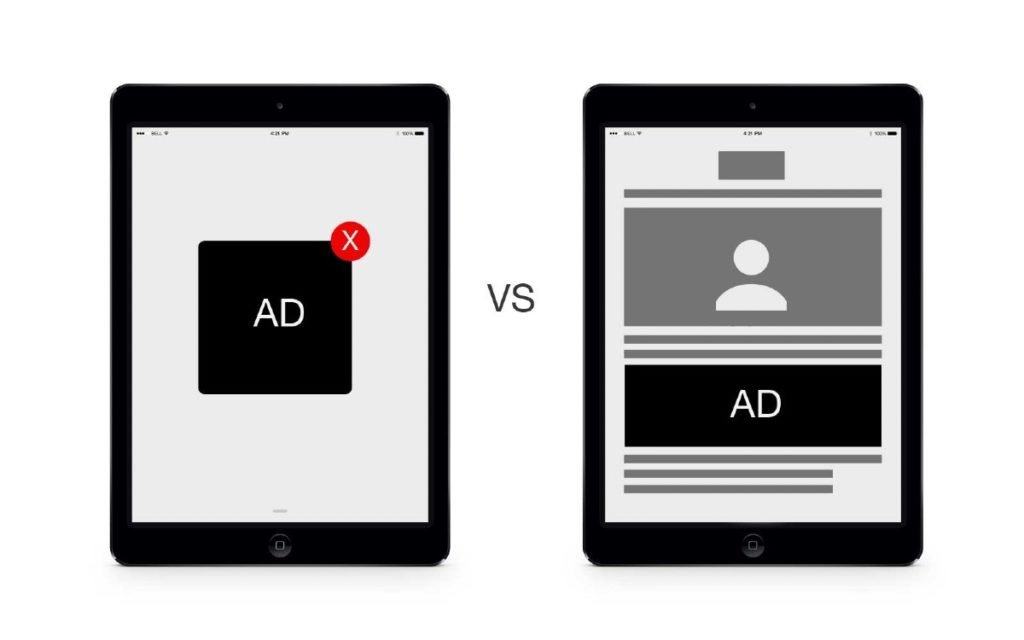
Native advertising, a strategic marketing approach, utilizes sponsored content to engage potential consumers in a more subtle and effective manner. These ads are seamlessly integrated into the user experience, blending harmoniously with the website or platform where they are showcased. This form of advertising has witnessed a surge in popularity due to its ability to connect with users in an authentic way, surpassing the impact of traditional advertising methods. Experience the native advertising services offered by Mgid.

Native advertising offers many advantages for marketers looking to promote their products or services. One of the main benefits of native advertising is that it allows businesses to connect with their target audience in a more natural and organic way than traditional forms of advertising. Unlike banner ads, which are typically viewed as intrusive and disruptive, native ads are designed to blend into the content they are featured in, providing an engaging experience for users.

Native ads can also be used to reach highly targeted audiences, allowing marketers to tailor their campaigns for maximum impact. By segmenting potential customers according to their interests, businesses can create custom content that will resonate with specific groups of people. This can help brands better engage with their target market and drive conversions.

In addition to being more effective than traditional advertising methods, native ads are also more cost-effective. By targeting specific audiences, businesses can maximize their ad spend and ensure that they are reaching the right people.

Native advertising is an effective marketing strategy for businesses of all sizes. Whether you’re a small business or a large corporation, native ads can help you reach your target audience in an innovative and engaging way. With the help of Mgid’s native advertising services, you can easily create and launch campaigns that will get the attention of potential customers.

How much does native advertising cost in 2023?

For businesses looking to utilize native advertising in 2023, it is important to consider the potential returns of their investment. Native ads can offer a number of benefits, including increased brand awareness, higher engagement rates, and better ROI than other forms of traditional advertising. Additionally, native ads can be tailored to specific target audiences and used to drive conversions. More about the cost of native advertising

When creating a native ad campaign for 2023, businesses should be sure to create content that is engaging and relevant to their target audience. Additionally, businesses should optimize their campaigns for mobile devices in order to maximize reach and engagement. With the right strategy, native advertising can be an effective way for businesses to reach their customers and increase brand awareness in 2023.

Unveiling the Pros and Cons of Native Advertising for Business

In recent years, native advertising has gained significant popularity as a marketing strategy, offering a more subtle and effective approach to reaching potential consumers. However, it is important to consider both the advantages and disadvantages of utilizing native ads for business purposes.

One of the primary benefits of native advertising is its ability to be customized to the target audience and seamlessly integrated into the user experience. Unlike other forms of advertising, native ads feel natural and blend harmoniously with the content, thereby enhancing brand awareness and enabling businesses to reach a wider customer base in a cost-effective manner. Moreover, the non-intrusive nature of native ads makes them more appealing to users.

Nonetheless, there are also drawbacks associated with native advertising. If the ads fail to resonate with the target audience or lack relevance, their effectiveness in boosting brand awareness and driving sales may be compromised. Transparency is another critical factor to consider, as it is essential to ensure that users are aware that the content is sponsored.

In conclusion, native advertising can be a potent tool for businesses to connect with customers and enhance brand visibility, provided it is used effectively. However, it is crucial to recognize that there are both pros and cons associated with utilizing native ads for business purposes. By carefully considering these factors, businesses can make informed decisions and leverage the full potential of native advertising.