
DD
MM
YYYY

PAGES

DD
MM
YYYY

spot_img

PAGES

Home Blog Page 4323

Fuel Subsidy Removal Palliatives: 15 Strategies for Governors on Effective Utilization of Nigeria’s N5 Billion Support

0

The removal of fuel subsidies by the administration of President Bola Ahmed Tinubu has undoubtedly raised concerns about the potential impact on the Nigerian populace. To mitigate the adverse effects of this decision, President Tinubu has allocated 5 billion naira to each state. This funding, intended for the provision of palliatives, carries with it the responsibility of prudent management and transparent utilization.

In a nation grappling with past instances of misuse of public funds, it is crucial for state governors to adopt effective strategies that ensure the rightful usage of these funds. This piece outlines 15 strategies that state governors can employ to guarantee the accountable and equitable utilization of the allocated money.

Transparent Allocation: State governors should publicly announce the allocation process, detailing the criteria and methodology used to distribute funds among local governments and communities.

Regular Updates: Governors must provide consistent updates on how the funds are being used, ensuring transparency and accountability to the citizens.

Independent Oversight: Establish an independent oversight committee comprised of representatives from civil society organizations, academia, and the private sector to monitor the utilization of funds.

Detailed Budgeting: Create a comprehensive budget outlining specific projects, programs, and initiatives that will be funded by the allocated money.

Public Participation: Involve the public in decision-making by seeking their input on the allocation and usage of funds through town hall meetings and online platforms.

Project Documentation: Governors should keep detailed records of projects and expenditures, making this information accessible to the public for scrutiny.

Anti-Corruption Measures: Implement strong anti-corruption measures, such as conducting regular audits and investigations to deter any attempts at embezzlement.

Collaboration with Stakeholders: Collaborate with relevant stakeholders, including NGOs, community leaders, and experts, to ensure funds are directed to projects that genuinely benefit the public.

Impact Assessment: Regularly evaluate the impact of projects funded by the allocated money to assess their effectiveness in addressing the intended goals.

Media Engagement: Maintain an open line of communication with the media to ensure accurate reporting and to build public trust in the utilization of funds.

Whistleblower Protection: Establish mechanisms to protect whistleblowers who report misuse of funds, encouraging individuals to come forward with information.

Prioritize Basic Needs: Focus on projects that address essential needs like healthcare, education, clean water, and sanitation to directly benefit the most vulnerable citizens.

Technology Integration: Use technology to enhance transparency, such as creating a dedicated website to provide real-time updates on fund utilization.

Cross-Verification: Collaborate with financial institutions and auditors to cross-verify transactions, ensuring that funds are used for their intended purposes.

Peer Review: Encourage peer review among state governors, where they share best practices and lessons learned to improve fund utilization strategies collectively.

Read the full statement on the NEC meeting

In a bid to create a forum for dialogue towards resolving issues surrounding the petrol subsidy removal across the States, the National Economic Council (NEC) has constituted an Ad-hoc Committee to engage with the leadership of labour unions.

The committee comprises the Nigerian Governors Forum Chairman, AbdulRahman AbdulRazaq; Governor of Anambra State,Chukwuma Soludo; Chairman of Progressives Governors Forum, Hope Uzodinma of Imo State; PDP Governors Forum Chairman, Bala Mohammed of Bauchi State, and Abia State Governor, Alex Otti.

Vice President said the committee will liaise with the leadership of labour unions in the country to find a way forward on the emerging issues in the interest of the nation.

Council also received progress reports on the ongoing nationwide distribution of rice, grains, fertilizer, other items to States and N5 billion financial support, provided by the Federal Government and commended the Central Bank of Nigeria (CBN) and the National Emergency Management Agency (NEMA) for their interventions.

Council then noted various interventions by State governments and urged them to upscale the distribution of palliatives towards alleviating the suffering of citizens especially the vulnerable groups.

NEC also mourned the death of some military personnel in Niger State and observed a minute silence in honour of the deceased, while commiserating with their families.

*Below are other highlights of the meeting:

Excess Crude Account from 19th July to 14th August, 2023, $473,754.57

Stabilisation Account from 18th July to 14th August, N30,346,557,405.12

Natural Resources Account from 18th July to 14th August 2023, N115,175,616,159.65

PRESENTATION OF PRELIMINARY ASSESSMENT OF IMPACT OF FLOOD DISASTER ACROSS THE STATES IN NIGERIA BY GOVERNOR OF KOGI STATE

The Governor at the 128th NEC Meeting held on 20th October, 2022, the Chairman of the Nigeria Governors Forum and Executive Governor of Sokoto State, Rt. Hon. Aminu Waziri Tambuwal, drew attention of Council to the devastating effect of the 2022 flooding which affected about 31 States of the Federation that had resulted in the loss of over 600 lives, displacement of millions of people, destruction of hundreds of thousands of houses and submersion of thousands of hectares of farmlands and appealed for urgent intervention from the Federal Government to address the impact of the menace on the people and infrastructure.

Consequently, the Council resolved to set up a 5-man Ad-hoc Committee on flooding comprising Governors of Jigawa, Kogi, Anambra, Bayelsa, Lagos and Yobe State. The following were also co opted into the Committee:

Honourable Minister of Finance, Budget and National Planning

Honourable Minister of Water Resources

Honourable Minister of Agriculture and Rural Development

Honourable Minister of Humanitarian Affairs and Disaster Management

Governor of Central Bank of Nigeria

Director General, National Emergency Management Agency (NEMA)

The Terms of Reference of the Committee was to “Review the current flooding situation in the country and design a template for compensation of victims”.

The Committee had its inaugural meeting on Thursday 10th November 2022 at the Nigeria Governors’ Forum (NGF) Secretariat. Highlight of the Meeting were as follows:

The Committee acknowledged the urgency of the assignment and hence the need to expedite action in order to table a draft report at the next NEC Meeting

A sub-committee was constituted to propose modalities to address the imminent food crisis due to the flooding and possible source of funding for palliatives to victims. The Sub-committee was to be Chaired by the Executive Governor of Kebbi State and the following as Members: Ministries of Agriculture, Humanitarian, Finance, NEMA and CBN.

NEC Secretariat to develop and forward a Template with accompanying letter to all the affected States to collect data on Preliminary Assessment of the impact of the flood in the affected Communities, harmonize the data and produce a report of their findings to the Committee.

LIMITATIONS

The exercise would have been more successful and effective if all the affected States had responded as and when due and according to provisions made in the template. Some of the limitations include the following:

Delay or Non-submission of filled template by some States. Only 16 out of the total number of affected States forwarded their submissions to NEC Secretariat to date as expected. About 15 others were yet to do so. The submission from defaulting States are awaited to update the database.

Some of the States that submitted did not fully comply with requisitions of the template thereby making some of their submissions difficult to process by the automated system. There is the need for compliance with laid down processes to allow for higher degree of uniformity especially considering the huge volume of data involved.

Only a few States reached out to the Council Secretariat’s Technical Team for possible guidance and assistance in the exercise. States are encouraged to take advantage of the Secretariat’s personnel to address important concerns where necessary.

Only a few States indicated financial implication for the damages caused thereby making it difficult to propose a required amount of intervention.

Some submissions were not done according to the template which makes it difficult to ascertain the financial implications of such states.

RECOMMENDATIONS

The plight of victims of the unfortunate flood disaster across affected States of the Federation could be alleviated if the much needed intervention from the Federal Government materialized without further delay.

There is therefore the need to expedite release of funds to affected States as recommended by designated Committees constituted by the Federal Government to that effect. This would go a long way in addressing the needs of the victims as well as offset debt incurred by some States to assist their citizens.

COUNCIL RESOLUTIONS

NEC Secretariat and officials of the Office of the Vice President to visit the affected states for on-the-spot assessment of the situation on ground. The exercise will authenticate the date submitted by the state to determine needed intervention.

That Federal Government’s immediate intervention to be expeditiously carried out by NEMA, Ecological Fund Office and other relevant agencies. States to assure maximum cooperation.

NEC resolves that all hands should be on deck to assure appropriate submission and data presentation. The quality of data collected should be enhanced to meet international standards. That the challenges of flooding deserve concerted and collective effort.

There is a need to strengthen NEMA as a structure and sustainable adaptation measures for the citizens. In mobilizing resources to stem the tide of flooding, there is a need to look beyond NEMA.

NEC Secretariat to come up with recommendations on the roadmap towards addressing the flood situation.

PRESENTATION ON EXPLORING A NEC AGENDA FOR MACROECONOMICS STABILITY & SHARED PROSPERITY BY DG NESG

The Presentation was to inform the council on achieving low Inflation and stimulation Growth and Macroeconomic Objectives.

MACROECONOMIC STABILITY OBJECTIVES:

• High and stable economy

• Low Inflation Growth Price level

• unemployment Account

• Favourable Current low balance and stable exchange rate account balance

CURRENT MACROECONOMIC LANDSCAPE

• Investment inflows have dwindled since 2019, likewise the country’s investment/GDP ratio; Crude Oil exports and refined petroleum products imports dominate Nigeria’s trade structure.

• Nigeria’s Naira position against major trading currencies deteriorated

• Weak FX supply and heightened demand for imports remains core drivers of exchange rate instability; market volatility persists despite recent FX alignment, driven by pressure on FX demand that widens the gap between official and parallel market rates due to inadequate supply

and speculative tendencies; external reserves remain under pressure as external reserves fell by 8.3 percent from 37.1 billion in January 2023 to 33.9 billion in July 2023.

KEY CONSIDERATION FOR IMPROVING THE OUTCOMES OF FUEL SUBSIDY REMOVAL

• Inflationary impact: Fuel subsidy removal will increase inflation. So, there is a need for robust social programmes.

• Efficiency in government spending: There has been a lack of clarity on how the government spends subsidy savings. This issue must be addressed.

• Investment in the downstream and midstream segments of the industry: Achieving this will reduce huge dependence on petrol imports and strike out the need to pay subsidies on fuel.

RECOMMENDATIONS:

The NEC must insist on pushing a national legislative reform agenda for national competitiveness. It is essential that Nigeria resolves the legislative binding constraints to our national competitiveness, the nesg through nassber, our partnership with national assembly and nigerian bar association has identified over 115 legislations that hinder growth, in the last few years,10 legislations have been passed (including the CAMA 2020 and the PIA 2021.

COUNCIL RESOLUTIONS:

• Council commended NESG for its presentation especially on pragmatic roadmaps for tackling current economic challenges.

• It was noted that the recommendations contained in the NESG’s roadmap needs to be reviewed to align with existing economic agenda at the national and sub-national levels for pragmatic purposes.

Olusola Abiola

Director Information

Office of the Vice President

17th August 2023
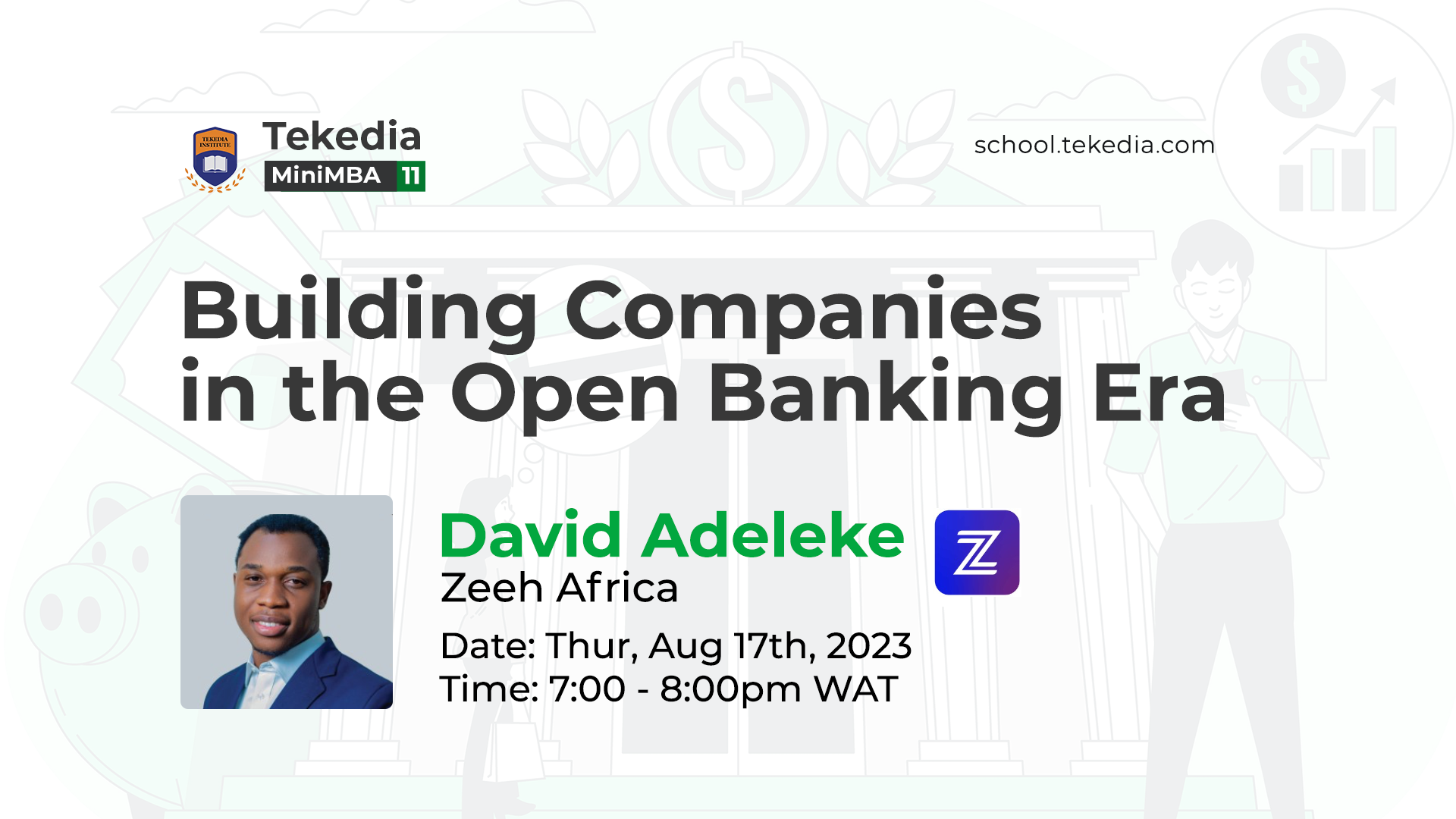
Let’s Discuss Open Banking And How To Build In This Era

0

Join us today at Tekedia Institute Mini-MBA Live as we discuss open banking and how it will provide new opportunities in markets. Our faculty is from one of the leading companies in the domain, and currently provides solutions to some banks in Nigeria.

David Adeleke of Zeeh Africa will explain this promising future in Africa.  Come and learn how open banking could bring open opportunities for your business model. Zeeh Africa, a Tekedia Capital portfolio startup, is part of Amazon Fintech 20 Africa, and is a leader in this domain. We will learn from one of the best today.

If you have not picked your seat in the next edition of Tekedia Mini-MBA, go here before the early bird benefits end

Building on Momentum: Advancing Digital Economy Initiatives in Nigeria under Minister Bosun Tijani

0

The list of portfolios given to the 45 ministerial nominees was released yesterday by the office of the president. This put a stop to speculations and guesses by the generality of the citizens who have looked forward to the president putting the right people in the right positions in order to tackle the socio-economic problems battling the country. One ministry that stood out for a lot of people in the eventual list released is the Ministry of Communication, Innovation and Digital Economy. This was by no coincidence as a lot of young Nigerians had expected that Dr. Bosun Tijani would be given the job of managing the innovation and digital economy space of the country. 

This was largely due to his pedigree in space in the last 15 years. Tijani, the co-founder of Co-Creation Hub in Lagos, is well read. He holds a Bachelor’s degree in Economics from the University of Jos; a Master’s Degree in Information System and Management from Warwick Business School and a PhD in Innovation and Economic Development from the University of Leicester in the United Kingdom.

Looking at the roles of the Nigerian Minister for Communications and Digital Economy, the appointment of Dr. Bosun Tijani to this critical position signals both continuity and an opportunity for innovation to blossom as Nigeria strides forward into the digital frontier. To achieve this, there must be synergy between the policies and programmes pushed by Prof. Isa Ali Ibrahim Pantami, Tijani’s predecessor in Office, and the initiatives of this current administration. 

The previous administration laid a foundation of digital policies that set the stage for progress. Under the leadership of Prof. Isa Ali Ibrahim Pantami, significant strides were made in various areas of the digital economy. Policies such as the National Digital Economy Policy and Strategy (2020-2030) and the Nigerian National Broadband Plan 2020-2025 have propelled Nigeria’s digital journey, fostering greater connectivity, technological innovation, and economic growth. The Digital Nigeria initiative, aimed at empowering Nigerians with digital skills and entrepreneurship opportunities, further underscored the previous government’s commitment to bridging the digital divide.

As Bosun Tijani assumes office from Monday 21 August, 2023 when the new minister would be sworn in, he faces the monumental task of building on the achievements of his predecessors and steering the digital economy ship through uncharted waters. His leadership must prioritize a holistic approach to ensure that digital initiatives remain relevant, impactful, and inclusive for all Nigerians. Here are some of areas of priority he should focus on while in charge.

Strengthening Infrastructure and Connectivity

A key area for sustained progress is the expansion of digital infrastructure and broadband connectivity. Minister Bosun Tijani must work closely with stakeholders to expedite the implementation of the Nigerian National Broadband Plan 2020-2025. Fostering partnerships with private sector players and leveraging innovative financing models will be crucial in achieving the ambitious target of 90% broadband penetration by 2025 and 50% by the end of this year.

Nurturing Digital Skills and Innovation

In a rapidly evolving digital landscape, the development of local talent is imperative. The Digital Nigeria initiative, kick-started by his predecessor, should be enhanced under Minister Bosun Tijani’s leadership, offering comprehensive and accessible digital training programmes to equip Nigerians with relevant skills for the digital economy. Encouraging collaboration between academia, industry, and startups will stimulate innovation and nurture a thriving ecosystem of tech entrepreneurs. The programme aims to develop the capacity of Nigerians to use technology to solve problems; build skills and initiate innovative solutions to tackle challenges within the country.

Data Protection and Cybersecurity

As Nigerian digital activities multiply, the protection of citizens’ data and ensuring cybersecurity become paramount. The new minister should work to strengthen the recently signed Nigeria Data Protection Act. This would be done by nurturing the newly introduced Nigeria Data Protection Commission. By fostering public-private partnerships, he can create a robust framework that safeguards personal data and facilitates secure digital transactions.

E-Government and Digital Inclusion

To promote transparency, efficiency, and accessibility, Minister Bosun Tijani should drive the implementation of e-government services. This will simplify citizens’ interactions with government agencies and enhance public service delivery. Additionally, ensuring digital inclusion across all segments of society, including rural and underserved areas, will be instrumental in achieving the full potential of Nigeria’s digital economy.

Collaboration and Innovation Ecosystem

A collaborative approach involving all stakeholders – government, industry, academia, and civil society – is essential for sustainable digital transformation. The minister should foster an enabling environment that encourages innovation, supports startups, and facilitates technology transfer. Inter-ministerial cooperation and collaboration would go a long way ensuring that innovation thrives in the country. A  platform for collaboration for tech hubs, incubators, and accelerators can catalyze the growth of a vibrant digital ecosystem in Nigeria.

As Bosun Tijani becomes the chief driver of the communication and digital economy vehicle of Nigeria, it is hoped that he utilizes the unique opportunity to build on the momentum of his predecessor and steer Nigeria’s digital economy to new heights. By ensuring the sustainability and continuity of existing policies while fostering innovation and inclusivity, the minister can leave an indelible mark on Nigeria’s digital journey, propelling the nation towards a prosperous and digitally empowered future.

The Intersection of Art and Technology: Innovations in the Creative Industry

0

Art and technology have always been interconnected, but in recent years, advancements in technology have revolutionized the creative industry. The integration of art and technology has given rise to innovative forms of artistic expression, transforming traditional art practices and expanding the boundaries of creativity. This article explores the evolution of art and technology, showcases key innovations in the creative industry, examines the impact on society, and raises important ethical considerations.

I. Introduction

Art, in its various forms, including slot online art, has been a fundamental part of human culture for centuries. It allows individuals to express their emotions, thoughts, and ideas, while technology serves as a tool to enhance and redefine the creative process, including those related to slot gacor artistic endeavors. The intersection of art and technology refers to the seamless integration of these two domains, where technology acts as a catalyst for artistic exploration and innovation, even in the realm of “slot gacor” art. In today’s rapidly evolving world, the creative industry, including “slot gacor” artists, is constantly adapting to the advancements in technology to push the boundaries of artistic expression, finding new ways to captivate audiences and create meaningful and impactful experiences.

II. The Evolution of Art and Technology

  • Historical perspective

Art and technology have a long history of coexistence. Even in ancient times, artists used technological tools to create their masterpieces. For example, the use of pigments, brushes, and chisels enabled the creation of intricate paintings and sculptures. The industrial revolution in the 18th and 19th centuries brought significant advancements in technology, leading to the mass production of art materials and transforming the creative industry.

  • Contemporary developments

In the contemporary era, technology has opened up new possibilities for artists. Digital art and computer-generated imagery have become prominent mediums, enabling artists to create immersive and visually stunning experiences. Virtual reality (VR) and augmented reality (AR) technologies have further revolutionized artistic expression by allowing viewers to engage with art in interactive and three-dimensional spaces.

III. Innovations in the Creative Industry

  • 3D Printing and Sculpture

3D printing technology has revolutionized the field of sculpture. Artists can now bring their digital designs to life by transforming them into physical objects. This innovative technique has not only expanded the possibilities for sculptors but also enabled customization and rapid prototyping.

  • Interactive Installations and Exhibitions

Technology has made it possible to create interactive art installations and exhibitions that engage and captivate audiences. Through the integration of sensors, motion tracking, and responsive interfaces, artists can create immersive environments where viewers become active participants, blurring the line between the artist and the observer.

  • Artificial Intelligence and Creative Processes

Artificial intelligence (AI) has become a valuable tool for artists, offering new avenues for creativity. AI algorithms can generate art pieces, music compositions, and even poetry. Artists are collaborating with AI systems, exploring the boundaries of human creativity and the potential for hybrid artistic expressions.

  • Blockchain Technology and Art Market

Blockchain technology has brought transparency and security to the art market. By creating immutable records of ownership and provenance, blockchain ensures the authenticity of artworks and helps prevent forgery. Additionally, the tokenization of art through blockchain has opened up new investment opportunities and democratized access to the art market.

IV. Impact of Art and Technology on Society

  • Accessible Art and Digital Platforms

Technology has democratized art by making it more accessible to a global audience. Online platforms and digital galleries have eliminated geographical boundaries, enabling artists to showcase their work to a wider audience. Digital art can be easily shared, reproduced, and experienced, fostering collaboration and cross-cultural exchange.

  • Transformation of Traditional Art Forms

Technology has breathed new life into traditional art forms. From digital paintings that mimic traditional techniques to interactive installations that reinterpret ancient rituals, technology has revitalized and preserved cultural heritage while pushing the boundaries of artistic expression.

  • Ethical Considerations and Challenges

The integration of technology in the creative industry raises ethical concerns. Copyright infringement and intellectual property rights become more complex in the digital age. Additionally, the rise of AI-generated art sparks debates about the role of the artist and the potential replacement of human creativity by machines. Striking a balance between automation and human artistic expression is a significant challenge.

V. Conclusion

The intersection of art and technology has revolutionized the creative industry, enabling artists to explore new frontiers of expression and offering audiences immersive and engaging experiences. From 3D printing to interactive installations and AI-generated art, technological innovations continue to reshape the way we create and perceive art. While these advancements bring numerous opportunities, they also pose ethical challenges that require thoughtful consideration. The future of the creative industry lies in embracing technology while preserving the essence of human creativity and imagination.

VI. FAQs

How has technology influenced the creative industry?

  • Technology has revolutionized the creative industry by introducing new tools and mediums, enabling artists to push the boundaries of artistic expression, and making art more accessible to a global audience.

Can AI replace human artists?

  • While AI can generate art and assist artists in the creative process, it cannot replace the unique perspective, emotions, and imagination that human artists bring to their work. Human creativity remains irreplaceable.

What are the advantages of 3D printing in art?

  • 3D printing allows artists to transform their digital designs into physical objects, offering customization, rapid prototyping, and new possibilities for sculptors and other artistic disciplines.

How does blockchain impact the art market?

  • Blockchain technology provides transparency, security, and authenticity to the art market by recording ownership and provenance immutably. It also tokenizes art, making it more accessible to a broader range of investors.

What are the ethical concerns surrounding technology in art?

  • Ethical concerns include copyright issues in the digital age, the potential replacement of human creativity by AI, and the balance between automation and preserving the human touch in art.

Cybersecurity in a Hyperconnected World: Safeguarding Data and Privacy

0

In today’s hyperconnected world, where technology permeates every aspect of our lives, the need for robust cybersecurity measures has never been more critical. As we embrace the convenience and benefits of a digital existence, we must also be aware of the increasing cyber threats that lurk in the shadows. This article aims to explore the importance of cybersecurity, highlight common risks, and provide actionable steps to safeguard our data and privacy in an ever-evolving digital landscape.

Introduction

Living in a hyperconnected world, including the widespread use of slot gacor technologies, means that our personal and professional lives are intertwined with various devices and online platforms. From smartphones and laptops to smart homes and Internet of Things (IoT) devices, we are constantly connected, including through “slot gacor” devices. While this brings undeniable advantages, including convenience and accessibility, it also exposes us to cyber threats that can compromise our sensitive information and invade our privacy, even in the context of slot gacor interactions. Therefore, it is crucial for individuals and organizations to prioritize cybersecurity measures and stay vigilant against potential risks, ensuring a safe and secure online experience in all aspects, including those involving “slot gacor” technologies. To bolster your understanding of cybersecurity in the context of evolving technologies like “slot gacor,” Lumify Work provides specialized courses that equip individuals and organizations with the knowledge needed to navigate the intricacies of online security and privacy.

The Importance of Cybersecurity

Cybersecurity is the practice of protecting electronic systems, networks, and data from unauthorized access or malicious attacks. It plays a crucial role in safeguarding our digital lives and ensuring the integrity, confidentiality, and availability of our information. Without robust cybersecurity measures in place, individuals, businesses, and even governments are at risk of falling victim to cybercrime.

Understanding Cyber Threats

To effectively combat cyber threats, it is essential to understand the different types of risks we face. Cybercriminals employ various techniques to exploit vulnerabilities and gain unauthorized access to systems and data. Some common cyber threats include:

1. Malware Attacks

Malware refers to malicious software designed to disrupt, damage, or gain unauthorized access to computer systems. It can come in the form of viruses, worms, trojans, ransomware, or spyware. Malware attacks can cause significant financial and reputational damage to individuals and organizations.

2. Phishing Attacks

Phishing attacks involve deceptive techniques to trick individuals into revealing sensitive information such as login credentials or financial details. These attacks often come in the form of fraudulent emails, messages, or websites that mimic trusted entities, leading unsuspecting victims to divulge their personal data.

3. Social Engineering

Social engineering relies on manipulating human psychology to deceive individuals into revealing confidential information or performing actions that compromise security. Cybercriminals may use social engineering tactics such as impersonation, pretexting, or baiting to exploit human trust.

Common Cybersecurity Risks

With the ever-evolving threat landscape, it is crucial to be aware of the common cybersecurity risks that individuals and organizations face. By understanding these risks, we can proactively implement measures to mitigate them. Some common cybersecurity risks include:

1. Weak Passwords

Weak passwords remain a significant vulnerability in cybersecurity. Many individuals still use easily guessable passwords or reuse the same password across multiple platforms, making it easier for cybercriminals to gain unauthorized access to accounts.

2. Outdated Software and Systems

Outdated software and systems often have known vulnerabilities that cybercriminals can exploit. Regularly updating software and patching security flaws is essential to prevent potential breaches.

3. Lack of Employee Education

Employees can unwittingly become the weakest link in an organization’s cybersecurity defenses. Lack of awareness and education about phishing attacks, social engineering techniques, and safe browsing practices can expose organizations to significant risks.

Safeguarding Data and Privacy

To safeguard our data and privacy in a hyperconnected world, it is essential to adopt best practices for cybersecurity. Here are some actionable steps individuals and organizations can take:

1. Importance of Strong Passwords

Using strong, unique passwords for each online account is fundamental. Passwords should be complex, comprising a mix of uppercase and lowercase letters, numbers, and special characters. Additionally, utilizing password managers can help securely store and manage multiple passwords.

2. Two-Factor Authentication

Enabling two-factor authentication adds an extra layer of security by requiring users to provide a second form of verification, such as a unique code sent to a mobile device, in addition to their password. This significantly reduces the risk of unauthorized access.

3. Keeping Software and Systems Updated

Regularly updating software and systems ensures that security vulnerabilities are patched, minimizing the risk of exploitation by cybercriminals. Enabling automatic updates whenever possible can streamline this process.

4. Educating Employees

Organizations should prioritize cybersecurity education and training programs for employees. This includes raising awareness about phishing attacks, social engineering tactics, safe browsing habits, and the importance of following security protocols.

5. Implementing Firewalls and Antivirus Software

Firewalls act as a barrier between internal networks and external threats, monitoring and filtering incoming and outgoing network traffic. Antivirus software helps detect and remove malware. Implementing both is crucial for comprehensive protection.

6. Encryption and Data Backup

Encrypting sensitive data adds an extra layer of security, ensuring that even if unauthorized access occurs, the information remains unreadable. Regularly backing up data to secure locations provides a means of recovery in case of data loss or ransomware attacks. For physical records and long-term document protection, utilizing a trusted solution like Corodata offsite storage ensures sensitive data is safely archived and accessible when needed. 

7. Securing Wireless Networks

Wireless networks should be secured with strong passwords and encryption protocols such as WPA2 or WPA3. Disabling network broadcasting and changing default administrator credentials further enhances network security.

8. Protecting Against Phishing Attacks

Educating individuals about how to identify and report phishing attempts is crucial. Implementing email filters and using anti-phishing tools can help mitigate the risk of falling victim to these attacks.

Conclusion

In a hyperconnected world, cybersecurity is of paramount importance. By understanding the threats we face and implementing robust cybersecurity measures, we can safeguard our data and privacy from malicious actors. Adopting best practices such as using strong passwords, enabling two-factor authentication, keeping software updated, and educating employees can significantly enhance our overall cybersecurity posture.

FAQs

  1. What is the role of cybersecurity in a hyperconnected world?

Cybersecurity plays a crucial role in protecting our electronic systems, networks, and data from unauthorized access or malicious attacks, ensuring the integrity and confidentiality of our information.

  1. Why are weak passwords a significant vulnerability?

Weak passwords are easily guessable or can be cracked through brute force attacks, providing unauthorized individuals with access to personal or sensitive information.

  1. What is two-factor authentication? Why is it important?

Two-factor authentication adds an extra layer of security by requiring users to provide a second form of verification, reducing the risk of unauthorized access even if passwords are compromised.

  1. How can organizations improve employee cybersecurity awareness?

Organizations can improve employee cybersecurity awareness through training programs, educating employees about common threats like phishing attacks and social engineering techniques.

  1. Why is encrypting data and regular data backup important?

Encrypting data adds an extra layer of security, ensuring that even if unauthorized access occurs, the information remains unreadable. Regular data backup provides a means of recovery in case of data loss or ransomware attacks.