DD
MM
YYYY

PAGES

DD
MM
YYYY

spot_img

PAGES

Home Blog Page 4323

The Potemkin village of Abakaliki

0

In 1787, Empress Catherine II visited a Russian city governed by Grigory Potemkin. Governor Grigory Potemkin in order to impress the empress constructed fake villages along the Dnieper River which is the route of the Monarch and beautified them so as to impress the monarch and for the monarch to have the impression that the city is blossoming without knowing that the city is in dire hardship. The fake villages created were called Potemkin villages hence where the name Potemkin Village originated from.

                       ***********

Fast forward to the 21st century, Governor Dave Umahi of Ebonyi state who we all can see is an ardent follower of Grigory Potemkin have copied serially from the old Russian governor by painting the city walls and building flyover and adding colorful street lights so as to have a place to show and impress visitors who may go and think that Ebonyi state is blossoming without knowing that the state with its residents are really suffering and still topping the rank as the state with the highest rate of poverty in southern Nigeria, still topping the rank as one of the states with highest rate of unemployment in Nigeria, still tops the rank as the number one educationally less developed state in south eastern Nigeria; but as a visitor who may have only visited Abakaliki at night and behold the colorful lights and multi color paints on the city walls or might have seen what the government media shows on social media you may get carried away and think otherwise that Ebonyi state is blossoming; lo and behold, what is created right there in Abakaliki is a Potemkin village. 

Behind those colorfully painted city walls and fancy street lights are dilapidated government-owned schools; there are primary schools around the Abakaliki town that I personally know of where the school kids receive lectures and write their exams sitting on the bare floor inside a dilapidated building that can collapse any moment and kill them all.  If you walk inside the streets behind those beautifully painted city walls there are untarred roads, uncleared and smelling gutters, unstable electricity, insecurity, high rate of poverty, lack of jobs, and the list goes on. 

The governor only masterfully created a Potemkin village in Abakaliki, Ebonyi state and people who should be holding him accountable to account for those resources squandered in all these white elephant projects and frivolous activities are applauding him as being the most hardworking governor amongst his peers. 

It is a shame!!!

It is only because we celebrate mediocrity and the barest minimum in this part of the world that is why Governor Dave Umahi is regarded as one of the most working governors just because he engaged in wasteful and unnecessary ventures instead of prioritizing more important things. 

The two major things that attract investors and industries to a state are steady and low-cost electricity and security. Any government that invests in electricity and security will attract industries that will create jobs. This is what Ebonyi state needs at the moment; jobs and education. This is what will build human capacity and drastically reduce the alarming rate of poverty in the state. 

Paints and traffic lights will not attract investors or create jobs in Ebonyi state. The governor engaged in all these ventures for about eight years now and no industry is yet to come knocking; this is to show that the strategy is not working and I know it as I know my name that no serious investor or industry will ever relocate to a state and build an industry simply because of flyovers and city wall paints or traffic lights; those are frivolities. 

Ebonyi state today being the poorest state in southern Nigeria with the highest rate of poverty and the state is top of the rank in educationally less developed states in Nigeria should warrant any serious government should prioritize things that will create long-term and sustainable formal jobs; prioritize on things that will boost economic and commercial activities in the state; prioritize on education. This is how you invest in the future of the state.


**********
This sequel to my last article “Street lights and paints will not attract investors or create jobs in Ebonyi state” only came as a response to the reactions I have been getting over the previous post.
As Tesla Expands Operations in China, in this Age of Sanctions, the Power of Markets Wins

0

The economic battle between China and the United States will define this century. The United States has unleashed torrents of technology sanctions on China and its companies (like Huawei) while China continues to ban and restrict certain US companies like Facebook, Instagram and Twitter. Yet, if you look deeper, you will get one conclusion: these two nations are entwined because across the oceans, their companies want to do business.

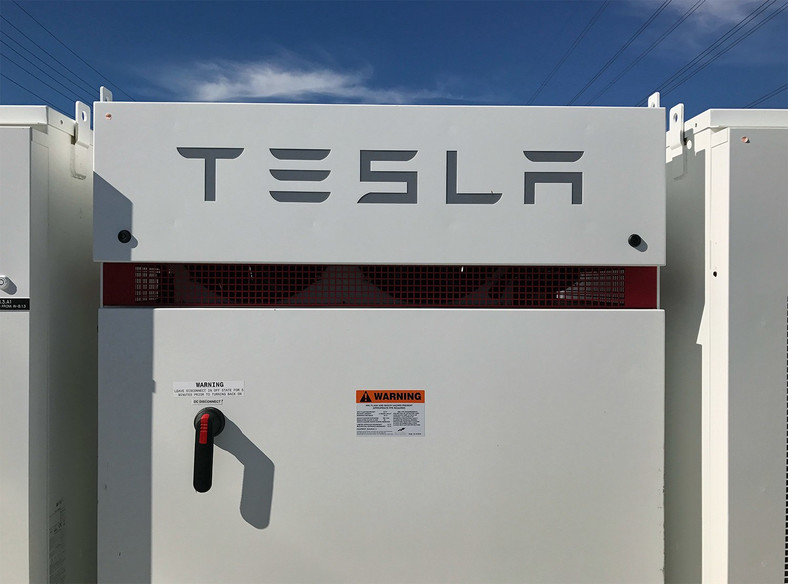
Tesla dropped a new validation: “Tesla is opening a mega energy factory in Shanghai, China, which will boost energy for EVs in the world’s largest auto market. The company said in a tweet on Sunday that the factory is capable of producing ten thousand Megapack energy products per year, supplementing output from the Megapack factory in California.”

In the last 10 centuries, China has ruled the world economically in at least 6 of those centuries. But in those 6 centuries, nothing could be compared to the one the US led in the 20th century. So, there is a new match and a new date is fixed. But we hope this competition is done with civility, respect and win-win because the spectators (Europe, Africa, LatA, etc) need to “survive” the battle royale.

Victory has relations, vanquish is an orphan, an African proverb says. China is rising and Tesla sees a part of its future there, and is going for it because “uwa bu ahia” (the world is a market), the Igbo Nation says.

Tesla Announces Plan to Build Megapack Energy Factory in Shanghai China

How African Farmers Can Leverage the Continuing Digital Revolution to Improve Africa’s Food System

0

The continuous digital revolution has significantly induced innovation in many sectors of the global economy. In the agricultural ecosystem, the narrative has changed and is still changing. Agricultural production has transitioned and is still transitioning from the primitive stage of relying on nature and crude implements to modern data-driven technologies and methodologies. According to experts, the next phase of agricultural practices will be largely driven by data of all kinds.

Unfortunately, in Africa digital agriculture has been growing rather unsteadily compared to other regions of the world, especially the global north. This has continued to impact how people within the region grow and source for their foods.

Africa’s food system has been disproportionately pressured by its increasing population, resulting in high incidence of hunger, malnutrition and criminality of the region. Therefore, it has been suggested that to meet the required food production for Africa’s projected population of 4.5 billion by 2050, stakeholders within the Africa’s agricultural workspace must begin to look in the direction of big data and digital technologies to optimize the food system.

It is believed that the future of Africa rests on the ability to resourcefully harness the vast potentials of the region’s agricultural ecosystem. One key thing that has been emphasized by experts in this regard is a deliberate, concerted effort to bridge the gap of knowledge in the Industry through increased investment in research and development as well as advocacy and training for data usage by farmers and other stakeholders.

High level of illiteracy among Africa’s smallholder farmers remains a big challenge. This problem often results in lack of capacity for system and collaborative thinking among farmers which is much needed for value creation and delivery across the agricultural value chains. Consequently, many local farmers tend to focus mainly on the production value chain.

However, when Agriculture is limited to just planting and harvesting, the food security that we all talk about may not be realized. Hence, farmers need to understand the entire business of Agriculture and how to link one part of the value chain to the other.

Data is a major element to achieving food security and large-scale production under controlled condition with minimal risks. However, beyond farming on a large scale, it is important to institutionalize data system for Agriculture so that people can become conscious of it and then collaborate towards driving innovation in the industry. It is said that in Africa, people will not go hungry due to insufficient farmlands or farmers but due to lack of capacity to leverage data and data analytics for sustainable agricultural practices.

Key Recommendations

  1. Farmers and other key stakeholders in Africa’s agriculture industry need to develop capacity in data analytics. They need to understand what data to collect, how to collect these data and how to build models to analyse and generate insight for sustainable agricultural production.
  2. We need to develop a system to collect data and store them in a location that is easily accessible to all farmers or stakeholders that need them.
  3. A strong sense of collaboration should be encouraged among practitioners in the industry.
  4. Knowledge gap existing in the area of developing indigenously made devices such as sensors and artificial intelligence models should be bridged. Research institute and agriculture-focused institution should look in this direction to ensure that we have affordable digital devices that can enhance farming practices locally.
  5. Government should provide enabling environment that will promote data-driven Agriculture in the continent.

Tesla Announces Plan to Build Megapack Energy Factory in Shanghai China

1

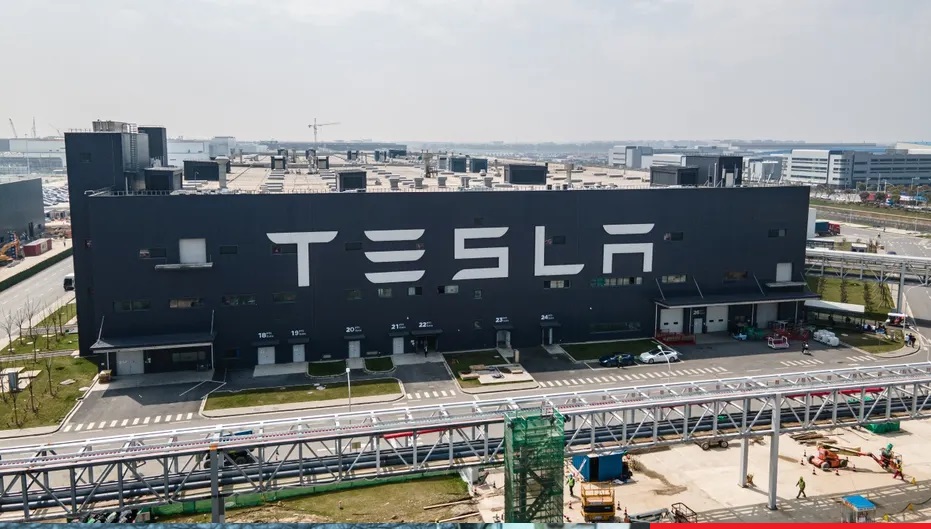
Tesla is opening a mega energy factory in Shanghai, China, which will boost energy for EVs in the world’s largest auto market.

The company said in a tweet on Sunday that the factory is capable of producing ten thousand Megapack energy products per year, supplementing output from the Megapack factory in California.

Xinhua, a Chinese state media outlet, which reported the news first, said the plant will begin production in the second quarter of 2024, after breaking ground on the plant in the third quarter.

Per the report, the new factory will initially produce 10,000 Megapack units a year, equal to around 40 gigawatt hours of energy storage, to be sold globally. This will complement Tesla’s Shanghai electric vehicles manufacturing gigafactory.

Tesla CEO Elon Musk has been ramping up efforts recently to increase the company’s energy output as a way of boosting revenue growth amid declining demand for electric vehicles.

Lowering the cost of energy in line with its recent decision to cut the price of some Tesla models will likely boost sales for the world-leading EV maker.

With the new Shanghai plant, Tesla will take advantage of China’s world leading battery supply chain to ramp up output and lower costs of its Megapack lithium-ion battery units to meet rising demand of energy storage globally as the world shifts to use more renewable energy, per Reuters.

Tesla’s current energy Megafactory in Lathrop, California, has the capacity to produce 10,000 Megapacks per year. The Shanghai factory underscores Musk’s commitment to grow the company’s solar energy and battery business close to its car business – which remains its major source of revenue.

China is Tesla’s largest market but has seen a slowdown of up to 20.8% in the first two months of 2023, a decline from 150% in the same period last year.

The resulting drop in sales, buoyed by rising inventory in Shanghai, has forced Tesla to initiate price cuts in January, especially for its Model Y and Model 3 across its major markets globally, including Japan, South Korea and Australia.

Tesla is building another gigafactory in Berlin-Brandenburg, its first and most advanced manufacturing hub in Europe. The factory, also known as Giga-Berlin, is expected to be completed this year, and will manufacture hundreds of thousands of Model Y vehicles and millions of battery cells.

Tesla has so far produced 4 million vehicles and currently has capacity to manufacture 1.9 million cars per year. Musk’s vision is for Tesla to deliver 20 million cars annually by 2030, broadening the company’s energy needs.

Musk announced plan for sustainable energy early March, estimating a total $10 trillion for its accomplishment. The move to start a Megapack energy factory in Shanghai is thus seen as part of the plan.

Reuters reported that Chinese battery giant CATL has also been deepening its collaborations with clients including Tesla in energy storage battery supplies.

Leadership and Management as Key Drivers of Entrepreneurship and Innovation

0

Leadership and Management are key concepts of entrepreneurship as a field of discipline. Entrepreneurship as a way of life probably started thousands of years ago when human interaction in their environment for economic survival was set on a trajectory of developing complex organisations and the use of sophisticated technology from subsistence farming which depended mainly on the use of simple stone and iron tools.

Before the end of the first industrial revolution, the French had already coined the word, entreprendre, to espouse the influence of human creative energy on economic growth and development. Entreprendre which translates as enterprise or entrepreneurship originally means to undertake or to start something.

The meaning and usage of the word later expanded when Richard Cantillon, an 18th Century French economist, reflected on the integration of economic forces to drive economic growth and development. Cantillon also describes the entrepreneur as someone who uses judgement without being able to foresee which (product) will pay the best price.

Essentially, the entrepreneur could be described as the leader who takes initiative and economic risk in combining and allocating other economic resources towards creating the best products that brings the greatest profit. Explicit in this definition is the capacity for strategic leadership and management especially under uncertain conditions. It is commonly believed that the success of a business depends on the quality of its leadership and management or the strength of the entrepreneur.

Leadership Vs Management

Leadership and management are often loosely used or interchangeably deployed in layman’s perspective. However, several technical analyses of the concepts unveil the relevance of each for attaining entrepreneurial success and economic development.

Leadership is the ability to take initiative and exert motivational influence towards achieving a common goal or a set of objectives. Koontz and O’Donnell defined leadership as the ‘’process of influencing people so that they strive willingly towards the achievement of group goals’’. For C.I Bernard, leadership is the ‘’quality of behaviour of the individuals whereby they guide people or their activities in organized efforts’’.

Management on the other hand is the ability to maximize scarce resources. ‘’Management is the design and implementation of new strategies to help organisations cope with rapid changes and uncertainties in their industry and general environment’’ (Hitt et al 2010).

By pursuing a degree in entrepreneurship, students are equipped with the skills to identify opportunities, develop strategies and effectively manage resources towards achieving business success. For example, a Master of Public Administration (MPA) degree with a concentration in entrepreneurship is designed to provide the necessary leadership and management skills, as well as an understanding of public policy and economic development, for individuals seeking to start their own businesses or work in entrepreneurial ventures. SImilarly, a Masters in Business Administration (MBA) with a focus on entrepreneurship prepares students for successful leadership and management of their own businesses.

Management is a continuous process of setting organisational goals as well as developing actionable plans and effectively allocating resources to execute those plans for the attainment of the organisational goals. In other words, management involves setting objectives, analyzing the competitive environment and the internal organization, evaluating strategies and ensuring that management rolls out the strategies across the organisation.