DD
MM
YYYY

PAGES

DD
MM
YYYY

spot_img

PAGES

Home Blog Page 4323

Avalanche (AVAX) and Aave (AAVE) Seen Struggling to Gain Momentum Whereas TMS Network (TMSN) Continues to Lure in Early Investors

0

Avalanche (AVAX), Aave (AAVE), and TMS Network (TMSN) are three promising blockchain projects in the market today. While all three aim to revolutionize the world of decentralized finance and blockchain technology, TMS Network (TMSN) stands out for its innovative approach to trading and financial education. With a successful presale phase that has attracted early investors, TMS Network has the potential to become a major player in the crypto space. Continue reading to gain further information on these tokens.

A Comprehensive Look at Avalanche (AVAX): Technical Analysis and Key Metrics

Avalanche (AVAX) is a smart contract platform that aims to provide fast, secure, and highly scalable decentralized applications (dApps) and enterprise blockchain solutions. Avalanche (AVAX) uses a consensus protocol, which allows for high throughput and low latency, enabling the platform to process thousands of transactions per second.

Avalanche (AVAX) has a long-term technical analysis score that surpasses 49% of other cryptocurrencies, making it an attractive option for long-term investors using a buy-and-hold strategy. To maximize their portfolio, investors may also want to identify cryptocurrencies with high short-term technical scores that have bottomed out. With a current trading price of $17.29, Avalanche (AVAX) is trading above its 100-day moving average of $16.07, and is 59.08% higher than its 52-week low of $10.65. However, Avalanche (AVAX) is currently 7.04% below its 52-week high of $103.53. These price movements and ranges have given Avalanche (AVAX) an average long-term technical score of 49, indicating that traders are currently bearish on the coin. With a total market cap of over $5 billion, and an average trading volume of more than $1 billion over the past seven days, Avalanche’s (AVAX) subclass is a Distributed Software Platform that offers decentralized exchanges, data storage, AI, virtual or augmented reality, distributed computing, and big data collection.

Aave (AAVE) Technical Analysis: Consolidated Mode in Price with Potential for Upside Momentum

Recently, Aave (AAVE) DAO approved a proposal to assist users in recovering lost tokens sent to the wrong address. Aave (AAVE) is a platform that enables decentralized borrowing and lending of digital assets through smart contracts. Aave (AAVE) offers features such as flash loans, which allow users to borrow funds for a short period without collateral. Aave (AAVE) has a market cap of $1.131 billion, and is ranked 50th in the crypto market. Aave’s (AAVE) technical indicators suggest a consolidated mode in price with a slight drop of 1.13% in the BTC pair. The daily chart shows weak upside momentum, and the support and resistance levels for Aave (AAVE) are $60 and $100 respectively. The RSI of Aave (AAVE) indicates its presence in the neutral zone, and a positive slope could potentially push the asset price to a new high.

TMS Network (TMSN) Presale Phase Reaches New Heights Attracting Early Investors

TMS Network (TMSN) is a blockchain-based trading platform that addresses various issues of traditional trading systems. TMS Network (TMSN) facilitates trading in diverse assets, including cryptocurrencies, with high liquidity and low transaction fees. TMS Network (TMSN) uses smart contracts to ensure the accuracy and transparency of financial transactions. TMSN also offers educational resources to improve financial awareness and a revenue-sharing model for token holders.

TMS Network (TMSN) presale phase has been successful, with the project raising around $3.6 million within a month of its launch. The stage 1 of the presale was sold out before the last date, and the price of a TMSN token has surged by around 1200%. TMSN price is currently $0.039. This shows a strong influx of early investors, and market analysts predict more promising months for TMS Network due to the bullish market conditions.

Presale: https://presale.tmsnetwork.io

Website: https://tmsnetwork.io

Telegram: https://t.me/TMSNetworkIO

Twitter: https://twitter.com/@tmsnetwork_io

Death Sentence for Homosexuals in Uganda.

0
FILE - Kenyan gays and lesbians and others supporting their cause wear masks to preserve their anonymity as they stage a rare protest against Uganda's tough stance against homosexuality and in solidarity with their counterparts there, outside the Uganda High Commission in Nairobi, Kenya on Feb. 10, 2014. Ugandan lawmakers passed a bill Tuesday, March 21, 2023 prescribing jail terms of up to 10 years for offenses related to same-sex relations, responding to popular sentiment but piling more pressure on the East African country's LGBTQ community. (AP Photo/Ben Curtis, File)

On Tuesday, the 21st of February, 2023, the Ugandan parliament added an extra lock to tighten up their fight against the lesbian, gay, bisexual, transgender, and queer (LGBTQ) community by passing a bill called the Anti- Homosexuality Bill which as the name of the bill implies is strictly Anti (against) anything that has to do with homosexuality, gay or transgender or even identifying with or as a gay person. 

The bill provided for some strict punishments like a life sentence and even a death sentence against some specific offences relating to homosexuality. For instance, the bill provides for the death sentence as a punishment for “aggravated homosexuality”. For only saying you are gay or identifying to be a lesbian or gay will fetch you a life sentence as a punishment.

Here are some  extracts from the Anti-Homosexuality Bill as passed by the parliament;

A person who is convicted of grooming or trafficking children for the purposes of engaging them in homosexual activities faces life in prison

Individuals or institutions which support or fund LGBT rights’ activities or organisations, or publish, broadcast and distribute pro-gay media material and literature, also face prosecution and imprisonment

Media groups, journalists and publishers face prosecution and imprisonment for publishing, broadcasting, and distributing any content that advocates for gay rights or “promotes homosexuality”

Death penalty for what is described as “aggravated homosexuality”, that is sexual abuse of a child, a person with a disability or vulnerable people, or in cases where a victim of homosexual assault is infected with a life-long illness

Property owners also face the risk of being jailed if their premises are used as a “brothel” for homosexual acts or any other sexual minorities’ rights’ activities. (Lifted from BBC).

Uganda, an East African country, has always been one of the leading countries of the world at the forefront against the LGBTQ community. In December 2013, they passed a similar law called Anti-Homosexuality Act, otherwise known as AHA but the court nullified this law in August 2014 because the parliament passed the act without forming a quorum ie the number of members of the parliament that ought to be present to form a quorum for a bill to be passed as required by law. Ten years later, the country is still reinforcing its fight and disdain against homosexuality by passing the Anti-Homosexuality Bill which is awaiting to be signed into law by the president.

Therefore, if this bill is finally signed into law by the president; merely dressing like a gay, saying you are gay or looking like one can send you to jail even if you are a visitor in the country or a citizen of the country. This will be one of the strictest legalization in the world made against the LGBTQ community in this century. 

According to the parliamentarians and other activists who have supported the passing of this bill, the bill seeks to protect traditional family values and shun same-sex sexual relationships or marriages which threatens the country’s core traditional and religious values as a conservative nation.

             ********************
Homosexuality has been totally outlawed in 34 out of the 55 African countries including Nigeria with strict laws prohibiting it. Some of the African countries which have not or yet to expressly outlawed homosexuality have some other laws which inadvertently criminalize it but Homosexuality has been decriminalized thereby making it legal to identify as a homosexual only in 22 African countries as of today including Cape Verde, Gabon, Seychelles, South Africa etc with South Africa the only African country to have legalized same-sex marriage which happened in 2006.

New Course Announcement at Tekedia Institute – Pitch Mastery

0

When you are before those investors and major customers, if you cannot communicate clearly, you go alone (i.e. no one understands). And whenever that happens, you are going back without an investment or a deal. Mastering the art of pitching to investors and customers is a very critical element when anyone is starting, building or scaling a business.

Tekedia Institute recognizes the importance of pitching, and is introducing a very important new course to be used across many programs, including Tekedia Industries, Tekedia Startup Masterclass and Tekedia Mini-MBA. It’s time for Pitch Mastery!

Our Faculty is a venerable business leader with senior management experiences in many leading companies around the world, including MTN, Ericsson, Nokia, and Avanti Communications. Today,  Jane Egerton-Idehen is Head of Sales Middle East & Africa at Meta, the parent company of Facebook.

Tekedia Institute >> only the best business executives teach here!

CBN to Release All Available Old Naira Notes to the Public to Avert NLC’s Nationwide Strike

0
Nigerian naira banknotes are seen in this picture illustration, September 10, 2018. REUTERS/Afolabi Sotunde/File Photo

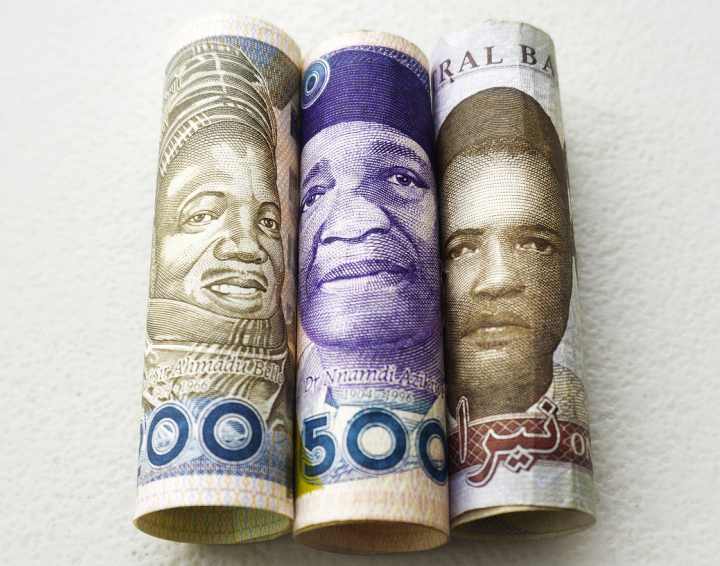
The Central Bank of Nigeria (CBN) is reportedly planning to release all N200, N500 and N1,000 notes in its vaults to commercial banks, in a move to avert proposed industrial action by the Nigerian Labour Congress (NLC).

The NLC had earlier issued a one-week ultimatum to the CBN to make cash available for Nigerians or face nationwide strike.

“CWC (central working committee) said poor implementation of the Naira re-design policy has caused considerable pain and hardship to the people.

“Accordingly, CWC resolved to give government seven working days, beginning from Tuesday, March 14, to make Naira notes available or Congress would be compelled to direct its members to withdraw services,” the NLC had said.

Following the expiration of the ultimatum, the NLC has directed public sector workers to embark on a nationwide strike beginning from next Wednesday.

The directive was given by the president, Joe Ajaero, during a media briefing on Wednesday in Abuja. He also directed the affiliates to get set for picketing of CBN branches across the federation.

The central bank has failed to push enough cash into circulation; weeks after the Supreme Court annulled the implementation of the naira redesign policy which created cash scarcity nationwide.

Total cash in circulation in the country has declined from N3.1 trillion in December 2022 to N982 billion in February 2023, according to Money and Credit Statistics. But the CBN said that N843 billion (85.8%) out of the sum in circulation was out of the banking system as at February 2023. This justifies the struggle Nigerians still face to access cash from commercial banks.

Former director-general of the National Bureau of Statistics (NBS), Yemi Kale, estimated that Nigeria lost between N10-15 trillion of national productivity in the first quarter of 2023 to the crippling impact of the naira redesign policy.

Against this backdrop, the proposed nationwide strike needs to be averted, lest, the economy grinds to a halt.

The CBN governor, Godwin Emefiele, is said to be working to beat the time by immediately emptying old N200, N500 and N1,000 notes in the apex bank vaults to commercial banks for disbursement to members of the public.

The decision was made following a meeting between Emefiele and Chief Executive Officers (CEOs) of banks on Wednesday evening.

“The CBN governor met with bank CEOs this evening virtually. It was a short meeting that lasted for just about 15 minutes,” one of the bank CEOs who attended the meeting was quoted as saying.

“The governor said all old N1,000, N500 and N200 notes will be released to commercial banks beginning from Thursday. The CBN will start with crisp old notes after which the ones deposited by DMBs will be returned.

“The plan is to flood the economy with cash and ameliorate the challenges Nigerians have been passing through.”

Scarcity of Cash Persists Despite CBN Directives to Nigerian Banks to Pay Out Old Notes to Customers

0

There are reports of the scarcity of cash across the country despite the Central Bank of Nigeria’s (CBN) recent directive to banks to dispense old notes to customers.

The apex bank in a bid to ease the cash crunch across the country which has heightened frustration among Nigerians has instructed banks to desist from hoarding cash and pay out both old and new notes to customers.

Reports disclose that despite the CBN’s directive, several banks across the country are reportedly short on cash, having little or no money to offer to customers. While some bank officials said their stocks of old notes were beginning to run low, others said they had exhausted the old currencies in their vaults.

According to a cost-benefit analysis by experts and a think tank group of the CBN’s naira redesign policy and its impact on the citizens and the economy, the Nigerian economy is grinding to a halt with a  loss estimated at  N20 trillion following the over 70 percent mop-up of the currency by the CBN.

The recent cash crunch which is affecting businesses across the country and has led to low customer patronage has not only crippled economic activities but has become a major threat to the livelihoods of Nigerians.

To further complicate the shortage of cash in Nigeria, as many Nigerians have been forced to resort to the mobile transactions using traditional bank apps, there are reports of incessant failed transactions as many banks in the country do not have the capacity to process the number of mobile transactions.

Due to this, the usage of electronic payment or e-payment systems recorded an abysmal 41.29 percent month-on-month rise, while cashless payment gateways used in the month of February were 901.46 million times, up from 638 million times in January.

Despite an increase in usage, the total value of cashless transactions fell in February, indicating that the number of failed transactions increased due to poor network infrastructure. This is contrary to the expectation of the Central Bank that the naira redesign policy will increase e-payment transactions in my country.

The fallout of the cashless policy has proved disastrous, with far-reaching socioeconomic consequences. Analysts disclose that the federal government and the CBN underestimated the cost-benefit side, which is now causing large-scale disruptions in the economy and loss of productivity.

They further maintained that the timeframe for implementation of the policy was unrealistic and not carefully considered. Some other consequences include inflation, unemployment, and economic growth slowing down. Statistics indicate that Nigeria’s Gross Domestic Product (GDP) will contract by N19 trillion in the first Quarter (Q1) of 2023.

Following the completion of elections in the country, citizens expect that there should be a massive flow of cash in the society, unfortunately, Naira scarcity persists. Citizens and experts have called on the CBN to do something urgently to address the naira scarcity before it further worsens the economy.