DD
MM
YYYY

PAGES

DD
MM
YYYY

spot_img

PAGES

Home Blog Page 4333

NPF Orders Vehicular Movement Restriction During Governorship and State Assembly Polls on Saturday

0

The Nigerian Police Force, NPF, has ordered restriction of vehicular movement during the governorship and house of assembly elections on Saturday, March 18, 2023 effective from 12 am to 6pm.

The order attributed to the Inspector General of Police (IGP), Usman Baba, was contained in a statement issued on Thursday by the force’s spokesperson Muyiwa Adejobi.

The statement reads in part: “Sequel to the forthcoming Gubernatorial and State Houses of Assembly elections scheduled to hold on the 18th of march, 2023, the Inspector-General of Police, IGP Usman Alkali Baba, CFR, has ordered the restriction of all forms of vehicular movement on roads, waterways, and other forms of transportation, from 12 am to 6 pm on election day in all states where elections will be conducted with the exception of those on essential services such as INEC Officials, Electoral Observers, Accredited Media and Observers, Ambulances responding to medical emergencies, firefighters, etc.

“This directive excludes the Federal Capital Territory as no election is being conducted therein.

“Similarly, the IGP reiterates the ban on all security aides to VIPs and escorts from accompanying their principals and politicians to polling booths and collation centres during the election.

“State-established and owned security outfits/organizations, quasi-security units, and privately-owned guard and security outfits are also barred from participating in election security management.

“The Inspector General of Police, therefore, urges all citizens to be law-abiding during and after the elections even as he assures that all necessary security arrangements have been emplaced to ensure they exercise their franchise unhindered”.

UK Government Joins the Trend, Bans TikTok on Official Devices

0

The UK government announced Thursday it’s banning TikTok on government-owned devices, following the steps of the US, Canada and the European Union Commission.

The move was announced by Cabinet Office Minister Oliver Dowden, who told Parliament that the ban applies to work phones of government ministers and civil servants only.

The decision was taken on security grounds. Dowden said there could be a risk to how government data and information is used by the app.

The UK government was reluctant to ban TikTok despite a warning by the US that the Chinese-owned short-form video app poses national security risks. On February 28, the Secretary of State for Science and Innovation, Michelle Donelan, said the app was a matter of personal choice, adding that Britain has no evidence and a ban would be very forthright.

Washington had last year banned officials from using TikTok on government devices. Congress and other states in the US have also done the same.

Last month, the U.S. government announced a decision ordering employees of federal agencies to delete TikTok from all government-issued mobile devices. The European Union Commission, Belgium and others have also temporarily banned the app from employee devices.

On Tuesday, the U.K. government asked the National Cyber Security Centre (NCSC) to review TikTok. Security minister Tom Tugendhat said “understanding exactly what the challenges that these apps pose, what they are asking for and how they’re reaching into our lives is incredibly important,” acknowledging that the move may lead to potential ban.

TikTok has been on the radar of the US for a while due to its ties to Beijing. The short-form video app is owned by Chinese tech giant ByteDance, which fuels concern that users’ data could be harvested by Chinese authorities for espionage, propaganda and misinformation.

The concern was amplified by former US President Donald Trump, who moved to ban TikTok’s operation in the US using executive orders. Trump also tried to force Chinese stakeholders to sell their stake to American companies such as Oracle and Walmart.

Dowen said the UK ban “is a proportionate move based on a specific risk with government devices.” The cabinet minister added that there will be limited exemptions which “will only be granted by security teams on a case-by-case basis with ministerial clearance provided as appropriate”.

TikTok has repeatedly tried to allay the concerns. The company said it is disappointed over the decision.

“We believe these bans have been based on fundamental misconceptions and driven by wider geopolitics, in which TikTok, and our millions of users in the UK, play no part.

“We remain committed to working with the government to address any concerns but should be judged on facts and treated equally to our competitors,” a spokesperson said.

China has been critical of the bans, accusing the US and its allies of being paranoid. A foreign ministry spokesperson on one occasion described it as an “abuse of state power”.

“How unsure of itself can the US., the world’s top superpower, be to fear a young person’s favorite app to such a degree?” she added.

On Thursday, China also accused the United States of spreading disinformation and suppressing TikTok following reports that the Biden administration was calling for its Chinese owners to sell their stakes in TikTok.

Early this month, the House foreign affairs committee supported the legislation that will grant Biden’s administration new powers to ban TikTok and other apps seen as potential risk to the US national security.

Leveraging Customer Lifetime Value for Sustainable Business Development

0
Customers

An essential element of business management is identifying the customer and delivering values to them in a way that inspires them to develop positive sentiments towards your brand. A business can be said to have a strong customer lifetime value, when its customers see themselves and act as an integral part of your business. No doubt, this consciousness is reinforced by an interplay of economic facts.

From time to time, the entrepreneur must review the impact of customers on his business cash-flow and liquidity. Customer lifetime value is a metric used to measure the effect of the contribution of your customers on your business profitability. In other words, customer lifetime value helps business owners to understand how much their customers are worth to their business over a period. A simple calculation of the net customer’s contribution is expressed as customer expenditure minus marketing cost.

A weak or negative CLV surfaces when the customers’ contributions do not yield profits or they result in a loss for your business. This may be a strong indication that your customers have been estranged from your business and you need to take possible urgent steps to reintegrate and revitalize them.

CLV cannot be ascertained independent of the business’ customer acquisition and retention approach. Whereas both acquisition of new customers and retention of old customers lead to increase in sales and cash-flow, customer retention involves less marketing cost compared to customer acquisition.

Study shows that five percent increase in customer retention can translate in 125percent increase in profits; 10 percent increase in retailer retention can translate into 20 percent increase in sales; and extending customer lifetime value by 3 years can triple profits per customer.

The following are ways to leverage CLV to improve marketing performance:

  1. Making targeted customer acquisition spending. The cost of acquiring a new customer should be determined by the propensity of the customer to generate sales value that can sufficiently offset the cost. In other words, if it is anticipated that a customer will inform higher sales, the estimated acquisition cost can be adjusted to convert this particular customer.
  2. Allocating resources based on the best recruitment sources. Different recruitment sources present customers with different lifetime value. Identify those values, and spend more on the best sources. It is worthy of note that not all customers are worth retaining, you should consider customers that are likely to yield the highest returns over a period of time, and channel marketing resources to them accordingly.
  3. Regarding how to analyse your customers to ascertain best marketing options, you can categorize them in terms of how regularly they the buy from you; their purchasing power or budget limit; and the sort of product they buy.
    Offering wide range of products to your customers through cross-selling and up-selling.
  4. Avoid allowing implementation of your customer acquisition and retention plans to deride other essential marketing activities. For instance, rather than increase spending on promotional ads, you can organically project activities that showcase your company’s philosophy or values.

Resource:

Good Small Businesse Guide 2012: How to Start and Grow Your Own Business. Bloomsbury.

Flutterwave $25 billion Since Inception, Stripe’s 90% Revelation, Moniepoint Yearly $144 Billion TPV

1

Picking data from a Flutterwave press release, there is a huge revelation: “serving more than one million businesses and processing more than 400 million transactions worth over $25 billion since inception.” That number means that we still have room for growth since in Nigeria, more than $300 billion moves from consumer to businesses yearly, according to a Mastercard/Fletcher School 2018 report.

If you average that number since Flutterwave inception, the trajectory becomes clearer: the online and API-based fintech penetration in Nigeria remains low. So, there are opportunities ahead.

As we examine that, Stripe reported that it has raised $6.5 billion in a series I funding round to put its valuation at $50 billion. That is a big effort considering the winter season of raising big funds remains extended. In an email from one of the two brothers who created Stripe, he wrote “It may feel as if everything has gone online, but 90% of purchases still happen in person”. Yes, money is still in the meatspace (physical).

That explains why Moniepoint processes $12 Billion monthly (total payment volume) in Nigeria with its POS/agency playbook. That is $144 billion per year.

Add this – “According to research done by The Fletcher School and Mastercard, of the $301 billion of funds flow from consumers to businesses in Nigeria, 98 percent is still based on cash”  – and you get the clear picture that money is still in the meatspace and not yet in the cyberspace. Yet, while we are transiting into the digital space, you cannot ignore where the money is at the moment.

The Press release

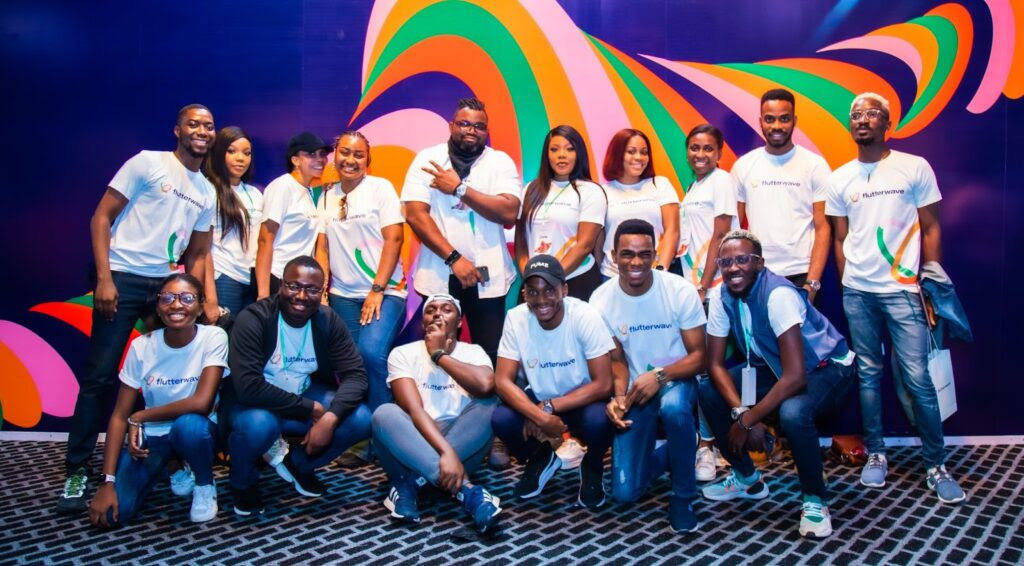
Flutterwave, Africa’s leading payments technology company, has been named to Y Combinator’s 2023 Top Companies List for the third consecutive year. Flutterwave’s inclusion in the list is a reflection of the company’s impressive growth as a major driver of commerce and economic growth in Africa, serving more than one million businesses and processing more than 400 million transactions worth over $25 billion since inception.

Flutterwave’s Founder and CEO, Olugbenga GB Agboola, said, “We are honored to be listed by Y Combinator on its 2023 Top Companies List. Flutterwave’s growth and success over the past year is a testament to the hard work and dedication of every single member of our team as well as the trust and support of our customers and partners. I am thrilled about Flutterwave’s future because we are at the forefront of driving the digital transformation of payments in Africa. We have already made significant strides in simplifying payments and increasing financial inclusion on the continent, and we are well positioned to continue to lead this transformation in the years to come.”

Y Combinator is the largest startup accelerator in the world. Y Combinator’s 2023 Top Companies List is divided into Private, Public, Exits, and Breakthrough categories. Listed and ranked by valuation, all of the 294 companies on the Top Private list are valued at over $150 million, with more than 90 worth more than $1 billion. Flutterwave reached a $3 billion valuation in 2022, making it the highest-valued startup in Africa.

Over the past year, Flutterwave added several world-class leaders to its team, including Oneal Bhambani (Chief Financial Officer), Gurbhej Dhillon (Chief Technology Officer), Mansi Babyloni (Chief People & Culture Officer), Emmanuel Efenure (Head of Risk, Africa), and Marshall Lux as Senior Advisor.

Stripe Raises $6.5bn in Series I Round to Arrive at $50bn Valuation

0

Digital payment company Stripe announced Wednesday it has raised $6.5 billion in a series I funding round to put its valuation at $50 billion. The company was expected to raise around $2 billion.

The new valuation comes a few months after Stripe laid off about 1,200 employees in a move to cut costs.

GIC, Goldman Sachs Asset and Wealth Management and Temasek are among new investors in the round. They teamed up with existing investors Andreessen Horowitz, Baillie Gifford, Founders Fund, General Catalyst, MSD Partners and Thrive Capital.

The payment processing giant said the new funds will be used to  “provide liquidity to current and former employees and address employee withholding tax obligations related to equity awards, resulting in the retirement of Stripe shares that will offset the issuance of new shares to Series I investors.”

Stripe has grown from a single tool-code for developers, tax and other fintech tools to a giant in the payment industry since it was founded in 2010. The company has onboarded other services including cryptocurrency and Buy Now Pay Later that it partnered with Affirm late last year to integrate. It recently went into partnership with OpenAI and has set a 12-month deadline for an IPO decision.

Two months ago, Stripe cut its internal valuation to $63 billion. TechCrunch reported that the 11% cut came after an internal valuation cut that occurred six months prior, which valued the company at $74 billion.

Forbes estimates that with its current valuation, the Collison brothers, who still run the company, are now worth $5.5 billion with 11% stake each, down from $9.5 billion at Stripe’s peak valuation in 2021.

The valuation reduction came as part of broader market correction in the tech industry. Stripe has cut its valuation internally on at least three occasions, reducing it from $95 billion where it was two years ago, to $63 billion early this year. The company said in a press statement that it does not need the new funding to run its business.

Stripe said last year that all those affected by the November 2022 lay off will be given at least 14 weeks’ worth of pay, although it will depend on the time they served at the company. Also, the company will pay the full 2022 annual bonus, though it will be prorated if any member of the laid workforce joined last year.