DD
MM
YYYY

PAGES

DD
MM
YYYY

spot_img

PAGES

Home Blog Page 4337

Leveraging Customer Lifetime Value for Sustainable Business Development

0
Customers

An essential element of business management is identifying the customer and delivering values to them in a way that inspires them to develop positive sentiments towards your brand. A business can be said to have a strong customer lifetime value, when its customers see themselves and act as an integral part of your business. No doubt, this consciousness is reinforced by an interplay of economic facts.

From time to time, the entrepreneur must review the impact of customers on his business cash-flow and liquidity. Customer lifetime value is a metric used to measure the effect of the contribution of your customers on your business profitability. In other words, customer lifetime value helps business owners to understand how much their customers are worth to their business over a period. A simple calculation of the net customer’s contribution is expressed as customer expenditure minus marketing cost.

A weak or negative CLV surfaces when the customers’ contributions do not yield profits or they result in a loss for your business. This may be a strong indication that your customers have been estranged from your business and you need to take possible urgent steps to reintegrate and revitalize them.

CLV cannot be ascertained independent of the business’ customer acquisition and retention approach. Whereas both acquisition of new customers and retention of old customers lead to increase in sales and cash-flow, customer retention involves less marketing cost compared to customer acquisition.

Study shows that five percent increase in customer retention can translate in 125percent increase in profits; 10 percent increase in retailer retention can translate into 20 percent increase in sales; and extending customer lifetime value by 3 years can triple profits per customer.

The following are ways to leverage CLV to improve marketing performance:

  1. Making targeted customer acquisition spending. The cost of acquiring a new customer should be determined by the propensity of the customer to generate sales value that can sufficiently offset the cost. In other words, if it is anticipated that a customer will inform higher sales, the estimated acquisition cost can be adjusted to convert this particular customer.
  2. Allocating resources based on the best recruitment sources. Different recruitment sources present customers with different lifetime value. Identify those values, and spend more on the best sources. It is worthy of note that not all customers are worth retaining, you should consider customers that are likely to yield the highest returns over a period of time, and channel marketing resources to them accordingly.
  3. Regarding how to analyse your customers to ascertain best marketing options, you can categorize them in terms of how regularly they the buy from you; their purchasing power or budget limit; and the sort of product they buy.
    Offering wide range of products to your customers through cross-selling and up-selling.
  4. Avoid allowing implementation of your customer acquisition and retention plans to deride other essential marketing activities. For instance, rather than increase spending on promotional ads, you can organically project activities that showcase your company’s philosophy or values.

Resource:

Good Small Businesse Guide 2012: How to Start and Grow Your Own Business. Bloomsbury.
Flutterwave $25 billion Since Inception, Stripe’s 90% Revelation, Moniepoint Yearly $144 Billion TPV

1

Picking data from a Flutterwave press release, there is a huge revelation: “serving more than one million businesses and processing more than 400 million transactions worth over $25 billion since inception.” That number means that we still have room for growth since in Nigeria, more than $300 billion moves from consumer to businesses yearly, according to a Mastercard/Fletcher School 2018 report.

If you average that number since Flutterwave inception, the trajectory becomes clearer: the online and API-based fintech penetration in Nigeria remains low. So, there are opportunities ahead.

As we examine that, Stripe reported that it has raised $6.5 billion in a series I funding round to put its valuation at $50 billion. That is a big effort considering the winter season of raising big funds remains extended. In an email from one of the two brothers who created Stripe, he wrote “It may feel as if everything has gone online, but 90% of purchases still happen in person”. Yes, money is still in the meatspace (physical).

That explains why Moniepoint processes $12 Billion monthly (total payment volume) in Nigeria with its POS/agency playbook. That is $144 billion per year.

Add this – “According to research done by The Fletcher School and Mastercard, of the $301 billion of funds flow from consumers to businesses in Nigeria, 98 percent is still based on cash”  – and you get the clear picture that money is still in the meatspace and not yet in the cyberspace. Yet, while we are transiting into the digital space, you cannot ignore where the money is at the moment.

The Press release

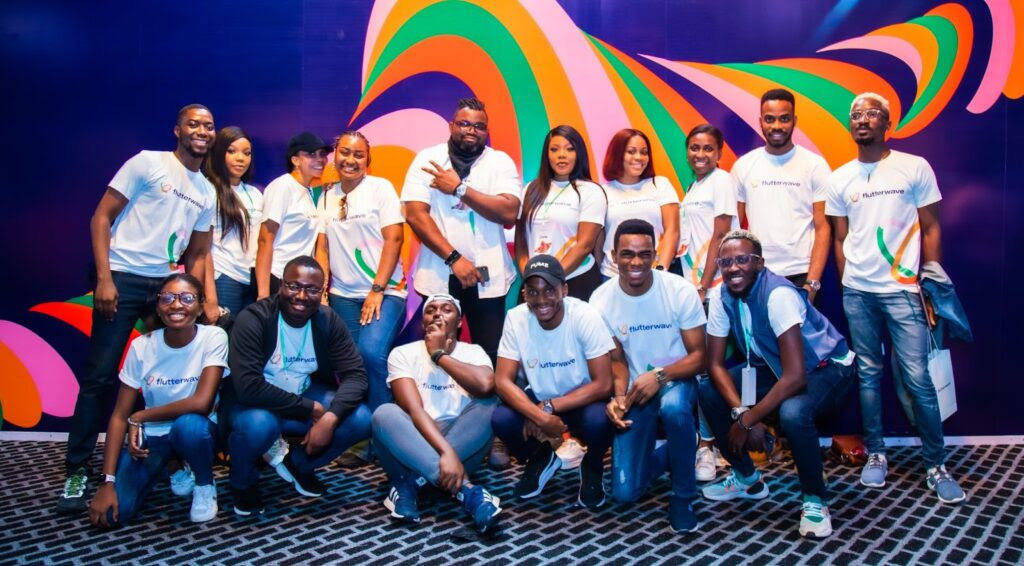
Flutterwave, Africa’s leading payments technology company, has been named to Y Combinator’s 2023 Top Companies List for the third consecutive year. Flutterwave’s inclusion in the list is a reflection of the company’s impressive growth as a major driver of commerce and economic growth in Africa, serving more than one million businesses and processing more than 400 million transactions worth over $25 billion since inception.

Flutterwave’s Founder and CEO, Olugbenga GB Agboola, said, “We are honored to be listed by Y Combinator on its 2023 Top Companies List. Flutterwave’s growth and success over the past year is a testament to the hard work and dedication of every single member of our team as well as the trust and support of our customers and partners. I am thrilled about Flutterwave’s future because we are at the forefront of driving the digital transformation of payments in Africa. We have already made significant strides in simplifying payments and increasing financial inclusion on the continent, and we are well positioned to continue to lead this transformation in the years to come.”

Y Combinator is the largest startup accelerator in the world. Y Combinator’s 2023 Top Companies List is divided into Private, Public, Exits, and Breakthrough categories. Listed and ranked by valuation, all of the 294 companies on the Top Private list are valued at over $150 million, with more than 90 worth more than $1 billion. Flutterwave reached a $3 billion valuation in 2022, making it the highest-valued startup in Africa.

Over the past year, Flutterwave added several world-class leaders to its team, including Oneal Bhambani (Chief Financial Officer), Gurbhej Dhillon (Chief Technology Officer), Mansi Babyloni (Chief People & Culture Officer), Emmanuel Efenure (Head of Risk, Africa), and Marshall Lux as Senior Advisor.

Stripe Raises $6.5bn in Series I Round to Arrive at $50bn Valuation

0

Digital payment company Stripe announced Wednesday it has raised $6.5 billion in a series I funding round to put its valuation at $50 billion. The company was expected to raise around $2 billion.

The new valuation comes a few months after Stripe laid off about 1,200 employees in a move to cut costs.

GIC, Goldman Sachs Asset and Wealth Management and Temasek are among new investors in the round. They teamed up with existing investors Andreessen Horowitz, Baillie Gifford, Founders Fund, General Catalyst, MSD Partners and Thrive Capital.

The payment processing giant said the new funds will be used to  “provide liquidity to current and former employees and address employee withholding tax obligations related to equity awards, resulting in the retirement of Stripe shares that will offset the issuance of new shares to Series I investors.”

Stripe has grown from a single tool-code for developers, tax and other fintech tools to a giant in the payment industry since it was founded in 2010. The company has onboarded other services including cryptocurrency and Buy Now Pay Later that it partnered with Affirm late last year to integrate. It recently went into partnership with OpenAI and has set a 12-month deadline for an IPO decision.

Two months ago, Stripe cut its internal valuation to $63 billion. TechCrunch reported that the 11% cut came after an internal valuation cut that occurred six months prior, which valued the company at $74 billion.

Forbes estimates that with its current valuation, the Collison brothers, who still run the company, are now worth $5.5 billion with 11% stake each, down from $9.5 billion at Stripe’s peak valuation in 2021.

The valuation reduction came as part of broader market correction in the tech industry. Stripe has cut its valuation internally on at least three occasions, reducing it from $95 billion where it was two years ago, to $63 billion early this year. The company said in a press statement that it does not need the new funding to run its business.

Stripe said last year that all those affected by the November 2022 lay off will be given at least 14 weeks’ worth of pay, although it will depend on the time they served at the company. Also, the company will pay the full 2022 annual bonus, though it will be prorated if any member of the laid workforce joined last year.

Silicon Valley Bank Collapse: African Startup Founders Review Their Banking Options

0

The collapse of the prestigious tech-focused Silicon Valley Bank has no doubt dealt a huge blow to tech startups across the globe, as several African startup founders are reportedly reviewing their banking options.

SVB has been a strong partner with startup firms like incubator Y combinator, which holds accounts from Africa and across the world. Following the shocking collapse of the bank, some 30% of Y combinator startups with SVB exposure are reportedly unable to make payroll.

An African founder disclosed that all the startup founders’ groups that he is in are in full-on panic mode, as everyone is reportedly moving money around. “Nobody knows which banks are safe,” he said. Several other African startups are affected with different degrees of impact, which includes Chipper Cash, African payments giant which had about $1 million at SVB when it collapsed, and Artifact, a Moroccan-owned business that has all its funds stuck at Silicon Valley Bank.

In a bid to cushion the effect of the collapse of SVB on African startups, some founders have begun to make certain changes as regards their company’s banking options. In an interview with TechCrunch, Nala, a U.K based African startup focused on mobile money transfer that managed to pull out its fund from SVB before it collapsed, disclosed that the company is exploring partnerships with new large corporate banks.

CEO of Nala Benjamin Fernandez said, “we have gotten inbound outreach by several banks, but you know banks always like to know a lot of information about companies, their revenue, the amount of cash the company would hold with them, and so on to bring them on board.”

Also, the Pan-African fund Future Africa, which suffered minimal exposure has disclosed its plans to open an account with a global banking institution. Jumba, a Kenyan construction firm that simplifies B2B purchase of construction materials is also looking to diversify its deposit holdings, as the startup founder Kagure Wamunyu revealed that he is opening additional accounts with a bigger bank in the U.S.

However, he believed that the impact on Africa’s tech sector may be limited given the small number who bank with SVB. The difficulty that African startups face in opening US bank accounts may have protected the continent from the worst of the fallout, he said. 

But if ripple effects are not yet fully apparent, observers believe that the long-term implications could be more significant. Some experts see SVB’s collapse as an opportunity to strengthen Africa’s startup ecosystem and encourage greater investment from local sources. Several African Founders disclose that the event has reinforced the need to build homegrown solutions. They revealed that when African startups rely on foreign investors, they expose themselves to imported problems.

It is however interesting to know that before now, there have been calls for African venture capitalists to be more involved in the backing of local solutions. These calls have not been heeded to, as  persistence of the west’s savior mentality remains a thorn in Africa’s flesh.

As the tech industry grapples with the aftermath of SVB’s collapse, it is clear that the lessons learned from this event will have far-reaching implications for startups and investors across the continent.

LinkedIn Extends AI Features to Profiles And Job Descriptions to Enhance User Experience

0

Business and employment-focused social media platform LinkedIn has introduced Artificial Intelligence (AI) based writing suggestions, which are available to users who seek to revamp their LinkedIn profiles and those who compose job descriptions.

The job hunting and business platform now uses GPT (Generative Pre-trained transformer) 3.5 and 4 models to enable users to write recruitment ads and personalized profiles respectively.

Speaking on the latest AI features, LinkedIn Chief Product Officer Tomer Cohen explained that the company has intensified the adoption of artificial intelligence (AI) and is actively exploring numerous promising opportunities to create unique value and innovation to enhance user experience.

A large percentage of LinkedIn’s main clients are recruiters; hence it is exploring more ways to aid recruiters in job descriptions and the likes. All a recruiter has to do is input basic information like the company’s name and job title, then the AI tool will generate a suggested job description for them to review and edit, saving them time and effort while still giving them the flexibility to customize the post to their taste.

LinkedIn’s Chief Product Officer disclosed that by streamlining this part of the hiring process, recruiters can focus their energy on the more strategic aspects of their job. Also, the social media platform launched a GPT-4 tool that creates summaries for user profiles. It analyzes the data from a job seeker’s skills and experiences.

The AI tool outlines the most impressive qualities of the user and emphasizes the information generated in the headline and about-section description. The AI writing prompts for profiles are aimed at helping people who have trouble writing their overviews of what they have done and achieved but might at least be able to spell out some of what they have done, which in turn gets translated into a more fluid narrative by the AI.

Thus, this can be of great advantage to job seekers enabling them to make a better first impression to recruiters, which can lead them to securing their desired job. However, LinkedIn’s AI feature is not available to every user, as it is only available to premium users which costs $29.99 monthly. Asides from these recent additions, LinkedIn also launched AI-powered collaborative articles last week that create more content based on conversation starters.

LinkedIn has therefore sought to offer more than 100 AI courses for free to all users until June 15, 2023. Founded in 2003, LinkedIn connects the world’s professionals to make them more productive and successful. With more than 850 million members worldwide, including executives from every Fortune 500 company, LinkedIn is the world’s largest professional network.

The company has a diversified business model with revenue coming from Talent Solutions, Marketing Solutions, Sales Solutions, and Premium Subscriptions products.