DD
MM
YYYY

PAGES

DD
MM
YYYY

spot_img

PAGES

Home Blog Page 435

Fewer Odds of October Rate Cut Signal a Stronger U.S. Economy but Stir Market Uncertainty

0

The U.S. Bureau of Economic Analysis released its third estimate for Q2 2025 GDP growth, revising it upward to a robust 3.0% annualized rate—surpassing the initial 2.8% estimate and Wall Street’s consensus of 2.9%.

This strength was largely driven by consumer spending, which rose 3.7% in the quarter, exceeding forecasts. Complementing this, the Labor Department’s weekly jobless claims report for the week ending September 20 showed initial claims falling to 228,000—below the expected 235,000—indicating a resilient labor market with limited layoffs.

These better-than-expected figures signal that the U.S. economy remains solid, reducing the urgency for aggressive monetary easing by the Federal Reserve. Inflation, while cooling, hovers around 2.9% core PCE, still above the Fed’s 2% target, and potential tariff impacts could add upward pressure.

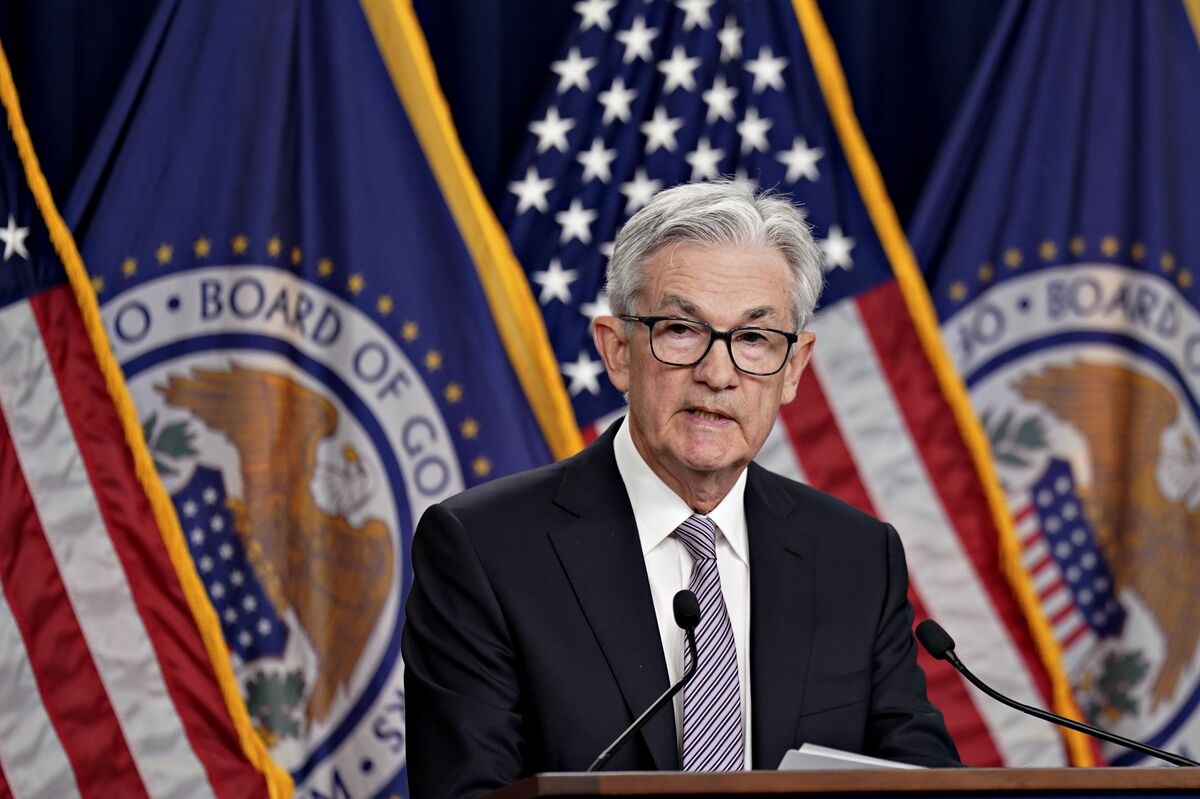
Fed Chair Jerome Powell has emphasized caution, noting the economy is in a “really good place” despite some softening, while new Governor Miran advocates for faster cuts to address labor risks.

Shift in Market-Implied Odds for an October Rate Cut

Markets gauge Fed expectations via the CME FedWatch Tool, which derives probabilities from 30-Day Fed Funds futures prices. Prior to the data release the odds of a 25 basis point (bp) cut at the October 28-29 FOMC meeting—bringing the target range to 3.75%-4.00%—stood at approximately 92%.

Post-release, these odds dropped to around 86%, with the probability of no change holding at 4.00%-4.25% rising to 14%. This adjustment reflects traders’ view that strong growth diminishes the case for immediate easing, though a cut remains the base case.

Some intraday futures pricing briefly showed a rebound to 87.7%, but the overall trend points to tempered expectations. U.S. indices S&P 500, Nasdaq, Dow opened lower on September 25, extending a three-day decline, as rate-cut hopes faded. Treasury yields rose 10-year at ~4.1%, pressuring bonds.

The USD strengthened, while gold dipped, as reduced easing prospects bolster the greenback. The September 17 cut first since December 2024 was a “risk management” move amid labor softening, but today’s data reinforces a data-dependent path. Projections suggest 50 bp total cuts by year-end, with December odds at ~60% for another 25 bp move.

The robust 3.0% GDP growth and resilient consumer spending 3.7% signal economic strength, reducing the urgency for immediate rate cuts. The Fed may opt to pause at the October 28-29 FOMC meeting to assess inflation trends core PCE at 2.9% vs. 2% target and labor market signals.

Fed Chair Powell’s cautious stance and the mixed signals from Fed officials such as Governor Miran’s push for faster cuts underscore a data-driven approach. Upcoming CPI released on September 26 and non-farm payrolls will be critical in shaping the December decision.

A pause could keep the fed funds rate at 4.00%-4.25%, potentially extending the timeline for reaching the projected “neutral” rate ~3% into 2026, especially if inflation remains sticky or tariffs emerge.

Strong economic data typically supports stocks, but the reduced likelihood of a cut has pressured indices like the S&P 500 and Nasdaq, which fell on September 25. Higher yields and a stronger USD could weigh on growth stocks, particularly tech, in the near term.

Treasury yields are rising as markets price in less aggressive easing. This could increase borrowing costs and dampen bond prices, impacting fixed-income portfolios. The USD’s strength post-data reduces appeal for gold and other commodities.

A stronger dollar may also pressure emerging markets with USD-denominated debt. Markets may see choppiness as traders recalibrate for a potential pause. The VIX could tick up if uncertainty around Fed moves grows.

Strong GDP and consumer spending bolster confidence, supporting retail and investment. However, sustained high rates could tighten financial conditions, raising borrowing costs for households and firms.

Persistent consumer strength and potential tariff policies could keep inflation above the Fed’s 2% target, complicating the path to easing.  Low jobless claims suggest resilience, but any softening in upcoming jobs data could revive rate-cut bets, as the Fed prioritizes its dual mandate.

A stronger USD and higher U.S. yields could strain emerging markets, increasing debt servicing costs and capital outflows. Global central banks (e.g., ECB, BoJ) may also adjust policies in response to a less dovish Fed.

If tariff policies intensify, they could offset domestic growth benefits by raising costs, potentially forcing the Fed to balance growth and inflation risks more carefully. Investors may shift toward defensive sectors and away from rate-sensitive growth stocks.

Fixed-income strategies might favor shorter-duration bonds to mitigate yield risk.  Expect Powell and other Fed speakers to emphasize caution, with markets parsing speeches for hints of a pause or continued cuts.

The Fed’s next moves hinge on inflation and labor data, with ripple effects across asset classes and global markets. While a pause in October isn’t the consensus, CPI release and jobs data could swing odds further. Investors should monitor for signs of “sticky” inflation or labor cracks, as the Fed navigates growth without overheating.

Implications of Vanguard Allowing Crypto ETF Access

0

Vanguard, the world’s second-largest asset manager with over $10 trillion in assets under management AUM, is reportedly preparing to reverse its long-standing resistance to cryptocurrency products.

According to recent reports, the firm is in exploratory talks to allow its U.S. brokerage clients—numbering around 50 million—to access select third-party crypto exchange-traded funds (ETFs). This comes after years of blocking such investments, citing crypto’s volatility and lack of long-term value as an asset class.

In January 2024, when spot Bitcoin ETFs were first approved by the SEC, Vanguard explicitly prohibited trading them on its platform. The firm viewed crypto as speculative rather than a viable investment for generating stable, long-term returns.

Rivals like BlackRock whose Bitcoin ETF has amassed over $80 billion in assets, Fidelity, and Charles Schwab have embraced crypto ETFs, driving massive inflows—totaling around $70 billion industry-wide since launch. Even JPMorgan and Morgan Stanley have begun offering Bitcoin trading and ETF access to clients.

What’s Changing Now?

Vanguard has initiated “methodical” discussions with external partners but has no plans to launch its own crypto products. The focus is solely on enabling access to existing third-party ETFs, such as those tracking Bitcoin or Ethereum.

The appointment of CEO Salim Ramji in 2024—formerly the head of BlackRock’s ETF business, including its Bitcoin ETF—appears to be a catalyst. In July 2025, Ramji reiterated no interest in proprietary crypto ETFs but left the door open for third-party access.

Recent SEC actions, including a new generic listing standard that slashes ETF approval times from 240 to 75 days and broadens eligibility for major cryptos, have eased barriers. This aligns with a more crypto-friendly environment under evolving U.S. regulations.

If implemented, this could unlock enormous capital flows into crypto: A mere 1% allocation from Vanguard’s AUM would equate to $100 billion—dwarfing many existing ETF categories and accelerating mainstream adoption.

With Vanguard serving one in six U.S. households, this move could integrate crypto into retirement accounts and passive portfolios, shifting perceptions from “speculation” to “core asset class.” Analysts predict a fresh boom, especially after last week’s market dip, offering attractive entry points.

Vanguard manages over $10 trillion in assets. Even a conservative 1% allocation to crypto ETFs could unleash $100 billion in new capital, surpassing the $70 billion total inflows into crypto ETFs since their inception in 2024.

This influx could drive significant price appreciation for major cryptocurrencies like Bitcoin and Ethereum, potentially sparking a new bull run, especially following recent market dips that have created attractive entry points.

With Vanguard’s vast retail client base one in six U.S. households crypto could transition from a niche asset to a staple in diversified portfolios, including retirement accounts like IRAs and 401(k)s.

Vanguard’s historical skepticism framed crypto as speculative. Allowing ETF access signals a softening stance, lending institutional credibility and encouraging conservative investors to consider crypto as a legitimate asset class.

Retail investors may increasingly view crypto ETFs as a low-effort way to gain exposure without navigating crypto exchanges, aligning with Vanguard’s passive, long-term investment philosophy.

Vanguard’s move levels the playing field with competitors like BlackRock, Fidelity, and Charles Schwab, who have already embraced crypto ETFs. This could stem client outflows to platforms offering broader crypto access.

While Vanguard is unlikely to launch proprietary crypto products, competitors may accelerate their own offerings like new ETF structures or direct crypto trading to maintain an edge.

Other conservative holdouts may follow Vanguard’s lead, accelerating the normalization of crypto in traditional finance and potentially leading to new products like crypto-focused index funds.

Vanguard’s 50 million clients gain flexibility to diversify into crypto without leaving the platform, potentially increasing client retention and satisfaction. Crypto’s high volatility could expose Vanguard’s risk-averse clients to significant losses, potentially leading to scrutiny if clients over-allocate without proper education.

Vanguard’s focus on third-party ETFs rather than proprietary products limits its exposure but also caps its ability to shape the crypto market directly. Without official confirmation or a clear timeline, delays or restrictive conditions.

If crypto markets crash, Vanguard’s cautious client base may blame the firm for enabling access, potentially straining its reputation for prudent investing. Vanguard’s pivot could catalyze a seismic shift in crypto adoption, driving billions in new capital, legitimizing the asset class, and pressuring competitors to keep pace.

However, its cautious approach and crypto’s volatility introduce risks that could temper enthusiasm. Investors should monitor for official announcements and weigh ETF access against direct crypto ownership on platforms like Coinbase or Binance, depending on their risk tolerance and goals.

SEC and FINRA Probe Insider Trading Concerns Involving Over 200 DATs

0

The U.S. Securities and Exchange Commission (SEC) and the Financial Industry Regulatory Authority (FINRA) have contacted over 200 Digital Asset Treasuries (DATs)—likely referring to tokenized or blockchain-based treasury vehicles or funds in the crypto space—regarding potential insider trading.

The regulators are scrutinizing pre-announcement trading activities that may have exploited material nonpublic information (MNPI) about treasury-related announcements. According to a Wall Street Journal (WSJ) report, this outreach signals an initial step, with a more formal and deeper investigation possibly forthcoming if irregularities are confirmed.

The focus is on suspicious trading patterns in treasury vehicles (e.g., tokenized U.S. Treasuries or similar assets) ahead of public announcements. DATs, which have surged in popularity amid the integration of traditional finance (TradFi) and decentralized finance (DeFi), are under review for breaches of insider trading rules under Section 10(b) of the Securities Exchange Act and Rule 10b-5.

SEC leads on securities law enforcement, using advanced surveillance tools to detect anomalous trades, whistleblower tips, and subpoena evidence. FINRA assists in broker-dealer oversight, potentially examining how firms handled client trades in these assets.

The contacts were made recently, aligning with a broader 2024-2025 uptick in SEC enforcement on crypto-related misconduct, including “shadow trading”. This development comes amid a “DATs frenzy” in crypto markets, where tokenized treasuries have driven liquidity and speculation.

However, it echoes the SEC’s aggressive 2024 actions, such as the high-profile SEC v. Panuwat case, where a jury upheld liability for shadow trading using acquisition news to profit from a peer company’s stock. In fiscal year 2024 alone, the SEC settled or litigated dozens of insider trading cases, recovering millions in disgorgement and penalties.

What This Means for the Crypto Ecosystem

The probe underscores the SEC’s expanding oversight of digital assets treated as securities, potentially cooling speculative fervor around DATs while reinforcing market integrity.

Traders and firms are advised to review internal policies immediately—e.g., avoiding trades during sensitive periods and documenting all decisions. If you’re involved in DAT trading, consulting securities counsel is prudent, as investigations can lead to civil penalties, disgorgement, or criminal charges.

The probe signals that tokenized assets, like DATs, are firmly on the SEC’s radar as securities, subjecting them to the same insider trading rules under Section 10(b) and Rule 10b-5 as traditional equities or bonds.

This could set legal boundaries for how material nonpublic information (MNPI) is handled in blockchain-based financial products, potentially reshaping compliance in decentralized finance (DeFi).

The investigation may expand to other crypto assets or platforms, especially those bridging traditional finance (TradFi) and DeFi, increasing pressure on exchanges and custodians.

News of the probe could dampen enthusiasm for DATs, leading to price swings in tokenized treasuries or related crypto assets as traders react to uncertainty. Fear of regulatory action may deter institutional and retail participation, slowing the growth of DAT markets.

High-profile enforcement could undermine confidence in tokenized assets, especially if major players are implicated, though it may also bolster long-term market integrity. DAT issuers, trading platforms, and broker-dealers may need to implement or strengthen insider trading safeguards, such as blackout periods, Rule 10b5-1 trading plans, or enhanced surveillance.

Firms may face higher legal and compliance costs to navigate investigations, audits, or new regulatory requirements, potentially passed on to investors. The SEC’s whistleblower program offering 10-30% of sanctions could encourage insiders to report misconduct, increasing internal scrutiny.

If the probe escalates, it could test insider trading laws in the context of tokenized assets, potentially extending concepts like “shadow trading” seen in SEC v. Panuwat to crypto markets. Firms or individuals found liable could face civil fines, disgorgement of profits, trading bans, or criminal referrals, setting a deterrent for future violations.

Traders and Investors must exercise caution, avoid trading on rumors, and document decision-making to mitigate risks of being swept into investigations. DAT Issuers and Platforms should proactively audit trading activity, enhance transparency, and consult securities counsel to prepare for potential subpoenas or enforcement actions.

While short-term growth in DATs may slow, clearer regulations could foster long-term stability, attracting institutional capital to compliant platforms. Aggressive enforcement could weed out bad actors, aligning DATs with traditional financial standards and boosting mainstream adoption.

FINRA’s involvement suggests regulators are pooling resources, potentially leading to more sophisticated monitoring of crypto markets. This probe could be a pivotal moment for DATs, either curbing their growth or paving the way for a more regulated, mature market.

Be Part of the AI Agentic World with Tekedia AI Technical Lab Program

0

Great people, we are writing codes not just for technology, but for possibilities. Our mission is to give you primitives and building blocks so that you can create AI agents which will work for you. We begin with six foundational agents: support, SEO, personal planner, career, research, and travel planner—all built on open-source foundation models. The design is deliberate: to keep your cost low while delivering high capabilities. On Oct 4, the Tekedia Institute AI Technical Lab begins.

If you do not have a domain name, your tuition covers one. If you prefer not to own, we will provide you a subdomain. And by the time we are done, four AI agents will already be working for you. Our vision is simple: just as the 2000s democratized websites for small businesses and individuals, the 2020s will democratize AI agents. Every business must have one, and we will do the coding while you connect the pieces.

Yes, no calculus is required. No coding is demanded. The level of skill you need is comparable to what is required to use Facebook. That is the threshold—because technology must never intimidate; it must empower. In this Lab, we are building the future, together.

If you have not picked your seat, I invite you to do so now. Join dozens of co-learners and let’s begin this exciting journey. Learn more and register here

New Set of Trump’s Tariffs To Kick-In From October 1st 2025

0

President Donald Trump announced a new wave of tariffs targeting pharmaceuticals, heavy trucks, and household furniture products.

These measures, set to take effect on October 1, 2025, are framed as efforts to protect American manufacturers from “unfair outside competition” and encourage domestic production. Trump detailed the plans in posts on Truth Social, emphasizing national security and economic reciprocity.

The announcements come amid ongoing trade tensions, with the U.S. already collecting over $200 billion in tariff revenues for 2025, including a record $31.4 billion in August. These tariffs build on Trump’s broader “reciprocal” trade strategy, invoked under laws like the International Emergency Economic Powers Act (IEEPA) and Section 232 of the 1962 Trade Expansion Act.

Earlier in 2025, he imposed baseline 10% tariffs on most imports, with escalations on China up to 30%, the EU 15-25% and others like Brazil additional 40%. Asian stocks fell on September 26, with pharmaceutical shares in Japan and China declining due to fears of supply chain disruptions.

The Nikkei 225 dropped 0.87%. U.S. futures also dipped, reflecting concerns over inflation. While major firms have pledged U.S. expansions, critics warn of higher drug prices and shortages for non-exempt medicines.

The Pharmaceutical Research and Manufacturers of America (PhRMA) noted exemptions could limit damage but urged regulatory fixes over tariffs. Mexico faces the heaviest hit on trucks; furniture importers may pass costs to consumers, exacerbating price surges in home goods.

Tariffs have generated significant revenue, which Trump plans to partially redirect to farmers as transition aid—acknowledging short-term pain from retaliatory measures. Core inflation slowed to 0.2% in August, but overall prices are up 2.7% year-over-year, with warnings that new levies could push it higher.

Opponents, including the Taxpayers Protection Alliance, argue the tariffs act as a tax on U.S. consumers and businesses like Walmart, Home Depot, raising costs without fully addressing supply chains.

A Supreme Court case on the legality of IEEPA-based tariffs is pending, with arguments set for July 31, 2025—potentially upending the policy. Farmers, hit by lost exports, are set to receive bailout funds from tariff proceeds, a move Trump described as ensuring “they’ll be doing better than before.”

This escalation aligns with Trump’s campaign promises for aggressive trade enforcement, but it risks further retaliation from partners like China and the EU. The new tariffs, effective October 1, 2025, are projected to generate additional revenue for the U.S. government, building on the over $200 billion collected year-to-date from existing duties.

However, they risk exacerbating inflationary pressures, with economists warning of higher costs passed on to consumers and businesses. Core inflation, already at 0.2% in August, could rise as import-dependent sectors absorb the hikes.

The OECD notes that while global growth holds at 3.2% for 2025, supported by AI investments and U.S. fiscal aid, the full tariff shock remains unabsorbed, potentially slowing momentum.

The 100% tariff targets branded/patented drugs but spares generics and firms with U.S. plants under construction such as Eli Lilly’s $11.5B expansion. India’s generic exports major U.S. supplier face minimal hit, per Pharmexcil, but complex generics could see price pressures.

UBS deems the real-world impact “negligible” due to carveouts, though Brookings warns of generic shortages and patient rationing. Ireland’s pharma exports surged 536% YOY in anticipation, but EU firms like Roche push for talks to avoid patient harm.

IKEA calls it a blow to business; U.S. imports have flooded markets, hurting domestic makers in states like North Carolina. Homebuilders face compounded costs, worsening affordability crises. Shields U.S. firms like Peterbilt and Mack from Mexican competition, but the U.S. Chamber warns it endangers alliances with Canada, Japan, and Germany—no security threat posed.

Logistics firms may reroute supply chains, hiking costs. Global equities dipped post-announcement: Nikkei fell 0.87%, Japan’s pharma index 1%, Hong Kong’s 2.8%. U.S. futures were mixed, with investors viewing it as targeted rather than systemic.

Fed officials remain cautious on rate cuts amid tariff uncertainty. India’s MEA is “closely monitoring” pharma impacts, with exporters assessing complex generics. Australia’s health minister decries it as “unfair after 20 years of free trade.”

Mexico bears the brunt on trucks; EU seeks urgent talks. Past retaliations like China’s soybean halt suggest escalation, though trade deals cap some rates. A pending Supreme Court case on IEEPA legality could invalidate broad uses.

Proponents see job gains in manufacturing and reduced deficits, aligning with Trump’s reciprocity push. Critics, including the Taxpayers Protection Alliance, label it a “tax on Americans,” risking supply disruptions and higher premiums for 131M patients on key meds.

Overall, it accelerates U.S. reshoring but at the cost of global tensions and consumer burdens—echoing 2018-2019 trade wars.